
A Fruit with a Story
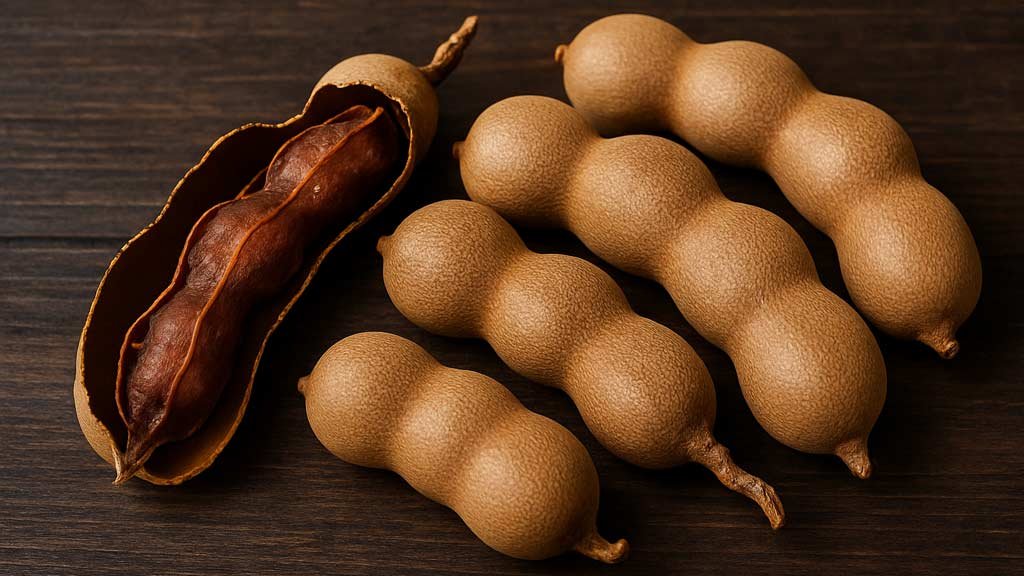
Tamarind isn’t the kind of fruit that sneaks quietly into your diet. No, it barges in with its sour-sweet punch, clinging to your tongue and waking up your senses. If you’ve ever cracked open its brittle brown pod, scooped out the sticky pulp, and licked your fingers afterward, you already know it’s memorable. This wrinkled little treasure has been used for centuries across Africa, Asia, and Latin America not only as food but also as medicine.
People don’t just toss tamarind into chutneys or sauces for taste—it has been trusted for digestion, detoxification, and keeping the heart in check. You’ll find it brewed in teas, rolled into candies, simmered into soups, and even stirred into remedies for fevers. It’s a fruit that sits comfortably at the crossroads of culinary delight and herbal healing.
Table of Contents

What Exactly Is Tamarind?
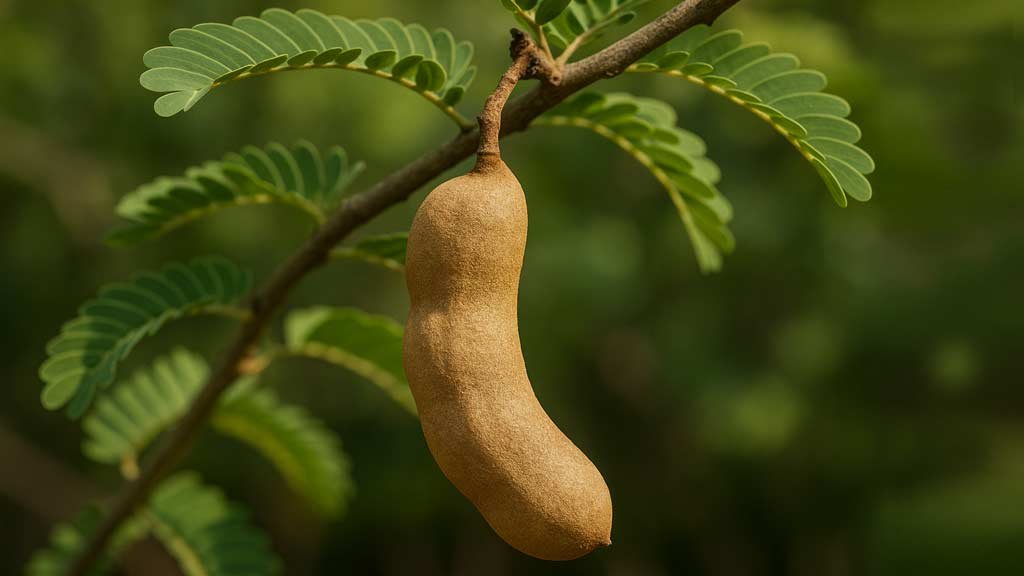
Tamarind (Tamarindus indica) grows on sprawling evergreen trees with delicate leaves and fragrant blossoms. It’s native to Africa, though now you’ll find it thriving in tropical regions worldwide. The pods dangle like ornaments, filled with seeds encased in that signature sticky pulp.

Nutritionally, tamarind is rich in:
- Vitamin C
- B vitamins (especially thiamine and niacin)
- Minerals like magnesium, potassium, and calcium
- Polyphenols and flavonoids that act as antioxidants
- Tartaric acid, which gives tamarind its sharp tang
It’s a peculiar mix: equal parts nutrient-dense food and natural medicine cabinet.
Tamarind for Digestion
The first thing traditional healers noticed about tamarind is how it helps the gut. That sticky pulp isn’t just tasty—it’s a gentle laxative. When eaten in small amounts, it nudges sluggish bowels and helps prevent constipation. People in India and Southeast Asia often chew tamarind pulp after heavy meals to settle their stomachs.
But it doesn’t stop there. Tamarind also:
- Stimulates bile production, which breaks down fats more efficiently.
- Helps reduce bloating by improving digestion.
- Contains dietary fiber that feeds gut bacteria and supports a healthier microbiome.
If you’ve ever felt that heavy, uncomfortable “stone in the stomach” sensation after eating fried food, a sip of tamarind water or tea can lighten the load. It’s the kind of old kitchen wisdom that works without fanfare.
A Natural Detoxifier
The word detox gets thrown around too much these days, but tamarind earns its place in that conversation. Historically, it’s been used to help clear excess bile, toxins, and even heavy metals from the body. Modern research has found that tamarind pulp and extracts may reduce levels of lead and fluoride in tissues, making it particularly interesting for environmental detoxification.
Its diuretic qualities encourage the kidneys to flush out waste, while its antioxidants mop up free radicals that damage cells. Tamarind tea, prepared by boiling the pulp in water, has long been a simple household remedy for fevers, liver sluggishness, and that feeling of “internal heat” many traditional systems talk about.
Heart Health and Circulation
Tamarind has a surprisingly strong reputation for supporting the cardiovascular system. The potassium it provides helps balance sodium levels and lowers blood pressure. Its polyphenols reduce oxidative stress and inflammation—two major drivers of heart disease.
Some studies suggest tamarind can:
- Lower LDL cholesterol (the “bad” kind)
- Raise HDL cholesterol (the “good” kind)
- Improve circulation by reducing blood viscosity
I’ve met people who grew up drinking tamarind juice daily in the Caribbean and swear it kept their families free from “thick blood” problems. That’s not a clinical term, of course, but it matches up with what we know: tamarind helps keep the blood flowing more smoothly.
Tamarind for Weight and Blood Sugar
Here’s where things get interesting. Tamarind’s tangy pulp isn’t just satisfying—it may also reduce appetite. Some research points to its role in regulating hormones like serotonin that influence satiety. In traditional diets, it was often eaten before meals to curb overeating.
For blood sugar, tamarind offers a paradox. It’s naturally sweet but doesn’t spike glucose the way refined sugars do. Instead, compounds in the fruit appear to improve insulin sensitivity and help the body use glucose more efficiently. That makes it an intriguing ally for people managing type 2 diabetes.
Women’s Health and Beyond
In folk medicine, tamarind has been used to ease menstrual cramps. Its anti-inflammatory nature, paired with magnesium and potassium, helps relax muscles and soothe discomfort. Tamarind infusions were often prepared for women recovering after childbirth as a restorative tonic.
Other traditional uses include:
- Cooling the body during fevers
- Soothing sore throats when mixed with honey
- Supporting liver health
- Acting as an antimicrobial rinse for wounds and skin infections
There’s even mention of tamarind paste being used topically for reducing swelling or relieving joint pain.
Tamarind in the Kitchen
Let’s not forget how it actually tastes—because that’s part of its magic. Tamarind’s tang can transform a dish. Thai pad thai owes its signature balance to tamarind paste. Mexican aguas frescas turn refreshing when brightened with tamarind pulp. Indian curries and chutneys rely on its sour edge to balance spices.
It’s not just medicine hidden in your food—it’s food that happens to heal.
Forms You’ll Find Tamarind In
You don’t need to live under a tamarind tree to enjoy its benefits. Today, it’s available in many forms:
- Fresh pods (seasonal and sticky to handle)
- Compressed blocks of pulp (often sold in Asian or Latin markets)
- Tamarind concentrate or paste (convenient but usually more intense)
- Dried tamarind candies (sweetened, less medicinal but still tasty)
- Herbal teas and powders
Each form has its place. For digestion and detox, teas and fresh pulp work best. For cooking, paste or blocks are the way to go.
Precautions and Things to Keep in Mind
Tamarind is safe for most people, but moderation matters. Because it can lower blood sugar and thin the blood, people on diabetes medication or anticoagulants should be cautious. Too much tamarind can also loosen stools more than you’d like.
Pregnant women traditionally consumed it in small amounts, but large doses weren’t encouraged. If you’re new to it, start with a modest portion—half a pod, a spoonful of paste, or a light tea—and see how your body responds.
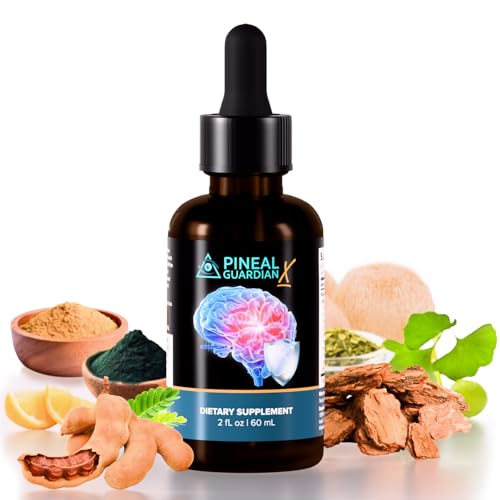
Best Selling Tamarind Supplements


Closing Thoughts
Tamarind isn’t just some exotic fruit. It’s a living thread in the fabric of global traditional medicine and cuisine. Sour, sticky, tangy—it’s full of contradictions, yet somehow they all make sense together. It digests your food but also feeds you. It cools the body but warms the spirit.
Next time you come across tamarind pods at a market, don’t just walk past. Crack one open, chew on the pulp, and feel its story unfold.
Article Sources
At AncientHerbsWisdom, our content relies on reputable sources, including peer-reviewed studies, to substantiate the information presented in our articles. Our primary objective is to ensure our content is thoroughly fact-checked, maintaining a commitment to accuracy, reliability, and trustworthiness.
- Ajayi, O. B., Akomolafe, S. F., & Akinyemi, F. T. (2015). Food value of two varieties of tamarind fruit (Tamarindus indica L.) from Nigeria. International Journal of Science and Research, 4(4), 93–98. https://www.ijsr.net/archive/v4i4/SUB152229.pdf
- Correa-Betanzo, J., Jaramillo-Flores, M. E., Garcia-Gasca, T., Martinez-Ayala, A. L., & Rocha-Guzman, N. E. (2011). Antioxidant and antihyperlipidemic activity of tamarind (Tamarindus indica L.) fruit pulp extracts. Food Chemistry, 128(1), 59–64. https://doi.org/10.1016/j.foodchem.2011.02.080
- Maiti, R., Jana, D., Das, U. K., & Ghosh, D. (2005). Antidiabetic effect of aqueous extract of seed of Tamarindus indica in streptozotocin-induced diabetic rats. Journal of Ethnopharmacology, 92(1), 85–91. https://doi.org/10.1016/j.jep.2004.12.003
- Martinello, F., Soares, S. M., Franco, J. J., Santos, A. C., Sugohara, A., Garcia, S. B., … & Curti, C. (2006). Hypolipemic and antioxidant activities from Tamarindus indica pulp in hypercholesterolemic hamsters. Food and Chemical Toxicology, 44(6), 810–818. https://doi.org/10.1016/j.fct.2005.10.011
- Shankaracharya, N. B. (1998). Tamarind—Chemistry, technology and uses: A critical appraisal. Journal of Food Science and Technology, 35(3), 193–208. https://www.researchgate.net/publication/285669478_Tamarind_-_Chemistry_technology_and_uses_A_critical_appraisal

- Phosphatidic Acid: Supporting Muscle Growth and Strength - July 31, 2026
- Ceramides: Supporting Healthy Skin From Within - July 31, 2026
- Synbiotics: Combining Prebiotics and Probiotics Together - July 31, 2026