
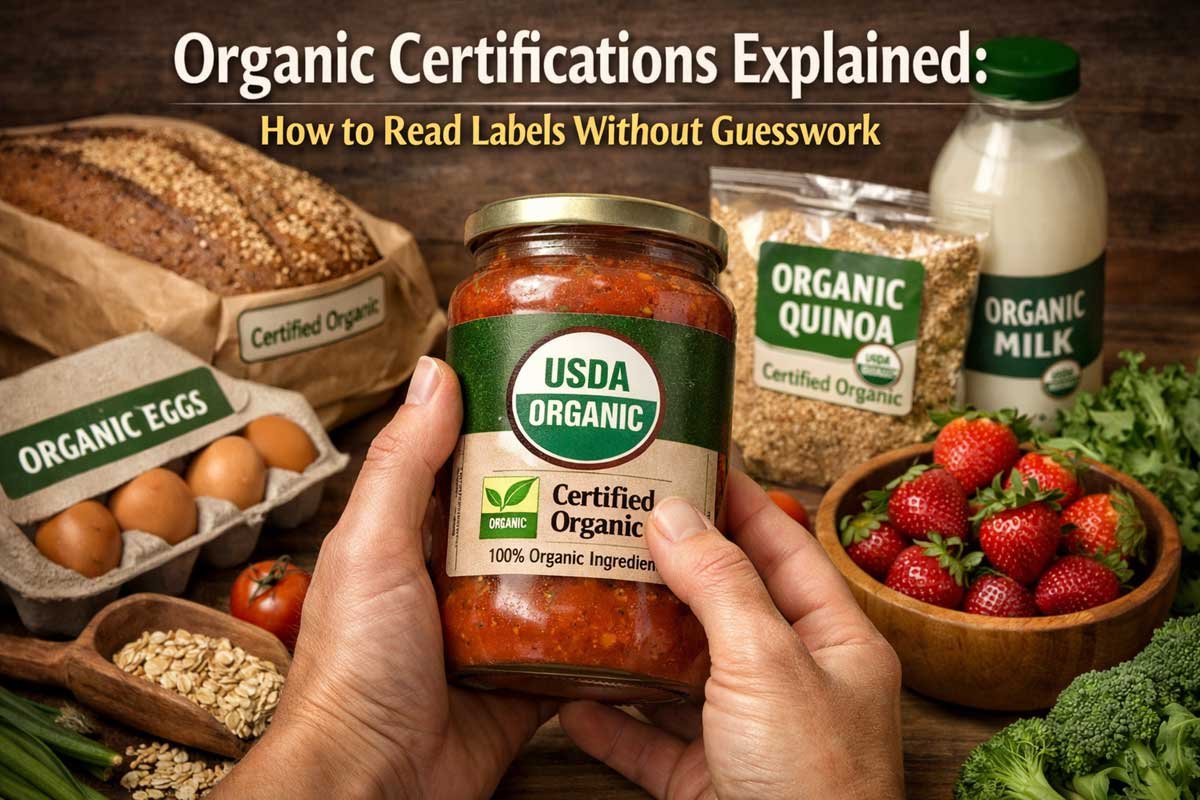
Why Organic Certification Matters to You
Walking down the grocery aisle can feel like entering a foreign language zone. Labels shout at you from every angle: “Organic,” “100% Organic,” “Certified Organic,” “Made with Organic Ingredients.” It’s easy to feel overwhelmed, and you might wonder if these words actually mean anything or if they’re just marketing fluff. The truth is, understanding organic certification isn’t just about checking boxes—it’s about knowing what goes into the food, herbs, and products you bring home, and making choices that align with your expectations for safety, quality, and environmental impact.
At its core, organic certification is a promise. It’s supposed to guarantee that a product was grown and processed under specific rules: no synthetic pesticides, no genetically modified organisms, and strict controls on additives and processing methods. But here’s the catch—this promise isn’t uniform across the globe. Standards vary by country, by certifying body, and even by the type of product. A leaf of basil labeled “organic” in Europe might not meet the same criteria as one sold under a USDA Organic label in the United States. This is where confusion sets in for the average shopper.
Table of Contents

Why should this matter to you? For one, organic certification can be a reliable signal about farming practices and product integrity, but only if you understand what the certification actually entails. When done correctly, certification gives you insight into the lifecycle of the product—from seed to shelf. You can see if the crop was exposed to chemical pesticides, if soil management practices were sustainable, or if post-harvest handling minimized contamination. Without this knowledge, you’re essentially taking a leap of faith each time you put an “organic” item into your cart.
Consider herbs, for example. A dried mint labeled organic may have avoided synthetic pesticides, but it could still carry residues from contaminated soil or water. Heavy metals, naturally occurring or industrially introduced, don’t disappear just because a plant is grown organically. In other words, the label gives you a partial picture, not the whole story. Being able to read and understand organic certification helps you interpret what that partial picture actually represents, so you can make informed decisions rather than relying on marketing.
Organic certification also matters for broader reasons beyond individual health or product quality. It reflects environmental stewardship. Certified organic farms are generally required to use crop rotations, natural pest control, and soil enrichment methods that reduce environmental degradation. Choosing certified products supports these practices and can indirectly encourage more sustainable agriculture. You’re voting with your wallet, in a sense, and certification is your map to where your money is going.
Then there’s the issue of trust. In a world where food fraud and mislabeling are not uncommon, certification serves as a form of verification. Third-party inspections, audits, and traceability requirements provide a framework for accountability. Without these systems, “organic” is just a word on a package—one that could mean anything. Knowing how to read these certifications allows you to separate genuine claims from superficial ones and ensures that your choices reflect your values.
But let’s be honest: not all certifications are created equal. Some certifying bodies are rigorous, demanding extensive documentation and regular inspections. Others operate with looser standards, and enforcement can be inconsistent. Being aware of the certifying authority behind the label is crucial. For instance, the USDA Organic seal in the United States carries different regulatory weight compared with smaller regional certifications or private labels. By recognizing these distinctions, you can weigh the reliability of a label and avoid being misled by vague claims.
There’s also the practical side: your wallet and your health. Organic products often come at a premium price, and it’s reasonable to want to know what you’re paying for. Understanding organic certification helps you evaluate whether the higher cost is justified for a given product. Are you paying for environmental impact, reduced chemical exposure, or simply the branding? With a clear understanding of the label, you can make choices that match your priorities without feeling like you’re guessing.
Finally, there’s a peace-of-mind factor. When you know what an organic certification really represents, grocery shopping becomes less stressful. You can confidently pick items that meet your standards for health, sustainability, or ethical farming practices. Instead of scanning shelves and feeling overwhelmed by conflicting claims, you’re empowered to make decisions grounded in knowledge rather than guesswork.
In short, organic certification matters because it is a tool for informed choice. It provides insight into production methods, environmental practices, and product integrity. But it’s not a magic word. Understanding what lies behind the label—the certifying body, the rules followed, and the limitations—is essential. When you know how to interpret organic certification, you can navigate the supermarket with clarity, protect your health, support sustainable practices, and ensure your money is spent in alignment with your values.
Reading labels without guesswork is less about memorizing seals and more about cultivating awareness. Every time you pick up a product, you have the opportunity to decode its story. And once you learn to do that, the simple word “organic” transforms from a marketing term into a meaningful reflection of choice, responsibility, and insight.
The Basics of Organic Certification
Organic certification often feels like navigating a maze, but at its heart, it’s a system designed to provide clarity in a market crowded with claims. The process is meant to assure consumers that certain standards were followed during production, handling, and processing. Understanding these basics gives context to the labels you see every day and helps you make decisions that reflect your values.
What “Organic” Really Means
When a product is labeled “organic,” it signifies more than just the absence of synthetic chemicals. It represents a set of practices applied throughout the lifecycle of the product. For crops, organic standards generally prohibit synthetic pesticides, herbicides, and fertilizers. Instead, farmers rely on natural alternatives: compost, green manure, crop rotation, and biological pest control. These methods not only minimize chemical exposure but also aim to improve soil health, water quality, and biodiversity.
Organic livestock practices are equally structured. Animals must have access to outdoor spaces, be fed organic feed, and cannot be routinely treated with antibiotics or synthetic growth hormones. The aim is to create conditions closer to natural living environments while avoiding substances that might accumulate in food products.
Processing and handling also fall under organic rules. Additives, preservatives, and processing aids are strictly regulated. Only substances on approved lists can be used, ensuring that the final product reflects the integrity of the organic system. Even packaging and storage can influence whether a product remains compliant.
It’s important to note that “organic” doesn’t automatically mean perfect or contamination-free. Environmental factors, accidental drift from conventional farms, and naturally occurring compounds like heavy metals can still be present. Certification sets a standard, but it doesn’t erase all variables. Understanding this distinction prevents misconceptions and helps consumers interpret labels realistically.
Key Certification Authorities
Different regions have their own certifying bodies, each with unique standards, inspection procedures, and enforcement mechanisms. In the United States, the USDA oversees the National Organic Program (NOP). Products certified under this program must comply with federal standards and are subject to regular inspections and audits. The familiar USDA Organic seal indicates adherence to these rigorous rules.
In the European Union, organic certification is regulated under EU Organic legislation. Products carry a recognizable green leaf logo and must meet EU-wide standards, which include rules on crop management, livestock welfare, and processing. Certification is managed at both national and EU levels, ensuring a consistent baseline across member states.
Canada has its own system, Canadian Organic Standards (COS), overseen by the Canadian Food Inspection Agency. Like the U.S. and EU systems, it covers production, processing, and labeling. Other countries may have smaller certifying bodies with their own requirements, which can vary significantly in scope and enforcement.
Some private organizations also offer certification. While these programs can be meaningful, their rigor may differ from government-mandated systems. Recognizing the certifying authority behind a product is key to understanding the reliability of its organic claims. Consumers who take note of the source of certification gain a clearer picture of what “organic” actually means in practice.
Understanding Label Terminology
Not all organic labels are created equal. The terminology on packaging can be confusing, but each phrase carries specific meaning.
“100% Organic” indicates that all ingredients and processing aids meet organic standards. There’s no allowance for non-organic components, and the product must undergo strict oversight.
“Organic” alone typically means that at least 95% of the ingredients are certified organic. The remaining 5% must be on a pre-approved list of substances. This category allows for a small percentage of non-organic ingredients while maintaining the overall integrity of the product.
“Made with Organic Ingredients” applies to products containing at least 70% organic components. Unlike the previous categories, these items cannot carry the official organic seal, but the label highlights the predominant use of organic ingredients.
These distinctions matter. A consumer choosing an “organic” product under the USDA definition may be getting a slightly different standard than one choosing “made with organic ingredients.” Being aware of these percentages and their implications helps prevent assumptions that all organic-labeled products are equivalent.
Beyond percentages, labels often include information about the certifying body and sometimes the country of origin. These details are critical in evaluating the credibility of a product. A well-informed consumer checks both the wording and the seal, using the label as a tool to decode production practices, rather than as a marketing signal alone.
In practice, understanding these basics transforms the way you shop. Rather than relying on intuition or aesthetics, you can systematically assess products, knowing what the certification guarantees, what it doesn’t, and how to weigh the information in your decision-making.
Common Pitfalls and Misconceptions
Organic certification is a helpful guide, but it isn’t a magic shield. Many consumers assume that the “organic” label guarantees absolute purity, safety, or superior quality, and that’s where misconceptions creep in. Knowing the limits of certification and the common pitfalls can save you frustration, wasted money, and unrealistic expectations.
Labels That Don’t Guarantee Purity
It’s easy to see the word “organic” and assume the product is completely free of chemicals, contaminants, or other unwanted substances. In reality, organic certification does not guarantee zero exposure to pesticides, herbicides, or heavy metals. Organic crops may still come into contact with substances from neighboring conventional farms through drift, or residues from contaminated water or soil.
Heavy metals like lead, cadmium, or arsenic are naturally present in some soils and can accumulate in plants regardless of farming method. Even organic growers cannot completely eliminate this risk, and certification standards allow trace levels under safety thresholds. Similarly, naturally occurring toxins, such as mycotoxins produced by mold, can appear in dried herbs or grains, and organic certification does not guarantee their absence.
Another misconception is that organic automatically means safer for all consumers. While avoiding synthetic chemicals is one benefit, it does not replace the need for careful handling, storage, and preparation. For example, dried herbs or spices that are poorly stored can harbor microbial contamination, which certification alone cannot prevent.
Third-Party Verification and Seal Reliability
One of the key elements of organic certification is verification by independent third-party bodies. These organizations inspect farms and facilities, review documentation, and ensure compliance with the established standards. However, not all certification programs are equal in rigor or enforcement.
Government-backed programs like the USDA Organic label in the United States or the EU Organic certification tend to have stricter requirements, including regular audits, traceability protocols, and penalties for violations. Private or smaller certifiers may vary in oversight, frequency of inspection, and enforcement mechanisms. Some programs are robust, while others may rely heavily on self-reporting or minimal documentation.
Seal recognition is another factor. Consumers often assume that any organic-looking seal carries the same authority, but the credibility of a seal depends on the certifying body behind it. Understanding which organizations are recognized by regulatory authorities, and which have a reputation for rigorous auditing, is essential for evaluating a product’s true organic status.
Practical Ways to Avoid Confusion
So how do you navigate these pitfalls and make informed choices? Start with the label itself. Look beyond the marketing graphics to identify the certifying authority and check whether it is recognized by a national or international regulatory agency. Knowing whether the product is “100% Organic,” “Organic,” or “Made with Organic Ingredients” helps you interpret what the label legally guarantees.
Cross-reference when possible. Many countries maintain online databases of certified products and producers. A quick lookup can confirm whether the certifier is legitimate and whether the producer is current in compliance. This step may feel meticulous, but it prevents accidental purchases of mislabeled products.
Develop a habit of reading ingredient lists carefully. Even products labeled organic can include non-organic components if they fall under permitted thresholds. Pay attention to percentages and unfamiliar additives, and ask yourself whether the combination aligns with your expectations for organic integrity.
Consider quality indicators beyond the label. Freshness, aroma, texture, and packaging all provide cues about handling and storage. Herbs that are organic but have been exposed to moisture or heat can lose potency and safety over time. A discerning consumer integrates both certification knowledge and sensory evaluation when making selections.
Finally, cultivate skepticism without paranoia. Being informed doesn’t mean rejecting all claims; it means interpreting them critically. Organic certification is a tool, not a guarantee. When you understand the limitations and know what to look for, you can confidently choose products that meet your standards without being misled by marketing.
Decoding Labels in Daily Life
Reading an organic label doesn’t have to feel like cracking a secret code. Once you understand what to look for, you can make choices confidently, knowing that the product meets your expectations for quality, safety, and authenticity. It’s about moving from guessing to informed decision-making.
How to Read an Organic Label Step by Step
Start with the seal. Look for the recognizable logo of a reputable certifying body, such as USDA Organic in the United States, the EU Organic leaf logo, or another government-backed authority. The presence of the seal indicates that the product has gone through formal inspection and meets defined standards. If a seal is absent, take note: the product may still be organic, but verification is less certain.
Next, examine the wording on the label. Phrases like “100% Organic,” “Organic,” and “Made with Organic Ingredients” carry specific meanings. “100% Organic” guarantees that all ingredients meet organic standards. “Organic” usually requires at least 95% organic ingredients, with a small allowance for approved non-organic components. “Made with Organic Ingredients” requires a minimum of 70% organic content and cannot carry the official seal. Understanding these distinctions prevents overestimating the product’s organic purity.
Check the certifying body name. Smaller or private certifications may have less rigorous oversight. If possible, cross-reference the certifier online to confirm legitimacy and see whether it is recognized by relevant national or international authorities.
Look at the ingredient list. Even certified organic products can contain additives or non-organic components within allowed thresholds. Being mindful of percentages and ingredients helps you assess whether the product aligns with your expectations. For example, an herbal tea labeled “Organic” but containing flavoring agents that aren’t organic may influence your choice.
Finally, note the origin. Country of origin can affect both standards and environmental factors. Products imported from countries with stringent organic regulations may have slightly different inspection protocols compared with local certifications. Being aware of the origin provides context for evaluating quality and compliance.
Comparing Local vs Imported Products
Organic products aren’t all equal across borders. Standards vary internationally, and the rigor of inspection and enforcement may differ. Local products often have the advantage of shorter supply chains, which can reduce the risk of contamination and maintain freshness. You might also have better access to information about local farms and certification processes.
Imported products, on the other hand, may carry international recognition and adhere to strict global standards. However, long transportation times, storage conditions, and customs handling can impact quality. Packaging may compensate for preservation, but some volatile compounds in herbs or produce can degrade despite these measures.
Comparing local versus imported options involves balancing trust in the certifying authority, understanding supply chain considerations, and evaluating freshness. Sometimes the local option may offer more reliable sensory cues—like aroma and texture—while the imported option may provide recognized international certification. Being deliberate in this comparison ensures that you make informed purchases rather than defaulting to assumptions based on familiarity or price alone.
Beyond the Label: Storage, Handling, and Quality Considerations
Even the most rigorously certified organic product can lose integrity if it is mishandled. Storage, handling, and environmental conditions play a significant role in preserving quality. Herbs, spices, and dried products are particularly sensitive to moisture, heat, and light. A certified organic herb stored improperly can lose its potency, develop microbial growth, or absorb off-flavors from other products.
At home, maintain cool, dry storage conditions. Airtight containers and minimal exposure to sunlight can preserve both flavor and nutritional qualities. Pay attention to expiration dates and batch information when available. Retail environments can also affect product quality; shelves near heat sources or areas of high humidity may compromise organic integrity despite certification.
Practical tips for consumers include gently inspecting products for visual quality, checking aroma, and even shaking packaging to detect clumping or moisture. These sensory cues provide real-time feedback on whether the product has been maintained properly, complementing the certification information.
Consider that handling doesn’t stop at purchase. Proper rotation, use of clean utensils, and safe storage practices in your kitchen or pantry all matter. Organic certification sets the foundation, but day-to-day care ensures that what reaches your table remains as intended.
By combining knowledge of labels, certifying authorities, origin, and proper handling, you can fully decode what “organic” means in practice. Rather than taking the label at face value, you’re equipped to interpret it, evaluate quality, and make informed choices every time you shop.
Making Sense of Organic Choices Every Day
Making sense of organic choices doesn’t require a degree in agriculture or hours of research. It’s about applying what you’ve learned to the decisions you make every time you step into a store, browse an online marketplace, or even consider a product at a farmers’ market. Understanding organic certification allows you to navigate the noise of labels, seals, and marketing claims with confidence, clarity, and purpose.
At its simplest, the process begins with awareness. Recognize that the word “organic” is not a guarantee of perfection, but a signal. It tells you that the product was produced according to specific rules, inspected by a certifying body, and meets defined standards. From there, your goal is to interpret the label, verify the certifier, and assess the product’s condition before purchase. These steps transform shopping from a guessing game into an informed, deliberate action.
Prioritize what matters most to you. Are you focused on reducing synthetic chemical exposure, supporting sustainable farming practices, or ensuring animal welfare? Your priorities guide how you read labels and weigh certification claims. For instance, a product labeled “100% Organic” may offer the highest assurance of ingredient integrity, but the environmental benefits might be more pronounced in a local farm following strict organic practices even if it’s only certified “Organic.” By connecting the label to your personal values, your choices become intentional rather than reactive.
Use certification as a tool, not a crutch. Knowing the certifying body behind a product provides insight into its reliability, but pairing this with practical evaluation ensures better results. Examine freshness, aroma, texture, and packaging. Consider the supply chain, storage conditions, and country of origin. These factors complement certification, giving a fuller picture of what you’re actually buying. For example, an herb imported from overseas may carry international certification but have traveled long distances, affecting its flavor or potency. Local organic options might be fresher and better preserved, even if the certification standards differ slightly.
Avoid over-reliance on labels alone. Marketing graphics and bold claims can be misleading, even on certified products. Developing critical thinking habits—questioning the certifier, the percentages listed, and the source—prevents assumptions that all organic products are equal. Small details on a label, such as “Made with Organic Ingredients,” carry legal meaning and practical implications. Understanding them protects you from being misled and ensures that your purchase aligns with your expectations.
Think of organic choices as an ongoing learning process. Each product you buy, each label you decode, and each experience with quality or freshness informs your next decision. Over time, this builds intuition and confidence. You’ll start recognizing trustworthy certifiers, noticing inconsistencies, and evaluating products holistically. This skill transforms grocery shopping into a proactive, empowered activity rather than a passive one dictated by branding.
Ultimately, the takeaway is that organic certification is a valuable tool—but it is only part of the equation. By combining label literacy, sensory evaluation, awareness of certifying authorities, and consideration of origin and handling, you create a framework for making choices that truly reflect your values. The next time you reach for a product labeled organic, you won’t be guessing. You’ll be making an informed decision, grounded in knowledge, experience, and a clear understanding of what that label really represents.
Shopping for organic products doesn’t have to be overwhelming. With the right approach, it becomes a practice in intentionality, curiosity, and discernment. Each choice reinforces a broader understanding of sustainability, product integrity, and personal priorities, empowering you to navigate the market with confidence and clarity.
Best-selling Organic Products




Article Sources
At AncientHerbsWisdom, our content relies on reputable sources, including peer-reviewed studies, to substantiate the information presented in our articles. Our primary objective is to ensure our content is thoroughly fact-checked, maintaining a commitment to accuracy, reliability, and trustworthiness.
- Sangiovanni, E., Brivio, P., Dell’Agli, M., & Calabrese, F. (2017). Botanicals as Modulators of Neuroplasticity: Focus on BDNF. Neural plasticity, 2017, 5965371. https://doi.org/10.1155/2017/5965371
- European Commission. (2023). Organic farming. https://ec.europa.eu/info/food-farming-fisheries/farming/organic-farming_en
- USDA. (2023). Organic labeling standards. https://www.ams.usda.gov/rules-regulations/organic
- World Health Organization. (2022). Food safety and quality. https://www.who.int/health-topics/food-safety
- Food and Agriculture Organization of the United Nations. (2021). Organic agriculture. http://www.fao.org/organicag/overview/en/
- IFOAM – Organics International. (2023). Organic standards and certification. https://www.ifoam.bio/en/organic-standards
- National Organic Program, USDA. (2022). Organic integrity and verification. https://www.ams.usda.gov/services/organic-certification
- European Food Safety Authority. (2020). Safety of organic foods: Pesticides, contaminants, and nutrients.https://www.efsa.europa.eu/en/topics/topic/organic-food

- Phosphatidic Acid: Supporting Muscle Growth and Strength - July 31, 2026
- Ceramides: Supporting Healthy Skin From Within - July 31, 2026
- Synbiotics: Combining Prebiotics and Probiotics Together - July 31, 2026