
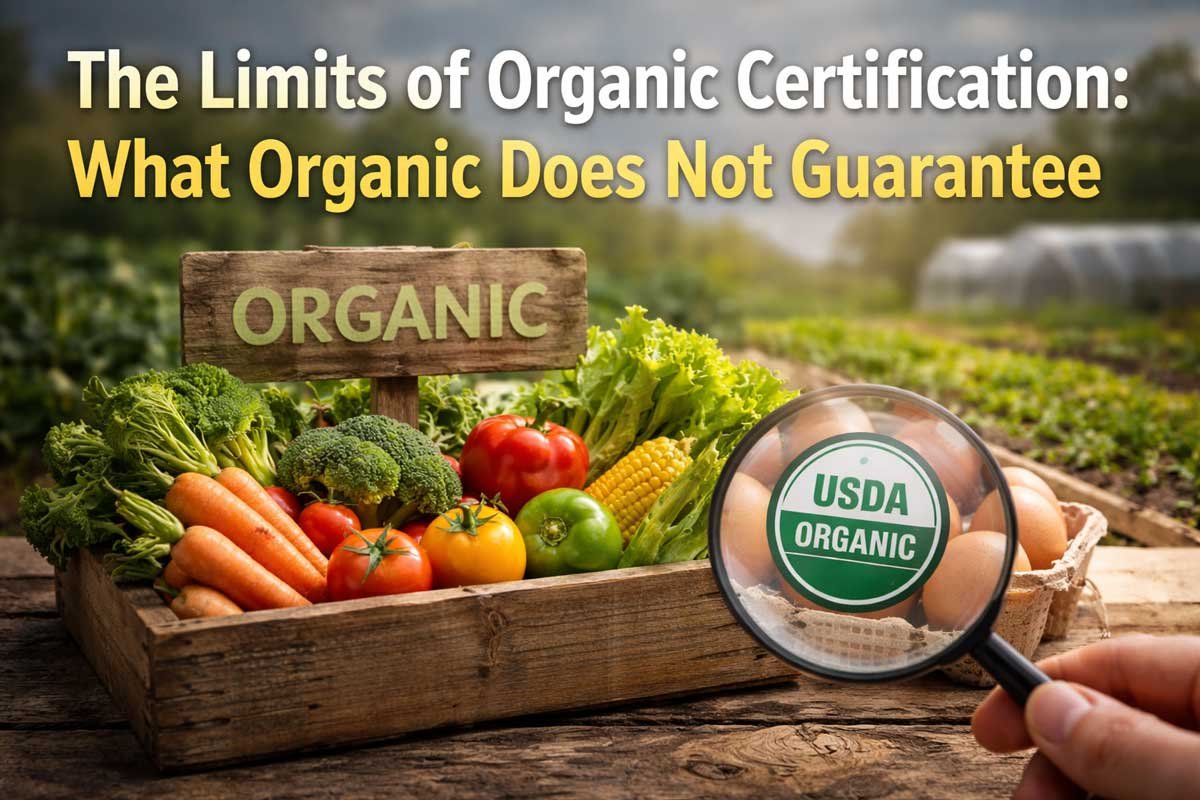
When “Organic” Isn’t the Whole Story
You walk down the aisle at your local market, and the bright green “organic” sticker on a bundle of herbs catches your eye. It feels reassuring, doesn’t it? Like someone somewhere took extra care to make sure that plant was grown with your health in mind. But the truth is, that label doesn’t tell the whole story. Organic certification is often treated as a stamp of absolute safety, a guarantee that what you’re putting in your body is free from risk, pure, and superior to conventional alternatives. In reality, the picture is far more complex.
Organic certification is a measure of how a plant was cultivated. It tells you that certain synthetic chemicals, pesticides, and fertilizers were avoided, and that specific farming practices were followed. It doesn’t, however, tell you about everything that could affect the final product once it leaves the field. Microbes, environmental contaminants, mishandling during storage, or even accidental misidentification of plant species—these are all factors that organic standards do not automatically control.
Table of Contents

Take, for example, a bunch of organic basil. It may have been grown without synthetic pesticides and harvested at the peak of freshness, but if the irrigation water was contaminated with bacteria, or the leaves were stored in a humid environment, mold could develop before it reaches your kitchen. Organic certification doesn’t guarantee protection against these post-harvest risks. For consumers, the disconnect between perception and reality can be misleading. You might assume that organic herbs are inherently safer, more potent, or free of any contaminants, when in fact they are simply produced under a certain set of guidelines.

There’s also a misconception about chemical residues. Many people believe organic herbs are entirely free of chemicals, but that isn’t always accurate. Organic farms can still be exposed to pesticides and pollutants drifting in from neighboring conventional farms, air or water pollution, and naturally occurring heavy metals in the soil. Lead, arsenic, and cadmium can accumulate in plant tissue, and organic standards do not specifically address these environmental contaminants. Even though organic protocols restrict synthetic inputs, they cannot fully shield plants from everything in their surroundings.
Then there’s the question of consistency. Organic certification is not a universal standard—it varies by country and certifying body. USDA Organic in the United States emphasizes specific agricultural practices, while the European Union’s organic label has its own criteria and enforcement mechanisms. In some countries, audits and inspections are frequent and rigorous; in others, they are more sporadic. The result is that an “organic” herb in one region might meet a different set of standards than the same label in another. For someone trying to rely on that label for quality assurance, this variation can be confusing and sometimes risky.
The label also does not speak to the potential for adulteration. Organic herbs are often more expensive, creating an incentive for suppliers to cut corners. Substituting cheaper plant material or blending different species can happen even under organic certification, because the auditing process focuses primarily on cultivation methods, not every step of processing or the authenticity of every batch. If you buy an organic chamomile tea, for instance, it may contain other flowers that were not intended, or even misidentified species, which can alter both flavor and potential effects.
One of the more subtle issues is microbial contamination. Organic standards encourage the use of natural fertilizers like composted manure, which adds nutrients to the soil but also introduces bacteria if not properly handled. Even after harvesting, herbs go through drying, storage, and packaging, and each of these steps presents opportunities for contamination. Yeasts, molds, and pathogenic bacteria like Salmonella or E. coli can thrive if conditions aren’t strictly controlled. Conventional herb production also faces these risks, but the assumption that organic equals safer is simply not supported by evidence.
People often cite taste or perceived health benefits as reasons to choose organic. There’s research suggesting that certain nutrients may be slightly higher in organic produce, but these differences are minor and context-dependent. Organic certification is about process, not performance. You might enjoy the aroma of an organic rosemary bundle, but that does not necessarily indicate superior potency or better health outcomes. Thinking otherwise can create false security and lead to overlooking other important safety measures.
It’s not all bad news. Organic farming has significant environmental and ecological benefits. It promotes soil health, biodiversity, and reduced synthetic chemical usage, which is crucial for long-term sustainability. The issue arises when consumers conflate these environmental gains with personal safety. An organic label is an assurance of cultivation philosophy, not a guarantee that what lands on your kitchen counter is free from contaminants, consistently potent, or completely authentic.
To really understand the limits of organic certification, it helps to think about the full journey of an herb. From seed selection to soil conditions, harvesting methods, water quality, drying processes, storage, and shipping—each stage introduces variables that certification may not fully address. A field grown according to organic standards could still yield herbs that are contaminated, degraded, or substituted if any of these steps falter. Organic certification is a snapshot of farming practice, not a comprehensive quality certificate.
This isn’t meant to make you distrust organic herbs entirely. Rather, it’s a reminder to approach the label critically. Look beyond the sticker and consider the source, handling practices, and available quality assurances. Ask questions about testing for microbial contamination or heavy metals, and seek brands that are transparent about their supply chain. Organic certification is an important indicator, but it should be just one part of a more comprehensive evaluation of safety and quality.
In short, “organic” is not synonymous with flawless. It’s a useful framework for understanding agricultural methods and avoiding certain synthetic chemicals, but it does not encompass every factor that affects safety, authenticity, and quality. Recognizing this distinction allows you to enjoy the benefits of organic herbs while remaining vigilant about the risks the label does not address. By approaching organic certification with curiosity and discernment rather than blind trust, you can make choices that are both informed and practical, maximizing the benefits of your herbs without falling into common misconceptions.
Understanding the Scope and Limits of Organic Certification
Organic certification feels like a promise. It suggests a product is grown carefully, with respect for nature, and free from synthetic pesticides or fertilizers. But beneath that promise lies a complex system of standards, inspections, and gaps. Understanding what organic certification actually covers—and what it doesn’t—helps you see the limits of the label. Many people assume it guarantees safety, purity, and even medicinal quality. The reality is far more nuanced.
Organic certification is primarily about farming practices, not the final product’s safety, chemical content, or authenticity. It sets rules for soil management, prohibited inputs, and processing, but it does not oversee every stage of production. It doesn’t automatically ensure that herbs are free from microbes, heavy metals, or accidental adulteration. While the label offers assurance that certain standards were met in cultivation, it should not be interpreted as a complete quality guarantee.
Certification Criteria and Gaps
Organic certification typically includes a core set of requirements, which often cover:
- Prohibition of synthetic chemicals: Farmers must avoid most synthetic pesticides, herbicides, and fertilizers. Only approved natural inputs are allowed.
- Soil management practices: Crop rotation, composting, cover crops, and minimal soil disturbance are encouraged to maintain soil fertility.
- Animal welfare and organic feed standards (where relevant): For integrated farming, livestock must meet specific living and feeding criteria.
- Processing limitations: Certain synthetic additives, irradiation, or chemical treatments are not allowed in processing organic products.
These standards are valuable—they ensure a level of environmental responsibility and reduce exposure to certain artificial chemicals. However, there are significant gaps. Organic certification usually does not regulate:
- Microbial contamination: Natural fertilizers like manure can introduce bacteria and fungi. Drying, storage, and packaging are not tightly controlled for pathogens unless extra testing is performed.
- Environmental toxins: Heavy metals such as lead, cadmium, or arsenic can accumulate in herbs from soil or water. Organic certification does not systematically monitor these contaminants.
- Authenticity and adulteration: Certification audits focus on processes, not on verifying the exact plant species in every batch. Cheaper herbs or substitute species may slip through without being detected.
These gaps illustrate that organic certification is primarily about how the plant was grown, not about what ends up in your cup or medicine cabinet. A product can meet all organic criteria yet still carry microbial contamination, environmental toxins, or misidentified herbs.
Variations Across Regions
One challenge with organic certification is that it is not a universal standard. Each country or certifying body sets its own rules and enforcement mechanisms. For example:
- United States (USDA Organic): Emphasizes prohibited synthetic inputs, soil fertility management, and regular inspections. Certain fertilizers and pesticides derived from natural sources are allowed.
- European Union (EU Organic): Has similar goals but slightly different rules for inputs, processing, and labeling.
- Other regions: Standards vary widely. Some countries have robust, well-enforced certification systems, while others rely on self-reporting and occasional inspections.
Because of these differences, an herb labeled as “organic” in one country may not meet the same safety or quality criteria in another. For international imports, the variability can be significant. A consumer buying imported organic herbs has to trust that the foreign certification body enforces standards as rigorously as local ones.
Even within the same certification system, inspection frequency and enforcement quality vary. Some farms undergo multiple audits each year, while others might have a single inspection. Third-party certifiers differ in strictness and testing requirements. This means that “organic” is not a uniform mark of safety or purity—it’s a measure of compliance with a specific set of practices, which can differ in stringency from farm to farm.
Misconceptions About Safety
Many consumers assume that “organic” equals “safe.” This is a misconception with potentially real consequences. Organic certification reduces exposure to synthetic pesticides, but it does not eliminate all risks.
Microbial risks: Organic herbs often use composted manure, which can introduce bacteria like E. coli or Salmonella. These pathogens can survive if drying or storage is inadequate. Even rigorous composting practices do not guarantee sterility, and contamination during handling or transportation can occur after harvest.
Chemical risks: Organic plants can still accumulate heavy metals, nitrates, or other environmental pollutants. These substances come from soil, irrigation water, or nearby industrial activity. Certification focuses on farming inputs, not environmental absorption, so the presence of these compounds may go unchecked.
Adulteration and mislabeling: The assumption that organic herbs are automatically authentic is flawed. Substitution with cheaper species or blending with other plants can happen, particularly with high-demand or rare herbs. Certification audits often do not include routine DNA testing or chemical profiling to detect these substitutions.
Perceived health benefits: Another common belief is that organic herbs are inherently more potent or nutritious. Evidence shows only minor differences in nutrient content compared to conventional herbs, and results vary based on species, growing conditions, and harvest time. The organic label reflects process, not measurable superiority in safety or therapeutic potential.
In practice, this means that organic certification should be seen as one piece of the puzzle. It is useful for confirming adherence to environmentally conscious farming methods and certain prohibited inputs, but it cannot be relied upon as a comprehensive marker of quality, safety, or effectiveness. Thinking of it as a complete guarantee is misleading and can result in overlooked risks.
By understanding these limits, consumers can approach organic herbs more critically. Asking about source transparency, testing for contaminants, and storage conditions becomes just as important as trusting the label. Brands that provide lab reports, independent testing results, or detailed supply chain information offer stronger assurances of actual product quality. Meanwhile, being aware of regional differences in standards can help consumers make informed decisions, especially when buying imported herbs.
Ultimately, organic certification is a standard for cultivation practices, not a guarantee of safety or authenticity. Recognizing this distinction allows you to enjoy the benefits of organic herbs without overestimating the protection the label provides. It encourages active engagement with suppliers, attention to storage and handling, and consideration of additional quality checks. In other words, the organic sticker is a starting point, not a finish line.
Hidden Risks in Organic Herbs
Organic certification is a powerful tool for promoting sustainable agriculture and reducing synthetic chemical exposure, but it is not a shield against all hazards. Even the most carefully grown organic herbs can carry risks that certification alone cannot control. Microbial contamination, environmental toxins, and adulteration remain significant concerns. Recognizing these hidden risks helps consumers make informed choices and treat the organic label as part of a broader evaluation of quality and safety.
Microbial Contamination
Microbial contamination is one of the most common risks associated with organic herbs. Unlike conventional farming, which often uses synthetic pesticides with antibacterial or antifungal properties, organic cultivation relies on natural fertilizers such as composted manure. While composting is intended to neutralize pathogens, it is not foolproof. If the composting process is insufficient, bacteria such as Salmonella, E. coli, or Listeria can persist and contaminate the herbs.
Even properly composted soil cannot prevent contamination entirely. Water used for irrigation may carry microbes, particularly if sourced from surface water or untreated reservoirs. During harvesting, workers’ hands, tools, and drying surfaces can introduce additional pathogens. The risk continues through storage and transportation. Herbs stored in humid conditions or inadequate packaging are prone to mold growth, even if they were initially free of microbial contamination.
Consider a batch of organic parsley harvested in the summer. It may be vibrant, fragrant, and certified organic, but if the drying barn is poorly ventilated, spores from Aspergillus or Penicillium species can colonize the leaves. Consumers may not notice discoloration or smell, yet exposure to these molds can trigger allergic reactions or gastrointestinal upset. Studies show that a significant proportion of commercially available organic herbs test positive for microbial contamination, highlighting the limits of certification as a guarantee of sterility.
Chemical and Environmental Contaminants
Organic farming prohibits most synthetic fertilizers and pesticides, but it cannot fully protect plants from environmental contaminants. Herbs absorb nutrients and minerals from the soil, but they also take in heavy metals and other chemicals present in their surroundings. Lead, arsenic, and cadmium, for example, are naturally occurring in certain soils but can also accumulate from industrial pollution or contaminated irrigation water.
Even rainwater and airborne particles carry contaminants from nearby conventional farms, factories, or roadways. These substances are not always monitored in organic certification. The result is that an organic herb can meet all cultivation standards but still contain measurable levels of heavy metals or environmental toxins. For example, organic peppermint grown near a roadway may absorb small amounts of airborne pollutants, or organic turmeric may contain arsenic from naturally occurring soil deposits.
Another chemical consideration is naturally occurring plant toxins. Some herbs produce secondary metabolites as defense mechanisms. Organic certification does not regulate these compounds, which may vary based on soil stress, climate, or harvest time. While generally harmless in moderation, variations in concentration can influence flavor, aroma, or, in rare cases, adverse reactions in sensitive individuals.
The combination of environmental toxins and natural plant chemicals illustrates that organic certification addresses cultivation methods but not comprehensive chemical safety. Consumers seeking assurance of purity and low toxicity need to consider additional safeguards, such as independent lab testing or sourcing from farms that provide contaminant reports.
Adulteration and Substitution
Adulteration is another hidden risk in organic herbs. Organic products often command higher prices, creating incentives for suppliers to cut costs or increase profits through substitution or blending. Certification audits primarily verify that farming practices meet organic standards—they rarely confirm that every batch contains the exact species claimed on the label.
For example, a bag of organic ginseng might be partially substituted with cheaper, similar-looking roots from another species. Chamomile flowers may be blended with other herbs that look similar but are not true chamomile. Such substitutions may affect flavor, potency, and safety. While these practices are often economically motivated, they can have unintended consequences for consumers relying on herbal products for culinary, wellness, or lifestyle purposes.
Mislabeling can also occur during international supply chains. Imported organic herbs pass through multiple handling stages, from local farms to processors to distributors, and each step presents opportunities for error. Even honest mistakes in sorting, drying, or packaging can lead to mixed or misidentified herbs. Since organic certification focuses on farming practices rather than end-product verification, these errors may not be detected before the herbs reach the market.
Adulteration isn’t always malicious. Sometimes it occurs due to lack of expertise or misidentification in the field. Wildcrafted herbs are particularly vulnerable because species can be visually similar, and harvesting may happen under time constraints. However, whether intentional or accidental, the result is that organic certification does not guarantee authenticity.
Combining microbial contamination, chemical absorption, and adulteration illustrates the multidimensional risks that organic certification cannot fully control. Even herbs grown with the best intentions and certified under rigorous standards can carry unseen hazards. Consumers who understand these risks are better positioned to choose products that balance the benefits of organic farming with the practical need for safety and quality.
Practical steps can mitigate these risks. Selecting brands with transparent sourcing, independent testing for microbial and chemical contaminants, and clear storage guidelines reduces the likelihood of exposure to hidden hazards. Observing herb freshness, aroma, and appearance can also provide clues about potential contamination. While these measures don’t eliminate risk entirely, they complement the protection offered by organic certification and enhance consumer confidence.
Organic herbs are not inherently risk-free. Microbes, environmental chemicals, and substitution can all compromise safety and quality. Certification provides valuable guidance on cultivation methods, but it is only one part of a comprehensive approach to choosing and using herbs responsibly. Understanding these hidden risks empowers consumers to engage critically with labels, seek additional assurances, and enjoy the benefits of organic herbs with a clear-eyed perspective.
Practical Steps for Ensuring Quality
Understanding the hidden risks in organic herbs is one thing; knowing how to navigate them is another. While organic certification provides a framework for responsible farming, it cannot guarantee safety, authenticity, or optimal quality. The good news is that there are concrete steps consumers can take to reduce risk and make informed choices. From researching sources to considering supplementary testing, each action adds an extra layer of assurance beyond the label.
Research the Source
The first step in ensuring quality is knowing exactly where your herbs come from. Transparency in sourcing is a hallmark of reputable brands. Farms that openly share information about their growing practices, harvest dates, and environmental conditions demonstrate a higher commitment to quality than those that only display a certification sticker.
For instance, an organic basil supplier that provides detailed insights into soil testing, irrigation methods, and harvest timing allows consumers to make better-informed decisions. Knowing the region of cultivation also matters. Herbs grown in areas with low industrial pollution and minimal chemical runoff are less likely to carry heavy metals or environmental contaminants.
In addition, some brands conduct independent third-party testing for microbial contamination, pesticides, and heavy metals. These results, often available as certificates of analysis, provide tangible evidence that the product has been evaluated beyond the scope of organic certification. Consumers can request these reports or look for suppliers that publish them online. By prioritizing transparency and verifiable data, you reduce the likelihood of purchasing herbs with hidden risks.
Inspect Packaging and Storage
Even high-quality organic herbs can degrade if stored improperly. Proper packaging and storage are critical for maintaining safety, flavor, and potency. Hermetically sealed containers, moisture-resistant bags, and dark packaging help protect herbs from light, humidity, and air exposure—all of which can accelerate microbial growth or reduce aromatic compounds.
When purchasing organic herbs, check packaging for expiration dates, integrity of seals, and signs of damage. Loose or torn packaging can expose herbs to contaminants during transportation or on store shelves. Some herbs, like fresh mint or cilantro, are particularly sensitive to moisture. Even if the farm followed impeccable organic practices, poor storage at any point in the supply chain can introduce mold or bacterial contamination.
Home storage is just as important. Keeping herbs in a cool, dry place away from sunlight and moisture preserves both quality and safety. Airtight jars or vacuum-sealed containers extend shelf life, and using herbs within recommended timeframes prevents deterioration. Simple habits like these amplify the protections already offered by organic certification, reducing the likelihood of consuming contaminated or degraded products.
Consider Supplementary Testing
For consumers who use herbs regularly or for specific culinary or wellness purposes, supplementary testing adds another layer of security. Independent laboratory tests can identify microbial contamination, heavy metals, pesticide residues, and adulteration that certification does not cover.
Testing is particularly relevant for products prone to contamination or those sourced from regions with less stringent enforcement of organic standards. For example, an imported organic turmeric powder may comply with cultivation rules but still carry traces of arsenic or lead if the soil is contaminated. Lab analysis can confirm safety and ensure that the product matches its label claims.
Some consumers also test herbs for authenticity, using chemical profiling or DNA barcoding to verify species identity. While these methods are more specialized, they provide reassurance against substitution or blending with cheaper plants. By investing in supplementary testing—or choosing suppliers that provide verified results—you gain concrete evidence that your herbs meet higher standards than certification alone can guarantee.
Diversify Your Sources
Relying on a single supplier or brand for organic herbs carries its own risks. Farms differ in soil quality, management practices, and post-harvest handling. Even with certification, one batch of herbs may be fresher, cleaner, or more potent than another. Diversifying your sources spreads risk and allows you to observe patterns in quality.
For example, purchasing organic oregano from multiple reputable farms enables you to compare aroma, flavor, and texture across batches. You may notice that some suppliers consistently deliver fresher, more vibrant herbs, while others occasionally include older, less aromatic leaves. This empirical approach complements certifications and lab tests, providing a practical way to assess quality firsthand.
Diversification also offers resilience against supply chain disruptions. If one farm experiences contamination, crop failure, or logistical issues, having alternative sources ensures continued access to high-quality herbs. This strategy mirrors the practices of chefs, herbalists, and experienced consumers who recognize that no single label, however prestigious, can guarantee perfection every time.
Beyond the Label: Making Informed Choices
Organic certification is valuable, but it is not a magic guarantee. The truth is, the label tells only part of the story. It assures you that certain farming practices were followed, that synthetic pesticides were avoided, and that minimal processing standards were applied. But it does not guarantee absolute safety, purity, or even that the herb you buy is exactly what the label claims. Understanding this distinction is crucial for anyone who wants to use organic herbs wisely and safely.
The first step in making informed choices is awareness. Recognize that the word “organic” does not automatically mean risk-free. Herbs can carry microbial contamination, absorb environmental toxins, or be subject to substitution despite certification. Treat the label as a starting point, not a final verdict. By doing so, you position yourself to make decisions based on facts, rather than assumptions or marketing impressions.
One practical approach is to look at the brand’s transparency. Suppliers who provide detailed sourcing information, harvest data, and independent testing results show a higher commitment to quality than those that rely solely on a sticker. Transparency allows you to verify claims and assess the likelihood of contamination or adulteration. Some brands even disclose their post-harvest handling procedures, including drying, storage, and packaging methods. When a supplier is open about these steps, you gain confidence that they take quality seriously at every stage of production.
Storage and handling are equally important. Even the best organic herb can deteriorate if exposed to humidity, heat, or light. Pay attention to packaging, expiration dates, and storage instructions. Airtight, light-resistant containers and a cool, dry storage environment preserve flavor, aroma, and potency while minimizing microbial growth. Simple habits, like shaking out dried herbs periodically to check for moisture or using vacuum-sealed storage for larger quantities, can make a noticeable difference in quality over time.
Testing beyond certification is another layer of protection. Independent laboratory testing for microbial contaminants, heavy metals, and species authenticity adds verification that certification alone cannot provide. While not all consumers will choose to send herbs for lab analysis, selecting suppliers who voluntarily conduct and publish such testing can significantly reduce risk. These tests confirm that the product is both safe and true to its label, giving you peace of mind that goes beyond process-based certification.
Another key principle is diversifying your sources. Relying on a single supplier may expose you to inconsistencies in quality, handling, or contamination. Purchasing from multiple trusted farms or brands allows you to compare freshness, aroma, and flavor across batches. You might find that one supplier consistently produces vibrant, clean herbs, while another occasionally delivers less optimal quality. This firsthand observation complements certification and testing, giving you practical insight into the reliability of your sources.
In addition to these practical steps, it helps to maintain realistic expectations about organic herbs. Certification ensures certain standards, but it does not promise perfection. Herbs are living products, influenced by soil, weather, harvesting, and storage conditions. A perfectly aromatic, visually flawless bunch is not guaranteed just because it bears the organic label. By approaching herbs with curiosity and discernment, you are better equipped to appreciate their benefits without falling into the trap of assuming that “organic” equates to flawless or superior safety.
Knowledge is your best tool. Learn about the types of contaminants, the natural characteristics of the herbs you use, and the regional differences in organic standards. Being informed allows you to ask the right questions, choose suppliers wisely, and recognize quality when you see it. For example, understanding that organic parsley is susceptible to mold if stored in humid conditions encourages you to inspect leaves carefully before purchase and to store them properly at home. Similarly, knowing that some herbs accumulate heavy metals from soil motivates you to select suppliers that test for these contaminants.
Finally, integrating all these strategies together creates a layered approach that maximizes safety and quality. Think of organic certification as the foundation: it establishes a baseline of responsible farming. On top of that, transparency, storage diligence, supplementary testing, diversification, and informed observation form a protective structure around your choices. No single factor guarantees perfection, but together they create a practical, evidence-based method for navigating the complexities of organic herbs.
The broader lesson is that being an informed consumer requires active engagement. Accept that labels have limits, ask questions about sourcing and testing, and observe your herbs carefully. Over time, you develop a sense of which suppliers consistently deliver quality products, how to store herbs to maintain freshness, and how to identify subtle signs of contamination or deterioration. This approach empowers you to enjoy the benefits of organic herbs while minimizing exposure to hidden risks.
In essence, making informed choices means thinking critically rather than trusting blindly. Organic certification is valuable, but it is only one piece of a larger puzzle. By combining awareness, practical safeguards, and a willingness to engage with the supply chain, you turn the act of purchasing herbs into a deliberate, informed process. You move from passive consumer to active participant, capable of making choices that reflect both the ethical and practical benefits of organic farming, while also safeguarding your own well-being.
Ultimately, the best decisions come from a balance of trust and verification. Trust in the principles of organic cultivation, but verify with observation, testing, and careful sourcing. Pay attention to handling and storage, diversify your suppliers, and maintain realistic expectations about what certification does and does not guarantee. With this mindset, you can enjoy organic herbs with confidence, appreciating their flavor, aroma, and contribution to your kitchen or wellness routine—without overestimating what the label promises.
By going beyond the label, you embrace a thoughtful, informed approach that respects the complexity of both farming and nature. Organic certification provides a framework, but it is your vigilance, curiosity, and critical thinking that ultimately ensure the quality, safety, and authenticity of the herbs you bring home.
Best-selling Organic Products


Article Sources
At AncientHerbsWisdom, our content relies on reputable sources, including peer-reviewed studies, to substantiate the information presented in our articles. Our primary objective is to ensure our content is thoroughly fact-checked, maintaining a commitment to accuracy, reliability, and trustworthiness.
- Sangiovanni, E., Brivio, P., Dell’Agli, M., & Calabrese, F. (2017). Botanicals as modulators of neuroplasticity: Focus on BDNF. Neural Plasticity, 2017, 5965371. https://doi.org/10.1155/2017/5965371
- Smith-Spangler, C., Brandeau, M. L., Hunter, G. E., Bavinger, J. C., Pearson, M., Eschbach, P. J., … & Bravata, D. M. (2012). Are organic foods safer or healthier than conventional alternatives?: A systematic review. Annals of Internal Medicine, 157(5), 348–366. https://doi.org/10.7326/0003-4819-157-5-201209040-00007
- Van Raamsdonk, L. W. D., & Slob, W. (2017). Safety assessment of herbal medicinal products: Current perspectives. Expert Opinion on Drug Safety, 16(1), 59–68. https://doi.org/10.1080/14740338.2017.1250281
- World Health Organization. (2020). WHO guidelines for assessing quality of herbal medicines with reference to contaminants and residues. https://www.who.int/publications/i/item/9789241515352
- Leifert, C., & Waites, W. (2009). Organic food and global food safety. Current Opinion in Clinical Nutrition and Metabolic Care, 12(6), 614–621. https://doi.org/10.1097/MCO.0b013e3283321f1f
- European Commission. (2022). Organic farming in the EU – Facts and figures. https://agriculture.ec.europa.eu/farming/organic-farming_en
- Food and Agriculture Organization of the United Nations. (2021). The state of the world’s biodiversity for food and agriculture. https://www.fao.org/state-of-biodiversity-for-food-agriculture/en/

- Phosphatidic Acid: Supporting Muscle Growth and Strength - July 31, 2026
- Ceramides: Supporting Healthy Skin From Within - July 31, 2026
- Synbiotics: Combining Prebiotics and Probiotics Together - July 31, 2026