
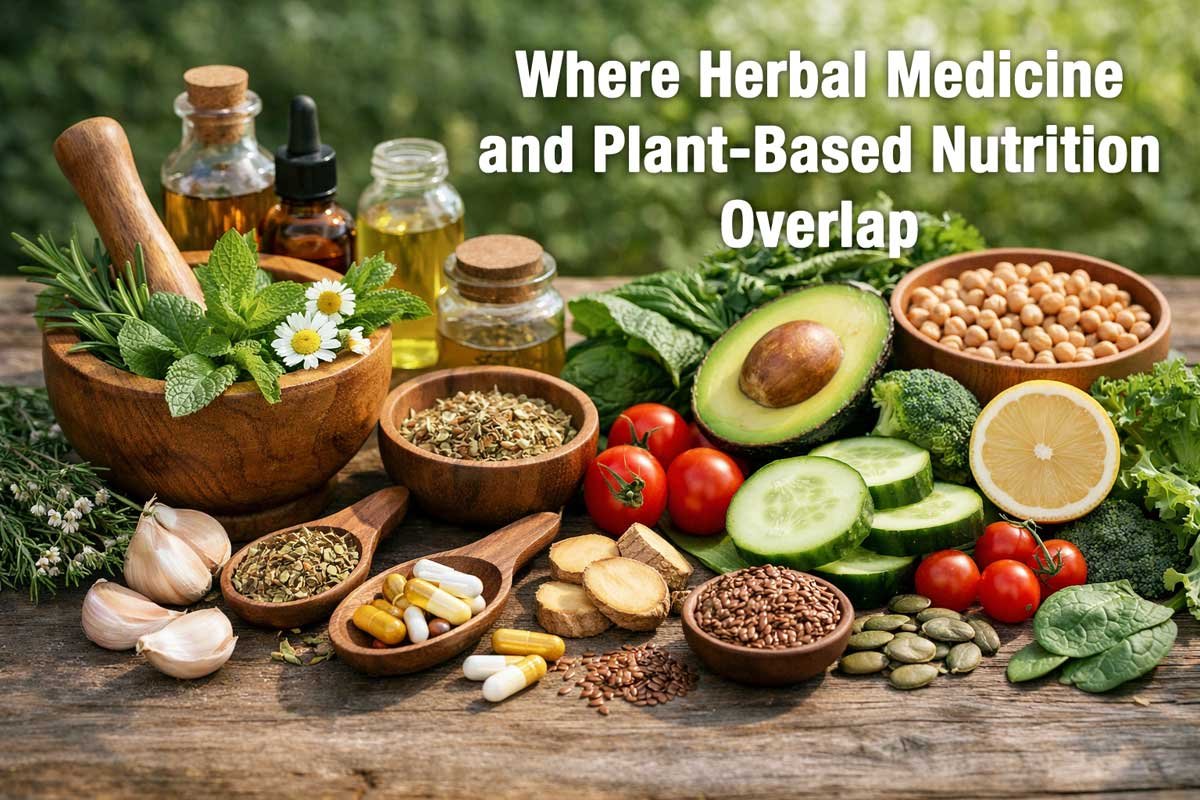
Where Food and Medicine Start Sharing the Same Roots
There was a time when nobody argued about whether something was food or medicine. It was just a plant. You ate it because it grew near you, because your body seemed to like it, because your grandmother said it mattered. Long before supplements, nutrition labels, or wellness trends, people practiced what we now call plant-based nutrition without a name for it. Eating and healing were part of the same daily rhythm. The modern split between diet and herbal medicine is a relatively recent invention, shaped by industrial food systems and pharmaceutical thinking, not by how humans actually lived.
If you step back and look at traditional food cultures, the overlap becomes obvious. Roots, leaves, seeds, and berries were chosen not only for calories, but for how they made people feel over time. Bitter greens showed up after heavy seasons. Aromatic herbs followed periods of illness. Fermented plants supported digestion long before anyone talked about gut health. This was not theory. It was observation repeated across generations. Plant-based nutrition grew out of lived experience, not ideology.
Table of Contents


Herbal medicine developed alongside this same logic. Many of the plants now labeled as medicinal were once common foods. Garlic, ginger, turmeric, fennel, cinnamon, coriander. These were not rare remedies locked in apothecaries. They were daily ingredients. Their benefits came from steady, repeated exposure, not isolated doses. The idea that healing plants must be taken separately from meals would have sounded strange in most historical contexts.

Vegan eating, when practiced with awareness, naturally pulls you back toward this older understanding. Removing animal products forces a deeper relationship with plants. You start noticing textures, flavors, and how different foods affect your energy, digestion, and mood. Over time, you realize that plant-based nutrition is not just about replacing meat with alternatives. It is about rebuilding a conversation with plants as living systems that interact with your body.
Modern nutritional science is slowly catching up to what traditional cultures already knew. Research on polyphenols, flavonoids, carotenoids, glucosinolates, and other phytochemicals confirms that plants influence inflammation, oxidative balance, metabolic signaling, and microbial diversity. These compounds do not behave like isolated drugs. They work subtly, cumulatively, and contextually. That is exactly how traditional herbal medicine has always described them.
The trouble starts when we try to separate these effects too cleanly. Food becomes fuel. Herbs become treatment. Supplements promise shortcuts. In reality, plants do not respect those categories. A bowl of lentils seasoned with cumin and garlic does not stop being therapeutic just because it is dinner. A cup of nettle tea does not stop being nourishment because it is called an herb. Plant-based nutrition lives in this gray space, where eating well supports the body long before anything feels broken.
One reason this overlap feels confusing today is that industrial food stripped plants of their original complexity. Highly processed vegan products can technically fit a plant-based label while offering very little of what traditional diets valued. Fiber drops. Phytochemical diversity disappears. The sensory relationship with food flattens. Herbal medicine then appears as something separate, almost corrective, instead of a continuation of eating well.
Traditional diets avoided this split by default. Meals were built around whole plants prepared in ways that improved digestibility and absorption. Soaking, fermenting, slow cooking, and combining ingredients thoughtfully were common practices. These methods enhanced mineral availability, reduced antinutrients, and supported gut function. They also preserved the subtle compounds that modern processing often destroys. Plant-based nutrition in this context was inherently functional, even if no one used that term.
Cultural examples are everywhere once you start looking. Mediterranean meals centered on olive oil, bitter greens, legumes, and aromatic herbs. East Asian diets relied heavily on sea vegetables, fermented soy, medicinal mushrooms, and warming spices. Ayurvedic food traditions classified ingredients by energetic effects, digestive strength, and seasonal suitability. None of these systems separated herbal medicine from the kitchen. The kitchen was the medicine cabinet.
Vegan diets today can reconnect with this lineage or drift far from it. When food choices focus only on macronutrients or ethical checklists, something gets lost. When they focus on variety, plant diversity, and preparation, the old wisdom reappears naturally. You begin to see how certain foods support digestion, others calm the nervous system, others sustain energy without spikes. This awareness is not mystical. It is experiential and repeatable.
Another forgotten piece is dosage through habit. Herbal medicine often gets framed as short-term intervention. Take this plant for that issue. Traditional food cultures worked differently. Small amounts of supportive plants appeared daily. Over weeks and months, their effects accumulated gently. Plant-based nutrition mirrors this pattern when meals are built around diverse whole plants rather than rotating the same few ingredients.
This perspective also softens the anxiety around doing everything perfectly. There is no single superfood, no exact formula. Health emerged from consistency, diversity, and relationship. Eating seasonally mattered because plants available at different times supported different physiological needs. Bitter spring greens supported elimination. Cooling summer fruits balanced heat. Dense autumn roots prepared the body for scarcity. Herbal medicine followed the same seasonal logic.
In modern vegan living, this can translate into simple shifts. Paying attention to what grows locally. Rotating greens instead of defaulting to spinach every day. Using culinary herbs generously instead of treating them as garnish. These choices align with both herbal tradition and plant-based nutrition without requiring dogma or complexity.
The biggest takeaway from looking at shared roots is humility. Humans did not invent these systems through intellectual design. They observed, adapted, and passed down what worked. The body responded to plants long before we understood receptors or enzymes. Scientific language now helps explain mechanisms, but it does not replace the value of lived patterns that endured for centuries.
When food and medicine share the same roots, eating becomes less about restriction and more about participation. You are not chasing outcomes. You are engaging with plants as allies. Vegan living then feels less like a stance and more like a return to something familiar. Plant-based nutrition stops being a trend and starts feeling like a quiet remembering of how nourishment and care were always meant to overlap.
Food as the First Form of Herbal Medicine
Before food became something engineered, fortified, or stripped down to numbers, it was trusted because it worked. People noticed patterns. Certain meals restored strength after illness. Certain plants eased digestion or helped the body adapt to cold, heat, or physical labor. This was not formal herbal medicine as we think of it today. It was daily life guided by observation. Plant-based nutrition did not emerge as a philosophy. It emerged as a survival skill.
When you look closely at traditional diets, you see intention everywhere. Not rigid rules, but habits shaped by long-term feedback from the body. What grew nearby was eaten often. What caused discomfort slowly disappeared from the table. What supported energy, digestion, and resilience became a staple. Over time, food itself became the first and most reliable form of herbal medicine.
Traditional diets built around medicinal plants
Across cultures, staple foods were rarely neutral. They carried functional value beyond basic nourishment. Legumes, grains, roots, leafy greens, and wild plants were chosen not only because they were available, but because they sustained people through physical stress, seasonal scarcity, and environmental challenges. This is where plant-based nutrition quietly took shape, long before the term existed.
Take legumes as an example. Beans and lentils were central to diets in regions where meat was scarce or used sparingly. They provided protein, fiber, and minerals, but also supported stable energy and digestive regularity. Preparation mattered. Soaking, fermenting, and slow cooking were common, not because of culinary fashion, but because people noticed these methods reduced discomfort and improved tolerance.
Wild greens offer another clear case. Many traditional diets relied on bitter leaves that modern palates often reject. Dandelion, chicory, nettle, purslane. These plants were not eaten accidentally. Their bitterness was associated with digestive support and seasonal cleansing. In early spring, when stored foods dominated and physical movement slowed, these greens rebalanced the diet naturally.
Grains, often criticized today, played a different role historically. Whole grains prepared through soaking or fermentation behaved very differently in the body than refined flours. Sourdough bread, fermented porridges, and slow cooked grains were easier to digest and more nourishing. They supported the gut environment rather than overwhelming it. Again, this aligns closely with both herbal thinking and plant-based nutrition when practiced traditionally.
In many cultures, the line between food and remedy barely existed. A thick vegetable stew during winter was not just warming. It was restorative. A simple rice congee with ginger after illness was not just gentle. It was intentional. These meals were repeated because they helped people recover, not because someone published a guideline.
Culinary herbs with documented physiological effects
Culinary herbs sit at the most obvious intersection of food and herbal medicine. They are used in small amounts, often daily, and chosen as much for effect as for flavor. Garlic, onion, ginger, turmeric, rosemary, thyme, basil. These are not exotic remedies. They are kitchen staples that quietly shape how the body responds to food.
Garlic is a classic example. It appears in traditional diets across continents, not because people agreed on its chemistry, but because it supported vitality and preservation. It flavored food, aided digestion, and extended shelf life. Modern research later confirmed what tradition already knew, but the habit existed first.
Ginger followed similar logic. It warmed meals, improved tolerance of heavy foods, and helped people feel steady after eating. In many cultures, ginger tea or ginger-infused dishes appeared during times of weakness or digestive upset. No prescription required. Just familiarity with how the plant behaved in the body.
Turmeric tells another story. Used daily in small amounts, often combined with fats and spices that enhanced its use, it became part of the dietary fabric rather than a targeted intervention. This is important. Traditional systems did not isolate compounds. They embedded plants within meals where absorption and synergy occurred naturally. Plant-based nutrition still benefits from this approach when herbs are used as ingredients rather than extracts.
Aromatic herbs like rosemary, sage, and thyme were not added randomly. They supported digestion of dense foods and added antimicrobial properties to meals prepared without refrigeration. Flavor was functional. Pleasure and practicality were not separate goals.
This daily, low-dose exposure is often overlooked today. Herbal medicine gets framed as something you take when something goes wrong. Traditional diets worked preventively, gently influencing physiology through repetition. Culinary herbs were not powerful because of intensity. They were powerful because of consistency.
The blurred line between nourishment and therapeutic use
Trying to draw a clean boundary between nourishment and therapy is a modern habit. Traditional cultures did not need it. Food that made you feel better was both. This is where plant-based nutrition feels most natural when it is not forced into categories.
A bowl of lentils with cumin and coriander nourishes, but it also reduces digestive strain. A plate of steamed greens with lemon and olive oil feeds the body, but also supports bile flow and mineral balance. These effects are not dramatic. They are cumulative. Over time, they shape baseline health.
The same plant could shift roles depending on context. Cinnamon might flavor a dessert or help preserve fruit. Fennel could appear in a savory dish or as a simple tea after meals. The plant did not change. The intention did. This flexibility kept food from becoming rigid and medicine from becoming intimidating.
Modern vegan diets sometimes lose this nuance. Food becomes optimized for macros. Herbs become supplements. The conversation between the two breaks down. When that happens, plant-based nutrition can feel incomplete, even if it checks all the ethical boxes.
The blurred line matters because it reflects how the body actually works. Systems respond to patterns, not isolated events. Digestion, metabolism, immune balance, and energy regulation are shaped by daily inputs. Food as herbal medicine works precisely because it is ordinary.
There is also a psychological layer here. When nourishment and care come from familiar foods, people engage more consistently. There is less pressure, less fear of doing something wrong. You eat. You pay attention. You adjust. This approach has sustained cultures for centuries without burnout.
Another overlooked aspect is diversity. Herbal traditions valued variety. Eating the same thing every day was rare. Different plants brought different effects, textures, and seasonal benefits. Plant-based nutrition thrives under the same principle. Diversity supports resilience. Monotony undermines it.
This is not about turning every meal into a treatment plan. It is about restoring trust in plants as partners rather than tools. When food is seen as the first layer of herbal medicine, the need for extreme interventions often decreases. Not because nothing ever goes wrong, but because the baseline is stronger.
The overlap also encourages patience. Traditional diets did not promise quick fixes. They worked slowly, quietly, and reliably. That rhythm feels unfamiliar today, but it is deeply human. Vegan living grounded in this mindset feels less performative and more lived-in.
Ultimately, food became herbal medicine because it had to. People depended on plants for survival, nourishment, and recovery. They paid attention because the feedback was immediate and personal. Plant-based nutrition reconnects with that reality when it moves beyond trends and returns to habit, observation, and respect for how plants interact with the body over time.
The kitchen was the first clinic. The table was the first place where health was built. That truth has not changed, even if the language around it has.
Plant-Based Nutrition Through an Herbal Lens
At some point, nutrition and herbal medicine started speaking different dialects. Nutrition talked about calories, macros, and recommended intakes. Herbal medicine talked about actions, energetics, and patterns. For a long time, these languages seemed incompatible. When you step back, they describe the same thing from different angles. Plant-based nutrition becomes far more coherent when you let herbal thinking back into the conversation.
An herbal lens does not reject science. It reframes it. Instead of asking what a single nutrient does in isolation, it asks how a whole plant behaves in the body over time. It values complexity, interaction, and context. That approach aligns closely with what modern research now shows about plant compounds and human physiology.
Phytochemicals as the common language
Phytochemicals sit at the center of this overlap. They are the non-nutrient compounds plants produce to protect themselves, communicate, and adapt to their environment. Polyphenols, flavonoids, carotenoids, glucosinolates, terpenes. Thousands of them. Nutrition science once dismissed them as irrelevant because they did not fit into the vitamin or mineral categories. Herbal traditions never ignored them because their effects were felt long before they were named.
From an herbal perspective, phytochemicals explain why two foods with similar macronutrient profiles can feel completely different in the body. A bowl of refined grains and a bowl of intact whole grains may deliver similar calories, but their phytochemical content tells a different story. One feeds quickly and disappears. The other engages digestion, microbiota, and metabolic signaling in a slower, more sustained way. Plant-based nutrition lives or dies by this difference.
These compounds influence inflammation, oxidative balance, vascular function, and microbial diversity. They rarely act alone. They work in networks. This mirrors how herbal medicine describes plant action. No single compound does all the work. The plant expresses an overall effect shaped by many constituents acting together.
An important detail often missed is that phytochemicals evolved alongside humans eating plants. Our physiology responds to them because it has always been exposed to them. When plant-based nutrition emphasizes whole foods rich in these compounds, it taps into an ancient biological relationship rather than forcing a new one.
This also explains why variety matters so much. Different plants express different phytochemical profiles based on species, soil, climate, and maturity. Eating a wide range of plants expands the chemical conversation between diet and body. Herbal traditions instinctively valued this diversity. Modern nutrition confirms its importance, even if it struggles to quantify it cleanly.
Whole plants versus isolated compounds
The temptation to isolate is strong. Once a beneficial compound is identified, the next step often involves extracting it, concentrating it, and selling it separately. This approach makes sense in certain contexts, but it misses something fundamental about how plants work.
Whole plants behave differently than isolated compounds. Fiber, fats, proteins, and phytochemicals interact during digestion. Absorption slows. Metabolic responses smooth out. Microbial fermentation changes how compounds are processed and utilized. When you strip a plant down to one molecule, you lose these interactions.
Herbal medicine has long warned against assuming that more concentration equals better effect. Traditional practitioners observed that whole plant preparations were often better tolerated and more reliable over time. Modern research supports this idea through the concept of synergy. Compounds can enhance each other’s availability, stability, and biological activity.
Plant-based nutrition benefits from this understanding. A diet built around intact foods consistently outperforms one that relies heavily on fortified products and isolates. This does not mean isolates have no place. It means they are tools, not foundations.
Consider the difference between eating a handful of berries and consuming a capsule of a single extracted compound from those berries. The former delivers fiber, water, sugars, acids, and a complex phytochemical matrix. The latter delivers a narrow signal. The body responds differently to each.
Vegan diets sometimes drift toward isolation without realizing it. Protein powders, refined oils, and engineered meat alternatives can crowd out whole foods if convenience drives every choice. An herbal lens brings balance back by asking a simple question. Is this food still behaving like a plant?
Whole plants also encourage sensory engagement. Chewing, aroma, texture, and flavor all play roles in digestion and satisfaction. These cues help regulate intake naturally. Herbal traditions paid close attention to these sensory aspects because they signaled how a plant would act in the body. Plant-based nutrition regains depth when it respects these signals instead of overriding them.
Why preparation methods matter for absorption
How a plant is prepared often matters as much as which plant is chosen. This is where herbal knowledge and traditional cooking techniques align almost perfectly. Raw is not automatically better. Cooked is not automatically inferior. The body responds to preparation, not ideology.
Many plants contain compounds that limit mineral absorption or irritate digestion when eaten improperly. Traditional diets addressed this through soaking, fermenting, cooking, and combining foods thoughtfully. These methods reduced antinutrients, improved bioavailability, and made nutrients more accessible.
Take legumes and grains again. Soaking and fermenting activate enzymes that break down phytates, improving mineral absorption. Slow cooking softens fibers, making digestion easier while preserving many beneficial compounds. These practices were developed through trial and error, not lab analysis.
Herbal medicine uses similar logic. Teas extract water-soluble compounds. Decoctions pull out tougher constituents. Oils capture fat-soluble components. Tinctures preserve a broader spectrum. Each method changes how the plant interacts with the body. Cooking does the same thing within plant-based nutrition.
Fats play a crucial role here. Many phytochemicals are fat-soluble. Traditional diets often paired plants with oils, seeds, or nuts without needing to justify it. Drizzling olive oil over greens, cooking spices in oil, fermenting foods with natural fats. These choices improved absorption long before the mechanisms were understood.
Another overlooked factor is mechanical breakdown. Chopping, grinding, and chewing affect how compounds are released. A whole seed passes through differently than a ground one. Herbal preparations accounted for this. So should plant-based eating.
Modern vegan cooking sometimes ignores these principles in favor of speed or trends. Smoothies replace chewing. Ultra-raw diets bypass traditional preparation. Highly refined foods skip structure entirely. An herbal lens invites a return to methods that respect how the body actually processes plants.
Seasonality also plays a role in preparation. Heavier cooking in colder months, lighter preparation in warmer ones. This pattern supported digestion and metabolic balance across the year. Plant-based nutrition feels more intuitive when it follows similar rhythms instead of chasing uniformity.
Viewing plant-based nutrition through an herbal lens does not require memorizing compounds or protocols. It asks for attention. How does this plant feel when eaten this way. How does preparation change the experience. Over time, patterns emerge.
This approach restores trust in plants as complex allies rather than collections of nutrients. It bridges the gap between science and tradition without forcing either to dominate. When nutrition listens to herbal wisdom and herbalism respects nutritional insight, the result feels grounded, flexible, and deeply human.
Vegan Living at the Crossroads of Diet and Herbal Practice
Vegan living tends to sharpen awareness. When animal products drop away, plants stop being side dishes and start carrying the full weight of nourishment. That shift changes how people relate to food. Meals become more deliberate. Ingredients get more attention. Over time, many people notice something subtle but important. The more intentional plant-based nutrition becomes, the more it starts to resemble gentle herbal practice woven into daily life.
This is not about turning meals into prescriptions. It is about recognizing that plants already influence the body in quiet, repeatable ways. When vegan eating leans into that reality, food stops feeling like a checklist and starts acting like a form of daily care.
Everyday foods are used intentionally as gentle remedies
In a thoughtful vegan kitchen, everyday foods do quiet work. Not dramatic. Not urgent. Just consistent. Oats in the morning because they feel grounding. Bitter greens before heavier meals because digestion flows better afterward. Soups built around roots and legumes when energy feels low. These choices are rarely framed as herbal medicine, but functionally, that is exactly what they are.
Plant-based nutrition supports this approach because it relies on repetition rather than intervention. Eating lentils regularly does something different than taking them once. Using spices daily changes digestion in ways that supplements rarely replicate. The effect comes from habit, not intensity.
Take simple examples. Adding ginger to meals in colder months because it feels warming. Using fennel or cumin after cooking legumes because the body responds more comfortably. Choosing fermented foods because digestion feels steadier afterward. None of this requires belief. It requires paying attention.
Vegan living encourages this attentiveness because plant foods are diverse in texture, flavor, and effect. You begin to notice how certain meals feel heavy while others leave you clear and energized. Over time, preferences shift. Foods that support well-being get repeated naturally. Foods that disrupt balance quietly fade out.
This is how traditional herbal knowledge survived for centuries. Not through books, but through lived feedback loops. Vegan diets that honor this process tend to feel less rigid and more sustainable. Plant-based nutrition becomes less about rules and more about listening.
Another important aspect is scale. Gentle remedies work because they are not overwhelming. A clove of garlic in a meal is not a dose. It is a nudge. Over weeks and months, these nudges add up. Herbal medicine traditionally valued this long view. Vegan eating aligns with it naturally when meals are built from whole plants rather than shortcuts.
Cultural examples of food herb overlap
Across cultures, vegan or plant-heavy diets developed alongside herbal thinking without needing labels. The overlap was practical, not philosophical. People ate what worked.
In Mediterranean regions, meals centered on legumes, wild greens, olive oil, and herbs. Bitter leaves balanced richer foods. Aromatic herbs supported digestion. Meals were simple, seasonal, and repetitive in a way that supported long-term resilience. This pattern fits squarely within both herbal tradition and modern plant-based nutrition.
In many East Asian food cultures, the line between food and herbal practice barely existed. Sea vegetables appeared regularly, not as supplements but as staples. Fermented soy products supported digestion and nutrient absorption. Medicinal mushrooms entered soups rather than capsules. Food was chosen based on how it interacted with the body, not just taste.
South Asian traditions offer another example. Meals relied heavily on legumes, rice, vegetables, and spices used deliberately. Turmeric, cumin, coriander, ginger, and mustard seed were not optional flavorings. They shaped how meals were tolerated and absorbed. Vegan dishes were common by necessity, not ideology. Herbal logic lived in the spice blend.
Even colder climates developed plant-centered strategies. Root vegetables, fermented cabbage, soaked grains, and preserved herbs supported people through long winters. These foods were not chosen randomly. They sustained energy, digestion, and mood when fresh produce was scarce. Plant-based nutrition in these contexts was adaptive and deeply practical.
What all these examples share is restraint. No single food carried unrealistic expectations. Health emerged from patterns, not hacks. Herbal medicine did not sit on a shelf. It lived in the pot, the bowl, the daily routine.
Modern vegan living often draws inspiration from these traditions without realizing how integrated they were. Reconnecting with that integration helps avoid extremes. It grounds plant-based nutrition in cultural memory rather than internet trends.
Practical ways to integrate herbal thinking into meals
Bringing herbal awareness into vegan eating does not require studying materia medica or memorizing properties. It starts with a few practical shifts that fit naturally into daily life.
First, prioritize diversity over perfection. Eating a wide range of plants across the week matters more than optimizing individual meals. Different leaves, roots, seeds, and spices bring different effects. Herbal traditions always emphasized variety because the body thrives on complexity. Plant-based nutrition works the same way.
Second, cook with intention rather than rules. Notice how preparation changes how food feels. Some days call for raw salads. Other days call for warm, cooked meals. Pay attention to how your digestion responds. Adjust without guilt. Herbal thinking values responsiveness over consistency for its own sake.
Third, use culinary herbs generously and regularly. Treat them as functional ingredients, not decoration. Fresh herbs, dried spices, and aromatics all contribute subtle effects when used consistently. This approach aligns perfectly with vegan cooking and plant-based nutrition without adding complexity.
Fourth, respect traditional preparation methods. Soaking legumes. Fermenting vegetables. Cooking grains properly. Pairing fats with vegetables. These practices improve absorption and tolerance. They also reconnect modern vegan diets with the wisdom that shaped plant-based eating historically.
Fifth, observe patterns over time rather than reacting to single meals. Herbal practice looks at trends, not moments. If certain foods consistently support energy and digestion, keep them. If others repeatedly cause discomfort, adjust preparation or frequency. Plant-based nutrition becomes intuitive when guided by lived experience rather than abstract rules.
Another practical shift involves seasonality. Eating lighter in warmer months and more grounding foods in colder ones supports digestion naturally. This rhythm appears in nearly every traditional food culture. Vegan living becomes easier when it follows these cycles instead of resisting them.
Finally, simplify expectations. Food does not need to fix everything. When meals support the body consistently, extremes become unnecessary. Herbal medicine traditionally complemented daily habits rather than replacing them. Plant-based nutrition thrives under the same principle.
Vegan living at this crossroads feels less like a lifestyle statement and more like a relationship with plants. Food becomes familiar again. Herbs lose their mystique and regain their place in the kitchen. Health emerges quietly through repetition, attention, and respect for how plants and bodies interact over time.
When diet and herbal practice meet this way, vegan eating stops being about absence and starts being about presence. Presence at the table. Presence in the body. Presence in the choices made day after day. That is where plant-based nutrition feels most alive, grounded, and sustainable.
When Eating Well Becomes a Form of Self Care
At a certain point, eating well stops feeling like a strategy and starts feeling like maintenance. Not optimization. Not control. Just care. This is where plant-based nutrition quietly shifts from something you do to something that supports you without constant effort. The body settles. Decisions simplify. Food becomes less charged and more grounding.
Self-care gets marketed as something extra. A ritual layered on top of an already busy life. In reality, the most effective forms of care are usually embedded in what you already do every day. Eating is one of those anchors. When plant-based nutrition is approached through lived experience rather than rules, it becomes one of the most reliable ways to support yourself without adding complexity.
This kind of care is not loud. It does not announce itself with dramatic results. It shows up as steadier energy, fewer digestive surprises, a calmer relationship with hunger, and a sense that your body is not constantly asking for correction. You stop chasing fixes because fewer things feel broken.
One reason this happens is that plant-based eating encourages consistency. Meals built around whole plants tend to digest more predictably. Blood sugar swings soften. Satiety cues become clearer. Over time, the nervous system responds to that predictability. The body relaxes because it is not constantly adapting to extremes.
Herbal traditions have always emphasized this baseline support. The goal was not to intervene aggressively unless necessary. It was to keep the system resilient enough that major interventions were rare. Plant-based nutrition naturally aligns with that philosophy when it focuses on patterns instead of performance.
There is also something emotionally stabilizing about meals that feel familiar and supportive. Vegan living often leads people back to simple foods eaten repeatedly with small variations. A pot of lentils prepared a few different ways. Seasonal vegetables rotated gently. Grains cooked well and paired thoughtfully. This repetition builds trust. The body learns what to expect. That trust is a form of self-care rarely talked about.
Modern food culture tends to frame eating as a problem to solve. Too much of this. Not enough of that. Constant adjustment. That mindset keeps the body in a state of low-grade vigilance. Plant-based nutrition practiced with an herbal sensibility does the opposite. It reduces friction. You eat foods that consistently work for you. You stop negotiating with every meal.
Another shift happens around hunger. When meals are built from whole plants with fiber, water, and intact structure, hunger signals tend to normalize. You get hungry. You eat. You feel satisfied. This sounds obvious, but it is not the norm for many people coming from highly processed diets. That normalization is deeply supportive. It removes mental noise around food.
Self-care also lives in how food makes you feel afterward. Heavy, sluggish meals demand recovery. Lighter, well-prepared plant-based meals often leave you functional rather than depleted. That difference compounds over time. When meals do not require recovery, energy becomes available for other parts of life.
There is a quiet confidence that develops when you know your meals generally support you. You stop second-guessing every choice. You stop fearing the consequences of eating. That confidence is not rigid. It is flexible because it is built on experience rather than theory. Plant-based nutrition becomes something you trust because it has shown up for you consistently.
Another important layer is the sensory experience of eating. Whole plant foods invite engagement. Texture, aroma, temperature, color. These cues help regulate appetite and satisfaction. Herbal traditions valued these sensory aspects because they signaled how a food would interact with the body. Modern self-care conversations often skip this entirely.
When you slow down enough to notice how food smells while cooking or how it feels while chewing, meals become grounding moments rather than tasks. This is not mindfulness as performance. It is attention as a byproduct of eating real food. Vegan meals prepared from scratch tend to encourage this naturally.
There is also relief in letting go of extremes. Plant-based nutrition does not require moral perfection to be supportive. Meals do not need to be flawless. They need to be consistent and nourishing most of the time. Herbal thinking has always allowed for this flexibility. The body responds to trends, not exceptions.
Self-care here looks like choosing foods that leave you steady instead of stimulated. It looks like favoring meals that support digestion instead of testing it. It looks like recognizing when simplicity works better than variety and when variety is exactly what you need.
Another understated benefit is how this approach affects decision fatigue. When you know which foods generally support you, choices narrow naturally. Shopping becomes easier. Cooking becomes more intuitive. Mental energy is freed up. That reduction in friction is a form of care that extends far beyond the kitchen.
Vegan living sometimes gets framed as restrictive from the outside. From the inside, when done well, it often feels the opposite. The removal of animal products creates space for deeper engagement with plants. That engagement leads to familiarity. Familiarity leads to ease. Ease is a cornerstone of sustainable self-care.
Plant-based nutrition also invites a longer view of health. Instead of reacting to every fluctuation, you start noticing patterns across weeks and months. Energy levels. Digestion. Mood. Sleep. This perspective reduces anxiety around normal variation. You stop interpreting every off day as failure.
Herbal traditions emphasized this long view because bodies are dynamic. Plant-based eating supports it because it tends to be gentler on systems over time. When care is embedded in daily habits, there is less need for constant correction.
Another shift happens around control. Many people come to food looking for certainty. Exact amounts. Exact outcomes. Plant-based nutrition practiced with an herbal mindset offers something different. It offers adaptability. You adjust meals based on season, appetite, and circumstance. This flexibility is supportive rather than destabilizing.
Self-care here is not about doing more. It is about doing fewer things consistently. Cooking familiar meals. Eating foods that feel good. Using herbs and spices because they belong there, not because they promise something dramatic. Letting the body do what it is designed to do when supported.
Over time, eating well stops being something you think about constantly. It becomes background support. Like sleep. Like hydration. That is often the clearest sign that plant-based nutrition has integrated into life rather than sitting on top of it.
When eating reaches that point, it no longer feels like self-improvement. It feels like self-respect. You are not fixing yourself. You are maintaining a relationship with your body that is cooperative rather than adversarial.
That is where self-care becomes real. Not in grand gestures, but in meals that quietly support you day after day. When food does its job well, it does not ask for attention. It simply allows you to get on with your life feeling a little steadier, a little more at ease, and a lot less at war with your plate.
Best-selling Plant-Based Products


Article Sources
At AncientHerbsWisdom, our content relies on reputable sources, including peer-reviewed studies, to substantiate the information presented in our articles. Our primary objective is to ensure our content is thoroughly fact-checked, maintaining a commitment to accuracy, reliability, and trustworthiness.
- Craig, W. J., & Mangels, A. R. (2009). Position of the American Dietetic Association: Vegetarian diets. Journal of the American Dietetic Association, 109(7), 1266–1282. https://doi.org/10.1016/j.jada.2009.05.027
- Satija, A., Bhupathiraju, S. N., Spiegelman, D., Chiuve, S. E., Manson, J. E., Willett, W., Rexrode, K. M., Rimm, E. B., & Hu, F. B. (2016). Healthful and unhealthful plant-based diets and the risk of coronary heart disease in U.S. adults. Journal of the American College of Cardiology, 70(4), 411–422. https://doi.org/10.1016/j.jacc.2017.05.047
- Liu, R. H. (2013). Health-promoting components of fruits and vegetables in the diet. Advances in Nutrition, 4(3), 384S–392S. https://doi.org/10.3945/an.112.003517
- Jacobs, D. R., & Tapsell, L. C. (2007). Food, not nutrients, is the fundamental unit in nutrition. Nutrition Reviews, 65(10), 439–450. https://doi.org/10.1111/j.1753-4887.2007.tb00269.x
- World Health Organization. (2003). Diet, nutrition and the prevention of chronic diseases. WHO Technical Report Series 916. https://apps.who.int/iris/handle/10665/42665
- Petrovska, B. B. (2012). Historical review of medicinal plants’ usage. Pharmacognosy Reviews, 6(11), 1–5. https://doi.org/10.4103/0973-7847.95849
- Tapsell, L. C., Hemphill, I., Cobiac, L., Sullivan, D. R., Fenech, M., Patch, C. S., Roodenrys, S., Keogh, J. B., Clifton, P. M., Williams, P. G., Fazio, V. A., & Inge, K. E. (2006). Health benefits of herbs and spices: The past, the present, the future. Medical Journal of Australia, 185(S4), S4–S24. https://www.mja.com.au/journal/2006/185/4/health-benefits-herbs-and-spices-past-present-future
- Gibson, G. R., Hutkins, R., Sanders, M. E., Prescott, S. L., Reimer, R. A., Salminen, S. J., Scott, K., Stanton, C., Swanson, K. S., Cani, P. D., Verbeke, K., & Reid, G. (2017). Expert consensus document: The International Scientific Association for Probiotics and Prebiotics consensus statement on the definition and scope of prebiotics. Nature Reviews Gastroenterology & Hepatology, 14(8), 491–502. https://doi.org/10.1038/nrgastro.2017.75
- Manach, C., Scalbert, A., Morand, C., Rémésy, C., & Jiménez, L. (2004). Polyphenols: Food sources and bioavailability. The American Journal of Clinical Nutrition, 79(5), 727–747. https://doi.org/10.1093/ajcn/79.5.727
- Tilburt, J. C., & Kaptchuk, T. J. (2008). Herbal medicine research and global health: An ethical analysis. Bulletin of the World Health Organization, 86(8), 594–599. https://doi.org/10.2471/BLT.07.042820

- Phosphatidic Acid: Supporting Muscle Growth and Strength - July 31, 2026
- Ceramides: Supporting Healthy Skin From Within - July 31, 2026
- Synbiotics: Combining Prebiotics and Probiotics Together - July 31, 2026