
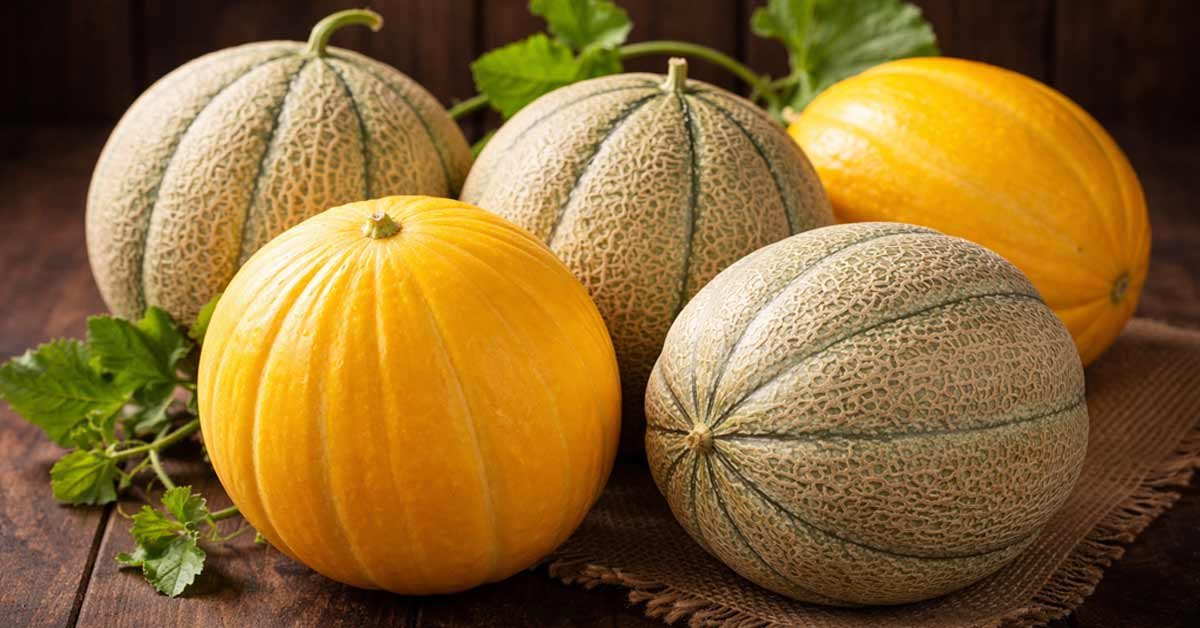
A Quiet Kind of Refreshment That Actually Works
There’s something almost forgettable about melon. It rarely gets the attention that berries or citrus pull in. No bold claims. No dramatic flavor punch. Just a soft sweetness, a clean bite, and a kind of refreshment that feels… easy. And maybe that’s exactly the point.
You don’t really think about hydration until you feel off. A bit sluggish. Slight headache. That dry, unfocused feeling that creeps in during the afternoon. Most people reach for coffee, maybe water if they remember. But food plays a role here that often gets ignored, and melon sits quietly at the center of that conversation.
Table of Contents


Honeydew, in particular, is over 85 to 90 percent water by weight, depending on ripeness and growing conditions. That number matters. If you eat a standard serving, around 150 grams, you are getting roughly 130 milliliters of water. You can verify that by simple conversion.
150 g × 0.87 water content ≈ 130.5 ml water
That’s not trivial. It’s the equivalent of a small glass of water, but it comes packaged with structure, flavor, and nutrients that plain water doesn’t offer.
And here’s where things get interesting. Hydration from food behaves slightly differently than hydration from liquids. It’s absorbed more gradually. It sticks with you longer. You don’t just drink it and lose it an hour later. The fiber and natural sugars in melon slow things down just enough to make the effect feel more stable.
Think about a hot afternoon. You slice into a chilled honeydew. The surface is slightly glossy. The texture is firm but yielding. That first bite feels cold, almost crisp, and the juice releases slowly rather than flooding your mouth all at once. It’s not overwhelming. It’s steady.
That steady release is part of why melon works so well in real life.
A lot of people underestimate how often mild dehydration shows up in subtle ways:
- Difficulty concentrating
- Low energy that doesn’t quite feel like fatigue
- Slight irritability
- Cravings that don’t match actual hunger
You might not connect these dots immediately. But when hydration improves, even slightly, those edges smooth out.
Melon fits here because it doesn’t ask much from you. No preparation beyond cutting. No strong taste to get used to. No heaviness after eating. You can have it in the morning, as a side at lunch, or straight from the fridge late at night when nothing else feels right.
And unlike many packaged snacks that pretend to refresh you, melon actually delivers on that feeling without complicating things. No added sugars. No processing. Just water held inside plant structure, along with small amounts of vitamins and minerals that support basic functions without turning it into a “superfood” narrative.
There’s also a behavioral angle that’s easy to miss. People tend to eat more of what feels effortless. Melon works because it lowers friction:
- It’s ready to eat once cut
- It doesn’t require pairing to be enjoyable
- It satisfies both thirst and mild hunger
That combination is rare.
You’ll notice something else if you pay attention. When melon becomes a regular part of your routine, you don’t feel dramatically different overnight. There’s no sudden shift. Instead, things feel slightly more stable. Energy doesn’t dip as sharply. Focus holds a bit longer. You’re less likely to reach for quick fixes that don’t really solve the underlying issue.
It’s subtle. But it adds up.
Honeydew also has a mild flavor profile that makes it adaptable. You can pair it with salty foods, blend it into smoothies, or just keep it simple. And because it’s not overly acidic or intense, it tends to sit well even when your appetite is low.
There’s a tendency to look for big solutions to small, recurring problems. More supplements. Stronger stimulants. Complex routines. But often, the things that actually move the needle are the ones that integrate quietly into your day.
Melon does exactly that.
It doesn’t try to impress you. It just works, consistently, in the background. And if you give it a bit of space in your routine, it earns that spot without much effort.
Why Melon Deserves a Spot in Your Daily Hydration
There’s a gap between knowing you should stay hydrated and actually doing it. Most people carry that intention around all day, then realize in the evening they barely drank anything. This is where melon quietly solves a problem without asking for discipline.
You’re not forcing yourself to drink more. You’re just eating something that naturally does part of the job.
And when you look at how hydration really works in the body, that shift matters more than it seems.
Water Content and What It Means in Real Life
Melon is mostly water. That’s not a marketing line. It’s measurable.
Honeydew typically contains around 87 to 90 percent water. If you take a common portion, about 1 cup or 170 grams, the math is simple:
170 g × 0.88 ≈ 150 ml of water
That’s a meaningful contribution, especially if you’re not consistently drinking fluids throughout the day.
Now compare that to how people actually behave. Many drink in bursts. A coffee in the morning. Maybe a glass of water with lunch. Then long gaps. The body doesn’t store hydration efficiently in those patterns. You absorb it, use what you need, and the rest is quickly excreted.
Melon changes the timing of that process.
Because it comes with fiber and natural sugars, the water is released more gradually during digestion. It’s not a flood. It’s a steady input. That slower release helps maintain hydration over a longer window instead of creating peaks and drops.
In practical terms, this means:
- You feel less sudden thirst
- Energy stays more even
- You’re less likely to overcompensate later with excessive drinking
There’s also a sensory component that’s hard to ignore. Cold melon feels more refreshing than room temperature water. That alone increases the likelihood you’ll reach for it again. Behavior follows experience more than intention.
And that’s where melon starts to stand out. It works with your habits, not against them.
Electrolytes and Subtle Mineral Support
Hydration is not just about water. Your body relies on electrolytes to move that water where it needs to go. Without them, fluid balance becomes inefficient.
Melon contributes small but useful amounts of key minerals, especially potassium.
A typical serving of honeydew, around 170 grams, provides roughly 300 to 400 milligrams of potassium. You can verify this against standard nutrition databases. The recommended daily intake for potassium is about 2600 mg for adult women and 3400 mg for adult men.
So one serving gives you around:
- 300 mg ÷ 2600 mg ≈ 11.5 percent
- 300 mg ÷ 3400 mg ≈ 8.8 percent
That’s not massive. But it’s not negligible either.
Potassium plays a role in:
- Fluid balance across cells
- Nerve signaling
- Muscle function
When you combine water with even moderate potassium intake, hydration becomes more effective. The body can actually retain and use that fluid instead of cycling it out quickly.
Melon also contains smaller amounts of magnesium and calcium. Again, not in high doses, but enough to support the overall electrolyte picture when combined with other foods.
What matters here is consistency. You’re not relying on one large intake. You’re layering small contributions throughout the day.
And because melon is easy to eat, that consistency tends to happen naturally.
When Hydration Foods Work Better Than Drinks
There’s a common assumption that drinking water is always the most efficient way to hydrate. In many cases, it is. But not always.
Hydration from food can outperform drinks in specific situations, especially when behavior and absorption are taken into account.
Here’s where melon fits particularly well:
- When you forget to drink regularly
- When plain water feels unappealing
- When you need something light that won’t weigh you down
- When appetite is low but hydration still matters
Food based hydration has a built in advantage. It slows intake. You chew, swallow, digest. That sequence spreads water absorption over time.
Compare that to drinking a large glass of water quickly. The body processes it fast. Some is used immediately, but a portion is excreted soon after. The net hydration effect is shorter lived.
Melon extends that curve.
There’s also a psychological factor. Eating feels more satisfying than drinking. Even if the hydration value is similar, the experience is different. That satisfaction can reduce unnecessary snacking later, which often happens when thirst is mistaken for hunger.
You’ll see this play out in simple scenarios. Someone reaches for a snack in the afternoon. They’re not truly hungry, just slightly dehydrated. If that snack is melon, it addresses both signals at once.
Another detail worth noticing is tolerance. Not everyone enjoys drinking large volumes of water, especially during busy periods. But most people can eat a bowl of chilled melon without resistance.
That difference changes outcomes over time.
Melon doesn’t replace water. It complements it. It fills the gaps where hydration habits usually break down. And because it does that quietly, without effort or resistance, it tends to stick.
That’s what makes it reliable. Not its nutrient profile alone, but how easily it becomes part of your actual day.
Honeydew and Vitamin C: More Than Just a Sweet Bite
Sweetness is usually what people notice first in melon. That light, clean flavor. Easy to eat, easy to like. But behind that, there’s a quieter nutritional layer that tends to get overlooked. Vitamin C sits right there.
Not in extreme amounts. Not enough to turn honeydew into a headline nutrient source. But enough to matter when you look at how people actually eat across a full day.
And that’s the context that makes melon more interesting than it first appears.
How Much Vitamin C You Actually Get
Let’s keep this grounded in numbers.
A standard serving of honeydew, about 1 cup or 170 grams, contains roughly 25 to 30 milligrams of vitamin C. Values vary slightly depending on ripeness and storage, but this is a consistent range across reliable nutrition databases.
Now compare that to daily requirements.
The recommended intake for vitamin C is:
- 75 mg per day for adult women
- 90 mg per day for adult men
So one serving of melon gives you approximately:
- 25 mg ÷ 75 mg = 33 percent
- 25 mg ÷ 90 mg = 27 percent
That’s a solid contribution from something most people treat as a side dish or a light snack.
If you eat two servings, which is not unusual given how easy melon is to consume, you’re already at:
- 50 mg ÷ 75 mg = 67 percent
- 50 mg ÷ 90 mg = 55 percent
No supplements. No effort. Just food that fits naturally into a meal or a break during the day.
There’s another detail that matters here. Vitamin C is water soluble. The body does not store it in large amounts. That means regular intake matters more than occasional high doses.
Melon supports that pattern. You’re more likely to eat it frequently because it doesn’t feel heavy or repetitive.
And that consistency tends to outperform intensity over time.
Vitamin C and Everyday Body Functions
Vitamin C often gets reduced to immune support. That’s the common association. But its role is broader and more structural than that.
It’s involved in processes you rely on every day, whether you notice them or not.
For example:
- Collagen production
This affects skin, connective tissue, and even how your body maintains structural integrity over time. It’s not about appearance alone. It’s about basic maintenance. - Antioxidant activity
Normal metabolism produces reactive molecules. Vitamin C helps neutralize some of these, contributing to overall cellular balance. - Iron absorption
When you eat plant based iron sources, vitamin C can enhance how much your body absorbs. This becomes relevant if your diet leans more toward grains, legumes, and vegetables. - Support for normal immune function
Not in a dramatic, instant way. More in the sense of maintaining baseline function.
What’s important is how these roles depend on steady availability. Not spikes.
You don’t feel vitamin C working. There’s no immediate feedback. But over time, insufficient intake can show up in subtle ways. Lower resilience. Slower recovery. General fatigue that doesn’t have a clear cause.
Melon fits into this by contributing regularly, without needing to be tracked or measured.
It becomes part of the background support system.
Pairing Honeydew for Better Nutrient Use
On its own, melon does a decent job. But pairing it thoughtfully can make it more effective without making things complicated.
Start with iron rich foods.
If you’re eating:
- Oats
- Nuts and seeds
- Leafy greens
- Legumes
Adding melon on the side can support iron absorption. The vitamin C content helps convert iron into a form that is easier for your body to use.
A simple example:
- A bowl of oatmeal with seeds and a side of honeydew
- A salad with spinach, chickpeas, and slices of melon
No need for precise timing. Just having them in the same meal is enough.
Another angle is combining melon with a small amount of fat or protein. Not because vitamin C needs it, but because it changes the overall eating experience.
Melon alone digests quickly. That’s part of its appeal. But if you want something more sustaining, pairing it can help balance things out.
You might try:
- Melon with yogurt
- Melon with a handful of nuts
- Melon alongside a simple protein source like cottage cheese
This doesn’t increase vitamin C absorption directly, but it stabilizes energy and reduces the chance of feeling hungry again too soon.
There’s also a practical detail that often gets ignored. Vitamin C is sensitive to storage conditions.
Exposure to air, light, and time can reduce its content. So how you handle melon matters if you care about maximizing what you get.
A few simple habits make a difference:
- Cut melon close to when you plan to eat it
- Store it in airtight containers in the fridge
- Avoid leaving it exposed for long periods
You don’t need perfection here. But small adjustments can preserve more of what’s already there.
And that’s really the pattern with melon overall. It doesn’t rely on extremes. It works through steady, repeatable habits.
You eat it because it’s refreshing. You keep eating it because it fits. And in the background, it contributes to hydration and vitamin C intake in a way that feels almost incidental.
That’s what makes it reliable. Not because it stands out, but because it stays consistent.
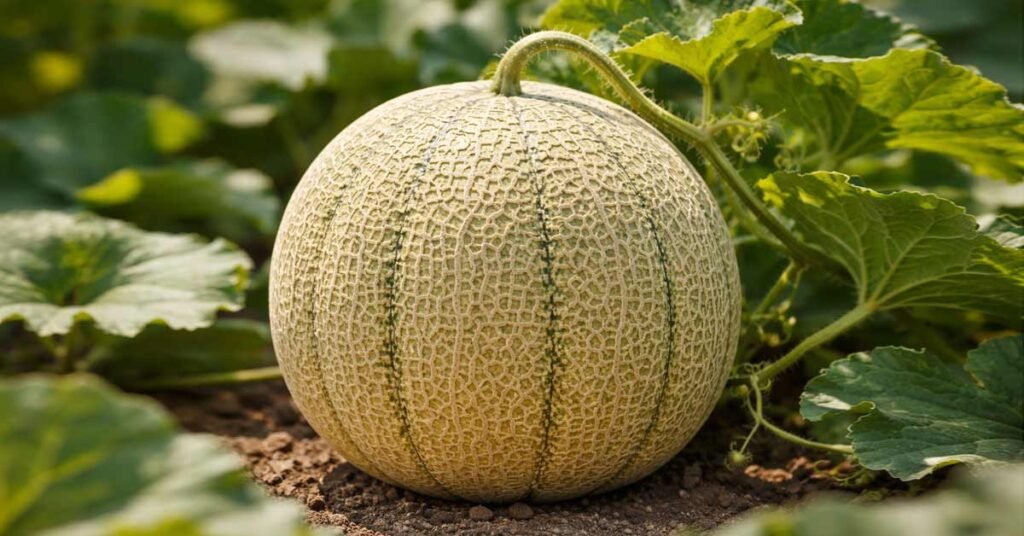
Making Melon a Habit Without Overthinking It
Most nutrition advice falls apart at the same point. It asks too much. Too many steps, too much planning, too much attention. Melon works in a different way. It slips into your routine without needing structure, and that’s exactly why it tends to stick.
You don’t need a system to eat melon. You just need it to be available at the right moment.
That’s the real shift. Not discipline. Positioning.
Fresh vs Pre Cut Honeydew: What Changes
There’s a practical trade off here, and it’s worth being honest about it.
Fresh whole melon gives you more control. Pre cut honeydew gives you convenience. Both work, but they’re not identical.
Start with fresh.
When you buy a whole melon and cut it yourself, you get:
- Maximum freshness
- Better texture
- Slightly higher retention of vitamin C
Vitamin C degrades over time when exposed to air. The process is gradual, not dramatic, but measurable. If you cut a melon and store it for two to three days, some loss happens. The exact percentage varies depending on temperature and exposure, but the direction is consistent.
Now compare that to pre cut melon from stores.
It’s usually processed, packaged, and stored before it reaches you. That adds time. And time means:
- More exposure to oxygen
- More light exposure
- More opportunity for nutrient loss
There’s also a texture difference. Pre cut honeydew often feels slightly softer, sometimes a bit watery. That changes the eating experience, even if the nutritional difference is moderate.
But here’s the part people often ignore. Convenience changes behavior.
If pre cut melon means you actually eat it, then it wins.
Because the alternative is often nothing at all.
So the better question is not which one is perfect. It’s which one you will consistently reach for.
A simple approach that works in real life:
- Use fresh melon when you have time to prep
- Keep pre cut melon as a backup for busy days
That way you don’t rely on ideal conditions to maintain the habit.
Simple Ways to Eat More Melon Without Effort
This is where melon stands out. It doesn’t need creativity to work. But a few small shifts can make it almost automatic.
Think in terms of placement, not recipes.
You’re more likely to eat what you see first.
Try this:
- Keep a container of cut melon at eye level in the fridge
- Place it at the front, not hidden behind other foods
- Use a clear container so it’s visible
That alone increases the chance you’ll grab it without thinking.
Then build simple associations.
Instead of asking when you should eat melon, attach it to things you already do:
- After you make coffee in the morning
- As a side with lunch
- Right after a workout
- In the evening when you usually look for something light
No planning required. Just pattern linking.
If you want a bit more variety without adding effort, use combinations that don’t require preparation:
- Melon with yogurt
- Melon with a handful of nuts
- Melon alongside a simple breakfast
- Melon as a quick afternoon reset
No measuring. No balancing macros. Just pairing based on what’s already there.
Another useful trick is portioning.
If you cut a whole melon into large chunks and leave it like that, you create friction. You need to go back, cut more, handle the knife again.
Instead:
- Cut it into bite sized cubes once
- Store it ready to eat
- Remove any extra steps between you and eating it
Small barriers matter more than people think.
And melon benefits from having almost none.
Storage, Ripeness, and Consistency That Sticks
Consistency depends on two things. Taste and availability.
If melon isn’t ripe, you won’t enjoy it. If it’s not available, you won’t eat it.
Start with ripeness.
A ripe honeydew usually has:
- A creamy yellow to pale golden rind
- A slightly soft feel at the blossom end
- A subtle sweet aroma
If it’s hard and green, it’s not ready. The flavor will be flat, and that experience can quietly discourage you from buying it again.
Once it’s ripe, timing matters.
Cut melon should be stored in the refrigerator, ideally in an airtight container. This slows down:
- Moisture loss
- Texture breakdown
- Vitamin C degradation
From a practical standpoint, most cut melon stays enjoyable for about 2 to 3 days. After that, the texture starts to decline, even if it’s still safe to eat.
So there’s a rhythm that works well:
- Buy one melon
- Cut it within a day or two
- Eat it over the next 2 to 3 days
Then repeat.
This creates a natural cycle without waste.
There’s also a temperature factor that affects how appealing melon feels.
Cold melon is more refreshing. That’s obvious when you think about it, but it has a real impact on behavior. You’re more likely to reach for something that feels immediately satisfying.
So keep it chilled.
Not just stored, but ready.
Over time, these small details shape the habit:
- Melon is visible
- Melon is ready
- Melon tastes good
That’s enough.
You don’t need more structure than that. And you don’t need to track anything.
The goal isn’t to optimize melon. It’s to remove the reasons you wouldn’t eat it.
Once those are gone, the habit builds on its own.
Best Selling Melon Related Products


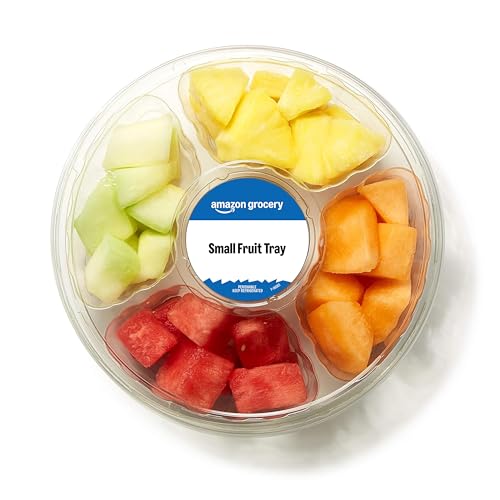


A Small Shift That Feels Bigger Than It Looks
There’s a tendency to look for changes that feel significant right away. Something you can notice within hours. More energy. Sharper focus. A clear before and after. Melon doesn’t work like that.
It’s quieter.
You add melon to your day, maybe without much intention at first. A bowl in the fridge. A few slices after lunch. Something cold and easy in the evening. And for a while, nothing feels dramatically different.
But give it a bit of time, and the pattern starts to show up in indirect ways.
You feel a little more steady.
Not energized in a sharp, artificial sense. Just more even. Fewer dips that push you toward quick fixes. Less of that low level drag that builds across the day.
Part of that comes back to hydration. Even mild dehydration can affect how you feel and function. Research shows that a body water loss of around 1 to 2 percent can begin to influence mood and cognitive performance. You don’t need to feel thirsty for that to happen. It can sit just below awareness.
Melon helps smooth that out.
If you’re eating two servings, around 300 grams total, and using an average water content of 88 percent, you’re getting:
300 g × 0.88 = 264 ml of water
That’s over a quarter of a liter, coming from food you’re likely to enjoy anyway.
Now layer in vitamin C.
Two servings of melon provide roughly 50 to 60 milligrams. Against daily reference values:
- 50 mg ÷ 75 mg ≈ 67 percent
- 50 mg ÷ 90 mg ≈ 55 percent
Again, not extreme. But consistent.
And consistency is what changes the baseline.
You’re not relying on one perfect meal or a sudden adjustment. You’re building a pattern where small inputs repeat day after day. Hydration improves slightly. Nutrient intake becomes more regular. The body responds to that stability, even if you don’t consciously track it.
There’s also a behavioral effect that tends to go unnoticed.
When melon becomes part of your routine, it often replaces something else. Not through restriction, just by proximity.
Instead of reaching for:
- Processed snacks that leave you unsatisfied
- Sugary options that spike and drop energy
- Random grazing that doesn’t address what you actually need
You reach for melon.
It’s already there. It feels right in the moment. And because it addresses both thirst and light hunger, it reduces the need to keep searching for something else.
That shift compounds.
Over a week, it’s a few better choices. Over a month, it’s a different pattern.
And importantly, it doesn’t feel forced.
Melon doesn’t ask you to commit to a strict plan. It doesn’t require tracking or measuring beyond what’s natural. You don’t need to think in terms of targets. You just need to keep it within reach.
That’s what makes it sustainable.
There’s also something worth saying about simplicity. The more complex a habit is, the more likely it is to break under pressure. Busy days, low energy, changing schedules. Complexity doesn’t survive those conditions very well.
Melon does.
It’s one step. Cut it. Eat it.
Or even zero steps, if it’s already prepared.
And that simplicity makes it resilient.
You don’t need motivation to follow through. You just need access.
Over time, this kind of habit does something subtle but important. It shifts your baseline expectations.
You get used to feeling slightly more hydrated. Slightly more balanced. Slightly more in control of your energy. And once that becomes normal, it’s easier to maintain, because it no longer feels like effort.
That’s where the real impact sits.
Not in a single serving. Not in a single day. But in the accumulation of small, repeatable actions that don’t demand attention.
Melon fits into that space naturally.
It’s not trying to be a solution to everything. It just does a few things well. Hydration. A steady contribution of vitamin C. Ease of use.
And when those pieces show up consistently, they start to matter more than they seem on paper.
Article Sources
At AncientHerbsWisdom, our content relies on reputable sources, including peer-reviewed studies, to substantiate the information presented in our articles. Our primary objective is to ensure our content is thoroughly fact-checked, maintaining a commitment to accuracy, reliability, and trustworthiness.
- U.S. Department of Agriculture, Agricultural Research Service. (2019). FoodData Central: Melons, honeydew, raw. https://fdc.nal.usda.gov/fdc-app.html#/food-details/169910/nutrients
- National Institutes of Health, Office of Dietary Supplements. (2022). Vitamin C Fact Sheet for Health Professionals. https://ods.od.nih.gov/factsheets/VitaminC-HealthProfessional/
- European Food Safety Authority. (2013). Scientific opinion on dietary reference values for vitamin C. EFSA Journal, 11(11), 3418. https://www.efsa.europa.eu/en/efsajournal/pub/3418
- World Health Organization. (2004). Vitamin and mineral requirements in human nutrition (2nd ed.). https://www.who.int/publications/i/item/9241546123
- Popkin, B. M., D’Anci, K. E., & Rosenberg, I. H. (2010). Water, hydration, and health. Nutrition Reviews, 68(8), 439–458. https://doi.org/10.1111/j.1753-4887.2010.00304.x
- Institute of Medicine. (2005). Dietary reference intakes for water, potassium, sodium, chloride, and sulfate. National Academies Press. https://nap.nationalacademies.org/catalog/10925/dietary-reference-intakes-for-water-potassium-sodium-chloride-and-sulfate
- Carr, A. C., & Maggini, S. (2017). Vitamin C and immune function. Nutrients, 9(11), 1211. https://doi.org/10.3390/nu9111211
- Hodges, R. E., Hood, J., Canham, J. E., Sauberlich, H. E., & Baker, E. M. (1971). Clinical manifestations of ascorbic acid deficiency in man. The American Journal of Clinical Nutrition, 24(4), 432–443. https://doi.org/10.1093/ajcn/24.4.432
- Lee, S. K., & Kader, A. A. (2000). Preharvest and postharvest factors influencing vitamin C content of horticultural crops. Postharvest Biology and Technology, 20(3), 207–220. https://doi.org/10.1016/S0925-5214(00)00133-2
- Armstrong, L. E., Ganio, M. S., Casa, D. J., Lee, E. C., McDermott, B. P., Klau, J. F., Jimenez, L., Le Bellego, L., Chevillotte, E., & Lieberman, H. R. (2012). Mild dehydration affects mood in healthy young women. The Journal of Nutrition, 142(2), 382–388. https://doi.org/10.3945/jn.111.142000

- Phosphatidic Acid: Supporting Muscle Growth and Strength - July 31, 2026
- Ceramides: Supporting Healthy Skin From Within - July 31, 2026
- Synbiotics: Combining Prebiotics and Probiotics Together - July 31, 2026