
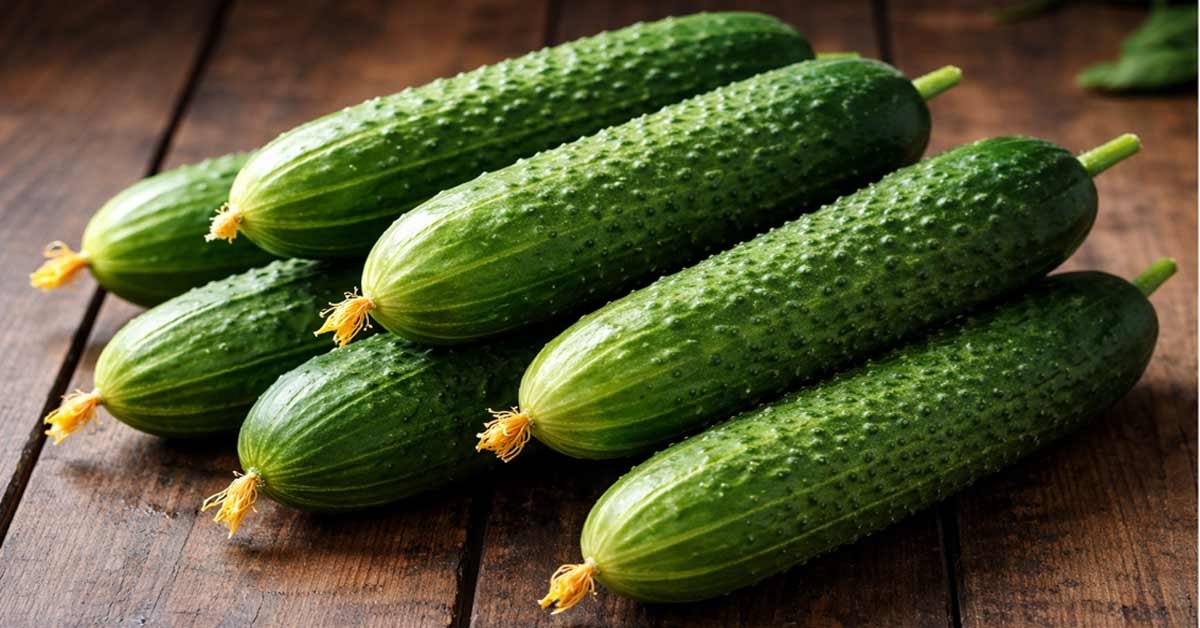
Why Cucumber Deserves a Spot in Your Daily Routine
There’s something almost too simple about cucumber. You see it in salads, maybe tucked into a sandwich, maybe floating in a glass of water at a spa. Easy to ignore. But when you slow down and actually pay attention to what cucumber brings to the table, it starts to feel less like a garnish and more like a quiet staple that earns its place every day.
Start with the obvious. Cucumbers are mostly water. About 95 percent, according to USDA data. That number matters more than it looks at first glance. If you eat 300 grams of cucumber, which is roughly one medium large cucumber, you are taking in about 285 milliliters of water. That is close to a full glass, without even thinking about it. If your daily hydration target sits around 2 liters, that single habit covers about 14 percent of it. No measuring, no tracking apps, no effort.
And it does not feel like effort. That is the point.

Table of Contents
You grab a few slices while cooking. You add some to a plate without planning it. You snack on cucumbers because they are there, not because you are forcing yourself to eat something “healthy.” Over time, that kind of behavior compounds in a way that strict routines rarely do.
The Kind of Hydration You Actually Stick To
Drinking water sounds simple. In reality, many people forget, delay, or just get bored with it. This is where cucumber changes the equation. It adds texture, flavor, and a sensory experience that plain water does not offer.
Think about biting into a cold cucumber straight from the fridge. That crisp snap. The immediate release of cool liquid. It is refreshing in a way that feels physical, not theoretical.
Hydration through cucumbers works because:
- It is passive. You eat and hydrate at the same time.
- It is distributed. Small amounts throughout the day instead of large, forced intake.
- It is enjoyable. That matters more than most people admit.
There is also a subtle electrolyte contribution. Cucumbers contain potassium, though in modest amounts. For example, 100 grams of cucumber provides around 147 mg of potassium. If you eat 300 grams, that is about 441 mg. Considering a daily intake target of around 3500 mg, that covers roughly 12.6 percent. It is not a primary source, but it contributes without adding complexity.
Light on the Body, Easy on the Mind
Some foods sit heavy. You feel them after eating. Others disappear almost unnoticed. Cucumbers fall into the second category.
They are low in calories. Around 15 kcal per 100 grams. That means a full cucumber, even a large one, rarely exceeds 45 kcal. You can eat a generous portion without thinking about energy intake, which changes how you approach meals.
This has a practical effect:
- You can add volume to meals without making them heavier.
- You can snack without triggering that sluggish, post meal feeling.
- You reduce the need for strict portion control.
There is also something psychological here. When food feels light, you are less likely to overcompensate later. You are not trying to “undo” a heavy meal or balance extremes. Cucumbers quietly support that steady middle ground.
A Simple Ally for Digestion
Cucumbers do not promise dramatic digestive changes. That is exactly why they work.
They contain both water and fiber, a combination that supports regular movement in a very basic, reliable way. Most of the fiber sits in the skin, which is why peeling cucumbers removes part of the benefit.
Let’s break it down in simple terms:
- Water softens stool.
- Fiber adds bulk.
- Together, they support smoother transit.
If you eat 200 grams of cucumbers with the skin, you get around 1 gram of fiber. That may not sound like much, but spread across meals and combined with other plant foods, it adds up. The key is consistency, not intensity.
People often look for strong interventions when it comes to digestion. Supplements, strict diets, elimination phases. Meanwhile, small daily habits like eating cucumbers are easy to overlook because they do not feel powerful. But they are repeatable. And repeatable usually wins.
The Cooling Effect You Can Feel
There is a reason cucumber shows up in warm climates and traditional dishes designed for heat. It has a noticeable cooling effect, both physically and subjectively.
Part of it is temperature. You usually eat cucumbers cold. Part of it is water content. And part of it is the mild flavor, which does not stimulate the palate in a heavy way.
This becomes useful in real life situations:
- After a long walk in the heat
- During a heavy meal that feels too rich
- Late in the evening when you want something light
A bowl of sliced cucumbers with a pinch of salt and a bit of vinegar can reset how you feel after eating. It is not dramatic. It is immediate and subtle at the same time.
Why Cucumbers Fit Real Life
Some foods are healthy in theory but hard to maintain. They require prep, planning, or a shift in habits that does not stick. Cucumbers are the opposite.
They fit into routines you already have.
You can:
- Slice cucumbers in under a minute
- Eat them raw without cooking
- Combine them with almost anything
- Store them easily in the fridge
Even the barrier to entry is low. No special tools. No recipes required. No learning curve.
And maybe that is the real reason cucumber deserves a spot in your daily routine. It does not ask for attention. It does not compete with other foods. It just sits there, ready to be used, quietly doing its job.
You might not notice the impact after one day. But give it a week. Add cucumbers to your meals without overthinking it. A few slices here, a small bowl there.
Then pay attention.
You will likely feel a bit more refreshed. A bit lighter. Digestion may feel smoother, not in a dramatic way, but in a consistent one. And hydration becomes less of a task and more of a side effect of eating.
That is the kind of change that lasts.
Hydration from the Inside Out
You can drink water all day and still feel off. Dry mouth, low energy, that vague sense that your body is lagging behind. Hydration is not just about volume. It is about how consistently fluids enter your system and how well your body holds onto them. This is where cucumber starts to make more sense.
Cucumber does not replace water. It supports it. It spreads hydration across your day in a way that feels natural. You eat, you hydrate. No extra step, no separate habit to build. And because cucumber is mostly water, every bite moves the needle a little.
The effect is quiet. But it is steady.
Water Content and Electrolytes
Cucumber is about 95 percent water. That number is well established in USDA FoodData Central. If you want to see what that means in real terms, break it down.
Take 300 grams of cucumber. That is roughly one large cucumber.
- Water content: 300 g × 0.95 = 285 g of water
- Since 1 g of water ≈ 1 ml, that equals about 285 ml
That is close to a standard glass of water, just from eating. If your daily target is 2000 ml, this covers about 14 percent.
Now layer that into a normal day:
- A few slices at lunch, about 100 g → 95 ml
- A small bowl in the afternoon, about 150 g → 142 ml
- A few more slices at dinner, about 100 g → 95 ml
Total: 332 ml, without planning for it. That is hydration happening in the background.
Electrolytes matter too, even in small amounts. Cucumbers are not dense in minerals, but they contribute.
Per 100 grams of cucumber:
- Potassium: ~147 mg
- Magnesium: ~13 mg
If you eat 300 grams:
- Potassium: 147 mg × 3 = 441 mg
- Magnesium: 13 mg × 3 = 39 mg
Compare that to general daily recommendations:
- Potassium: ~3500 mg
- Magnesium: ~300 to 400 mg
So cucumber provides:
- Potassium: 441 ÷ 3500 ≈ 12.6 percent
- Magnesium: 39 ÷ 350 ≈ 11.1 percent
It is not a primary source. But it supports fluid balance. Electrolytes help your body retain and distribute water inside cells. Without them, hydration is less efficient.
This is why cucumber feels different from just drinking water. It brings a small mineral contribution along with fluid, and that combination matters.
Cooling Effects on the Body
You notice this one immediately. Eat a chilled cucumber and your body reacts. There is a drop in perceived heat, a sense of relief that shows up within seconds.
Part of this is physical:
- High water content increases internal fluid volume
- Lower temperature food reduces mouth and throat temperature
But there is also a physiological angle. Foods with high water and low energy density tend to feel lighter during digestion. They do not demand as much metabolic effort compared to dense, high fat meals. That alone can shift how your body feels, especially in warm conditions.
There is also the way cucumber is typically eaten. Cold, raw, often paired with fresh ingredients. That context reinforces the cooling effect.
Think about common real situations:
- You come in from the heat, slightly dehydrated
- You eat a heavy meal and feel sluggish
- You need something late in the evening but do not want to feel full
Cucumber works in all three.
A simple example:
You eat 200 grams of cold cucumber after being outside in warm weather.
- Water intake: 200 × 0.95 = 190 ml
- Temperature: lower than body temperature
- Energy load: about 30 kcal
You hydrate, cool down, and avoid adding digestive stress at the same time.
This is why cucumber shows up in traditional dishes designed for heat. It fits the body’s need for relief without adding complexity.
Practical Ways to Boost Hydration
This is where most people overthink things. Hydration plans, tracking intake, setting reminders. Those can work, but they often fade.
Cucumber works better when it becomes automatic. You build it into routines that already exist.
Start simple.
Keep cucumbers visible and ready:
- Store them at eye level in the fridge
- Wash them as soon as you get home
- Slice a few in advance and keep them in a sealed container
Visibility changes behavior. If you see cucumbers first, you are more likely to eat them.
Use them as a default addition:
- Add cucumber to every salad, even small ones
- Put slices in sandwiches or wraps
- Serve them as a side, not an afterthought
This turns cucumber into a baseline, not an occasional extra.
Upgrade your water without effort:
- Add a few slices of cucumber to a bottle of water
- Let it sit for 10 to 15 minutes
- Drink it throughout the day
The flavor is subtle, but it changes the experience enough to make you drink more.
Pair cucumbers with other hydrating foods:
- Tomato and cucumber salads
- Yogurt with cucumber and herbs
- Fruit bowls with cucumber slices mixed in
You are stacking hydration sources without making it a task.
Use cucumbers as a replacement, not an addition:
- Swap part of a snack with cucumber slices
- Replace part of a heavy side dish with cucumber salad
- Use cucumber instead of crackers for dips
This keeps total intake balanced while increasing water content.
And one small detail that often gets ignored. Eat the skin when you can.
The skin contains fiber and some of the nutrients. It also adds texture, which makes the experience more satisfying. Just wash thoroughly. If the taste feels too bitter, try different varieties or peel partially instead of fully.
Hydration does not need to be forced. It works better when it blends into how you already eat.
Cucumber does exactly that. It does not demand attention. It just shows up, adds water, adds a bit of mineral support, and leaves you feeling slightly better than before.
Repeat that enough times, and the effect stops being small.
Digestion Made Gentle
Digestion does not always need fixing. Sometimes it needs less pressure, fewer extremes, and more consistency. That is where cucumber fits in. It does not push your system. It supports it in a quiet, repeatable way.
You eat cucumber and you rarely notice anything dramatic. No sudden shift, no strong reaction. But over a few days of regular intake, things tend to feel smoother. Less heaviness after meals. Less friction, if that makes sense.
Part of that comes down to what cucumber brings in small, steady amounts. Water. Fiber. A mix of plant compounds that interact with your gut without overwhelming it. Nothing excessive. Nothing aggressive.
And that balance matters more than people expect.
Fiber and Its Role in Gut Health
Cucumber is not a high fiber food. That needs to be clear. If you look at the numbers, 100 grams of cucumber with the skin provides about 0.5 grams of fiber.
So if you eat 300 grams in a day:
- Fiber intake: 0.5 g × 3 = 1.5 g
Compare that to general daily recommendations:
- Around 25 g for women
- Around 30 to 38 g for men
That means cucumber alone provides roughly:
- 1.5 ÷ 25 = 6 percent
- 1.5 ÷ 30 = 5 percent
On its own, that is modest. But digestion does not rely on a single food. It responds to patterns.
Cucumber contributes in two key ways:
First, it brings fiber in a hydrated form. The fiber in cucumber comes with a large amount of water. That changes how it behaves in the gut.
- Soluble fiber absorbs water and forms a gel like consistency
- Insoluble fiber adds bulk and helps movement
Even in small amounts, this combination supports stool consistency. Not by force, but by making the environment easier to work with.
Second, cucumber lowers the barrier to consistency. You are more likely to eat it daily compared to denser fiber sources that require planning or cooking.
A simple pattern might look like this:
- Oats in the morning
- Vegetables at lunch
- A few slices of cucumber added to both
Cucumber is not carrying the fiber load. It is supporting it, smoothing the edges.
One detail that often gets overlooked. The skin matters.
Peel the cucumber and you remove a portion of the fiber. Keep the skin and you preserve more of the structure that helps with movement through the digestive tract.
If texture is an issue, try partial peeling instead of removing it completely.
Enzymes and Phytochemicals
Cucumber contains small amounts of enzymes and a range of plant compounds. You will not feel these directly, but they play a role over time.
One enzyme often mentioned is erepsin. It is involved in breaking down proteins into smaller peptides and amino acids. In practice, the amount in cucumber is not high enough to drive digestion on its own, but it contributes to the overall enzymatic environment in the gut.
Then you have phytochemicals. These include:
- Flavonoids
- Lignans
- Triterpenes such as cucurbitacins
These compounds have been studied for their interaction with oxidative stress and inflammation pathways. In the context of digestion, the effect is subtle.
Lower irritation in the gut can support smoother digestion. Not in a direct cause and effect way that you can feel immediately, but as part of a broader pattern.
Think of it like this.
A heavy, processed meal can increase digestive discomfort for some people. Add cucumber on the side and the experience often feels lighter. Not because cucumber cancels the meal, but because it shifts the balance slightly.
There is also a mechanical effect.
Cucumber has structure. It is not soft like a puree. Chewing it stimulates saliva production, which begins the digestive process before food even reaches the stomach. More chewing, more saliva, better initial breakdown.
It sounds basic, but it matters.
Mindful Ways to Support Digestion
This is where cucumber becomes practical. Not as a solution on its own, but as part of a way of eating that your body can handle consistently.
You do not need complicated strategies. You need repeatable ones.
Start with timing.
Eat cucumber alongside meals, not just as a separate snack. This helps in two ways:
- It adds water to the meal, supporting digestion
- It increases chewing, which slows down eating
Slower meals tend to feel easier on the gut.
Pair cucumber with foods that benefit from balance:
- Rich meals with higher fat content
- Protein heavy dishes
- Salty foods that may increase thirst
A simple plate could look like:
- Grilled meat or legumes
- A portion of starch
- A generous side of cucumber slices
No special recipe. Just balance.
Use cucumber to reduce digestive load in the evening.
Late meals often cause discomfort because the body is winding down. Choosing lighter components helps.
A practical example:
- Replace part of a heavy side dish with cucumber salad
- Keep seasoning simple, a bit of salt, maybe some yogurt
You reduce overall density while still eating enough.
Pay attention to how you prepare it.
Some people tolerate raw vegetables differently. If raw cucumber feels slightly irritating, try:
- Slicing it thinner
- Removing part of the skin
- Pairing it with yogurt or olive oil
These small adjustments change how the food interacts with your digestive system.
Stay consistent rather than increasing quantity.
Eating 500 grams of cucumber in one sitting is not the goal. Spreading intake across the day works better.
For example:
- 100 g with lunch
- 100 g in the afternoon
- 100 g with dinner
Total: 300 g, about 285 ml of water and 1.5 g of fiber, distributed in a way your body can handle easily.
Finally, keep expectations realistic.
Cucumber supports digestion. It does not fix underlying issues on its own. But when it becomes part of your daily routine, it reduces friction. Meals feel lighter. Regularity becomes more predictable.
That is what most people are actually looking for.
Not a dramatic change. Just a system that works without effort.
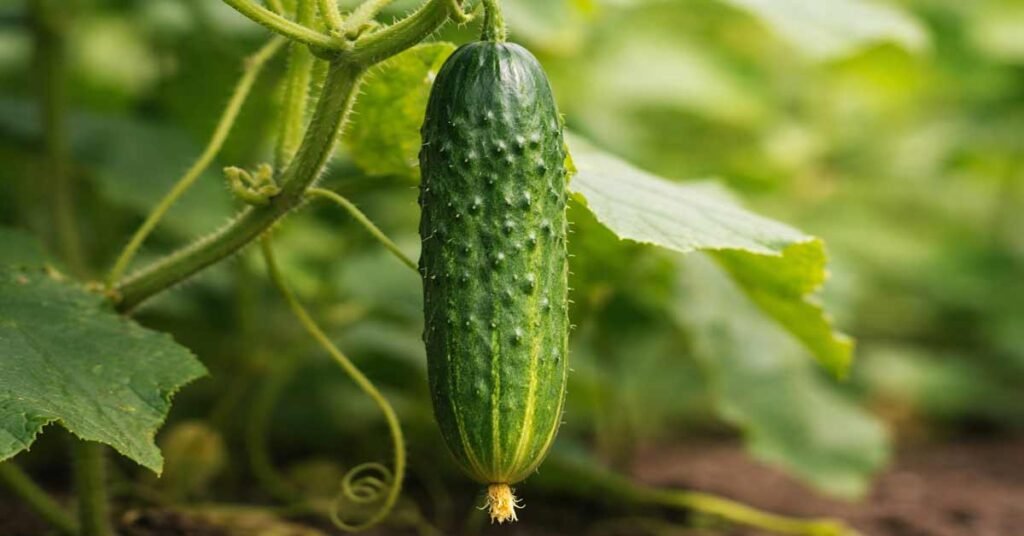
Creative Uses to Make Cucumbers a Daily Habit
Most people do not struggle with knowing that cucumber is healthy. They struggle with eating it often enough for it to matter. That gap usually comes down to friction. Too repetitive, too plain, too easy to forget.
The solution is not more discipline. It is variety and convenience.
Cucumber works best when it shows up in different forms, fits into meals you already eat, and stays within reach. You are not trying to force a habit. You are removing the reasons it does not happen.
Fresh, Pickled, or Blended
Fresh cucumber is the default. Crisp, clean, and easy. But if that is the only way you eat cucumber, it can get predictable fast. Rotating formats changes everything.
Fresh is where you start:
- Sliced with a pinch of salt
- Chopped into salads
- Layered into sandwiches or wraps
This is the fastest option. No prep beyond cutting. It works because it is immediate.
Pickled cucumber adds a completely different angle. The texture softens slightly, the flavor becomes sharper, and suddenly cucumber feels like a new ingredient.
There are two main approaches:
- Quick pickles at home
- Fermented versions
Quick pickles take minutes:
- Slice cucumber
- Add vinegar, water, salt
- Let it sit for 20 to 30 minutes
You get a tangy, refreshing side that cuts through heavy meals. It pairs especially well with rich or fatty foods.
Fermented cucumber, like traditional pickles, brings in live bacteria. These can support gut diversity, depending on how they are made. The key is choosing versions that are not heat processed, since heat destroys those bacteria.
Blended cucumber is the most underrated option.
It disappears into:
- Smoothies
- Cold soups
- Simple juices
You can blend cucumber with yogurt, garlic, and a bit of salt for a quick sauce. Or mix it with fruit like apple or melon for a light drink.
This format solves a common problem. Some people do not enjoy the texture of raw vegetables. Blending removes that barrier completely.
If you rotate between fresh, pickled, and blended, cucumber stops feeling repetitive. It becomes flexible.
Pairing with Other Ingredients
Cucumber on its own is fine. Cucumber paired well is something else entirely. The right combinations make it easier to eat more without thinking about it.
Start with contrast.
Cucumber is high in water and low in fat. Pairing it with healthy fats improves both flavor and nutrient absorption.
Examples:
- Cucumber with olive oil and a pinch of salt
- Cucumber with avocado slices
- Cucumber with yogurt based dressings
Fat slows digestion slightly, which can make meals feel more satisfying without becoming heavy.
Add acidity for balance.
A bit of acid sharpens the flavor and keeps cucumber from tasting flat.
- Lemon juice
- Vinegar
- A squeeze of lime
This is why simple cucumber salads work so well. They rely on contrast, not complexity.
Use herbs to change the profile.
Cucumber takes on the character of what you pair it with.
- Mint creates a cooling effect that feels even stronger
- Dill adds a savory, slightly earthy note
- Basil brings a softer, aromatic layer
You can use the same base ingredient and get completely different experiences.
Combine cucumber with protein.
This is where cucumber becomes part of a complete meal instead of just a side.
- Cucumber with grilled chicken or fish
- Cucumber mixed into tuna or chickpea salads
- Cucumber with eggs or yogurt
Protein adds structure. Cucumber adds lightness. Together, they balance each other.
One simple example that works almost anywhere:
- Sliced cucumber
- Greek yogurt
- Garlic
- Salt
Mix it together. You get a quick, high protein, hydrating dish that feels fresh and filling at the same time.
Storage and Consistency
This is where habits are won or lost. You can have the best ideas, but if cucumber is not ready when you need it, you will not use it.
Start with storage basics.
Whole cucumber:
- Store in the refrigerator
- Keep it in the crisper drawer
- Best used within about 5 to 7 days
Cut cucumber:
- Store in a sealed container
- Add a slightly damp paper towel to maintain moisture
- Use within 1 to 2 days for best texture
These small details matter. Once cucumber becomes soft or dry, you are less likely to eat it.
Prep ahead, but not too much.
Cutting cucumber in advance saves time, but over prepping reduces quality. A good balance is preparing enough for one day.
For example:
- Slice one or two cucumbers in the evening
- Store them in the fridge
- Use them the next day across meals
This removes friction without sacrificing freshness.
Keep cucumber visible.
Out of sight usually means out of mind.
- Place it at the front of the fridge
- Store sliced cucumber at eye level
- Pair it with foods you already reach for
If you see cucumber when you open the fridge, you are more likely to use it.
Use it as a default addition.
Instead of asking “should I add cucumber,” assume that you will.
- Every salad gets cucumber
- Every sandwich gets a few slices
- Every snack plate includes it
This shifts cucumber from optional to automatic.
Track consistency, not quantity.
You do not need large portions. You need repetition.
A realistic daily pattern:
- 100 g at lunch
- 100 g as a snack
- 100 g at dinner
That is 300 g per day. About 285 ml of water, a small amount of fiber, and steady exposure to its benefits.
Over a week:
- 300 g × 7 = 2100 g of cucumber
- Water intake from cucumber: 285 ml × 7 = 1995 ml
That is almost 2 liters of water from food alone, spread across seven days.
That is how small habits scale.
Cucumber does not need to be exciting every time. It needs to be present. When it is easy to prepare, easy to pair, and easy to store, it becomes part of your routine without effort.
And once that happens, you stop thinking about whether you should eat it. You just do.
Best Selling Cucumber Related Products


The Subtle, Everyday Power of Cucumbers
There is a tendency to look for foods that promise big, visible results. Something you can feel within hours or measure within days. Cucumber does not work like that. It operates in the background. Quiet, consistent, almost invisible.
And that is exactly why it works.
When you eat cucumber regularly, you are not chasing a spike. You are building a baseline. Hydration becomes easier to maintain. Digestion becomes more predictable. Meals feel lighter without needing to change everything you eat.
You do not notice a single moment where things shift. You notice that nothing feels off as often.
That difference matters more than it sounds.
A lot of daily discomfort comes from small imbalances:
- Slight dehydration that builds over hours
- Meals that feel heavier than expected
- Digestion that is inconsistent from one day to the next
Cucumber addresses these in small increments. Not enough to stand out in isolation, but enough to smooth the overall experience of how your body feels.
Take hydration as an example.
If you eat about 300 grams of cucumber per day:
- Water intake: 300 g × 0.95 = 285 ml
Over a week:
- 285 ml × 7 = 1995 ml
That is almost 2 liters of water, just from cucumber, distributed across meals and snacks. You are not forcing intake. You are absorbing it gradually, which is often easier for the body to handle.
Now combine that with regular fluid intake. You are no longer relying on large amounts of water at once. You are layering hydration throughout the day.
The same pattern shows up with digestion.
Cucumber provides small amounts of fiber, around 0.5 grams per 100 grams. At 300 grams per day, that is about 1.5 grams. On its own, that is not significant. But paired with other plant foods, it supports a steady intake.
More important than the number is the form:
- Fiber comes with water
- Intake is spread across meals
- The digestive system is not overloaded
This tends to result in fewer extremes. Less heaviness after eating. Less need to “fix” digestion later.
There is also a behavioral shift that happens when cucumber becomes a daily habit.
You start building meals differently.
Instead of focusing only on main components, you begin to think in terms of balance:
- Something dense
- Something hydrating
- Something light
Cucumber naturally fills that second and third role.
A typical meal might look like:
- Protein source
- Carbohydrate source
- A side of cucumber slices or salad
That addition changes the overall feel of the meal without requiring a complete overhaul.
Over time, these small adjustments create a pattern that is easier to maintain than strict dietary rules.
There is also the sensory side, which often gets ignored.
Food is not just nutrition. It is experience.
Cucumber adds:
- Crunch
- Temperature contrast
- A clean, neutral flavor
These details make meals feel more complete. A plate with different textures and temperatures is more satisfying than one that is uniform.
That satisfaction can influence how much you eat and how you feel after.
A simple example.
You eat a heavy dish on its own. It feels dense. You finish it quickly. You might still feel unsatisfied.
Add cucumber on the side:
- You chew more
- You slow down
- You introduce contrast
The same meal feels different, even though the main components have not changed.
This is not about replacing foods. It is about adjusting the environment around them.
Another aspect that stands out is how accessible cucumber is.
No preparation barrier:
- No cooking required
- Minimal cutting
- Ready to eat at any time
No complexity:
- Works with most cuisines
- Pairs with both simple and elaborate meals
No cost barrier in most regions. It is widely available and usually affordable.
These factors remove excuses. When something is easy to use, you are more likely to use it.
Consistency depends more on convenience than motivation.
Cucumber fits into that idea almost perfectly.
There is also a limit to how much you need.
You do not need large portions to see the benefit of consistency.
A realistic daily intake is 200 to 300 grams.
This provides:
- 190 to 285 ml of water
- Around 1 to 1.5 grams of fiber
- Small amounts of potassium and magnesium
The numbers are modest. The repetition is what matters.
Over a month:
- 300 g per day × 30 days = 9000 g of cucumber
- Water intake: 285 ml × 30 = 8550 ml
That is over 8.5 liters of water from food alone, without any extra effort.
When you look at it this way, cucumber is less about individual servings and more about accumulation.
It is also forgiving.
Miss a day, nothing happens. Skip a week, you can pick it back up without disruption. There is no strict protocol to follow, no dependency.
That flexibility makes it sustainable.
And that is where the real value sits.
Not in dramatic claims. Not in quick results. In the ability to support your body in a way that fits into real life.
You eat a cucumber because it is there. Because it tastes good. Because it makes meals feel better.
And over time, those small decisions add up to something noticeable.
Not all at once. But enough that you would feel the difference if it disappeared.
Article Sources
At AncientHerbsWisdom, our content relies on reputable sources, including peer-reviewed studies, to substantiate the information presented in our articles. Our primary objective is to ensure our content is thoroughly fact-checked, maintaining a commitment to accuracy, reliability, and trustworthiness.
- U.S. Department of Agriculture, Agricultural Research Service. (2023). FoodData Central: Cucumber, raw. https://fdc.nal.usda.gov/fdc-app.html#/food-details/169910/nutrients
- World Health Organization. (2020). Healthy diet. https://www.who.int/news-room/fact-sheets/detail/healthy-diet
- Slavin, J. L. (2013). Fiber and prebiotics: Mechanisms and health benefits. Nutrients, 5(4), 1417–1435. https://doi.org/10.3390/nu5041417
- Mayo Clinic. (2022). Dietary fiber: Essential for a healthy diet. https://www.mayoclinic.org/healthy-lifestyle/nutrition-and-healthy-eating/in-depth/fiber/art-20043983
- National Institutes of Health, Office of Dietary Supplements. (2022). Potassium fact sheet for health professionals. https://ods.od.nih.gov/factsheets/Potassium-HealthProfessional/
- National Institutes of Health, Office of Dietary Supplements. (2022). Magnesium fact sheet for health professionals. https://ods.od.nih.gov/factsheets/Magnesium-HealthProfessional/
- Popkin, B. M., D’Anci, K. E., & Rosenberg, I. H. (2010). Water, hydration, and health. Nutrition Reviews, 68(8), 439–458. https://doi.org/10.1111/j.1753-4887.2010.00304.x
- Zhang, Y., Chen, J., Zhang, D., Pan, Y., & Chen, M. (2014). Antioxidant and anti-inflammatory activities of cucurbitacins from cucumber. Journal of Agricultural and Food Chemistry, 62(40), 9740–9748. https://doi.org/10.1021/jf503430h

- Phosphatidic Acid: Supporting Muscle Growth and Strength - July 31, 2026
- Ceramides: Supporting Healthy Skin From Within - July 31, 2026
- Synbiotics: Combining Prebiotics and Probiotics Together - July 31, 2026