
The Kind of Sweet That Actually Works for You
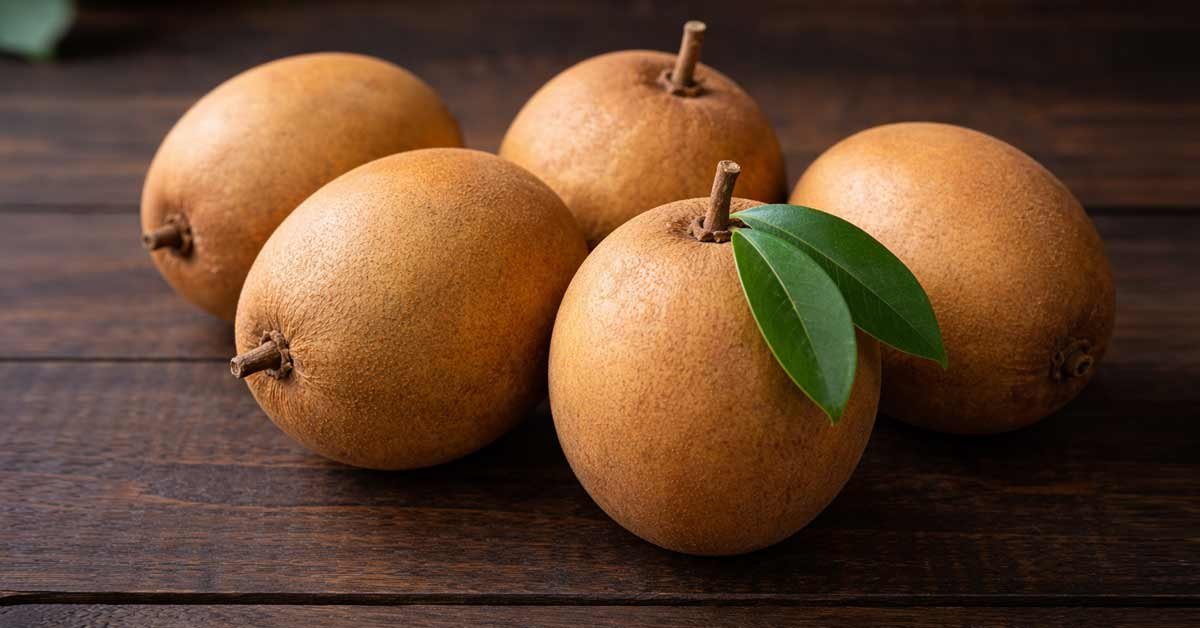
There’s a certain kind of sweetness your body recognizes right away. Not the sharp, almost aggressive hit you get from refined sugar, but something softer. Slower. More grounded. Sapodilla falls right into that category. It doesn’t try to impress you with intensity. It just works quietly in the background, and over time, that matters more than most people expect.
If you’ve never had sapodilla before, the first thing you notice is the texture. Soft, almost grainy in a way that reminds some people of a ripe pear mixed with brown sugar. Then the taste settles in. Deep caramel notes, a bit of molasses, maybe even something slightly malty. It feels indulgent, but it doesn’t behave like a dessert once it’s in your system. That difference is where things get interesting.
Table of Contents


Most conversations about fruit stop at vitamins or calories. That’s useful, but it misses the bigger picture. What really matters is how a food fits into your day. How it feels after you eat it. Whether it supports digestion or leaves you feeling off. Whether it gives you energy that lasts or disappears within an hour. Sapodilla tends to check the right boxes here, especially when it comes to digestion and steady energy.

A big part of that comes down to how whole fruits are structured. Sapodilla contains natural sugars, yes, but they don’t exist in isolation. They’re wrapped in fiber, along with a mix of plant compounds that influence how your body processes everything. That combination changes the pace. Instead of a spike, you get a gradual release. Instead of digestive strain, you often get something closer to ease.
You can think of it like this:
- Refined sugar arrives fast and leaves fast
- Whole fruit arrives slower and stays longer
- Fiber acts like a buffer, smoothing everything out
Sapodilla leans heavily toward that second category. It’s not just about what it contains, but how those components interact.
There’s also something worth noticing about how your body responds to foods that are naturally sweet but minimally processed. People often expect anything sweet to feel heavy or disruptive. But sapodilla doesn’t usually behave that way when eaten in a reasonable portion. In fact, many people find it sits surprisingly well, especially compared to packaged snacks or baked desserts.
Part of that comes from its fiber content. Dietary fiber plays a direct role in how food moves through your digestive system. It adds bulk, supports regularity, and helps maintain a more stable internal rhythm. When you eat sapodilla, you’re not just consuming sugars. You’re also giving your digestive system material it can actually work with.
And that’s where things start to shift from theory to everyday experience.
You eat something like a pastry on an empty stomach, and within an hour, you might feel sluggish or even slightly irritable. Your energy rises quickly, then drops just as fast. Hunger creeps back in sooner than expected. It’s a familiar cycle.
Now compare that to eating a ripe sapodilla. The sweetness is there, no question. But the after-effect is different. There’s usually less of that sharp rise and fall. The body processes it more gradually. You feel fed, not overwhelmed.
Of course, context matters. No single food fixes digestion or transforms your energy on its own. But patterns build over time. When foods like sapodilla show up regularly in your diet, especially in place of more processed options, the difference becomes easier to notice.
There’s also a practical side to this that often gets overlooked. Sapodilla doesn’t require preparation in the way many “healthy” foods do. No cooking. No complicated recipes. You cut it open, remove the seeds, and eat it. That simplicity makes it easier to be consistent, and consistency is where most benefits come from.
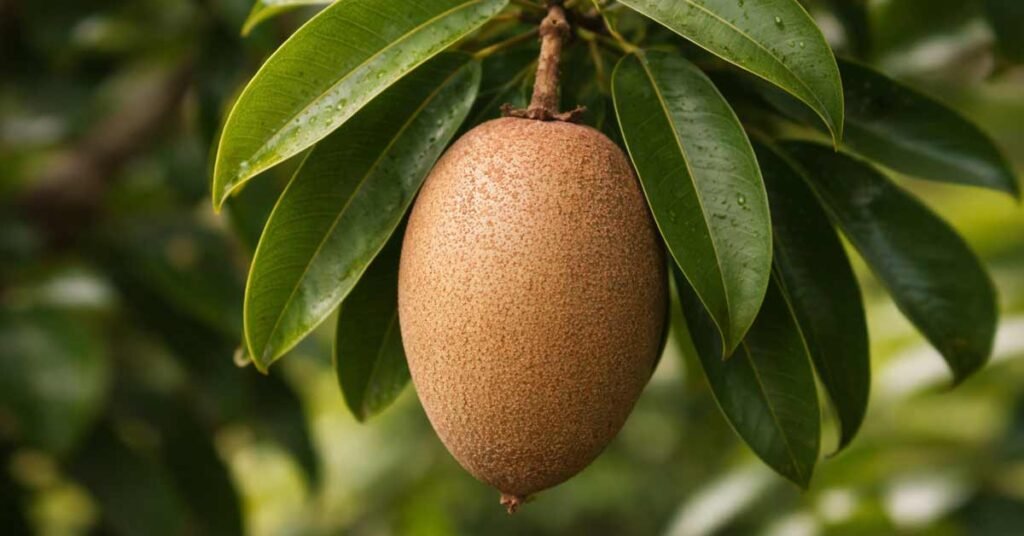
Another detail that deserves attention is ripeness. An unripe sapodilla is a completely different experience. It’s firm, astringent, and not particularly enjoyable. But once it ripens fully, the fruit softens and the sugars develop into that signature caramel-like flavor. More importantly, it becomes easier to digest. Eating it at the right stage isn’t just about taste. It directly affects how your body handles it.
You start to see a pattern here. Sapodilla works best when you approach it simply:
- Eat it ripe
- Keep portions reasonable
- Use it as part of a broader eating routine, not a quick fix
That’s where it tends to shine.
There’s a tendency to overcomplicate nutrition, to look for exotic compounds or extreme strategies. But often, it comes back to foods that people have been eating for generations without much fuss. Sapodilla has been part of traditional diets in tropical regions for a long time. Not because it’s trendy, but because it’s reliable. It provides sweetness, some energy, and digestive support in a form that’s easy to incorporate into daily life.
And maybe that’s the real appeal. It doesn’t demand attention. It doesn’t promise dramatic changes. It just fits. Quietly, consistently, and in a way that makes sense once you start paying attention to how your body responds.
If you’re used to thinking of sweet foods as something to limit or avoid, sapodilla offers a slightly different perspective. It shows that sweetness itself isn’t the issue. The form it comes in matters. The context matters. The way your body processes it matters.
That’s the kind of shift that tends to stick, because it’s based on experience, not theory. You eat something, you notice how you feel, and you adjust from there. Sapodilla just happens to be one of those foods that often makes that process a little easier to understand.
Why Sapodilla Feels So Easy on Digestion
There’s a reason sapodilla tends to feel “light” even though it’s naturally sweet. It comes down to structure. The sugars, the fiber, the water content, the plant compounds, all of it arrives together in a form your digestive system already knows how to handle. Nothing isolated. Nothing forced.
You don’t get that sense of overload that often shows up with processed foods. Instead, digestion moves at a steadier pace. Food breaks down gradually. Absorption feels more controlled. For a lot of people, that translates into fewer digestive surprises and a more predictable rhythm.
And this isn’t about dramatic effects. It’s subtle. But it’s consistent when sapodilla becomes part of a regular eating pattern.
What Happens When You Eat Sapodilla Regularly
The first few times you eat sapodilla, you mostly notice the taste. After that, the pattern becomes clearer. Your body starts responding in a more predictable way.
Regular intake of sapodilla tends to support:
- More consistent bowel movements
- Less heaviness after eating
- A smoother transition between meals without discomfort
- Reduced reliance on overly processed snacks
That consistency matters more than intensity. Digestion doesn’t improve because of one “perfect” food. It improves when the system stops getting disrupted.
Sapodilla helps in that sense because it doesn’t create friction. It fits easily into meals or between them. You eat it, and things keep moving as they should.
There’s also a behavioral side to this. When you start reaching for sapodilla instead of packaged sweets, you naturally reduce ingredients that often interfere with digestion. Additives, excessive fats, refined sugars. You’re not just adding something helpful. You’re removing something that tends to cause issues.
Over time, that swap alone can change how your digestive system feels day to day.
Fiber Content and Gut Rhythm
If you had to point to one key factor behind sapodilla’s effect on digestion, fiber would be it.
Sapodilla contains dietary fiber that plays a direct role in regulating gut movement. Not in an aggressive way, but in a steady, supportive one. It helps create bulk, which gives your digestive system something to work with. It also supports the timing of digestion, which is often where problems begin.
When fiber intake is too low, things tend to slow down. When it’s inconsistent, digestion becomes unpredictable. Sapodilla helps smooth that out when eaten regularly.
Here’s what that looks like in practice:
- Food moves through the digestive tract at a more stable pace
- Stools tend to become more regular in both timing and consistency
- The gut doesn’t have to compensate for sudden dietary extremes
There’s also a secondary effect. Fiber influences how sugars are absorbed. In sapodilla, this means the natural sugars don’t rush into the bloodstream all at once. That slower absorption reduces the chance of digestive discomfort linked to rapid intake of simple carbohydrates.
But there’s a detail people often overlook. Fiber works best when it’s part of a broader pattern. If your overall diet lacks fiber and you suddenly add large amounts of sapodilla, your body may need time to adjust. That’s normal. Gradual consistency works better than sudden changes.
Natural Compounds That Support Digestive Comfort
Beyond fiber, sapodilla contains plant compounds that contribute to how it feels in the digestive system.
One of the more notable groups is polyphenols. These are naturally occurring compounds found in many fruits. In the context of digestion, they are studied for their role in interacting with gut bacteria and supporting a balanced internal environment.
Sapodilla also contains tannins, especially when slightly underripe. Tannins have an astringent quality. In moderate amounts, they can contribute to a feeling of digestive control. Too much, especially from unripe fruit, can have the opposite effect, which is why ripeness matters.
There’s also the simple fact that sapodilla is a whole food with minimal processing. That alone reduces the burden on digestion. No added emulsifiers. No artificial sweeteners. No complex ingredient lists your body has to figure out.
Instead, you get:
- Natural sugars paired with fiber
- Water content that supports breakdown and movement
- Micronutrients that play supporting roles in metabolism
It’s a complete package, and your digestive system tends to respond better to that kind of simplicity.
Another point worth mentioning is how sapodilla interacts with gut sensitivity. People who experience occasional digestive discomfort often notice that certain foods either trigger or calm that response. Sapodilla, when ripe and eaten in moderate amounts, tends to fall into the “calm” category for many.
Not because it’s doing something dramatic, but because it avoids common triggers.
Common Mistakes That Reduce Its Benefits
Even with a food as straightforward as sapodilla, small mistakes can change the experience quite a bit.
One of the most common issues is eating it unripe. An unripe sapodilla is firm and high in astringent compounds. It can feel harsh on digestion and may lead to discomfort instead of ease. The fruit should be soft to the touch, almost like a ripe avocado, before you eat it.
Another mistake is overeating it in one sitting. Because sapodilla is sweet and easy to eat, it’s tempting to go beyond what your body needs. Large portions increase the total sugar and fiber load at once, which can feel heavy rather than supportive.
A more effective approach looks like this:
- One to two medium fruits per serving
- Paired with other foods if part of a meal
- Eaten slowly rather than all at once
Timing can also make a difference. Eating sapodilla on a completely empty stomach works well for some people, but not for everyone. If your digestion is sensitive, pairing it with a small amount of protein or fat can make the experience smoother.
Then there’s the issue of substitution. Sapodilla works best when it replaces less supportive foods. If it’s simply added on top of an already heavy diet, the benefits become harder to notice.
And finally, consistency. Eating sapodilla once and expecting a clear digestive shift misses the point. Its effect builds over time, through repeated, simple use.
That’s really where sapodilla stands out. It doesn’t try to fix digestion in a dramatic way. It just supports it quietly, meal after meal, as long as you let it do its job.
A Slow, Steady Source of Energy That Holds Up
Energy is one of those words that gets thrown around so casually it almost loses meaning. You see it on labels, in marketing, in quick promises that sound good but rarely hold up through an actual day. The reality is simpler and less dramatic. Energy, in a nutrition sense, is about how your body converts food into usable fuel and how stable that process remains over time.
Sapodilla fits into that picture in a way that’s easy to overlook. It’s sweet, so people often assume it behaves like other sugary foods. But the experience tends to be different. The energy it provides doesn’t rush in and disappear. It builds more gradually, and more importantly, it sticks around.
That’s not accidental. It comes from how sapodilla is structured as a whole food.
What “Energy” Really Means in Everyday Nutrition
When you eat, your body breaks food down into components it can use. Carbohydrates become glucose, which fuels cells. That part is straightforward. What changes from one food to another is the speed and stability of that process.
Fast-digesting foods push glucose into your bloodstream quickly. You feel a rise in energy, sometimes within minutes. But that rise is often followed by a drop. Hunger returns. Focus slips. You start looking for the next thing to eat.
Slower-digesting foods create a different pattern:
- Glucose enters the bloodstream gradually
- Energy levels rise more gently
- The drop-off is less abrupt
- Hunger signals stay quieter for longer
Sapodilla tends to lean toward that second pattern. Not because it’s low in sugars, but because those sugars are part of a more balanced structure.
Another detail that matters is how “energy” feels in real life. It’s not just physical. It shows up as mental clarity, stable mood, and the ability to move from one task to another without needing constant input. Foods that support that kind of steady state tend to be more useful than anything that promises a quick boost.
Sapodilla rarely feels like a boost. It feels more like a continuation.
Natural Sugars Paired With Fiber
Sapodilla contains natural sugars such as sucrose, fructose, and glucose. On their own, these would behave like any other simple carbohydrate. The difference is the presence of fiber.
Fiber changes how quickly sugars are absorbed. It slows down digestion, which in turn slows the release of glucose into the bloodstream. This creates a more controlled energy curve.
Instead of this pattern:
- Quick rise
- Short peak
- Sudden drop
You get something closer to:
- Gradual rise
- Stable plateau
- Gentle decline
That shape is what most people are actually looking for, even if they don’t describe it that way.
There’s also a practical effect on appetite. When energy release is steady, you’re less likely to experience sudden hunger shortly after eating. That reduces the tendency to snack impulsively, especially on highly processed foods.
It’s worth noting that this doesn’t make sapodilla a “low sugar” food. It isn’t. But the context in which those sugars exist changes how your body responds to them.
Think of it as delivery speed rather than total content.
When Sapodilla Works Best During the Day
Timing influences how you experience the energy from sapodilla.
Many people find it works well:
- In the morning, when your body is shifting out of an overnight fast
- Midday, when energy naturally starts to dip
- Before light physical activity, when you want fuel without heaviness
In the morning, sapodilla offers a gentle way to reintroduce carbohydrates. It doesn’t overwhelm digestion, and it provides a base level of energy that can carry into the first part of your day.
Midday is where it often stands out the most. That early afternoon window, where focus drops and the temptation for something sweet kicks in, is exactly where sapodilla fits. It satisfies that need for sweetness while avoiding the sharp rise and fall that processed snacks tend to create.
Before physical activity, especially something moderate like walking or light training, sapodilla can provide accessible fuel without feeling heavy. It digests relatively easily when ripe, so it doesn’t sit in your stomach in an uncomfortable way.
That said, context always matters. Eating sapodilla right after a very large meal may not feel the same as eating it on its own or as part of a lighter combination. Paying attention to your own response is more useful than following a fixed rule.
Comparing Sapodilla to Processed Sweet Snacks
This is where the difference becomes obvious.
Processed sweet snacks are designed for immediate impact. They’re often built with refined sugars, low fiber, and combinations of fat and additives that make them easy to overconsume. The effect is predictable:
- Rapid spike in blood sugar
- Short-lived energy
- Noticeable crash
- Increased cravings
Sapodilla doesn’t behave like that. Even though it’s sweet, it comes with built-in limits. The fiber slows you down, both in how you eat it and how your body processes it. The natural structure makes it harder to consume in excess without noticing.
Here’s a simple comparison:
Processed snack:
- Fast digestion
- Low satiety
- Easy to overeat
- Energy drops quickly
Sapodilla:
- Slower digestion
- More satisfying per portion
- Naturally self-limiting
- Energy release is more stable
There’s also a psychological aspect. When you eat something that feels like real food, your body tends to register it differently. You’re less likely to chase another snack immediately after. That alone can change your overall energy pattern throughout the day.
Another point worth mentioning is ingredient simplicity. With sapodilla, what you see is what you get. There’s no long list to interpret, no hidden components. That reduces the chances of unexpected reactions, especially for people who are sensitive to certain additives found in processed foods.
None of this turns sapodilla into a magic solution. It’s still just a fruit. But in the context of everyday eating, it does something valuable. It offers sweetness, supports digestion, and provides energy in a form that doesn’t disrupt the rest of your day.
And that’s really the goal. Not constant highs, but something you can rely on without thinking too much about it. Sapodilla tends to land right there when you use it consistently and keep things simple.
How Sapodilla Fits Into Real Eating Habits
Knowing that sapodilla supports digestion and provides steady energy is one thing. Actually using it in a way that sticks long term is something else entirely. This is where most people get tripped up. Not because the food is complicated, but because habits are.
Sapodilla works best when it blends into what you’re already doing. No drastic changes. No rigid rules. Just small, repeatable choices that make sense in a normal day. The kind you don’t have to think about too much.
What makes sapodilla useful here is its simplicity. It doesn’t require prep, it travels well enough if handled carefully, and it satisfies that natural pull toward something sweet without pushing things off balance.
Simple Ways to Add Sapodilla to Your Routine
The easiest way to use sapodilla is also the most effective. Eat it as it is, fully ripe, when you feel the need for something sweet or when your energy starts to dip.
That alone covers most situations.
Still, a few practical patterns tend to work well:
- Mid-morning snack instead of biscuits or packaged bars
- Early afternoon reset when focus starts to drop
- Light dessert after a meal, especially when you want something sweet without going heavy
You don’t need to build elaborate recipes around it, but if you want variety, sapodilla adapts easily:
- Sliced into yogurt for a more balanced snack
- Blended into a simple smoothie with milk or a plant-based alternative
- Mashed and spread on toast in place of sweet spreads
What matters more than the format is consistency. Using sapodilla a few times per week, in place of more processed options, tends to have a noticeable impact over time.
There’s also something to be said about keeping it visible. If sapodilla is sitting in a bowl on your counter, ripe and ready, you’re far more likely to reach for it. If it’s hidden away or forgotten, it won’t become part of your routine.
That sounds obvious, but it’s one of the most reliable behavior shifts you can make.
Pairing Sapodilla for Better Nutrient Balance
On its own, sapodilla provides carbohydrates, fiber, and a range of micronutrients. That’s a solid base. But pairing it with other foods can make the experience more balanced, especially in terms of satiety and sustained energy.
The idea is simple. Combine sapodilla with a source of protein or fat to slow digestion further and extend the feeling of fullness.
Some combinations that work in real life:
- Sapodilla with plain yogurt
- Sapodilla alongside a handful of nuts
- Sapodilla with cottage cheese
- Sapodilla blended with milk and a spoon of nut butter
These pairings do a few things:
- They stabilize energy even further
- They reduce the likelihood of getting hungry soon after
- They create a more complete snack or light meal
You don’t need to do this every time. Sapodilla on its own is often enough. But when you’re relying on it to carry you through a longer stretch between meals, pairing makes a difference.
There’s also a sensory aspect. The softness and sweetness of sapodilla contrast well with creamier or slightly savory elements. That balance can make simple meals feel more satisfying without adding complexity.
Portion Size and Frequency That Make Sense
This is where things can quietly go off track if you’re not paying attention. Sapodilla is easy to eat, and because it feels gentle on digestion, it’s tempting to have more than you actually need.
A reasonable portion for most people looks like:
- One to two medium sapodilla fruits per serving
That amount provides enough fiber and natural sugars to support digestion and energy without overwhelming your system.
Going beyond that occasionally isn’t a problem, but doing it regularly can lead to:
- A heavier digestive load
- Excess sugar intake for the day
- A feeling of sluggishness instead of steady energy
Frequency matters just as much as portion size. Eating sapodilla a few times per week is enough to notice benefits. Daily use can work well too, especially if it replaces less supportive foods.
The key is balance across your entire diet. Sapodilla isn’t meant to carry everything on its own. It’s one part of a broader pattern.
Another detail that often gets overlooked is how you eat it. Slowing down, actually tasting it, gives your body time to register fullness. Eating quickly makes it easier to go past the point where it’s beneficial.
When Whole Fruits Do More Than Supplements
It’s easy to fall into the idea that benefits come from isolated compounds. Fiber supplements for digestion. Powders for energy. Extracts for specific effects. Those tools have their place, but they don’t always replicate what whole foods do naturally.
Sapodilla is a good example of that difference.
In a whole fruit, you get:
- Fiber working alongside natural sugars
- Micronutrients in their original context
- Plant compounds interacting in ways that are still being studied
That combination creates an effect that’s hard to match with a single supplement. Not stronger, just more balanced.
There’s also a behavioral layer. Eating a whole fruit requires you to pause. To sit down, even briefly. That alone can influence digestion and how your body processes food. Supplements, by contrast, tend to be quick and disconnected from meals.
Another point is reliability. Whole foods like sapodilla have been part of traditional diets for generations. Their effects are understood through consistent use, not just isolated measurements.
That doesn’t mean supplements are unnecessary. It just means they don’t replace the role of real food.
When you start relying more on foods like sapodilla, you often find that you need fewer add-ons. Digestion becomes more predictable. Energy feels more stable. Not perfect, but manageable without constant adjustment.
And that’s really what makes sapodilla valuable in everyday eating habits. It doesn’t complicate things. It simplifies them. You eat it, you notice how you feel, and over time, it becomes one of those small choices that quietly supports everything else.
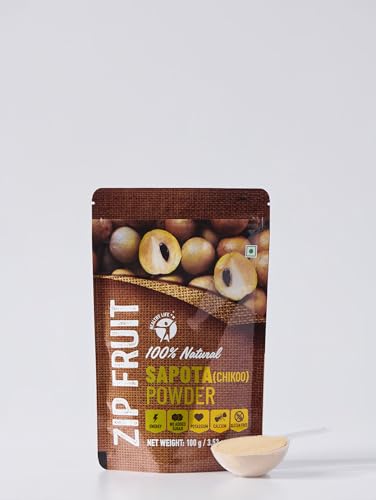
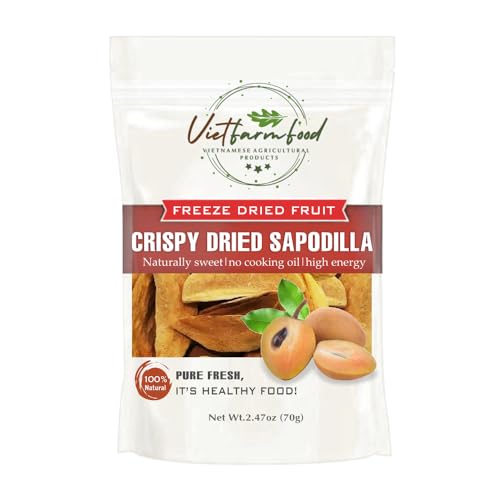
Best Selling Sapodilla Related Products




When Simple Foods Like Sapodilla Do Enough
There’s a point where you stop looking for complicated answers. Not because you’ve tried everything, but because you start noticing a pattern. The things that actually hold up over time are usually simple. Repetitive in a good way. Easy to return to without effort.
Sapodilla sits right in that space.
It doesn’t try to compete with trends or stand out as something extreme. It’s just a fruit. Sweet, soft, easy to eat. And yet, when you pay attention to how it fits into your day, it quietly covers more ground than expected. Digestion feels more predictable. Energy stops swinging as much. Cravings don’t disappear, but they become easier to manage.
That shift matters more than any single “benefit.”
A lot of people approach food looking for results they can feel immediately. More energy today. Better digestion by tomorrow. It’s understandable, but it rarely works that way. The body responds to patterns, not isolated moments.
Sapodilla works because it fits into those patterns without resistance.
You don’t have to force yourself to eat it. You don’t need a plan. When it’s ripe, it’s naturally appealing. That alone increases the chances that you’ll choose it again, and again is where things start to change.
There’s also something worth saying about how sapodilla reshapes your expectations around sweetness. When most of your sweet intake comes from processed foods, your baseline shifts. You start needing more intensity to feel satisfied. More sugar, more flavoring, more of everything.
Then you bring in something like sapodilla.
At first, it might feel different. Not weaker, just less aggressive. But give it a little time, and your perception adjusts. The natural sweetness starts to feel complete on its own. You don’t need the extra layer anymore.
That’s not a restriction. It’s a recalibration.
And it tends to carry over into other parts of your diet. You begin to notice that simpler foods are enough more often than you thought.
Another thing that becomes clear over time is how much consistency matters. Not perfection, not strict rules. Just showing up with the same few choices that work.
Sapodilla fits easily into that kind of rhythm:
- It can replace a snack without feeling like a compromise
- It supports digestion without drawing attention to itself
- It provides energy without creating a spike and crash
That combination is rare, not because the components are unusual, but because they’re balanced in a way that doesn’t demand anything from you.
There’s also a practical side that’s easy to underestimate. The fewer decisions you have to make around food, the more likely you are to stick with something. Sapodilla reduces that friction. It answers a very common question, “what should I eat when I want something sweet but don’t want to feel off afterward?”
You already know the answer. You don’t have to think about it.
That kind of reliability builds trust, and once you trust a food, it becomes part of your routine without effort.
It’s worth being clear about one thing, though. Sapodilla isn’t doing anything magical. It’s not fixing digestion on its own or transforming your energy levels in isolation. What it does is support a system that’s already designed to work well when it’s given the right inputs.
And sometimes, the right input is just a whole fruit eaten consistently.
There’s a tendency to look past that because it feels too simple. People expect complexity to equal effectiveness. But in practice, complexity often creates inconsistency, and inconsistency is where things fall apart.
Simple foods remove that problem.
You don’t need to track them closely. You don’t need to cycle them in and out. You just use them, regularly, and let the effects build in the background.
Sapodilla is one of those foods that earns its place this way. Not through bold claims, but through repeatable results you can feel if you’re paying attention.
You eat it, and nothing dramatic happens. That’s the point.
Digestion stays on track. Energy holds steady. You move through your day without needing to correct anything. No sudden drops, no unexpected discomfort, no need to compensate later.
Over time, those “nothing happened” moments add up to something very real.
A more stable baseline.
And once you reach that baseline, you stop chasing quick fixes. You stop overcorrecting. You start trusting that small, consistent choices are enough to keep things where they need to be.
Sapodilla doesn’t ask for much. Just that you use it as it is, in a way that fits your day, and give it enough time to do its job.
That’s usually where people find that simple foods don’t just help.
They’re enough.
Article Sources
At AncientHerbsWisdom, our content relies on reputable sources, including peer-reviewed studies, to substantiate the information presented in our articles. Our primary objective is to ensure our content is thoroughly fact-checked, maintaining a commitment to accuracy, reliability, and trustworthiness.
- USDA FoodData Central. (2019). Sapodilla, raw. U.S. Department of Agriculture. https://fdc.nal.usda.gov/fdc-app.html#/food-details/169910/nutrients
- Slavin, J. L. (2013). Fiber and prebiotics: Mechanisms and health benefits. Nutrients, 5(4), 1417–1435. https://doi.org/10.3390/nu5041417
- Jones, J. M. (2014). CODEX-aligned dietary fiber definitions help to bridge the “fiber gap”. Nutrition Journal, 13, 34. https://doi.org/10.1186/1475-2891-13-34
- Ludwig, D. S. (2002). The glycemic index: Physiological mechanisms relating to obesity, diabetes, and cardiovascular disease. JAMA, 287(18), 2414–2423. https://doi.org/10.1001/jama.287.18.2414
- Jenkins, D. J. A., Kendall, C. W. C., Augustin, L. S. A., Franceschi, S., Hamidi, M., Marchie, A., Jenkins, A. L., & Axelsen, M. (2002). Glycemic index: Overview of implications in health and disease. The American Journal of Clinical Nutrition, 76(1), 266S–273S. https://doi.org/10.1093/ajcn/76/1.266S
- Delzenne, N. M., Neyrinck, A. M., & Cani, P. D. (2011). Modulation of the gut microbiota by nutrients with prebiotic properties: Consequences for host health in the context of obesity and metabolic syndrome. Microbial Cell Factories, 10(Suppl 1), S10. https://doi.org/10.1186/1475-2859-10-S1-S10
- Manach, C., Scalbert, A., Morand, C., Rémésy, C., & Jiménez, L. (2004). Polyphenols: Food sources and bioavailability. The American Journal of Clinical Nutrition, 79(5), 727–747. https://doi.org/10.1093/ajcn/79.5.727
- Basu, A., & Lyons, T. J. (2012). Strawberries, blueberries, and cranberries in the metabolic syndrome: Clinical perspectives. Journal of Agricultural and Food Chemistry, 60(23), 5687–5692. https://doi.org/10.1021/jf203320y
- World Health Organization. (2015). Guideline: Sugars intake for adults and children. World Health Organization. https://www.who.int/publications/i/item/9789241549028
- Mayo Clinic Staff. (2022). Dietary fiber: Essential for a healthy diet. Mayo Foundation for Medical Education and Research. https://www.mayoclinic.org/healthy-lifestyle/nutrition-and-healthy-eating/in-depth/fiber/art-20043983

- Phosphatidic Acid: Supporting Muscle Growth and Strength - July 31, 2026
- Ceramides: Supporting Healthy Skin From Within - July 31, 2026
- Synbiotics: Combining Prebiotics and Probiotics Together - July 31, 2026