
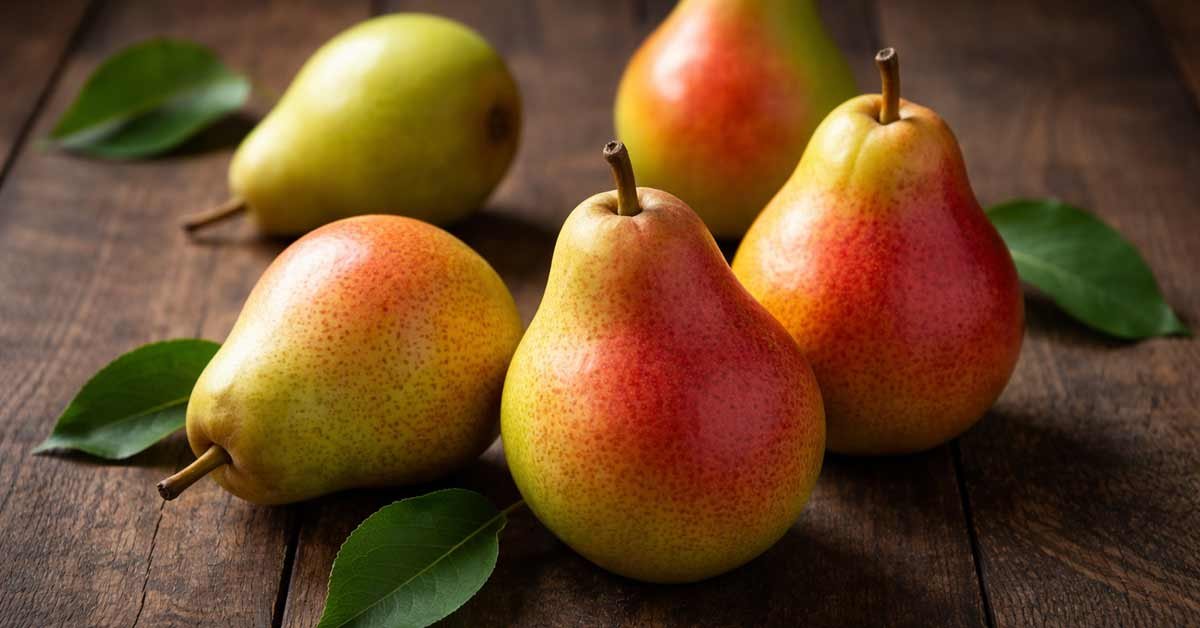
The Quiet Power of a Simple Pear
You don’t usually think twice about a pear. It sits there next to apples and oranges, a little softer in color, a little less attention grabbing. But that quiet presence is part of the point. A pear does not try to impress you. It just works.
Pick one up when it is ripe. The skin gives slightly under your thumb. There is that faint sweetness in the smell, nothing sharp or overwhelming. Bite into it and you get that soft grainy texture, almost like it is already halfway broken down for you. That detail matters more than most people realize.
Table of Contents
A pear fits into your day without friction. No peeling. No slicing if you are in a hurry. No cleanup. You just eat it. And when something is that easy, you actually do it consistently. That is where most nutrition advice falls apart. It asks too much. A pear asks almost nothing.

From a practical standpoint, what you get is a mix of water and fiber in a form your body handles well. A medium pear contains around 84 percent water. That is not a small detail. If you are slightly dehydrated, which most people are at some point during the day, foods like pear quietly help close that gap. Not in a dramatic way. In a steady one.
Then there is the fiber. A single pear provides about 5 to 6 grams of fiber, depending on size. That is roughly 20 percent of the daily intake recommended for adults. You do not need a supplement. You do not need a complicated plan. You just need something you will actually eat.
What makes pear different is how that fiber shows up. It is not harsh. It is not the kind that leaves you feeling bloated if your system is sensitive. The texture gives you a hint of what is going on. It is soft, slightly granular, easy to chew. Your digestive system tends to respond the same way. Smooth, predictable, without much resistance.
Think about a typical day. Coffee in the morning. Maybe something quick for lunch. A long stretch without real food. Then a heavier dinner. That pattern puts pressure on digestion and hydration at the same time. Dropping a pear into that rhythm changes things more than you would expect.
- Mid morning, when energy dips, a pear gives you light sugar with fiber that slows it down
- Afternoon, when you feel sluggish, the water content helps more than another coffee
- Before dinner, it can take the edge off hunger without making you feel full
It is not a dramatic intervention. It is a small adjustment that compounds.
There is also something worth saying about how a pear feels compared to other fruits. Apples can be crisp and acidic. Citrus can be sharp. Bananas are dense. A pear sits somewhere in the middle. Gentle sweetness, high water content, soft texture. That combination makes it easier to keep coming back to.
And consistency is the entire game here. You do not need a perfect diet. You need repeatable actions. A pear is repeatable.
You see it in real life. Someone starts adding a pear to their day without overthinking it. Maybe with breakfast, maybe as a snack. A week passes. Nothing dramatic. Two weeks, digestion feels a bit more regular. Three weeks, they notice they are not as drawn to overly processed snacks in the afternoon. Not because of discipline. Because they are already partly satisfied.
That is the kind of shift that holds.
There is also a subtle psychological side to it. Foods that feel easy tend to reduce decision fatigue. You are not negotiating with yourself. You are not weighing options. You just reach for a pear because it is there and it works. Over time, that matters more than any single nutrient.
Hydration and digestion often get treated as separate goals. In reality, they overlap constantly. Your digestive system relies on adequate fluid. Fiber needs water to do its job properly. A pear brings both into the same place, in a form that feels natural rather than forced.
If you had to strip things down to basics, it would look like this:
- You need enough fiber for digestion to stay regular
- You need enough water for your system to function smoothly
- You need foods that you will actually eat every day
A pear checks all three without effort.
It is easy to overlook something this simple. There is always a more complex option, a more optimized plan, a more detailed approach. But when you step back, the question becomes practical. What are you actually going to do tomorrow, and the day after that?
Chances are, you are more likely to eat a pear than follow a complicated routine.
And that is where the quiet power comes in. Not in what a pear promises, but in what it reliably delivers when you keep it around long enough to matter.
Why Pear Works So Well for Digestion
A lot of foods get labeled as “good for digestion,” but when you actually pay attention to how your body responds, the list gets shorter. Some are too harsh. Some are inconsistent. Some work only in theory. A pear tends to hold up in real life.
There is a reason for that. It comes down to how fiber shows up in a pear and how your body handles it. Not all fiber behaves the same way. Not all fiber feels the same once it reaches your gut. And not all of it leads to the kind of steady, predictable digestion most people are actually looking for.
A pear lands in that middle ground where things just work. You eat it, and your system knows what to do with it.
Fiber That Actually Does Its Job
When people hear “fiber,” they often think in extremes. Either it fixes everything overnight or it causes discomfort. The truth sits somewhere in between, and a pear is a good example of that balance.
A medium pear contains around 5 to 6 grams of fiber. That number matters, but what matters more is how that fiber behaves once it is inside your digestive system.
The texture of a pear already gives you a clue. It is soft, slightly grainy, easy to break down. That translates into a type of fiber that supports movement without forcing it. You are not shocking your system. You are guiding it.
Here is what that looks like in practice:
- Stool tends to become more formed, not overly loose and not overly hard
- Transit time through the gut becomes more consistent
- You feel less of that heavy, stuck sensation after meals
It is not immediate. It builds over days of regular intake. That is the part people often miss. Fiber is not a one time fix. It is a daily input that shapes how your system behaves over time.
A pear works because it is easy to repeat. You are more likely to eat a pear every day than measure out a fiber supplement or overhaul your meals completely. That consistency is what allows the fiber to actually do its job.
There is also the fact that pear comes with water. Fiber without enough fluid can slow things down instead of helping. A pear naturally pairs the two, which removes one of the most common problems people run into.
Soluble vs Insoluble Fiber in Pear
This is where things get more specific, but it is worth understanding because it explains why a pear feels different from other high fiber foods.
A pear contains both soluble and insoluble fiber. Each plays a different role.
Soluble fiber dissolves in water and forms a gel like substance in the gut. In a pear, this comes largely from pectin. That gel slows digestion slightly, which helps regulate how nutrients are absorbed.
What you notice from that:
- A steadier release of energy instead of spikes
- Less sudden hunger shortly after eating
- A smoother digestive process overall
Insoluble fiber does something else. It does not dissolve. It adds bulk and helps move material through the digestive tract.
From a practical perspective:
- It supports regular bowel movements
- It reduces the likelihood of sluggish digestion
- It helps maintain a consistent rhythm in your gut
A pear gives you both at the same time. That balance is what makes it effective without being aggressive. Some foods lean heavily in one direction. Too much insoluble fiber can feel rough. Too much soluble fiber without enough movement can feel slow. A pear sits right in between.
There is also a small but important detail. Most of the fiber in a pear sits in the skin. Peeling it removes a significant part of what makes it useful for digestion. That is why eating the whole pear matters.
What Happens in the Gut After You Eat a Pear
Once you eat a pear, digestion starts in a fairly straightforward way, but the effects build as it moves through your system.
First, the water content begins to hydrate the digestive tract. That alone helps soften things and prepares the environment for fiber to work properly.
Then the soluble fiber starts forming that gel like structure. This slows down how quickly food moves through the upper part of your digestive system. It gives your body more time to break things down and absorb nutrients in a controlled way.
As the pear moves further along, the insoluble fiber begins to take over. It adds bulk to what is in your intestines and stimulates movement. This is where the feeling of regularity comes from, not instantly, but over repeated cycles.
At the same time, something else is happening that you do not feel directly. The fiber in a pear acts as a substrate for beneficial gut bacteria. They ferment parts of that fiber and produce short chain fatty acids. These compounds support the environment of the gut.
You do not notice this in a dramatic way. It shows up as small improvements:
- Less bloating over time
- More predictable digestion
- A general sense that your system is working with you, not against you
It is also why consistency matters again. Your gut bacteria respond to what you feed them regularly, not occasionally. Eating a pear once in a while will not change much. Eating a pear most days starts to shift the pattern.
There is a practical way to think about it. Your digestive system prefers rhythm. It responds well to repeated inputs that it can rely on. A pear fits into that pattern because it is simple, accessible, and easy to tolerate.
If you had to reduce it to a few key points:
- The fiber in a pear is balanced and gentle
- The water content supports how that fiber works
- The combination leads to steady, repeatable digestion
And maybe more importantly, it does this without requiring much from you. You are not forcing a change. You are nudging your system in a direction it already knows how to follow.
That is why a pear tends to work so well. Not because it is powerful in a dramatic sense, but because it is consistent in a way that your body recognizes and responds to over time.
Hydration You Don’t Notice but Feel
Most people think about hydration only when they feel thirsty. That is already late. By the time thirst shows up, your body has been running slightly behind for a while. Energy dips, focus softens, digestion slows a bit. Nothing dramatic, just enough to notice if you pay attention.
This is where a pear quietly fits in. It does not feel like a hydration strategy. You are not thinking about fluids when you eat it. But your body registers it anyway.
A pear is mostly water. Roughly 84 percent by weight. That means when you eat a medium pear, you are taking in about 140 to 150 milliliters of water along with fiber and natural sugars. It is not the same as drinking a glass of water, but it does not need to be. It fills in the gaps that most people leave throughout the day.
Hydration works best when it is steady. Small inputs, repeated often. A pear fits that pattern without effort.
Water Content in Pear and Why It Matters
The water inside a pear is not just sitting there. It is part of the fruit’s structure, held within cells along with fiber and nutrients. That changes how your body absorbs it.
When you drink water quickly, a portion passes through your system just as quickly, especially if your electrolyte balance is off. When you eat a pear, the release is slower. The fiber holds onto some of that water and moves it through your digestive tract at a more controlled pace.
What you get is a kind of extended hydration effect.
You might notice it in small ways:
- Your mouth does not feel dry an hour after eating
- You do not feel the urge to keep sipping water constantly
- Your energy stays a bit more even through the afternoon
It is subtle. That is the point.
There is also a connection between hydration and digestion that often gets overlooked. Fiber needs water to function properly. Without enough fluid, it can slow things down instead of helping. A pear brings both in the same package, which makes it more effective than adding fiber alone.
Think about a typical afternoon. You have had coffee, maybe a small meal, not much water. You reach for a snack. Something dry does not help much. A pear, on the other hand, gives you fluid and fiber together. That changes how your body responds over the next few hours.
It is not a fix. It is a quiet adjustment that keeps things from drifting too far off.
Electrolytes and Fluid Balance
Water alone is only part of hydration. Your body also relies on electrolytes to manage where that water goes and how it is used.
A pear contains small but meaningful amounts of potassium. Not enough to stand out like a banana, but enough to contribute to daily intake. Potassium plays a role in maintaining fluid balance inside cells. It helps regulate how water moves in and out.
Here is why that matters in practical terms:
- Better fluid distribution across tissues
- Support for normal muscle function
- A more stable internal environment, especially during long days or light physical activity
You are not going to feel a sudden shift from one pear. That is not how this works. But over time, these small inputs add up.
There is also the fact that many diets lean toward higher sodium intake. Processed foods, restaurant meals, even simple snacks can push sodium up. Potassium helps balance that. Including foods like pear contributes to that balance without needing to track numbers or follow strict rules.
It is a low effort correction to a common pattern.
Another detail worth noticing is how a pear feels after you eat it compared to something more processed. There is no heaviness, no need to reach for a drink immediately after. That is often a sign that your body is handling the fluid and nutrients efficiently.
Hydration, when it is working well, is not something you think about. It is something you stop noticing because everything feels a bit smoother.
Whole Fruit vs Juice for Hydration
It is easy to assume that pear juice would do the same job. It comes from the same fruit, after all. But the experience and the outcome are different.
When you turn a pear into juice, you remove most of the fiber. That changes everything.
Without fiber:
- The water is absorbed faster, but also passes through faster
- The natural sugars hit your system more quickly
- You lose the steady release that whole fruit provides
You end up with something that hydrates briefly but does not sustain that effect.
A whole pear slows things down in a useful way. The fiber holds water in the digestive tract, extending its availability. It also moderates how sugars are absorbed, which helps maintain a more stable energy level.
There is also a behavioral side to it. Drinking juice is quick. You can consume the equivalent of several pears in a few minutes without noticing. Eating a whole pear takes time. You chew, you pause, you register that you have eaten something.
That difference matters more than it seems.
From a hydration standpoint, the goal is not just to take in fluid. It is to keep your body in a steady state where fluid levels do not swing too much. Whole foods tend to support that better than processed forms.
If you had to simplify the comparison:
- Whole pear: slower absorption, longer lasting hydration, better digestion support
- Pear juice: faster intake, shorter effect, less support from fiber
That does not mean juice has no place. It can be useful in certain situations, especially when quick energy is needed. But as a daily habit, a whole pear tends to align better with how your body manages hydration over time.
In the end, what makes a pear effective is not any single component. It is the way water, fiber, and small amounts of electrolytes come together in a form that your body can use without effort.
You eat it, you move on with your day, and things feel just a bit more stable. No sharp changes, no obvious signals. Just fewer dips, fewer dry moments, fewer small inefficiencies adding up.
That is the kind of hydration that actually holds.
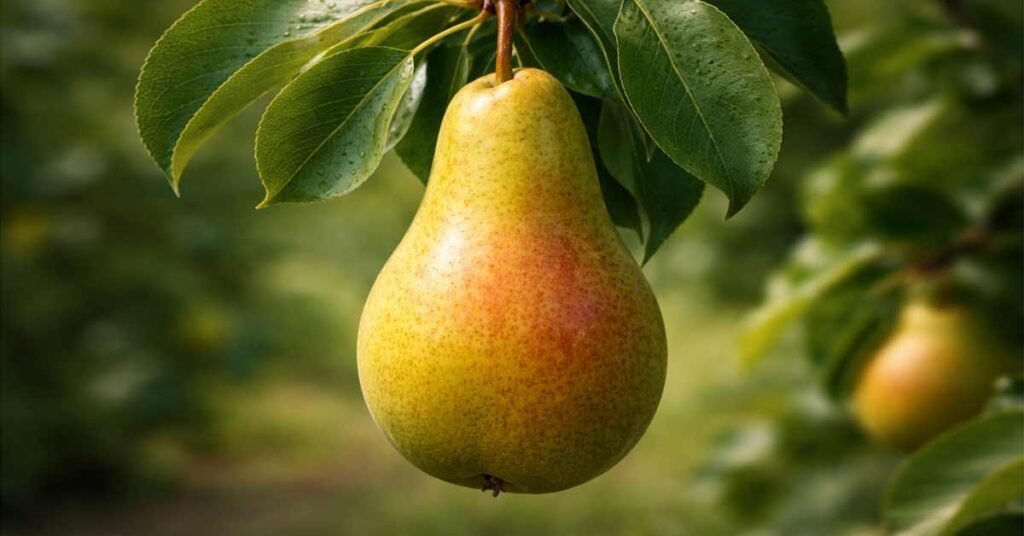
Making Pear a Natural Part of Your Routine
This is where things either stick or fall apart. You can understand digestion, hydration, fiber, all of it. But if a pear does not fit into your actual day, none of that matters.
The goal is not to create a perfect plan. It is to make pear so easy to include that you stop thinking about it. That is when it becomes part of your routine instead of something you try for a few days and forget.
A pear works best when it lives in the background of your habits. Always available, easy to grab, no preparation needed. That is the real advantage.
Easy Ways to Eat Pears Without Thinking Too Much
The simplest approach is usually the one that lasts. You do not need recipes or elaborate combinations. You need a few repeatable moments where a pear naturally fits.
Start with placement. If pears are visible, you eat them. If they are hidden in the fridge drawer, you forget.
Some low effort ways to make pear part of your day:
- Keep a bowl of pears on the counter where you pass by often
- Add a pear to your bag before leaving the house
- Place one next to your coffee setup as a reminder in the morning
Then think in terms of timing rather than planning meals.
A pear tends to work well in these moments:
- Mid morning, when you want something light but steady
- Early afternoon, when energy starts to dip
- Before dinner, when hunger builds but you do not want to overeat
You do not need to commit to a strict schedule. Just notice where you usually reach for something quick. That is where a pear can replace or balance what you already do.
There is also something to be said about ripeness. An unripe pear is firm and less appealing. A ripe pear is soft, slightly sweet, easy to eat. That difference determines whether you reach for it or ignore it.
A simple trick:
- Buy a few pears at different stages of ripeness
- Let some sit out to soften while others stay firmer
That way, you always have one ready. No waiting, no second guessing.
Another point people overlook is variety. Different types of pear have slightly different textures and sweetness levels. Rotating between them keeps things from feeling repetitive without adding complexity.
At the end of the day, the question is simple. Is a pear easier than the alternative you would normally choose? If the answer is yes, it becomes part of your routine almost automatically.
Pairing Pear for Better Nutrient Balance
A pear on its own works well. But pairing it with other foods can make it more satisfying and balanced, especially if you are using it as a snack.
A pear is mostly carbohydrates, with fiber and water. Adding protein or fat can slow digestion a bit more and help you stay full longer.
Some combinations that tend to work in real life:
- Pear with a handful of nuts
- Pear with plain yogurt
- Pear with a slice of cheese
- Pear with peanut or almond butter
These are not complicated meals. They are small adjustments that change how long the energy lasts.
For example, a pear on its own might carry you for an hour or two. Pair it with protein or fat, and that window often extends. You feel more stable, less likely to reach for something else quickly.
There is also a sensory aspect. Sweetness from the pear, combined with something creamy or slightly salty, makes the experience more satisfying. That matters because satisfaction drives consistency.
If something feels like a compromise, you eventually stop doing it. If it feels complete, you repeat it without effort.
You can also work pear into meals without overthinking it:
- Slice pear into a salad for added texture and moisture
- Add it to oatmeal for natural sweetness
- Pair it with whole grain bread and a protein source for a quick meal
How Much Pear Makes Sense Day to Day
None of this requires a recipe. It is more about noticing where a pear can replace something less balanced.
This is where people often overcomplicate things. You do not need an exact number. You need a range that feels realistic and sustainable.
For most people, one medium pear per day is a solid baseline.
Here is why that works:
- It provides around 5 to 6 grams of fiber
- It contributes to hydration without replacing water intake
- It is easy to maintain without feeling forced
If your overall diet is low in fiber, even one pear can make a noticeable difference over time. If you are already eating a variety of fruits and vegetables, a pear still adds value without pushing things too far.
Could you eat more than one pear a day? Yes, but context matters.
Two pears a day might make sense if:
- Your overall fiber intake is still within a comfortable range
- Your digestion responds well without bloating or discomfort
- It replaces less balanced snack options rather than adding extra calories on top
On the other hand, jumping from very low fiber intake to multiple pears a day can feel like too much. Your system usually needs time to adjust.
A practical approach:
- Start with one pear daily
- Keep that consistent for a couple of weeks
- Adjust based on how your digestion and appetite respond
There is also timing to consider. Eating a pear earlier in the day can support energy and hydration when you need it most. Eating it later can help manage appetite before dinner.
You do not need to optimize this perfectly. Just notice what feels better.
One more thing that often gets missed. A pear should fit into your routine, not dominate it. It is one piece of a broader pattern. You still need variety, different sources of fiber, different nutrients.
But if you had to choose a single fruit that is easy to repeat, supports digestion, and contributes to hydration without effort, pear is hard to argue against.
Keep it simple:
- Make it visible
- Make it easy
- Make it repeatable
Do that, and the rest tends to take care of itself.
Best Selling Pears Related Products




When a Small Habit Starts to Show Results
At first, nothing really stands out.
You add a pear to your day. Maybe mid morning, maybe in the afternoon. It feels like a small, almost insignificant change. No big shift in energy. No dramatic difference in how you feel. And that is usually where people underestimate what is happening.
Because this is the phase where consistency starts doing its quiet work.
A pear is not meant to create instant results. It is meant to create stable conditions. And stable conditions are what allow your body to function without constant adjustment.
Give it a few days, then a couple of weeks, and small patterns begin to show.
You might notice digestion first.
Not in a dramatic way, but in the absence of friction:
- Less variability from day to day
- A more predictable rhythm
- Fewer moments where things feel slow or uncomfortable
It is the kind of change you almost miss because nothing feels extreme anymore. Your system just settles into a steady pace.
That is usually the first signal that something is working.
Then there is hydration, which is even more subtle. Most people do not track it closely. They respond only when something feels off. But when hydration improves slightly and consistently, the signals shift.
You may start to notice:
- Less dryness through the day
- A reduced need to constantly reach for drinks
- A more stable level of focus, especially in the afternoon
Again, nothing sharp or obvious. Just fewer small drops in how you feel.
This is where the combination of fiber and water in a pear starts to show its value. Not as a single event, but as a repeated input that keeps your system from drifting too far in any direction.
There is also an effect on appetite that tends to build over time.
When you eat a pear regularly, especially at consistent times, it starts to shape how hungry you feel later. The fiber slows things down just enough. The volume helps take the edge off. The natural sugars give a light lift without a crash.
After a while, you may notice:
- Less urgency around snacks
- Fewer sudden cravings for highly processed foods
- A more controlled sense of hunger leading into meals
This is not about restriction. It is about removing the extremes that push you toward quick, less balanced choices.
There is a practical example that shows up often. Someone replaces a random afternoon snack with a pear. At first, it feels like a simple swap. After a couple of weeks, they realize they are not as drawn to overly sweet or salty foods later in the day. Not because they are trying to avoid them, but because the need is not as strong.
That shift matters more than willpower.
Another thing that starts to change is how your routine feels overall. When one small habit becomes stable, it often makes other decisions easier.
You are already doing something that supports digestion and hydration. That creates a baseline. From there, adding another simple habit feels more manageable.
But even on its own, a pear holds its place.
There is also a point where you stop thinking about it entirely. It becomes automatic. You buy pears when you shop. You reach for one without planning it. You do not track it or analyze it.
That is when the habit has fully integrated.
And this is where the real value shows up. Not in intensity, but in duration.
A single pear does not change much. A week of pears starts to shift small things. A month of consistent intake creates a pattern your body can rely on.
If you had to break down what is happening over time, it would look something like this:
- Days 1 to 3: little to no noticeable change
- Week 1 to 2: slight improvements in digestion and hydration signals
- Week 3 and beyond: more consistent patterns, fewer fluctuations
These are not exact timelines, but they reflect how gradual the process tends to be.
It is also worth acknowledging that results depend on context. A pear is not a fix for an otherwise unbalanced routine. It works best as part of a pattern where you are at least somewhat consistent with meals, fluid intake, and general habits.
But that does not reduce its value. It reinforces it.
Because a pear is one of the few changes that can fit into almost any starting point. You do not need to overhaul everything else for it to begin making a difference.
There is a tendency to look for big interventions. Something that promises fast, visible results. But those rarely last. What lasts is what you can repeat without effort.
A pear fits that model.
It supports digestion without forcing it.
It contributes to hydration without requiring attention.
It influences appetite without restriction.
And most importantly, it does all of this quietly.
At some point, you look back and realize things feel more stable. Not perfect, not optimized, just easier to manage. Fewer ups and downs. Fewer moments where you feel off without knowing why.
That is the result of a small habit that stayed long enough to matter.
Article Sources
At AncientHerbsWisdom, our content relies on reputable sources, including peer-reviewed studies, to substantiate the information presented in our articles. Our primary objective is to ensure our content is thoroughly fact-checked, maintaining a commitment to accuracy, reliability, and trustworthiness.
- Aune, D., Keum, N., Giovannucci, E., Fadnes, L. T., Boffetta, P., Greenwood, D. C., Tonstad, S., Vatten, L. J., Riboli, E., & Norat, T. (2017). Fruit and vegetable intake and the risk of cardiovascular disease, total cancer and all cause mortality: A systematic review and dose response meta analysis of prospective studies. International Journal of Epidemiology, 46(3), 1029–1056. https://doi.org/10.1093/ije/dyw319
- Dahl, W. J., & Stewart, M. L. (2015). Position of the Academy of Nutrition and Dietetics: Health implications of dietary fiber. Journal of the Academy of Nutrition and Dietetics, 115(11), 1861–1870. https://doi.org/10.1016/j.jand.2015.09.003
- EFSA Panel on Dietetic Products, Nutrition, and Allergies. (2010). Scientific opinion on dietary reference values for carbohydrates and dietary fiber. EFSA Journal, 8(3), 1462. https://doi.org/10.2903/j.efsa.2010.1462
- Food and Agriculture Organization of the United Nations. (2013). Dietary protein quality evaluation in human nutrition. FAO Food and Nutrition Paper 92. https://www.fao.org/3/i3124e/i3124e.pdf
- Gibson, G. R., Hutkins, R., Sanders, M. E., Prescott, S. L., Reimer, R. A., Salminen, S. J., Scott, K., Stanton, C., Swanson, K. S., Cani, P. D., Verbeke, K., & Reid, G. (2017). The International Scientific Association for Probiotics and Prebiotics consensus statement on the definition and scope of prebiotics. Nature Reviews Gastroenterology & Hepatology, 14(8), 491–502. https://doi.org/10.1038/nrgastro.2017.75
- Slavin, J. (2013). Fiber and prebiotics: Mechanisms and health benefits. Nutrients, 5(4), 1417–1435. https://doi.org/10.3390/nu5041417
- U.S. Department of Agriculture, Agricultural Research Service. (2019). FoodData Central: Pears, raw. https://fdc.nal.usda.gov/fdc-app.html#/food-details/169910/nutrients
- World Health Organization. (2003). Diet, nutrition and the prevention of chronic diseases. WHO Technical Report Series 916. https://www.who.int/publications/i/item/924120916X
- World Health Organization. (2020). Healthy diet. https://www.who.int/news-room/fact-sheets/detail/healthy-diet

- Phosphatidic Acid: Supporting Muscle Growth and Strength - July 31, 2026
- Ceramides: Supporting Healthy Skin From Within - July 31, 2026
- Synbiotics: Combining Prebiotics and Probiotics Together - July 31, 2026