
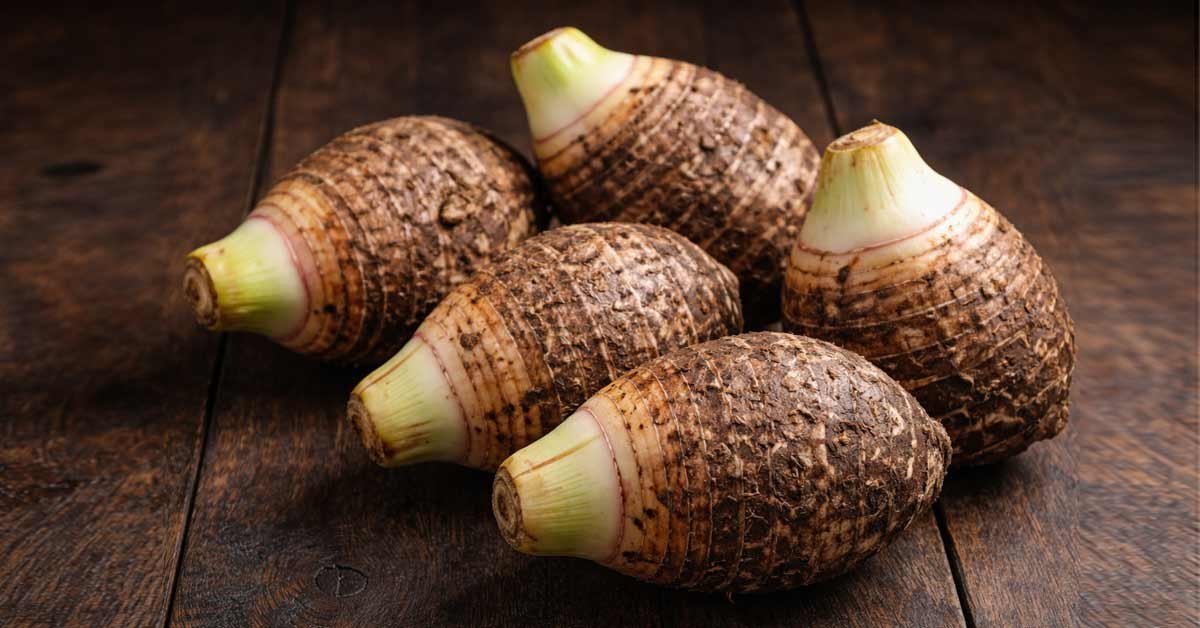
A Root That Quietly Fuels and Balances the Body
Taro has been around for centuries, quietly doing its job without needing much attention. It is not flashy. It does not trend. Yet in many parts of the world, it has been a steady source of nourishment long before modern nutrition started dissecting macronutrients and gut health.
You might have seen taro in a purple dessert, a creamy mash, or tucked into a stew. Maybe you passed by it in a market without giving it much thought. That is usually how it goes. Taro does not demand attention. It earns it over time, through consistency. And when you look closely, it becomes clear why so many cultures built meals around it.
Table of Contents

At its core, taro is a starchy root. That alone tells you a lot. Foods in this category tend to provide energy. But not all starches behave the same way once they reach your plate or your body. Some burn fast and leave you hungry again within an hour. Others move more slowly, offering a steadier release. Taro leans toward the second group, and that changes the experience of eating it.

Think about how you feel after different meals. A sugary snack might give you a quick lift, then drop you just as fast. A heavier, fiber-rich meal tends to settle in, keeping you satisfied longer. Taro fits into that second pattern. It is filling without being heavy, and energizing without being overwhelming.
That balance comes from its structure. The carbohydrates in taro are paired with fiber, including forms that resist quick digestion. This slows down how glucose enters your bloodstream. You do not need to measure anything to notice the effect. You just feel it. Fewer cravings. More stable energy. A smoother rhythm through the day.
There is also the texture. It sounds like a small detail, but it matters. When cooked properly, taro becomes soft, almost creamy, with a slightly nutty taste. That texture naturally encourages slower eating. You chew more. You pay attention. And that alone can influence digestion in a way people often overlook.
In traditional cooking, taro is rarely eaten in isolation. It shows up alongside vegetables, sometimes protein, often in dishes that simmer or bake slowly. This context matters. Food is not just about isolated nutrients. It is about how ingredients interact, how they are prepared, and how they are eaten. Taro tends to be part of meals that support a slower, more deliberate style of eating.
Another point that often gets missed is how preparation changes the experience. Raw taro is not something you eat. It needs to be cooked properly to become safe and enjoyable. Once cooked, though, it transforms completely. The starch softens. The flavor develops. The digestibility improves. This shift is a reminder that food is not static. What you do in the kitchen directly affects how your body handles what you eat.
From a practical standpoint, taro fits easily into everyday routines. It can be boiled, mashed, roasted, or added to soups. It does not require complicated techniques. You can prepare it in batches and use it across several meals. That kind of flexibility makes it easier to turn a good food into a consistent habit.
A few simple ways people often use taro:
- Boiled and mashed with a pinch of salt and olive oil
- Cubed and added to vegetable stews
- Roasted until slightly crisp on the outside
- Blended into soups for a thicker texture
These are not elaborate recipes. That is the point. The easier something is to prepare, the more likely it becomes part of your routine.
There is also a subtle psychological aspect to foods like taro. When you rely on ingredients that provide steady energy and support digestion, your relationship with food starts to shift. You stop chasing quick fixes. You build meals that carry you through the day without constant snacking or energy dips. It is not dramatic. It is quiet. But over time, it adds up.
Taro does not try to be everything. It does not replace every other carbohydrate or solve every dietary concern. What it does is simpler. It offers a reliable foundation. A way to support energy without extremes. A way to ease digestion without overthinking it.
And maybe that is why it has lasted. Not because it is trendy or exotic, but because it works. Consistently, predictably, without much effort.
When you start paying attention to foods that make you feel steady rather than stimulated, taro begins to make more sense. It is not just something you eat. It becomes something you return to.
Taro and Energy: More Than Just a Carb Source
There is a tendency to lump all carbohydrate-rich foods into the same category. Fast energy. Quick spikes. Something to be managed or limited. But that view falls apart the moment you start paying attention to how different foods actually behave in your body. Taro is a good example of why that distinction matters.
Yes, taro is a starchy root. That is not in question. But what matters is how that starch is structured, how it is digested, and what kind of energy it actually provides once you eat it. The difference between steady fuel and short-lived bursts often comes down to those details.
Understanding Taro’s Complex Carbohydrates
The carbohydrates in taro are primarily complex. That means they are made of longer chains of glucose molecules that take more time to break down during digestion. This slower breakdown process changes everything.
Instead of releasing glucose rapidly into the bloodstream, taro allows for a more gradual absorption. The presence of fiber, both soluble and insoluble, further slows this process. You are not just eating starch. You are eating a structure that naturally moderates how your body accesses that energy.
From a practical standpoint, this often translates into:
- A slower rise in blood glucose levels after eating
- Reduced likelihood of sudden hunger shortly after a meal
- More consistent energy across several hours
You do not need lab measurements to notice the difference. It shows up in how long you stay satisfied and how stable your focus feels during the day.
Another detail worth paying attention to is how cooking affects these carbohydrates. When taro is cooked and then allowed to cool, part of its starch content can reorganize into a form that resists digestion. That small shift has a measurable impact on how your body processes the food.
Steady Energy vs. Quick Spikes
It helps to compare taro with more refined carbohydrate sources. Think white bread, sugary snacks, or highly processed cereals. These tend to break down quickly, flooding the bloodstream with glucose. The body responds with a rapid insulin release, and not long after, energy levels tend to drop.
Taro behaves differently.
Because of its fiber content and complex carbohydrate structure, the release of glucose is slower and more controlled. The result is not a sharp peak followed by a crash, but a flatter, more sustained curve.
You might notice:
- Fewer mid-morning or mid-afternoon energy dips
- Less need for constant snacking
- A more stable mental focus
This is especially relevant if your day requires steady output rather than short bursts. Whether you are working, studying, or just trying to avoid that late afternoon slump, the type of carbohydrate you choose plays a direct role.
There is also a satiety factor here. Foods that digest more slowly tend to keep you full longer. Taro does this quietly. It does not feel heavy, but it lingers just enough to prevent that restless feeling that pushes you toward the next snack.
Resistant Starch and Metabolic Efficiency
One of the more interesting aspects of taro is its content of resistant starch. This is a type of carbohydrate that does not get fully digested in the small intestine. Instead, it moves into the large intestine, where it becomes a substrate for gut bacteria.
That might sound like a digestion topic, but it ties directly into energy.
When gut bacteria ferment resistant starch, they produce short-chain fatty acids. These compounds can be absorbed and used by the body as a secondary energy source. The process is slower and less direct, but it contributes to overall metabolic efficiency.
There is also evidence that resistant starch can improve how the body responds to insulin. A more stable insulin response supports better energy regulation over time. You are not constantly cycling between highs and lows.
Here is where preparation matters again. If you cook taro and eat it immediately, you get one profile of starch digestion. If you cook it, let it cool, and then reheat it, the resistant starch content can increase. It is a small adjustment, but it can make a difference if you are paying attention to how your body responds.
This is not about optimizing every bite. It is about understanding that simple habits can shift how food works for you.
Practical Ways to Use Taro for Sustained Energy
Knowing the theory is useful, but it only matters if it translates into something you can actually do on a regular day. Taro is practical in that sense. It fits into meals without requiring major changes.
A few approaches that work well:
- Start with a base
Replace part of your usual carbohydrate source with taro. Instead of relying entirely on rice or bread, add boiled or roasted taro alongside your meal. - Batch cook for consistency
Cook a larger portion of taro, let it cool, and store it in the fridge. This not only saves time but also supports the formation of resistant starch. - Pair it with protein and fat
Combining taro with foods like legumes, fish, eggs, or olive oil slows digestion further and enhances satiety. The result is a meal that carries you longer. - Use it in simple, repeatable meals
Think of combinations you can prepare without effort:- Taro with sautéed vegetables and a drizzle of oil
- Taro added to soups for a thicker, more satisfying texture
- Roasted taro cubes with herbs and a side of protein
- Pay attention to timing
Taro works well earlier in the day or before periods where you need sustained energy. It is not about strict rules, just noticing when it helps you feel more stable.
There is no need to overcomplicate it. The goal is not perfection. It is consistency.
When you start using taro in this way, you begin to see it less as a side dish and more as a reliable energy source. It supports you without drawing attention to itself. And that is often what makes a food worth keeping in rotation.
Taro and Digestion: A Root That Works With Your Gut
Digestion is one of those things you only notice when it goes wrong. When it works well, it stays in the background. Meals feel light but satisfying. There is no bloating, no heaviness, no second-guessing what you just ate. Taro tends to support that kind of quiet efficiency, and it does it without needing much attention.
Part of the reason comes down to how taro is built. It is not just starch packed into a root. It carries a mix of fibers and compounds that influence how food moves through your system, how it gets broken down, and how your gut environment responds over time. When you eat taro regularly, the effect is not dramatic. It is subtle, steady, and cumulative.
Fiber Composition and Its Role in Digestive Flow
The fiber in taro does more than add bulk. It creates structure. There is a balance between soluble fiber, which forms a gel-like consistency in the gut, and insoluble fiber, which adds physical volume to what you eat. That combination shapes digestive flow in a practical way.
Soluble fiber slows things down just enough. It helps regulate how nutrients are absorbed and gives your digestive system time to do its job properly. Insoluble fiber moves things along, supporting regularity and preventing that sluggish, backed-up feeling.
Together, they create a rhythm. Not too fast, not too slow.
You might notice a few things when taro becomes a regular part of your meals:
- A more predictable digestion pattern
- Less post-meal heaviness
- Reduced tendency toward bloating when portions are reasonable
There is also the texture factor again. Cooked taro is soft, almost creamy. That makes it easier to break down mechanically when you eat it. Less strain on the digestive process often translates into better comfort afterward.
Gut Microbiome Support Through Resistant Starch
This is where taro becomes more interesting. Some of its starch behaves differently from typical carbohydrates. Resistant starch passes through the small intestine without being fully digested and reaches the large intestine intact.
Once there, it becomes fuel for gut bacteria.
That interaction matters. A well-fed microbiome tends to produce compounds called short-chain fatty acids. These compounds play a role in maintaining the integrity of the gut lining and supporting overall digestive balance.
You do not feel this happening directly. What you notice instead is the outcome:
- A gut that feels calmer and less reactive
- Better tolerance to a wider range of foods
- A general sense that digestion is working with you, not against you
Consistency matters here. Eating taro once will not shift your gut environment. Including it regularly, even in small amounts, gives your microbiome something to work with over time.
And again, preparation plays a role. When taro is cooked and then cooled, the resistant starch content can increase. That gives gut bacteria more to ferment. It is a small adjustment that can have a meaningful effect when repeated.
Cooking Methods That Influence Digestibility
Taro is not a raw food. It needs to be cooked properly, and the method you choose can change how easy it is on your system.
Boiling is the most straightforward approach. It softens the fibers and starches, making taro easier to digest. This is often the best starting point if you are new to it or if your digestion tends to be sensitive.
Steaming works in a similar way, preserving structure while still improving digestibility. It is a good option if you want a slightly firmer texture without sacrificing comfort.
Roasting adds another layer. It brings out flavor and creates a crisp exterior, but it also concentrates the starch. Some people find roasted taro slightly heavier, especially in larger portions. That does not make it a poor choice. It just means you might want to pay attention to how your body responds.
A few practical observations:
- Well-cooked taro should be soft all the way through. Undercooked pieces can feel dense and harder to digest
- Cooling and reheating can improve resistant starch content, which may support gut health
- Pairing taro with moisture-rich foods like vegetables or broths can make meals feel lighter
Preparation is not just about taste. It directly shapes how taro interacts with your digestive system.
Portioning Taro for Comfort and Consistency
Even with a well-tolerated food, portion size matters. Taro is filling. That is part of its strength, but it also means that eating too much at once can feel excessive.
The goal is not to maximize intake. It is to find a portion that supports your digestion without overwhelming it.
A practical way to approach this:
- Start with a moderate serving, roughly the size of your fist
- Combine taro with other foods rather than eating it alone
- Pay attention to how you feel one to two hours after eating
If digestion feels smooth and energy remains stable, you are likely in a good range. If you notice heaviness or sluggishness, it might be worth adjusting the portion or the preparation method.
There is also value in consistency. Smaller, regular servings of taro tend to work better than occasional large portions. Your digestive system responds well to patterns. When you give it familiar inputs, it adapts.
Some simple ways to keep portions balanced:
- Add a few cubes of taro to soups instead of making it the entire base
- Mix mashed taro with other vegetables
- Use taro as one component of a meal rather than the centerpiece
These small adjustments keep taro working in your favor.
Over time, taro becomes less of an experiment and more of a reliable part of your routine. It supports digestion without drawing attention to itself. And that is usually the sign that something is working as it should.
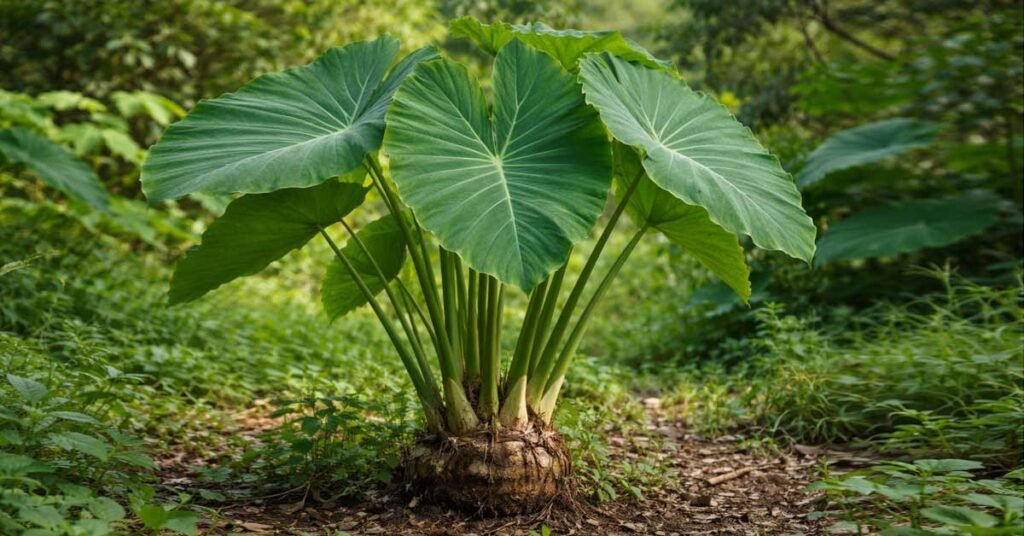
Beyond Energy and Digestion: The Nutritional Depth of Taro
It is easy to stop at energy and digestion when thinking about taro. That is where most of the conversation usually sits. But that view is incomplete. Taro brings more to the table than steady fuel and gut support. Its nutritional profile is broader, and when you look at it in context, it starts to feel less like a simple root and more like a foundational food.
What makes taro interesting is not that it is packed with extreme amounts of any single nutrient. It is the balance. It provides a range of vitamins, minerals, and plant compounds in proportions that make sense for everyday eating. Nothing excessive. Nothing missing. Just steady support across multiple systems.
Key Vitamins and Minerals That Support Daily Function
Taro contributes several micronutrients that quietly support basic physiological processes. You are not going to eat taro once and feel a noticeable shift. But include it regularly, and it starts to fill in nutritional gaps that often go unnoticed.
Some of the more relevant nutrients in taro include:
- Potassium
Plays a role in fluid balance and muscle function. It also supports normal nerve signaling. Many diets fall short here, especially when processed foods replace whole ingredients. - Magnesium
Involved in hundreds of enzymatic reactions. It supports muscle relaxation, energy production, and general metabolic function. - Vitamin B6
Helps with amino acid metabolism and contributes to the production of neurotransmitters. It is one of those nutrients that quietly supports both physical and cognitive processes. - Vitamin C
Present in smaller amounts compared to fruits, but still contributes to antioxidant defenses and tissue maintenance. - Manganese
Often overlooked, yet important for enzyme activity and the metabolism of carbohydrates and amino acids.
What stands out is how these nutrients align with the role taro already plays. A food that supports energy also providing magnesium and B vitamins makes sense. A root that works well for digestion contributing minerals that support muscle and nerve function adds another layer of usefulness.
This is how real foods tend to work. They are not isolated solutions. They are systems that support other systems.
Antioxidants and Plant Compounds in Taro
Taro also contains plant compounds that extend beyond basic nutrition. These include polyphenols and other antioxidants that help manage oxidative stress in the body.
You will not see taro at the top of antioxidant charts, and that is fine. The value here is not about extremes. It is about consistency.
Regular exposure to a range of plant compounds can support:
- Cellular resilience over time
- A balanced inflammatory response
- General maintenance of tissues and systems
There is also some variation depending on the type of taro. Purple varieties, for example, may contain additional pigments that contribute to antioxidant activity. These visual differences often signal shifts in plant compound content, even if the overall role remains similar.
Again, this is not about turning taro into a superfood headline. It is about recognizing that even simple foods contribute to a broader nutritional picture when eaten consistently.
How Taro Fits Into Balanced Eating Patterns
Taro works best when it is part of a pattern, not treated as a standalone solution. Its composition makes it a strong base for meals, especially when combined with other whole foods.
A balanced approach might look like this:
- Carbohydrate base: taro
- Protein source: legumes, fish, eggs, or lean meats
- Fats: olive oil, nuts, seeds
- Fiber-rich additions: vegetables of different colors
This kind of structure does a few things at once. It stabilizes energy, supports digestion, and ensures a broader nutrient intake. Taro anchors the meal without dominating it.
It is also flexible across dietary styles. Whether someone leans toward plant-based eating or includes animal products, taro fits without friction. That flexibility makes it easier to maintain consistency, which is where most benefits come from.
A few practical combinations that tend to work well:
- Taro with lentils and sautéed greens
- Roasted taro with fish and a simple vegetable side
- Mashed taro with olive oil, paired with beans or eggs
None of these are complicated. They are repeatable. That matters more than novelty.
Cultural and Culinary Perspectives That Shape Its Use
To understand taro fully, it helps to look at how it has been used traditionally. In many regions across Asia, Africa, and the Pacific Islands, taro is not a side dish. It is a staple.
It appears in meals that are built around balance and practicality. Slow-cooked stews, steamed preparations, mashed forms that are easy to digest and share. These methods did not come from nutritional theory. They came from observation and repetition over generations.
There is a pattern in how taro shows up in these cuisines:
- It is often cooked thoroughly, improving digestibility
- It is combined with other whole ingredients rather than eaten alone
- It is part of meals designed to sustain, not just satisfy briefly
That context adds something modern discussions often miss. Taro has already been tested in real-world conditions across different environments and lifestyles. Its continued use suggests it meets basic needs reliably.
Even today, when it appears in more modern dishes, that foundation remains. Whether it is blended into a soup, baked into a dish, or prepared traditionally, the core role does not change.
Taro supports. It adapts. It fits.
When you step back and look at it this way, taro stops being just another root vegetable. It becomes part of a larger pattern of eating that prioritizes stability, balance, and long-term sustainability.
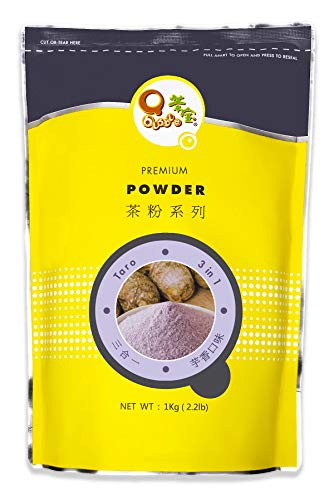
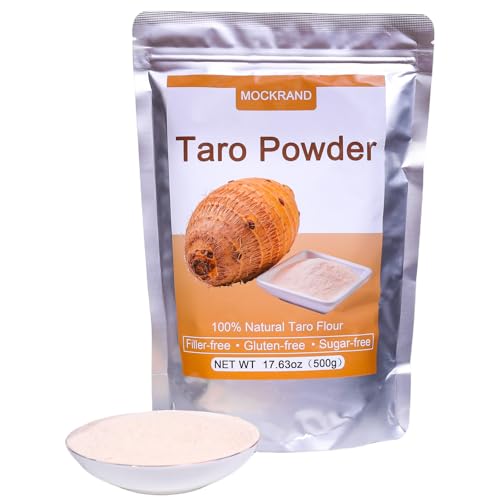
Best Selling Taro Related Products


When a Simple Root Becomes a Daily Advantage
At some point, the conversation stops being about nutrients. You already know taro supports energy. You have seen how it works with digestion. The more interesting question is simpler. Does it fit into your life in a way that actually lasts?
Because that is where most foods fail. Not in theory, but in repetition.
Taro has an advantage here. It does not rely on novelty. It does not demand precision. It is the kind of food that quietly earns a place in your routine because it keeps doing what you expect it to do. You eat it, you feel steady, digestion stays predictable, and nothing feels forced.
That consistency is what turns taro from an occasional ingredient into something you reach for without thinking.
There is a shift that happens when you start building meals around foods like taro. You stop chasing quick energy fixes. You stop reacting to dips and cravings. Instead, you create a baseline that carries you through most of the day without much effort.
It is not dramatic. It is actually a bit boring. But in practice, that is exactly what works.
Think about a typical day. You eat something quick in the morning, maybe grab something else a few hours later, and by the afternoon you are already looking for another boost. That cycle often has less to do with how much you eat and more to do with what you eat.
When taro becomes part of that rhythm, things tend to smooth out.
You might notice:
- Meals hold you longer without feeling heavy
- Energy feels more even, less reactive
- Digestion becomes something you stop thinking about
That last point is easy to overlook. When digestion works well, it disappears from your awareness. That alone is a strong indicator that your food choices are lining up with what your body handles best.
There is also a practical side to this. Taro is not fragile. It stores well. It handles reheating without falling apart. You can prepare it in advance and use it across several meals without much drop in quality. That makes it easier to stay consistent, even when your schedule is not.
A simple approach that tends to stick looks like this:
- Cook taro in batches once or twice a week
- Keep it in the fridge, ready to add to meals
- Rotate how you use it so it does not feel repetitive
For example:
- One day it shows up in a soup
- The next day it is roasted alongside vegetables
- Later it becomes part of a simple mash
Same ingredient, different experience. That variety helps maintain the habit without adding complexity.
There is also something worth saying about expectations. Taro is not going to transform how you feel overnight. It is not designed for that. What it does is more subtle and, over time, more reliable.
It helps you build meals that:
- Support steady energy instead of quick spikes
- Work with your digestion instead of challenging it
- Fit into your routine without constant adjustment
And once that pattern is in place, you stop needing to think about it so much.
Another angle that often gets missed is how foods like taro influence decision-making around eating. When your baseline is stable, you are less likely to reach for whatever is convenient in the moment. You are not driven by sudden hunger or low energy. You choose more deliberately, almost without realizing it.
That is where the real advantage shows up. Not in the individual meal, but in the pattern that forms around it.
There is no strict rule for how often to eat taro. It depends on your preferences and how your body responds. For some, a few times a week is enough to notice a difference. For others, it becomes a near-daily staple. The key is not frequency alone, but consistency over time.
If you are trying to make it work realistically, keep it simple:
- Start with one or two meals per week
- Pay attention to how you feel afterward
- Adjust portions and preparation as needed
- Let it become familiar before increasing frequency
No pressure, no overhaul. Just a gradual shift.
Over time, taro stops being something you evaluate and starts being something you rely on. It becomes part of your default way of eating, not because you decided it should be, but because it fits.
And that is usually the point where a simple food becomes useful in a lasting way. Not because it promises anything extraordinary, but because it quietly delivers, day after day, without asking much in return.
Article Sources
At AncientHerbsWisdom, our content relies on reputable sources, including peer-reviewed studies, to substantiate the information presented in our articles. Our primary objective is to ensure our content is thoroughly fact-checked, maintaining a commitment to accuracy, reliability, and trustworthiness.
- Agyare, C., Boakye, Y. D., Bekoe, E. O., Hensel, A., Dapaah, S. O., & Appiah, T. (2016). Review: African medicinal plants with wound healing properties. Journal of Ethnopharmacology, 177, 85–100. https://doi.org/10.1016/j.jep.2015.11.008
- Brown, I. L. (2004). Applications and uses of resistant starch. Journal of AOAC International, 87(3), 727–732. https://doi.org/10.1093/jaoac/87.3.727
- Chandrasekara, A., & Josheph Kumar, T. (2016). Roots and tuber crops as functional foods: A review on phytochemical constituents and their potential health benefits. International Journal of Food Science, 2016, 3631647. https://doi.org/10.1155/2016/3631647
- Food and Agriculture Organization of the United Nations. (2013). Edible roots, tubers, plantains and bananas in human nutrition. FAO Food and Nutrition Series No. 24. http://www.fao.org/3/t0207e/t0207e.pdf
- Higuchi, T., & Hara, H. (2003). Resistant starch and gut microbiota: Effects on fermentation and intestinal health. Journal of Nutritional Science and Vitaminology, 49(5), 273–276. https://doi.org/10.3177/jnsv.49.273
- Lebot, V. (2009). Tropical root and tuber crops: Cassava, sweet potato, yams and aroids. CABI Publishing. https://doi.org/10.1079/9781845934248.0000
- Ndabikunze, B. K., Talwana, H. A. L., Mongi, R. J., Issa-Zacharia, A., Serem, A. K., Palapala, V. A., & Nandi, J. M. (2011). Proximate and mineral composition of cocoyam (Colocasia esculenta and Xanthosoma sagittifolium) grown along the Lake Victoria Basin in Tanzania and Kenya. Journal of Agricultural and Biological Science, 6(2), 1–13. http://www.arpnjournals.com/jabs/research_papers/rp_2011/jabs_0211_228.pdf
- Niba, L. L. (2003). Processing effects on susceptibility of starch to digestion in some dietary starch sources. International Journal of Food Sciences and Nutrition, 54(1), 97–109. https://doi.org/10.1080/0963748031000084076
- Slavin, J. (2013). Fiber and prebiotics: Mechanisms and health benefits. Nutrients, 5(4), 1417–1435. https://doi.org/10.3390/nu5041417
- U.S. Department of Agriculture, Agricultural Research Service. (2019). FoodData Central: Taro, raw. https://fdc.nal.usda.gov/fdc-app.html#/food-details/169978/nutrients

- Phosphatidic Acid: Supporting Muscle Growth and Strength - July 31, 2026
- Ceramides: Supporting Healthy Skin From Within - July 31, 2026
- Synbiotics: Combining Prebiotics and Probiotics Together - July 31, 2026