
The Quiet Strength of Bok Choy in Everyday Eating
You don’t usually hear people get excited about bok choy. It doesn’t have the cultural weight of kale or the comfort factor of spinach. It sits quietly in the produce aisle, pale green stalks, dark leaves, almost understated. And yet, if you pay attention to how people actually eat over time, not just what trends for a few months, bok choy tends to stick around.
That matters more than most people think.
Because when it comes to bone health, you are not looking for a single “superfood moment.” You are building something slow. Something structural. Bone is living tissue. It responds to what you do daily, not occasionally. And that’s where bok choy earns its place without trying too hard.
Table of Contents


There’s something practical about it. You can toss it into a pan in under five minutes. You can add it to soups, noodles, rice dishes, even eat it raw if it’s young and tender. It doesn’t demand a complicated recipe or a strong commitment. And that ease changes behavior. If a food fits into your routine without friction, you’ll eat it more often. That consistency is what shapes outcomes over time.
A lot of people assume bone health starts and ends with dairy. Milk, cheese, maybe yogurt if they are trying to be a bit more health-conscious. But when you zoom out and look at dietary patterns linked with better bone density, especially in large observational studies, you notice something else. Diets rich in vegetables, especially leafy greens, show up again and again. Not because they are trendy, but because they supply a broader mix of nutrients that bone tissue quietly relies on.
Bok choy happens to be one of those vegetables that delivers more than it advertises.
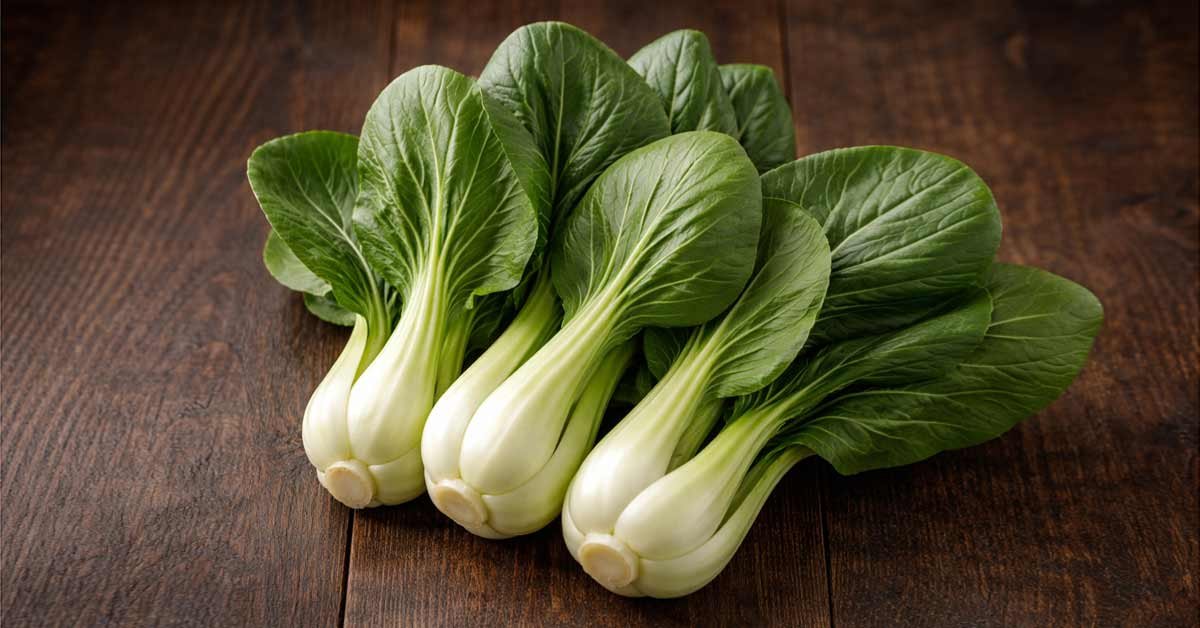
Pick up a bunch and look at it closely. The crisp white stems hold structure. The leaves are softer, almost delicate. That contrast tells you something about its composition. High water content, yes, but also a mix of minerals and compounds that don’t scream for attention. Calcium is there, but not in a way that feels heavy. Vitamin K is present in meaningful amounts, yet you won’t notice it the way you would notice caffeine or sugar. It works in the background.
And that’s kind of the point.
Bone health is not built on extremes. It’s built on accumulation. Small inputs, repeated often enough, start to matter. Think about it like this. If you eat bok choy a few times a week, maybe in a quick stir fry or dropped into a simmering broth, you are layering in nutrients without changing your life. You’re not forcing a new system. You’re just adjusting what’s already there.
People who succeed with long-term dietary changes rarely overhaul everything at once. They add one or two things that feel manageable. Bok choy fits that pattern almost perfectly.
There’s also the question of tolerance. Some greens come with baggage. They can be bitter, tough, or simply hard to digest in larger amounts. Bok choy tends to be gentler. Its fiber structure is less aggressive, especially when lightly cooked. That makes it easier to include regularly without the kind of pushback that leads people to quietly drop a food after a week or two.
And then there’s taste, which is often where good intentions fall apart. Bok choy has a mild, slightly peppery profile. It absorbs flavors well. Garlic, soy sauce, ginger, olive oil, even a bit of lemon. It adapts. That flexibility means you don’t get bored as quickly. You can prepare it differently depending on what you already have in your kitchen.
A simple example. You come home late, you’re hungry, and you want something quick. You heat a pan, add a bit of oil, toss in chopped garlic, then bok choy. Two to three minutes, maybe a splash of soy sauce. Done. It’s not a “health ritual.” It’s just dinner. But that dinner includes a vegetable that supports bone health in a quiet, cumulative way.
Over time, those small choices stack.
Another thing that often gets overlooked is how foods interact within a meal. Bok choy rarely stands alone. It’s part of a dish. Maybe alongside protein, maybe with grains, maybe both. That context matters because nutrient absorption and utilization depend on what else you eat. Fat helps with certain vitamins. Protein supports overall tissue maintenance. Bok choy fits into that system without competing for attention.
You start to see a pattern here. It’s not about bok choy being exceptional in isolation. It’s about how well it integrates into real eating habits.
There’s also a seasonal angle. Bok choy is widely available year round, but it thrives in cooler conditions. In many places, it shows up at its best when other greens are either out of season or less appealing. That gives you a reliable option when variety tends to drop. And variety, even at a basic level, supports a broader nutrient intake.
If you talk to people who have maintained steady, balanced diets for years, they rarely describe dramatic changes. They talk about routines. About foods they keep coming back to because they work. Bok choy often ends up in that category. Not because it’s exciting, but because it’s dependable.
And dependability is underrated.
Bone health doesn’t ask for perfection. It asks for consistency. For patterns that hold over months and years. Foods like bok choy make that easier, not by forcing discipline, but by removing obstacles. It cooks fast. It tastes good with minimal effort. It blends into meals you already enjoy.
So instead of thinking about it as something you “should” eat, it’s more useful to think about where it naturally fits. A side dish here. A quick addition to a soup there. A base for a stir fry when you don’t feel like overthinking dinner.
Nothing dramatic. Just repetition.
And over time, that quiet repetition starts to matter more than any single, perfect meal ever could.
What Makes Bok Choy a Standout for Bone Health
There’s a difference between a food that looks good on paper and one that actually contributes in a meaningful way once it’s on your plate. Bok choy falls into the second category, and not by accident. It brings together a set of nutrients that tend to work in the background of bone health, the kind you don’t feel immediately but that shape outcomes over time.
What makes it interesting is not just what it contains, but how those nutrients behave in the body. Bone health is less about hitting a single number and more about coordination. Minerals, vitamins, and cellular processes all moving in the same direction. Bok choy fits into that system in a way that’s surprisingly efficient.
Calcium That Actually Gets Used
Calcium gets all the attention. For good reason. It forms a large part of bone structure. But here’s where things get a bit more nuanced. The amount of calcium in a food doesn’t tell you how much your body can actually use.
Bok choy contains less calcium per serving than dairy. That’s straightforward. But absorption rates tell a different story.
Research has shown that calcium from low oxalate leafy greens like bok choy can be absorbed at a relatively high rate, in some cases around 50 percent or more. Compare that with dairy, where absorption tends to sit closer to 30 to 35 percent. The numbers vary depending on the study, but the pattern holds.
You can think of it like this:
- 1 cup of cooked bok choy contains roughly 150 to 160 mg of calcium
- If absorption is around 50 percent, you retain about 75 to 80 mg
- 1 cup of milk contains about 300 mg of calcium
- At 30 percent absorption, that gives you about 90 mg
The gap narrows quickly.
This doesn’t mean bok choy replaces other calcium sources. It means it contributes more effectively than many people assume. And when you eat it regularly, those contributions add up without needing large portions.
There’s also a practical angle. Some people reduce dairy intake for personal or digestive reasons. In that context, foods like bok choy become more relevant, not as substitutes, but as steady contributors that help maintain overall intake.
Vitamin K and Bone Remodeling
If calcium is the building material, vitamin K is part of the system that decides where that material goes.
Bone is constantly being broken down and rebuilt. This process, known as remodeling, relies on a set of proteins that need vitamin K to function properly. One of the most studied is osteocalcin, a protein involved in binding calcium to the bone matrix.
Without enough vitamin K, this process becomes less efficient. Calcium may still be present, but it is not used as effectively for bone formation.
Bok choy provides a meaningful amount of vitamin K, particularly in the form of phylloquinone (vitamin K1). A single cup can deliver well over the daily recommended intake, depending on preparation and portion size.
What makes this relevant is not just the amount, but the consistency. Vitamin K is not stored in large quantities in the body. Regular intake matters.
In practical terms:
- Including bok choy a few times per week helps maintain steady vitamin K levels
- This supports normal bone turnover processes
- Over time, efficient remodeling contributes to stronger, more resilient bone structure
It’s not something you feel after a single meal. It’s something that shows up in patterns measured over months and years.
Magnesium, Potassium, and Structural Support
Calcium and vitamin K tend to dominate the conversation, but bone health is not a two nutrient system. It relies on a broader mineral balance, and this is where bok choy quietly adds value.
Magnesium plays a role in bone formation and influences how calcium is transported and utilized. Around 50 to 60 percent of the body’s magnesium is stored in bone tissue. Low intake has been associated with changes in bone density in observational studies.
Potassium, on the other hand, contributes to acid base balance. Diets high in potassium rich foods, especially vegetables, are associated with reduced calcium loss through urine. The idea is simple. When the diet is more alkaline, the body is less likely to draw calcium from bone to buffer acidity.
Bok choy contains both magnesium and potassium in moderate amounts. Not extreme levels, but enough to matter when included regularly.
A typical serving provides:
- Around 20 to 30 mg of magnesium
- Roughly 250 to 300 mg of potassium
Individually, these numbers don’t stand out. But bone health doesn’t depend on single large inputs. It depends on cumulative intake across the day.
This is where patterns come in again. If bok choy is part of a diet that already includes other vegetables, legumes, and whole foods, these minerals reinforce each other. The effect is not isolated. It’s additive.
Low Oxalate Advantage Compared to Other Greens
This is one of those details that rarely gets mentioned, but it changes how you interpret everything else.
Oxalates are naturally occurring compounds found in many plant foods. In high amounts, they can bind to calcium and reduce its absorption. Some leafy greens, like spinach, are particularly high in oxalates.
Spinach, for example, contains a significant amount of calcium on paper. But due to its high oxalate content, the fraction your body absorbs is quite low, often estimated below 10 percent.
Bok choy is different.
It is considered a low oxalate vegetable. That means less interference with calcium absorption. The calcium it contains remains more available for the body to use.
This changes how you evaluate it:
- You are not just looking at calcium content
- You are looking at how much of that calcium remains usable
- Bok choy performs well on both sides of that equation
From a practical standpoint, this makes it a reliable choice if you are trying to build a diet that supports bone health without overcomplicating things.
It also explains why diversity in greens matters. Rotating between different types ensures you benefit from a range of nutrients while avoiding the limitations of any single food.
If you rely heavily on high oxalate greens, you may unintentionally reduce the effectiveness of your calcium intake. Including bok choy helps balance that out.
Taken together, these factors give bok choy a kind of quiet efficiency. It doesn’t dominate any single category, but it performs well across several that matter for bone health.
And when you zoom out, that’s what you want. Not extremes. Not a single nutrient in isolation. A combination that works together, consistently, without requiring constant attention.
That’s where bok choy earns its place.
How Bok Choy Fits into Real Life Without Effort
There’s a gap between knowing something is good for you and actually eating it often enough to matter. That gap is where most habits fall apart. Bok choy works because it doesn’t ask for much. No complicated prep. No special timing. No mental negotiation at the end of a long day.
If you’ve ever stood in your kitchen thinking, “I should eat better,” but then defaulted to whatever was easiest, you already understand the problem. The foods that win are the ones that slide into your routine without resistance. Bok choy tends to do exactly that once you know how to handle it.
Buying, Storing, and Preparing Bok Choy
Start at the store. You’re looking for firm, crisp stalks and leaves that still have some life in them. The stems should feel solid, not rubbery. The leaves should be deep green, not yellowing or wilted. Smaller heads are usually more tender, but larger ones work just as well if you’re cooking them.
There are usually two common forms:
- Baby bok choy, smaller, more delicate, cooks very quickly
- Mature bok choy, larger stalks, slightly more structure
Both are useful. It just depends on what you’re making.
Once you bring it home, don’t overthink storage. Keep it in the fridge, ideally in a loose bag or wrapped lightly so it doesn’t dry out. It holds up well for several days, sometimes close to a week if it’s fresh when you buy it.
Preparation is where people sometimes hesitate, but it’s simpler than it looks.
A quick routine:
- Slice off the base if it looks dry
- Separate the stalks if dirt is trapped near the bottom
- Rinse under running water
- Shake off excess moisture
That’s it. No peeling. No soaking. No long prep time.
If you’re in a hurry, you can chop the whole thing and cook it as is. If you want a bit more control over texture, separate the stems from the leaves. The stems take a bit longer to cook, so you add them first, then the leaves at the end.
Once you’ve done it a couple of times, it becomes automatic.
Simple Ways to Cook Bok Choy Without Losing Nutrients
This is where people sometimes go too far. They either overcook vegetables until everything turns soft and muted, or they avoid cooking altogether out of fear of “losing nutrients.”
The reality sits somewhere in the middle.
Bok choy responds well to quick cooking. High heat, short time. That approach preserves texture and helps retain water soluble vitamins.
A few methods that work without much effort:
- Stir fry: Heat a pan, add oil, garlic, maybe ginger, then bok choy. Cook for 3 to 5 minutes. The stems soften slightly, the leaves wilt, but nothing collapses.
- Steaming: 3 to 4 minutes is enough. The color brightens, texture stays intact.
- Soup addition: Drop chopped bok choy into hot broth near the end. It cooks in a minute or two.
- Sauté with minimal water: A splash of water with a lid can lightly steam and soften it without overcooking.
What you want to avoid is long cooking times. Ten or fifteen minutes on heat breaks down texture and reduces some of the more delicate nutrients.
A simple rule you can follow without measuring anything: once the leaves are wilted and the stems are just tender, you’re done.
There’s also a practical benefit here. Quick cooking means less friction. Less time between deciding to eat something and actually having it on your plate.
Pairing Bok Choy for Better Nutrient Absorption
This is one of those small adjustments that changes how effective your meals are without changing what you eat too much.
Bok choy contains nutrients that depend on context. Fat soluble vitamins, for example, are better absorbed when there’s some fat in the meal. Minerals interact with other components in the dish.
So instead of treating bok choy as a standalone side, it helps to think about what you pair it with.
A few combinations that make sense:
- With healthy fats: Olive oil, sesame oil, or even a handful of nuts improves absorption of fat soluble compounds.
- With protein: Eggs, tofu, chicken, or fish turn it into a more complete meal and support overall tissue maintenance.
- With vitamin C rich foods: While bok choy already contains some vitamin C, pairing it with other sources like peppers or citrus can support mineral absorption.
- With grains or legumes: Rice, quinoa, lentils. These combinations make meals more satisfying and easier to repeat regularly.
You don’t need to calculate anything. Just avoid eating it completely on its own every time. A small amount of fat and a source of protein goes a long way.
A quick example. Stir fried bok choy with garlic, a drizzle of sesame oil, and scrambled eggs over rice. It takes under ten minutes. It covers multiple bases without feeling like a “designed” health meal.
That’s the kind of setup that sticks.
How Much Bok Choy Makes Sense Day to Day
This is where people often look for exact numbers, but real life doesn’t work that way.
You don’t need a precise daily dose for bok choy to contribute to bone health. What matters more is frequency and consistency.
A practical range:
- One serving is roughly 1 cup cooked or 2 cups raw
- Including it 3 to 5 times per week is already meaningful
- More is fine, as long as it fits naturally into your meals
If you want a simple way to think about it, treat bok choy as one of your regular vegetables, not a special case. Rotate it with others, but bring it back often enough that it becomes familiar.
Some people prefer eating the same foods repeatedly. Others need more variety. Bok choy works in both cases because it adapts easily.
You might have it:
- In a quick weekday stir fry
- Added to a weekend soup
- As a side dish with a simple protein
Over time, these moments blend together. You’re not tracking intake. You’re just eating in a way that supports bone health without constant effort.
And that’s really the goal. Not perfect planning. Not strict rules. Just a pattern that holds up when life gets busy.
Bok choy fits into that pattern because it doesn’t compete for attention. It shows up, does its job, and leaves you with one less thing to think about.
The Subtle Long-Term Effects on Bone Health
Most people approach bone health the wrong way at first. They look for a moment. A supplement, a sudden dietary shift, a short burst of motivation. But bone doesn’t respond to intensity. It responds to patterns. Quiet, repeated inputs that accumulate over time.
That’s where bok choy starts to make more sense. Not as a standout food you rely on once in a while, but as something that shows up often enough to become part of the background. And in that background, it does more than you might expect.
Consistency Over Intensity
There’s a tendency to overcorrect. Someone decides to “focus on bone health” and suddenly increases calcium intake dramatically for a few weeks. Then life gets busy, and everything falls apart.
Bone metabolism doesn’t work on short cycles like that.
Bone is constantly being broken down and rebuilt. This process happens every day, influenced by nutrient availability, hormonal signals, and mechanical stress. What matters is not what you do once, but what you repeat.
Bok choy fits into this idea because it’s easy to repeat.
You’re not forcing large portions. You’re not relying on willpower. You’re just including it often enough that its nutrients become part of your normal intake.
Think about it in simple terms:
- Eating bok choy once a week has minimal impact
- Eating it three to five times per week creates a steady nutrient input
- Maintaining that pattern over months begins to support measurable changes
The shift is subtle. You won’t feel it. There’s no immediate feedback. But that’s how bone health works. It’s slow by design.
And this is where many people underestimate the value of small, consistent habits. They don’t feel significant in the moment, so they get dismissed. But over time, they’re the only ones that actually stick.
Supporting Bone Density Through Diet Patterns
If you look at research on bone density, especially large population studies, one pattern shows up repeatedly. People who eat more vegetables tend to have better bone outcomes over time.
Not because of a single nutrient. Because of the overall dietary pattern.
Vegetables contribute:
- Minerals like calcium and magnesium
- Vitamins like K and C
- Compounds that influence inflammation and cellular activity
Bok choy contributes to that pattern in a very practical way. It’s one of the vegetables that people can realistically eat often. That matters more than theoretical nutrient density.
Bone density is influenced by long-term intake. If your daily pattern includes a mix of vegetables, adequate protein, and enough total calories, you’re creating conditions that support bone maintenance.
Bok choy helps reinforce that structure without requiring major adjustments.
There’s also the acid-base balance angle. Diets high in vegetables and fruits tend to reduce dietary acid load. In simple terms, this may reduce the need for the body to draw minerals like calcium from bone to maintain balance.
You don’t need to track pH levels or calculate anything. Just including more vegetables like bok choy shifts the pattern in a favorable direction.
Again, it comes back to repetition. Not perfect meals. Not ideal days. Just a general pattern that holds over time.
Bok Choy Within a Broader Bone Health Strategy
It’s important to keep perspective here. Bok choy supports bone health, but it doesn’t carry the entire system on its own.
Bone health depends on several factors working together:
- Adequate total calcium intake from multiple sources
- Sufficient vitamin D, often from sun exposure or diet
- Regular physical activity, especially weight-bearing exercise
- Protein intake that supports tissue maintenance
- Other micronutrients like magnesium and vitamin K
Bok choy fits into this system as one piece, not the solution.
But it’s a useful piece because it overlaps with several of these needs at once. It provides calcium, contributes vitamin K, and adds to overall mineral intake. It also supports a vegetable-rich diet, which tends to align with better long-term outcomes.
What it doesn’t do is replace the need for movement or sunlight or overall dietary balance.
A simple way to think about it:
- Bok choy strengthens the foundation
- Other factors determine how strong that foundation becomes
For example, someone who eats bok choy regularly but has very low vitamin D levels may not see the same benefit as someone who addresses both. The system is interconnected.
This doesn’t make things complicated. It just means you don’t isolate one habit and expect it to solve everything.
Instead, you build a few reliable habits that reinforce each other. Bok choy is one of the easier ones to maintain.
Who Benefits Most from Adding Bok Choy
Technically, almost anyone can benefit from including more vegetables in their diet. But there are certain groups where bok choy becomes particularly useful.
People with low dairy intake often need alternative calcium sources. Bok choy provides a plant-based option with relatively good absorption. It doesn’t fully replace other sources, but it helps close the gap.
Older adults also stand to benefit. Bone density tends to decline with age, and nutrient intake can become less consistent. Foods that are easy to prepare and digest, like bok choy, make it easier to maintain regular intake without added effort.
Then there are people who rely heavily on a limited range of vegetables. It happens more often than you’d think. The same two or three foods on repeat. Adding bok choy introduces variety without disrupting routine too much.
It’s also useful for those who prefer lighter meals. Bok choy doesn’t feel heavy. You can include it without changing the overall feel of what you’re eating.
A few practical examples:
- Someone who skips dairy but eats stir fries regularly can add bok choy without changing their habits
- An older adult who prefers simple, cooked meals can include it in soups or as a soft side dish
- A busy person who cooks quickly can rely on it as a fast vegetable option
These are not extreme cases. They’re everyday situations.
And that’s really where bok choy does its best work. Not in ideal conditions, but in real ones. In meals that are thrown together, in routines that aren’t perfect, in habits that need to hold up under pressure.
Over time, those small, repeated choices create a pattern. And that pattern is what shapes bone health in a way that no short-term effort ever could.
Best Selling Bok Choy Related Products





When a Simple Green Starts to Pull Its Weight
There’s a moment, and it’s easy to miss, when a small habit stops feeling like effort and starts becoming part of how you eat without thinking. That’s usually when something begins to matter.
Bok choy tends to reach that point quietly.
At first, it’s just something you try. Maybe you pick it up because it looks fresh, or because you’ve heard it’s good for bone health. You cook it once, maybe twice. Then it sits in the background for a while. Nothing dramatic happens. No immediate signal that anything has changed.
But if it sticks, if it shows up again and again in your meals, something shifts.
You stop asking whether you should eat it. You just do.
And that’s where the value builds.
Bone health doesn’t give you quick feedback. You don’t feel your bones getting stronger after a week of eating better. There’s no visible progress, no short-term reward. That’s exactly why most people lose interest. The effort feels disconnected from the outcome.
But underneath that lack of feedback, your body is responding.
Every time you include bok choy, you’re adding small amounts of calcium, vitamin K, magnesium, potassium. Not in isolation, but as part of a pattern. That pattern starts to look different from the one you had before.
Maybe you used to skip vegetables on busy days. Now you throw bok choy into a pan without thinking. Maybe your meals were heavier, more repetitive. Now there’s a bit more balance without extra effort.
It doesn’t feel like a transformation. It feels like a slight adjustment.
And that’s enough.
There’s a kind of threshold with habits. Before it, everything feels intentional. After it, things run on default. Bok choy works best when it crosses that threshold. When it becomes one of those ingredients you keep buying without planning to.
You might notice it in small ways:
- You reach for it automatically when you want something quick
- You start combining it with whatever you already have at home
- You don’t need a recipe anymore
That’s when it starts to pull its weight.
Because now it’s consistent.
Consistency is where bone health lives. Not in perfect days, but in average ones. In meals that are good enough, repeated often enough.
There’s also a mental shift that happens here. When a food becomes familiar, it stops feeling like a “healthy choice” and just becomes food. That reduces friction in a way that’s hard to overstate.
You’re no longer negotiating with yourself.
And when that happens across multiple foods, not just bok choy, your overall diet changes without a clear starting point. It just evolves.
That’s usually how sustainable eating patterns form.
It’s worth pointing out that bok choy doesn’t need to be central to your meals to matter. It can be a side, an addition, something that rounds things out. That’s part of its strength. It doesn’t compete. It supports.
A quick stir fry next to rice and eggs. A handful dropped into soup. A simple sauté with garlic on the side of a larger dish. None of these feel significant on their own.
But repeat them over weeks and months, and you’re looking at dozens of exposures. Dozens of small inputs contributing to bone health without requiring attention each time.
That’s the accumulation effect in real life.
There’s also something practical about how bok choy behaves over time. It doesn’t lead to burnout. Strong flavors and complicated preparations can be appealing at first, but they’re harder to maintain. Bok choy stays neutral enough that you don’t get tired of it easily.
That neutrality is an advantage.
You can change the flavor profile depending on what you’re in the mood for. Garlic and soy sauce one day. Olive oil and lemon another. Maybe something spicier if you feel like it. The base stays the same, but the experience shifts just enough to keep it interesting.
This flexibility supports repetition, and repetition supports outcomes.
At some point, you stop thinking about bok choy as something you added for bone health. It’s just part of how you eat. And ironically, that’s when it becomes most effective.
Because now it’s not dependent on motivation.
It’s tied to routine.
And routines are what carry you through the days when you don’t feel like making an effort. When you’re tired, busy, distracted. Those are the days that usually define long-term patterns more than the ideal ones.
If bok choy is already part of your routine, it shows up even on those days.
That’s where it earns its place.
Not by being exceptional in a single moment, but by being reliable across many of them. By contributing small amounts, consistently, without asking for much in return.
And over time, those small contributions stop being small. They become part of a larger system that supports bone health in a way that feels almost invisible.
Until you step back and realize how different your baseline has become.
Article Sources
At AncientHerbsWisdom, our content relies on reputable sources, including peer-reviewed studies, to substantiate the information presented in our articles. Our primary objective is to ensure our content is thoroughly fact-checked, maintaining a commitment to accuracy, reliability, and trustworthiness.
- Weaver, C. M., Proulx, W. R., & Heaney, R. (1999). Choices for achieving adequate dietary calcium with a vegetarian diet. The American Journal of Clinical Nutrition, 70(3), 543S–548S. https://doi.org/10.1093/ajcn/70.3.543s
- Heaney, R. P., Weaver, C. M., & Fitzsimmons, M. L. (1990). Soybean phytate content: Effect on calcium absorption. The American Journal of Clinical Nutrition, 53(3), 745–747. https://doi.org/10.1093/ajcn/53.3.745
- National Institutes of Health Office of Dietary Supplements. (2022). Calcium fact sheet for health professionals. https://ods.od.nih.gov/factsheets/Calcium-HealthProfessional/
- National Institutes of Health Office of Dietary Supplements. (2022). Vitamin K fact sheet for health professionals. https://ods.od.nih.gov/factsheets/VitaminK-HealthProfessional/
- Rizzoli, R., Biver, E., Brennan-Speranza, T. C., et al. (2018). Benefits and safety of dietary protein for bone health—An expert consensus paper endorsed by the European Society for Clinical and Economic Aspects of Osteoporosis, Osteoarthritis, and Musculoskeletal Diseases. Osteoporosis International, 29(9), 1933–1948. https://doi.org/10.1007/s00198-018-4534-5
- Tucker, K. L., Hannan, M. T., Chen, H., Cupples, L. A., Wilson, P. W. F., & Kiel, D. P. (1999). Potassium, magnesium, and fruit and vegetable intakes are associated with greater bone mineral density in elderly men and women. The American Journal of Clinical Nutrition, 69(4), 727–736. https://doi.org/10.1093/ajcn/69.4.727
- Lanham-New, S. A. (2008). The balance of bone health: Tipping the scales in favor of potassium-rich, bicarbonate-rich foods. Journal of Nutrition, 138(1), 172S–177S. https://doi.org/10.1093/jn/138.1.172S
- World Health Organization. (2003). Diet, nutrition and the prevention of chronic diseases. WHO Technical Report Series 916. https://apps.who.int/iris/handle/10665/42665
- U.S. Department of Agriculture, Agricultural Research Service. (2024). FoodData Central: Bok choy, raw. https://fdc.nal.usda.gov/
- Bonjour, J. P., Gueguen, L., Palacios, C., Shearer, M. J., & Weaver, C. M. (2009). Minerals and vitamins in bone health: The potential value of dietary enhancement. British Journal of Nutrition, 101(11), 1581–1596. https://doi.org/10.1017/S0007114509311721

- Cabbage: Vegetable for Digestion and Immunity - April 3, 2026
- Brussels Sprouts: Vegetable for Detox and Heart Health - April 3, 2026
- Bok Choy: Cruciferous Vegetable for Bone Health - April 3, 2026