
When a Humble Green Starts to Matter
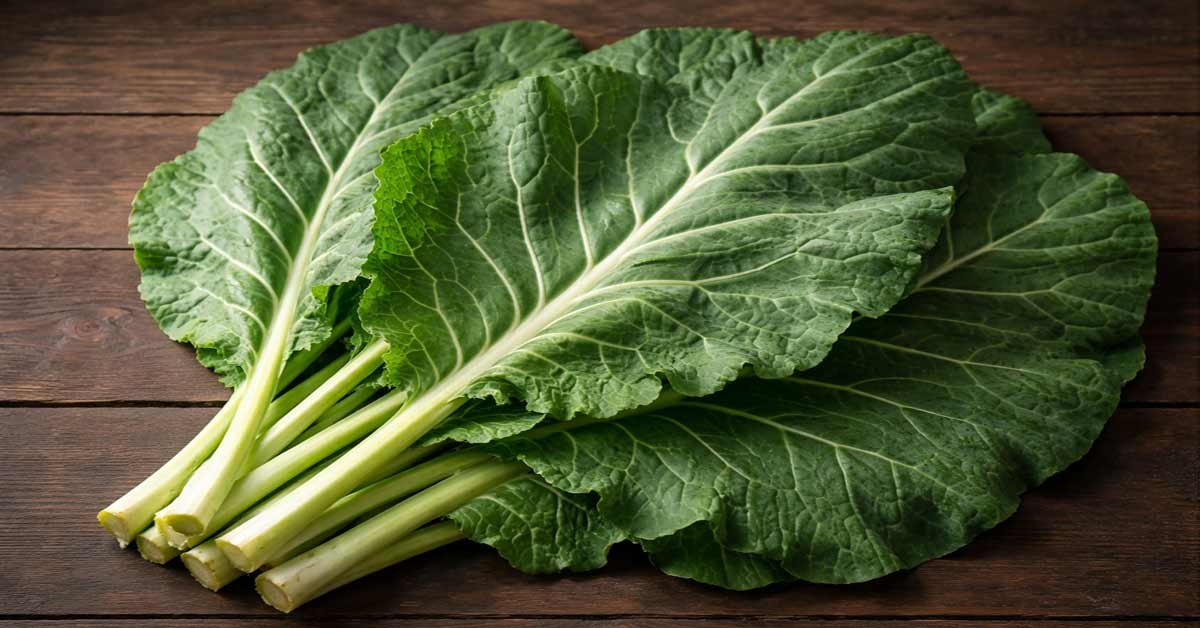
Collards rarely get the spotlight. They sit quietly in the produce section, usually off to the side, often overlooked in favor of shinier greens with trendier names. But here is the thing. The foods that tend to stick around for generations usually do so for a reason. Collards have been part of traditional diets across regions for a long time, and not because they are fashionable. They are reliable. They do their job without asking for attention.
If you have ever eaten a slow cooked pot of collards, you already know they are not delicate. They have structure. They hold their shape. They taste like something real. That matters more than it sounds, especially when you start thinking about how food supports your body over time. Bone health and fiber intake are not built on occasional superfoods. They come from repetition. From foods you can actually keep eating without getting tired of them.
Collards fit into that rhythm almost too easily.
Table of Contents
There is a practical side to this. When people talk about improving bone health, the conversation often jumps straight to supplements or dairy. That skips over a big part of the picture. Your body relies on a mix of nutrients working together. Calcium gets most of the attention, but it does not work in isolation. Vitamin K, magnesium, potassium, and even overall dietary patterns all play a role. Collards bring several of these elements together in one place. Not in extreme amounts that feel unrealistic, but in steady, usable quantities.
And then there is fiber. This is where collards quietly do a lot of heavy lifting. Most people do not think of leafy greens as a meaningful fiber source, but collards challenge that assumption. A single serving contributes to daily fiber intake in a way that adds up over time. Not dramatically in one meal, but consistently across many.
That consistency is what changes things.
Think about how most people actually eat. You are not building your diet around perfect meals every day. You are repeating a handful of familiar foods, adjusting slightly depending on time, mood, or what is in your fridge. If collards become one of those defaults, even occasionally, they start to influence your baseline. Your fiber intake inches up without much effort. Your intake of bone supporting nutrients becomes more stable.
It is not flashy. But it works.
There is also something worth saying about how collards feel to eat. They are not fragile like some greens that disappear the moment they hit heat. They require a bit of time. A bit of intention. Whether you sauté them quickly or let them cook down slowly, they hold onto texture. That changes how satisfying a meal feels. And satisfaction matters more than most nutrition advice admits. If a food leaves you feeling like you actually ate something, you are more likely to come back to it.
Collards also adapt well. You can go simple with garlic and olive oil. You can fold them into soups, stews, or grain bowls. You can cook them down Southern style, or keep them slightly firm for a lighter dish. This flexibility is part of why they work in real life. You do not have to reinvent your routine to include them.
From a nutritional standpoint, collards offer a combination that is hard to ignore once you look closely:
- A steady source of calcium that contributes to bone health over time
- High levels of vitamin K, which plays a key role in how your body uses that calcium
- Meaningful fiber content that supports digestion and gut function
- Additional minerals that round out their impact without complicating things
None of these on their own are revolutionary. Together, they form a pattern that makes sense.
There is also a broader perspective here. Foods like collards remind you that health is rarely about extremes. It is not about finding the single most powerful ingredient. It is about stacking small, consistent choices that support your body in the background. Collards happen to fit neatly into that idea.
You do not need to overhaul your diet to make them useful. You just need to make room for them often enough that they stop feeling like an exception.
And once that happens, something subtle shifts. Your meals start to carry a bit more weight. Not in calories or complexity, but in what they deliver over time. That is where collards start to matter.
The Nutritional Backbone of Collards
Collards earn their place through consistency, not exaggeration. When you look at their nutrient profile, nothing feels extreme or out of reach. Instead, you see a combination that works quietly in the background, supporting bone health in a way that feels sustainable.
A standard cooked serving of collards, about one cup or roughly 190 grams, gives you a meaningful spread of nutrients:
- Calcium: about 260 mg
- Vitamin K: well above daily requirements
- Magnesium: around 40 mg
- Potassium: roughly 220 to 300 mg
- Fiber: about 5 grams
These numbers are not abstract. They translate directly into how your body maintains structure, repairs tissue, and regulates internal balance. The value of collards comes from how these nutrients interact, not just how much of each one is present.
Calcium That Actually Contributes
Calcium tends to dominate any conversation around bone health. Fair enough. It forms the structural base of your bones. But the real question is not just how much calcium you consume. It is how much your body can actually use.
Collards offer a form of calcium that is relatively well absorbed compared to many other plant foods. Some leafy greens contain compounds that bind calcium tightly, making it harder to access. Collards are lower in these compounds, which means more of what you eat becomes available to your body.
Put it into perspective. If one serving gives you around 260 mg of calcium, and the general daily intake target sits near 1000 mg for most adults, you are covering about a quarter of your needs with a single addition to your meal.
The math is simple:
260 mg ÷ 1000 mg = 0.26 → 26 percent of daily intake
That is not a small contribution. Especially when it comes from something you can eat regularly without effort.
There is also a pattern worth noticing. Calcium works best when it comes in steady amounts across the day, not in large, isolated doses. Collards fit that pattern well. They are easy to include in meals where calcium might otherwise be missing.
And unlike supplements, they bring other nutrients along for the ride. That matters more than it seems.
Vitamin K and Its Quiet Role in Bone Strength
Vitamin K rarely gets the attention calcium does, but it plays a direct role in how your body handles bone formation. It activates proteins that help bind calcium into the bone matrix. Without enough vitamin K, that process becomes less efficient.
Collards happen to be one of the richest natural sources of vitamin K.
A single cooked serving can provide several times the daily requirement. That sounds excessive at first, but vitamin K does not behave like nutrients where more quickly becomes a problem in healthy individuals. Instead, it ensures that the calcium you consume is guided into the right places.
Think of it less as an addition and more as a regulator.
There is also an interesting pattern in dietary research. Diets consistently rich in vitamin K are associated with better markers of bone strength over time. Not because vitamin K works alone, but because it supports the entire system.
Collards make this easy. You are not chasing vitamin K through multiple foods or worrying about precise amounts. It is already built in.
And this is where collards start to show their advantage. They combine calcium and vitamin K in the same food. That pairing removes a layer of complexity from your diet. You are not relying on perfect meal planning to make nutrients work together. It happens naturally.
Magnesium, Potassium, and the Bigger Picture
Focusing only on calcium and vitamin K misses part of the story. Bone health is not a two nutrient system. It depends on a broader network, and this is where magnesium and potassium come in.
Magnesium plays a structural and regulatory role. Around 50 to 60 percent of the body’s magnesium is stored in bone. It helps convert vitamin D into its active form, which in turn supports calcium absorption. Without enough magnesium, that chain weakens.
Collards provide a modest but steady amount. Around 40 mg per serving may not sound dramatic, but it adds up when combined with other foods throughout the day. That steady intake supports balance rather than spikes.
Potassium works differently. It helps regulate acid base balance in the body. Diets higher in potassium rich foods are associated with reduced calcium loss through urine. In simple terms, potassium helps your body hold onto the calcium it already has.
Again, collards contribute without overcomplicating things.
What stands out is how these nutrients overlap:
- Calcium supports structure
- Vitamin K helps direct calcium into bones
- Magnesium supports activation and balance
- Potassium helps reduce unnecessary loss
This is not a collection of isolated benefits. It is a system that works together.
And this is where people often get stuck. They look for a single food to solve a single problem. But your body does not operate that way. It responds to patterns. To combinations. To repetition.
Collards fit into that model almost effortlessly.
You do not need to measure every gram or track every nutrient to make them useful. If collards show up in your meals a few times a week, they start contributing to a broader nutritional baseline. Your calcium intake becomes more consistent. Your vitamin K intake stays high without effort. Your magnesium and potassium intake get subtle but meaningful support.
It is not dramatic. But it is dependable.
And that is exactly what makes collards worth paying attention to.
Fiber in Collards and What It Really Does
Fiber is one of those things everyone agrees you need, but few people really feel in a tangible way. You hear numbers. Twenty five grams. Thirty grams. Maybe more. But what does that actually look like in daily eating? And more importantly, what does it feel like in your body?
This is where collards start to stand out again. Not because they deliver extreme amounts of fiber in one sitting, but because they contribute in a way that feels steady and noticeable over time.
A cooked cup of collards gives you around 5 grams of fiber. If you are aiming for roughly 25 to 30 grams per day, that is about 17 to 20 percent of your target.
The calculation is straightforward:
5 g ÷ 25 g = 0.20 → 20 percent
5 g ÷ 30 g = 0.17 → 17 percent
That is a meaningful contribution from a single side dish. And unlike processed fiber sources, collards bring structure, water, and micronutrients along with it. That combination changes how fiber behaves once it reaches your digestive system.
Soluble vs Insoluble Fiber in Collards
Not all fiber does the same thing. This is where things get more nuanced, and also more practical.
Collards contain both soluble and insoluble fiber, each playing a different role:
- Soluble fiber dissolves in water and forms a gel like substance
- Insoluble fiber does not dissolve and adds bulk to stool
In collards, insoluble fiber tends to dominate, which makes sense given their sturdy leaf structure. This type of fiber supports physical movement through the digestive tract. It gives your system something to push against.
But the soluble portion matters too. Even in smaller amounts, it helps slow digestion slightly and creates a more stable environment in the gut. It can also serve as a substrate for beneficial bacteria.
What you get from collards is balance. Not a perfectly even split, but enough of both types to support multiple aspects of digestion at once.
And this is where whole foods quietly outperform isolated fiber supplements. You are not choosing between types. You are getting a mix that works together.
Gut Movement and Microbiome Support
If you have ever adjusted your fiber intake, you know the effects show up quickly. Sometimes too quickly. Bloating, irregularity, discomfort. It usually happens when fiber is increased abruptly or comes from sources your body is not used to.
Collards tend to land differently.
Their fiber is embedded in a dense, water rich structure. When cooked, especially, that structure softens without disappearing. This makes the fiber easier to tolerate compared to raw, highly fibrous foods.
From a gut movement perspective, collards support regularity in a straightforward way. The insoluble fiber adds bulk, which helps stimulate movement through the intestines. It is a mechanical effect. Simple, but effective.
Over time, this can translate into more predictable digestion. Not dramatic changes overnight, but a gradual shift toward consistency.
The microbiome side is a bit more subtle.
The soluble portion of fiber in collards provides material that gut bacteria can ferment. This process produces short chain fatty acids, which play a role in maintaining the gut lining and supporting overall digestive balance. You are not going to get massive fermentation from one serving, but repeated intake builds an environment where beneficial bacteria have what they need.
This is where consistency shows up again. Fiber is not a one time input. It is a daily signal to your digestive system.
And collards make that signal easy to repeat.
Why Fiber From Whole Greens Feels Different
There is a noticeable difference between getting fiber from whole greens like collards and getting it from processed sources.
It shows up in a few ways:
- The pace of digestion feels more natural
- Fullness lasts longer without feeling heavy
- There is less of the sharp, uncomfortable buildup that sometimes comes with isolated fiber
Part of this comes down to structure. In collards, fiber is woven into the plant’s cellular framework. You are not just adding fiber to your diet. You are eating a food that carries fiber as part of its design.
There is also the water content to consider. Cooked collards retain moisture, which helps fiber move more smoothly through the digestive tract. Dry, processed fiber often requires careful hydration to avoid discomfort. Collards handle some of that for you.
And then there is the experience of eating them.
Collards require chewing. They take up space on your plate. They feel substantial. That changes how quickly you eat and how satisfied you feel afterward. It is a small detail, but it influences digestion more than most people realize.
A quick comparison makes this clearer:
- A fiber supplement delivers a controlled dose, often quickly
- A processed snack with added fiber can feel artificial and inconsistent
- Collards deliver fiber as part of a complete, structured food
The third option tends to be easier to sustain.
Over time, this is what matters. Not just hitting a number, but doing it in a way that your body accepts without resistance.
Collards do not force fiber into your routine. They integrate it.
And once they become part of your regular meals, something shifts quietly in the background. Digestion becomes less of a variable. More predictable. More stable. Less something you have to think about.
That is the kind of change that does not feel dramatic in the moment, but becomes obvious when you look back.
Making Collards Work in Everyday Eating
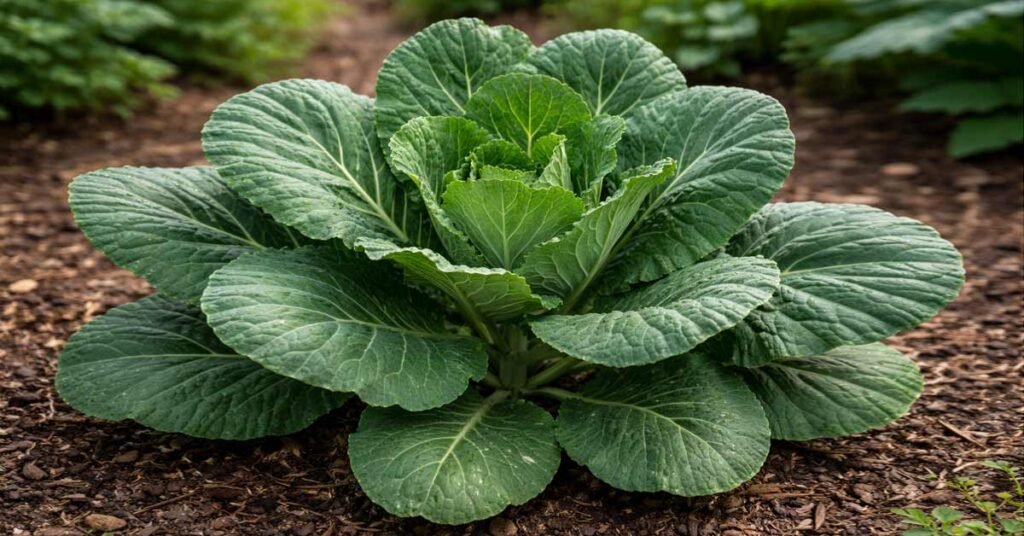
Collards only become useful when they show up on your plate often enough to matter. That sounds obvious, but it is where most good intentions fall apart. People buy a bunch, cook it once, then forget about it for two weeks. The leaves wilt, the habit disappears, and nothing really changes.
The goal is not to treat collards like a special ingredient. It is to make them familiar. Something you can rely on without thinking too much about it.
Once you get the basics right, collards stop feeling like effort and start feeling like a default.
Buying, Storing, and Prepping Collards
It starts at the store. Fresh collards are easy to recognize if you know what to look for:
- Leaves should be deep green and firm
- Stems should feel sturdy, not limp
- Avoid yellowing or slimy spots
Bigger leaves are not a problem. In fact, they often have more structure and hold up better during cooking.
Once you bring collards home, storage matters more than people expect. If you leave them exposed in the fridge, they dry out quickly. If you trap too much moisture, they spoil.
A simple approach works best:
- Wrap them loosely in a damp paper towel
- Place them in a breathable bag or crisper drawer
- Use within 4 to 5 days for best quality
They will last longer, but texture and flavor start to decline after that.
Prepping collards is where many people hesitate, mostly because the leaves are large and the stems are thick. But once you do it a couple of times, it becomes automatic.
Here is a straightforward method:
- Rinse thoroughly to remove any grit
- Fold each leaf in half along the stem
- Slice out the thick central stem
- Stack the leaves and cut into strips
That is it. No complicated technique.
The stems are edible, by the way. They just need more cooking time. You can chop them separately and cook them first if you want to avoid waste.
This step alone makes collards more approachable. When they are prepped and ready, you are far more likely to use them.
Cooking Methods That Preserve Nutrients
How you cook collards changes both their nutritional value and how often you will actually eat them.
There is a balance here. Overcooking can reduce certain nutrients, especially water soluble ones like vitamin C and some B vitamins. On the other hand, cooking makes collards easier to digest and can improve the availability of minerals like calcium.
You do not need perfection. You need methods that you will repeat.
A few approaches consistently work well:
- Quick sauté
Cook collards in olive oil with garlic for 5 to 10 minutes. They soften but keep some texture. This preserves nutrients and keeps flavor clean. - Light steaming
Steam for 5 to 7 minutes until tender. This minimizes nutrient loss while making them easier to digest. - Slow cooking
Traditional long cooking methods break collards down completely. You lose some heat sensitive nutrients, but you gain depth of flavor and a softer texture that many people prefer. - Adding acid at the end
A splash of vinegar or lemon juice can brighten flavor and make collards more appealing. This small detail often determines whether you come back to them.
Each method has a trade off, but all of them can support bone health and fiber intake when used consistently.
One practical point that often gets overlooked. Cooking reduces the volume of collards significantly. A large bunch shrinks down to a few servings. This makes it easier to eat a meaningful amount without feeling like you are forcing it.
And that matters more than chasing perfect nutrient retention.
Realistic Portions and Frequency That Stick
This is where things either become sustainable or fall apart.
You do not need large portions of collards every day. In fact, that approach usually backfires. What works better is moderate portions, repeated often enough to build a pattern.
A realistic serving looks like this:
- About 1 cup cooked collards per meal
From a nutrient perspective, that gives you:
- Around 5 grams of fiber
- Roughly 260 mg of calcium
- High vitamin K intake
Now think about frequency.
If you eat collards:
- 3 times per week → about 15 grams of fiber from collards alone
- 4 times per week → about 20 grams of fiber
- Daily → about 35 grams across the week
The math is simple:
5 g per serving × number of servings = total fiber contribution
This is how collards start influencing your baseline. Not through extreme intake, but through repetition.
The same applies to bone health support. You are not relying on one meal to deliver everything. You are creating a steady intake of calcium, vitamin K, magnesium, and potassium over time.
And this is where collards fit naturally into everyday meals:
- Added to a simple lunch alongside eggs or grains
- Mixed into soups or stews without changing the dish too much
- Served as a side with dinner a few times a week
- Folded into warm bowls where they absorb flavor from other ingredients
Nothing complicated. No special recipes required.
The key is removing friction. The easier collards are to prepare and combine with foods you already eat, the more often they will show up.
That is the difference between a good idea and a lasting habit.
Over time, those small servings add up. Fiber intake becomes more consistent. Nutrient intake stabilizes. You stop thinking about whether you are getting enough because your routine is doing the work for you.
That is where collards move from being just another vegetable to something that quietly supports how you eat every day.
Best Selling Collards Related Products




A Leafy Habit That Pulls Its Weight
There is a point where certain foods stop feeling like a choice and start feeling like part of how you eat. Not in a rigid, planned way. More like something you reach for without thinking too much about it. That is where collards begin to matter in a lasting way.
Up to this point, you have seen what collards bring to the table. They support bone health through a steady mix of calcium, vitamin K, magnesium, and potassium. They contribute meaningful fiber that actually does something once it reaches your gut. None of that is theoretical. It is measurable, repeatable, and grounded in how your body works.
But the real shift happens when those benefits stop being something you track and start being something you live with.
Collards make that shift easier than most foods.
They are not dependent on perfect timing or complicated preparation. You can cook them quickly or let them simmer. You can pair them with almost anything. They do not demand precision, which is exactly why they fit into real routines.
And routine is where results come from.
Think about how dietary habits actually stick. It is rarely about motivation. It is about reducing the number of decisions you need to make. If collards are already in your fridge, already prepped, already familiar, you are far more likely to use them. That single detail changes everything.
You start to see patterns like this:
- Meals feel more complete without adding extra sides
- Fiber intake becomes more consistent without tracking
- Bone supporting nutrients show up regularly without planning
Nothing dramatic. But very reliable.
There is also a subtle psychological effect. When a food feels substantial, you treat it differently. Collards are not decorative. They take up space on your plate. They require chewing. They hold flavor. That changes how satisfying a meal feels, and satisfaction plays a direct role in whether you stick with a habit.
You do not need to convince yourself to eat collards every day. That approach rarely works. What does work is letting them become the easy option a few times a week. Then a few more. Then something you expect to have around.
At that point, the numbers take care of themselves.
If you are eating collards regularly, your weekly intake starts to look different without effort:
- Fiber adds up across meals instead of coming in bursts
- Calcium intake becomes more evenly distributed
- Vitamin K stays consistently high, supporting how your body uses calcium
- Supporting minerals like magnesium and potassium fill in the gaps
You are not forcing anything. You are just repeating a pattern that works.
There is also value in how low maintenance collards are once you get used to them. They do not spoil instantly. They do not require exact measurements. They adapt to what you already cook. That flexibility removes one more barrier, and small barriers are often what break habits.
It is worth being honest here. Collards are not going to transform your health overnight. No single food does that. What they can do is strengthen the foundation you build your diet on.
And foundations are where long term changes happen.
You might notice it gradually. Digestion feels more predictable. Meals feel more satisfying. You are not thinking about nutrients as much because your routine is covering the basics. These are quiet changes, but they tend to stick because they come from something sustainable.
Collards fit into that idea almost perfectly. They are simple, but not empty. Consistent, but not boring if you give them a little attention. Nutritious, without requiring you to rethink everything you eat.
If there is one practical takeaway, it is this. Do not overcomplicate it.
Keep collards in rotation. Cook them in ways you actually enjoy. Let them show up often enough that they stop feeling like an effort.
That is how a leafy green starts to pull its weight. Not by doing everything at once, but by showing up again and again in a way your body can actually use.
Article Sources
At AncientHerbsWisdom, our content relies on reputable sources, including peer-reviewed studies, to substantiate the information presented in our articles. Our primary objective is to ensure our content is thoroughly fact-checked, maintaining a commitment to accuracy, reliability, and trustworthiness.
- U.S. Department of Agriculture, Agricultural Research Service. (2019). FoodData Central: Collards, cooked, boiled, drained, without salt. https://fdc.nal.usda.gov/fdc-app.html#/food-details/169263/nutrients
- National Institutes of Health, Office of Dietary Supplements. (2022). Calcium fact sheet for health professionals. https://ods.od.nih.gov/factsheets/Calcium-HealthProfessional/
- National Institutes of Health, Office of Dietary Supplements. (2022). Vitamin K fact sheet for health professionals. https://ods.od.nih.gov/factsheets/VitaminK-HealthProfessional/
- National Institutes of Health, Office of Dietary Supplements. (2022). Magnesium fact sheet for health professionals. https://ods.od.nih.gov/factsheets/Magnesium-HealthProfessional/
- National Institutes of Health, Office of Dietary Supplements. (2022). Potassium fact sheet for health professionals. https://ods.od.nih.gov/factsheets/Potassium-HealthProfessional/
- Slavin, J. L. (2013). Fiber and prebiotics: Mechanisms and health benefits. Nutrients, 5(4), 1417–1435. https://doi.org/10.3390/nu5041417
- Dahl, W. J., & Stewart, M. L. (2015). Position of the Academy of Nutrition and Dietetics: Health implications of dietary fiber. Journal of the Academy of Nutrition and Dietetics, 115(11), 1861–1870. https://doi.org/10.1016/j.jand.2015.09.003
- Weaver, C. M., Gordon, C. M., Janz, K. F., Kalkwarf, H. J., Lappe, J. M., Lewis, R., O’Karma, M., Wallace, T. C., & Zemel, B. S. (2016). The National Osteoporosis Foundation’s position statement on peak bone mass development and lifestyle factors. Osteoporosis International, 27(4), 1281–1386. https://doi.org/10.1007/s00198-015-3440-3
- Lanham-New, S. A. (2008). Importance of calcium, vitamin D and vitamin K for osteoporosis prevention and treatment. Proceedings of the Nutrition Society, 67(2), 163–176. https://doi.org/10.1017/S0029665108007003
- Cashman, K. D. (2002). Calcium intake, calcium bioavailability and bone health. British Journal of Nutrition, 87(S2), S169–S177. https://doi.org/10.1079/BJN/2002534

- Endive: Bitter Green for Digestion and Gut Health - April 4, 2026
- Drumstick: Moringa Pods for Digestion and Vitamin C - April 4, 2026
- Collards: Greens for Bone Health and Fiber - April 4, 2026