
The Bright Bite That Does More Than Refresh
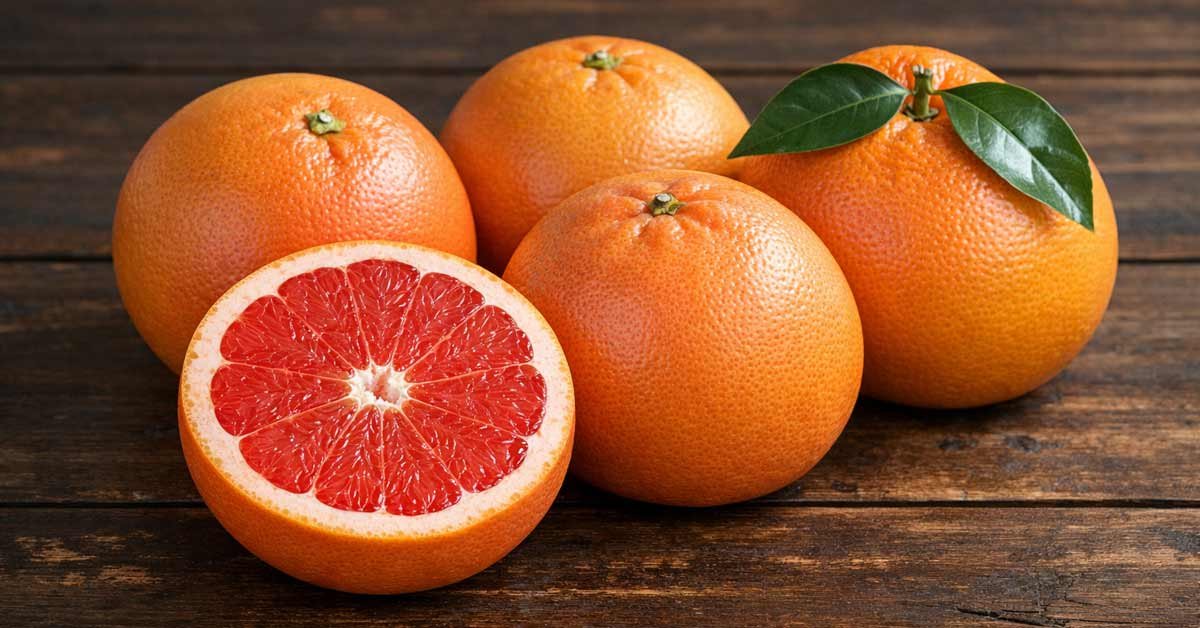
There’s something about grapefruit that makes people pause. It’s not an easy fruit. It doesn’t lean sweet the way an orange does, and it doesn’t try to win you over on the first bite. That sharp, slightly bitter edge catches your attention. Some people love it immediately. Others take a few tries before it clicks. But once it does, grapefruit tends to stick around.
I’ve seen this play out over and over again. Someone starts eating grapefruit almost by accident. Maybe it shows up at breakfast during a trip, or they’re trying to break out of a routine that feels too heavy. They slice one open, take a bite, wince a little, then go back for another. A week later, it becomes part of the grocery list without much thought. That’s usually how it goes. Not a big decision. Just a quiet shift.
Table of Contents

Part of the appeal is sensory. Grapefruit wakes you up. The smell alone does half the job. It’s bright, clean, almost sharp in a way that feels deliberate. Then the texture, those juicy segments that don’t just sit there but burst when you bite into them. It’s refreshing, yes, but not in a passive way. It demands attention. That matters more than people realize.
But grapefruit isn’t just about the experience. It earns its place for more practical reasons too. When people talk about eating better, they often jump straight into complicated systems. Strict plans, elimination rules, tracking apps. Grapefruit sits on the opposite end of that spectrum. It’s simple. You cut it open. You eat it. That’s it. No preparation tricks, no hidden steps.
And yet, behind that simplicity, there’s a lot going on.
Grapefruit naturally brings together a mix of elements that tend to show up in discussions around everyday nutrition. You’re getting hydration from its high water content. You’re getting a modest amount of fiber from the pulp. And of course, there’s vitamin C, which is often the first thing people associate with citrus. But the interesting part is not any single nutrient on its own. It’s how these pieces come together in a whole food that people can actually eat consistently.
Consistency is where most good intentions fall apart. Not because people don’t care, but because the approach becomes too complicated. Grapefruit avoids that trap. It doesn’t require effort to understand or maintain. It fits into real life without negotiation.
Think about how people actually eat during a typical week. Mornings are rushed. Lunch is often improvised. Dinner depends on energy levels more than planning. In that kind of environment, foods that are easy to reach for tend to win. Grapefruit has an advantage here. It doesn’t need to be cooked, blended, or combined with anything else to be useful.
You’ll see it used in simple ways:
- Halved and eaten with a spoon at breakfast
- Added to a quick salad for contrast
- Paired with yogurt or cottage cheese
- Eaten on its own as a light snack
Nothing complicated. That’s the point.
There’s also something worth mentioning about how grapefruit changes your palate over time. At first, the bitterness stands out. It can feel like a barrier. But after a while, that same bitterness starts to feel refreshing instead of harsh. This shift matters because it often carries over into other food choices. People who get used to less sweetness in one area tend to notice it elsewhere too. Suddenly, overly sweet snacks don’t hit the same way. It’s a subtle recalibration, but it’s real.
That doesn’t mean grapefruit replaces anything or fixes anything on its own. It just nudges things in a slightly different direction. And those small shifts tend to add up more than big, short-lived changes.
Another thing that often gets overlooked is how grapefruit fits into appetite and meal rhythm. It’s not heavy. It doesn’t sit in your stomach the way dense foods do. But it’s also not empty. There’s enough substance there to make it feel like you’ve actually eaten something. That balance can be useful, especially when you’re trying to avoid that cycle of eating too little and then overcompensating later.
Of course, grapefruit has its quirks. Not everyone tolerates it the same way, and its interaction with certain medications is well documented in clinical research. That’s not something to ignore. It’s one of those details that reminds you that even simple foods can have layers to them. Paying attention matters.
Still, for most people, grapefruit remains one of the more straightforward additions you can make to your routine. No hype needed. No dramatic claims. Just a citrus fruit that does its job quietly.
And maybe that’s why it keeps showing up, year after year, in kitchens that don’t have time for complicated solutions. It doesn’t try to be everything. It just does enough, consistently.
Grapefruit and Vitamin C: What You Actually Get
Grapefruit has been tied to vitamin C for as long as most people can remember. It sits in that same mental category as oranges and lemons. You catch a cold, someone suggests citrus, and grapefruit shows up on the list. Simple, familiar, almost automatic.
But when you slow down and actually look at grapefruit in real terms, the picture gets more useful. Not inflated. Not undersold. Just clear.
Because the question isn’t whether grapefruit contains vitamin C. It does. The better question is what you’re actually getting when you eat grapefruit regularly, and how that plays out in daily life.
How Much Vitamin C Is Really in Grapefruit
Let’s ground this in numbers you can verify.
A standard half of a raw grapefruit, roughly 120 to 130 grams, provides about 35 to 40 milligrams of vitamin C. If you eat a whole grapefruit, you’re looking at roughly 70 to 80 milligrams.
Now compare that to established daily intake recommendations:
- Adult men: 90 mg per day
- Adult women: 75 mg per day
So if you eat one whole grapefruit, you’re covering:
- About 78 percent to 89 percent of daily needs for men
- About 93 percent to 107 percent for women
That’s not theoretical. That’s a realistic portion you can eat without effort.
For context, here’s how grapefruit stacks up against other common fruits per similar serving sizes:
- Orange: around 70 mg
- Strawberries: about 85 mg per cup
- Kiwi: about 65 to 75 mg per fruit
So grapefruit sits comfortably in the same range. It’s not the highest, but it doesn’t need to be. It delivers enough to matter, especially when eaten consistently.
What often gets missed is that grapefruit is rarely eaten in isolation over time. If you combine it with other fruits or vegetables during the day, hitting or exceeding vitamin C needs becomes straightforward.
That’s where grapefruit becomes practical. Not because it dominates the category, but because it contributes reliably.
What Vitamin C Does in the Body Day to Day
Vitamin C tends to get reduced to one idea. Immunity. And while that’s part of the picture, it’s incomplete.
What matters more is how vitamin C operates quietly across multiple systems, every single day.
First, there’s its role in collagen production. Collagen is a structural protein. It supports skin, blood vessels, tendons, and connective tissue. Without enough vitamin C, the body cannot properly synthesize collagen. This isn’t abstract. It affects how tissues maintain themselves over time.
Then there’s its function as an antioxidant. Normal metabolism, along with environmental factors like pollution or UV exposure, generates reactive molecules. Vitamin C helps neutralize some of these, limiting cumulative cellular stress. This doesn’t mean it stops damage entirely. It helps keep things in balance.
Vitamin C also plays a role in iron absorption, particularly non heme iron found in plant foods. If you eat something like lentils or spinach alongside grapefruit, the vitamin C improves how much iron your body actually takes in. That’s a small detail, but it adds up over time, especially in diets that rely more on plant sources.
And yes, there’s immune function. But even here, it’s not about instant effects. Vitamin C supports immune cells by contributing to their normal function and signaling. It helps maintain the system rather than boosting it in a dramatic, short term way.
What you notice in real life is subtle. You don’t eat grapefruit once and feel different. But over weeks and months, maintaining adequate vitamin C intake supports processes that keep things running as they should.
That’s a quieter benefit, but it’s also more reliable.
Why Whole Fruits Work Better Than Isolated Nutrients
It’s tempting to reduce grapefruit to a vitamin C delivery system. That’s how most nutrition conversations go. Find the nutrient. Extract it. Replicate it in a supplement.
But whole foods don’t work like that.
When you eat grapefruit, you’re not just getting vitamin C. You’re getting:
- Fiber from the pulp
- Water that contributes to hydration
- Small amounts of potassium
- Plant compounds like flavonoids
Each of these plays a role, even if it’s not obvious in the moment.
Fiber slows down how food moves through your digestive system. That changes how nutrients are absorbed and how full you feel afterward. Water content adds volume without adding energy, which influences satiety in a practical way.
Then there are the plant compounds. Grapefruit contains flavonoids such as naringenin and hesperidin. These have been studied for their interaction with oxidative processes and metabolic pathways. The key point is not that they act as standalone solutions, but that they contribute to the overall effect of the food.
This combination creates something that isolated nutrients can’t replicate.
You can take a vitamin C supplement and hit the same milligram number. That’s easy. But you won’t get the fiber. You won’t get the hydration. You won’t get the same interaction between compounds that occurs in a whole fruit.
There’s also a behavioral layer to this. Eating grapefruit takes time. You sit down, cut it open, and eat it piece by piece. That slows you down. It turns a nutrient intake into an actual eating experience. That might sound minor, but it affects how satisfied you feel afterward, which in turn shapes your overall eating pattern.
Another point worth considering is consistency. People tend to stick with simple habits. Eating a grapefruit in the morning is easy to repeat. Taking multiple supplements, tracking doses, and managing timing becomes harder to sustain over months.
So when you look at grapefruit through that lens, vitamin C is still central, but it’s not isolated. It’s part of a broader structure that makes the fruit useful in everyday life.
And that’s really what you’re getting. Not a miracle dose. Not a shortcut. Just a steady, repeatable way to support your intake through something you can actually enjoy eating.
A Citrus Habit That Supports Heart Health
Grapefruit tends to enter the conversation around heart health in a quiet way. It’s not marketed as a solution. It doesn’t carry the same reputation as oats or fatty fish. But if you look closely at how people actually build eating habits that support heart health over time, grapefruit fits in more naturally than you might expect.
It’s not about a single food changing outcomes. It’s about patterns. And grapefruit works best when it becomes part of a pattern that’s easy to repeat.
Nutrients in Grapefruit That Matter for the Heart
Start with what’s actually in grapefruit that relates to heart health. Nothing exotic. Nothing hard to understand. Just a handful of nutrients that show up consistently in dietary patterns associated with cardiovascular function.
Potassium is one of the first. A medium grapefruit provides roughly 250 to 300 milligrams. That’s not a massive amount on its own, but it contributes to daily intake. Potassium plays a role in fluid balance and helps regulate how the body handles sodium. In practical terms, diets that include enough potassium tend to align with healthier blood pressure patterns.
Then there’s fiber. Grapefruit is not a high fiber fruit compared to something like apples or pears, but it still contributes around 2 grams per half fruit. That fiber is mostly soluble, which is the type often discussed in relation to cholesterol metabolism. Again, this is not about one serving making a difference. It’s about cumulative intake across the day.
Vitamin C shows up here too, but in a slightly different context. Beyond its general roles, it contributes to the protection of cells from oxidative stress. Since oxidative processes are involved in how blood vessels function over time, maintaining adequate intake supports the system in a broad sense.
The more interesting layer comes from plant compounds. Grapefruit contains flavonoids, particularly naringenin. This compound has been studied for its interaction with lipid metabolism and vascular function. The research does not position it as a treatment, but it does suggest that diets rich in flavonoid containing foods are associated with better cardiovascular markers.
So when you look at grapefruit as a whole, you’re seeing a combination of:
- Potassium contributing to fluid and pressure balance
- Fiber supporting cholesterol related processes
- Vitamin C helping manage oxidative stress
- Flavonoids interacting with metabolic pathways
None of these act in isolation. They overlap, reinforce each other, and become meaningful when intake is consistent.
What Research Suggests About Citrus and Cardiovascular Function
When researchers look at heart health, they rarely isolate one food. Instead, they study patterns across large populations over time. That’s where citrus fruits, including grapefruit, show up.
Epidemiological studies have found that higher intake of fruits rich in flavonoids is associated with a lower incidence of cardiovascular events. Citrus fruits are one of the primary contributors to flavonoid intake in many diets. Grapefruit, along with oranges, plays a role here.
There are also controlled studies that look more directly at grapefruit consumption. Some have observed modest improvements in markers like lipid profiles when grapefruit is included regularly in the diet. For example, reductions in total cholesterol or LDL cholesterol have been reported in certain groups. These effects are generally small and depend on the broader diet, but they are consistent enough to be noted.
It’s important to interpret this correctly. These findings do not mean grapefruit acts as a direct intervention. They reflect how including citrus fruits as part of a balanced diet aligns with markers linked to heart health.
Dietary guidelines from major health organizations reinforce this approach. They consistently emphasize:
- Higher intake of fruits and vegetables
- Inclusion of fiber rich foods
- Preference for whole foods over processed options
Grapefruit fits into all three categories. That’s where its relevance comes from.
Another angle worth noting is dietary substitution. When someone adds grapefruit to their routine, it often replaces something else. Maybe a processed snack. Maybe a sugary breakfast item. That shift alone can influence overall dietary quality in a meaningful way.
So while the research doesn’t isolate grapefruit as a standalone factor, it consistently places it within patterns that support cardiovascular function.
The Role of Consistency Over Intensity
This is where most people get it wrong. They look for intensity. Big changes. Quick results. Foods that promise visible effects in a short time.
That’s not how heart health works.
Cardiovascular systems respond to long term patterns. Small, repeated actions. Not occasional bursts of perfection.
Grapefruit works in this context because it’s easy to repeat. It doesn’t require planning beyond buying it. It doesn’t require preparation beyond cutting it open. That lowers the barrier to consistency, which is where real impact comes from.
Think about two different approaches:
One person eats perfectly for three days, then falls back into inconsistent habits. Another person adds a grapefruit to their breakfast most days of the week without changing much else.
The second pattern is more likely to hold over months. And over time, that consistency matters more than short periods of intensity.
There’s also a behavioral effect. When you start your day with something like grapefruit, it tends to influence what follows. Not in a strict way, but in a subtle shift. You’re less likely to immediately reach for overly processed options. The palate adjusts. The routine stabilizes.
This is how simple foods contribute to larger outcomes. Not by acting as solutions, but by anchoring habits.
It’s also worth being realistic. Grapefruit is not essential. You can support heart health without ever eating it. But if you enjoy it, and it fits into your routine, it becomes a useful tool.
One more detail that should not be ignored. Grapefruit can interact with certain medications, particularly those related to cholesterol and blood pressure. This interaction affects how drugs are metabolized in the body. Anyone taking such medications should verify compatibility with a qualified professional before making grapefruit a regular habit.
That aside, for most people, grapefruit remains a straightforward addition. No complexity. No exaggerated expectations.
Just a citrus fruit that, when eaten regularly, aligns with the kind of dietary pattern that supports heart health over time.
How Grapefruit Fits Into Real Eating Habits
Grapefruit sounds like one of those foods people admire more than they actually eat. It has a good reputation. It shows up in conversations about clean eating. But then real life kicks in. Mornings get rushed. Meals become repetitive. Convenience starts to win.
And that’s where grapefruit either finds its place or disappears completely.
The difference usually comes down to one thing. Friction. If something feels even slightly inconvenient, it slowly fades out of your routine. Grapefruit has a small barrier compared to grab and go foods. You have to cut it. Maybe peel it. Deal with the juice. That’s enough for some people to skip it.
But once you remove the idea that it needs to be done perfectly, grapefruit becomes much easier to keep around. It doesn’t need a system. It just needs a spot in your day.
Simple Ways to Eat Grapefruit Without Overthinking It
Most people overcomplicate this part. Grapefruit is not a recipe ingredient first. It’s a standalone food.
The simplest version still works best:
- Cut it in half and eat it with a spoon
- Slice it into wedges and peel the skin
- Separate the segments and keep them in a container for later
That’s already enough to make grapefruit part of your routine.
But if you want a bit of variation without turning it into a project, a few small adjustments go a long way:
- Add grapefruit segments to a bowl of yogurt
- Toss it into a simple salad with greens and olive oil
- Pair it with cottage cheese for a quick contrast in texture
- Chill it in the fridge before eating for a sharper, cleaner taste
There’s also the option of lightly adjusting the flavor if the bitterness feels too strong at first. Some people add a pinch of sugar or drizzle a bit of honey. That’s fine if it helps you actually eat it. Over time, most people reduce that naturally as their taste adjusts.
The key idea is this. Grapefruit doesn’t need to be reinvented. It just needs to be used.
Pairing Grapefruit for Better Nutrient Balance
On its own, grapefruit is light. That can be a strength or a limitation, depending on how you use it.
If you eat grapefruit by itself, it works well as a refreshing snack or a light start to the day. But it won’t keep you full for long. That’s where pairing comes in.
Combining grapefruit with other foods changes how it fits into a meal:
- Pair with protein
- Yogurt
- Eggs
- Cottage cheese
This helps extend satiety and stabilize energy after eating
- Add healthy fats
- Nuts
- Seeds
- A drizzle of olive oil in salads
This slows digestion and makes the meal feel more complete
- Combine with other fruits
- Berries
- Apple slices
This balances flavor and adds variety without complicating things
A simple example that works in real life:
You wake up, don’t have much time, and don’t want a heavy breakfast. Instead of skipping food or grabbing something processed, you eat half a grapefruit and a bowl of yogurt with a handful of nuts. That’s it. No planning. No measuring. But you’ve covered hydration, protein, fats, and a range of nutrients.
This is how grapefruit becomes useful. Not as a centerpiece, but as part of a balanced combination.
Portion Size and Frequency That Make Sense
There’s a tendency to assume that more is better, especially with foods that have a healthy reputation. Grapefruit doesn’t need that kind of approach.
A realistic portion is:
- Half a grapefruit for a light addition
- One whole grapefruit if it’s a main fruit serving
That’s enough to contribute meaningfully without overdoing it.
In terms of frequency, most people benefit from thinking in patterns rather than rules. Eating grapefruit:
- A few times per week is already useful
- Daily intake works if you enjoy it and tolerate it well
There’s no need to force it every day. Consistency matters, but so does flexibility. If you enjoy grapefruit three or four times a week over several months, that’s more sustainable than eating it every day for a week and then stopping.
One practical point that often gets overlooked is variety. Grapefruit works well as part of a rotation. Some days it replaces other fruits. Other days it sits alongside them. That keeps your overall intake diverse, which tends to align better with long term habits.
Also, pay attention to how your body responds. Some people find grapefruit too acidic on an empty stomach. Others have no issue at all. Adjust based on your own experience rather than forcing a fixed pattern.
When Grapefruit Works Best in Your Day
Timing is less about rules and more about how grapefruit feels in different contexts.
Morning is the most common slot. Grapefruit has a natural place at breakfast because it’s light and refreshing. It wakes up your appetite without weighing you down. If your mornings feel sluggish or overly heavy, this is where grapefruit often fits best.
Midday can work too, especially as part of a lighter meal. Adding grapefruit to a salad or eating it alongside a simple lunch keeps things from feeling too dense. It also breaks monotony, which matters more than people think when it comes to sticking with a routine.
Afternoon is where grapefruit can quietly replace less useful habits. Instead of reaching for something overly sweet or processed, a chilled grapefruit offers a different kind of reset. It doesn’t spike energy. It refreshes.
Evening is less common, mostly because of its acidity and brightness. Some people enjoy it after dinner as a palate cleanser, while others find it too sharp late in the day. This is one of those areas where personal preference matters more than general advice.
There’s also a situational angle. Grapefruit works well:
- After heavier meals, when you want something light afterward
- During warmer months, when refreshing foods feel more appealing
- When your appetite feels off and you want something simple
The pattern that emerges is straightforward. Grapefruit fits best where you need something light, clean, and easy to repeat.
And that’s really the thread running through all of this. Grapefruit doesn’t demand a specific time, portion, or method. It adapts. As long as you keep it simple and actually eat it, it does what it’s supposed to do.
Best Selling Grapefruit Related Products



When Simple Foods Like Grapefruit Do Enough
There’s a point where nutrition advice starts to feel heavier than the food itself. Lists get longer. Rules get tighter. You start thinking more about what you should be doing than what you’re actually eating. That’s usually where things begin to drift.
Grapefruit sits on the other side of that.
It doesn’t try to carry the whole conversation. It just shows up, does its part, and leaves the rest alone. And in many cases, that’s exactly what you need.
Because when you strip things down, most people aren’t struggling due to a lack of advanced strategies. They’re struggling with consistency. Not enough repetition. Too many shifts. Too much friction between intention and action.
This is where simple foods like grapefruit start to matter more than they seem to.
You’re not eating grapefruit to fix anything overnight. You’re eating grapefruit because it’s one of those foods that quietly supports a pattern that works.
A pattern that might look like this:
- You eat fruit regularly instead of occasionally
- You include whole foods without needing a plan
- You build meals that feel balanced without tracking every detail
- You rely less on processed options because better ones are already there
Grapefruit fits into that without effort. That’s the difference.
There’s also something to be said about expectations. When people expect too much from a single food, they tend to get disappointed quickly. Grapefruit doesn’t promise anything dramatic. It doesn’t need to.
What it offers is steady input:
- A reliable source of vitamin C
- A contribution to daily fiber intake
- Hydration through its high water content
- A mix of plant compounds that come as part of the package
That’s enough. Not in isolation, but as part of a bigger picture that repeats over time.
And that bigger picture is where most outcomes are shaped.
Think about how dietary habits actually form. Rarely through big decisions. More often through small defaults. What you buy. What you keep visible. What you reach for without thinking.
If grapefruit becomes one of those defaults, it starts to replace something else. Maybe something more processed. Maybe something less satisfying. That shift doesn’t feel dramatic in the moment, but over weeks and months, it changes the baseline.
There’s also a mental side to this that doesn’t get enough attention.
When you rely on simple foods, decision fatigue drops. You’re not constantly evaluating options or trying to optimize every meal. You already know what works, so you just repeat it. That frees up energy for everything else.
Grapefruit helps in that sense because it’s predictable. You know what it tastes like. You know how it fits. There’s no learning curve after the first few times.
And then there’s the taste itself.
That slightly bitter edge that puts some people off at first often becomes the reason they keep coming back. It breaks the cycle of constant sweetness. It sharpens your palate. Over time, that can influence how you experience other foods too.
You start noticing when things are overly sweet. You become less dependent on that level of intensity. That shift is subtle, but it can reshape preferences in a way that makes balanced eating feel more natural.
Another point that deserves attention is restraint. Not every good habit needs to be pushed to the extreme.
You don’t need to eat grapefruit every day to benefit from it. You don’t need to build meals around it. You don’t need to turn it into a rule.
In fact, doing that often backfires.
What works better is letting grapefruit stay simple:
- Eat it when you want something fresh and light
- Use it when it fits naturally into a meal
- Keep it available without forcing it
That approach keeps the habit flexible, which makes it easier to maintain.
There are, of course, limits. Grapefruit is not suitable for everyone in every situation. Its interaction with certain medications is well documented and should be taken seriously. This is one of those cases where individual context matters more than general advice.
But outside of that, grapefruit remains one of the more straightforward examples of how simple foods can carry real value without complexity.
You don’t need a long list of ingredients. You don’t need perfect timing. You don’t need precision.
You need foods you’ll actually eat, consistently, without resistance.
Grapefruit checks that box for a lot of people.
And when enough of your choices start to look like that, something shifts. Not suddenly. Not dramatically. But steadily.
At that point, you’re no longer relying on effort alone. Your habits are doing part of the work for you.
That’s when simple foods like grapefruit stop feeling small.
They start doing exactly enough.
Article Sources
At AncientHerbsWisdom, our content relies on reputable sources, including peer-reviewed studies, to substantiate the information presented in our articles. Our primary objective is to ensure our content is thoroughly fact-checked, maintaining a commitment to accuracy, reliability, and trustworthiness.
- U.S. Department of Agriculture. (2019). FoodData Central: Grapefruit, raw, pink and red, all areas. https://fdc.nal.usda.gov/fdc-app.html#/food-details/167773/nutrients
- National Institutes of Health, Office of Dietary Supplements. (2023). Vitamin C fact sheet for health professionals. https://ods.od.nih.gov/factsheets/VitaminC-HealthProfessional/
- World Health Organization. (2020). Healthy diet. https://www.who.int/news-room/fact-sheets/detail/healthy-diet
- U.S. Department of Health and Human Services & U.S. Department of Agriculture. (2020). Dietary Guidelines for Americans 2020–2025. https://www.dietaryguidelines.gov
- Bhuyan, D. J., Alsherbiny, M. A., Perera, S., Low, M., Basu, A., Devi, O. A., Barooah, M. S., Li, C. G., & Papoutsis, K. (2022). The odyssey of bioactive compounds in avocado (Persea americana) and their health benefits. Antioxidants, 11(5), 1–21. https://doi.org/10.3390/antiox11050921
- Cassano, A., Conidi, C., Timpone, R., D’Avella, M., & Drioli, E. (2010). A membrane-based process for the clarification and the concentration of the cactus pear juice. Journal of Food Engineering, 102(4), 385–392. https://doi.org/10.1016/j.jfoodeng.2010.09.015
- Rimm, E. B., Katan, M. B., Ascherio, A., Stampfer, M. J., & Willett, W. C. (1996). Relation between intake of flavonoids and risk for coronary heart disease in male health professionals. Annals of Internal Medicine, 125(5), 384–389. https://doi.org/10.7326/0003-4819-125-5-199609010-00005
- Peterson, J. J., Dwyer, J. T., Jacques, P. F., & McCullough, M. L. (2012). Associations between flavonoids and cardiovascular disease incidence or mortality in European and US populations. Nutrition Reviews, 70(9), 491–508. https://doi.org/10.1111/j.1753-4887.2012.00508.x
- Fuhrman, B., Aviram, M., & Volkova, N. (2005). Grapefruit consumption improves lipid profile in patients with hyperlipidemia. Journal of Agricultural and Food Chemistry, 53(11), 4390–4395. https://doi.org/10.1021/jf0479271
- Bailey, D. G., Dresser, G. K., & Arnold, J. M. O. (2013). Grapefruit–medication interactions: Forbidden fruit or avoidable consequences. CMAJ, 185(4), 309–316. https://doi.org/10.1503/cmaj.120951

- Lime: Citrus Fruit for Immunity and Digestion - March 31, 2026
- Grapefruit: Citrus Fruit for Heart Health and Vitamin C - March 31, 2026
- Star Fruit: Hydrating Fruit for Vitamin C - March 30, 2026