
Kiwi: Small Fruit, Serious Nutritional Impact
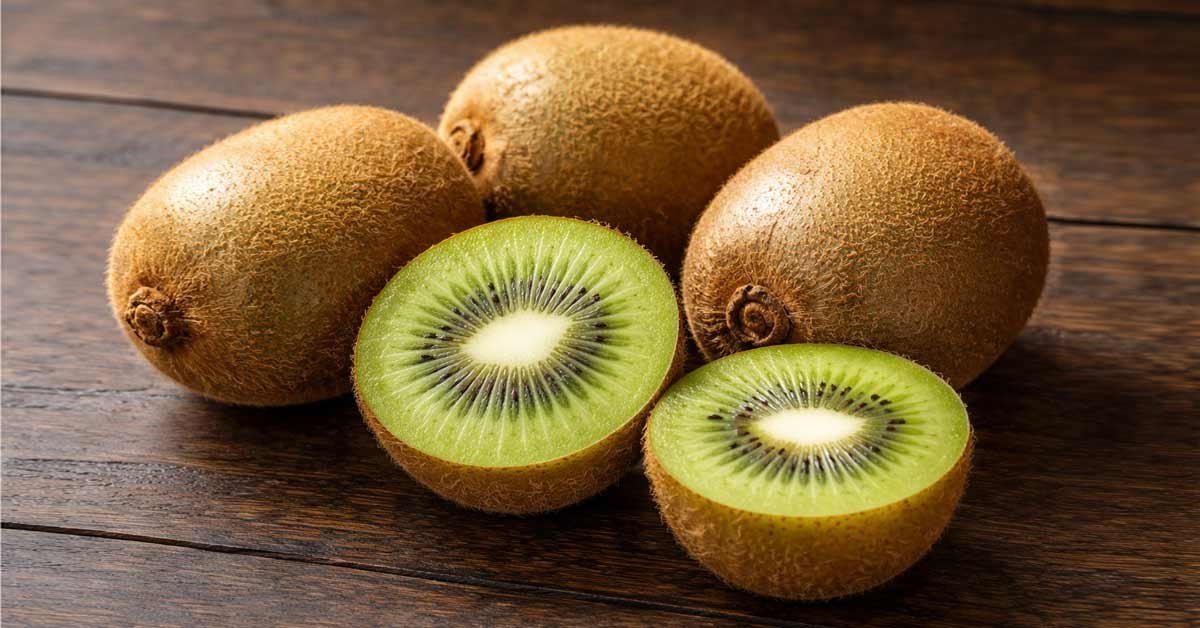
Pick up a kiwi and it does not look like much. Brown, fuzzy, almost unremarkable sitting next to brighter fruits. Cut it open and the story changes. Bright green flesh, tiny black seeds, a clean, sharp aroma. That contrast tells you something important. Kiwi packs far more nutritional value than its size suggests.
When people think about improving immunity or digestion, they often jump to supplements or complicated routines. Kiwi rarely gets top billing, yet it consistently shows up in nutritional research as a dense, efficient source of key compounds your body actually uses. Not in extreme doses. Not in isolated extracts. In a form that fits easily into real meals.
Table of Contents

A single medium kiwi, around 75 grams, delivers roughly 60 to 70 milligrams of vitamin C. You can verify this using standard food composition databases like the USDA FoodData Central. The recommended daily intake for adults ranges from 75 milligrams for women to 90 milligrams for men. Do the math:
- 1 kiwi ≈ 65 mg vitamin C
- 65 ÷ 75 = 0.86 → 86 percent of daily needs for women
- 65 ÷ 90 = 0.72 → 72 percent of daily needs for men
That is from one fruit. No blending, no stacking ingredients, no effort beyond slicing it in half.
But reducing kiwi to vitamin C alone misses the bigger picture. What makes kiwi valuable is how its nutrients show up together. You get vitamin C, fiber, potassium, vitamin K, and a range of plant compounds in one package. These do not act in isolation. They interact.
Take fiber as an example. A single kiwi contains about 2 grams of fiber. That may not sound high compared to oats or legumes, but the type of fiber matters. Kiwi provides both soluble and insoluble fiber, which means it supports gut movement while also feeding beneficial gut bacteria. That dual action is what people usually try to achieve with multiple foods or supplements.
Then there is actinidin, an enzyme found in kiwi. It helps break down proteins during digestion. This is not a vague claim. It has been studied in controlled settings, showing measurable effects on gastric digestion, especially after protein rich meals. In practical terms, eating kiwi after a heavier meal often feels easier on the stomach. Many people notice it without knowing the mechanism.
Kiwis also bring in potassium, around 200 to 250 milligrams per fruit. This matters for fluid balance and muscle function. If your diet leans toward processed foods, potassium intake is often lower than recommended. Adding kiwis is a simple correction that does not require tracking macros or overthinking food choices.
Another detail that tends to get overlooked is nutrient density per calorie. A kiwi has about 40 to 50 calories. That is low. When you compare that to what you get in return, especially vitamin C and fiber, the ratio is efficient. You are not trading high energy intake for micronutrients. You are getting both control and value.
Now, here is where things get more interesting. Not all kiwis are identical. Green kiwi is the most common, slightly tart, higher in actinidin. Gold kiwi, smoother skin and sweeter taste, often contains even more vitamin C per serving. The difference is not dramatic, but it is measurable. If you prefer sweeter fruit, gold kiwi makes it easier to eat consistently without adding sugar elsewhere.
Consistency is the part most people ignore. Eating kiwi once will not change anything. Eating kiwi regularly, even one per day, starts to build a pattern. Nutrients like vitamin C do not stay stored in large amounts in the body. They need regular intake. Kiwi fits into that pattern without effort.
There is also a practical advantage that rarely gets discussed. Kiwi requires almost no preparation:
- Cut and eat with a spoon
- Slice into yogurt or oatmeal
- Add to salads for contrast
- Blend into smoothies
No peeling is required if you are comfortable eating the skin, which adds extra fiber. Many people skip this, but it is an option.
From a real world perspective, kiwi works because it removes friction. You do not need to plan your entire diet around it. You do not need a recipe. It fits into what you are already doing.
There is also something subtle about how kiwi affects satiety. Because it contains fiber and water, it contributes to a feeling of fullness without heaviness. That matters if you are trying to manage portions without tracking everything. Small inputs like this add up over time.
People often ask whether fresh or processed kiwi makes a difference. It does. Fresh kiwi retains its full vitamin C content and enzyme activity. Processing, especially heat, reduces both. Dried kiwi, for example, concentrates sugars and reduces vitamin C due to oxidation. You still get some benefits, but the balance shifts. If your goal is immunity and digestion support, fresh kiwi is the better baseline.
Another point worth grounding in numbers is variability. Nutrient values can change based on ripeness and storage. Vitamin C, for instance, decreases slowly over time. That means a freshly purchased, properly stored kiwi will provide more value than one that has been sitting for too long. You can test ripeness by gentle pressure. Slight give means it is ready. Too soft means it is overripe.
There is no need to overcomplicate this. Kiwi works because it is simple, consistent, and nutrient dense. It does not rely on extreme quantities or isolated compounds. It delivers a combination of nutrients your body uses daily, in amounts that actually matter.
If you look at your current routine and ask one question, it should be this: where can kiwi fit without adding effort?
That is where the real impact starts.
Why Kiwi Stands Out for Immunity Support
There are plenty of foods associated with immunity. Citrus fruits usually take the spotlight. Supplements dominate the conversation. Kiwi sits quietly in the background, even though the data around it is consistent and practical. It delivers high concentrations of key nutrients in a form your body can use without complication.
What makes kiwi stand out is not a single compound. It is the combination, the density, and the reliability of intake when eaten regularly. You are not chasing extremes. You are building a steady input of nutrients that support how your immune system actually works day to day.
Vitamin C Density and Immune Function
Vitamin C is often reduced to a simple idea. Take more when you feel run down. That is not how it works. Your body uses vitamin C continuously. It supports immune cells, helps maintain physical barriers like skin, and plays a role in signaling during immune responses.
Kiwi is one of the most efficient ways to get it through food.
A single kiwi provides around 60 to 70 milligrams of vitamin C. That already covers a large portion of daily needs. If you eat two kiwis, the calculation is straightforward:
- 2 kiwis ≈ 130 mg vitamin C
- Recommended intake: 75 to 90 mg
- 130 ÷ 90 = 1.44 → 144 percent of daily needs
That is still within safe dietary intake levels and achieved through whole food, not supplementation.
But intake alone is not the full story. Vitamin C is water soluble. Your body does not store large amounts. Excess is excreted. That means regular intake matters more than occasional high doses. Kiwi works well here because it is easy to eat daily without fatigue or effort.
From a functional standpoint, vitamin C contributes to:
- Production and activity of white blood cells
- Protection of immune cells from oxidative stress
- Support of epithelial barriers, which act as a first line of defense
These are not abstract roles. They influence how your body responds to everyday exposures, not just acute illness.
There is also a practical observation from dietary studies. People who regularly consume vitamin C rich foods tend to show more stable immune markers compared to those with inconsistent intake. Kiwi fits into that pattern without requiring tracking or supplementation.
Antioxidants and Cellular Protection
Vitamin C is part of a broader antioxidant network. Kiwi contributes to this network in a way that is often underestimated.
Inside the body, normal metabolism produces reactive oxygen species. These molecules can damage cells if not balanced by antioxidants. This process is called oxidative stress. It is linked to inflammation and reduced efficiency in immune responses.
Kiwi contains several antioxidant compounds:
- Vitamin C
- Vitamin E in small amounts
- Carotenoids such as lutein
- Flavonoids
Each plays a role, but their combined effect is what matters. They work together to neutralize reactive molecules before they cause damage.
Think about this in practical terms. Your immune cells are active. They generate oxidative byproducts as part of their function. Without enough antioxidant support, these cells can become less efficient over time. Regular intake of antioxidant rich foods helps maintain balance.
Kiwi contributes without excess calories or complexity. You are not adding large amounts of energy intake. You are increasing the density of protective compounds.
There is also a timing factor. Antioxidants from whole foods are absorbed and used in patterns that align with digestion and metabolism. This is different from large supplemental doses, which can lead to spikes and rapid excretion. Kiwi provides a steady input that matches how your body processes nutrients.
From a day to day perspective, this means:
- Less fluctuation in antioxidant availability
- More consistent support for cellular function
- Reduced cumulative oxidative stress over time
These effects are gradual. You do not feel them immediately. But they are measurable in controlled settings and meaningful when maintained over weeks and months.
Polyphenols and Everyday Resilience
Polyphenols are less talked about than vitamins, but they are critical. Kiwi contains a range of these plant compounds, including flavonoids and phenolic acids. Their role goes beyond simple antioxidant activity.
Polyphenols interact with your body in three main ways:
- They modulate signaling pathways related to inflammation
- They influence gut bacteria composition
- They support vascular and cellular responses to stress
This matters for immunity because your immune system is not isolated. It is connected to your gut, your metabolic state, and your overall level of inflammation.
One of the more interesting aspects of polyphenols is how they work through the gut microbiome. When you eat kiwi, some polyphenols are not fully absorbed in the small intestine. They reach the colon, where they are metabolized by gut bacteria. This process produces bioactive compounds that can influence immune signaling.
In practical terms, regular consumption of kiwi may contribute to:
- A more balanced gut environment
- Improved communication between gut and immune system
- Better regulation of low grade inflammation
This is not immediate. It builds with consistency.
There is also a resilience factor. Your body faces small stressors every day. Environmental exposure, diet variation, physical activity. Polyphenols help your system respond without overreacting. This balance is key. An underactive immune system is a problem. An overactive one is also a problem.
Kiwi supports this middle ground.
From a real world perspective, the advantage of kiwi is how easily it integrates into daily routines. You are not relying on isolated compounds. You are using a whole food that delivers:
- High vitamin C
- A mix of antioxidants
- Functional polyphenols
All in one serving that takes less than a minute to prepare.
If you look at foods that genuinely support immunity in a practical, repeatable way, kiwi belongs in that list. Not because it is extreme. Because it is consistent, efficient, and easy to maintain.
Kiwi and Digestion: What Actually Makes a Difference
Digestion is where kiwi quietly does some of its best work. Not in a dramatic way. You do not eat a kiwi and feel an instant transformation. What happens is more subtle and, over time, more useful. Things move more predictably. Meals feel easier to handle. That heavy, slow feeling after eating starts to fade.
A lot of foods claim to support digestion. Most of them focus on one angle. Fiber, probiotics, enzymes. Kiwi brings several of these together in a way that actually fits into daily eating habits. No protocols. No timing rules. Just consistent intake.
When people say digestion feels off, they usually mean one of three things. Irregular bowel movements. Discomfort after meals. Or a general sense that food sits too long. Kiwi touches all three through different mechanisms that work at the same time.
Fiber Content and Gut Movement
Start with fiber, because this is where most digestive improvements begin.
A single kiwi provides about 2 grams of fiber. That might not sound like much compared to foods like beans or whole grains. But the type of fiber matters more than the total number in many cases.
Kiwi contains both:
- Soluble fiber
- Insoluble fiber
Each plays a different role.
Insoluble fiber adds bulk to stool and helps it move through the digestive tract. This supports regular bowel movements. Soluble fiber absorbs water and forms a gel-like substance, which can help soften stool and make passage easier.
When both are present in the same food, the effect is more balanced. You are not just pushing things through faster. You are improving the quality and consistency of movement.
Now look at what happens when you eat kiwi daily.
- 2 kiwis per day ≈ 4 grams of fiber
- General recommendation: 25 to 38 grams per day depending on sex
4 ÷ 25 = 0.16 → 16 percent of the lower end of daily needs
That is a meaningful contribution from a single, easy food.
But there is another detail that matters. Kiwi fiber has a high water holding capacity. This means it retains moisture in the digestive tract more effectively than some other fibers. In practical terms, this supports softer stool and reduces the likelihood of straining.
Clinical studies have observed that regular kiwi intake can increase stool frequency and improve stool consistency, especially in individuals with mild constipation. The mechanism is not extreme stimulation. It is normalization.
From a real world perspective, this is what people notice:
- More predictable timing
- Less effort during bowel movements
- Reduced bloating related to slow transit
It is not about speed. It is about rhythm.
Actinidin Enzyme and Protein Breakdown
This is where kiwi separates itself from most fruits.
Kiwi contains actinidin, a proteolytic enzyme. That means it helps break down proteins into smaller peptides and amino acids. This process normally happens in the stomach and small intestine through enzymes like pepsin and trypsin. Actinidin supports that process.
Here is why that matters.
Protein rich meals take longer to digest. If protein breakdown is slower, food can remain in the stomach longer. That can lead to:
- A heavy or full feeling
- Mild discomfort
- Delayed gastric emptying
Actinidin helps reduce that load.
Controlled studies have shown that consuming kiwi alongside or after protein rich meals can improve gastric digestion and increase the rate at which the stomach empties. The effect is measurable, not speculative.
In practical terms, people often describe it like this:
“I feel less heavy after eating.”
“Meals sit better.”
No one is thinking about enzymes while eating. They are just noticing the result.
There is also a useful comparison. Some fruits contain enzymes, but many lose activity during digestion or processing. Actinidin in fresh kiwi remains active enough to contribute meaningfully during the digestive process.
That leads to a simple habit that works well:
- Eat kiwi after meals that are higher in protein
- Or include kiwi as part of the meal itself
No need to time it precisely. Just keep it consistent.
One important detail. Heat reduces enzyme activity. Cooked kiwi will not provide the same digestive enzyme benefit as fresh kiwi. If actinidin is part of your goal, raw kiwi is the better option.
Gut Microbiome and Fermentation Effects
The gut microbiome adds another layer to this.
Your digestive system is not just mechanical. It is biological. Trillions of microorganisms interact with what you eat. They break down fibers, produce metabolites, and influence how your gut functions.
Kiwi contributes to this system in two main ways:
- Through its fiber
- Through its polyphenols
Not all fiber is digested in the small intestine. Some reaches the colon, where it becomes fuel for gut bacteria. This process is called fermentation.
When kiwi fiber is fermented, it produces short chain fatty acids such as acetate, propionate, and butyrate. These compounds are associated with:
- Supporting the cells lining the colon
- Maintaining gut barrier integrity
- Influencing local immune responses
You do not feel these processes directly. But they affect how your digestive system performs over time.
Polyphenols in kiwi also interact with gut bacteria. Some are metabolized into bioactive compounds that can influence microbial balance. This can support a more diverse and stable gut environment.
From a practical standpoint, regular kiwi consumption may contribute to:
- Improved microbial diversity
- Better tolerance to different foods
- Reduced digestive discomfort over time
Again, this is not immediate. It builds.
There is also a synergy here that matters. Fiber feeds the bacteria. Polyphenols influence how those bacteria behave. Together, they shape the environment in your gut.
When that environment is more stable, digestion tends to feel more predictable.
You might notice:
- Less bloating after meals
- More consistent bowel habits
- A general sense that digestion is smoother
Nothing dramatic. Just fewer issues.
That is what makes kiwi useful. It does not rely on a single mechanism. It supports digestion from multiple angles at once:
- Mechanical movement through fiber
- Chemical breakdown through actinidin
- Biological balance through microbiome interaction
All from a fruit that takes seconds to prepare and fits into almost any meal.
If digestion feels inconsistent, the solution is often not a drastic change. It is a small input repeated daily. Kiwi fits that pattern well.
Practical Ways to Use Kiwi and Kiwis Daily
Knowing that kiwi supports immunity and digestion is one thing. Actually eating kiwi consistently is where the benefit shows up. This is usually where things break down. People start strong, then forget, then move on.
Kiwi works best when it becomes automatic. No planning. No recipes you need to follow perfectly. Just simple ways to include it in what you already eat.
There are a few details that make a real difference. Form matters. Timing can help. Storage affects nutrient value more than most people realize. Get these right, and kiwi becomes one of the easiest habits to maintain.
Fresh vs Processed Kiwi: What Changes
Start with the basics. Not all forms of kiwi deliver the same nutritional value.
Fresh kiwi is the reference point. It contains:
- Full vitamin C content
- Active actinidin enzyme
- Intact fiber structure
- Minimal nutrient loss
Once you process kiwi, things change.
Drying is the most common example. Removing water concentrates sugars. A 100 gram portion of dried kiwi contains significantly more sugar than fresh kiwi, simply because the volume shrinks. At the same time, vitamin C decreases due to oxidation during processing and storage.
Heat is another factor. Cooking kiwi reduces:
- Vitamin C, which is heat sensitive
- Enzyme activity, especially actinidin
If your goal is digestion support, this matters. Cooked kiwi will not provide the same enzyme effect as fresh kiwi.
Juicing is another case. When you juice kiwi:
- Fiber content drops sharply
- Sugar becomes more rapidly absorbed
- Satiety decreases
You still get vitamin C, but you lose part of what makes kiwi effective for digestion.
There is also the issue of added ingredients in packaged products. Kiwi flavored snacks, yogurts, or drinks often contain:
- Added sugars
- Flavorings instead of real fruit
- Minimal actual kiwi content
If you check labels, you will often find kiwi listed far down the ingredient list.
From a practical standpoint, the hierarchy is simple:
- Fresh kiwi
- Frozen kiwi (minimal loss if handled properly)
- Dried or processed kiwi
If you want the full benefit, especially for digestion, fresh kiwi should be the default.
Simple, Real World Serving Ideas
This is where most people overcomplicate things. Kiwi does not need a recipe.
Start with the simplest approach. Cut it in half. Eat it with a spoon. That takes less than a minute and requires no cleanup beyond a knife.
If you want variety, here are options that actually fit into daily routines:
- Add sliced kiwi to yogurt
- Mix kiwi into oatmeal after cooking
- Combine kiwi with banana and berries in a smoothie
- Add kiwi slices to a simple salad for contrast
- Pair kiwi with cottage cheese or a handful of nuts
These are not ideas you need to plan for. They fit into meals you are likely already eating.
There is also a timing angle that works well for many people.
After meals, especially heavier ones, kiwi can feel easier to include. This is where actinidin may support protein digestion. You do not need to measure or time it precisely. Just make it part of the meal or eat it shortly after.
Another option is using kiwi as a default snack. Instead of reaching for something processed, you have kiwi ready. This works best when the fruit is already ripe and accessible.
If you want a simple structure, use this:
- 1 kiwi with breakfast or mid morning
- 1 kiwi later in the day or after a meal
That gives you consistency without effort.
You can also eat the skin. This is often overlooked. Kiwi skin contains additional fiber. If you wash it properly and the texture does not bother you, it is a simple way to increase fiber intake.
For people who struggle with consistency, preparation helps more than motivation.
- Keep kiwis visible on the counter
- Store a few ripe ones separately so they are ready to eat
- Avoid buying too many at once if they tend to spoil
Small adjustments like these make the habit stick.
Storage, Ripeness, and Consistency
Storage directly affects both taste and nutrient value.
Kiwis continue to ripen after harvest. A firm kiwi is not ready yet. A ripe kiwi yields slightly when pressed. That is the point where flavor and texture are optimal.
You can control ripening:
- Leave kiwis at room temperature to ripen
- Place them in a paper bag with a banana or apple to speed up the process
- Once ripe, move them to the refrigerator to slow further ripening
This matters because overripe kiwi loses texture and some nutritional value, especially vitamin C, which degrades over time.
Here is a simple system that works:
- Buy a mix of firm and slightly soft kiwis
- Leave firm ones out to ripen
- Store ripe ones in the fridge
- Rotate them so you always have a few ready to eat
This removes the common problem of having only hard or overripe fruit.
Consistency depends on availability. If kiwi is not ready to eat, you will skip it. That is the pattern to avoid.
There is also a seasonal aspect. Kiwi is widely available year round, but quality can vary. When quality is lower, frozen kiwi can be a reliable backup. Freezing preserves most nutrients if done properly, especially when the fruit is frozen soon after harvest.
One more detail that is easy to ignore. Cutting kiwi and leaving it exposed reduces vitamin C over time due to oxidation. If you slice kiwi, eat it relatively soon. This is not critical for a single serving, but it matters if you prepare fruit in advance.
From a practical standpoint, the goal is simple:
- Keep kiwi accessible
- Keep it ripe
- Eat it without overthinking
That is what turns kiwi from an occasional food into a daily input.
You do not need variety every day. You need repetition. Two kiwis per day, eaten consistently, will do more than a complex plan that you follow for a week and then drop.
Kiwi fits into real life because it asks very little from you. That is exactly why it works.
Best Selling Kiwi Related Products


A Simple Habit That Builds Over Time
There is a tendency to look for big changes when it comes to health. New routines. Strict plans. Perfect timing. Kiwi does not fit that pattern, and that is exactly why it works.
What actually moves the needle is repetition. Small inputs, done daily, without friction. Kiwi is one of those inputs. It is simple enough to repeat, and that is where the value builds.
You are not eating kiwi for a one time effect. You are using kiwi as part of a steady pattern that supports how your body functions day after day.
Think about what happens when kiwi becomes consistent.
Two kiwis per day give you roughly:
- 120 to 140 milligrams of vitamin C
- Around 4 grams of fiber
- A regular intake of antioxidants and polyphenols
Now compare that to recommended intake levels:
- Vitamin C: 75 to 90 mg per day
- Fiber: 25 to 38 grams per day
The math is straightforward.
For vitamin C:
130 ÷ 90 = 1.44 → 144 percent of daily needs
For fiber:
4 ÷ 25 = 0.16 → 16 percent of daily needs
That means kiwi alone can cover your full daily vitamin C requirement and contribute meaningfully to fiber intake, without requiring any major dietary change.
But numbers only tell part of the story. What matters more is consistency.
Vitamin C is water soluble. Your body uses what it needs and eliminates the rest. There is no large reserve. That means irregular intake leads to fluctuation. Consistent intake keeps levels stable.
Fiber works the same way in practice. Eating a high fiber meal once does not fix digestion. Regular intake shapes how your digestive system behaves over time.
This is where kiwi fits naturally. It does not require effort to repeat.
A habit only sticks if it meets three conditions:
- Easy to do
- Easy to remember
- Easy to repeat
Kiwi checks all three.
You do not need preparation.
You do not need tracking.
You do not need to change your meals.
You just need to eat it.
There is also a cumulative effect that is easy to overlook. When you add kiwi daily, you are not replacing nutrients. You are adding to your baseline.
Over weeks, that means:
- More consistent vitamin C availability
- More stable digestive patterns
- Ongoing intake of antioxidants and plant compounds
These are not dramatic shifts. They are adjustments that reduce variability.
And that is the real benefit. Less fluctuation.
People often notice this indirectly:
- Fewer digestive issues
- More predictable energy levels after meals
- Less need to “fix” things with supplements or quick solutions
It does not feel like a major change. It feels like fewer problems.
There is also a behavioral side to this. Once you build one simple habit, it tends to influence others. Not through discipline, but through momentum.
If you are already eating kiwi daily, adding another small habit becomes easier. A better breakfast. More water. Slightly better food choices. It builds naturally.
That said, kiwi is not a solution on its own. It is one piece of a broader pattern. But it is a piece that delivers a high return for very little effort.
If you want to make it practical, keep it simple:
- Buy kiwi regularly
- Keep a few ripe and ready
- Eat one in the morning and one later in the day
That is enough.
No variation needed. No optimization required.
The value of kiwi is not in doing more with it. It is in not stopping.
Over time, that is what makes the difference.
Article Sources
At AncientHerbsWisdom, our content relies on reputable sources, including peer-reviewed studies, to substantiate the information presented in our articles. Our primary objective is to ensure our content is thoroughly fact-checked, maintaining a commitment to accuracy, reliability, and trustworthiness.
- Carr, A. C., & Maggini, S. (2017). Vitamin C and immune function. Nutrients, 9(11), 1211. https://doi.org/10.3390/nu9111211
- Stonehouse, W., Gammon, C. S., Beck, K. L., Conlon, C. A., von Hurst, P. R., Kruger, R., & Coad, J. (2013). Kiwifruit: Our daily prescription for health. Canadian Journal of Physiology and Pharmacology, 91(6), 442–447. https://doi.org/10.1139/cjpp-2012-0281
- Hunter, D. C., Greenwood, J., Zhang, J., & Skinner, M. A. (2011). Antioxidant and anti-inflammatory properties of kiwifruit. Food Chemistry, 128(1), 1–10. https://doi.org/10.1016/j.foodchem.2011.02.040
- Drummond, L. N., Boler, B. M. V., & Whelan, K. (2018). The effect of kiwifruit on gut health. Advances in Food and Nutrition Research, 84, 1–35. https://doi.org/10.1016/bs.afnr.2018.02.001
- Rush, E. C., Patel, M., Plank, L. D., & Ferguson, L. R. (2002). Kiwifruit promotes laxation in the elderly. Asia Pacific Journal of Clinical Nutrition, 11(2), 164–168. https://doi.org/10.1046/j.1440-6047.2002.00287.x
- Nishiyama, I. (2007). Fruits of the actinidia genus. Advances in Food and Nutrition Research, 52, 293–324. https://doi.org/10.1016/S1043-4526(06)52006-6
- Richardson, D. P., Ansell, J., & Drummond, L. N. (2018). The nutritional and health attributes of kiwifruit. European Journal of Nutrition, 57(8), 2659–2676. https://doi.org/10.1007/s00394-018-1627-z
- Bayer, S. B., & König, B. (2016). Consumption of kiwifruit improves digestion of dietary protein. Nutrition Research, 36(3), 208–214. https://doi.org/10.1016/j.nutres.2015.12.010
- U.S. Department of Agriculture. (2020). FoodData Central: Kiwifruit, green, raw. https://fdc.nal.usda.gov/fdc-app.html#/food-details/09148/nutrients
- Chang, S. K. C., Alasalvar, C., Bolling, B. W., & Shahidi, F. (2016). Nuts and berries: Understanding their health benefits. Journal of Food Bioactives, 1, 1–17. https://doi.org/10.31665/JFB.2016.1131

- Kiwi: Nutrient Dense Fruit for Immunity and Digestion - March 21, 2026
- Redcurrant: Berry for Vitamin C and Immune Support - March 21, 2026
- Yumberry: Asian Fruit for Antioxidants and Circulation - March 21, 2026
