
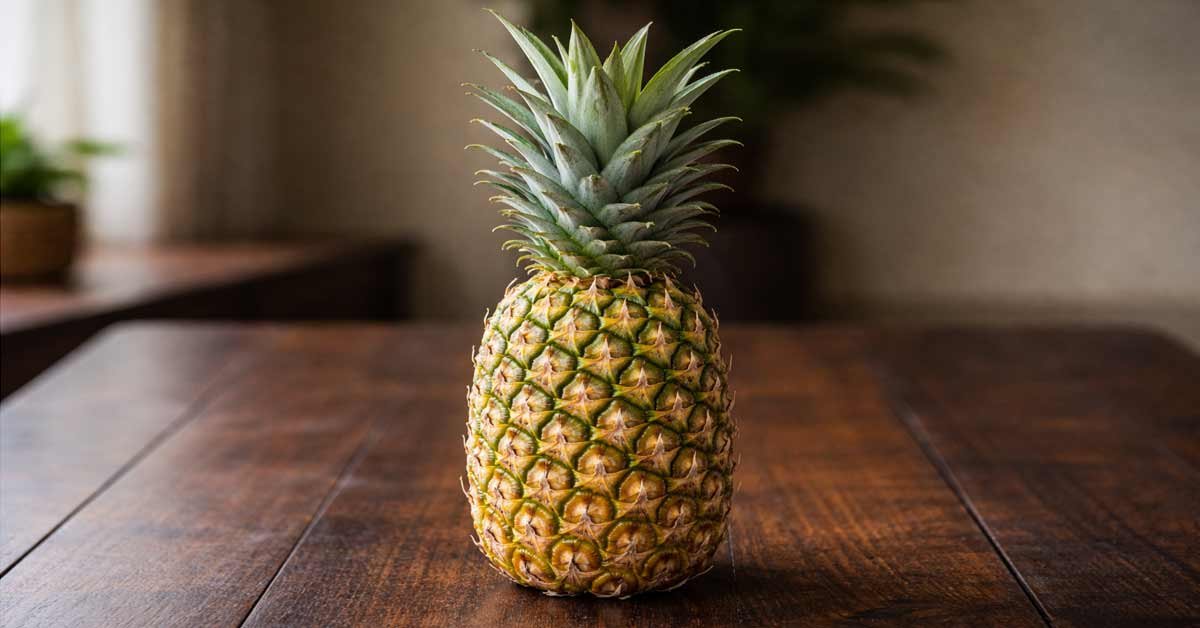
The Sweet Spot Between Flavor and Function
Pineapple is one of those rare fruits that feels like a treat and functions like more than just a sweet snack. Its bright, tropical flavor can brighten a meal, a smoothie, or even a simple fruit salad—but beyond taste, pineapple quietly plays a role in supporting digestion and immunity. You don’t need to eat huge amounts or follow complex protocols to notice its effects; the fruit’s natural compounds work in small, consistent ways that add up over time.
What makes pineapple particularly interesting is that it combines flavor, texture, and functional benefits in one package. Bite into a fresh slice and you immediately notice the juicy sweetness, the slight tang, and even a subtle tingling that hints at the enzymes at work. That tingling is bromelain, an active enzyme unique to pineapple, gently interacting with proteins—even starting the breakdown process in your mouth before it reaches your stomach. It’s a rare instance where taste, chemistry, and physiology intersect naturally.
Table of Contents

At the same time, pineapple delivers vitamin C and antioxidants, which participate in maintaining cellular health and supporting immune function. Unlike supplements that isolate nutrients, pineapple offers a full package: water, fiber, natural sugars, vitamins, and enzymes that interact synergistically in the digestive system. That combination is one reason the fruit has been valued in traditional diets for centuries and studied in modern nutritional science.
In everyday eating, pineapple’s effects are subtle but noticeable. A meal with fresh pineapple may feel lighter, digestion may seem smoother, and the body benefits from a consistent supply of nutrients that help maintain immune balance. It’s not a miracle cure, but it is an example of how food can be both enjoyable and functional at the same time.
This article explores how pineapple’s unique composition makes it stand out among fruits, the science behind its enzymes, and practical ways to include it in your diet so you can experience its benefits naturally and consistently.
Why Pineapple Stands Out as an Enzyme-Rich Fruit
Walk through any fruit market and you will see dozens of options that promise freshness, sweetness, maybe a boost of vitamins. But pineapple quietly sits in its own category. It is not just another tropical fruit. Pineapple brings something functional to the table that most fruits simply do not: a meaningful concentration of active enzymes that interact with how your body processes food.
That difference matters more than people tend to realize. You can eat fruit for taste, for hydration, for micronutrients. But pineapple earns attention because it actively participates in digestion in a way that goes beyond passive nutrition.
What Makes Pineapple Unique Among Fruits
Most fruits contain trace amounts of enzymes. That is normal. Plants rely on enzymes for their own metabolic processes. But in many fruits, these enzymes are either present in very small amounts or become less relevant once consumed due to digestion and breakdown.
Pineapple is different because it contains a group of proteolytic enzymes known collectively as bromelain. These enzymes are not just present. They are active and studied for how they interact with proteins.
If you compare pineapple to fruits like apples, bananas, or berries, the distinction becomes clearer:
- Apples provide fiber and polyphenols but minimal enzyme activity that affects protein digestion
- Bananas offer resistant starch and potassium but do not meaningfully assist in breaking down proteins
- Berries are rich in antioxidants but are not enzyme-driven in their digestive impact
Pineapple, on the other hand, contributes something functional during the digestive process itself. That is a different role.
There is also a sensory clue most people have experienced without thinking about it. That slight tingling or even irritation in your mouth after eating fresh pineapple? That is not just acidity. It is enzyme activity interacting with proteins in the surface tissues of your mouth. It is a small, direct example of what is happening on a larger scale during digestion.
Bromelain: The Enzyme Behind the Reputation
Bromelain is not a single enzyme. It is a mixture of proteases, meaning enzymes that break down proteins into smaller peptides and amino acids. It is found in both the fruit and the stem of pineapple, although concentrations are higher in the stem, which is often used for extracts.
In practical terms, bromelain works by cleaving protein structures. Proteins are complex molecules. Your body needs to break them down into smaller units before absorption. This process usually starts in the stomach with acid and enzymes like pepsin, then continues in the small intestine.
Bromelain supports this process from the outside. It does not replace your own digestive enzymes. It complements them.
Here is how that plays out in real life:
- When you eat a protein-rich meal, digestion requires time and enzymatic effort
- Adding pineapple introduces external proteases that can begin breaking down protein structures earlier
- This can reduce the overall workload on your digestive system, especially in meals that are heavy or dense
It is worth noting that bromelain activity is sensitive to heat. Fresh pineapple contains active enzymes. Canned pineapple, which is typically heat-processed, has significantly reduced enzymatic activity. That detail alone changes how the fruit functions in your body.
There is also a long-standing culinary use that reflects this science. Pineapple has been used as a natural meat tenderizer for generations. That is not a coincidence or a trend. It is a direct result of bromelain breaking down protein fibers, making meat softer. The same principle applies, in a more controlled way, inside your digestive system.
How Enzymes Support Everyday Digestion
Digestion is not just about what you eat. It is about how efficiently your body processes it. Enzymes are central to that process. Without them, nutrients remain locked in forms your body cannot use.
Your body produces its own enzymes, and for most people, that system works well. But modern eating patterns can complicate things. Larger meals, higher protein intake, fast eating habits, and stress can all influence how comfortable digestion feels.
This is where foods like pineapple can play a subtle but useful role.
When you include pineapple in a meal or eat it shortly after, you are adding active compounds that assist with protein breakdown. This can translate into noticeable differences, especially in specific situations:
- After a heavy meal that feels like it is “sitting” in your stomach
- When meals are high in animal protein or dense plant proteins
- During periods of slower digestion, which can happen with stress or irregular eating patterns
The effect is not dramatic or instant. It is more of a gentle shift. Digestion feels smoother. There is less heaviness. Sometimes less bloating, although that depends on the overall meal and the individual.
There is also a timing aspect that people experiment with:
- Eating pineapple alongside a meal can integrate enzyme support directly into digestion
- Eating it after a meal may help continue the breakdown process
- Eating it on an empty stomach highlights its enzymatic activity more clearly, though not everyone prefers that sensation
What matters most is consistency rather than precision. A few pieces of fresh pineapple regularly included in your diet can be enough to notice a difference over time.
That said, more is not always better. Large amounts of pineapple can cause mouth irritation or digestive discomfort due to both acidity and enzyme activity. The goal is balance, not excess.
A practical way to think about pineapple is this: it acts as a supportive player in digestion, not the main driver. Your body does the heavy lifting. Pineapple steps in to make that process a bit more efficient, a bit more comfortable.
And that is really where its value sits. Not in exaggerated claims, not in quick fixes, but in small, consistent contributions that align with how your body already works.
Pineapple and Digestion: What You Actually Notice
You can talk about enzymes and mechanisms all day, but what most people care about is simple: how does pineapple actually feel when you eat it regularly? Not in theory. In real life, after real meals, on busy days when you are not thinking about digestion at all.
Pineapple tends to show its value in subtle ways. It is not dramatic. There is no instant transformation. But over time, certain patterns become noticeable. Meals feel lighter. That heavy, slow sensation after eating does not linger as long. You start to feel like your body is keeping up instead of playing catch up.
That is where pineapple earns its place. Not as a solution, but as a quiet improvement.
Breaking Down Protein and Easing Digestive Load
Protein is essential, but it is also the most demanding macronutrient to digest. It requires multiple steps, different enzymes, and more time compared to carbohydrates or fats. When meals are protein-heavy, digestion can feel slower, sometimes even uncomfortable.
This is where pineapple fits in naturally.
The enzymes in pineapple, especially bromelain, begin interacting with protein structures early in the digestive process. Think about a typical meal:
- Grilled chicken with rice
- Eggs and toast in the morning
- A steak dinner that sits a bit too long afterward
In each case, your body needs to break down dense protein structures. Pineapple can support that process by starting the breakdown before your internal enzymes have to do all the work alone.
What people often notice is not a dramatic change, but a reduction in that “heavy” feeling. The kind where you feel like you need to sit still for a while after eating. With pineapple in the mix, meals can feel more manageable.
It is especially noticeable in meals that combine:
- High protein
- Larger portion sizes
- Faster eating habits
Even small amounts of pineapple alongside or after these meals can make digestion feel more efficient.
Pineapple and Gut Comfort in Real Life
Gut comfort is a broad term. It can mean less bloating, less pressure, fewer moments where your stomach feels unsettled. Pineapple does not directly fix these issues, but it can influence the conditions that lead to them.
When food is broken down more effectively, it moves through the digestive system more smoothly. That alone can reduce the likelihood of discomfort.
People who include pineapple regularly often describe a few consistent observations:
- Meals feel “lighter,” even when the food itself has not changed
- There is less post-meal sluggishness
- Occasional bloating feels less intense, especially after protein-heavy dishes
There is also a behavioral aspect. When you start paying attention to how foods like pineapple affect you, you naturally become more aware of how different meals feel. That awareness leads to better choices over time.
For example, someone might notice that:
- A heavy dinner without pineapple feels slow and dense
- The same dinner with a few slices of pineapple afterward feels easier to digest
It is not magic. It is a small shift in how efficiently food is processed.
That said, pineapple is not universally comfortable for everyone. Its natural acidity and enzyme activity can feel intense, especially on an empty stomach or in large amounts. Some people experience mild irritation or sensitivity. That is a signal to adjust quantity, not to avoid it entirely.
Simple Ways to Eat Pineapple for Digestive Support
You do not need complicated recipes or strict timing. Pineapple works best when it fits naturally into your routine. The goal is consistency, not precision.
Here are practical ways to include pineapple without overthinking it:
- Add fresh pineapple slices next to a protein-rich meal like chicken, fish, or tofu
- Eat a small bowl of pineapple after lunch or dinner as a light, functional dessert
- Mix pineapple into a yogurt bowl for a combination of enzymes and probiotics
- Blend it into a smoothie, keeping in mind that fresh pineapple retains more enzyme activity than processed versions
Some people prefer it before meals, others after. Both approaches can work. The difference is mostly personal comfort.
A few patterns tend to work well:
- After heavier meals, pineapple feels more beneficial
- In smaller portions, it is easier on the stomach
- Fresh pineapple consistently delivers better results than canned varieties
Canned pineapple is convenient, but the heating process reduces enzyme activity significantly. If digestion support is your goal, fresh pineapple is the better option.
Also, pairing matters. Pineapple alongside protein-rich foods makes the most sense because that is where its enzymes are most relevant.
Common Mistakes That Reduce Its Benefits
Pineapple is simple, but a few common habits can limit what you get from it.
One of the biggest mistakes is relying on processed forms:
- Canned pineapple often lacks active enzymes due to heat treatment
- Packaged juices may contain little to no functional bromelain
Another issue is quantity. More pineapple does not mean better digestion. In fact, large amounts can lead to:
- Mouth irritation
- Stomach discomfort due to acidity
- A general feeling of “too much” rather than support
Moderation works better than excess.
Timing can also be misunderstood. Some people expect immediate results after eating pineapple once. That is not how it works. The benefits are more noticeable with regular use, not one-off consumption.
There is also the tendency to treat pineapple as a fix for poor eating habits. If meals are consistently oversized, rushed, or unbalanced, pineapple cannot compensate for that. It supports digestion, it does not replace good habits.
A more effective approach looks like this:
- Balanced meals with reasonable portions
- Slower eating when possible
- Consistent inclusion of pineapple as a supportive element
Finally, ripeness matters more than people think. Underripe pineapple is more acidic and less pleasant to eat, which can discourage regular use. A ripe pineapple is naturally sweeter, easier on the stomach, and more enjoyable overall.
When you get these basics right, pineapple becomes something you actually want to eat, not something you feel like you should eat.
And that is usually the difference between something that stays in your routine and something you forget about after a week.

Pineapple and Immunity: Subtle but Consistent Support
When people think about immunity, their minds often jump to pills, powders, or occasional mega-doses of vitamin C. But the reality is far more nuanced. Immunity is a daily, ongoing process. Pineapple fits into that process not as a dramatic cure, but as a small, consistent contributor that complements the body’s natural defenses.
Eating pineapple regularly provides more than flavor and digestion support—it introduces compounds that participate quietly in cellular protection and immune function. Over time, these subtle contributions add up, supporting overall wellness without drawing attention to themselves.
Vitamin C and Its Role in Immune Function
Pineapple is a surprisingly robust source of vitamin C, an essential nutrient for the body’s defense systems. Vitamin C contributes to the production and maintenance of white blood cells, which are central to immune responses. It also supports the integrity of the skin and mucous membranes, which act as the first line of defense against pathogens.
The vitamin C content in a single serving of fresh pineapple can cover a significant portion of the daily recommended intake. For example, 100 grams of fresh pineapple provides roughly 47.8 milligrams of vitamin C, which is about 53% of the daily recommended value for adults. That is substantial, especially considering how easy it is to incorporate pineapple into meals or snacks.
Regular vitamin C intake helps the body maintain consistent immune function, rather than relying on high-dose supplements sporadically. It is not about preventing every cold, but about providing steady support to your immune system so it can function efficiently day-to-day.
Antioxidants and Cellular Defense
Beyond vitamin C, pineapple contains other antioxidants, including flavonoids and phenolic compounds. These molecules help neutralize free radicals—unstable molecules that can damage cells and affect immune responses. While the effects are subtle, over time antioxidants contribute to cellular resilience and reduce oxidative stress, which is linked to inflammation and slower recovery processes.
The combination of enzymes, vitamin C, and antioxidants makes pineapple more than a source of nutrients. It is a functional food in the sense that its compounds interact with biological processes that influence immune health. That does not mean it is a cure or a treatment, but it is a reliable contributor to overall wellness when consumed consistently.
People often notice the difference not in dramatic shifts, but in small, cumulative effects: less lingering fatigue, smoother recovery from minor illnesses, and a general feeling of vitality that is hard to quantify but easy to experience.
How Regular Intake Fits Into a Balanced Routine
The key to pineapple’s immune-supporting benefits is regular inclusion rather than occasional indulgence. A few slices with breakfast, added to a salad at lunch, or enjoyed as a snack in the afternoon can be enough to maintain steady intake.
Some practical approaches include:
- Mixing pineapple with other fruits for a vitamin- and antioxidant-rich snack
- Pairing it with yogurt or nuts to combine enzymes with probiotics and healthy fats
- Using it as a topping for whole-grain cereals or oatmeal to start the day with a nutrient boost
Regular consumption ensures that your body receives a consistent supply of vitamin C and antioxidants, supporting immune function in a subtle, manageable way. Over time, this pattern reinforces habits that contribute to resilience without feeling forced or burdensome.
When Pineapple Becomes Part of Everyday Resilience
The real value of pineapple lies in its integration into daily life. It is easy to forget that immunity is not a single event—it is an ongoing process influenced by nutrition, sleep, stress, and activity. Pineapple fits naturally into this rhythm. It provides functional compounds that your body can use every day, contributing to steady, baseline support.
It does not make the immune system invincible. No food can do that. But it does help ensure that the system is equipped to respond efficiently to minor stressors and environmental challenges. People who include pineapple in their routine often find that it complements other healthy practices: balanced meals, hydration, adequate rest, and regular activity.
In practical terms, pineapple becomes a small, reliable ally. You may not notice a single moment of impact, but over weeks and months, it quietly supports your body’s natural defenses. That cumulative, consistent effect is where its true strength lies, turning a simple tropical fruit into a meaningful part of everyday resilience.
Best Selling Pineapple Related Products


When a Simple Fruit Like Pineapple Is Enough
Sometimes the simplest choices are the most effective. Pineapple illustrates this better than most foods. It doesn’t require elaborate preparation, exotic pairings, or strict timing to offer benefits. Its value lies in its consistent, gentle contribution to digestion, enzyme support, and immune function. Often, people overlook that regular, modest inclusion of functional foods like pineapple can yield noticeable improvements over time, without needing complex diets or supplements.
The key is understanding what “enough” really means. Pineapple is not a cure-all, nor will it single-handedly transform digestion or immunity. Its role is supportive, steady, and cumulative. Think of it as a companion rather than a hero. By incorporating pineapple into meals a few times a week, you can reinforce the natural processes your body already performs, making digestion smoother and maintaining baseline immune resilience.
For example, a few slices with lunch or a small pineapple smoothie in the morning can subtly influence how your body handles proteins and oxidative stress. Over time, these small interventions compound. Meals feel lighter, energy levels remain more balanced, and the body experiences fewer digestive slowdowns after protein-heavy foods. You begin to notice that post-meal bloating diminishes, or that your morning routine feels more comfortable without feeling like you need a supplement regimen.
Simplicity also encourages consistency. A fruit that is enjoyable, accessible, and easy to prepare is more likely to become a routine part of your diet. Unlike specialized powders or capsules, pineapple naturally fits into everyday life, providing functional support without requiring strict adherence to timing or dosage. Its combination of enzymes, vitamin C, and antioxidants makes it a multifaceted ally that interacts with the body in several subtle ways simultaneously.
It is also worth noting that eating whole pineapple offers benefits that extracts or isolated compounds cannot fully replicate. Whole fruit delivers fiber, water, and a natural balance of sugars alongside enzymes. This combination slows digestion just enough to enhance nutrient absorption while avoiding spikes in blood sugar or overwhelming the gut.
In the bigger picture, pineapple demonstrates that health does not always require complicated solutions. Regular, mindful inclusion of simple, enzyme-rich fruits can be enough to support digestion, comfort the gut, and contribute to steady immune function. It reminds us that consistency and balance often outweigh intensity or complexity. By letting pineapple play a quiet, steady role in your meals, you harness its benefits naturally, without overthinking or overcomplicating your dietary choices.
In short, pineapple is enough because it works with your body rather than against it. It does not promise dramatic transformations, but it provides reliable, cumulative support that aligns perfectly with everyday life. Over time, that simple fruit becomes part of a pattern that fosters comfort, balance, and resilience—sometimes, that is exactly what your body needs.
Article Sources
At AncientHerbsWisdom, our content relies on reputable sources, including peer-reviewed studies, to substantiate the information presented in our articles. Our primary objective is to ensure our content is thoroughly fact-checked, maintaining a commitment to accuracy, reliability, and trustworthiness.
- Bromelain. (2023). National Center for Complementary and Integrative Health. https://www.nccih.nih.gov/health/bromelain
- Pavan, R., Jain, S., Shraddha, & Kumar, A. (2012). Properties and therapeutic application of bromelain: a review. Biotechnology Research International, 2012, 976203. https://doi.org/10.1155/2012/976203
- Miller, E. M., & Shukla, D. (2019). Pineapple (Ananas comosus) and its bioactive components: Effects on health and disease. Food & Function, 10(10), 6206–6216. https://doi.org/10.1039/c9fo01490k
- Li, S., Tan, H. Y., Wang, N., Zhang, Z. J., Lao, L., Wong, C. W., & Feng, Y. (2015). The role of oxidative stress and antioxidants in liver diseases. International Journal of Molecular Sciences, 16(11), 26087–26124. https://doi.org/10.3390/ijms161125942
- Carr, A. C., & Maggini, S. (2017). Vitamin C and immune function. Nutrients, 9(11), 1211. https://doi.org/10.3390/nu9111211
- Böhm, V., & Bitsch, R. (1999). Flavonoids and their effects on the immune system. Journal of Nutritional Biochemistry, 10(2), 66–74. https://doi.org/10.1016/S0955-2863(98)00089-7
- Mandal, S., & Sharma, A. (2018). Digestive enzyme activity of bromelain in gastrointestinal health. Journal of Food Biochemistry, 42(5), e12596. https://doi.org/10.1111/jfbc.12596
- World Health Organization. (2021). Nutrition: Micronutrients. https://www.who.int/health-topics/nutrition#tab=tab_1

- Star Fruit: Hydrating Fruit for Vitamin C - March 30, 2026
- Sapodilla: Sweet Fruit for Digestion and Energy - March 30, 2026
- Pineapple: Enzyme Rich Fruit for Digestion and Immunity - March 29, 2026