
The Underrated Crunch: Why Kohlrabi Deserves Attention
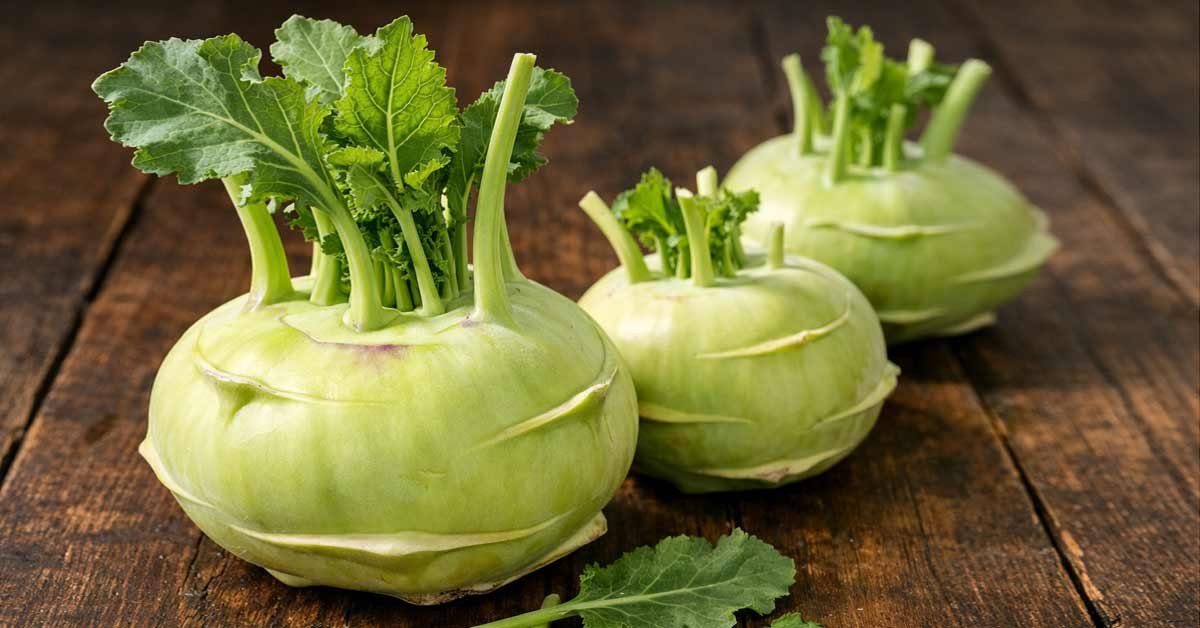
Walk through any produce aisle and you’ll see the usual suspects. Broccoli. Kale. Spinach. Vegetables that built their reputation over years of headlines and health trends. Then, tucked somewhere between them, you might notice something odd. A pale green bulb with stems sticking out in all directions, almost like it doesn’t belong. That’s kohlrabi. Most people pass it without a second glance. Not because it lacks value, but because no one really told them what to do with it.
Kohlrabi sits in that uncomfortable space between familiar and unknown. It’s part of the same cruciferous family as broccoli and cabbage, yet it never quite made it into everyday routines. The irony is that from a nutritional standpoint, especially when you care about fiber, kohlrabi holds its ground better than most people expect. Not in a loud, dramatic way. More like a steady, reliable presence that quietly does its job.
Table of Contents


Take a bite of raw kohlrabi and the first thing that stands out is the texture. Crisp. Almost apple-like, but denser. There’s a mild sweetness, followed by a slightly peppery edge that reminds you it belongs to the same family as mustard greens. That combination matters more than it seems. Foods that require chewing, that have structure, tend to slow you down. And that alone changes how you eat. You notice it more. You stop rushing. You feel full sooner without needing to think about it.

Fiber plays a central role here, but not in the way it’s often marketed. It’s easy to reduce fiber to numbers on a label. Grams per serving. Daily percentages. But that doesn’t capture how it actually behaves in real life. When you eat kohlrabi, the fiber comes bundled with water, plant structure, and micronutrients. It isn’t isolated. It isn’t engineered. That combination changes how your digestive system responds.
In practical terms, kohlrabi contributes both bulk and texture to what you eat. That matters because modern diets tend to lean heavily on softer, more processed foods. Things that require minimal effort to chew and move quickly through meals. Over time, that pattern can leave meals feeling incomplete, even when calorie intake is technically sufficient. Adding something like kohlrabi shifts that balance. It brings back a kind of physicality to eating that’s easy to overlook.
There’s also a subtle psychological angle that doesn’t get enough attention. When people try to increase fiber, they often go straight to dramatic changes. Large servings of legumes. Bran-heavy cereals. Supplements. It becomes a task, something to manage rather than something that fits naturally into a meal. Kohlrabi avoids that trap. It doesn’t feel like a “fiber food.” It just feels like food. Something you can slice, roast, or toss into a salad without overthinking it.
And that ease matters more than most nutrition advice admits. Because the real challenge isn’t knowing that fiber is important. That part is well established. The challenge is consistency. What you can repeat without effort. What you don’t have to negotiate with yourself to eat. Kohlrabi fits into that space surprisingly well.
Another point worth noticing is how kohlrabi behaves across different preparations. Raw, it’s sharp and refreshing. Cooked, it softens but holds its structure better than many other vegetables. It doesn’t collapse into mush unless you really push it. That resilience makes it useful in everyday cooking. You can roast it alongside other vegetables, sauté it lightly, or even add it to soups without losing its identity. And every time you do, you’re still working with that same fiber backbone.
There’s a tendency to overlook vegetables that don’t come with a strong narrative. Kale had its moment. Broccoli built its reputation decades ago. Kohlrabi never had that push. No major campaign. No sudden surge in popularity. But sometimes that’s exactly why something is worth paying attention to. It hasn’t been overhyped. It hasn’t been distorted by trends. It’s just been sitting there, doing what it’s always done.
If you step back and look at the bigger picture, kohlrabi represents a shift in how you approach food. Less focus on extremes. Less chasing after the next “superfood.” More attention to what actually fits into your routine. What you can buy without searching specialty stores. What you can prepare without needing a recipe every time.
Fiber, in that context, stops being an abstract goal and becomes something tangible. Something you experience through texture, through satiety, through the way a meal feels from start to finish. Kohlrabi delivers that in a way that’s simple and direct.
And maybe that’s the real reason it deserves attention. Not because it’s extraordinary, but because it’s reliable. It gives you a way to bring fiber back into your meals without turning it into a project. You cut it, you eat it, and it does what it’s supposed to do. Quietly, consistently, without asking for much in return.
What Makes Kohlrabi a Fiber-Focused Vegetable
There’s a tendency to treat fiber as a checkbox. Hit a number, move on. But when you look at how foods actually deliver fiber, the picture changes. Not all sources behave the same, and not all of them fit easily into daily eating. Kohlrabi stands out here, not because it contains extreme amounts of fiber, but because of how naturally it delivers it. The structure, the water content, the way you eat it. All of that shapes the outcome.
Understanding Fiber Content in Kohlrabi
A standard serving of raw kohlrabi, about 100 grams, provides roughly 3 to 4 grams of fiber. That number comes from established food composition databases like the USDA. It’s not an outlier, but it’s solid. To put it in perspective:
- 100 grams of broccoli: about 2.5 to 3 grams of fiber
- 100 grams of cabbage: about 2 to 2.5 grams
- 100 grams of kohlrabi: about 3 to 4 grams
So kohlrabi sits slightly above many of its cruciferous relatives. Not dramatically higher, but enough to matter when repeated across meals.
The fiber itself is a mix of soluble and insoluble types. Exact ratios vary depending on the growing conditions and maturity of the plant, but the pattern is consistent with other cruciferous vegetables:
- Insoluble fiber provides structure. It adds bulk and supports movement through the digestive tract.
- Soluble fiber interacts with water. It forms a gel-like consistency and slows digestion.
What’s important here is the combination. Kohlrabi doesn’t lean heavily in one direction. It offers both, which creates a more balanced effect when you eat it.
Cooking changes things slightly, but not in a way that removes the benefit. The total fiber content remains relatively stable. What shifts is texture. Heat softens the plant structure, which can make the fiber easier to tolerate for some people, especially those who struggle with raw vegetables. But the core contribution remains intact.
How Fiber in Kohlrabi Behaves in the Body
Once you eat kohlrabi, the fiber doesn’t act in isolation. It interacts with fluid, digestive enzymes, and the existing contents of your gut. That interaction is where the real effects show up.
Insoluble fiber from kohlrabi increases stool bulk. It doesn’t dissolve, so it moves through the digestive system largely intact. This supports regular movement by giving the intestinal muscles something to work with. It’s a mechanical effect more than a chemical one.
Soluble fiber behaves differently. It absorbs water and forms a thicker consistency in the digestive tract. This slows down how quickly food moves. Slower movement can influence how nutrients are absorbed and how long you feel satisfied after eating.
There’s also the fermentation aspect. Some of the fiber in kohlrabi reaches the colon, where it becomes a substrate for gut bacteria. During fermentation, these bacteria produce short chain fatty acids. You don’t feel this happening directly, but it plays a role in how the gut environment maintains balance.
What matters in practice is not any single mechanism, but how they combine:
- Meals that include kohlrabi tend to feel more substantial
- Digestion becomes more predictable when fiber intake is consistent
- Eating pace often slows down because of the texture
None of these effects are dramatic on their own. But repeated daily, they add up. That’s where kohlrabi becomes useful. It supports these processes without requiring a major shift in how you eat.
Why Whole Vegetables Like Kohlrabi Feel Different
This is where things get overlooked. Fiber from whole vegetables behaves differently than fiber added to processed foods. Not because the fiber itself is chemically unique, but because of the context it comes in.
Kohlrabi is a good example. When you eat it, you’re not just getting fiber. You’re getting:
- Water, which affects volume and hydration
- Plant cell structure, which slows down chewing and digestion
- Micronutrients that interact with metabolic processes
- Natural density that influences portion size without calculation
Compare that to something like a fiber supplement or a fortified snack. The numbers on paper might look similar, but the experience is different. You don’t chew a supplement. You don’t get the same sensory feedback. You don’t naturally adjust your eating pace.
There’s also the physical act of eating kohlrabi. You slice it. You bite into it. It resists slightly. That resistance matters. It signals fullness earlier, often before you’ve eaten more than you need. It’s a subtle form of regulation that doesn’t rely on willpower.
Another detail that often gets ignored is dilution. In processed foods, fiber is often added to a calorie-dense base. In kohlrabi, fiber comes packaged in a low energy, high volume food. That shifts the balance of a meal without requiring calculation. You eat a bowl with kohlrabi in it, and the overall density changes automatically.
From a practical standpoint, this is why kohlrabi works so well for people trying to increase fiber without overcomplicating things. It doesn’t require tracking. It doesn’t require precise measurements. It fits into meals in a way that feels normal.
You might notice it in small ways. A salad with thin slices of kohlrabi feels more filling than expected. A roasted mix holds its texture better. A simple snack of raw sticks keeps you satisfied longer than something softer. None of these are dramatic shifts, but they’re consistent.
And consistency is where the value lies. Not in hitting a perfect number once, but in repeating a pattern that works. Kohlrabi supports that pattern. Quietly, without needing attention.
Nutritional Depth Beyond Fiber in Kohlrabi
It’s easy to frame kohlrabi as a fiber vehicle and stop there. That would be a mistake. The fiber matters, but it doesn’t work alone. What gives kohlrabi its staying power is the way fiber sits inside a broader nutritional structure. Vitamins, minerals, and plant compounds all come bundled together, shaping how the body responds over time. You don’t notice this in a single meal. You notice it when the same food shows up again and again, quietly doing its job.
Vitamins That Support Everyday Function
Start with vitamin C, because kohlrabi delivers more of it than most people expect. A 100 gram serving of raw kohlrabi provides roughly 60 to 65 milligrams of vitamin C. That’s based on standard nutrient databases. For context, many adults aim for around 75 to 90 milligrams per day depending on guidelines. So one serving of kohlrabi covers a large portion of that target.
What matters here is not just the number, but the consistency. Vitamin C is water soluble. The body does not store large amounts of it. That means regular intake matters more than occasional high doses. Foods like kohlrabi make that easier because they fit into daily meals without much effort.
There’s also the issue of stability. Vitamin C is sensitive to heat. Long cooking times reduce its content. This is where kohlrabi has an advantage. It’s often eaten raw or lightly cooked. When you slice it into a salad or keep the cooking time short, you preserve more of that vitamin content without needing to think too much about it.
Beyond vitamin C, kohlrabi provides smaller but relevant amounts of B vitamins. Vitamin B6 shows up in modest quantities. It plays a role in amino acid metabolism and general energy processes. Folate is present as well, contributing to cell function and normal tissue maintenance. These aren’t headline numbers, but they add up when the food becomes part of a routine.
The key point is that these vitamins arrive in a format that doesn’t demand attention. You don’t eat kohlrabi because you are chasing a specific micronutrient. You eat it because it fits, and the nutrients come with it.
Minerals That Complement Fiber Intake
Fiber often gets discussed in isolation, but it works alongside minerals in ways that are easy to overlook. Kohlrabi contributes several of these, especially potassium.
A 100 gram portion of kohlrabi provides around 350 milligrams of potassium. That’s a meaningful amount, considering many diets fall short of recommended intake levels. Potassium plays a role in fluid balance and normal muscle function. When fiber intake increases, fluid movement in the digestive system changes. Having adequate potassium in the same foods helps support that balance.
Magnesium is present in smaller amounts, roughly 15 to 20 milligrams per 100 grams. It doesn’t stand out on paper, but it contributes to muscle relaxation and general metabolic activity. Again, this is not about a single serving solving anything. It’s about layering intake across the day.
Calcium is also found in kohlrabi, though not in high concentrations. Still, when combined with other foods, it adds to total intake without requiring separate planning.
There’s a practical side to this. When people increase fiber quickly without adjusting the rest of their diet, they sometimes run into discomfort. Bloating, irregular digestion, things like that. Part of the issue is not just fiber itself, but the overall balance of nutrients and fluids. Foods like kohlrabi help smooth that transition because they bring multiple elements together:
- Fiber that supports structure
- Water that supports movement
- Minerals that support fluid balance
It’s a more integrated approach, even if it doesn’t look impressive on a label.
Phytonutrients in Kohlrabi
This is where kohlrabi starts to resemble the rest of the cruciferous family more closely. Like broccoli, cabbage, and Brussels sprouts, it contains glucosinolates. These are sulfur containing compounds naturally present in these vegetables.
When you cut or chew kohlrabi, enzymes convert glucosinolates into other compounds, including isothiocyanates. This process depends on the integrity of the plant tissue. That’s one reason why chopping and chewing matter. The act of eating activates these transformations.
These compounds have been studied for their interaction with cellular processes, particularly those related to oxidative balance. The research is still evolving, but what’s consistent is that cruciferous vegetables as a group are associated with beneficial dietary patterns. Kohlrabi fits into that category without needing special treatment.
Kohlrabi also contains other antioxidant compounds in smaller amounts. These include phenolic compounds that contribute to its mild bitterness and overall flavor profile. You don’t taste them individually, but they shape the experience of eating the vegetable.
What’s important here is context. Phytonutrients do not act like isolated nutrients. Their effects depend on the overall diet. Eating kohlrabi once will not create a measurable shift. Including it regularly as part of a varied intake of vegetables contributes to a broader pattern that supports normal physiological processes.
There’s also a practical observation that often gets missed. Foods rich in phytonutrients tend to have distinct flavors. Slight bitterness. Peppery notes. Subtle sharpness. Kohlrabi has all of these, but in a milder form compared to something like raw cabbage or mustard greens. That makes it easier to include without resistance.
In real life, that matters more than the chemistry. A food that you can eat consistently will always outperform a food that looks impressive on paper but rarely shows up on your plate.
Kohlrabi sits in that middle ground. It delivers fiber, yes, but also a mix of vitamins, minerals, and plant compounds that work together. Nothing extreme. Nothing exaggerated. Just a steady contribution that becomes meaningful through repetition.
Making Kohlrabi Work in Real Life Without Overthinking It
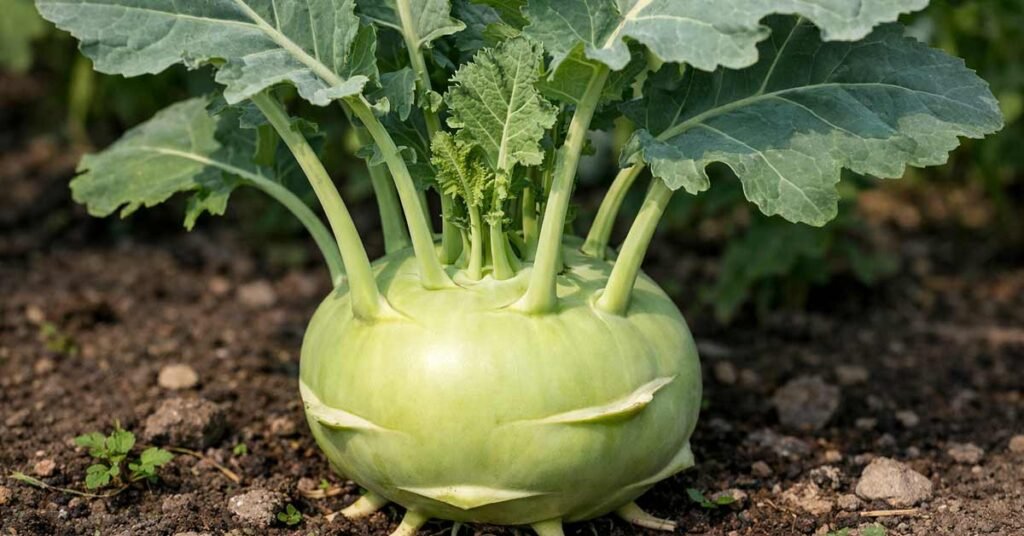
Most people don’t struggle with understanding nutrition. They struggle with making it happen on a random Tuesday when time is tight and attention is elsewhere. That’s where kohlrabi either earns its place or disappears completely. The good news is that it doesn’t demand much. Once you get past the unfamiliar shape, it becomes one of the more practical vegetables you can keep around.
Choosing and Storing Kohlrabi
Start at the store. Kohlrabi doesn’t require much expertise to pick, but a few details make a difference.
Look for bulbs that feel firm and heavy for their size. The surface should be smooth, not wrinkled or cracked. Smaller bulbs, usually around the size of a tennis ball, tend to have a more tender texture. Larger ones can still be good, but they’re more likely to develop a slightly woody interior.
If the leaves are still attached, pay attention to them. Fresh leaves are a good sign the vegetable hasn’t been sitting around too long. They should look vibrant, not wilted or yellowing. And those leaves aren’t just decorative. They’re edible and can be used like any other leafy green.
Once you bring kohlrabi home, separate the leaves from the bulb if they’re attached. The leaves draw moisture away over time. Store the bulb in the refrigerator, ideally in the crisper drawer. It holds up well for about one to two weeks when kept cold and dry.
The leaves are more delicate. Use them within a few days. Treat them like spinach or kale. Quick sauté, add to soups, or mix into other greens.
There’s no need for complicated storage systems. Keep it simple. Cool, dry, and separate.
Simple Ways to Prepare Kohlrabi
This is where most people overthink it. Kohlrabi doesn’t need elaborate recipes to work.
Start by trimming off the top and bottom. Then peel the outer layer. It can be slightly tough, especially on larger bulbs. Once peeled, you’re left with a crisp interior that’s easy to work with.
From there, you have a few straightforward options:
- Slice into thin rounds for a quick snack
- Cut into sticks, similar to carrots, for dipping
- Shred it for salads or slaws
- Cube it for roasting or sautéing
Raw kohlrabi keeps its crunch and mild sweetness. It works well when you want something fresh and structured. Add a bit of salt, maybe a squeeze of lemon, and it’s done.
Cooking changes the texture but doesn’t erase it. That’s one of its strengths. Light sautéing softens it slightly while keeping some bite. Roasting brings out a deeper flavor without turning it into mush. Keep the cooking time reasonable. Around 20 to 25 minutes in the oven at a moderate temperature is usually enough for cubes.
Boiling is where things can go wrong. Too much time in water and you lose both texture and some of the more delicate nutrients. If you go that route, keep it brief.
The leaves follow the same logic as other greens. A quick sauté with garlic or added at the end of a soup works well. No need to separate them into a different category.
Easy Meal Ideas That Actually Stick
The difference between a good idea and a habit is repetition. If something takes too much effort, it doesn’t last. Kohlrabi works best when it slips into meals you already make.
Here are a few ways that tend to stick:
- Add raw kohlrabi slices to salads for extra crunch. It pairs well with carrots, cabbage, and simple vinaigrettes.
- Mix shredded kohlrabi into slaws. Combine with a bit of olive oil, vinegar, and salt. Let it sit for a few minutes to soften slightly.
- Roast kohlrabi alongside other vegetables like carrots or potatoes. It holds its structure and doesn’t get lost in the mix.
- Use kohlrabi sticks as a side with dips like hummus or yogurt-based sauces.
- Toss sautéed kohlrabi into grain bowls with rice or quinoa and a protein source.
None of these require a recipe. That’s the point. The goal is to reduce friction.
One small detail that makes a difference: cut size. Thinner pieces work better raw. Slightly larger chunks hold up better when cooked. Adjusting that changes the experience without adding complexity.
And then there’s repetition. The first time you use kohlrabi, it feels new. By the third or fourth time, it becomes automatic. That’s when it starts to matter.
How Much Kohlrabi Makes Sense Day to Day
This is where people often look for a precise answer. There isn’t one. What you’re aiming for is consistency, not perfection.
A realistic portion is around one cup of raw kohlrabi, roughly 100 to 150 grams. That provides a few grams of fiber along with water and micronutrients. It’s enough to contribute without dominating the meal.
You don’t need to eat it every day. A few times per week is already meaningful if it replaces lower-fiber options. What matters is how it fits into your overall pattern.
If you’re increasing fiber intake, pace matters. Going from very low fiber to high fiber overnight can lead to discomfort. Adding kohlrabi gradually avoids that problem. Start with small portions, see how it feels, and adjust.
Also pay attention to context. Kohlrabi doesn’t need to carry the entire fiber load. It works alongside other vegetables, legumes, and whole foods. Think of it as one piece of a larger system.
There’s a practical rhythm that tends to work well:
- Include kohlrabi in one meal when it’s available
- Pair it with other whole foods rather than isolating it
- Keep preparation simple enough that you don’t avoid it
Over time, these small decisions compound. Not in a dramatic way, but in a steady, predictable way.
That’s really the role kohlrabi plays. It doesn’t demand attention. It doesn’t require a plan. It just fits. And when something fits, you use it more often. That’s where the real benefit shows up.
Best Selling Kohlrabi Related Products


When a Simple Vegetable Quietly Improves Your Diet
There’s a point where nutrition advice starts to blur together. More fiber. More vegetables. Less processed food. You’ve heard it all before. The gap isn’t in the information. It’s in what actually sticks when life gets busy, repetitive, and a little unpredictable. That’s where something like kohlrabi starts to matter, not as a standout ingredient, but as a reliable one.
Kohlrabi doesn’t try to impress you. It doesn’t come with bold claims or dramatic results. It shows up, adds texture, brings in fiber, and leaves you feeling a bit more balanced than you did before. And if you keep using kohlrabi, that small shift starts to repeat. That’s the part most people underestimate. Improvement rarely comes from a single change. It comes from what you can do again without resistance.
Think about how meals usually go. You build them around what’s convenient. What you already know how to cook. What doesn’t slow you down. When kohlrabi becomes part of that rotation, even occasionally, it changes the structure of those meals in subtle ways. A plate that might have leaned heavily on refined or soft foods now has something crisp, something with resistance. That alone alters how quickly you eat and how satisfied you feel afterward.
There’s also the accumulation effect. One serving of kohlrabi adds a few grams of fiber. That’s not remarkable on its own. But repeat that across the week, alongside other vegetables and whole foods, and you start to reach intake levels that support more consistent digestion and steadier eating patterns. No tracking required. No strict plan. Just repetition.
You might notice it indirectly. Meals feel more complete. You’re less likely to look for something else right after eating. There’s a steadiness that shows up when fiber intake becomes consistent rather than occasional. Kohlrabi contributes to that without needing to be the center of attention.
Another detail that often gets overlooked is how kohlrabi changes your expectations around food. Once you get used to that crisp texture and mild bite, softer foods start to feel less satisfying on their own. You begin to look for contrast. Crunch next to something creamy. Fresh next to something warm. That shift pushes meals in a direction that naturally includes more whole foods, without forcing it.
There’s a practical example that comes up often. Someone starts adding raw kohlrabi slices to lunch. Nothing dramatic, just a handful on the side. At first, it’s just there. After a few days, they notice lunch holds them longer. They don’t reach for snacks as quickly. Not because they decided to eat less, but because the meal itself changed. That’s the kind of adjustment that lasts, because it doesn’t rely on willpower.
Kohlrabi also helps reduce the friction around eating vegetables. Some foods feel like a commitment. You need a recipe, time, or a specific mood. Kohlrabi doesn’t demand that. You can peel it, slice it, and eat it as it is. Or cook it quickly without worrying too much about getting it perfect. That flexibility makes it easier to come back to.
And then there’s the mental side of it. When you find a food that works without effort, it builds a kind of quiet confidence. You stop feeling like you have to overhaul everything to eat better. You just add something that makes the meal slightly more balanced. Then you do it again the next day, or the next week. Over time, those small additions reshape the overall pattern.
It’s worth being honest about what kohlrabi won’t do. It won’t transform your diet overnight. It won’t solve deeper issues tied to eating habits or lifestyle. Expecting that would miss the point. Its value is in consistency, not intensity.
What it does offer is a low-friction way to increase fiber intake, improve meal structure, and bring more variety into your routine. It does that without demanding attention, without requiring strict planning, and without creating a sense of effort around eating well.
If you zoom out, that’s what makes a difference. Not the one meal where everything is perfect, but the pattern that holds over time. Kohlrabi fits into that pattern because it’s easy to return to. It doesn’t wear you out. It doesn’t get complicated.
You keep a bulb in the fridge. You slice it when you need something fresh. You add it to meals without thinking too much about it. And over weeks and months, those small choices start to shape how you eat.
That’s how a simple vegetable quietly improves your diet. Not by standing out, but by showing up often enough to matter.
Article Sources
At AncientHerbsWisdom, our content relies on reputable sources, including peer-reviewed studies, to substantiate the information presented in our articles. Our primary objective is to ensure our content is thoroughly fact-checked, maintaining a commitment to accuracy, reliability, and trustworthiness.
- U.S. Department of Agriculture, Agricultural Research Service. (2019). FoodData Central: Kohlrabi, raw. https://fdc.nal.usda.gov/fdc-app.html#/food-details/169279/nutrients
- World Health Organization. (2003). Diet, nutrition and the prevention of chronic diseases. https://apps.who.int/iris/handle/10665/42665
- Slavin, J. L. (2013). Fiber and prebiotics: Mechanisms and health benefits. Nutrients, 5(4), 1417–1435. https://doi.org/10.3390/nu5041417
- Dreher, M. L. (2018). Whole fruits and fruit fiber emerging health effects. Nutrients, 10(12), 1833. https://doi.org/10.3390/nu10121833
- Jones, J. M. (2014). CODEX-aligned dietary fiber definitions help to bridge the ‘fiber gap’. Nutrition Journal, 13, 34. https://doi.org/10.1186/1475-2891-13-34
- McRae, M. P. (2017). Dietary fiber intake and type 2 diabetes mellitus: An umbrella review of meta-analyses. Journal of Chiropractic Medicine, 16(1), 44–53. https://doi.org/10.1016/j.jcm.2016.11.002
- Aune, D., Giovannucci, E., Boffetta, P., Fadnes, L. T., Keum, N., Norat, T., Greenwood, D. C., Riboli, E., Vatten, L. J., & Tonstad, S. (2017). Fruit and vegetable intake and the risk of cardiovascular disease, total cancer and all-cause mortality. International Journal of Epidemiology, 46(3), 1029–1056. https://doi.org/10.1093/ije/dyw319
- Verkerk, R., Schreiner, M., Krumbein, A., Ciska, E., Holst, B., Rowland, I., De Schrijver, R., Hansen, M., Gerhäuser, C., Mithen, R., & Dekker, M. (2009). Glucosinolates in Brassica vegetables: The influence of the food supply chain on intake, bioavailability and human health. Molecular Nutrition & Food Research, 53(S2), S219–S265. https://doi.org/10.1002/mnfr.200800065
- Institute of Medicine. (2005). Dietary reference intakes for energy, carbohydrate, fiber, fat, fatty acids, cholesterol, protein, and amino acids. https://nap.nationalacademies.org/catalog/10490
- U.S. Department of Agriculture, Agricultural Research Service. (2019). FoodData Central: Vegetables and vegetable products, nutrient profiles. https://fdc.nal.usda.gov/

- Phosphatidic Acid: Supporting Muscle Growth and Strength - July 31, 2026
- Ceramides: Supporting Healthy Skin From Within - July 31, 2026
- Synbiotics: Combining Prebiotics and Probiotics Together - July 31, 2026