
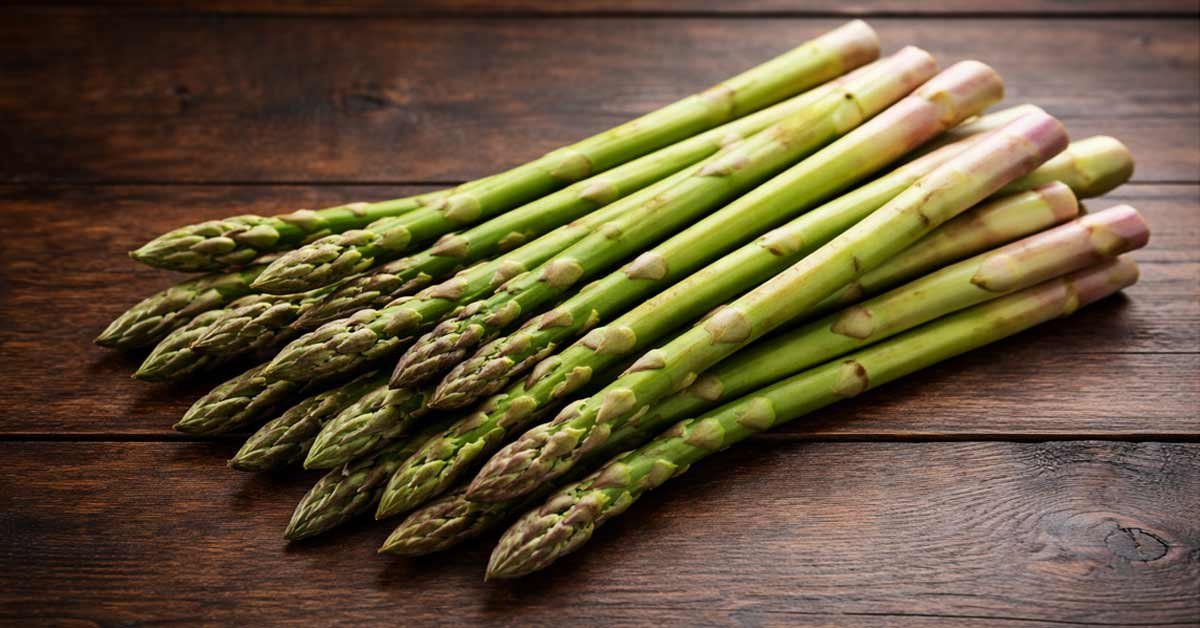
Why Asparagus Deserves a Spot on Your Plate
You don’t usually hear people talk about asparagus with the same enthusiasm reserved for berries or leafy greens. It sits quietly on the side of the plate, often overcooked, sometimes ignored. And yet, if you pay closer attention, asparagus starts to look less like a garnish and more like a steady, reliable contributor to how your body functions day to day.
There’s something almost understated about asparagus. It doesn’t scream “superfood.” It doesn’t rely on trends. But that’s exactly where its strength lies. It shows up with a mix of nutrients and compounds that support systems people tend to overlook until something feels off, especially kidney health and digestion.
Table of Contents


I’ve seen this pattern play out over the years. People chase extremes. They look for dramatic changes, quick fixes, sharp interventions. Meanwhile, the quiet consistency of foods like asparagus often gets pushed aside. But the body rarely responds best to extremes. It responds to patterns. Repetition. Small inputs that accumulate.
And this is where asparagus starts to make sense.
A Vegetable That Works in the Background
Asparagus brings together several things that matter, without overcomplicating your meals:
- It’s naturally low in calories but dense in nutrients
- It contains fiber that your digestive system actually uses
- It provides compounds that interact with fluid balance
- It offers antioxidants that help manage everyday cellular stress
None of these are flashy on their own. Together, they create a kind of quiet support system.
Take a typical day. Maybe you sit more than you should. Maybe your meals are a bit rushed. Maybe hydration is inconsistent. These aren’t dramatic problems, but they add up. Over time, they influence how your digestion feels, how your body handles fluids, how balanced everything seems.
Adding asparagus into that mix doesn’t “fix” anything overnight. That’s not how the body works. But it nudges things in a better direction.
The Taste That Grows on You
Let’s be honest for a second. Not everyone loves asparagus right away. It has a distinct flavor. Slightly earthy, a bit bitter if handled poorly. But once you figure out how to cook it properly, it changes.
Lightly roasted asparagus with a bit of olive oil and salt develops a deeper, almost nutty flavor. Steamed asparagus keeps more of its natural bite. Grilled asparagus picks up a smoky edge that makes it feel like a completely different vegetable.
This matters more than it seems. Because if you don’t enjoy the taste, you won’t eat it consistently. And consistency is where the real benefit lives.
I remember someone telling me they “tried asparagus once and didn’t like it.” When we dug into it, it turned out they had only eaten it boiled into softness. No texture left. No flavor development. Just a limp green spear on a plate. That’s not a fair test.
Prepared well, asparagus becomes something you actually look forward to. And once that happens, it stops feeling like an obligation.
Nutritional Density Without the Effort
One of the reasons asparagus earns its place is how much it offers without requiring much in return.
A standard serving brings in:
- Fiber that contributes to digestive rhythm
- Folate, which plays a role in cellular processes
- Vitamin K, involved in normal physiological functions
- Small but meaningful amounts of potassium
- A range of plant compounds with antioxidant activity
You don’t need to measure obsessively. You don’t need to build your entire meal around it. It fits in easily. That’s the point.
Compare that to more complicated dietary strategies. Tracking macros. Rotating food groups. Cutting entire categories of foods. Those approaches can work, but they demand attention and discipline. Asparagus doesn’t demand much. It just asks to be included.
And over time, that simplicity wins.
A Natural Fit for Everyday Eating
What I appreciate most about asparagus is how adaptable it is. It doesn’t require special recipes or a complete overhaul of your eating habits.
You can:
- Add it to a simple omelet in the morning
- Toss it into a quick stir-fry
- Roast it alongside potatoes or carrots
- Pair it with grilled fish or chicken
- Chop it into salads for extra texture
There’s no single “right” way to use asparagus. And that flexibility makes it easier to keep coming back to it.
People often underestimate how important that is. If a food only works in one specific context, you’ll use it occasionally. If it fits into multiple meals without effort, it becomes part of your routine.
And once something becomes routine, it stops requiring motivation.
The Quiet Shift Toward Better Habits
Here’s where things get interesting. When you start adding asparagus regularly, you often notice small shifts. Nothing dramatic. But noticeable.
Meals feel a bit more balanced. Digestion feels a bit more predictable. You start paying attention to how foods affect you, not in an obsessive way, but in a practical one.
That awareness tends to spill over.
You might start pairing asparagus with other whole foods. You might cook more often. You might reduce reliance on heavily processed options without even trying to.
It’s rarely about the asparagus alone. It’s about what it represents. A simple choice that leans in a better direction.
And those choices compound.
Why It’s Worth Your Attention
If you strip everything down, asparagus earns its place for a few straightforward reasons:
- It supports digestion through fiber and plant compounds
- It contributes to fluid balance in a natural way
- It fits into real meals without effort
- It encourages consistency, which is where most benefits come from
No hype. No exaggeration. Just a vegetable that does its job quietly and reliably.
That might not sound exciting at first. But over time, you start to see the value in foods that don’t need to prove anything. They just work.
And asparagus is one of those foods.
Asparagus and Kidney Health: What Actually Matters
Kidney health rarely becomes a priority until something feels off. Most people don’t think about how their body handles fluids, filters waste, or maintains mineral balance on a daily basis. It just happens in the background. Quiet, efficient, easy to ignore.
This is where asparagus starts to stand out. Not because it does anything extreme, but because it aligns well with how the body naturally regulates these processes. When you look closely, asparagus supports several small mechanisms that, over time, influence how smoothly things run.
No exaggeration needed. Just a closer look at what actually matters.
Natural Diuretic Properties and Fluid Balance
One of the most talked about aspects of asparagus is its mild diuretic effect. This isn’t some dramatic flushing mechanism. It’s subtle. But consistent.
Asparagus contains an amino acid called asparagine. It plays a role in fluid regulation and is often associated with increased urine production. In practical terms, this means your body may move fluids through more efficiently when asparagus is part of your regular intake.
Why does that matter?
Because fluid balance is not just about how much water you drink. It’s about how your body handles that water. Retention, circulation, and elimination all play a role.
A gentle, food-based diuretic effect can support:
- More consistent fluid turnover
- Reduced sense of heaviness or puffiness
- Better alignment between intake and elimination
This is not a quick fix. It’s not meant to be. The body prefers gradual adjustments. Foods like asparagus work with that rhythm rather than against it.
There’s also a practical angle here. People who struggle with hydration often focus only on drinking more water. But without proper fluid movement, more intake doesn’t always translate into better balance. Adding asparagus into meals introduces a different kind of support. One that works alongside hydration rather than replacing it.
Antioxidants and Oxidative Stress in the Kidneys
The kidneys are exposed to a constant flow of substances that need to be filtered. This process naturally generates oxidative stress. Not in a dramatic sense, but in a steady, ongoing way.
Over time, managing that stress becomes important.
Asparagus contains several antioxidant compounds that contribute to this balance:
- Flavonoids such as quercetin
- Vitamin C
- Glutathione, often referred to as one of the body’s key antioxidant molecules
These compounds don’t “clean” the kidneys in the way marketing language sometimes suggests. That idea is misleading. The kidneys already have a defined physiological role.
What these compounds do is support the environment in which that role takes place.
Think of it like this. The kidneys are constantly working. Antioxidants help maintain conditions that allow that work to continue without unnecessary strain.
From a practical standpoint, including asparagus regularly contributes to:
- A steady intake of plant-based antioxidants
- Support for normal cellular processes
- A more balanced internal environment over time
Again, nothing dramatic in isolation. But consistency changes the picture.
Potassium Content and Mineral Balance
Potassium often gets oversimplified. It’s either praised or restricted, depending on the context. The reality is more nuanced.
Asparagus provides a moderate amount of potassium. Not excessively high, not negligible. This middle ground is important.
Potassium plays a role in:
- Fluid balance at the cellular level
- Muscle and nerve function
- Blood pressure regulation mechanisms
For most people, getting potassium from whole foods helps maintain balance. The key word here is balance. Not extremes.
Asparagus fits well into this approach because:
- It contributes potassium without overwhelming intake
- It comes packaged with fiber and water content
- It integrates easily with other potassium-containing foods
There is also a behavioral aspect. When people start including foods like asparagus, they often shift away from highly processed options that are high in sodium and low in potassium. That shift matters more than any single nutrient.
It’s worth noting that individual needs vary. In certain medical contexts, potassium intake requires careful management. But in a general dietary pattern built around whole foods, asparagus supports mineral balance without creating complications.
Real-World Ways to Support Kidney Health with Asparagus
This is where things either work or fall apart. You can understand all the mechanisms, but if asparagus doesn’t fit into your routine, none of it matters.
The good news is that it doesn’t take much effort to make it work.
Here are a few practical approaches that actually hold up in real life:
- Roast asparagus with olive oil and a pinch of salt. Keep it simple. High heat, short cooking time. You preserve texture and flavor.
- Pair asparagus with protein sources like eggs, fish, or chicken. This creates more balanced meals without extra planning.
- Add chopped asparagus to grain-based dishes like rice or quinoa. It blends in without changing the structure of the meal.
- Use it as a side dish a few times per week instead of defaulting to the same vegetables. Rotation keeps things sustainable.
There’s also value in paying attention to timing. Some people prefer asparagus earlier in the day, especially if they notice its mild diuretic effect. Others don’t notice any difference. This is one of those areas where personal observation matters more than rigid rules.
A quick note on preparation. Overcooking asparagus reduces both texture and some of its nutrient value. Aim for:
- Slight tenderness with a bit of bite left
- Bright green color, not dull or faded
- Minimal water exposure during cooking
These small details make a difference over time.
What I’ve noticed is that people who include asparagus regularly don’t treat it as a “health intervention.” It becomes part of normal eating. That’s when it starts to have an impact.
Kidney health is shaped by patterns. Hydration, food choices, mineral balance, overall lifestyle. Asparagus fits into that pattern quietly. No need for extremes, no need for complicated strategies.
Just a consistent presence on the plate, doing its job in the background.
Asparagus and Digestion: Subtle Effects That Add Up
Digestion is one of those things you don’t think about when it works. But the moment it feels off, everything else follows. Energy dips. Focus drops. Meals start to feel like a gamble instead of something enjoyable.
This is where asparagus earns its place again. Not as a quick solution, but as a steady input that supports how digestion unfolds over the course of a day, then a week, then longer.
What makes asparagus interesting is that its effects are rarely dramatic. You’re not going to eat it once and feel a sudden shift. But include asparagus regularly, and small changes start to stack. Things move more predictably. Less guesswork. Less discomfort.
That’s usually the goal, whether people say it out loud or not.
Fiber Content and Gut Motility
Let’s start with something simple and often overlooked. Movement.
Your digestive system relies on rhythm. Food goes in, gets broken down, moves along, and eventually exits. When that rhythm slows down or becomes irregular, you feel it.
Asparagus contributes to this process through its fiber content. It provides a mix of:
- Insoluble fiber, which adds bulk and helps move things forward
- Soluble fiber, which interacts with water and forms a softer, more gel-like consistency
This combination matters because it supports both structure and flow.
A serving of asparagus is not going to meet your entire daily fiber needs. But it doesn’t have to. What it does is contribute to a pattern. And patterns are what regulate gut motility.
In real terms, this can translate to:
- More consistent bowel movements
- Less straining or sluggishness
- A general sense that digestion is “working” without effort
I’ve noticed that when people start adding asparagus to meals a few times a week, they often don’t immediately connect it to digestion. They just notice that things feel more regular. That’s usually the first sign that something is shifting in the right direction.
Prebiotic Compounds and Gut Microbiota
Now it gets a bit more interesting.
Asparagus contains a type of carbohydrate called inulin. This is a prebiotic. That means it feeds beneficial bacteria in your gut.
Your digestive system is not just about breaking down food. It’s also about maintaining a balanced microbial environment. These bacteria influence how food is processed, how nutrients are absorbed, and even how comfortable you feel after eating.
Inulin acts as fuel for these microbes.
When you regularly consume asparagus, you’re essentially supporting the growth of bacteria that contribute to:
- Efficient fermentation of certain fibers
- Production of short-chain fatty acids, which play a role in gut health
- A more stable digestive environment over time
This is not something you feel immediately. It’s gradual. But over time, it changes how your gut responds to food.
There’s also a practical takeaway here. Variety matters. Asparagus should not be the only source of prebiotics in your diet. But it’s a strong contributor, especially because it’s easy to include without overthinking.
And unlike supplements, it comes with fiber, water, and other nutrients that work together. That combination tends to be more reliable.
Digestive Comfort and Common Experiences
Let’s address something people often notice but don’t always talk about directly.
When you start eating asparagus more regularly, you might experience:
- Mild bloating
- Increased gas
- A feeling of fullness that shows up sooner than expected
This is not a sign that something is wrong. In many cases, it’s the opposite.
When prebiotic fibers like inulin reach the large intestine, they are fermented by gut bacteria. This process produces gas. That’s part of how the system works.
For someone not used to this type of fiber, the initial response can feel uncomfortable.
What usually happens over time:
- The gut adapts
- Bacterial populations shift
- Symptoms reduce or stabilize
This adaptation phase is often short if intake increases gradually.
A practical approach is to:
- Start with smaller portions of asparagus
- Increase frequency before increasing quantity
- Combine it with other foods rather than eating it alone in large amounts
There’s also an individual factor. Some people tolerate asparagus immediately without any noticeable effects. Others need a bit of time. Both responses are normal.
The key is not to overreact to early signals. Give your body space to adjust.
Simple Ways to Use Asparagus for Better Digestion
This is where consistency either becomes easy or falls apart.
You don’t need complex recipes or strict plans. You just need a few reliable ways to include asparagus so it becomes part of your routine.
Here are some approaches that work in real life:
- Add lightly sautéed asparagus to eggs in the morning. It blends in easily and adds fiber without changing the meal too much.
- Toss chopped asparagus into soups or stews. It softens slightly and becomes easier to digest for those sensitive to raw or firmer vegetables.
- Roast asparagus and pair it with simple proteins and grains. This creates a balanced plate that supports digestion more broadly.
- Slice it thin and add it to salads. This works especially well when combined with healthy fats like olive oil, which can support nutrient absorption.
Preparation matters more than people think.
If digestion is a concern, slightly softer asparagus is often better tolerated than very firm or raw versions. Not overcooked, just enough to reduce toughness.
Timing can also play a role. Some people prefer asparagus earlier in the day, when digestion tends to be more active. Others include it at dinner without any issue. This is one of those areas where personal observation is more useful than rigid advice.
What stands out over time is not a single meal, but repetition.
You include asparagus here and there. A few times a week. No pressure. No strict rules. And gradually, digestion becomes more predictable.
That’s the real benefit.
Not a sudden transformation. Just fewer disruptions, better rhythm, and a system that feels like it’s doing what it’s supposed to do without constant attention.

Making Asparagus Part of Your Routine Without Overthinking It
This is where things either stick or fade out.
You can understand how asparagus supports digestion and how it fits into kidney health, but if it feels like extra work, it won’t last. The goal is not to turn asparagus into a project. The goal is to make it so easy that you stop thinking about it altogether.
That usually comes down to a few simple habits. How you buy it. How you store it. How you cook it without turning it into something you don’t enjoy.
Once those are in place, asparagus stops being “that healthy vegetable you should eat” and just becomes food you actually use.
Buying, Storing, and Preparing Asparagus
Let’s start with the basics, because this is where most people quietly get it wrong.
When buying asparagus, look for:
- Firm stalks that stand straight, not limp
- Closed, compact tips
- A fresh, green color without dull or dry patches
Thickness matters less than people think. Thin asparagus cooks faster. Thicker stalks hold more bite. Both work. It’s more about preference than quality.
Storage is where a small adjustment makes a big difference.
Instead of tossing asparagus into the fridge and forgetting about it, treat it more like fresh herbs:
- Trim the ends slightly
- Place the stalks upright in a glass with a bit of water
- Cover loosely and refrigerate
This keeps it usable for several days without losing texture. If that feels like too much effort, at least wrap the ends in a damp paper towel. It still helps.
Preparation doesn’t need to be complicated.
The bottom part of asparagus can be tough. The easiest way to deal with it is to bend the stalk gently. It naturally snaps where the tougher section ends. No guesswork.
From there, keep it simple:
- Roast it at high heat for a slightly crisp texture
- Steam it briefly if you want something softer
- Sauté it quickly in a pan for a balanced result
The biggest mistake is overcooking. That’s when asparagus turns dull, soft, and forgettable. Aim for a bit of bite. That texture makes it more satisfying and, for many people, easier to keep eating regularly.
Easy Meal Ideas That Don’t Feel Forced
This is where people tend to overcomplicate things.
You don’t need recipes that take an hour. You don’t need to build meals around asparagus. It works best when it slides into what you’re already doing.
Some ideas that hold up in real life:
- Add asparagus to scrambled eggs or omelets. It cooks quickly and doesn’t change the structure of the meal.
- Roast asparagus alongside whatever else you’re already putting in the oven. One tray, no extra effort.
- Toss it into a stir-fry near the end of cooking. It keeps its texture and blends in easily.
- Use it as a side dish with simple protein and a carbohydrate source. It completes the plate without complicating it.
There’s also something to be said for repetition. You don’t need ten different ways to cook asparagus. Two or three methods you actually enjoy are enough.
I’ve seen people try to “keep it interesting” by constantly changing things. That usually leads to inconsistency. Familiar meals are easier to repeat, and repetition is what makes asparagus part of your routine.
Pairing Asparagus for Better Nutrient Balance
Asparagus works well on its own, but it works better when paired with other foods.
This isn’t about strict rules. It’s about making meals more complete without overthinking it.
A few practical combinations:
- Pair asparagus with healthy fats like olive oil, nuts, or seeds. This supports the absorption of fat-soluble nutrients.
- Combine it with protein sources such as eggs, fish, chicken, or legumes. This helps create more balanced meals that keep you satisfied longer.
- Add it alongside whole grains like rice, quinoa, or potatoes. This brings in additional fiber and energy.
These combinations do two things.
First, they improve the overall nutritional profile of the meal. Second, they make it more likely that you’ll actually feel satisfied afterward. That matters more than any single nutrient.
There’s also a behavioral benefit. When asparagus becomes part of a balanced plate, it stops feeling like an “extra.” It becomes integrated.
And once it’s integrated, it sticks.
How Much Asparagus Makes Sense Day to Day
This is the question people tend to overthink.
There’s no exact number you need to hit. No strict daily requirement. What matters is consistency, not precision.
A realistic approach looks like this:
- A serving a few times per week is enough to make a difference over time
- A typical portion might be a handful of stalks, depending on size
- It can be part of a meal, not the entire focus of it
Some people enjoy asparagus daily when it’s in season. Others rotate it with other vegetables. Both approaches work.
What matters is that it shows up regularly without feeling forced.
There’s also value in paying attention to your own response. If larger portions lead to digestive discomfort, scale back slightly and build up gradually. If it feels easy to include more often, there’s no need to limit it unnecessarily.
The body tends to respond well to steady patterns.
In the end, asparagus doesn’t need to be perfect to be useful. It just needs to be present often enough to contribute.
That’s really the theme here.
Not intensity. Not strict rules. Just a simple vegetable, used consistently, in a way that fits into your actual life.
Best Selling Asparagus Related Products


When a Simple Vegetable Starts to Make a Difference
There’s a point where things stop feeling theoretical.
You’re no longer thinking about fiber content or antioxidants or whether asparagus fits into some ideal version of your diet. You’re just eating it. A few times this week. Maybe again next week. It becomes familiar. Easy. Almost automatic.
And then, without a clear moment you can point to, something shifts.
Not in a dramatic way. That’s the part people often miss. The real value of asparagus shows up quietly, in the background of your daily routine. It’s not a transformation. It’s a steady adjustment.
The Changes You Actually Notice
When asparagus becomes a regular part of your meals, the first changes are usually subtle.
You might notice:
- Digestion feels more predictable
- Meals sit a little lighter
- That heavy, sluggish feeling after eating shows up less often
- Your body feels more in sync with what you’re eating
Nothing extreme. No sudden breakthroughs. Just fewer small frictions throughout the day.
And that matters more than it sounds.
Because most discomfort people experience with food isn’t intense. It’s repetitive. Small issues that show up often enough to become normal. When those start to ease, even slightly, it changes how you feel overall.
Asparagus plays a role here because it contributes to that consistency. Fiber supports movement. Prebiotic compounds support your gut environment. Its natural composition works with your body rather than pushing it in any one direction.
Kidney Health as a Long Game
Kidney health doesn’t give you constant feedback. You don’t feel your kidneys working. You don’t get immediate signals when something improves.
That’s why habits matter more than anything else.
Including asparagus regularly adds small inputs that support fluid balance and provide antioxidant compounds. On their own, these inputs are not dramatic. Over time, they become part of a broader pattern that supports how your body manages internal balance.
Think about how most people approach hydration. Some days are good, others not so much. Meals vary. Salt intake fluctuates. Activity levels change.
In that kind of environment, consistency becomes valuable.
Asparagus contributes to that consistency. It’s one of those foods that quietly supports the systems you don’t actively monitor.
And over months and years, that’s what makes a difference.
The Compounding Effect of Small Choices
This is where things start to connect.
You don’t just eat asparagus in isolation. It usually shows up alongside other choices. Maybe you cook at home more often. Maybe your meals include more whole foods. Maybe you start paying attention to how you feel after eating.
These shifts don’t happen all at once. They build gradually.
And asparagus often becomes part of that pattern because it’s easy to keep using.
- It cooks quickly
- It pairs with almost anything
- It doesn’t require planning ahead
- It fits into meals you already enjoy
That ease matters. Because the easier something is, the more likely you are to repeat it. And repetition is what turns small choices into meaningful habits.
Over time, those habits compound.
You’re not relying on motivation. You’re not forcing anything. You’re just repeating a few simple actions that move things in a better direction.
Letting Go of the Need for Perfection
There’s a tendency to overanalyze food choices. To ask whether something is optimal, whether it’s enough, whether it’s worth the effort.
Asparagus doesn’t need that level of scrutiny.
It’s not meant to be perfect. It’s meant to be useful.
Some weeks you’ll eat asparagus more often. Other weeks less. Sometimes it will be cooked well, other times not quite how you intended. None of that cancels out the benefit of including it consistently over time.
What matters is the overall pattern.
- You include vegetables regularly
- You vary your choices
- You pay some attention to how your body responds
- You adjust without overreacting
Asparagus fits into that pattern naturally.
And once you stop expecting perfection, it becomes easier to maintain.
A Practical Way to Think About It
If you step back, the value of asparagus comes down to a simple idea.
It supports systems that rely on consistency.
- Digestion works best with regular fiber intake
- Fluid balance responds to steady habits, not extremes
- The gut environment adapts based on repeated inputs
Asparagus contributes to all of these without demanding much in return.
That’s why it works.
Not because it’s special in isolation, but because it fits into how the body actually operates. Gradual, responsive, and influenced by patterns more than single events.
So instead of asking whether asparagus is powerful enough, it’s more useful to ask a different question.
Can you include it often enough that it becomes part of your normal routine?
If the answer is yes, then over time, it will do what it’s supposed to do.
Quietly. Consistently. Without needing your attention.
Article Sources
At AncientHerbsWisdom, our content relies on reputable sources, including peer-reviewed studies, to substantiate the information presented in our articles. Our primary objective is to ensure our content is thoroughly fact-checked, maintaining a commitment to accuracy, reliability, and trustworthiness.
- U.S. Department of Agriculture, Agricultural Research Service. (2019). FoodData Central: Asparagus, raw. https://fdc.nal.usda.gov/fdc-app.html#/food-details/11011/nutrients
- National Institutes of Health, Office of Dietary Supplements. (2022). Potassium Fact Sheet for Health Professionals. https://ods.od.nih.gov/factsheets/Potassium-HealthProfessional/
- Slavin, J. L. (2013). Fiber and prebiotics: mechanisms and health benefits. Nutrients, 5(4), 1417–1435. https://doi.org/10.3390/nu5041417
- Roberfroid, M. (2007). Prebiotics: The concept revisited. The Journal of Nutrition, 137(3 Suppl 2), 830S–837S. https://doi.org/10.1093/jn/137.3.830S
- Dhingra, D., Michael, M., Rajput, H., & Patil, R. T. (2012). Dietary fibre in foods: a review. Journal of Food Science and Technology, 49(3), 255–266. https://doi.org/10.1007/s13197-011-0365-5
- Boeing, H., Bechthold, A., Bub, A., Ellinger, S., Haller, D., Kroke, A., Leschik-Bonnet, E., Müller, M. J., Oberritter, H., Schulze, M., Stehle, P., & Watzl, B. (2012). Critical review: vegetables and fruit in the prevention of chronic diseases. European Journal of Nutrition, 51(6), 637–663. https://doi.org/10.1007/s00394-012-0380-y
- World Health Organization. (2020). Healthy diet. https://www.who.int/news-room/fact-sheets/detail/healthy-diet
- Kaliora, A. C., Dedoussis, G. V. Z., & Schmidt, H. (2006). Dietary antioxidants in preventing atherogenesis. Atherosclerosis, 187(1), 1–17. https://doi.org/10.1016/j.atherosclerosis.2005.11.001
- Rodríguez-Cantú, L. N., Gutiérrez-Uribe, J. A., & Serna-Saldívar, S. O. (2019). Inulin and oligofructose: health benefits and food applications. Journal of Food Science, 84(6), 1267–1277. https://doi.org/10.1111/1750-3841.14679
- Chen, L., Magliano, D. J., & Zimmet, P. Z. (2012). The worldwide epidemiology of type 2 diabetes mellitus. Nature Reviews Endocrinology, 8(4), 228–236. https://doi.org/10.1038/nrendo.2011.183

- Bean: A Protein Legume for Heart Health and Digestion - April 3, 2026
- Asparagus: A Vegetable for Kidney Health and Digestion - April 3, 2026
- Date Fruit: Sweet Fruit for Energy and Digestion - April 2, 2026