
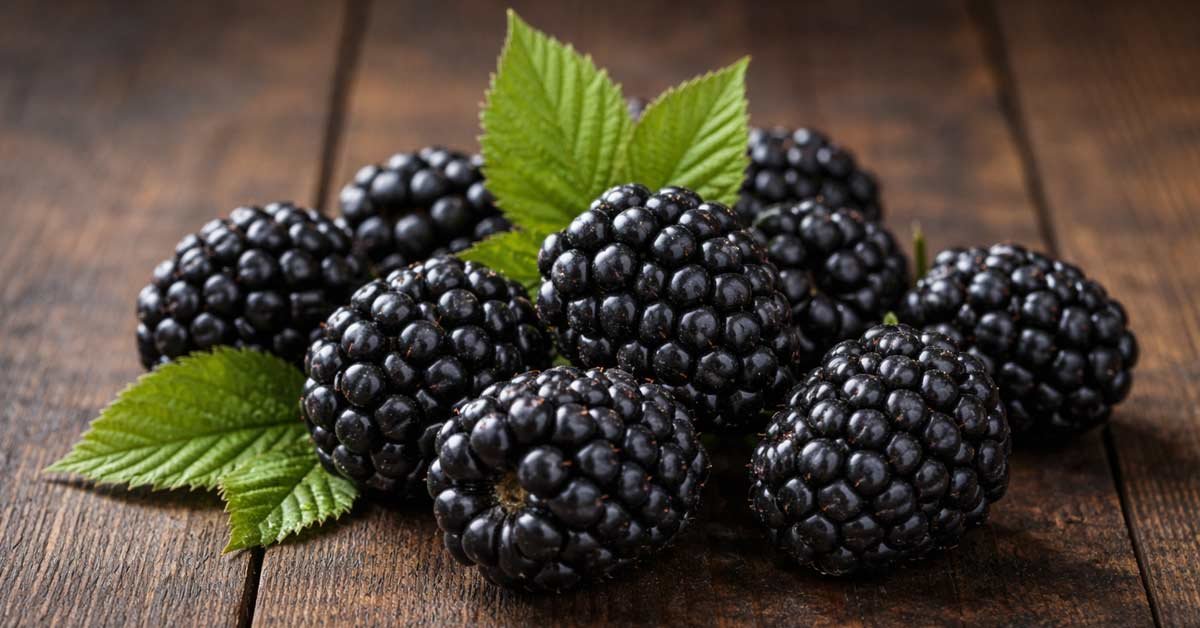
A Dark Berry With More Going On Than Meets the Eye
You have probably seen blackberry sitting quietly in the produce aisle, often overshadowed by flashier fruits like blueberries or strawberries. It does not shout for attention. It stains your fingers, spoils quickly, and can be a little tart if you catch it at the wrong moment. But that first bite, when it is perfectly ripe, tells a different story. Deep, layered sweetness. A slight earthiness. A texture that feels almost substantial compared to other berries. That richness is not just a matter of taste. It reflects what is happening at a nutritional level.
Blackberry carries a dense concentration of plant compounds that go far beyond basic vitamins. The dark purple color is a signal. In plant biology, that pigment usually means high levels of anthocyanins, a class of polyphenols studied for their role in protecting cells from oxidative stress. When you think about long-term brain health and heart health, oxidative stress is one of the recurring themes. It shows up in aging, in vascular function, in how neurons handle daily wear and tear. Blackberry happens to sit right in the middle of that conversation.
Table of Contents

What makes blackberries interesting is not just that it contains antioxidants. Many fruits do. It is the combination and concentration that stand out. Alongside anthocyanins, you also get ellagic acid, flavonols, and vitamin C. These compounds do not work in isolation. They interact. Some help neutralize free radicals. Others influence how cells signal inflammation or repair damage. It is less like a single tool and more like a small toolkit working in the background.
If you look at how people actually eat, this matters. You are not consuming isolated nutrients in a lab setting. You are building patterns over time. A handful of blackberries added to breakfast, a small bowl in the afternoon, maybe blended into a smoothie. These small, repeatable habits shape nutrient intake in a way that supplements often try to replicate but rarely match fully.
There is also the fiber angle, which tends to get less attention than antioxidants but deserves equal weight. Blackberry provides a meaningful amount of dietary fiber relative to its size. That has implications for digestion, blood sugar response, and even cardiovascular markers. When fiber slows down glucose absorption, it reduces sharp spikes and crashes. Over time, that kind of stability matters for metabolic health, which is closely tied to heart health.
And then there is the sensory side of things, which people tend to overlook when talking about nutrition. Blackberry has seeds. Some people love them, some do not. But those seeds contribute to satiety. You chew more. You slow down. You feel like you actually ate something, not just consumed something. That subtle shift can influence how much you eat overall, especially in a diet that is otherwise filled with soft, ultra processed textures.
From a practical standpoint, blackberry also fits easily into real life. It does not require preparation. No peeling, no slicing. You rinse it, maybe pat it dry, and it is ready. That convenience increases the chance that you will actually eat it consistently. Consistency is where most dietary benefits come from, not occasional bursts of perfect eating.
There is a broader pattern here. Foods that support brain health and heart health tend to share a few traits:
- High in polyphenols
- Contain fiber that supports metabolic balance
- Provide micronutrients that contribute to cellular function
- Easy to include regularly without friction
Blackberry checks all of those boxes. It is not a miracle food, and it does not need to be. Its strength is that it quietly fits into a pattern that supports long term health without demanding major changes.
You might wonder if fresh is always better. In an ideal setting, yes, fresh blackberry picked at peak ripeness offers the best flavor and often the highest nutrient retention. But real life does not always work like that. Frozen blackberries are usually picked and processed quickly, which helps preserve many of their nutrients. In some cases, they are more consistent than what you find sitting on a shelf for days. That makes them a reliable option if you are trying to build a routine rather than chase perfection.
There is also a cultural side worth mentioning. Blackberry has been part of traditional diets across different regions for a long time. Not because people analyzed its antioxidant profile, but because it was available, flavorful, and satisfying. Modern nutrition research often circles back to these foods and explains, in scientific terms, why they have stood the test of time.
So when you look at blackberry, it is easy to underestimate it. It is small. It is familiar. It does not come with bold marketing claims. But underneath that simplicity, there is a dense nutritional profile that aligns closely with what current research values for supporting both brain health and heart health.
And that is really the point. You are not looking for a single food to solve everything. You are looking for foods that you can realistically eat often, that bring meaningful nutritional value, and that do not feel like a chore. Blackberry fits that role better than most people expect.
Why Blackberry Stands Out for Brain Health
There is a reason blackberries keeps showing up in conversations about brain health. It is not hype. It comes down to a mix of compounds that interact with how the brain handles stress, communication, and aging over time. When you look at dietary patterns linked to better cognitive outcomes, berries come up again and again. Blackberry earns its place in that group, and in some cases, it quietly outperforms expectations.
What makes blackberries different is not a single nutrient. It is the density and interaction of several compounds that influence brain function in subtle but meaningful ways. You are not going to feel a dramatic shift after one serving. That is not how this works. The effect builds through repeated exposure, through daily habits that support the brain’s ability to adapt and maintain itself.
Anthocyanins and Cognitive Function
The deep color of blackberry is not just visual. It signals a high concentration of anthocyanins, a group of polyphenols that have been studied for their role in cognitive function. These compounds are capable of crossing the blood-brain barrier. That matters, because many dietary compounds never actually reach brain tissue in meaningful amounts.
Once there, anthocyanins appear to influence how neurons communicate. Research suggests they may support signaling pathways involved in learning and memory. In simple terms, they help neurons stay responsive and efficient. That is a key factor in maintaining cognitive performance over time.
There is also evidence that anthocyanins may influence neuroplasticity. This is the brain’s ability to adapt, form new connections, and reorganize itself. It is essential for learning new skills, retaining information, and recovering from stress. When neuroplasticity declines, mental sharpness often follows.
From a practical perspective, blackberries offer a consistent, food based source of these compounds. You are not dealing with isolated extracts or high dose supplements. You are getting a steady intake that fits naturally into meals.
A pattern you will notice in dietary research is that regular berry consumption, including blackberries, is associated with slower rates of cognitive decline. The key word here is regular. Occasional intake does not create the same effect.
Oxidative Stress and Neuronal Protection
The brain is highly active. It uses a large share of the body’s energy, and that activity generates oxidative stress as a byproduct. Over time, this can damage cells if it is not balanced by antioxidant defenses.
Blackberry contributes to that defense system in a meaningful way. Its combination of anthocyanins, vitamin C, and other polyphenols helps neutralize reactive oxygen species before they cause significant damage. This is not about eliminating oxidative stress completely. That would not even be desirable. It is about maintaining balance.
Neurons are particularly vulnerable to oxidative damage because they are long-lived and not easily replaced. When oxidative stress accumulates, it can affect membrane integrity, signaling efficiency, and overall cell function. Over time, this contributes to cognitive decline.
What stands out with blackberry is that its compounds do more than just act as antioxidants. Some of them appear to influence inflammatory signaling as well. Chronic low-grade inflammation is often linked with changes in brain function, especially as people age.
This is where dietary patterns matter again. A single antioxidant-rich meal does very little. A consistent intake of foods like blackberries helps maintain a more stable internal environment. It supports the systems that protect neurons rather than trying to fix damage after it happens.
There is also an indirect effect through vascular health. The brain depends on steady blood flow. Compounds in blackberries that support blood vessel function can improve the delivery of oxygen and nutrients to brain tissue. Better circulation supports better function. It is a simple relationship, but an important one.
Memory, Aging, and Daily Intake Patterns
Memory changes with age. That is expected. What matters is the rate and extent of that change. This is where long-term dietary habits start to show their impact.
Blackberries fit into a category of foods that are associated with healthier cognitive aging. The combination of antioxidants and polyphenols appears to support areas of the brain involved in memory, particularly those sensitive to aging.
There have been observational studies linking higher berry intake with slower memory decline. While these studies do not prove cause and effect on their own, the consistency of the findings across different populations adds weight to the connection.
What is often overlooked is how simple the practical application can be. You do not need large quantities. A small daily serving can be enough to contribute to overall intake patterns.
Some realistic ways people incorporate blackberries include:
- Adding a handful to breakfast alongside yogurt or oats
- Blending into a smoothie with other fruits and protein sources
- Eating as a mid-afternoon snack instead of processed options
- Pairing with nuts for a combination of fiber and healthy fats
These habits are not complicated. That is exactly why they work. The easier something is to repeat, the more likely it becomes part of your routine.
It is also worth considering timing and consistency. Spreading intake across the week is more useful than consuming a large amount at once. The brain benefits from a steady supply of supportive nutrients rather than irregular spikes.
Another point that comes up often is whether fresh or frozen makes a difference. In terms of brain health, both can contribute. Frozen blackberries are often processed quickly after harvest, which helps preserve anthocyanin content. That makes them a reliable option when fresh blackberry is not available or consistent in quality.
There is no single food that determines how your brain ages. But patterns matter. When blackberry becomes a regular part of your diet, it contributes to a broader framework that supports cognitive function over time.
And that is really where it stands out. It is not about dramatic effects or quick fixes. It is about small, consistent inputs that align with how the brain actually works and adapts.
How Blackberry Supports Heart Health in Practical Terms
Heart health rarely comes down to one dramatic change. It is built on patterns that influence blood vessels, lipid balance, and pressure over time. Blackberry fits into that picture in a very practical way. It is not exotic. It is not hard to use. But it delivers a combination of compounds that align closely with what cardiovascular research consistently points toward.
When you look at dietary patterns linked to better heart health, a few elements keep showing up: polyphenols, fiber, and key minerals like potassium. Blackberry brings all three into one small serving. That matters because it lowers the friction. You are not trying to piece together multiple foods to hit different targets. You are covering several bases at once.
Polyphenols and Vascular Function
The first thing to understand is how blood vessels behave. Healthy vessels are flexible. They expand and contract easily to regulate blood flow. When that flexibility declines, circulation becomes less efficient, and strain on the heart increases.
Blackberries contain a range of polyphenols, including anthocyanins, that are associated with improved vascular function. These compounds appear to support the endothelium, the thin layer lining blood vessels. The endothelium plays a key role in producing nitric oxide, a molecule that helps vessels relax and widen.
Better vasodilation means blood can flow more freely. That reduces resistance and supports more stable circulation. Over time, this can contribute to better cardiovascular efficiency.
There is also the oxidative stress angle again, but in a vascular context. Blood vessels are constantly exposed to mechanical and chemical stress. Polyphenols in blackberries help counterbalance this by neutralizing reactive compounds that can damage vessel walls.
Some studies suggest that regular intake of anthocyanin rich foods, including blackberries, is associated with improved markers of vascular health. This includes measures like flow mediated dilation, which reflects how well arteries respond to changes in blood flow.
From a practical standpoint, you do not need to overthink it. A consistent intake of blackberry contributes to your overall polyphenol consumption, which is one of the dietary factors most often linked with cardiovascular resilience.
Fiber, Cholesterol, and Lipid Balance
Fiber does not get the same attention as antioxidants, but when it comes to heart health, it plays a direct and measurable role. Blackberry provides a notable amount of dietary fiber relative to its size, and that has clear implications for lipid balance.
Soluble fiber, in particular, interacts with cholesterol metabolism. It binds to bile acids in the digestive system, which are made from cholesterol. When these are excreted, the body needs to use more cholesterol to produce new bile acids. This process can contribute to lower circulating LDL cholesterol levels over time.
Blackberry contributes to this mechanism as part of a broader diet. It is not a standalone solution, but it supports the process in a way that is easy to maintain.
There is also an effect on post-meal lipid response. Meals high in refined carbohydrates and low in fiber tend to cause sharper spikes in blood sugar and triglycerides. Adding fiber-rich foods like blackberries helps moderate that response.
This is where small habits start to matter:
- Adding blackberries to a meal that would otherwise be low in fiber
- Pairing it with foods that digest quickly to slow overall absorption
- Using it as a replacement for low-fiber snacks
These adjustments influence how your body handles fats and carbohydrates throughout the day.
Another point worth noting is satiety. Fiber increases the feeling of fullness. When you feel satisfied, you are less likely to overconsume foods that negatively impact lipid profiles. It is an indirect effect, but it adds up over time.
Potassium and Blood Pressure Regulation
Blood pressure regulation is closely tied to mineral balance, especially the relationship between sodium and potassium. Many diets provide more sodium than needed and not enough potassium. That imbalance can influence how the body retains fluid and how blood vessels respond.
Blackberry provides potassium in a modest but meaningful amount. It is not the highest potassium food available, but it contributes to overall intake, which is what matters most.
Potassium supports blood pressure regulation through several mechanisms:
- It helps counteract the effects of sodium
- It supports proper muscle function, including the heart
- It contributes to vascular relaxation
When potassium intake is adequate, the body is better able to maintain fluid balance and stable pressure within blood vessels.
What makes blackberries useful here is that it fits easily into daily eating patterns. You are not forcing a major dietary change. You are adding a food that contributes to potassium intake while also delivering fiber and polyphenols.
There is also a behavioral angle. People are more likely to maintain dietary changes that feel simple and familiar. Eating blackberries does not require planning or preparation. That increases consistency, and consistency is what drives results in blood pressure management.
It is worth being realistic. Blackberry alone will not determine your blood pressure. But as part of a pattern that includes whole foods, balanced mineral intake, and reduced reliance on processed options, it plays a supportive role.
When you step back, the value of blackberries for heart health becomes clearer. It supports vascular function through polyphenols, contributes to lipid balance through fiber, and helps with pressure regulation through potassium. Each effect is modest on its own. Together, they align with the kind of dietary pattern that supports long term cardiovascular health without adding complexity.
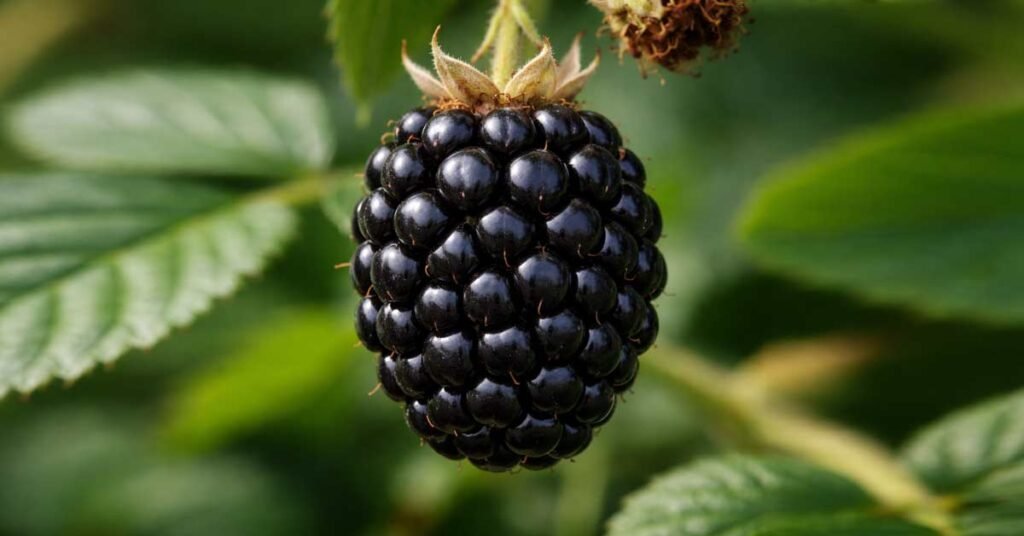
Nutritional Profile of Blackberry and Smart Ways to Eat It
Blackberry earns its place in a daily routine because it delivers a lot without asking much in return. Low in calories, high in fiber, and packed with plant compounds, it fits into almost any eating pattern without forcing tradeoffs. You are not rearranging your diet to make room for it. You are upgrading what is already there.
If you break it down numerically, a typical 100 gram serving of blackberries looks like this:
- Calories: about 43 kcal
- Fiber: about 5.3 grams
- Vitamin C: about 21 mg
- Vitamin K: about 19.8 micrograms
- Potassium: about 162 mg
These numbers vary slightly depending on ripeness and variety, but they give you a reliable baseline. What stands out immediately is the fiber content. Over 5 grams per 100 grams is significant, especially for a fruit. That alone changes how blackberry behaves in the body compared to lower fiber options.
Key Vitamins, Minerals, and Plant Compounds
The nutritional value of blackberries goes beyond standard vitamins and minerals. It is the combination that matters.
Vitamin C plays a role in immune function and helps protect cells from oxidative stress. In the context of brain health and heart health, it supports the broader antioxidant network. It also contributes to collagen formation, which matters for blood vessel integrity.
Vitamin K is often overlooked, but it is involved in blood clotting and vascular health. Adequate intake supports proper calcium handling in the body, which has implications for arterial health over time.
Potassium, while not extremely high per serving, contributes to daily intake in a meaningful way. When combined with other potassium-rich foods, it supports fluid balance and blood pressure regulation.
Then you have the plant compounds, which are where blackberry really separates itself:
- Anthocyanins give blackberry its deep color and are linked with cognitive and vascular support
- Ellagic acid is studied for its role in cellular protection
- Flavonols contribute to antioxidant and anti-inflammatory pathways
These compounds are not listed on standard nutrition labels, but they are central to why blackberries are consistently associated with positive health outcomes.
There is also something worth noting about bioavailability. Whole foods like blackberries provide these compounds in a matrix that the body recognizes and processes efficiently. This is different from isolated extracts, where absorption and effect can vary widely.
Fresh vs Frozen vs Dried Blackberries
People tend to assume fresh is always better. It is a reasonable assumption, but it is not always accurate in practice.
Fresh blackberry is ideal when it is truly fresh. That means recently harvested, properly stored, and consumed within a short window. In that state, it offers excellent flavor and strong nutrient retention. The problem is that blackberries are fragile. It degrades quickly, both in texture and nutritional quality.
Frozen blackberries are often a smarter choice than people expect. They are typically frozen shortly after harvest, which helps preserve vitamins and anthocyanins. In many cases, frozen blackberry provides a more consistent nutrient profile than fresh berries that have spent days in transport and storage.
Dried blackberries are a different category. Removing water concentrates both nutrients and sugars. You get more fiber and antioxidants per gram, but also a higher sugar density. That changes how they fit into a diet.
A simple way to think about it:
- Fresh blackberry works best when quality is high and you plan to eat it quickly
- Frozen blackberry offers consistency and convenience with minimal nutrient loss
- Dried blackberry is more concentrated and should be used in smaller portions
There is no need to overcomplicate the choice. The best option is the one you will actually use consistently.
Practical Ways to Add Blackberry to Everyday Meals
This is where things either work or fall apart. A food can be nutritionally impressive, but if it does not fit into your routine, it becomes irrelevant. Blackberry has an advantage here because it is easy to use.
You do not need recipes. You need repeatable patterns.
A few examples that tend to stick:
- Add blackberries to a bowl of yogurt with nuts. You get fiber, protein, and fat in one simple meal
- Mix blackberries into oatmeal. The heat softens the texture and spreads the flavor
- Blend frozen blackberries into a smoothie with a protein source. It adds thickness without needing extra ingredients
- Use blackberries as a side to a savory meal. It works surprisingly well with foods like chicken or cheese
- Keep a small portion ready in the fridge for a quick snack instead of reaching for processed options
There is also a sensory element that helps with consistency. Blackberry has a strong flavor and a slightly tart edge. That makes it more satisfying than overly sweet fruits, especially if your taste preferences have shifted away from high sugar foods.
If you want to push it a bit further, you can combine blackberries with other foods that support brain health and heart health:
- Pair it with walnuts for a mix of polyphenols and healthy fats
- Add it to dark leafy greens in a salad for contrast and nutrient diversity
- Combine it with seeds like chia for additional fiber and texture
These combinations are not complicated. They are small upgrades that build a more nutrient dense pattern over time.
One thing that often gets ignored is preparation friction. The easier something is to use, the more likely you are to keep using it. Blackberry scores well here. No peeling. Minimal cutting. Quick cleanup. That matters more than people think.
At the end of the day, the value of blackberries is not just in its nutrient profile. It is in how easily that profile can become part of your daily routine. You are not chasing perfection. You are building consistency. And Blackberry makes that process easier than most foods in its category.
Best Selling Blackberry Related Products


A Simple Habit With Long-Term Payoff
Most people overestimate what a single change can do and underestimate what a small habit can build over time. That shows up clearly with something like blackberry. You are not looking at a dramatic intervention. You are looking at a repeatable action that quietly compounds.
If you step back and look at how brain health and heart health are shaped, a pattern emerges. It is not about isolated superfoods. It is about consistency in nutrient intake, stability in blood sugar, support for vascular function, and protection against oxidative stress. Blackberry fits into that pattern without friction.
That last part matters more than it sounds. The foods that make a difference are the ones you actually eat, not the ones you plan to eat.
A handful of blackberry each day does a few simple things at once:
- It adds fiber without requiring a major dietary shift
- It contributes antioxidants that support cellular balance
- It increases intake of potassium and vitamin C
- It replaces lower quality snack options almost automatically
None of these effects are extreme on their own. Together, they create a baseline that supports how your body and brain function over time.
There is also a behavioral shift that tends to happen when you introduce foods like blackberry regularly. You start building meals around whole foods instead of adding them as an afterthought. That changes decision making in subtle ways.
For example, once blackberry becomes part of your breakfast routine, you are less likely to reach for highly processed options in the morning. That decision influences energy levels, focus, and even appetite later in the day. It is a chain reaction, not an isolated choice.
The same applies to snacks. Replacing a processed snack with blackberry and something simple like nuts creates a different metabolic response. You get slower digestion, more stable blood sugar, and a more sustained sense of fullness. Over weeks and months, that pattern has measurable effects.
There is also the question of sustainability. Can you keep doing this without thinking too much about it?
Blackberry works because it does not require effort:
- No preparation barrier
- No learning curve
- No need for strict timing or pairing
You can eat it on its own or combine it with other foods. You can use fresh or frozen. You can adjust portions based on what feels right. That flexibility makes it resilient as a habit.
Another point worth considering is how habits stack. Blackberry does not exist in isolation. It often gets paired with other supportive foods. Yogurt, oats, nuts, seeds. Over time, these combinations create a nutrient dense pattern that supports both brain health and heart health more effectively than any single addition.
You also avoid the trap of extremes. There is no need to overconsume or treat blackberry as a solution to everything. Moderate, consistent intake aligns better with how the body responds to nutrition.
There is something else people notice after a while. Taste preferences shift. When you regularly eat foods like blackberry, your sensitivity to sweetness changes. Highly processed foods start to feel overly sweet or artificial. That shift makes it easier to maintain better choices without relying on willpower.
From a long term perspective, this is where the real value sits. Not in immediate results, but in the way a simple habit reshapes your baseline.
If you look at populations with better cardiovascular outcomes and slower cognitive decline, their diets tend to include foods like blackberry regularly. Not in large amounts. Not as a focal point. Just as part of everyday eating.
That is the model to follow.
Keep it simple:
- Buy blackberry regularly
- Keep it visible and easy to access
- Pair it with foods you already eat
- Repeat without overthinking
There is no need to optimize beyond that. The goal is not perfection. The goal is consistency over time.
Blackberry earns its place because it supports that goal. It brings nutritional value that aligns with brain health and heart health, and it does it in a way that fits real life. That combination is rare, and it is what turns a small habit into something that actually lasts.
Article Sources
At AncientHerbsWisdom, our content relies on reputable sources, including peer-reviewed studies, to substantiate the information presented in our articles. Our primary objective is to ensure our content is thoroughly fact-checked, maintaining a commitment to accuracy, reliability, and trustworthiness.
- Basu, A., & Lyons, T. J. (2012). Strawberries, blueberries, and cranberries in the metabolic syndrome: Clinical perspectives. Journal of Agricultural and Food Chemistry, 60(23), 5687–5692. https://doi.org/10.1021/jf203320y
- Bennett, L., Ziauddin, J. M., & Gilhooly, C. H. (2014). Anthocyanins and cardiovascular disease risk: A systematic review and meta-analysis of prospective cohort studies. The American Journal of Clinical Nutrition, 100(6), 1591–1601. https://doi.org/10.3945/ajcn.114.093997
- Devore, E. E., Kang, J. H., Breteler, M. M., & Grodstein, F. (2012). Dietary intakes of berries and flavonoids in relation to cognitive decline. Annals of Neurology, 72(1), 135–143. https://doi.org/10.1002/ana.23594
- Joseph, J. A., Shukitt-Hale, B., & Willis, L. M. (2009). Grape juice, berries, and walnuts affect brain aging and behavior. The Journal of Nutrition, 139(9), 1813S–1817S. https://doi.org/10.3945/jn.109.108399
- Manach, C., Scalbert, A., Morand, C., Rémésy, C., & Jiménez, L. (2004). Polyphenols: Food sources and bioavailability. The American Journal of Clinical Nutrition, 79(5), 727–747. https://doi.org/10.1093/ajcn/79.5.727
- Mazza, G. (2007). Anthocyanins and heart health. Annali dell’Istituto Superiore di Sanità, 43(4), 369–374. https://www.iss.it/documents/20126/45616/ANN_07_04_12.pdf
- Miller, M. G., & Shukitt-Hale, B. (2012). Berry fruit enhances beneficial signaling in the brain. Journal of Agricultural and Food Chemistry, 60(23), 5709–5715. https://doi.org/10.1021/jf2036037
- Rodriguez-Mateos, A., Heiss, C., Borges, G., & Crozier, A. (2014). Berry polyphenols and cardiovascular health. Journal of Agricultural and Food Chemistry, 62(18), 3842–3851. https://doi.org/10.1021/jf403757g
- Slavin, J. L. (2013). Fiber and prebiotics: Mechanisms and health benefits. Nutrients, 5(4), 1417–1435. https://doi.org/10.3390/nu5041417
- U.S. Department of Agriculture, Agricultural Research Service. (2019). FoodData Central: Blackberries, raw. https://fdc.nal.usda.gov/fdc-app.html#/food-details/173946/nutrients
- World Health Organization. (2012). Guideline: Potassium intake for adults and children. https://www.who.int/publications/i/item/9789241504829

- Redcurrant: Berry for Vitamin C and Immune Support - March 21, 2026
- Yumberry: Asian Fruit for Antioxidants and Circulation - March 21, 2026
- Gooseberry: Tart Berry for Immunity and Digestion - March 20, 2026
