
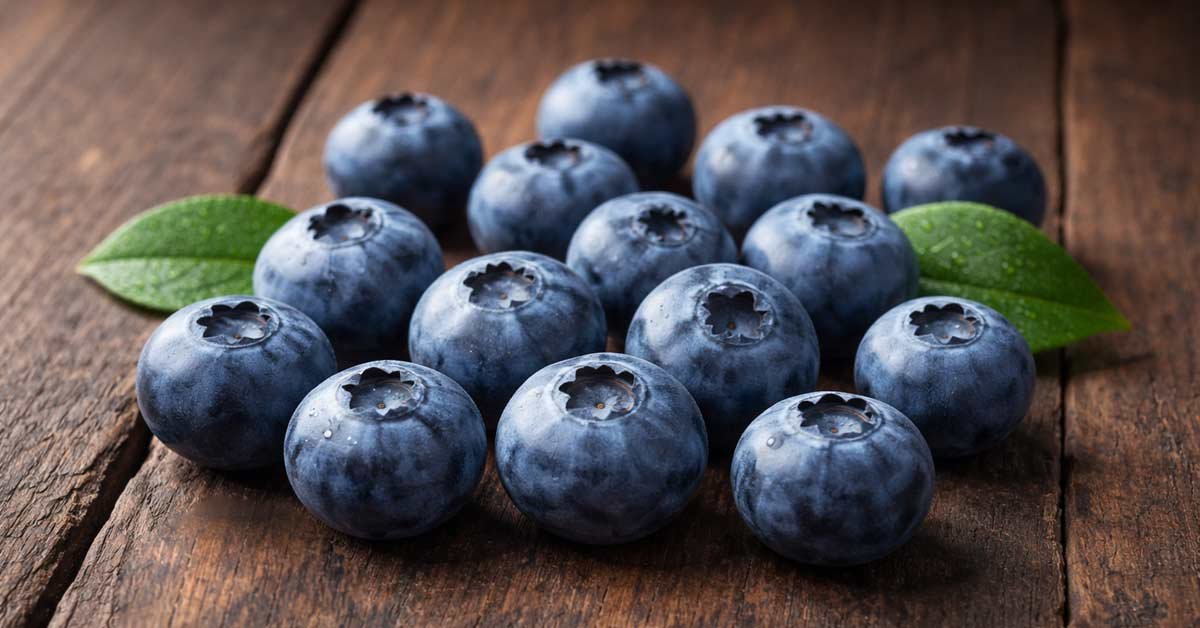
The Small Berry That Quietly Does a Lot
You don’t usually expect much from something as small as a blueberry. It sits quietly in the bowl, doesn’t demand attention, doesn’t have the tropical flair of mango or the bold acidity of citrus. And yet, the more you look into blueberry, the harder it becomes to ignore what it’s doing behind the scenes.
There’s a reason blueberries keep showing up in discussions about memory and heart health. Not as a miracle food. Not as a quick fix. But as something that, when eaten consistently, seems to support systems that tend to decline slowly over time. That’s the part that matters.
The appeal of blueberry is not dramatic. It’s steady.
Table of Contents


You eat a handful. Then another the next day. Maybe you forget about it for a week, then come back. Over months, even years, that habit starts to add up. And what you’re really doing is feeding your body a mix of compounds that interact with processes most people don’t think about until something feels off. Blood flow. Cellular stress. Communication between brain cells.
It’s easy to underestimate that.
Why blueberries keep coming up in research
Blueberries have been studied extensively, especially in the context of cognitive function and cardiovascular health. The reason is simple. They are rich in compounds called polyphenols, particularly anthocyanins, which give blueberries their deep blue color.
These compounds don’t act like traditional nutrients such as vitamin C or potassium. They don’t fix a deficiency. Instead, they influence how your body responds to stress at a cellular level.
Think about how often your body deals with low level stress. Not the kind you feel emotionally, but the constant exposure to:
- Oxidative stress from metabolism
- Inflammation triggered by diet or environment
- Gradual wear in blood vessels
- Age related changes in brain signaling
This is where blueberry starts to matter.
Anthocyanins and other plant compounds in blueberries appear to interact with these processes in subtle ways. They help regulate oxidative balance. They influence signaling pathways in the brain. They may support the flexibility of blood vessels.
Nothing extreme. Just small adjustments that, over time, can make a difference.
The connection between blueberry, memory, and aging
Memory is not a single function. It’s a combination of processes that involve attention, learning, storage, and recall. These processes rely heavily on communication between neurons, as well as adequate blood flow to the brain.
As people age, a few predictable things tend to happen:
- Blood flow to certain brain regions can decline
- Oxidative stress increases
- Inflammation becomes more persistent
- Neuronal communication becomes less efficient
This is where blueberries have drawn attention.
Some studies suggest that regular blueberry intake is associated with improvements in certain aspects of memory, particularly in older adults. The effect is not immediate or dramatic. It’s more like a gentle support system that helps maintain function.
From a practical standpoint, this means that adding blueberries to your routine is less about boosting memory overnight and more about supporting how your brain handles the long term wear and tear of daily life.
That’s a different mindset. And it’s more realistic.
Heart health is a slow game
Heart health works in a similar way. You don’t notice improvements from one meal. What matters is what happens consistently over time.
Your cardiovascular system depends on:
- Flexible, responsive blood vessels
- Balanced cholesterol levels
- Stable blood pressure
- Low levels of chronic inflammation
Blueberries seem to interact with several of these areas.
Research often points to improved endothelial function, which is a technical way of describing how well your blood vessels expand and contract. That flexibility is essential for proper circulation.
There’s also evidence suggesting that compounds in blueberries may help reduce the oxidation of LDL cholesterol. Oxidized LDL is more likely to contribute to plaque formation, so slowing that process matters.
Again, none of this is dramatic in isolation. But combined with other habits, it starts to build a more stable foundation for heart health.
What makes blueberries different from other fruits
A lot of fruits contain beneficial compounds. So why does blueberry stand out?
It comes down to concentration and consistency.
Blueberries provide a relatively high level of anthocyanins compared to many other commonly consumed fruits. That deep blue color is not just visual. It reflects a dense presence of these compounds.
They’re also easy to eat regularly. No peeling. No preparation. No seasonal limitations if you use frozen options.
That simplicity matters more than people think.
Because the best food for your health is the one you actually eat, consistently, without effort.
A realistic way to think about it
It’s tempting to look for foods that promise clear, immediate benefits. Sharper focus. Lower blood pressure. Better energy. But that’s not how most of nutrition works.
Blueberry fits into a different category.
It’s part of a pattern.
You include blueberries in your diet a few times a week. Maybe daily. You combine that with other whole foods. Over time, you’re creating an environment where your body has better support to maintain its systems.
There’s no single moment where everything changes. Instead, things tend to not decline as quickly. You feel steady. Maybe your focus holds up better during long days. Maybe your cardiovascular markers stay within a healthy range longer than expected.
That’s the real value.
What this means for your daily routine
If you’re thinking about adding blueberry to your routine, keep it simple. This is not about optimization. It’s about consistency.
A handful a day is enough to make it part of your diet. That’s roughly 50 to 100 grams. You don’t need to measure it precisely.
You can:
- Add blueberries to breakfast without changing anything else
- Keep frozen blueberries on hand for convenience
- Pair blueberries with yogurt or oats
- Eat them as a quick snack instead of something processed
No complexity. No strict plan.
Over time, this kind of habit becomes automatic. And that’s where blueberry starts to do what it does best. Quiet support. No noise. No exaggeration.
Just a small berry, doing more than it looks like it should.
Blueberry and Memory: What Actually Makes It Work
If you strip away the marketing and the headlines, the relationship between blueberry and memory comes down to a few core mechanisms. No magic. No shortcuts. Just a set of interactions that influence how the brain communicates, adapts, and handles stress over time.
What makes blueberry interesting is not that it “boosts” memory in a direct way. It’s that it supports the systems that memory depends on. Subtle difference, but it changes how you think about it.
You’re not flipping a switch. You’re maintaining the wiring.
Anthocyanins and Brain Signaling
The deep blue color of blueberry comes from anthocyanins, a class of flavonoids that has been studied for its effects on the brain. These compounds are small enough to cross the blood brain barrier. That alone puts them in a different category compared to many dietary components.
Once in the brain, anthocyanins appear to interact with signaling pathways involved in learning and memory.
One pathway that often comes up in research is related to brain derived neurotrophic factor, known as BDNF. This protein supports neuron survival, growth, and communication. Higher activity in this pathway is associated with better learning capacity and memory formation.
Studies suggest that compounds found in blueberries may influence these signaling processes in a way that supports neuroplasticity. In simple terms, your brain’s ability to adapt and form new connections.
That matters more than people realize.
Memory is not just storage. It’s the ability to form, strengthen, and retrieve connections between neurons. When that system becomes less efficient, you start noticing small things first. Slower recall. More effort to focus. That feeling of knowing something but not being able to access it quickly.
Including blueberry regularly in your diet seems to support the environment where these connections happen. Not by forcing them, but by helping the underlying processes function more smoothly.
Oxidative Stress and Cognitive Aging
Your brain uses a lot of energy. Despite representing a small percentage of body weight, it consumes a disproportionate amount of oxygen. That makes it especially vulnerable to oxidative stress.
Oxidative stress is essentially the accumulation of reactive molecules that can damage cells over time. This is a normal part of metabolism, but it becomes more relevant as you age.
Left unchecked, it contributes to:
- Damage to neuronal membranes
- Reduced efficiency of signaling between brain cells
- Increased inflammation
- Gradual decline in cognitive function
This is where blueberry earns its reputation.
Blueberries are rich in antioxidants, particularly those same anthocyanins. These compounds help neutralize reactive molecules and support the body’s own antioxidant defenses.
The effect is not about eliminating oxidative stress completely. That’s not realistic. It’s about reducing the burden.
Think of it like background noise. When the noise is lower, signals are clearer. Communication improves.
From a practical standpoint, this means that regular intake of blueberries may help maintain cognitive function by slowing some of the processes associated with aging. Not stopping them. Not reversing them entirely. Slowing them enough to make a difference over years.
That’s a long game.
Everyday Cognitive Benefits You Can Notice
Now, this is the part people care about. What do you actually feel?
The truth is, the effects of blueberry on memory are usually subtle. If you’re expecting a dramatic shift after eating blueberries for a few days, you’ll miss the point.
But over time, some patterns start to show up.
People who consistently include blueberries in their diet often report small but noticeable changes in how they think and focus. Research reflects similar observations, especially in older adults and in situations involving cognitive fatigue.
What you might notice:
- Slightly better recall of names or details
- More stable focus during long tasks
- Less mental fatigue in the afternoon
- A general sense of clarity rather than sharp spikes of energy
It’s not like caffeine. There’s no immediate stimulation. Instead, it feels like your baseline is a bit more stable.
And that stability is valuable.
One example I hear often is from people who add blueberries to their breakfast. Nothing else changes. Same routine, same workload. After a few weeks, they realize they’re not reaching for distractions as often during the morning. Focus feels more consistent.
Is that entirely due to blueberry? Hard to isolate. But when you combine what people report with what research suggests, the pattern starts to make sense.
Why consistency matters more than quantity
A common mistake is thinking that more is better. That if a handful of blueberries is good, a large bowl must be better.
That’s not how this works.
Most studies showing cognitive benefits use moderate, consistent intake. Roughly the equivalent of one serving per day. The body responds better to regular exposure than to occasional high doses.
So instead of thinking in terms of quantity, think in terms of frequency.
- A small portion daily
- Or several times per week
- Integrated into meals you already eat
This approach supports the ongoing processes that influence memory, rather than overwhelming the system in short bursts.
A grounded perspective
It’s worth being clear about one thing. Blueberry is not a treatment for cognitive decline. It does not replace medical care. It does not guarantee protection.
What it does is support.
It supports how your brain handles stress. It supports communication between cells. It supports the environment in which memory operates.
And when you stack that with other habits, good sleep, physical activity, balanced nutrition, the effect becomes more meaningful.
On its own, blueberry is a small factor.
Used consistently, it becomes part of a pattern that helps your brain stay functional, responsive, and a bit more resilient as time goes on.
That’s a realistic expectation. And honestly, it’s enough to make it worth keeping in your routine.
Blueberry and Heart Health: Practical Mechanisms
When people talk about heart health, they often reduce it to a few numbers. Cholesterol. Blood pressure. Maybe resting heart rate. Useful metrics, but they don’t tell the full story.
What matters more is how the system behaves day to day. How your blood vessels respond to demand. How your body handles circulating fats. How stable your internal environment remains under stress.
This is where blueberry starts to show its value again. Not as a direct fix. More as a steady influence on processes that tend to drift in the wrong direction over time.
You don’t feel these changes immediately. But they’re happening in the background.
Vascular Function and Blood Flow
Healthy blood flow depends on something called endothelial function. The endothelium is a thin layer of cells lining your blood vessels. It controls how vessels expand and contract, which directly affects circulation.
When this system works well, blood flows smoothly. Oxygen and nutrients reach tissues efficiently. Your heart doesn’t have to work as hard to push blood through.
When it doesn’t, things start to tighten up. Vessels become less responsive. Circulation becomes less efficient. Over time, this contributes to higher cardiovascular strain.
Compounds found in blueberry, especially anthocyanins, have been studied for their effect on this exact process.
Research suggests that regular consumption of blueberries is associated with improved endothelial function. In practical terms, this means:
- Blood vessels relax more easily
- Circulation improves
- The body adapts better to changes in demand, like exercise or stress
One mechanism behind this involves nitric oxide. This molecule helps signal blood vessels to dilate. Polyphenols in blueberries appear to support nitric oxide availability, which supports that dilation response.
You’re not going to feel your arteries “relax,” obviously. But over time, better vascular function shows up in more stable cardiovascular markers and better overall resilience.
Cholesterol Balance and Lipid Oxidation
Cholesterol gets a lot of attention, often without enough nuance.
It’s not just about how much LDL cholesterol you have. It’s also about what happens to it in your body.
LDL becomes more problematic when it undergoes oxidation. Oxidized LDL is more likely to contribute to plaque formation in arteries. That’s where risk increases.
This is another area where blueberry comes into play.
The antioxidants in blueberries, particularly anthocyanins and other polyphenols, appear to help reduce the oxidation of LDL particles. They don’t eliminate LDL. They don’t replace the need for a balanced diet. But they may help shift how these particles behave.
Some studies also suggest modest improvements in overall lipid profiles with regular blueberry intake, including:
- Slight reductions in LDL levels
- Improvements in HDL function
- Better balance in lipid metabolism
Again, these are not dramatic shifts. You won’t see extreme changes in a short period. But over months of consistent intake, these small effects can accumulate.
Think of it as reducing friction in the system.
Less oxidative damage. More stable lipid behavior. A slightly cleaner internal environment for your cardiovascular system to operate in.
Blood Pressure and Potassium Support
Blood pressure is influenced by multiple factors. Sodium intake. Kidney function. Hormonal balance. Vascular tone. Stress levels.
Diet plays a role, but it’s rarely about a single food.
Blueberry contributes in two main ways.
First, through its polyphenols, which support vascular flexibility. As mentioned earlier, more responsive blood vessels can help regulate pressure more effectively.
Second, through its potassium content.
Potassium helps balance the effects of sodium in the body. It supports proper muscle function, including the contraction and relaxation of blood vessel walls.
A typical serving of blueberries provides a modest amount of potassium. Not enough to make a large impact on its own, but enough to contribute when combined with other potassium rich foods.
What matters is the overall pattern.
If your diet includes:
- Regular intake of fruits like blueberries
- Adequate potassium from whole foods
- Controlled sodium intake
- Consistent hydration
You create conditions that support more stable blood pressure over time.
There’s also evidence suggesting that regular blueberry consumption is associated with small reductions in systolic blood pressure, particularly in individuals with elevated levels. The changes are usually modest, often in the range of a few millimeters of mercury.
To put that into perspective:
- A reduction of 3 to 5 mmHg in systolic pressure is considered meaningful at a population level
- Even small decreases can reduce long term cardiovascular risk
So while blueberry is not a standalone solution, it contributes to a broader strategy that supports healthier blood pressure regulation.
What this looks like in real life
No one improves heart health by focusing on a single food. That approach doesn’t hold up.
But adding blueberry into your routine is one of those low effort decisions that fits easily into a larger pattern.
You’re not changing your entire diet overnight. You’re making small adjustments that support key processes:
- Better blood vessel function
- Reduced oxidative stress
- More stable lipid behavior
- Support for healthy pressure regulation
Over time, these small inputs start to matter.
Maybe your blood pressure stays within a healthy range with less effort. Maybe your cardiovascular markers remain stable as you get older. Maybe you simply feel more consistent during physical activity.
That’s how this usually shows up. Quiet improvements. No dramatic shifts.
And honestly, that’s the kind of progress that tends to last.
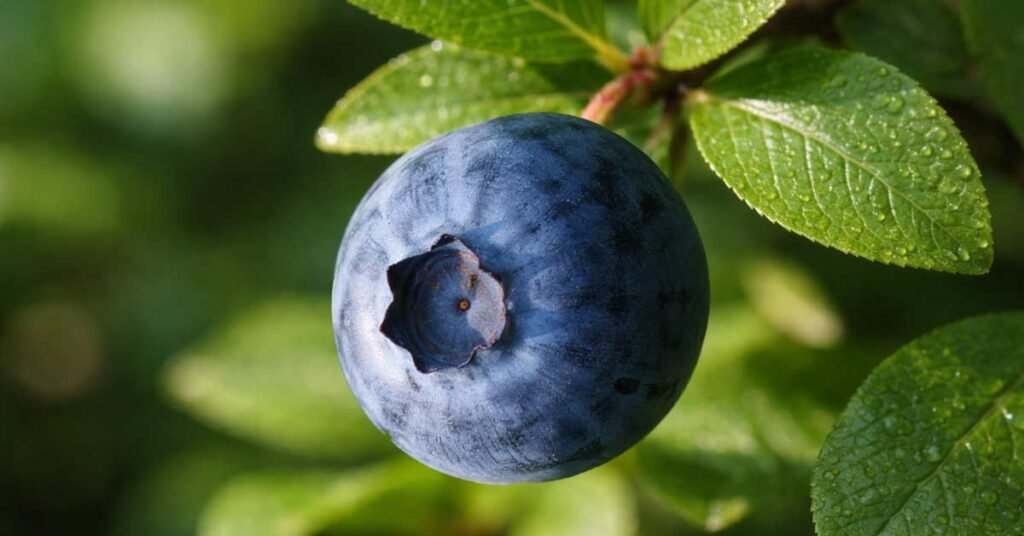
Nutritional Value of Blueberries and Smart Ways to Eat It
At some point, it helps to step back and look at what you’re actually getting from a blueberry beyond the general idea of “it’s healthy.” Because when you break it down, the value of blueberry is not just in one standout nutrient. It’s the combination that makes it useful.
You’re getting fiber, vitamins, minerals, and a dense layer of plant compounds that don’t show up on standard nutrition labels but do a lot of the heavy lifting when it comes to memory and heart health.
And maybe more important than the numbers is this. Blueberry is easy to eat regularly. That alone makes its nutritional profile more relevant than foods that look impressive on paper but rarely make it into your routine.
Key Vitamins, Minerals, and Plant Compounds
A standard serving of blueberry is about 100 grams. Roughly a handful. Here’s what that typically provides:
- Vitamin C: about 9 to 10 mg
- Vitamin K: around 19 to 20 mcg
- Fiber: close to 2.5 grams
- Potassium: about 75 to 80 mg
- Calories: roughly 55 to 60
These numbers are not extreme. You won’t look at them and think this changes everything. But that’s not the point.
The real value of blueberry sits in its plant compounds.
Anthocyanins are the most studied. They give blueberry its color and are strongly associated with antioxidant activity. Then you have other polyphenols like quercetin and catechins, which contribute to how your body responds to oxidative stress and inflammation.
Together, these compounds:
- Support cellular defense systems
- Help regulate inflammatory responses
- Interact with pathways linked to memory and vascular function
Fiber also deserves more attention than it usually gets.
That 2.5 grams per serving might seem small, but it contributes to daily intake in a meaningful way if you’re consistent. Fiber supports digestion, helps regulate blood sugar response, and plays a role in cholesterol balance.
When you combine all of this, blueberry becomes less about individual nutrients and more about synergy. Each component adds a small piece to the overall effect.
Fresh vs Frozen vs Dried Blueberries
People often overthink this part. Fresh must be better, right?
Not necessarily.
Frozen blueberries are often picked at peak ripeness and frozen quickly, which helps preserve both nutrients and polyphenols. In many cases, frozen blueberries provide a nutritional profile very close to fresh ones.
That makes them a practical option, especially when blueberries are out of season.
A quick comparison:
Fresh blueberries:
- Slightly better texture and taste for direct eating
- No added ingredients
- Short shelf life
Frozen blueberries:
- Very similar nutrient content to fresh
- Available year round
- Convenient for smoothies, oatmeal, or yogurt
- Longer storage without waste
Dried blueberries are where things change more noticeably.
When blueberries are dried, water is removed, which concentrates both nutrients and sugar. The issue is that many commercial dried blueberries have added sugar to improve taste.
So with dried blueberries, you’re getting:
- Higher calorie density
- More concentrated sugar
- Lower water content, which affects satiety
They can still fit into your diet, but they’re easier to overeat. A small portion goes a long way.
If you’re choosing between the three, fresh and frozen blueberries are usually the better everyday options. Dried blueberries work best in controlled portions, like adding a small amount to a mix or a salad.
Simple Ways to Add Blueberry to Daily Meals
This is where most people either succeed or fail. Not because they don’t understand the benefits, but because they overcomplicate the process.
You don’t need recipes. You need habits.
Start with situations where adding blueberry requires almost no effort.
Breakfast is the easiest entry point:
- Add blueberries to oatmeal or overnight oats
- Mix them into yogurt without changing anything else
- Throw a handful into a smoothie
- Pair them with eggs and toast on the side
These are low friction changes. You’re not building a new routine. You’re adjusting an existing one.
Snacking is another opportunity:
- Eat blueberries on their own as a quick snack
- Combine them with nuts for a balance of carbs and fats
- Add them to cottage cheese for something more filling
If you cook regularly, you can go a bit further:
- Toss blueberries into salads for contrast
- Add them to whole grain pancakes or waffles
- Use them as a topping for simple desserts instead of processed options
One example that tends to stick is keeping frozen blueberries in the freezer and adding them directly to warm oatmeal. They thaw slightly, release their juices, and change the texture just enough to make the meal more enjoyable.
No extra work. No planning.
Portion and consistency
A reasonable daily intake is around 50 to 100 grams of blueberry. That’s one small handful to one full handful.
You don’t need to hit that number exactly. What matters is consistency.
- A handful most days of the week
- Or slightly larger portions a few times per week
What you want to avoid is the pattern of eating a large amount once and then forgetting about it for weeks.
The body responds better to regular exposure. Especially when it comes to plant compounds like polyphenols, which work through repeated interaction with your system.
A practical way to think about it
Blueberry is not a superfood in the way it’s often marketed. It’s not exceptional because it does one thing better than everything else.
It’s useful because it does several things reasonably well and fits easily into real life.
You don’t need to track every nutrient. You don’t need to optimize every meal. You just need a pattern that you can maintain without effort.
Add blueberry where it makes sense. Keep it visible. Make it easy to reach.
That’s usually enough to turn it from something you “should eat” into something you actually do eat. And once that happens, the benefits have a chance to build in the background, where they belong.
Best Selling Blueberry Related Products


A Habit That Pays Off Over Time
Most people approach nutrition with the wrong expectation. They look for signals that something is working right away. More energy. Sharper focus. A noticeable shift in how they feel after a few days.
That’s not how something like blueberry works.
Blueberry fits into a slower rhythm. You add it to your routine, you forget about it, and then months later you realize certain things have stayed more stable than you expected. That’s the payoff. Quiet, gradual, and easy to miss if you’re chasing immediate results.
The real value of blueberry shows up in what doesn’t happen as quickly.
The long game most people ignore
Memory and heart health tend to decline gradually. There’s no single moment where things change. It’s a slow shift influenced by daily habits, environment, and time.
What makes blueberry worth keeping around is how it supports that long game.
When you eat blueberry regularly, you’re consistently supplying your body with compounds that:
- Help manage oxidative stress
- Support vascular function
- Contribute to stable cellular signaling
- Add fiber and micronutrients without effort
Each of these on its own is small. Together, repeated over time, they create a more supportive baseline.
That baseline matters more than any short-term boost.
Because when your baseline is stable, everything else becomes easier to maintain.
Why simple habits win
People tend to overestimate what they can sustain when something is new. They try to overhaul their entire diet, add complicated recipes, measure everything.
It rarely lasts.
What works is something you don’t have to think about.
Blueberry has an advantage here. It doesn’t require preparation. It doesn’t need planning. It fits into routines that already exist.
That’s why a simple habit like this tends to stick:
- You keep blueberries visible in your kitchen
- You add them to meals you already eat
- You don’t change anything else
That’s it.
No tracking. No strict rules.
The easier a habit is, the more likely you are to repeat it. And repetition is what makes the difference.
Small inputs, measurable outcomes
It’s easy to dismiss small dietary changes because they don’t feel significant. But when you look at how long-term health outcomes are shaped, small inputs matter.
Take blood pressure as an example.
Even modest improvements, around 3 to 5 mmHg in systolic pressure, are associated with reduced cardiovascular risk over time. That kind of shift doesn’t come from one major change. It comes from multiple small factors working together.
Blueberry can be one of those factors.
The same applies to cognitive function.
Maintaining memory is not about sudden improvements. It’s about slowing the rate of decline. Supporting brain function so that it remains stable for longer.
That’s harder to notice in the moment, but it becomes obvious when you compare patterns over years.
What consistency actually looks like
Consistency doesn’t mean perfection. It means repetition with flexibility.
You don’t need to eat blueberry every single day. You don’t need a fixed portion or a strict schedule.
What works in real life looks more like this:
- Blueberry shows up in your meals most days of the week
- You switch between fresh and frozen depending on availability
- You adjust portions without overthinking them
- You keep the habit going even when your routine changes
There’s no pressure to optimize. You’re aiming for continuity.
If you miss a few days, nothing breaks. You just continue.
That approach keeps the habit sustainable.
The compound effect people underestimate
This is where things start to add up.
A handful of blueberries today doesn’t change much. But a handful, repeated hundreds of times over a year, starts to matter.
Let’s keep it simple.
If you eat about 75 grams of blueberries per day, five days per week:
- 75 grams × 5 days = 375 grams per week
- 375 grams × 52 weeks = 19,500 grams per year
- That’s 19.5 kilograms of blueberries in a year
That’s not a trivial amount.
Over that time, your body has been consistently exposed to the same beneficial compounds, over and over again. Supporting the same systems, without interruption.
That’s how cumulative effects work.
Not through intensity. Through repetition.
A grounded expectation
It’s important to stay realistic.
Blueberry is not a guarantee of better health. It does not override poor sleep, inactivity, or a highly processed diet. It doesn’t replace medical care or address existing conditions on its own.
What it does is support.
It supports systems that are already working. It helps maintain function. It contributes to a pattern that favors stability instead of decline.
That’s enough.
Because long-term health is rarely about dramatic interventions. It’s about stacking small, consistent behaviors that move things in the right direction.
Making it stick without effort
If you want this habit to last, remove friction.
Keep blueberries where you can see them. Buy them in forms that fit your routine. Don’t rely on motivation.
A few practical adjustments make a difference:
- Store frozen blueberries in portion-friendly containers
- Add them to meals that don’t require extra preparation
- Pair them with foods you already enjoy
- Keep a backup option so you don’t run out
The goal is to make the decision automatic.
When something becomes automatic, it stops feeling like a healthy choice and starts feeling like part of your normal day.
The kind of habit that stays with you
Some habits fade because they demand too much. Others stay because they fit.
Blueberries tend to fall into the second category.
It’s simple. It’s flexible. It doesn’t interfere with how you already eat.
And over time, it becomes one of those things you don’t question. You just do it.
That’s usually the difference between something that sounds good in theory and something that actually changes your long term trajectory.
A small habit. Repeated often enough. Quietly doing its job in the background.
Article Sources
At AncientHerbsWisdom, our content relies on reputable sources, including peer-reviewed studies, to substantiate the information presented in our articles. Our primary objective is to ensure our content is thoroughly fact-checked, maintaining a commitment to accuracy, reliability, and trustworthiness.
- Basu, A., Du, M., Leyva, M. J., Sanchez, K., Betts, N. M., Wu, M., Lyons, T. J., & Talaulikar, A. (2010). Blueberries decrease cardiovascular risk factors in obese men and women with metabolic syndrome. The Journal of Nutrition, 140(9), 1582–1587. https://doi.org/10.3945/jn.110.124701
- Cassidy, A., Mukamal, K. J., Liu, L., Franz, M., Eliassen, A. H., & Rimm, E. B. (2013). High anthocyanin intake is associated with a reduced risk of myocardial infarction in young and middle-aged women. Circulation, 127(2), 188–196. https://doi.org/10.1161/CIRCULATIONAHA.112.122408
- Devore, E. E., Kang, J. H., Breteler, M. M. B., & Grodstein, F. (2012). Dietary intakes of berries and flavonoids in relation to cognitive decline. Annals of Neurology, 72(1), 135–143. https://doi.org/10.1002/ana.23594
- Krikorian, R., Shidler, M. D., Nash, T. A., Kalt, W., Vinqvist-Tymchuk, M. R., Shukitt-Hale, B., & Joseph, J. A. (2010). Blueberry supplementation improves memory in older adults. Journal of Agricultural and Food Chemistry, 58(7), 3996–4000. https://doi.org/10.1021/jf9029332
- McAnulty, S. R., McAnulty, L. S., Morrow, J. D., Khardouni, D., Shooter, L. A., Monk, J., Gross, S. J., Brown, V., & Roberts, L. J. (2005). Effect of blueberry ingestion on natural killer cell counts, oxidative stress, and inflammation prior to and after 2.5 h of running. Applied Physiology, Nutrition, and Metabolism, 30(3), 357–365. https://doi.org/10.1139/h05-018
- Miller, M. G., & Shukitt-Hale, B. (2012). Berry fruit enhances beneficial signaling in the brain. Journal of Agricultural and Food Chemistry, 60(23), 5709–5715. https://doi.org/10.1021/jf203603y
- Rodriguez-Mateos, A., Rendeiro, C., Bergillos-Meca, T., Tabatabaee, S., George, T. W., Heiss, C., Spencer, J. P. E., & Crozier, A. (2013). Intake and time dependence of blueberry flavonoid-induced improvements in vascular function. The American Journal of Clinical Nutrition, 98(5), 1179–1191. https://doi.org/10.3945/ajcn.113.066639
- U.S. Department of Agriculture. (2019). FoodData Central: Blueberries, raw. https://fdc.nal.usda.gov/fdc-app.html#/food-details/09050/nutrients
- Williamson, G., & Kay, C. D. (2018). The bioavailability, transport, and bioactivity of dietary flavonoids: A review from a historical perspective. Comprehensive Reviews in Food Science and Food Safety, 17(5), 1054–1112. https://doi.org/10.1111/1541-4337.12351

- Redcurrant: Berry for Vitamin C and Immune Support - March 21, 2026
- Yumberry: Asian Fruit for Antioxidants and Circulation - March 21, 2026
- Gooseberry: Tart Berry for Immunity and Digestion - March 20, 2026
