
The Quiet Strength of Chard in Everyday Nutrition
There is something almost unassuming about chard. It rarely takes center stage. You do not hear people rave about it the way they do about kale or spinach. Yet, once you start paying attention, chard quietly proves its place in everyday nutrition. It shows up, does the work, and asks for very little in return.
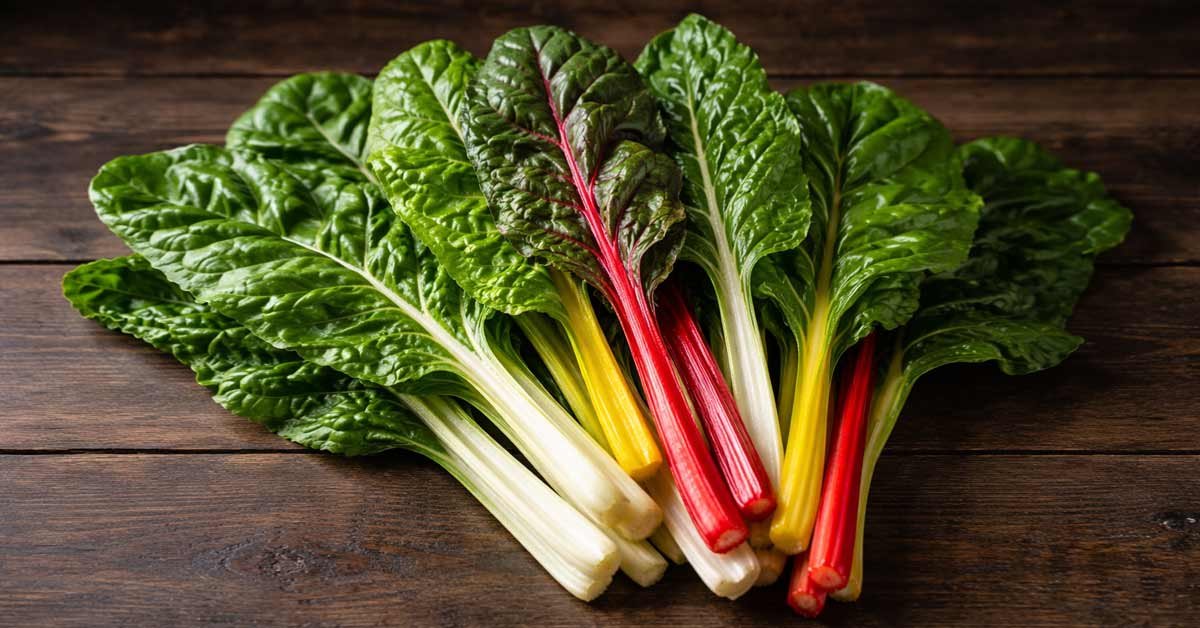
Chard sits in that category of foods that feel simple on the surface but carry a surprising amount of nutritional depth. You might notice it first for its vibrant stems, deep green leaves, sometimes streaked with red, yellow, or white. But beyond appearance, chard brings together a combination of nutrients that align well with long term health goals, especially when it comes to bone health and antioxidants.
Table of Contents
What makes chard particularly interesting is how it fits into real life. It is not a “superfood” in the trendy sense. It does not require complicated recipes or hard to find ingredients. It works just as well sautéed with garlic as it does folded into soups or mixed into a grain bowl. That accessibility matters more than people often realize. The best foods are the ones you actually eat consistently.
From a nutritional perspective, chard offers a steady supply of vitamins and minerals that your body uses every day. It contains vitamin K, magnesium, and calcium, all of which play a role in maintaining bone health over time. These are not dramatic, immediate effects. They are subtle. They build gradually, meal by meal, over months and years.
Then there is the antioxidant side of chard, which tends to go overlooked. Leafy greens in general are known for their antioxidant content, but chard has its own mix of compounds that support the body’s natural balance. These compounds help manage oxidative stress, a process that happens continuously in the body as a result of normal metabolism and environmental exposure.
You might not feel antioxidants working in the moment. There is no immediate feedback. But their role becomes clearer when you think about long term patterns. A diet that consistently includes foods like chard creates a kind of nutritional baseline. It is less about quick fixes and more about maintaining stability.
One of the more practical advantages of chard is how flexible it is in the kitchen. If you have ever felt stuck trying to “eat healthier,” chard can make that process easier rather than harder. It does not demand precision.
A few simple ways people tend to use chard:
- Lightly sautéed with olive oil and garlic for a quick side dish
- Added to soups or stews in the last few minutes of cooking
- Mixed into omelets or scrambled eggs
- Tossed into grain bowls with lentils, rice, or quinoa
- Used as a base for warm salads
There is also a certain rhythm to cooking chard. The leaves soften quickly, while the stems take a bit longer and add a slight crunch. That contrast gives it texture without requiring much effort. It is one of those ingredients that makes a meal feel more complete without adding complexity.
Another point worth considering is how chard fits into a broader dietary pattern. No single food determines health outcomes on its own. What matters is repetition. When chard becomes part of your weekly routine, even in small amounts, it contributes to a more balanced intake of nutrients linked to bone health and antioxidant support.
People often overcomplicate nutrition. They look for perfect plans or strict rules. But in practice, it usually comes down to habits that are easy to maintain. Chard fits into that space. It does not require a complete overhaul of your diet. It simply adds value where it can.
You might start with one meal a week. Then it becomes two. Over time, it becomes something you buy without thinking twice. That is where the real impact begins, not from a single serving, but from the quiet consistency that builds around it.
There is also something worth saying about how chard feels to eat. It has a slightly earthy, mildly bitter taste, balanced by a soft texture when cooked. That bitterness, often overlooked, is part of what makes leafy greens nutritionally interesting. It signals the presence of plant compounds that go beyond basic vitamins and minerals.
If you have never cooked with chard before, the first experience might feel unfamiliar. That is normal. Most people are used to more neutral vegetables. But once you find a simple preparation that works for you, it tends to stick.
Chard does not try to impress. It does not need to. Its value comes from how reliably it supports everyday nutrition, especially in areas like bone health and antioxidant intake. It becomes part of the background, in the best possible way.
And in a world where nutrition advice often feels overwhelming, there is something refreshing about a food that just quietly does its job.
Why Chard Matters for Bone Health
If you zoom out and look at bone health over a lifetime, it is less about dramatic interventions and more about quiet consistency. What you eat every day shapes how your body maintains and repairs bone tissue. That is where chard earns its place. It does not act as a shortcut or a solution on its own, but it contributes meaningfully when it shows up often enough.
Chard brings together several nutrients that are directly involved in bone structure and maintenance. None of them work in isolation. They operate as part of a system. That is why whole foods like chard tend to matter more than isolated supplements for most people. You get a combination that works together, not just a single input.
Key Minerals That Support Bone Structure
Bone is not static. It is a living tissue that constantly breaks down and rebuilds. For that process to stay balanced, your body needs a steady supply of specific minerals. Chard provides several of them in useful amounts.
The most obvious one is calcium. It is the primary mineral found in bone, forming much of its structure. While dairy products are often the first thing people think of, leafy greens like chard contribute to overall calcium intake in a quieter way. The amount per serving is moderate, but consistency makes the difference.
Magnesium is another mineral in chard that often gets overlooked. It plays a role in converting vitamin D into its active form, which then helps regulate calcium balance in the body. Without enough magnesium, calcium metabolism becomes less efficient. It is a small detail that adds up over time.
Chard also contains potassium. This matters because potassium helps buffer acid load in the body. Diets high in processed foods tend to increase acid production, which may influence how calcium is retained. Potassium rich foods like chard help balance that equation.
When you look at these minerals together, a pattern emerges:
- Calcium contributes to bone structure
- Magnesium supports calcium metabolism
- Potassium helps maintain a favorable environment for bone retention
Chard does not provide extreme amounts of any single mineral. What it offers is balance. That balance is what makes it useful in a real world diet.
Vitamin K and Its Role in Bone Maintenance
This is where chard becomes particularly relevant for bone health. It is a rich source of vitamin K, especially in its leafy green form.
Vitamin K is involved in the production of proteins that regulate bone mineralization. One of the most studied is osteocalcin, a protein that helps bind calcium to the bone matrix. Without sufficient vitamin K, this process becomes less efficient.
Think of it this way. Calcium is the raw material. Vitamin K helps direct where that material goes. Without proper direction, the system does not function as smoothly.
Regular intake of vitamin K through foods like chard supports this process in a steady, predictable way. Again, this is not something you feel immediately. There is no short term signal. But over time, it contributes to maintaining normal bone function.
It is also worth noting that vitamin K works alongside other nutrients. It does not replace calcium or vitamin D. It complements them. That is another reason why whole foods matter. Chard brings vitamin K into the picture naturally, alongside other supportive nutrients.
How Chard Fits into a Bone-Supportive Diet
One of the biggest mistakes people make when thinking about bone health is focusing on single foods or nutrients in isolation. The body does not work that way. What matters is the overall pattern.
Chard fits into a bone-supportive diet because it is easy to repeat. That might sound simple, but it is critical. A nutrient only helps if it is present regularly.
Here is what that can look like in practice:
- Adding chard to meals two to four times per week
- Combining it with sources of healthy fats, like olive oil, to support nutrient absorption
- Pairing it with protein sources, such as legumes or eggs, which contribute to overall bone maintenance
- Including a variety of other vegetables to avoid relying on a single food
You do not need large portions. A cooked serving of chard is already quite dense in nutrients. What matters more is frequency than volume.
There is also a practical angle. Chard cooks quickly. It integrates into meals without much planning. That lowers the barrier to consistency, which is often the biggest challenge.
A simple example might look like this. You sauté chard with garlic and olive oil, add it to a plate with lentils and a piece of fish or a couple of eggs. Nothing complicated. But within that meal, you have:
- Minerals from chard contributing to bone structure
- Vitamin K supporting bone maintenance
- Protein supporting tissue repair
- Fats helping with nutrient absorption
It is not about perfection. It is about stacking small, repeatable choices.
Another point that tends to get overlooked is timing across life stages. Bone health is often associated with aging, but the groundwork starts much earlier. The habits you build in your 20s, 30s, and 40s influence what happens later. Chard fits into that long timeline because it is sustainable.
At the same time, it remains relevant later in life. As the body’s ability to maintain bone density changes, consistent intake of supportive nutrients becomes even more important. Chard continues to contribute in that context without requiring any major dietary shift.
There is no single food that defines bone health. Chard is not an exception. But it plays a reliable role when it is part of a broader pattern built on whole foods, variety, and consistency.
That is really the point. Chard does not need to be the focus of your diet. It just needs to be present often enough to do what it does best.
Antioxidants in Chard: More Than Just Color
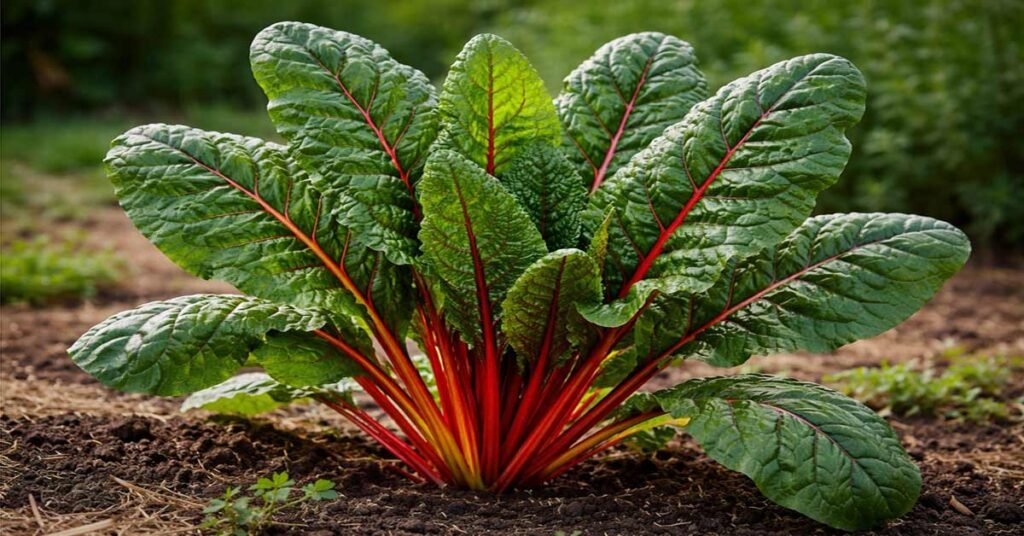
Chard tends to catch your eye before it earns your attention. The deep green leaves, the bright stems that range from white to red to golden yellow. It looks vibrant, almost decorative. But that color is not just visual appeal. It signals something functional. Inside those leaves, chard carries a range of antioxidant compounds that quietly support how your body handles everyday stress.
The interesting part is this. Antioxidants are often talked about in big, vague terms. People hear the word and think of protection, but without a clear sense of what that means in practice. With chard, it becomes easier to ground the idea. You are not chasing a concept. You are eating something tangible that contributes to a broader pattern.
Understanding Antioxidants in Leafy Greens
Every day, your body produces reactive molecules as part of normal metabolism. This process is unavoidable. It happens when you breathe, digest food, or respond to environmental factors like pollution or sunlight. These molecules, often grouped under oxidative stress, need to be balanced.
That is where antioxidants come in. They help regulate this process by neutralizing excess reactive compounds. The goal is not to eliminate them entirely. Your body actually uses them for signaling. The goal is balance.
Leafy greens like chard play a consistent role here because they provide a mix of antioxidant compounds rather than a single one. This matters more than it seems. A varied intake creates a more stable system than relying on isolated nutrients.
Chard contributes to this balance through:
- Vitamin C, which supports cellular protection
- Beta carotene, which the body can convert into vitamin A
- Flavonoids, a group of plant compounds associated with antioxidant activity
None of these act in isolation. They overlap in function. That overlap creates resilience. If one pathway is limited, others can still contribute.
One thing that often gets missed is the importance of frequency. Antioxidants do not build up in a way that lasts indefinitely. Many of them are used and cleared relatively quickly. That means regular intake matters more than occasional large amounts.
This is where chard becomes practical. It is easy to include often. You are not relying on a rare ingredient or a seasonal fruit. You are working with something that fits into everyday meals.
Unique Phytonutrients Found in Chard
Chard has its own profile of phytonutrients that sets it apart from other leafy greens. While there is overlap with spinach or kale, chard brings a slightly different mix to the table.
One of the more notable groups found in chard is betalains. These are the same class of pigments found in beets. They are responsible for some of the red and yellow tones you see in chard stems and veins.
Betalains have been studied for their role in supporting the body’s natural detoxification processes and managing oxidative balance. They interact with enzymes involved in neutralizing reactive compounds. Again, this is not something you feel directly. It is part of background regulation.
Chard also contains flavonoids such as quercetin and kaempferol. These compounds are widely present in plant foods, but their concentration and combination vary. In chard, they contribute to its antioxidant profile in a way that complements other nutrients.
Another component worth noting is the presence of polyphenols. These compounds are linked to how the body responds to stress at a cellular level. They do not act as nutrients in the traditional sense. They act more like modulators, influencing how systems behave.
What makes chard useful is not that it contains a single standout compound. It is the combination:
- Betalains contributing to oxidative balance
- Flavonoids supporting cellular responses
- Polyphenols influencing metabolic pathways
This layered approach tends to be more effective in the long run than focusing on one compound at a time.
Everyday Impact of Antioxidants from Chard
The effects of antioxidants from chard are not dramatic. That is important to understand. You are not going to notice a clear before and after. The impact shows up over time, through consistency.
Think in terms of accumulation. Each serving of chard adds a small contribution to your overall antioxidant intake. On its own, that contribution is modest. Repeated over weeks and months, it becomes meaningful.
There is also a behavioral side to this. When you include chard regularly, you are likely improving the overall quality of your diet. It often replaces less nutrient dense foods. That shift matters just as much as the antioxidants themselves.
A practical way to think about it is this:
- You are not using chard to fix a problem
- You are using chard to maintain balance
- You are reinforcing a pattern that supports long term stability
In everyday terms, this might look simple. You add chard to a soup, toss it into a pan with olive oil, or mix it into a grain bowl. Nothing complicated. But those small actions repeat.
There is also a subtle shift in how meals feel. Chard adds depth. A slight bitterness, a more complex flavor profile. That tends to encourage a more varied diet, which in turn increases exposure to different antioxidants.
Another point worth considering is how chard interacts with other foods. Antioxidants often work better in combination. A meal that includes chard, along with other vegetables, healthy fats, and protein, creates a more supportive environment for nutrient use.
For example:
- Pairing chard with olive oil helps with the absorption of fat soluble compounds like beta carotene
- Combining it with other vegetables increases the diversity of antioxidants
- Including a protein source supports overall metabolic function
These are small adjustments, but they are realistic. They fit into daily life without forcing major changes.
Chard does not need to stand out to be effective. Its value comes from how quietly it integrates into your routine, contributing to antioxidant intake in a steady, repeatable way. Over time, that consistency is what shapes the bigger picture.
Making Chard a Practical Part of Daily Eating
At some point, nutrition stops being about information and starts being about friction. You can know exactly why chard is useful for bone health and antioxidants, but if it sits in your fridge and wilts, none of that matters. The real shift happens when chard becomes something you use without thinking twice.
That usually comes down to small, repeatable habits. Not perfect routines. Just simple ways to make chard easier to buy, store, cook, and actually enjoy.
Buying, Storing, and Preparing Chard
If you have ever bought chard and forgotten about it, you are not alone. It is a delicate leafy green. It does not last forever. Knowing what to look for and how to handle it makes a noticeable difference.
When buying chard, focus on freshness:
- Leaves should look firm and vibrant, not limp or yellowing
- Stems should be crisp, with no soft spots
- The color, whether green, red, or rainbow, should appear saturated
Fresh chard usually keeps well for about 3 to 5 days in the refrigerator. You can stretch that slightly with proper storage, but it is not a long term vegetable. It works best when you plan to use it within a few days.
For storage:
- Wrap chard loosely in a damp paper towel
- Place it in a breathable bag or container in the fridge
- Avoid sealing it in airtight plastic without airflow
This helps maintain moisture without causing it to spoil quickly.
Preparation is straightforward, but there is one detail people often miss. The stems and leaves cook at different speeds. The stems are firmer and need more time, while the leaves soften quickly.
A simple approach:
- Rinse thoroughly to remove any grit
- Separate stems from leaves
- Chop stems into small pieces
- Slice or tear the leaves
If you cook the stems first for a few minutes and then add the leaves, you get a better texture. It takes no extra effort, just a slight adjustment in timing.
Once you go through this a few times, it becomes automatic. That is usually the point where chard starts showing up more often in meals.
Simple Cooking Methods That Preserve Nutrients
You do not need complicated techniques to get value from chard. In fact, simpler methods tend to work better, both for nutrient retention and for making it a habit you stick to.
One of the most reliable methods is quick sautéing. It takes less than 10 minutes and works in almost any kitchen setup.
Basic method:
- Heat a small amount of olive oil in a pan
- Add chopped stems and cook for 2 to 3 minutes
- Add garlic if you like, then the leaves
- Cook until the leaves are wilted but still bright
This preserves much of the nutrient content while keeping the flavor clean and balanced.
Steaming is another option if you want something even lighter. It reduces the risk of overcooking and keeps the texture soft without losing structure.
Adding chard to soups and stews also works well. The key is timing. Add it toward the end of cooking so it does not break down too much. This way, you retain both texture and a good portion of its antioxidant compounds.
A few practical ideas:
- Stir chard into lentil or vegetable soup in the last 5 minutes
- Fold it into a warm grain bowl with rice or quinoa
- Mix it into scrambled eggs or an omelet
- Use it as a base for a warm salad with beans and olive oil
Cooking does affect nutrients, but not always negatively. For example, light cooking can improve the availability of certain compounds like beta carotene. The goal is not to keep chard raw at all costs. It is to avoid overcooking it into something lifeless.
If the leaves turn dark and overly soft, you have probably gone too far. A slight bite and bright color usually signal a better balance.
Realistic Portion Sizes and Frequency
This is where things tend to get overcomplicated. People often ask how much chard they need for bone health or antioxidants. The honest answer is simpler than expected. You do not need large amounts. You need consistency.
A realistic portion looks like:
- About one cup of cooked chard
- Or a generous handful or two when raw
Once cooked, chard reduces significantly in volume. What looks like a large bunch often becomes a modest serving.
In terms of frequency, a practical range is:
- Two to four times per week
This is enough to contribute meaningfully to your intake of nutrients linked to bone health and antioxidants without forcing it into every meal.
You can adjust based on preference. Some people enjoy it more often. Others rotate it with spinach, kale, or other greens. Variety still matters.
What tends to work best is attaching chard to meals you already eat. Instead of creating new routines, you modify existing ones.
For example:
- Add chard to your usual soup recipe
- Replace one side dish during the week with sautéed chard
- Mix it into meals where greens already make sense
This reduces effort and increases the chance that you will stick with it.
Another detail worth mentioning is pairing. Chard contains fat soluble compounds, so including a source of fat helps with absorption. It does not need to be complicated. A drizzle of olive oil is enough.
Over time, these small patterns build:
- You buy chard without overthinking it
- You prepare it quickly without checking a recipe
- You include it in meals without planning around it
That is when chard starts to do what it does best. Not as a standout ingredient, but as a reliable part of your routine that supports bone health and antioxidants in a steady, practical way.
Best Selling Chard Related Products




When a Simple Leafy Green Starts to Make a Difference
There is a point where small habits stop feeling small. You do not notice it right away. It happens quietly, almost in the background. Chard is a good example of that kind of shift. It does not demand attention, but over time, it becomes part of a pattern that starts to carry weight.
Most people expect change to feel obvious. They look for clear signals, something immediate they can point to. But with foods like chard, the effect is more gradual. It builds through repetition. A serving here, another there. Weeks pass. Then months. The difference shows up in how consistent your overall diet becomes.
Chard plays a role in that consistency. It contributes to bone health through nutrients that your body uses daily, and it supports antioxidant intake in a steady way. Not in spikes. Not in extremes. Just a reliable presence that adds up over time.
You might start to notice subtle shifts in your habits first, not your body. Meals feel more balanced. You rely less on processed options because you have something simple to fall back on. A bunch of chard in the fridge becomes an easy decision, not a question.
That shift matters more than it seems.
When your meals begin to include more whole foods like chard, a few things tend to happen naturally:
- You increase your intake of nutrients linked to bone health without forcing it
- You build a more consistent intake of antioxidants from real foods
- You reduce reliance on highly processed ingredients without strict rules
- You create meals that feel complete without being complicated
None of this requires a complete overhaul. It comes from layering simple choices.
There is also a psychological side to it. Once you have a few reliable ingredients like chard in your routine, decision making becomes easier. You are not starting from scratch every time you cook. You already know what works.
You might have a go to approach:
- Sauté chard with olive oil and garlic
- Add it to whatever protein or grain you already planned
- Adjust based on what you have available
That kind of flexibility removes friction. And when friction drops, consistency increases.
Chard also has a way of influencing the rest of your diet. It rarely shows up alone. If you are cooking chard, you are likely pairing it with other whole foods. Over time, that creates a ripple effect. More vegetables. Better balance. A wider range of nutrients.
This is where the impact of antioxidants becomes more meaningful. Not because chard is doing something dramatic on its own, but because it is part of a broader pattern that supports how your body manages everyday stress.
The same idea applies to bone health. You are not relying on chard to carry the entire load. But it contributes. Regularly. Quietly. And when combined with other supportive habits, that contribution becomes more significant.
It is also worth acknowledging that habits are not always perfect. Some weeks you will cook more. Other weeks less. That is normal. What matters is the overall trend.
If chard shows up often enough, even in small amounts, it continues to add value.
A useful way to think about it is this:
- One serving of chard will not change much
- Repeated servings over time start to shape your baseline
- Your baseline influences long term outcomes
That is the level where real change happens.
There is no need to overthink it. You do not need precise tracking or strict targets. You just need a handful of habits that are easy to repeat. Chard fits into that space because it is simple, flexible, and nutrient dense without being demanding.
At some point, it stops being something you are trying to include. It becomes something you naturally reach for. That is when it starts to make a difference. Not because it stands out, but because it stays consistent.
Article Sources
At AncientHerbsWisdom, our content relies on reputable sources, including peer-reviewed studies, to substantiate the information presented in our articles. Our primary objective is to ensure our content is thoroughly fact-checked, maintaining a commitment to accuracy, reliability, and trustworthiness.
- Booth, S. L. (2013). Vitamin K: Food composition and dietary intakes. Food & Nutrition Research, 57(1), 5505. https://doi.org/10.3402/fnr.v57i0.5505
- Weaver, C. M. (2013). Potassium and health. Advances in Nutrition, 4(3), 368S–377S. https://doi.org/10.3945/an.112.003533
- Rondanelli, M., Faliva, M. A., Peroni, G., Infantino, V., Gasparri, C., Iannello, G., & Perna, S. (2021). Essentiality of magnesium in healthy aging. Nutrients, 13(2), 463. https://doi.org/10.3390/nu13020463
- Panche, A. N., Diwan, A. D., & Chandra, S. R. (2016). Flavonoids: An overview. Journal of Nutritional Science, 5, e47. https://doi.org/10.1017/jns.2016.41
- Slavin, J. L., & Lloyd, B. (2012). Health benefits of fruits and vegetables. Advances in Nutrition, 3(4), 506–516. https://doi.org/10.3945/an.112.002154
- U.S. Department of Agriculture, Agricultural Research Service. (2019). FoodData Central: Swiss chard, raw. https://fdc.nal.usda.gov/fdc-app.html#/food-details/169910/nutrients
- National Institutes of Health, Office of Dietary Supplements. (2022). Vitamin K fact sheet for health professionals. https://ods.od.nih.gov/factsheets/VitaminK-HealthProfessional/
- National Institutes of Health, Office of Dietary Supplements. (2022). Magnesium fact sheet for health professionals. https://ods.od.nih.gov/factsheets/Magnesium-HealthProfessional/
- National Institutes of Health, Office of Dietary Supplements. (2022). Calcium fact sheet for health professionals. https://ods.od.nih.gov/factsheets/Calcium-HealthProfessional/
- World Health Organization. (2020). Healthy diet.https://www.who.int/news-room/fact-sheets/detail/healthy-diet

- Chickpeas: Plant Protein for Heart Health and Digestion - April 4, 2026
- Chard: Leafy Green for Bone Health and Antioxidants - April 4, 2026
- Cauliflower: Cruciferous Vegetable for Fiber - April 3, 2026