
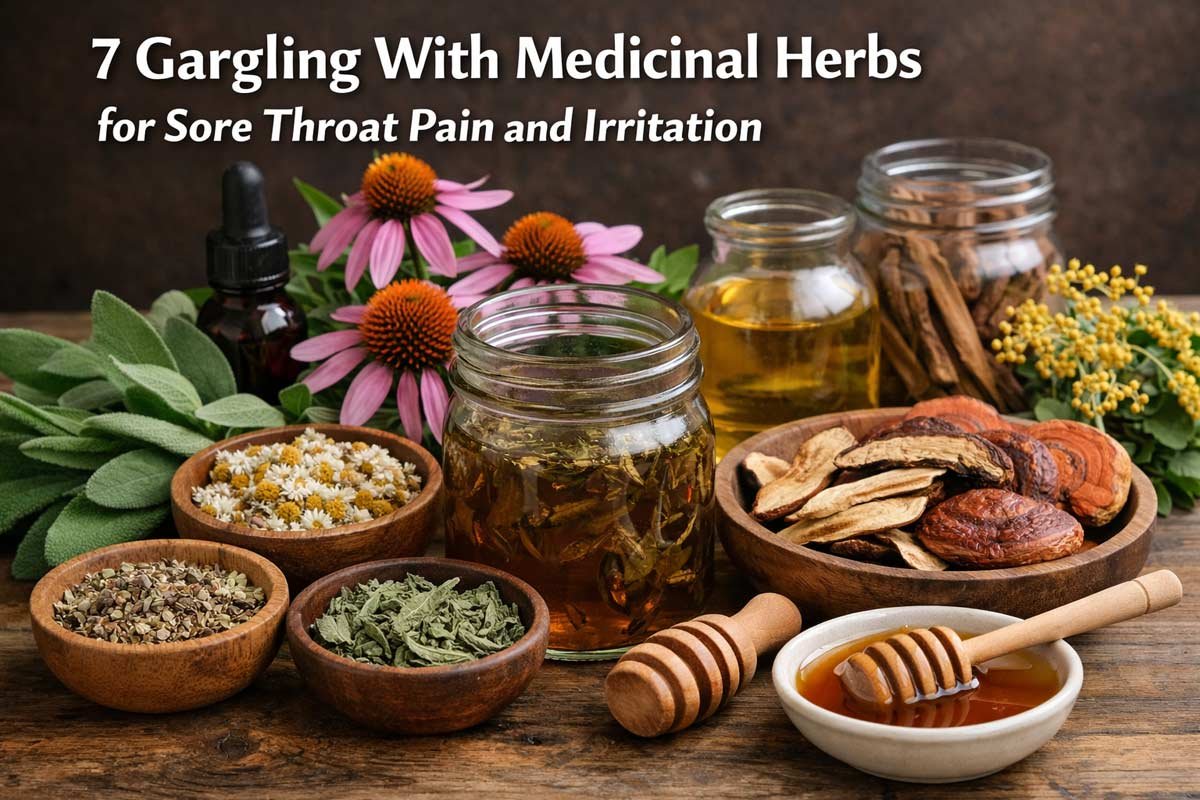
Soothing Your Throat Naturally: Why Gargling Helps
A sore throat has a way of shrinking your world. Swallowing becomes deliberate. Talking feels like work. Even breathing cold air can sting. When that raw, scraped feeling sets in, the instinct is often to reach for lozenges or sprays that numb everything into temporary silence. They have their place. But when it comes to real relief, the kind that actually changes how the tissue feels an hour later, gargling with medicinal plants stands apart.
Gargling is one of the oldest forms of localized herbal therapy. It is direct, intentional, and surprisingly effective. Instead of sending compounds through digestion and hoping enough reaches the throat, you place them exactly where the problem lives. Warm liquid flows over inflamed tissue, loosens tension, increases circulation, and delivers plant chemistry straight to irritated mucous membranes. This is why herbs for sore throat relief have been used as gargles for thousands of years across cultures, long before anyone cared about convenience.
Table of Contents

There is also something grounding about the act itself. You slow down. You prepare the infusion. You stand at the sink, tilt your head back, and give the throat your full attention. Healing likes that kind of focus.
From a physiological standpoint, gargling works on several levels at once. Warmth increases blood flow to the throat lining, which brings immune cells and speeds tissue repair. The mechanical action of gargling helps dislodge mucus, debris, and microbial buildup clinging to the back of the throat. This alone can reduce irritation. Add herbs to the mix, and you layer in anti inflammatory, antimicrobial, astringent, and demulcent effects that change the environment pathogens rely on.
Herbs for sore throat pain often contain tannins. These compounds gently tighten and tone swollen tissue, reducing that spongy, inflamed feeling that makes swallowing painful. Astringency also limits excess mucus production and creates a less hospitable surface for bacteria. This is why plants like sage and thyme feel immediately relieving when used as gargles. The relief is not imaginary. It is biochemical.
Other herbs work differently. Demulcent plants release mucilage when steeped in warm water. This forms a slick, soothing layer that coats the throat lining. If you have ever gargled marshmallow root or licorice and felt that soft, protected sensation afterward, that is mucilage at work. It reduces friction, calms exposed nerve endings, and allows irritated tissue to rest. For dry, scratchy sore throats or pain that worsens with talking, this category of herbs for sore throat care is especially valuable.
Then there are the antimicrobial heavy hitters. Many sore throats are caused or complicated by viruses and bacteria. Gargling with herbs rich in volatile oils or phenolic compounds reduces microbial load directly at the site of infection. This does not mean sterilizing the throat. That is neither possible nor desirable. It means shifting the balance. Less irritation. Less inflammation. Less opportunity for pathogens to dig in and linger.
One of the most overlooked benefits of gargling is its effect on nerve signaling. A sore throat is not just damaged tissue. It is also heightened sensitivity. Inflamed nerves fire more easily, sending pain signals with every swallow or cough. Warm herbal gargles soothe these nerves, dampening that feedback loop. This is why pain can decrease even before inflammation visibly subsides.
Timing matters too. Gargling early, at the first hint of scratchiness, often prevents a full blown sore throat from developing. The tissue is still resilient at that stage. The immune response is just beginning. Introducing herbs for sore throat support at this point can shorten the entire course. Waiting until pain is severe still helps, but early intervention is where gargling truly shines.
There is also a practical advantage. Gargles reach areas sprays often miss. The tonsillar crypts. The back wall of the pharynx. The folds where mucus collects. When you gargle properly, letting the liquid bubble gently at the back of the throat for thirty seconds or more, you treat these hidden spaces. This is especially useful for recurrent sore throats or lingering irritation after infections seem to have passed.
Water quality and temperature matter more than most people realize. Warm water opens tissue and improves absorption of plant compounds. Too hot irritates. Too cool constricts. Think comfortably warm, like a bath you could soak in for a while. This temperature also helps dissolve resins, mucilage, and essential oils from herbs for sore throat gargles more effectively than cold infusions.
Consistency beats intensity. Gargling once with a strong infusion can help, but regular gentle gargles do more for healing. Two or three times a day is usually enough. Morning clears overnight buildup. Midday calms irritation from talking and dry air. Evening prepares tissue for rest and repair. This rhythm supports the throat without overwhelming it.
There is a common misconception that gargling is only about killing germs. That narrow view misses the real value of herbs for sore throat care. The goal is not warfare. It is restoration. You are restoring moisture, tone, circulation, and balance to tissue designed to be flexible and resilient. When those qualities return, pain fades naturally.
Modern research increasingly supports what traditional medicine always knew. Herbal gargles reduce inflammatory markers, inhibit pathogenic microbes, and support mucosal immunity. But even without lab data, the lived experience is convincing. Anyone who has watched a hoarse voice return after two days of consistent sage gargles understands this on a visceral level.
Another overlooked aspect is how gargling influences breathing. A swollen, irritated throat subtly alters airflow. This increases dryness and coughing, which further irritates tissue. Gargling reduces swelling and restores smoother airflow. Breathing feels easier. The urge to clear the throat lessens. That alone speeds recovery.
It is also worth saying that gargling invites you to work with your body rather than against it. You are not suppressing symptoms. You are responding to them. Pain signals that tissue needs support. Herbs for sore throat gargles answer that call with compounds shaped by evolution to interact gently with human physiology.
There is no single best herb for every sore throat. Some are fiery and infected. Others are dry and exhausted. Some follow colds. Others follow shouting, smoking, or sleeping with your mouth open. Gargling allows you to choose plants that match the quality of irritation you are dealing with. This adaptability is one of herbal medicine’s greatest strengths.
Finally, there is something quietly empowering about treating a sore throat this way. You are not outsourcing relief. You are participating in it. Preparing herbs. Paying attention to sensation. Adjusting as needed. Healing becomes a process rather than a product.
Used thoughtfully, gargling with medicinal plants is not an old fashioned trick. It is one of the most precise, effective ways to work with herbs for sore throat pain and irritation. Simple. Direct. Proven by centuries of use and reinforced every time that raw ache softens after a warm, plant rich gargle.
Herbal Allies for Soothing Pain and Inflammation
When a sore throat hurts, it is rarely subtle. There is heat, swelling, tightness, and that unmistakable raw edge that makes swallowing feel like a small act of courage. This kind of pain is inflammatory by nature. Tissue is irritated, blood vessels are dilated, nerve endings are sensitized. Gargling with the right herbs for sore throat pain addresses all of these layers at once. Not by numbing them into silence, but by changing the conditions that created the pain in the first place.
Some plants excel at this work. They cool heat without chilling. They tighten without drying excessively. They soothe without suppressing. Sage, thyme, and licorice root form a classic trio in herbal throat care for good reason. Each brings a distinct quality, and together they cover a wide range of sore throat patterns, from fiery and swollen to dry and overworked.
1. Sage (Salvia officinalis)
Sage has a reputation. Sharp. Bitter. Assertive. It does not tiptoe around inflammation. It meets it head on. When a throat feels swollen, hot, and tender, sage is often the first plant that comes to mind. There is a reason sage gargles show up repeatedly in European folk medicine, monastic herbal texts, and modern clinical herbal practice.
The primary action of sage in sore throat care comes from its high tannin content. Tannins constrict tissue gently but decisively. Inflamed mucous membranes that feel loose and spongy tighten and tone. This alone reduces pain. Swollen tissue presses on nerve endings. When swelling goes down, pain follows.
Sage also contains volatile oils with antimicrobial activity. These compounds do not sterilize the throat, but they do reduce the overall microbial burden. This is especially useful when soreness is accompanied by redness, white patches, or that thick, unpleasant taste that often signals bacterial involvement. Gargling allows these oils to make direct contact with affected tissue, which is far more effective than swallowing them and hoping they arrive intact.
The sensation of a sage gargle is unmistakable. Slightly drying. Cooling. Clarifying. For some people, it feels like opening a window in a stuffy room. That clarity is not just sensory. It reflects a reduction in excess moisture, heat, and stagnation in the throat environment.
Sage shines when the sore throat feels angry. Red. Inflamed. Painful to the touch. It is particularly helpful for sore throats associated with upper respiratory infections, post nasal drip that irritates the throat lining, or vocal strain that leads to swelling. Singers have relied on sage gargles for generations to restore voice clarity after overuse.
Preparation matters. A strong infusion works best for gargling. The water should be hot enough to extract tannins and volatile oils, then cooled to a comfortable warmth before use. Gargling for at least thirty seconds allows the herb to do its work. Short, half hearted gargles miss the point.
Sage is powerful, and it knows it. Used too frequently or for too long, it can become overly drying. This is where balance comes in. Pairing sage with a more soothing herb or alternating it with gentler gargles prevents irritation while preserving its benefits.
2. Thyme (Thymus vulgaris)
If sage is the stern teacher, thyme is the warm but firm guardian. Thyme carries antimicrobial strength, but it expresses it through aromatic warmth rather than bitterness. The smell alone tells you what it does. Clean. Sharp. Comforting in a medicinal way.
Thyme’s key compound, thymol, has been extensively studied for its antibacterial and antifungal properties. In sore throat care, this translates to reduced microbial activity directly at the site of irritation. Gargling with thyme tea can decrease the presence of organisms that prolong inflammation and pain.
But thyme does more than fight microbes. It also relaxes smooth muscle and reduces spasms. This matters more than most people realize. A sore throat often comes with tension. The throat tightens reflexively in response to pain. Swallowing becomes guarded. Coughing increases. Thyme helps interrupt this cycle by gently relaxing the tissue.
The warming quality of thyme is especially useful when sore throat pain comes with a sense of chill or congestion. It improves circulation locally, bringing fresh blood flow to irritated areas. Increased circulation supports immune response and speeds healing. This warmth is not fiery. It is steady and penetrating.
Thyme gargles are particularly helpful when sore throat pain is accompanied by coughing or hoarseness. The herb calms the urge to cough while simultaneously addressing the underlying irritation. This dual action makes it invaluable during colds that settle into the throat and chest.
From a sensory perspective, thyme is easier for many people to tolerate than sage. Its flavor is familiar, almost culinary. This makes regular gargling more appealing, which matters when consistency is key. Herbs for sore throat care only work if you actually use them.
Thyme pairs beautifully with both sage and licorice root. Combined with sage, it softens the astringency while reinforcing antimicrobial action. Combined with licorice, it balances sweetness with aromatic sharpness. These combinations create gargles that are both effective and pleasant enough to use multiple times a day.
3. Licorice Root (Glycyrrhiza glabra)
Licorice root works from an entirely different angle. Where sage tightens and thyme clears, licorice soothes, coats, and restores. It is one of the most valuable herbs for sore throat pain when dryness, irritation, or rawness dominate the picture.
Licorice contains glycyrrhizin and a range of flavonoids that reduce inflammation and protect mucous membranes. When prepared as a warm infusion, licorice releases compounds that cling to tissue, forming a protective layer. This coating effect reduces friction during swallowing and shields exposed nerve endings from further irritation.
The sweetness of licorice is not just pleasant. It has a physiological effect. Sweet flavors stimulate saliva production, which increases moisture in the throat. Moisture is essential for healing irritated mucosa. A dry throat heals slowly. Licorice changes that environment quickly.
Licorice is especially useful when sore throat pain follows prolonged talking, shouting, singing, or breathing dry air. In these cases, the tissue is often inflamed because it is exhausted and dehydrated rather than infected. Astringent herbs alone can make this worse. Licorice restores softness and flexibility.
There is also an anti inflammatory depth to licorice that goes beyond surface soothing. Its compounds modulate inflammatory pathways, reducing redness and swelling over time. This makes it valuable not just for immediate relief, but for ongoing healing when soreness lingers for days.
Licorice shines in combination formulas. Paired with sage, it prevents excessive dryness while enhancing pain relief. Paired with thyme, it rounds out antimicrobial action with mucosal protection. This balancing role is one of licorice’s greatest strengths.
It is worth noting that licorice should be used thoughtfully. While gargling minimizes systemic absorption, frequent use over long periods is not necessary for throat care. In most cases, short term use during active irritation is enough.
What makes this trio of herbs so effective is not just their individual actions, but how they address pain and inflammation from multiple angles. Sage reduces swelling. Thyme clears microbes and tension. Licorice restores moisture and comfort. Together, they create an environment where healing feels inevitable rather than forced.
Using herbs for sore throat gargles this way teaches you to listen to the quality of the pain. Is it hot and swollen. Tight and congested. Dry and scraped raw. The answer guides your choice. When the herb matches the sensation, relief is not subtle. It is felt. Quickly. Deeply. And with a sense that the throat is finally being treated with the respect it deserves.
Antimicrobial and Immune-Supportive Herbs
Not every sore throat announces itself with sharp pain. Some creep in quietly, lingering as a dull ache, a constant need to clear the throat, or a feeling that the tissue never quite settles. Others come with fatigue, swollen glands, or that unmistakable sense that the immune system is working overtime. In these cases, soothing alone is not enough. The throat needs protection, immune support, and a gentle but persistent push back against microbes that refuse to move on.
This is where certain herbs for sore throat care show a different kind of intelligence. Instead of forcing a reaction, they create conditions that favor healing. They protect damaged tissue. They modulate immune activity rather than overstimulating it. They reduce microbial pressure without scorching the landscape. Marshmallow root, echinacea, and chamomile belong firmly in this category.
4. Marshmallow Root (Althaea officinalis)
Marshmallow root is often misunderstood. Its softness leads some to underestimate it. In reality, it is one of the most effective herbs for sore throat irritation when tissue is inflamed, dry, or repeatedly aggravated. Its power lies in restraint.
The defining feature of marshmallow root is its mucilage content. When steeped in warm water, the root releases polysaccharides that swell and form a slippery, gel like substance. This mucilage adheres to mucous membranes, coating the throat in a protective layer that can last for hours. For sore throats that feel raw, scraped, or painfully exposed, this coating changes everything.
Pain decreases because nerve endings are shielded. Swallowing becomes smoother because friction is reduced. Coughing becomes less frequent because the throat no longer feels attacked by every breath of air. This is not superficial relief. It is structural support.
From an immune perspective, marshmallow root is quietly effective. The mucilage not only soothes but also creates a physical barrier that limits contact between irritated tissue and microbes. This reduces ongoing immune activation and gives the body space to resolve inflammation without constant provocation.
Marshmallow root is particularly useful in sore throats associated with dryness. Heated indoor air. Mouth breathing during sleep. Prolonged talking. Post viral irritation that lingers long after infection has passed. In these situations, antimicrobial herbs alone can feel too harsh. Marshmallow restores hydration and resilience first.
For gargling, marshmallow root benefits from patience. A longer steep or even a cold infusion warmed gently afterward extracts more mucilage. The resulting liquid feels noticeably thicker in the mouth. That texture is a sign it is doing what it should.
5. Echinacea (Echinacea purpurea)
Echinacea has a reputation for immune support, but its role in gargling is often overlooked. When used locally, echinacea brings immune modulation and antimicrobial action directly to the throat tissue, where it matters most.
Echinacea contains alkamides, polysaccharides, and caffeic acid derivatives that influence immune cell activity. Applied as a gargle, these compounds stimulate local immune defenses without pushing them into overdrive. This distinction matters. An overzealous immune response can increase inflammation and pain. Echinacea helps sharpen the response rather than amplify it indiscriminately.
One of the most noticeable effects of echinacea gargles is the characteristic tingling or numbing sensation. This comes from alkamides interacting with sensory receptors. The effect is mild but meaningful. Pain softens. The throat feels less reactive. This can be especially helpful during the early stages of infection, when soreness escalates quickly.
Echinacea also exhibits antimicrobial activity against a range of bacteria and viruses commonly associated with upper respiratory infections. Gargling allows these effects to be localized, reducing microbial presence in the throat without relying solely on systemic immune response.
This herb is particularly well suited to sore throats accompanied by swollen lymph nodes, fatigue, or a sense of oncoming illness. In these cases, echinacea supports the body’s effort to contain infection early, which often shortens the overall duration of symptoms.
Echinacea works best when used for short, focused periods. A few days of consistent gargling at the onset of soreness is usually enough. Prolonged, continuous use is unnecessary for throat care and does not improve outcomes.
6. Chamomile (Matricaria recutita)
Chamomile often gets dismissed as gentle to the point of irrelevance. That assumption could not be further from the truth. Chamomile is subtle, but it is not weak. In sore throat care, its strength lies in its ability to calm inflamed tissue and soothe an irritated immune response without dulling natural defenses.
Chamomile contains flavonoids such as apigenin and essential oils that exhibit anti inflammatory and antimicrobial properties. When used as a gargle, chamomile reduces redness and swelling while supporting tissue repair. Its effects accumulate with regular use, making it especially valuable for lingering sore throats that refuse to resolve.
One of chamomile’s most important actions is its effect on smooth muscle and nervous tension. A sore throat often comes with unconscious clenching. The jaw tightens. The throat braces itself. Chamomile relaxes this pattern. Gargling with warm chamomile tea often brings an immediate sense of ease that goes beyond the throat itself.
Chamomile is also remarkably well tolerated. For people with sensitive tissue, reactive inflammation, or a history of harsh remedies making things worse, chamomile offers a safe entry point. It rarely irritates. It rarely over dries. This makes it suitable for frequent gargling, even several times a day.
From an immune standpoint, chamomile does not push or pull aggressively. It nudges. It reduces excessive inflammatory signaling while allowing normal immune surveillance to continue. This balance is crucial when soreness is driven as much by immune overreaction as by infection.
Chamomile pairs beautifully with both marshmallow root and echinacea. With marshmallow, it enhances soothing and prolongs comfort. With echinacea, it softens immune stimulation and reduces the risk of increased irritation. These combinations are especially useful when the throat feels both sore and fragile.
Taken together, marshmallow root, echinacea, and chamomile offer a different kind of relief. They do not dominate the sore throat. They support it back into balance. Protection. Modulation. Gentle antimicrobial action. When herbs for sore throat care work this way, healing feels steady and reliable rather than dramatic.
These plants remind you that not every battle is won by force. Sometimes the fastest path to relief is creating safety at the tissue level, calming the immune system’s edges, and letting the body remember how to heal when it is not under constant assault.
Medicinal Mushrooms for Throat Health
Medicinal mushrooms enter sore throat care from a different doorway than herbs. They are not sharp. They are not aromatic. They do not announce themselves with immediate sensory drama. Instead, they work quietly in the background, shaping immune response, calming chronic inflammation, and supporting tissue integrity over time. When sore throat pain keeps returning, when irritation lingers long after the acute phase should have passed, mushrooms deserve attention.
Among them, reishi stands alone for throat health. It is not a quick fix. It is a regulator. A stabilizer. A long view ally when herbs for sore throat pain need reinforcement at a deeper level.
7. Reishi Mushroom (Ganoderma lucidum)
Reishi has been used for centuries in East Asian medicine for conditions involving chronic inflammation, immune imbalance, and tissue vulnerability. Its traditional association with the lungs and upper respiratory tract makes its role in throat health intuitive rather than experimental. The throat sits at a crossroads. Immune tissue. Mucosal tissue. Constant exposure to air, pathogens, dryness, and strain. Reishi supports all of these aspects simultaneously.
The primary compounds of interest in reishi are polysaccharides and triterpenes. Polysaccharides modulate immune activity. They do not stimulate indiscriminately. They help the immune system respond appropriately. When immune response is sluggish, they enhance vigilance. When inflammation is excessive, they temper it. This dual action matters in sore throat patterns that swing between frequent infections and prolonged irritation.
Triterpenes contribute anti inflammatory and antimicrobial effects. They reduce the biochemical signals that drive swelling and pain while also inhibiting certain bacteria and viruses. This combination is particularly useful in sore throats that feel persistent rather than acute. The pain is not sharp. It is dull. The tissue feels thickened. The throat never quite feels normal again. Reishi addresses this kind of stagnation patiently and effectively.
Using reishi for gargling may seem unconventional at first, but it makes sense when you consider how local immune tissue responds to repeated exposure. The tonsils, adenoids, and lymphoid tissue lining the throat are constantly sampling their environment. A warm reishi infusion introduced directly to this area delivers immune modulating compounds exactly where immune decisions are being made.
Unlike many herbs for sore throat gargles, reishi does not rely on volatile oils or tannins. Its action is subtle. There is no strong taste. No immediate tightening or numbing sensation. What people often notice instead is a gradual decrease in sensitivity over days. Less redness. Less morning soreness. Fewer flare ups triggered by talking, cold air, or minor infections.
Reishi is especially useful for sore throats linked to immune exhaustion. Frequent colds. Recurrent tonsil irritation. Post viral sensitivity that drags on for weeks. In these cases, the immune system is not weak. It is tired. Reishi supports recovery by improving immune efficiency rather than pushing harder.
There is also a tissue level effect worth noting. Chronic throat irritation often involves compromised mucosal barriers. The lining becomes more permeable. More reactive. Reishi polysaccharides support mucosal integrity, helping tissue regain its natural resilience. When the barrier function improves, fewer irritants penetrate, and pain decreases as a result.
From a practical standpoint, reishi gargles are best prepared as decoctions. The mushroom’s tough cell walls require longer simmering to extract active compounds. Once prepared, the liquid can be cooled to a warm temperature suitable for gargling. The process itself encourages patience, which aligns well with reishi’s nature.
Reishi works best when used consistently over time rather than aggressively for short bursts. Gargling once or twice daily during periods of recurring irritation builds cumulative benefit. This makes it a valuable addition for people who feel they are always on the edge of a sore throat, never fully sick, never fully well.
Reishi also pairs well with herbs for sore throat care that focus on symptom relief. When sage or thyme reduce acute inflammation, reishi supports longer term immune balance. When marshmallow root protects fragile tissue, reishi strengthens it from within. These combinations allow you to address both immediate discomfort and underlying vulnerability.
Another often overlooked aspect of reishi is its effect on stress physiology. Chronic stress influences immune function and increases inflammatory tone throughout the body, including the throat. Reishi’s adaptogenic properties help regulate stress responses that quietly undermine healing. For people whose sore throats flare during periods of overwork, poor sleep, or emotional strain, this effect matters.
It is also worth mentioning that reishi is generally well tolerated when used topically as a gargle. Systemic concerns associated with long term internal use are far less relevant here. The exposure is local. The dose is modest. The focus is support rather than intervention.
Reishi teaches a different lesson about herbs for sore throat care. Not every remedy needs to feel dramatic to be effective. Some of the most meaningful changes happen gradually. One day you realize your throat no longer aches when you wake up. Another day you notice you spoke all afternoon without that familiar burn. These shifts are quiet, but they are real.
In a world obsessed with instant relief, medicinal mushrooms ask for trust and consistency. They work with cycles rather than against them. When throat irritation is part of a larger pattern of immune imbalance or chronic inflammation, reishi offers a way out that does not involve constant suppression.
Used thoughtfully, reishi becomes more than a remedy. It becomes a stabilizing presence in throat care. A reminder that healing is not always about fighting symptoms. Sometimes it is about restoring harmony at the systems level so the throat can finally do what it was designed to do without complaint.
For those willing to listen to that approach, medicinal mushrooms earn their place alongside classic herbs for sore throat pain and irritation. Quietly. Reliably. And often more deeply than expected.
Gentle Relief and Practical Tips for Daily Gargling
Gargling works best when it becomes a small ritual rather than a desperate last step. The throat responds to consistency, warmth, and attention. Treated this way, herbs for sore throat care stop being emergency tools and start becoming daily allies that prevent irritation from gaining momentum in the first place.
One of the simplest mistakes people make is waiting until pain is intense before doing anything. By then, tissue is already inflamed, nerves are sensitized, and healing takes longer. Gargling early, when the throat first feels dry, scratchy, or slightly tight, changes the trajectory. A few days of gentle, regular gargling often prevents that familiar slide into full soreness.
Temperature matters more than most people think. Gargling should feel comforting, not shocking. Water that is too hot irritates already sensitive tissue. Water that is too cool constricts blood vessels and limits absorption. Aim for a warmth that feels relaxing in the mouth, the same temperature you would want for a long sip of tea. That warmth increases circulation and helps herbal compounds penetrate the mucous membranes more effectively.
Time also matters. A quick swish does very little. Gargling should last at least thirty seconds, ideally closer to a full minute. Let the liquid reach the back of the throat. Let it bubble gently. This mechanical action helps loosen mucus, dislodge debris, and distribute herbs evenly across irritated tissue. Rushing through the process undermines its effectiveness.
Frequency depends on the state of the throat. During active soreness, two to three gargles per day is usually enough. Morning gargling clears overnight dryness and mucus buildup. Midday gargling calms irritation from talking, dry air, or temperature changes. Evening gargling prepares tissue for rest and repair. More is rarely necessary and can become counterproductive, especially with astringent herbs.
Choosing the right herb at the right time makes daily gargling feel intuitive rather than forced. When the throat feels hot, swollen, or angry, sage or thyme bring relief quickly. When dryness dominates, licorice root or marshmallow root restore comfort. When soreness is tied to immune strain or frequent infections, echinacea or reishi offer deeper support. Listening to sensation guides choice better than rigid formulas.
Blending herbs thoughtfully can enhance results. Pairing an astringent herb with a demulcent one balances tightening with moisture. Combining antimicrobial herbs with immune supportive ones addresses both cause and consequence. These blends often feel more complete, both in flavor and effect. That completeness encourages consistency, which is where real relief comes from.
Preparation deserves care. Herbs for sore throat gargles are most effective when properly extracted. Leaves and flowers usually respond well to hot infusions. Roots and mushrooms need longer simmering or extended steeping. Rushing preparation leads to weak remedies that feel disappointing. Taking an extra few minutes pays off in potency.
Freshness matters too. Gargles should be prepared daily when possible. Stale infusions lose volatile compounds and feel flat. The throat notices the difference. If time is tight, preparing a day’s worth and storing it covered in a cool place is reasonable, but longer storage reduces effectiveness.
Posture influences how well gargling reaches its target. Standing upright, tilting the head back gently, and relaxing the jaw allows liquid to contact deeper throat tissue. Tension works against you. Let the shoulders drop. Let the throat open. The more relaxed the body, the more effective the gargle.
There is also value in what you avoid during throat irritation. Dry air, smoke, excessive caffeine, and alcohol all worsen soreness. Gargling can only do so much if the throat is constantly being irritated between treatments. Simple adjustments like using a humidifier at night or sipping water throughout the day amplify the benefits of herbal care.
Pay attention to how your throat feels after gargling. Relief should feel supportive, not harsh. A slight tightening followed by ease is normal with astringent herbs. A soft, coated sensation is normal with demulcents. Burning, increased dryness, or sharp discomfort are signs to adjust the herb, the strength, or the frequency.
It is also worth acknowledging that gargling is as much about nervous system feedback as it is about chemistry. The act signals care. Warmth, repetition, and attention tell the body it is safe to relax. That relaxation reduces protective tension in the throat that often perpetuates pain. This is why people often sigh afterward without realizing it.
Daily gargling also builds awareness. You start noticing subtle changes in throat sensation before they escalate. Slight dryness after a long conversation. Tightness after sleeping with your mouth open. Early scratchiness during seasonal changes. Catching these early allows herbs for sore throat care to work preventively rather than reactively.
There is no need to gargle forever. The goal is not dependency. It is resilience. As tissue heals and irritation fades, frequency naturally decreases. Some people keep a gentle gargle in their routine during cold seasons or periods of heavy voice use. Others reserve it for early warning signs. Both approaches are valid.
One practical tip that often gets overlooked is hydration timing. Gargling works best when the body is already reasonably hydrated. If you are dehydrated, throat tissue struggles to recover no matter how good the herbs are. Drinking water regularly throughout the day supports everything gargling is trying to do.
Another subtle but important point is flavor tolerance. If you dread the taste, you will avoid the practice. Choosing herbs you can tolerate or even enjoy makes consistency realistic. There is no prize for enduring unpleasant remedies. Herbs for sore throat care should feel supportive, not punitive.
Over time, daily gargling shifts how you relate to sore throat pain. Instead of feeling blindsided by it, you recognize patterns. You respond early. You trust that relief is accessible without reaching for suppression. This confidence alone reduces stress around symptoms, which further supports healing.
Gentle relief does not mean weak relief. When used with intention, gargling is one of the most effective localized therapies available for throat pain and irritation. It meets the problem where it lives. It respects the tissue rather than overwhelming it. And it adapts easily to different needs and seasons.
In the end, daily gargling is less about technique and more about relationship. Relationship with your throat. With your voice. With the signals your body sends when something is off. Herbs for sore throat care offer their support willingly, but they work best when you show up regularly, listen closely, and allow small, consistent actions to do what force never could.
Best-selling Supplements for Sore Throat


Article Sources
At AncientHerbsWisdom, our content relies on reputable sources, including peer-reviewed studies, to substantiate the information presented in our articles. Our primary objective is to ensure our content is thoroughly fact-checked, maintaining a commitment to accuracy, reliability, and trustworthiness.
- Blumenthal, M., Goldberg, A., & Brinckmann, J. (2000). Herbal medicine: Expanded Commission E monographs. Integrative Medicine Communications. https://www.herbalgram.org/resources/commission-e-monographs/
- EMA Committee on Herbal Medicinal Products. (2012). Assessment report on Salvia officinalis L., folium. European Medicines Agency. https://www.ema.europa.eu/en/documents/herbal-report/assessment-report-salvia-officinalis-l-folium_en.pdf
- EMA Committee on Herbal Medicinal Products. (2013). Assessment report on Thymus vulgaris L. and Thymus zygis L., herba. European Medicines Agency. https://www.ema.europa.eu/en/documents/herbal-report/assessment-report-thymus-vulgaris-l-thymus-zygis-l-herba_en.pdf
- EMA Committee on Herbal Medicinal Products. (2014). Assessment report on Glycyrrhiza glabra L. and Glycyrrhiza inflata Bat., radix. European Medicines Agency. https://www.ema.europa.eu/en/documents/herbal-report/assessment-report-glycyrrhiza-glabra-l-glycyrrhiza-inflata-bat-radix_en.pdf
- EMA Committee on Herbal Medicinal Products. (2016). Assessment report on Althaea officinalis L., radix. European Medicines Agency. https://www.ema.europa.eu/en/documents/herbal-report/assessment-report-althaea-officinalis-l-radix_en.pdf
- Barnes, J., Anderson, L. A., & Phillipson, J. D. (2007). Herbal medicines (3rd ed.). Pharmaceutical Press. https://www.pharmpress.com/product/9780853696230/herbal-medicines
- Senchina, D. S., McCann, D. A., Asp, J. M., Johnson, J. A., Cunnick, J. E., & Kaiser, M. S. (2006). Changes in immunomodulatory properties of Echinacea spp. root infusions following simulated digestion. Journal of Ethnopharmacology, 107(2), 290–302. https://doi.org/10.1016/j.jep.2006.03.013
- McKay, D. L., & Blumberg, J. B. (2006). A review of the bioactivity and potential health benefits of chamomile tea. Phytotherapy Research, 20(7), 519–530. https://doi.org/10.1002/ptr.1900
- Boh, B., Berovic, M., Zhang, J., & Zhi-Bin, L. (2007). Ganoderma lucidum and its pharmaceutically active compounds. Biotechnology Annual Review, 13, 265–301. https://doi.org/10.1016/S1387-2656(07)13010-6
- Ríos, J. L., & Recio, M. C. (2005). Medicinal plants and antimicrobial activity. Journal of Ethnopharmacology, 100(1–2), 80–84. https://doi.org/10.1016/j.jep.2005.04.025

- Zucchini: Hydrating Vegetable for Digestion and Heart - April 6, 2026
- Yams: Energy Rich Root for Fiber - April 6, 2026
- Turnip: Root Vegetable for Digestion and Vitamin C - April 6, 2026