
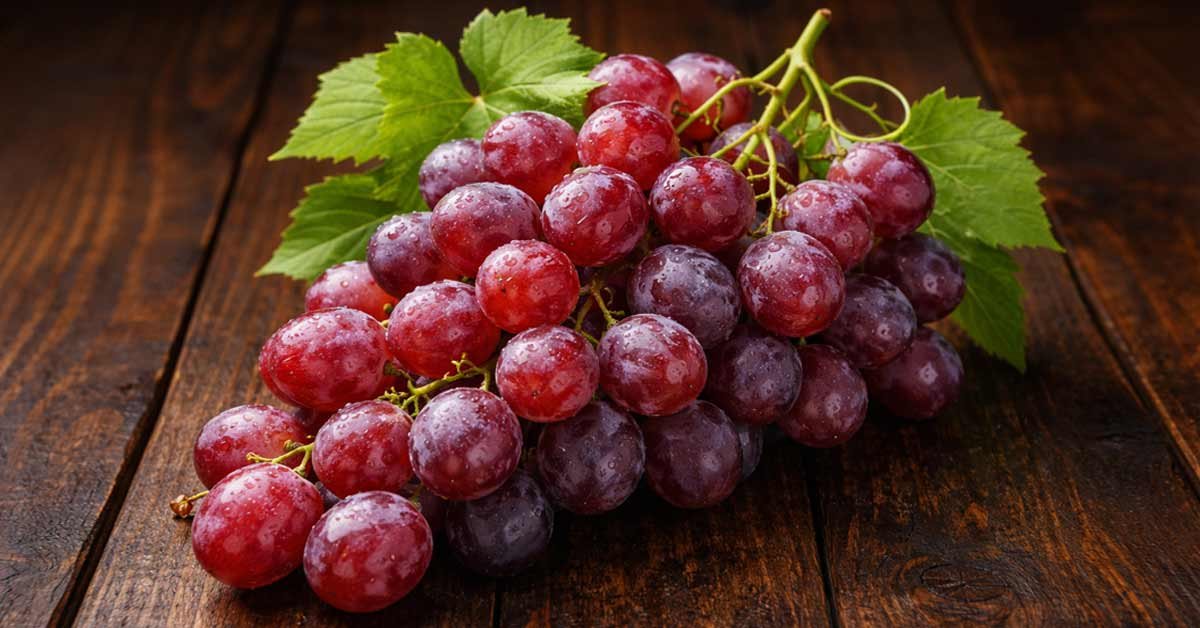
A Small Fruit With a Big Reputation
You probably do not think twice when you reach for grapes. They are easy. No peeling. No slicing. Just rinse and eat. That simplicity hides something more interesting. Grapes have built a quiet reputation over decades of research, especially when it comes to heart health and circulation.
It is not hype. It is not a trend. It is a pattern that keeps showing up in nutritional science.
Table of Contents
If you look at traditional diets linked with long term cardiovascular health, grapes and grape derived foods appear again and again. The most cited example is the Mediterranean pattern of eating. People often focus on olive oil or fish, but grapes, especially in whole form, have always been part of that picture. Not in extreme amounts. Just consistent, daily presence.
That is where grapes stand out. They are not a “superfood” in the exaggerated sense. They are something more practical. A food that fits easily into daily life and quietly contributes over time.
Why grapes keep showing up in heart health discussions
Researchers tend to look for patterns, not isolated miracles. When grapes come up in studies, it is rarely because of one single nutrient. It is the combination that matters.
Inside grapes, you get:
- Polyphenols that interact with oxidative processes
- Natural sugars that come packaged with fiber and water
- Vitamins like vitamin C and vitamin K
- Trace minerals that support vascular function
On paper, none of these are unique. Many fruits contain similar elements. What makes grapes interesting is how concentrated and bioactive some of their compounds are, especially in the skin.
That is where much of the conversation around grape and circulation begins.
You might have heard of resveratrol. It tends to get all the attention. But in reality, it is just one part of a broader network of plant compounds. Grapes contain a mix of flavonoids, anthocyanins, and other polyphenols that seem to work together rather than in isolation.
That matters because the body does not respond to nutrients in a vacuum. It responds to combinations.
The connection between grapes and circulation
Circulation is not just about blood moving through vessels. It is about how flexible those vessels are. How they respond to stress. How easily blood flows without resistance.
This is where grapes start to become relevant in a practical sense.
When circulation is working well, you usually do not notice it. When it is not, subtle signs show up first. Cold hands. Low energy. Sluggish recovery after effort. These are not medical diagnoses, but they reflect how efficiently blood is moving and delivering oxygen.
Compounds in grapes have been studied for their interaction with these processes. Not in a dramatic, overnight way. More in a gradual, cumulative sense.
Some research looks at how grape polyphenols influence endothelial function. That refers to the inner lining of blood vessels. This lining plays a key role in regulating blood flow. When it functions well, vessels can expand and contract as needed. When it does not, circulation becomes less efficient.
You do not feel that directly. But over time, it shapes cardiovascular health.
A realistic way to think about grapes
It is easy to fall into extremes. Either expecting too much from a single food or dismissing it entirely.
Grapes sit somewhere in the middle.
They are not going to transform heart health on their own. But they can support it in a way that is easy to sustain. That is the part most people underestimate. Consistency matters more than intensity.
Think about how people actually eat:
- Quick snacks between tasks
- Something sweet after a meal
- Small additions to breakfast or lunch
Grapes fit naturally into all of these moments. No preparation barrier. No learning curve. That alone increases the chance that they become a regular habit.
And that is where the long term effect builds.
Whole grapes vs isolated compounds
There is a tendency to reduce foods to single compounds. In the case of grapes, resveratrol often becomes the headline. Supplements follow. Concentrated extracts. High dose capsules.
But whole grapes behave differently.
When you eat grapes, you are getting:
- Fiber that slows sugar absorption
- Water that supports hydration
- A mix of polyphenols that interact with each other
This combination changes how the body processes what you eat. It is not just about what is inside the grape. It is about how it is delivered.
That is one reason why dietary patterns tend to show more consistent benefits than isolated supplements. The body recognizes whole foods in a different way.
The sensory side people overlook
There is also something less discussed but still relevant. The sensory experience.
Grapes are:
- Crisp or soft depending on the variety
- Sweet with a slight acidity
- Easy to portion without measuring
That matters more than it sounds. Foods that are enjoyable are easier to repeat. And repetition is what turns a food into a habit.
You are far more likely to eat a handful of grapes regularly than to stick with something that feels like a chore.
A small habit with long term implications
If you zoom out, the role of grapes becomes clearer.
They are not a solution. They are a piece of a larger pattern.
- A diet that includes fruits rich in polyphenols
- Regular intake rather than occasional spikes
- Simple foods that do not require effort to maintain
Grapes check all those boxes.
You do not need a specific protocol. No timing strategy. No complicated pairing rules. Just including grapes in your day, consistently, is enough to make them relevant.
That is how most meaningful dietary changes actually happen. Quietly. Repeatedly. Without friction.
And that is exactly why grapes have earned their reputation. Not because they promise something dramatic, but because they fit into real life and still manage to contribute to heart health and circulation over time.
The Polyphenol Power Inside Grapes
If you strip grapes down to what makes them interesting from a physiological point of view, you keep coming back to one category: polyphenols. This is where grapes separate themselves from many other everyday fruits. Not because they contain something rare, but because of the type, density, and interaction of these compounds.
You will find polyphenols in many plant foods. Berries, tea, cocoa. Grapes belong in that same group, but they bring a specific profile that has been studied extensively in relation to heart health and circulation.
Most of these compounds sit in the skin and seeds of grapes. That matters. It explains why darker grapes often get more attention. It also explains why whole grapes tend to show different effects compared to filtered products where parts of the fruit are removed.
The conversation around grape and heart health starts here.
What Polyphenols Actually Do in the Body
Polyphenols are often described as antioxidants. That is accurate, but incomplete. If you stop there, you miss how they actually behave inside the body.
At a basic level, polyphenols interact with reactive molecules often referred to as free radicals. These molecules are a normal byproduct of metabolism. The issue is not their presence, but their excess. When levels rise, they can start to affect lipids, proteins, and cell structures.
Polyphenols help regulate this environment.
But their role goes further. Research shows they also influence signaling pathways. That means they can affect how cells respond to stress, how inflammation is regulated, and how blood vessels behave.
Some of the key actions linked to grape polyphenols include:
- Supporting endothelial function, which affects how blood vessels expand and contract
- Modulating inflammatory responses at a cellular level
- Influencing nitric oxide availability, which plays a role in circulation
- Interacting with lipid oxidation processes
These are not immediate effects you can feel after eating grapes once. They build through repeated exposure. The body adjusts gradually.
There is also a bioavailability aspect to consider. Not all polyphenols are absorbed in the same way. Some are transformed by gut bacteria before they become active. This creates variability between individuals, but it also highlights something important. The gut microbiome becomes part of the equation.
So when you eat grapes, you are not just consuming compounds. You are triggering a chain of interactions that depends on digestion, metabolism, and microbial activity.
Resveratrol and Flavonoids: The Compounds That Stand Out
Resveratrol tends to dominate the conversation around grapes. It is easy to understand why. It has been studied in isolation, often at higher doses, and linked to mechanisms associated with cardiovascular protection.
In grapes, resveratrol is present in relatively small amounts, mostly in the skin. That is important context. The effects observed in controlled settings do not translate directly to the amounts you get from eating grapes. Still, its presence contributes to the overall profile.
Resveratrol has been associated with:
- Regulation of oxidative stress pathways
- Influence on endothelial function
- Interaction with enzymes involved in vascular health
But focusing only on resveratrol creates a narrow view.
Flavonoids make up a much larger portion of the polyphenol content in grapes. This group includes compounds such as quercetin, catechins, and anthocyanins, especially in red and black grapes.
These flavonoids have been studied for their role in:
- Supporting blood vessel flexibility
- Reducing oxidation of LDL particles
- Modulating inflammatory signaling
Anthocyanins, the pigments that give darker grapes their color, are particularly relevant. Their structure allows them to interact with oxidative processes in a way that appears to support vascular function.
When you combine all these compounds, you get a layered effect. Each one contributes something slightly different. Together, they create a broader impact than any single compound alone.
That is why whole grapes matter more than isolated extracts in most real world dietary patterns.
Oxidative Stress and Why It Matters for Heart Health
Oxidative stress is one of those terms that gets used often but rarely explained clearly. At its core, it refers to an imbalance between reactive molecules and the body’s ability to manage them.
This imbalance affects several systems, but it is particularly relevant for heart health and circulation.
One of the key areas involved is lipid oxidation. LDL cholesterol is often discussed in isolation, but its behavior matters as much as its levels. When LDL particles undergo oxidation, they become more reactive. This changes how they interact with blood vessel walls.
Over time, this process contributes to vascular changes that affect circulation.
Polyphenols from grapes have been studied for their interaction with this mechanism. The idea is not that they “block” oxidation entirely. That would not be realistic. Instead, they appear to reduce the extent to which these processes occur.
Another important area is the endothelium, the inner lining of blood vessels. This layer plays a central role in regulating blood flow. It produces nitric oxide, a molecule that signals vessels to relax and widen.
When oxidative stress increases, nitric oxide availability can decrease. This leads to less efficient vessel function.
Compounds found in grapes seem to support this balance by:
- Helping maintain nitric oxide levels
- Reducing oxidative pressure on endothelial cells
- Supporting more stable vascular responses
These effects are subtle. You will not notice them directly after eating a serving of grapes. But over time, they influence how efficiently your circulatory system responds to daily demands.
There is also an indirect effect through inflammation. Oxidative stress and inflammation are closely linked. When one increases, the other tends to follow. Polyphenols appear to modulate this relationship, which adds another layer to their relevance in heart health.
Putting it into perspective
It is easy to overstate the role of individual nutrients. The reality is more grounded.
Grapes provide a consistent source of polyphenols that interact with processes linked to circulation and heart health. The effect is not dramatic. It is cumulative.
What matters is:
- Regular intake
- Whole fruit consumption rather than isolated compounds
- Integration into a broader dietary pattern
You do not need high doses. You need repetition.
A handful of grapes here and there might seem insignificant. Over weeks and months, it becomes a steady input of compounds that support how your body handles oxidative stress and vascular function.
That is the real value. Not intensity. Consistency.
Grapes and Circulation: What Really Happens
Circulation sounds simple. Blood moves. Oxygen gets delivered. Waste gets removed. But once you look closer, it becomes clear how many moving parts are involved. Vessel flexibility. Blood viscosity. Cellular signaling. Even small shifts in these systems can change how efficiently everything works.
This is where grapes start to matter in a practical way. Not as a fix. More as a steady input that interacts with these processes over time.
When people talk about circulation and grapes, they usually expect something immediate. Better flow. More energy. Warmer hands. That is not how it works. The effects tied to grapes are gradual and often invisible in the short term. They show up in how the system performs under stress and how well it maintains balance over time.
To understand that, you need to break circulation into its core components.
Blood Flow and Vessel Function Explained
Blood flow depends heavily on the condition of your blood vessels. Not just whether they are open or blocked, but how responsive they are.
Healthy vessels are flexible. They expand when more blood is needed and contract when demand drops. This constant adjustment is managed by the endothelium, the inner lining of the vessels. It acts almost like a control center, responding to signals and regulating tone.
When vessel function is optimal:
- Blood moves with less resistance
- Oxygen delivery is more efficient
- The heart does not need to work as hard to maintain flow
When function declines, even slightly, the system becomes less efficient. You may not notice it directly, but it shows up in subtle ways over time.
This is where grapes enter the picture.
Polyphenols in grapes have been studied for their interaction with endothelial function. The mechanisms are not fully linear, but several patterns appear consistently in research:
- Improved responsiveness of blood vessels to changes in demand
- Support for signaling pathways that regulate vessel dilation
- Reduced oxidative pressure on endothelial cells
These changes do not mean vessels suddenly become wider. They become more adaptable. That distinction matters. Circulation is not about permanently dilated vessels. It is about dynamic control.
A practical way to think about it is this: grapes may support how well your vessels respond, not just how wide they are at rest.
Nitric Oxide and Vascular Relaxation
Nitric oxide is one of the key molecules involved in circulation. It signals blood vessels to relax, which allows them to widen. This process is essential for regulating blood pressure and ensuring adequate blood flow to tissues.
Your body produces nitric oxide naturally. The challenge is maintaining its availability.
Several factors can reduce nitric oxide levels:
- Oxidative stress
- Poor dietary patterns
- Sedentary behavior
- Aging related changes in endothelial function
When nitric oxide availability drops, vessels become less responsive. They do not relax as easily. Blood flow becomes less efficient.
Compounds found in grapes appear to interact with this system in a supportive way.
Research suggests that grape polyphenols may:
- Help preserve nitric oxide by reducing oxidative breakdown
- Support enzymes involved in nitric oxide production
- Improve signaling between endothelial cells and smooth muscle cells
Again, this is not an on off switch. Eating grapes will not trigger an immediate surge you can feel. The effect builds with consistency.
Think of it as maintenance rather than stimulation.
If nitric oxide is part of the system that keeps vessels responsive, then grapes contribute by helping protect that system from gradual decline. That is a slower, less noticeable benefit, but it aligns more closely with how long term cardiovascular health actually develops.
Platelet Activity and Blood Fluidity
Circulation is not only about vessels. It also depends on the properties of the blood itself.
Platelets play a central role here. Their primary function is to help blood clot when needed. This is essential for preventing excessive bleeding. But platelet activity needs to stay balanced. Too much activity can increase the tendency for blood to become more viscous or prone to aggregation.
Blood fluidity, in simple terms, refers to how easily blood flows through vessels.
If blood becomes more prone to clotting or aggregation:
- Flow can become less smooth
- Resistance increases
- The overall efficiency of circulation declines
Grapes have been studied for their influence on platelet behavior, particularly through their polyphenol content.
Some findings suggest that compounds in grapes may:
- Modulate platelet aggregation responses
- Influence signaling pathways involved in clot formation
- Support a more balanced state between clotting and fluidity
This does not mean grapes “thin the blood” in a clinical sense. That would be an oversimplification and not accurate. The effect is more subtle. It is about supporting balance rather than pushing the system in one direction.
From a practical standpoint, this contributes to smoother circulation over time.
What this looks like in real life
All of these mechanisms sound technical. The question is how they translate into everyday experience.
You are unlikely to notice dramatic changes from eating grapes. No immediate shift in how your body feels. No sudden improvement in circulation that you can point to.
What you get instead is gradual support across multiple systems:
- Blood vessels that respond more efficiently to changes in demand
- Better maintenance of nitric oxide signaling
- Balanced platelet activity that supports steady blood flow
These changes accumulate.
If you pair that with other habits that influence circulation such as movement, hydration, and overall diet, the effect becomes more meaningful.
That is the context in which grapes make sense. Not as a standalone solution, but as part of a pattern that supports how your circulatory system behaves day after day.
A grounded perspective
It is easy to exaggerate the impact of a single food. Grapes are no exception. Claims can quickly drift into unrealistic territory.
A more accurate way to look at it:
- Grapes contribute to circulation through multiple small mechanisms
- The effect depends on regular intake, not occasional consumption
- Whole grapes provide a broader benefit than isolated extracts
You are not trying to change circulation overnight. You are supporting how the system maintains itself over time.
That is less exciting, but far more reliable.
And that is where grapes quietly earn their place.
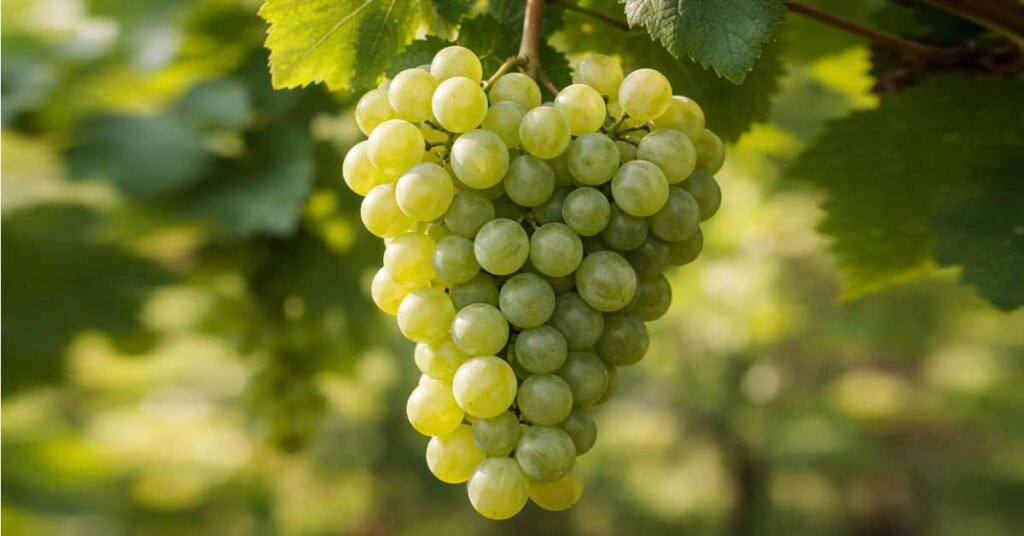
How to Use Grapes in Real Life Without Overthinking It
This is where most people either overcomplicate things or lose consistency. Grapes are simple, but the way you use them can quietly shift their impact.
You do not need a strategy that feels like a nutrition plan. You need something that fits into how you already eat. If it requires effort, tracking, or strict timing, it will not last. Grapes work best when they become automatic.
There is also a practical side to this. Not all forms of grapes behave the same once they are processed, stored, or concentrated. The differences are not trivial, especially if your focus is circulation and heart health.
Fresh vs Dried vs Juice: What Changes Nutritionally
Start with the baseline. Fresh grapes.
Fresh grapes give you the full package:
- Water content that slows how quickly sugars are absorbed
- Fiber that supports digestion and moderates blood sugar response
- Polyphenols concentrated in the skin
- A relatively low energy density per serving
This combination matters. It creates a slower, more balanced metabolic response. That is part of why fresh grapes are easy to integrate daily without much downside.
Now compare that with dried grapes, commonly known as raisins.
When grapes are dried:
- Water is removed
- Sugars become concentrated
- Portion size shrinks while calorie density increases
- Some polyphenols remain, but their balance can shift
A small handful of raisins can contain the same sugar as a much larger portion of fresh grapes. That does not make them “bad,” but it changes how you use them.
Raisins work better as an addition rather than a standalone snack. Think small amounts mixed into meals, not something you eat mindlessly by the handful.
Grape juice is where the shift becomes more significant.
With juice:
- Fiber is almost entirely removed
- Sugar becomes rapidly absorbable
- Portion sizes tend to increase without much awareness
- Some polyphenols remain, but the structure of the food is lost
The absence of fiber changes everything. The body processes juice faster, which affects blood sugar and satiety. It is easy to drink the equivalent of several servings of grapes in minutes.
If your goal is to support circulation and heart health through consistent intake, juice is less effective compared to whole grapes.
A simple hierarchy that reflects real world use:
- Fresh grapes as the default
- Dried grapes in small, controlled amounts
- Juice as an occasional addition, not a staple
That keeps things grounded without turning food into a set of rigid rules.
Simple, Practical Ways to Eat More Grapes
The biggest barrier is not availability. It is friction. If grapes are not easy to grab, they will not be eaten.
Start with small adjustments that fit into what you already do.
Keep grapes visible and ready. Washed, in a container, at eye level in the fridge. This sounds basic, but it changes behavior. If they are hidden, you will forget them.
Use grapes as a replacement, not an addition. Instead of adding more calories to your day, swap them in:
- Replace processed snacks with a bowl of grapes
- Use grapes instead of desserts a few times per week
- Add grapes to breakfast instead of reaching for something packaged
Pairing works well too. Grapes combine easily with other foods:
- Yogurt and grapes for a quick breakfast
- A handful of grapes with nuts for a balanced snack
- Added to salads for texture and contrast
- Alongside cheese for a simple, satisfying plate
Freezing grapes is another option that people often overlook. Frozen grapes change texture. They become firmer, slightly icy, and slower to eat. That alone can help with portion control while still feeling like a treat.
If you prefer structure, keep it simple. No need for meal plans. Just anchor grapes to moments in your day:
- Mid morning snack
- Afternoon energy dip
- Something light after dinner
Repeat that pattern and it becomes automatic.
Portion Size, Frequency, and Consistency
This is where people tend to overthink things. Exact grams. Exact timing. None of that is necessary.
A practical portion of grapes is roughly one handful. For most people, that falls around 100 to 150 grams. If you want a simple way to verify:
- 1 cup of grapes is about 150 grams
- That provides roughly 100 to 110 calories
You do not need to measure this every time. Use it once to calibrate your eye, then move on.
Frequency matters more than precision.
Eating grapes once a week in large amounts will not create the same effect as eating smaller portions regularly. The mechanisms tied to grapes and circulation depend on repeated exposure.
A realistic pattern looks like:
- One serving of grapes most days
- Occasionally two servings if it fits naturally
- No need to compensate or adjust aggressively
Consistency beats intensity.
There is also context to consider. Grapes are part of your overall diet. Their effect depends on what surrounds them. If the rest of your intake is heavily processed and inconsistent, grapes will not offset that.
But in a reasonably balanced pattern, they contribute in a meaningful way.
What tends to go wrong
A few patterns show up often:
- Overreliance on juice because it feels convenient
- Eating large amounts of raisins without realizing how concentrated they are
- Treating grapes as a short term “health fix” instead of a habit
- Ignoring portion awareness because they feel harmless
None of these are extreme mistakes, but they reduce the long term benefit.
The fix is simple. Keep grapes close to their original form. Eat them regularly. Avoid turning them into something complicated.
Keep it simple enough to repeat
The real value of grapes is not in a perfect plan. It is in how easily they fit into daily life.
You want a setup where:
- Grapes are always available
- Eating them requires no decision making
- Portions stay naturally reasonable
- The habit repeats without effort
That is how small dietary choices start to influence circulation and heart health over time.
Not through precision. Through consistency.
Best Selling Grapes Related Products




A Daily Habit That Feels Effortless but Adds Up
Most people look for turning points. A specific food. A structured plan. A moment where everything shifts. That is not how long term changes in heart health or circulation tend to happen.
What actually moves the needle is repetition. Small actions that are easy enough to keep doing, even on days when you are distracted, busy, or not particularly motivated.
Grapes fit into that model almost perfectly.
They do not require preparation. They do not need a recipe. You are not committing to anything when you eat them. That lack of friction is what makes them useful, not just nutritionally, but behaviorally.
If something feels effortless, you repeat it. If you repeat it, it starts to matter.
Why simple habits tend to work better
There is a pattern you can observe in real life. The more steps a habit requires, the more likely it is to break.
Compare these two:
- Planning a specific “healthy snack” every day, preparing it, timing it
- Reaching into the fridge and grabbing a handful of grapes
One of these depends on energy and attention. The other does not.
Grapes fall into the second category. That is why they tend to stick.
This matters because the benefits linked to grapes and circulation are not immediate. They depend on consistency. If you only eat grapes occasionally, nothing meaningful builds. If you eat them regularly, even in small amounts, you create steady input over time.
That is the difference between intention and outcome.
Building the habit without thinking about it
The goal is not to “remember” to eat grapes. The goal is to remove the need to remember.
A few small adjustments make that easier:
- Keep grapes washed and visible in the fridge
- Store them at eye level, not hidden in a drawer
- Place them near foods you already reach for
This changes behavior without effort. You see grapes, you eat grapes. No decision required.
You can also anchor grapes to existing routines. This works better than creating new habits from scratch.
For example:
- After lunch, instead of something processed, you reach for grapes
- During an afternoon break, grapes replace whatever is closest
- In the evening, grapes become the default light option
These are not strict rules. They are patterns. Over time, they become automatic.
What consistency actually looks like
Consistency does not mean perfection. It means frequency.
A realistic approach:
- Grapes most days, not every single day
- One portion at a time, not large amounts
- No need to compensate if you skip a day
If you want a simple way to quantify it:
- One handful of grapes per day
- Around 100 to 150 grams
- Repeated across the week
Over 7 days, that adds up to roughly 700 to 1,000 grams of grapes.
That number is not a target you need to track daily. It just shows how small amounts accumulate over time.
This is how dietary patterns form. Not through large, isolated actions, but through repeated, moderate intake.
Why grapes are easy to sustain long term
Some foods are healthy but difficult to maintain. They require cooking, planning, or specific timing. Grapes avoid all of that.
They offer:
- Immediate accessibility
- Natural portion control through their form
- A balance of sweetness and freshness
- No preparation barrier
That combination increases adherence. And adherence is what determines whether something has any real impact.
You are far more likely to eat grapes regularly than to maintain a complex dietary change.
There is also flexibility. Grapes can fit into different contexts without friction:
- At home, straight from the fridge
- At work, as a quick snack
- After meals, as something light
- Alongside other foods without changing the meal structure
This adaptability makes the habit resilient. It does not depend on perfect conditions.
The long term effect people underestimate
When you look at a single serving of grapes, it feels insignificant. It is just a handful. Easy to dismiss.
But over time, that repeated intake becomes consistent exposure to:
- Polyphenols that interact with oxidative processes
- Compounds that support endothelial function
- Nutrients that contribute to overall dietary balance
None of these act in isolation. They build gradually.
If you maintain the habit for months, the cumulative intake becomes meaningful. Not because each serving is powerful, but because the pattern is stable.
This is the part most people overlook. They expect visible results quickly. When that does not happen, they stop.
But the effect of grapes on circulation and heart health is not something you feel day to day. It is something that supports how your body functions over time.
Keeping expectations grounded
It is important to stay realistic.
Grapes are not a solution on their own. They do not override other habits. They do not compensate for a diet that is consistently unbalanced.
What they do offer is support.
- Support for vascular function through consistent intake
- Support for managing oxidative stress at a dietary level
- Support for maintaining a pattern that favors long term health
That is enough. It does not need to be more than that.
Make it so easy you cannot skip it
If there is one practical takeaway, it is this:
Lower the effort until the habit becomes automatic.
- Buy grapes regularly without thinking about it
- Prepare them once so they are ready to eat
- Keep portions simple and repeatable
No tracking. No optimization. No pressure.
Just a small action that happens often enough to matter.
That is how grapes move from being “just a fruit” to something that quietly supports circulation and heart health over time.
Article Sources
At AncientHerbsWisdom, our content relies on reputable sources, including peer-reviewed studies, to substantiate the information presented in our articles. Our primary objective is to ensure our content is thoroughly fact-checked, maintaining a commitment to accuracy, reliability, and trustworthiness.
- Castilla, P., Echarri, R., Dávalos, A., Cerrato, F., Ortega, H., Teruel, J. L., Lucas, M. F., Gómez-Coronado, D., Ortuño, J., & Lasunción, M. A. (2006). Concentrated red grape juice exerts antioxidant, hypolipidemic, and antiinflammatory effects in both hemodialysis patients and healthy subjects. The American Journal of Clinical Nutrition, 84(1), 252–262. https://doi.org/10.1093/ajcn/84.1.252
- Chiva-Blanch, G., Urpi-Sarda, M., Llorach, R., Rotches-Ribalta, M., Guillén, M., Casas, R., Arranz, S., Valderas-Martínez, P., Portolés, O., Corella, D., Salas-Salvadó, J., Lamuela-Raventós, R. M., Estruch, R., & Andrés-Lacueva, C. (2013). Differential effects of polyphenols and alcohol of red wine on the expression of adhesion molecules and inflammatory biomarkers related to atherosclerosis. The American Journal of Clinical Nutrition, 97(4), 660–670. https://doi.org/10.3945/ajcn.112.051300
- Dohadwala, M. M., Hamburg, N. M., Holbrook, M., Kim, B. H., Duess, M. A., Levit, A., Titas, M., Chung, W. B., Vincent, F. B., Caiano, T. L., Frame, A. A., Keaney, J. F., & Vita, J. A. (2010). Effects of concord grape juice on ambulatory blood pressure in prehypertension and stage 1 hypertension. The American Journal of Clinical Nutrition, 92(5), 1052–1059. https://doi.org/10.3945/ajcn.2010.29986
- Hodgson, J. M., Croft, K. D., Puddey, I. B., Mori, T. A., & Beilin, L. J. (2006). Effects of tea and flavonoid intake on cardiovascular disease risk factors. Molecular Aspects of Medicine, 27(1), 87–107. https://doi.org/10.1016/j.mam.2005.12.002
- Kar, P., Laight, D., Shaw, K. M., & Cummings, M. H. (2009). Flavonoid rich grape seed extract: A new approach in high cardiovascular risk patients? International Journal of Clinical Practice, 63(10), 1474–1483. https://doi.org/10.1111/j.1742-1241.2009.02175.x
- Lamuela-Raventós, R. M., Romero-Pérez, A. I., Andrés-Lacueva, C., & Tornero, A. (1995). Review: Health effects of cocoa flavonoids. Food Chemistry, 65(2), 161–170. https://doi.org/10.1016/S0308-8146(99)00060-9
- Manach, C., Scalbert, A., Morand, C., Rémésy, C., & Jiménez, L. (2004). Polyphenols: Food sources and bioavailability. The American Journal of Clinical Nutrition, 79(5), 727–747. https://doi.org/10.1093/ajcn/79.5.727
- National Institutes of Health. (2022). Polyphenols: What they are and how they support health. https://ods.od.nih.gov/factsheets/Polyphenols-HealthProfessional/
- Pojer, E., Mattivi, F., Johnson, D., & Stockley, C. S. (2013). The case for anthocyanin consumption to promote human health: A review. Comprehensive Reviews in Food Science and Food Safety, 12(5), 483–508. https://doi.org/10.1111/1541-4337.12024
- Rasines-Perea, Z., & Teissedre, P. L. (2017). Grape polyphenols’ effects in human cardiovascular diseases and diabetes. Molecules, 22(1), 68. https://doi.org/10.3390/molecules22010068
- U.S. Department of Agriculture. (2023). FoodData Central: Grapes, raw. https://fdc.nal.usda.gov/fdc-app.html#/food-details/1102651/nutrients
- World Health Organization. (2020). Healthy diet. https://www.who.int/news-room/fact-sheets/detail/healthy-diet
- Zern, T. L., & Fernandez, M. L. (2005). Cardioprotective effects of dietary polyphenols. The Journal of Nutrition, 135(10), 2291–2294. https://doi.org/10.1093/jn/135.10.2291

- Chayote: Mild Squash for Fiber and Heart Health - March 25, 2026
- Cantaloupe: Hydrating Melon for Eye Health and Vitamin A - March 25, 2026
- Pomegranate: Fruit for Heart Health and Antioxidants - March 25, 2026