
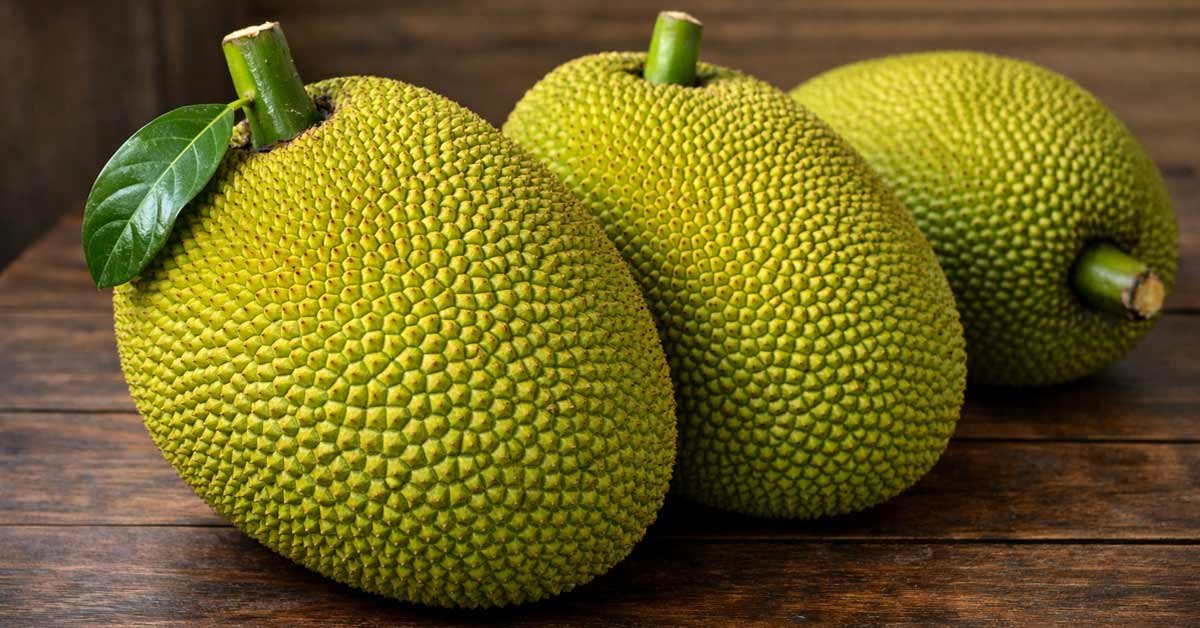
The Quiet Power of a Fruit That Actually Fills You Up
You don’t usually expect much from fruit. Something sweet, maybe refreshing, easy to eat and just as easy to forget. That’s the general deal. But jackfruit doesn’t quite follow that script. It sits somewhere between a snack and a real meal, the kind of food that makes you pause halfway through and realize you’re no longer looking for anything else to eat.
The first time you cut into a ripe jackfruit, it’s a bit of an experience. The smell is unmistakable. Sweet, dense, almost overwhelming at first. The texture surprises you even more. Not watery like most fruits, not soft in a forgettable way. It has structure. You chew it. You notice it. That alone changes how you interact with it. You don’t rush through jackfruit.
And that’s where things start to shift.
Table of Contents


Most people move through their day in a constant loop of quick hunger and quick fixes. A pastry in the morning. Something packaged in the afternoon. Maybe a proper meal later if there’s time. The problem isn’t just what’s being eaten. It’s what’s missing. Fiber is usually the first thing to disappear, and with it goes any sense of lasting fullness or steady energy.
Jackfruit quietly fills that gap.
It’s not marketed as a performance food. It doesn’t come with bold claims or dramatic before-and-after stories. But sit down with a bowl of jackfruit and pay attention to what happens next. You don’t feel that immediate drop-off in energy. You’re not reaching for something else ten minutes later. There’s a kind of calm satisfaction that builds slowly, almost unnoticed.
That feeling comes down to how jackfruit is built. It carries a mix of natural sugars, water, and a meaningful amount of fiber. Not in extreme quantities, not in a way that feels forced. Just enough to change the pace of digestion. Instead of everything hitting your system at once, it stretches the experience out. You feel it in the background rather than in a sudden spike.
And that matters more than most people think.
When your food digests too quickly, you’re constantly resetting. Hunger comes back faster. Energy dips harder. You end up eating again, often without realizing why. Jackfruit tends to slow that cycle down. It gives your body something to work through, something that lasts a bit longer.
There’s also a practical side to it. Jackfruit is flexible in a way many fruits aren’t. You can eat it fresh, straight from the pod, sticky fingers and all. You can toss it into a bowl with yogurt or oats and suddenly breakfast feels more substantial. Even in savory dishes, especially when unripe, jackfruit holds its own with a texture that feels closer to a proper dish than a side note.
But what stands out most isn’t versatility. It’s how grounded it feels.
There’s no need to measure anything. No need to pair it perfectly or time it down to the minute. You eat jackfruit, and it does what real food is supposed to do. It satisfies. It holds you over. It fits into your day without demanding attention.
That’s rare.
Some foods promise energy but deliver a short burst followed by a crash. Others claim to support digestion but feel like a chore to eat consistently. Jackfruit sits somewhere in between. It’s easy to come back to, and over time, that consistency starts to show in subtle ways.
You might notice:
- Fewer sudden hunger spikes between meals
- A more stable feeling of energy throughout the day
- Less reliance on quick snacks that don’t really satisfy
- A more predictable digestion pattern
None of this feels dramatic. And that’s exactly the point.
The real value of jackfruit isn’t in a single serving. It’s in how it fits into your routine without friction. The kind of food you don’t have to convince yourself to eat. The kind that becomes familiar, almost automatic.
There’s also something worth saying about how it slows you down, just a little. Between opening it, pulling apart the segments, and dealing with the sticky texture, you naturally eat more deliberately. That alone can change how full you feel. You’re more aware of what you’re eating, and your body has time to catch up.
In a way, jackfruit brings you back to a simpler way of eating. Not restrictive. Not complicated. Just intentional enough to make a difference.
And maybe that’s why it stands out.
Not because it does anything extreme, but because it does a few basic things really well. It fills you up. It supports a steady sense of energy. It fits into real life without needing adjustments or rules.
You don’t have to build a system around it. You just have to eat it often enough to notice what it does.
Why Jackfruit Stands Out in a Fiber-Starved Diet
There’s a quiet pattern in how most people eat now. Meals look full on the surface, but when you break them down, something important is missing. Fiber rarely shows up in meaningful amounts. It’s been stripped out, refined away, or simply replaced with convenience. And the result is predictable. You eat, but you’re not satisfied. You feel full for a moment, then oddly empty not long after.
This is exactly where jackfruit starts to make sense.
It doesn’t try to compensate with intensity. It doesn’t rely on high protein claims or engineered formulas. Instead, jackfruit brings something back that’s been slowly disappearing from everyday food. Fiber that actually does something you can feel. Not in a clinical way, but in how your day unfolds after you eat.
What’s interesting is how quickly you notice the difference when you swap low-fiber snacks with something like jackfruit. The gap between meals stretches. The urge to snack becomes less urgent. It’s not about eating less. It’s about needing less.
A Closer Look at Its Fiber Content
Jackfruit isn’t the highest-fiber food you can find, and that’s part of its appeal. It sits in a balanced range that works in real life. According to standard nutritional data, 100 grams of raw jackfruit provides around 1.5 to 3 grams of dietary fiber, depending on ripeness and variety. That may not sound impressive at first glance, but context matters.
Most ultra-processed snacks people rely on during the day often contain close to zero meaningful fiber. A typical pastry, a handful of crackers, or a sugary bar might give you quick calories, but almost nothing that slows digestion or supports satiety.
Now compare that to a realistic portion of jackfruit. Let’s say you eat about 250 grams, which is easy to reach without forcing it.
Calculation:
- 100 g jackfruit ≈ 2 g fiber (average)
- 250 g jackfruit ≈ 5 g fiber
That’s already a noticeable contribution toward the general daily recommendation of around 25 to 30 grams for adults, based on guidelines from organizations like the World Health Organization and other public health bodies.
But numbers alone don’t tell the full story.
Jackfruit contains both soluble and insoluble fiber. Soluble fiber absorbs water and forms a gel-like consistency during digestion. This slows how quickly food moves through your system. Insoluble fiber adds bulk, helping maintain a more regular digestive rhythm. You don’t need extreme amounts of either to notice the effect. What matters is consistency.
And jackfruit makes consistency easy.
How Fiber Shapes Digestion in Real Life
Most conversations about digestion stay stuck in theory. Terms like gut health and microbiome get thrown around without much connection to what you actually feel day to day. But digestion, when it’s working well, is very noticeable in a simple way. It feels predictable.
You eat, and a few hours later, you’re hungry again. Not urgently, not desperately. Just ready for the next meal. There’s no bloating that lingers for hours. No heavy feeling that slows you down. No sudden swings between extremes.
Fiber plays a central role in that rhythm.
When you eat jackfruit regularly, even in moderate amounts, a few subtle shifts tend to happen:
- Meals feel more complete, even without increasing portion size
- Hunger signals become more spaced out and easier to recognize
- The digestive process feels smoother, less rushed and less stalled
- You stop thinking about food as frequently between meals
It’s not dramatic. There’s no sharp before-and-after moment. It’s more like things settle into place.
One practical example. Imagine your usual afternoon. You grab something quick, maybe a low-fiber snack. It satisfies you for a short window, then your energy drops, and hunger creeps back in. Now swap that with a portion of jackfruit. Same calories, roughly speaking, but a different outcome. You’re not immediately looking for something else. Your body has something to work with.
That’s fiber doing its job quietly.
Another point worth noting is how fiber interacts with hydration. Jackfruit has a high water content, which works alongside its fiber to support digestion. Fiber alone, without enough fluid, can feel heavy. Combined with naturally hydrating food, it tends to move more comfortably through the system.
This is where whole foods start to outperform isolated nutrients. You’re not just getting fiber. You’re getting it in a form your body recognizes and handles well.
The Difference Between Whole Fruit and Processed Snacks
On paper, many processed foods can be adjusted to look comparable. Fiber gets added back in. Labels highlight numbers that seem reassuring. But the experience of eating them tells a different story.
Whole jackfruit behaves differently because of its structure.
When you eat jackfruit, you’re dealing with intact plant cells, natural sugars bound within fiber, and a texture that requires actual chewing. That changes how quickly you eat and how your body processes what you’ve eaten. The release of energy is slower. The feeling of fullness builds gradually.
Processed snacks tend to remove that structure.
Even when fiber is added artificially, the overall matrix of the food is altered. Sugars are more accessible. Digestion speeds up. You get a faster rise in energy, followed by a quicker drop. It’s efficient, but not in a way that supports stability.
There’s also the behavioral side.
Think about how you eat a packaged snack versus how you eat jackfruit. One is automatic. Open, eat, finish. The other requires a bit more attention. You pull apart the pieces, deal with the texture, maybe even slow down without realizing it. That alone affects how full you feel.
And then there’s satisfaction.
Jackfruit has weight to it. Not just physically, but in how it registers as food. It doesn’t feel like filler. It feels like something that counts. That perception matters more than people expect. When your brain recognizes a meal or snack as substantial, it changes how hunger signals show up later.
In a fiber-starved diet, small changes tend to have outsized effects. You don’t need to overhaul everything. You just need to introduce foods that bring back what’s missing.
Jackfruit does that without forcing the issue.
It doesn’t compete with your routine. It fits into it. And over time, that’s what makes the difference.
Jackfruit and Digestion: What You Notice When You Eat It Regularly
There’s a difference between eating something once and actually living with it in your routine. With jackfruit, that difference shows up in subtle ways that build over time. You don’t sit there analyzing it after every bite. You just start noticing that your digestion feels… easier. Less unpredictable. Less demanding.
It’s not a dramatic shift. It’s more like things stop getting in the way.
When jackfruit becomes a regular part of your meals, your body starts to respond to that consistency. The fiber, the water content, the natural sugars, they all work together in a way that feels steady. You’re not forcing your system to adapt to extremes. You’re giving it something it can rely on.
And that reliability is what most people are missing.
How It Interacts with the Gut
The gut doesn’t need perfection. It needs rhythm.
Jackfruit supports that rhythm in a few practical ways. The fiber it contains helps move food through the digestive tract at a more balanced pace. Not too fast, where you feel hungry again almost immediately. Not too slow, where everything feels heavy and stuck.
Part of this comes down to how different types of fiber behave.
- Soluble fiber absorbs water and creates a softer, gel-like consistency during digestion
- Insoluble fiber adds bulk and helps maintain movement through the intestines
Jackfruit brings both into the picture in moderate amounts. That balance matters. Too much of one type, especially all at once, can feel uncomfortable. Jackfruit tends to avoid that problem because it doesn’t overload your system.
There’s also the interaction with gut bacteria to consider. Certain fibers act as fuel for beneficial microbes in the gut. When those microbes are regularly fed, they produce compounds like short-chain fatty acids, which are associated with maintaining the integrity of the gut lining and supporting normal digestive function. This isn’t something you feel directly, but over time, it contributes to a more stable internal environment.
What you do feel is the outcome.
Digestion becomes more predictable. You’re less likely to swing between extremes like sluggishness and urgency. Meals feel like they move through you at a pace that makes sense.
Another detail that often gets overlooked is how jackfruit’s natural composition reduces friction in the digestive process. It’s not overly dense, not overly dry, and not aggressively stimulating. Combined with its water content, it tends to pass through the system without creating that heavy, lingering sensation some foods leave behind.
It’s the kind of food your gut doesn’t have to argue with.
Simple Ways to Add Jackfruit Without Overthinking It
The biggest mistake people make with any healthy food is turning it into a project. Measuring, planning, optimizing every detail until it becomes inconvenient. Jackfruit works best when you keep things simple.
You don’t need a system. You just need a few easy entry points.
Here are some realistic ways people actually use jackfruit:
- Eat it fresh as a standalone snack
A bowl of ripe jackfruit in the afternoon can replace the usual processed options without feeling like a compromise. - Add it to breakfast without changing your routine
Toss a handful into yogurt, oats, or alongside eggs. It adds texture and makes the meal feel more complete. - Use it as a light addition to meals
It works surprisingly well next to savory dishes, especially when you want something that doesn’t feel heavy but still contributes to fullness. - Keep it visible and ready to eat
This sounds minor, but it matters. If jackfruit is already cut and accessible, you’re far more likely to reach for it instead of something packaged.
The key is not to overcomplicate it. You’re not trying to build a perfect diet around jackfruit. You’re just giving your body more opportunities to get the fiber it’s been missing.
Consistency beats precision every time.
Common Mistakes That Cancel the Benefits
Jackfruit does its job well, but like any food, how you use it determines what you get from it. There are a few patterns that tend to reduce or even cancel out the benefits, often without people realizing it.
One of the most common issues is overeating in one sitting.
Because jackfruit tastes sweet and easy to eat, it’s tempting to go well beyond a reasonable portion. Large amounts of fiber, especially if your body isn’t used to it, can lead to discomfort like bloating or a feeling of heaviness. The effect isn’t dangerous, but it defeats the purpose of making digestion feel smoother.
Another mistake is relying on processed forms instead of the whole fruit.
Packaged jackfruit products, especially those with added sugars or heavy processing, don’t behave the same way. The fiber structure can be altered, and the balance between sugar and fiber shifts. What you end up with is closer to a sweet snack than a functional, fiber-rich food.
Pairing also matters more than people expect.
If you combine jackfruit with highly processed, low-fiber foods, the overall effect becomes diluted. For example:
- Eating jackfruit alongside sugary pastries
- Adding it to desserts loaded with refined ingredients
- Using it as a side while the main meal lacks any real fiber
In these cases, jackfruit is still beneficial, but it’s working against the rest of the meal instead of supporting it.
Another subtle mistake is inconsistency.
Eating jackfruit once in a while won’t do much for digestion. The gut responds to patterns, not isolated events. If you go days or weeks without fiber-rich foods and then suddenly add a large portion, your system doesn’t have time to adjust. Regular, moderate intake works better than occasional extremes.
Finally, there’s the expectation problem.
Some people look for immediate, noticeable changes and assume something isn’t working if they don’t feel a difference right away. But digestion doesn’t respond like that. It’s gradual. The benefits show up as stability, not as a sudden shift.
You don’t need to feel something dramatic for jackfruit to be doing its job.
You just need to notice what’s no longer happening. Less discomfort. Fewer fluctuations. A more consistent rhythm.
That’s usually the signal that things are moving in the right direction.
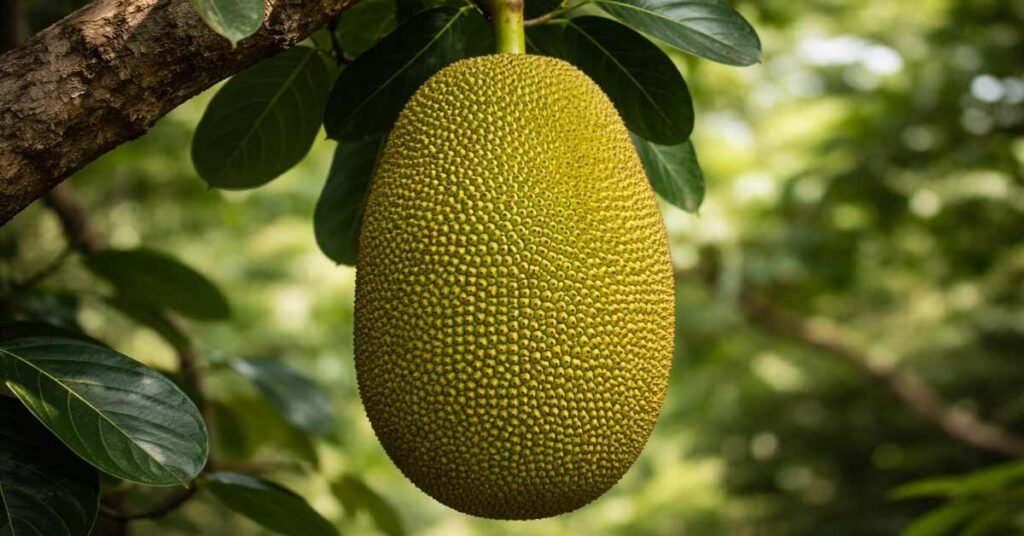
A Natural Source of Energy That Doesn’t Spike and Crash
Energy is one of those words that gets thrown around so casually it almost loses meaning. Everything promises it. Drinks, bars, powders, snacks that barely resemble food anymore. But if you pay attention to how you actually feel during the day, the pattern is obvious. Short bursts, followed by dips. You eat to fix the dip, then repeat the cycle.
Jackfruit doesn’t play that game.
It doesn’t give you that immediate jolt that feels impressive for thirty minutes and then disappears. What it offers is quieter. More stable. The kind of energy that lets you move through your day without constantly thinking about your next snack.
You notice it more by what’s missing than by what’s added. No sudden crashes. No urgent hunger right after eating. Just a steady baseline that holds.
What “Energy” Really Means in Daily Nutrition
Most people think of energy as something you feel instantly. A boost. A lift. But in practical terms, energy is about how consistently your body can keep going without interruption.
That consistency depends largely on how your body processes carbohydrates. Foods that break down quickly release glucose into the bloodstream at a fast rate. That creates a sharp rise in energy, but it also triggers a faster drop. You feel it as fatigue, lack of focus, or the need to eat again.
On the other hand, foods that digest more slowly tend to support a more even release of glucose. The result is less dramatic, but far more useful in real life.
Jackfruit falls into that second category.
It contains natural sugars, mainly fructose and glucose, but they come packaged with fiber and water. That combination changes how your body handles them. Instead of hitting your system all at once, the release is stretched over time.
You don’t feel a spike. You feel sustained availability.
That’s the difference between chasing energy and actually having it.
The Role of Natural Sugars and Fiber Together
Sugars on their own aren’t the problem. The issue is how isolated they’ve become in modern food. When sugars are stripped away from their original context and consumed without fiber, they move through the body quickly. Absorption is rapid. Blood glucose rises fast, then falls just as quickly.
Jackfruit avoids that pattern because its sugars are still embedded within the structure of the fruit.
Let’s look at a typical portion again.
- 100 g jackfruit contains around 19 g of carbohydrates
- Of that, roughly 15 to 16 g are natural sugars
- The same portion provides about 2 g of fiber
If you scale that to a more realistic serving of 250 g:
- Carbohydrates ≈ 47 to 48 g
- Sugars ≈ 38 to 40 g
- Fiber ≈ 5 g
At first glance, that sugar content might seem high. But the presence of fiber changes the outcome. Fiber slows gastric emptying and reduces the rate at which sugars are absorbed in the small intestine. This leads to a more gradual increase in blood glucose rather than a sharp spike.
In simple terms, fiber acts like a buffer.
It doesn’t eliminate the energy from sugars. It controls the speed at which that energy becomes available. That’s what creates a steadier experience.
There’s also the chewing factor. Jackfruit requires more effort to eat than liquid or highly processed foods. That slows intake, giving your body more time to register fullness and begin digestion. It sounds small, but it has a measurable effect on how energy is perceived after eating.
Another detail is hydration. Jackfruit has a high water content, which supports overall metabolic processes and helps prevent that heavy, sluggish feeling that sometimes follows dense meals.
When you put it all together, the effect is consistent:
- Energy rises gradually
- It stays more stable over time
- The drop is less noticeable
That’s what people often describe as “feeling better,” even if they don’t connect it directly to what they ate.
When to Eat Jackfruit for the Best Energy Support
Timing isn’t everything, but it does influence how noticeable the benefits are. Jackfruit works well in several parts of the day, depending on what you need.
Morning is one of the most practical options.
After an overnight fast, your body is more sensitive to how quickly energy becomes available. Starting your day with something that releases energy gradually can set a more stable tone. Adding jackfruit to breakfast, whether alongside protein or on its own, can help avoid that mid-morning crash that often follows low-fiber, high-sugar options.
Pre-activity is another good window.
If you need energy before a walk, a workout, or even a mentally demanding task, jackfruit provides a source of carbohydrates that won’t feel too heavy. Because it digests at a moderate pace, it gives you usable energy without the discomfort that can come from heavier meals.
Midday is where jackfruit tends to stand out the most.
This is when many people experience a noticeable drop in energy. Lunch might not be enough, or it might have been too refined to last. A portion of jackfruit in the early afternoon can bridge that gap. Instead of reaching for something quick and processed, you’re giving your body something that actually extends your energy window.
Evening use depends more on individual preference.
For some, a small portion of jackfruit can work as a light, satisfying option that doesn’t feel overly heavy. For others, especially if eaten in large amounts, the natural sugars might feel too stimulating late in the day. This isn’t a strict rule, but it’s something you notice over time.
A few practical patterns tend to work well:
- Morning: combine jackfruit with protein for a balanced start
- Midday: use it to prevent energy dips between meals
- Pre-activity: keep portions moderate for steady fuel
- Evening: adjust based on how your body responds
The key is not precision. It’s awareness.
You don’t need to track every gram or calculate exact timing. You just need to notice how your energy behaves after eating jackfruit compared to other options.
That comparison is usually enough to make the choice easier next time.
Best Selling Jackfruit Related Products


When Simple Foods Do More Than Complicated Diets
At some point, eating became complicated.
You start with a basic goal. Feel better. Have more energy. Keep digestion steady. Then suddenly you’re tracking numbers, adjusting ratios, reading labels that feel more like formulas than food. It turns into a system you have to manage instead of something that fits into your life.
And here’s the part most people quietly notice but don’t say out loud. The more complicated it gets, the harder it is to stick with.
That’s where something like jackfruit stands out, not because it’s special in isolation, but because it doesn’t demand anything from you. It doesn’t need a plan. It doesn’t require precision. You just eat it, regularly enough, and let the small effects build.
That approach tends to work better than people expect.
The body responds well to consistency. Not perfection, not extremes. Just repeated, steady input. When you give it fiber-rich, whole foods like jackfruit on a regular basis, digestion stabilizes. Energy becomes more predictable. Hunger signals start making more sense.
No tracking required.
There’s also a mental shift that happens when food becomes simple again. You stop overthinking every decision. You don’t stand in front of the fridge trying to optimize a meal. You reach for something you know works and move on with your day.
Jackfruit fits into that pattern easily.
It’s one of those foods that can quietly replace less useful habits without forcing a complete reset. Instead of removing everything at once, you start adding something that does its job better. Over time, that changes your baseline.
Think about a typical day.
You might not overhaul your meals, but small adjustments add up:
- Swapping a low-fiber snack with jackfruit in the afternoon
- Adding it to a breakfast that used to leave you hungry too soon
- Using it as a simple fallback when you don’t feel like preparing anything complicated
None of these changes feel significant on their own. But repeat them daily, and the effect becomes noticeable. You’re less reactive to hunger. You don’t rely as much on quick fixes. Your energy doesn’t fluctuate as much.
That’s how real progress usually looks. Quiet and cumulative.
There’s also something worth addressing about the idea of “perfect eating.” It sounds appealing, but it rarely holds up in real life. People have schedules, stress, unexpected changes. The more rigid a system is, the easier it is to fall out of it completely.
Simple foods reduce that risk.
Jackfruit doesn’t require ideal conditions. It works whether your day is structured or chaotic. You can eat it on its own, pair it loosely with other foods, or just use it to fill a gap. That flexibility makes consistency possible.
And consistency is where digestion and energy actually improve.
Another point that often gets overlooked is satisfaction. Not just physical fullness, but the sense that what you ate was enough. Many structured diets focus heavily on restriction or optimization, but they miss that basic human response to food.
Jackfruit tends to deliver that sense of “this was enough” without forcing it.
It has texture. It has weight. It takes time to eat. All of that contributes to how your body and mind register the experience. You’re not just consuming calories. You’re having a complete eating moment, even if it’s quick.
Over time, that changes your relationship with food.
You stop chasing intensity. You stop looking for dramatic results. You start noticing stability instead. And once you feel that stability, it becomes easier to maintain than any strict plan.
A few practical ideas tend to reinforce this approach:
- Keep jackfruit available in a ready-to-eat form whenever possible
- Use it to replace, not compete with, less satisfying snacks
- Pay attention to how long it keeps you full compared to other foods
- Let it be simple. No need to turn it into a recipe every time
These are small habits, but they’re repeatable. And repeatable habits are what actually shape outcomes.
There’s no single food that solves everything. That’s not how nutrition works. But some foods make it easier to move in the right direction without friction. Jackfruit is one of them.
It supports digestion without forcing you to think about digestion. It provides energy without making you chase it. It fits into your day without asking for attention.
That’s a rare combination.
When you strip away the noise, most people aren’t looking for something complicated. They’re looking for something that works and keeps working. Something they can come back to without effort.
Simple foods tend to win in the long run for that reason.
Not because they’re better on paper, but because they’re easier to live with. And anything you can live with consistently has a much better chance of actually making a difference.
Article Sources
At AncientHerbsWisdom, our content relies on reputable sources, including peer-reviewed studies, to substantiate the information presented in our articles. Our primary objective is to ensure our content is thoroughly fact-checked, maintaining a commitment to accuracy, reliability, and trustworthiness.
- World Health Organization. (2003). Diet, nutrition and the prevention of chronic diseases. WHO Press. https://apps.who.int/iris/handle/10665/42665
- Slavin, J. L. (2013). Fiber and prebiotics: Mechanisms and health benefits. Nutrients, 5(4), 1417–1435. https://doi.org/10.3390/nu5041417
- Anderson, J. W., Baird, P., Davis, R. H., Ferreri, S., Knudtson, M., Koraym, A., Waters, V., & Williams, C. L. (2009). Health benefits of dietary fiber. Nutrition Reviews, 67(4), 188–205. https://doi.org/10.1111/j.1753-4887.2009.00189.x
- Jenkins, D. J. A., Kendall, C. W. C., Augustin, L. S. A., Franceschi, S., Hamidi, M., Marchie, A., Jenkins, A. L., & Axelsen, M. (2002). Glycemic index: Overview of implications in health and disease. The American Journal of Clinical Nutrition, 76(1), 266S–273S. https://doi.org/10.1093/ajcn/76/1.266S
- U.S. Department of Agriculture, Agricultural Research Service. (2019). FoodData Central: Jackfruit, raw. https://fdc.nal.usda.gov/fdc-app.html#/food-details/169910/nutrients
- Ranasinghe, R. A. S. N., Maduwanthi, S. D. T., & Marapana, R. A. U. J. (2019). Nutritional and health benefits of jackfruit (Artocarpus heterophyllus Lam.): A review. International Journal of Food Science, 2019, 4327183. https://doi.org/10.1155/2019/4327183
- Stephen, A. M., Champ, M. M. J., Cloran, S. J., Fleith, M., van Lieshout, L., Mejborn, H., & Burley, V. J. (2017). Dietary fibre in Europe: Current state of knowledge on definitions, sources, recommendations, intakes and relationships to health. Nutrition Research Reviews, 30(2), 149–190. https://doi.org/10.1017/S095442241700004X
- Mayo Clinic. (2022). Dietary fiber: Essential for a healthy diet. https://www.mayoclinic.org/healthy-lifestyle/nutrition-and-healthy-eating/in-depth/fiber/art-20043983
- Harvard T.H. Chan School of Public Health. (2023). Carbohydrates and blood sugar. https://www.hsph.harvard.edu/nutritionsource/carbohydrates/carbohydrates-and-blood-sugar/

- Star Fruit: Hydrating Fruit for Vitamin C - March 30, 2026
- Sapodilla: Sweet Fruit for Digestion and Energy - March 30, 2026
- Pineapple: Enzyme Rich Fruit for Digestion and Immunity - March 29, 2026