
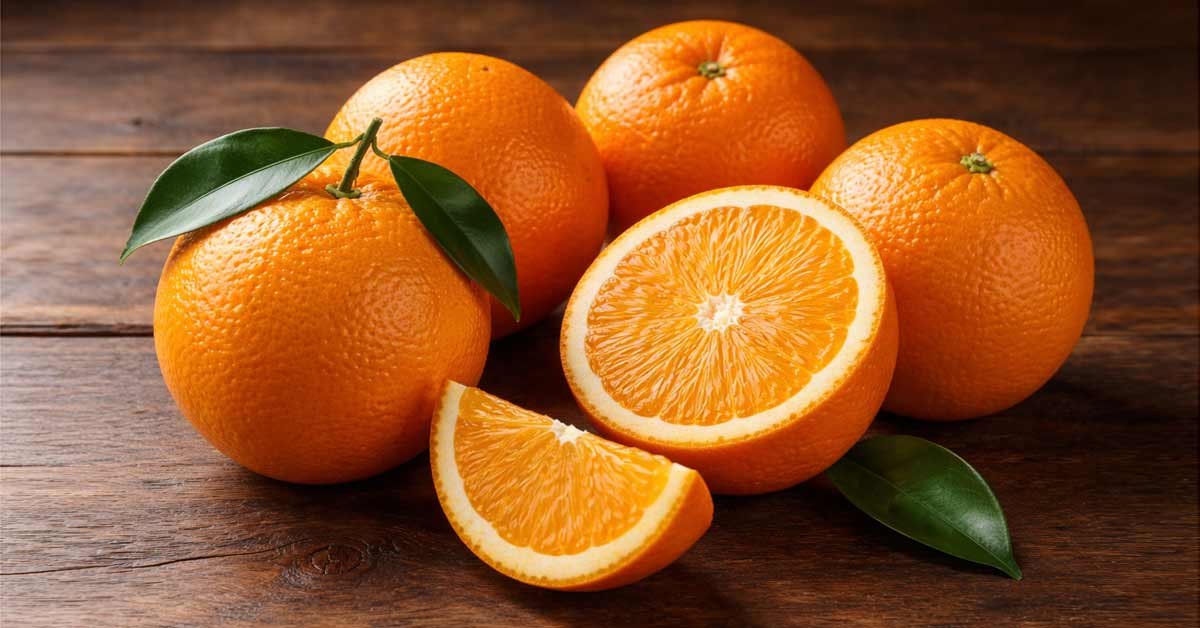
The Quiet Power of a Simple Orange
You probably don’t think twice about an orange. It sits there in a bowl, bright but familiar, easy to overlook. No hype, no complicated preparation, no claims that sound too good to be true. And yet, this simple fruit has quietly held its place in human diets for centuries, not because of trends, but because it works.
There’s something almost grounding about peeling an orange. The scent hits first. Sharp, fresh, unmistakably citrus. Then the texture, the slight resistance of the skin giving way, the neat segments inside. It feels real in a way that packaged foods rarely do. And that matters more than most people realize when thinking about immunity or heart health. Consistency beats intensity every time.
An orange does not try to overwhelm your system. It supports it. That distinction is important.
Table of Contents

When people think about immunity, the conversation often jumps straight to extremes. Supplements, megadoses, quick fixes. But your immune system does not operate on sudden spikes. It responds to steady input. Daily nutrients. Balanced signals. Small, repeated actions. This is where an orange fits naturally into the picture.
At its core, an orange delivers a mix of nutrients that your body already knows how to use:
- Vitamin C in a form that is easily absorbed
- Natural sugars paired with fiber, which slows their impact
- Water content that contributes to hydration
- Plant compounds that interact with oxidative stress
Nothing here is exotic. That is exactly the point.
The same goes for heart health. People tend to associate it with restriction. Less salt. Less fat. Less of everything. But what often gets ignored is what you consistently add. Foods that gently support blood vessels, circulation, and metabolic balance over time. An orange does not solve anything overnight, but it participates in a pattern that your body can rely on.
There is also a practical side that is hard to ignore. You do not need to plan around an orange. You do not need a recipe. You can carry it with you, leave it on your desk, eat it between tasks. That ease removes friction, and when friction is low, habits stick. This is where real change happens, not in perfect plans, but in repeatable actions.
Think about a typical day. You wake up, maybe rush through breakfast or skip it entirely. Lunch is often quick, sometimes heavier than you intended. By the afternoon, energy dips, focus slips. This is where people reach for something convenient. Often processed, often lacking structure. Swapping even one of those moments for an orange seems small, almost insignificant. But done daily, it starts to shift things.
You might notice:
- A steadier kind of energy, not a spike and crash
- Less urge to reach for overly sweet snacks
- A subtle feeling of refreshment, especially mid-day
- A gradual shift in how full or satisfied you feel
These are not dramatic changes. They are the kind that build quietly in the background.
There is also the question of how whole foods behave compared to isolated nutrients. You can take vitamin C as a supplement, and it will do its job to a certain extent. But an orange brings context. Fiber changes how sugars are absorbed. Flavonoids interact with cellular processes. Water content supports digestion and distribution of nutrients. The effect is not just about one compound. It is about how they work together.
This idea often gets lost. Nutrition is not a checklist of isolated numbers. It is a system of interactions. Whole foods tend to respect that system better than anything engineered to replace them.
Another thing worth noticing is how forgiving an orange is. You do not need perfect timing. You do not need to measure it precisely. Whether you eat one in the morning, after a meal, or as a late afternoon reset, it still contributes something useful. That flexibility makes it realistic, and realism is what keeps habits alive.
And then there is taste. It sounds simple, but it matters. The slight balance between sweet and acidic, the way it wakes up your palate, the clean finish. Foods that you actually enjoy are the ones you return to without effort. No discipline required. Just preference.
You could argue that an orange is too basic to make a difference. That real impact comes from more advanced strategies. But when you look closely at how people actually eat day to day, the basics are often what shape long term outcomes. Not because they are powerful in isolation, but because they are consistent.
So instead of asking whether an orange can transform your immunity or heart health, a better question is this: what happens when something this simple becomes part of your daily rhythm?
That is where its quiet power shows up. Not in a single moment, but in the accumulation of many small ones.
Why Orange Still Matters for Immunity
It is easy to reduce the conversation about immunity to a single nutrient. In the case of orange, that nutrient is almost always vitamin C. Fair enough, it is one of the most studied vitamins in relation to immune function. But if you stop there, you miss most of the picture.
An orange works less like a targeted tool and more like a steady input your body can rely on. No spikes. No extremes. Just consistent support that fits into how your immune system actually operates day to day.
Vitamin C and What It Actually Does
Let’s start with what people think they already know.
A medium orange typically provides around 70 mg of vitamin C. The recommended daily intake for most adults sits around 75 mg for women and 90 mg for men. That means one orange gets you very close, sometimes covering it entirely.
But numbers alone do not explain much.
Vitamin C plays several roles that matter for immunity:
- It supports the production and function of white blood cells
- It contributes to the integrity of skin and mucosal barriers
- It acts as an antioxidant, helping reduce oxidative stress
- It helps regenerate other antioxidants inside the body
These functions are not dramatic on their own. They are maintenance tasks. And that is exactly what your immune system needs most of the time.
There is also a common misunderstanding. Taking more vitamin C does not linearly increase immune performance. Your body regulates absorption. Once you reach a certain level, excess is simply excreted. This is why a steady daily intake from foods like orange makes more sense than occasional large doses.
Another detail that often gets ignored is timing. Your immune system does not store large reserves of vitamin C. It depends on regular intake. An orange fits that pattern naturally. You eat it, your body uses what it needs, and the cycle continues the next day.
Beyond Vitamin C: Flavonoids and Antioxidants
If vitamin C were the whole story, supplements would fully replace foods. They do not.
An orange contains a range of plant compounds, especially flavonoids like hesperidin and naringenin. These compounds are less talked about, but they play a role in how your body responds to stress at the cellular level.
Here is where things get more interesting.
Flavonoids contribute to:
- Modulating inflammatory responses
- Supporting vascular function, which affects immune cell movement
- Interacting with signaling pathways involved in immune regulation
This is not about boosting your immune system in a simple sense. It is about balance. Your body needs to respond to threats without overreacting. That balance is where these compounds seem to matter.
Then there is the antioxidant effect. Everyday processes in your body generate reactive molecules. In small amounts, they are normal. In excess, they can interfere with cellular function. The mix of vitamin C and flavonoids in an orange helps manage that load.
Again, nothing extreme. Just steady regulation.
And this is where whole food context matters. Fiber, water, micronutrients, and plant compounds all interact. You are not getting isolated inputs. You are getting a system that your body recognizes.
What Regular Intake Looks Like in Real Life
This is where theory either becomes practical or falls apart.
You do not need a complex plan to get the benefits of an orange. In fact, complexity usually works against consistency.
A realistic pattern might look like this:
- One orange in the morning alongside or after breakfast
- One orange as a mid afternoon reset instead of a processed snack
- A few segments added to a simple salad for variety
That is it. No strict timing. No tracking required.
The key is repetition. Eating an orange once a week does very little. Eating one most days creates a pattern your body can adapt to.
There is also the question of whole fruit versus juice. A whole orange gives you fiber, which slows sugar absorption and supports digestion. Juice removes that structure. It is easier to consume more than you need without noticing.
If you are aiming for steady immune support, the whole fruit tends to make more sense in everyday life.
Another detail that often gets overlooked is context. Pairing an orange with other foods can change how it fits into your day. For example:
- With nuts, it creates a more balanced snack
- After a heavier meal, it can feel refreshing and light
- During busy periods, it offers a quick option that does not require preparation
This is how habits actually stick. Not through strict rules, but through flexibility.
Subtle Signs Your Body Responds Well
People often expect clear, immediate signals when something supports immunity. That expectation usually leads to disappointment.
The effects here are quieter.
You might start to notice small shifts over time:
- You recover from minor fatigue a bit faster
- Your energy feels more stable across the day
- You feel less drawn to overly processed snacks
- Your digestion feels more regular, which indirectly supports immune function
None of these changes prove anything on their own. But together, they reflect a system that is functioning with fewer disruptions.
It is also worth paying attention to how easy the habit feels. If eating an orange becomes automatic, almost effortless, that is a strong indicator you have found something sustainable. And sustainability is what matters most for immunity.
There is no single food that defines how your immune system performs. But patterns do. Daily inputs do. The small choices that repeat without friction tend to shape outcomes more than anything else.
An orange fits into that pattern without demanding attention. It does its job quietly, which is probably why it is so easy to underestimate.
Orange and Heart Health: Small Inputs, Long-Term Effects
Heart health rarely shifts because of one big decision. It moves slowly, shaped by what you do most days without thinking too much about it. That is why foods like an orange tend to matter more than they get credit for. They do not feel powerful in the moment, but they fit into routines that your body responds to over time.
An orange does not act like an intervention. It behaves more like background support. You eat it, your body processes it, and small things happen beneath the surface. Blood pressure adjusts slightly. Digestion changes its rhythm. Circulation responds in subtle ways. None of it is dramatic, but it adds up.
When you look at heart health through that lens, the value of simple, repeatable foods becomes easier to understand.
Potassium and Blood Pressure Balance
A medium orange contains roughly 230 to 250 mg of potassium. That number on its own does not seem impressive. The general daily recommendation sits around 2,600 to 3,400 mg depending on age and sex. So one orange gives you a modest contribution.
But this is where context matters.
Potassium plays a role in regulating fluid balance and how blood vessels respond to pressure. It works in opposition to sodium. When sodium intake is high, potassium helps offset some of its effects by supporting the relaxation of blood vessel walls and encouraging the excretion of excess sodium through urine.
You are not trying to “fix” blood pressure with a single orange. You are contributing to a broader pattern where potassium intake becomes more consistent.
Think about a typical eating pattern that leans heavily on processed foods. Sodium tends to be high, potassium often low. Adding an orange into your day does not eliminate that imbalance, but it starts to shift it.
Over time, small inputs like this can support:
- More stable fluid balance
- Slightly improved vascular tone
- Reduced strain on the circulatory system
Again, subtle. But consistent.
There is also a behavioral side to this. People who eat fruit regularly, including orange, tend to displace less supportive foods without forcing restriction. That alone can influence overall nutrient balance in a meaningful way.
Fiber and Cholesterol Regulation
An orange contains about 3 grams of dietary fiber, much of it soluble fiber in the form of pectin. This is where things get more interesting for heart health.
Soluble fiber interacts with digestion in a way that affects cholesterol metabolism. It binds with bile acids in the gut. Since bile acids are made from cholesterol, this process encourages the body to use circulating cholesterol to produce more bile.
The result is a gradual reduction in certain cholesterol markers when fiber intake is consistently adequate.
No single orange will create a measurable change. But regular intake contributes to a daily fiber total that supports:
- Improved digestion rhythm
- Better regulation of lipid metabolism
- A slower absorption of sugars, which indirectly affects metabolic health
There is also a practical angle here. Many people fall short of recommended fiber intake without realizing it. Adding an orange is one of the simplest ways to close that gap without restructuring your entire diet.
And unlike fiber supplements, an orange brings additional context. Water content, natural sugars, micronutrients, all working together. This combination tends to be easier on digestion and more sustainable over time.
You also feel it. Not in a dramatic way, but in the background. Meals feel more balanced. Fullness lasts a bit longer. Cravings become slightly easier to manage.
Citrus Compounds and Vascular Function
This is the part that rarely gets attention outside of research circles.
Oranges contain bioactive compounds, especially flavonoids like hesperidin. These compounds appear to interact with the inner lining of blood vessels, known as the endothelium.
The endothelium plays a key role in regulating:
- Vessel dilation and constriction
- Blood flow efficiency
- Inflammatory signaling within the vascular system
When endothelial function is supported, circulation tends to operate more smoothly. Blood vessels respond better to changes in demand. Pressure regulation becomes more efficient.
Hesperidin and similar compounds have been studied for their potential to influence these processes. The effects are not immediate or dramatic, but they point toward improved vascular responsiveness over time when intake is consistent.
There is also an antioxidant dimension. Oxidative stress can interfere with normal vascular function. The combination of vitamin C and flavonoids in an orange contributes to managing that stress, helping maintain a more stable internal environment.
This is where the idea of synergy comes back. It is not just one compound doing the work. It is the interaction between multiple components within the fruit.
And importantly, this happens within the context of real food. Not isolated extracts. Not concentrated doses. Just a normal serving that fits into daily life.
What Research Suggests Without Overpromising
It is easy to overstate the effects of individual foods, especially when discussing heart health. That is not useful.
Research on citrus fruits, including orange, tends to show associations rather than guarantees. Regular consumption of fruits rich in vitamin C, potassium, and flavonoids is linked with better cardiovascular markers. That includes aspects like blood pressure regulation, lipid profiles, and vascular function.
But these outcomes depend on patterns, not single inputs.
Clinical studies looking at citrus flavonoids, particularly hesperidin, suggest modest improvements in endothelial function and inflammatory markers under controlled conditions. Observational studies often show that people who consume more whole fruits, including orange, tend to have lower risk of cardiovascular issues over time.
There are limits to what you can conclude from this.
- An orange does not replace broader dietary patterns
- It does not override high stress, poor sleep, or lack of movement
- It does not act as a standalone solution
What it does is contribute to a set of conditions that support heart health.
That distinction matters. It keeps expectations realistic and makes the habit easier to maintain.
If you step back and look at how people actually build better health outcomes, it rarely comes from extreme changes. It comes from small adjustments that hold up over months and years.
Adding an orange to your daily routine is one of those adjustments. It is simple enough to repeat, flexible enough to fit your day, and meaningful enough to support the systems that keep your heart functioning well over time.
Making Orange Part of Your Everyday Eating Habits
This is where things usually fall apart for most people. Not because the food is complicated, but because the approach is. You start with good intentions, maybe even a clear plan, and then real life steps in. Time gets tight. Choices become automatic. Convenience wins.
An orange works precisely because it does not demand much from you.
No prep beyond peeling. No cleanup. No timing rules you have to follow perfectly. That simplicity is not a small detail. It is the reason habits either stick or disappear after a few days.
If you want something to support immunity and heart health in a real, lasting way, it has to fit into your life without friction. That is exactly where an orange holds its ground.
Simple Ways to Eat Orange Without Overthinking It
You do not need to reinvent your meals to include an orange. In fact, trying too hard usually backfires.
Start with moments that already exist in your day.
- Morning: add an orange next to whatever you already eat. Even if breakfast is quick, it takes less than a minute to peel and eat.
- Midday: keep an orange nearby instead of relying on packaged snacks. It is just as convenient once it becomes a habit.
- Afternoon: that point where energy drops and you start looking for something sweet. An orange fits naturally here.
- Evening: after a heavier meal, an orange can feel lighter and more refreshing than dessert.
There is no perfect slot. What matters is repetition.
Some people prefer to slice it and add it to a bowl. Others just peel and eat it standing in the kitchen. Both work. The goal is not presentation. The goal is consistency.
You can also mix things up when you feel like it:
- Toss orange segments into a simple salad
- Add them next to yogurt for contrast in texture
- Pair with a handful of nuts for a more complete snack
But none of this is required. If you rely on variety to stay consistent, fine. If not, keeping it simple usually works better.
Pairing Orange for Better Nutrient Balance
An orange on its own is useful. Paired well, it becomes more balanced.
The natural sugars in an orange are not a problem in most cases, especially because they come with fiber. But pairing it with other foods can make the effect even steadier and more satisfying.
Think in terms of combinations that slow things down and keep you full longer.
For example:
- Orange + almonds or walnuts
You add healthy fats and a bit of protein. This slows digestion and extends satiety. - Orange + plain yogurt
You bring in protein and probiotics, which support digestion and make the snack more substantial. - Orange + a piece of dark chocolate
Not something you hear often, but it works. You balance sweetness with bitterness and make the experience more satisfying, which can reduce the urge to keep snacking. - Orange + a simple meal
Adding orange on the side of a meal can improve overall balance without changing the meal itself.
These combinations are not rules. They are options. The idea is to make the orange fit into what you already do, not build your day around it.
Whole Fruit vs Juice: What Makes More Sense
This is one of those decisions that seems small but changes how the food behaves in your body.
A whole orange contains fiber. That fiber slows how quickly sugars are absorbed. It also supports digestion and contributes to a more gradual release of energy.
Juice removes that structure.
When you drink orange juice:
- Sugar is absorbed faster
- It is easier to consume more than you intended
- Satiety is lower compared to eating the whole fruit
To put it in simple terms, drinking two or three oranges worth of juice takes a minute. Eating two or three whole oranges takes effort. That difference naturally limits intake.
This does not mean juice has no place. It can be useful in certain situations, like after intense physical activity or when you need something quick and easy. But as a daily habit, whole orange tends to make more sense for both immunity and heart health support.
There is also a psychological factor. Eating a whole orange creates a pause. You engage with the food. That small moment can influence how you approach the rest of your eating decisions.
Juice, on the other hand, is easy to consume without thinking.
Portion Size and Frequency That Feel Sustainable
This is where people often overcomplicate things.
You do not need exact measurements or strict limits to benefit from an orange. But having a general sense of what works helps.
For most people, one medium orange per day is a solid baseline. It provides:
- A meaningful amount of vitamin C
- A contribution to daily fiber intake
- A modest amount of potassium
If your routine allows for it, having two oranges in a day is still reasonable, especially if they replace less balanced snacks.
What matters more than the exact number is how it fits into your overall pattern.
Ask yourself:
- Does eating an orange feel easy to repeat tomorrow?
- Does it replace something less supportive in your routine?
- Does it leave you feeling satisfied rather than wanting more?
If the answer is yes, you are in the right range.
There is no benefit in forcing higher intake if it feels like effort. And there is no need to aim for perfection. Missing a day does not undo anything. What counts is the general rhythm over time.
A sustainable approach usually looks like this:
- One orange most days
- Occasionally two, depending on appetite and context
- No pressure to be exact
That kind of flexibility keeps the habit alive.
And that is really the point. An orange is not meant to be a strict rule. It is a simple, reliable addition that supports your system quietly, as long as you keep coming back to it.
Best Selling Orange Related Products



When a Simple Citrus Habit Is Enough
There is a point where doing more stops helping and starts getting in the way. You see it all the time with nutrition. People stack habits, layer supplements, chase precision, and somewhere along the way, they lose the one thing that actually makes a difference: consistency.
An orange does not ask much from you. That is exactly why it works.
If you step back and look at how immunity and heart health are supported in real life, it is rarely about intensity. It is about whether you can maintain a pattern without effort creeping in. A simple citrus habit, like eating an orange most days, sits right in that space. It is small enough to repeat. Meaningful enough to matter.
And for a lot of people, that is enough.
Not perfect. Not optimized. Just enough to create a steady baseline your body can rely on.
There is also a tendency to underestimate simple foods because they feel ordinary. No branding. No sense of urgency. No immediate feedback that tells you something big is happening. But your body does not operate on hype. It responds to what shows up regularly.
An orange shows up easily.
You do not need to schedule it. You do not need to track it. You do not need to adjust your entire diet to make room for it. That low barrier is what allows the habit to survive busy days, travel, stress, and everything else that usually breaks more complicated routines.
Think about what actually holds up over time.
- Foods that are accessible
- Foods that require minimal effort
- Foods you do not get tired of quickly
- Foods that fit into multiple parts of your day
An orange checks all of these without trying.
And when you repeat that choice day after day, small things begin to stabilize in the background. You are getting a consistent intake of vitamin C. You are adding fiber without thinking about it. You are contributing to potassium intake in a quiet way. You are exposing your system to plant compounds that support balance rather than extremes.
None of this stands out in a single moment. But together, it creates a kind of nutritional reliability.
That reliability matters more than occasional bursts of effort.
There is also something to be said about what a simple habit replaces. When you reach for an orange, you are often not reaching for something else. That substitution effect is easy to overlook, but it has real impact over time.
Instead of:
- Highly processed snacks with little structure
- Sugary options that lead to quick crashes
- Foods that leave you wanting more shortly after
You get something that holds you steady.
Again, not dramatically. Just enough to shift the direction.
And that is the pattern you start to notice if you stick with it. You are not chasing results anymore. You are maintaining a baseline that feels stable.
Of course, there are limits.
An orange does not compensate for chronic lack of sleep. It does not override a consistently unbalanced diet. It does not cancel out long periods of inactivity. Expecting that would miss the point entirely.
What it does is support what is already working, and gently improve what is slightly off.
That distinction keeps things realistic.
If the rest of your routine is reasonably balanced, even if not perfect, adding an orange most days is often enough to contribute meaningfully to both immunity and heart health. Not as a solution, but as part of a system that makes sense.
And there is a kind of relief in that.
You do not need to upgrade your approach constantly. You do not need to search for something better every few weeks. Sometimes, the better option is the one you can stick with without thinking about it.
A simple citrus habit fits that role.
You might not notice it day to day. But over time, it becomes part of how you eat, how you choose, how you maintain your energy and balance without effort.
That is usually the point where you stop asking if it is enough.
Because it no longer feels like something extra you are trying to do. It just feels like part of your routine.
Article Sources
At AncientHerbsWisdom, our content relies on reputable sources, including peer-reviewed studies, to substantiate the information presented in our articles. Our primary objective is to ensure our content is thoroughly fact-checked, maintaining a commitment to accuracy, reliability, and trustworthiness.
- Carr, A. C., & Maggini, S. (2017). Vitamin C and immune function. Nutrients, 9(11), 1211. https://doi.org/10.3390/nu9111211
- Grosso, G., Stepaniak, U., Micek, A., Topor-Mądry, R., Pikhart, H., Szafraniec, K., Pająk, A. (2016). Dietary polyphenol intake and risk of hypertension in the Polish arm of the HAPIEE study. European Journal of Nutrition, 55(4), 1535–1544. https://doi.org/10.1007/s00394-015-0970-1
- He, F. J., & MacGregor, G. A. (2012). Increasing potassium intake to reduce blood pressure and cardiovascular risk. Current Opinion in Cardiology, 27(4), 346–351. https://doi.org/10.1097/HCO.0b013e32835465f4
- Hodges, R. E., & Minich, D. M. (2015). Modulation of metabolic detoxification pathways using foods and food-derived components: A scientific review with clinical application. Journal of Nutrition and Metabolism, 2015, 760689. https://doi.org/10.1155/2015/760689
- Liu, S., Manson, J. E., Lee, I. M., Cole, S. R., Hennekens, C. H., Willett, W. C., Buring, J. E. (2000). Fruit and vegetable intake and risk of cardiovascular disease: The Women’s Health Study. The American Journal of Clinical Nutrition, 72(4), 922–928. https://doi.org/10.1093/ajcn/72.4.922
- Nishida, C., Uauy, R., Kumanyika, S., & Shetty, P. (2004). The joint WHO FAO expert consultation on diet, nutrition and the prevention of chronic diseases: process, product and policy implications. Public Health Nutrition, 7(1A), 245–250. https://doi.org/10.1079/PHN2003592
- Rimm, E. B., Katan, M. B., Ascherio, A., Stampfer, M. J., Willett, W. C. (1996). Relation between intake of flavonoids and risk for coronary heart disease in male health professionals. Annals of Internal Medicine, 125(5), 384–389. https://doi.org/10.7326/0003-4819-125-5-199609010-00003
- U.S. Department of Agriculture, Agricultural Research Service. (2019). FoodData Central: Oranges, raw, all commercial varieties. https://fdc.nal.usda.gov/fdc-app.html#/food-details/169097/nutrients
- World Health Organization. (2020). Healthy diet. https://www.who.int/news-room/fact-sheets/detail/healthy-diet
- Zhang, Y., Li, Y., Cao, C., & Wang, Z. (2014). Hesperidin improves endothelial function and reduces inflammatory markers in patients with metabolic syndrome: A randomized controlled trial. Journal of Clinical Biochemistry and Nutrition, 54(2), 97–102. https://doi.org/10.3164/jcbn.13-84

- Orange: Citrus Fruit for Immunity and Heart Health - April 1, 2026
- Lime: Citrus Fruit for Immunity and Digestion - March 31, 2026
- Grapefruit: Citrus Fruit for Heart Health and Vitamin C - March 31, 2026