
A Small Fruit That Does More Than You Expect
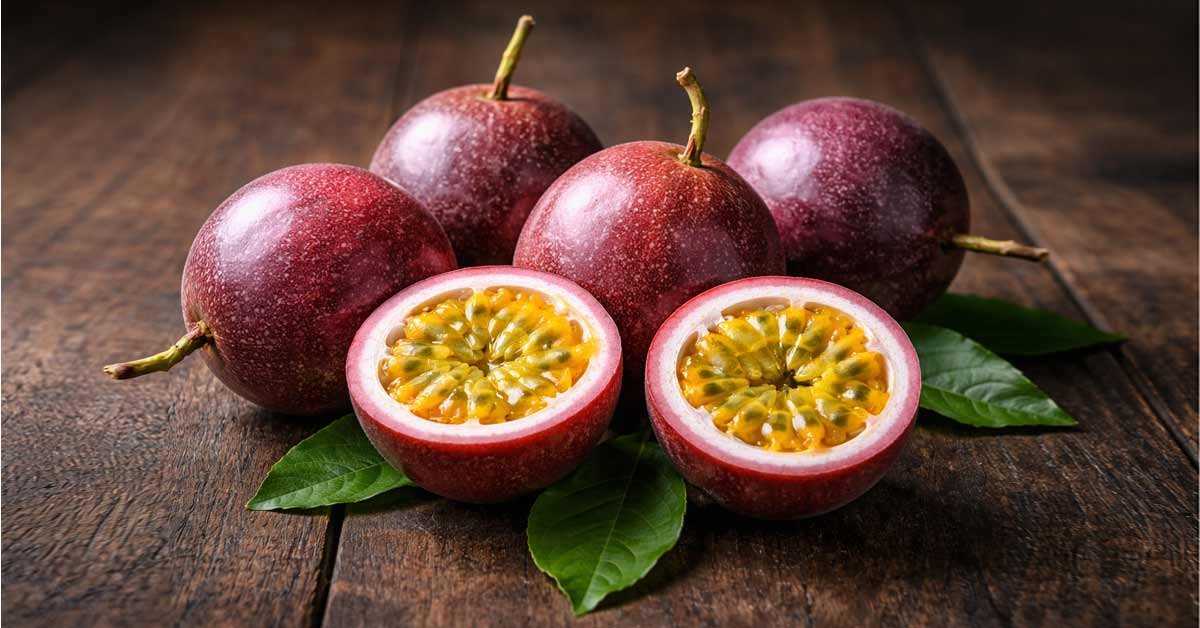
You probably don’t think twice when you see passion fruit sitting quietly between more familiar options like apples or bananas. It’s small. A bit wrinkled sometimes. Not exactly the kind of fruit that screams for attention. But once you cut it open, everything changes. Bright pulp. Crunchy seeds. That sharp, tropical aroma that hits before the first bite. It feels alive in a way that most fruits don’t.
And here’s the thing. Passion fruit is not just interesting from a taste perspective. It’s one of those foods that quietly checks multiple boxes at once. Fibers. Micronutrients. Plant compounds that actually do something inside the body. Not in a dramatic, overnight transformation kind of way. More like a steady influence that builds over time.
Most people underestimate how much a single food can contribute when it shows up consistently. Passion fruit fits into that category. It doesn’t try to replace your entire diet. It just strengthens what’s already there.
Table of Contents


The appeal goes beyond flavor
Let’s be honest. A lot of healthy foods feel like a compromise. You eat them because you “should,” not because you want to. Passion fruit doesn’t fall into that trap.
It brings a combination that’s hard to replicate:
- Natural sweetness with a sharp acidic edge
- A texture that forces you to slow down and actually chew
- A flavor profile that stands out even in small amounts
That last point matters more than it seems. When a food is intense in taste, you don’t need large portions to feel satisfied. That naturally keeps intake balanced without effort.
And because you’re eating the seeds along with the pulp, you’re not just getting flavor. You’re getting structure. That’s where a big part of the fibers come in.
Why fibers here feel different
You’ll often hear that fruits contain fibers, but not all fibers behave the same way in the body. Passion fruit has a mix that creates a noticeable effect when eaten regularly.
When you scoop it out and eat it whole, seeds included, you’re getting:
- Insoluble fibers from the seeds, which add bulk
- Soluble fibers from the pulp, which interact with fluids
That combination is where things get interesting. It doesn’t just “help digestion” in a vague sense. It creates a more predictable rhythm in how your digestive system moves and processes food.
Think about how inconsistent digestion can feel when your meals vary a lot. Some days everything moves fine. Other days feel heavy or slow. Foods like passion fruit can smooth that variability when they become part of your routine.
Small portions, noticeable impact
One of the biggest misconceptions around nutrition is that you need large quantities to see any effect. That’s not always true.
A typical serving of passion fruit is around 2 to 3 fruits. That gives you roughly:
- 4 to 6 grams of fibers
Here’s the simple math:
- Daily recommended fiber intake: about 25 grams for women, 38 grams for men
- 5 grams from passion fruit ÷ 25 grams = 0.2 → 20 percent of a lower daily target
That’s from a very small portion. No cooking. No preparation. No planning beyond cutting it open.
And because it’s easy to pair with other foods, it doesn’t feel like an extra step. You can add it to yogurt, mix it into oats, or just eat it on its own when you want something quick.
The connection to digestion and heart health
This is where things start to connect in a more practical way.
Fibers are not just about digestion. They play a role in how the body handles:
- Nutrient absorption
- Blood sugar response
- Lipid balance
And all of these influence heart health over time.
When digestion works efficiently, you reduce unnecessary strain on the system. When fibers help regulate how nutrients are absorbed, you avoid sharp spikes and drops. Over time, that creates a more stable internal environment.
Passion fruit contributes to this without requiring major changes. It’s not a “solution” on its own. But it’s a reliable piece of the bigger picture.
Real life tends to be messy, not perfect
Nobody eats perfectly every day. Some meals are balanced. Others are rushed. Sometimes you just grab whatever is available.
That’s why foods like passion fruit matter. They fit into imperfect routines.
You don’t need a strict plan to include it. You just need small, repeatable moments:
- A quick snack in the afternoon
- A topping for something you already eat
- A simple addition to breakfast
Over time, these small actions stack up. Not in a dramatic way. In a steady, almost unnoticeable shift.
It earns its place quietly
There’s no hype needed here. Passion fruit doesn’t rely on trends or marketing claims. It holds its value through consistency.
You eat it. You enjoy it. Your body uses what it offers.
That’s really the core of it.
It’s a small fruit. But when you look closer, it brings together fibers, digestion support, and elements that contribute to heart health in a way that feels practical, not forced. And that’s exactly what makes it worth paying attention to.
Why Fiber in Passion Fruit Actually Matters
There’s a tendency to treat fibers like a background detail. Something you know you need, but rarely think about in a practical way. That changes when you start paying attention to how different foods actually behave once you eat them.
Passion fruit stands out here. Not because it contains fibers, but because of how those fibers show up. You don’t have to process it, peel away layers, or remove parts. You scoop it out and eat everything. Pulp and seeds together. That simple act delivers a combination that most fruits don’t offer in the same way.
And when you repeat that over days and weeks, you start to notice something. Digestion feels less unpredictable. Less forced. More consistent.
What Makes Passion Fruit Naturally High in Fibers
The structure of passion fruit is doing most of the work here.
Inside that small shell, you have two main components:
- Juicy pulp that surrounds each seed
- Firm, edible seeds that you chew and swallow
Each part contributes differently.
The pulp contains soluble fibers. These are the ones that interact with water and form a more gel like consistency in the digestive tract. They slow things down just enough to make digestion more controlled.
The seeds, on the other hand, bring insoluble fibers. These do not dissolve. They pass through largely intact, adding physical bulk.
That combination matters. A lot.
Most people get one type of fiber more than the other depending on what they eat. Refined foods often lack both. Some fruits lean heavily toward soluble fibers. Whole grains tend to emphasize insoluble ones.
Passion fruit sits right in the middle. Balanced. No need to overthink ratios or combinations.
From a numbers perspective, it holds up well.
A 100 gram portion of passion fruit provides around 10 grams of fibers.
If you break that down:
- 10 grams ÷ 25 grams daily target = 0.4 → 40 percent of a lower daily recommendation
That’s unusually high for a fruit.
Now consider a realistic portion. Two to three fruits give you about 4 to 6 grams. That still covers a meaningful part of your daily intake without feeling heavy or excessive.
Soluble vs Insoluble Fibers and Their Roles
It helps to understand what each type of fiber is actually doing, because the effects are not abstract. They show up in how your body feels day to day.
Soluble fibers:
- Absorb water and expand
- Form a gel like substance during digestion
- Slow the movement of food through the stomach and small intestine
In practical terms, that leads to:
- A more gradual absorption of nutrients
- Less abrupt shifts in blood sugar
- A feeling of steadiness after eating
Insoluble fibers:
- Do not dissolve in water
- Add volume to what moves through the digestive tract
- Help maintain physical movement in the intestines
What you notice here is different:
- More regular bowel movements
- Less stagnation or heaviness
- A clearer sense of completion after digestion
When both types are present in the same food, the effect is more balanced.
Passion fruit does exactly that. The pulp slows things down where needed. The seeds keep things moving where they should.
You don’t get extremes. No overly slow digestion. No overly fast transit. Just a smoother process overall.
How Fibers Influence Digestion in Real Life
This is where things move from theory to something you can actually observe.
Think about a typical day of eating. Maybe breakfast is quick. Lunch is rushed. Dinner is heavier than planned. That kind of variation puts pressure on your digestive system to constantly adjust.
Fibers act as a stabilizer.
When passion fruit becomes a regular part of your intake, even in small amounts, it can influence digestion in a few consistent ways:
- It improves rhythm
Digestion becomes more predictable. You start to notice fewer extremes between sluggish and overly fast days. - It reduces effort
The body doesn’t have to work as hard to move things along. That translates into less discomfort. - It supports fullness without heaviness
Because soluble fibers expand, they contribute to a sense of satisfaction. But because the portion is small, you don’t feel weighed down. - It creates a better environment in the gut
Some fibers are fermented by gut bacteria. This produces short chain fatty acids, which play a role in maintaining gut lining integrity and overall digestive balance.
That last point tends to be overlooked, but it matters. Digestion is not just about movement. It’s also about interaction. Between food, enzymes, and the microbiome.
Passion fruit feeds into that system quietly.
A quick example from real life
Let’s say you add passion fruit to a simple breakfast. Yogurt, oats, maybe a handful of nuts.
Without fibers, that meal might digest quickly. You feel hungry again sooner. Energy fluctuates.
Add passion fruit, and a few things shift:
- The meal takes longer to break down
- Nutrients are released more gradually
- Fullness lasts longer
No dramatic change. Just a smoother curve.
Now repeat that daily.
That’s where the effect compounds. Not because passion fruit is doing something extreme, but because it’s consistently supporting how digestion is supposed to work.
It’s less about perfection, more about consistency
You don’t need to track fiber intake down to the gram for this to work. What matters is having reliable sources that you actually enjoy eating.
Passion fruit fits that role well.
It doesn’t require preparation. It doesn’t compete with other foods. It complements them.
And over time, that consistency with fibers leads to something most people are actually looking for, even if they don’t phrase it this way.
A digestive system that feels predictable.
Not perfect. Just reliable.
Digestion and Gut Function: What’s Really Going On
Digestion is often reduced to a simple idea. You eat, your body processes, and that’s it. In reality, it’s a layered system. Mechanical breakdown. Enzymatic activity. Microbial interaction. Fluid balance. Movement patterns that need to stay coordinated.
When something feels “off,” it’s usually not one single issue. It’s a mismatch between these processes.
This is where passion fruit becomes more interesting than it first appears. It doesn’t target one isolated mechanism. It interacts with several stages of digestion at once, mostly through its fibers and plant compounds.
And the effect is subtle. You don’t feel a sudden shift. You notice fewer disruptions.
How Passion Fruit Interacts with Digestive Processes
Start with what happens right after you eat passion fruit.
The seeds require chewing. That alone changes the pace of eating. Slower intake means better initial breakdown in the mouth, which sets the tone for everything that follows.
Once in the stomach, soluble fibers from the pulp begin to absorb water. They expand and create a thicker consistency. This has a direct effect on gastric emptying.
Food leaves the stomach more gradually.
That slower release matters because:
- Enzymes in the small intestine have more time to act
- Nutrients are absorbed in a more controlled way
- The digestive system avoids sudden overload
At the same time, insoluble fibers from the seeds remain structurally intact. They do not dissolve or break down easily. Instead, they move forward through the digestive tract, acting almost like a framework.
So you get two parallel effects:
- A slowing influence where digestion benefits from more time
- A structural push where movement needs to continue
This balance is what keeps digestion from swinging between extremes.
There’s also a lesser known detail. Passion fruit contains small amounts of organic acids and bioactive compounds that can stimulate digestive secretions. Not in a strong or irritating way, but enough to support the overall process.
You won’t feel this happening. But over time, it contributes to smoother digestion.
Gut Movement, Regularity, and Comfort
Regularity is one of those things people only think about when it’s inconsistent.
Some days feel effortless. Other days feel delayed, heavy, or incomplete. That variability often comes down to fiber intake and hydration, but also to the type of fibers consumed.
Passion fruit plays a role here because of how its fibers behave physically.
Insoluble fibers:
- Add bulk to intestinal contents
- Stretch the walls of the intestines slightly
- Trigger natural movement signals known as peristalsis
This is not forced movement. It’s the body responding to volume in a normal way.
Soluble fibers:
- Retain water
- Soften the overall mass moving through the intestines
- Reduce friction and resistance
Put those together, and you get a more efficient process.
In practical terms, that can translate into:
- More consistent timing
- Less straining
- A reduced feeling of heaviness after meals
There’s also a comfort aspect that doesn’t get enough attention.
When digestion is irregular, it often creates secondary effects:
- Bloating
- A sense of pressure
- Fluctuating appetite
By supporting a steadier flow, passion fruit can help reduce these sensations over time. Not instantly. But gradually, as the system becomes more predictable.
A small but important detail is hydration. Fibers need water to function properly. Passion fruit contains water, but it works best when part of an overall pattern that includes adequate fluid intake.
Without that, even beneficial fibers can feel less effective.
Microbiome Effects and Fermentation Dynamics
This is where things move into a deeper layer of digestion.
Your gut is not just processing food. It’s hosting a large community of microorganisms. These bacteria interact with what you eat, especially fibers that the body itself cannot digest.
Soluble fibers from passion fruit become a food source for these microbes.
Through fermentation, bacteria break down these fibers and produce compounds called short chain fatty acids. The main ones are:
- Acetate
- Propionate
- Butyrate
These compounds play several roles:
- They provide energy for cells lining the colon
- They help maintain the integrity of the gut barrier
- They influence local inflammation levels
Now, it’s important to stay grounded here. Passion fruit alone is not going to reshape your microbiome. That would require broader dietary patterns.
But it contributes to the environment.
When you regularly include fermentable fibers, you support bacteria that thrive on them. Over time, that can shift the balance toward a more stable microbial ecosystem.
There’s also a pacing effect.
Fermentation produces gas as a byproduct. When fiber intake is inconsistent, this can lead to noticeable bloating. But when intake is steady and moderate, the system adapts.
Passion fruit works well in this context because:
- Portions are naturally small
- Fiber content is significant but not overwhelming
- It’s easy to consume regularly
That combination reduces the likelihood of sudden digestive discomfort while still feeding beneficial processes.
A grounded way to look at it
It’s easy to overcomplicate gut health. There are endless variables, and not all of them are within your control.
What you can control is what you eat repeatedly.
Passion fruit fits into that space as a low effort addition that supports:
- Mechanical digestion through its texture
- Chemical digestion through its interaction with fluids and enzymes
- Microbial activity through fermentable fibers
No single mechanism stands out as dramatic. That’s actually the point.
Digestion works best when multiple small factors align.
Adding passion fruit to your routine doesn’t overhaul the system. It nudges it in the right direction. And when those nudges happen consistently, the overall experience of digestion starts to feel easier, more stable, and less unpredictable.
Passion Fruit and Heart Health: A Practical Perspective
Heart health rarely comes down to one single factor. It’s a combination of how your body handles fats, how your blood vessels respond to pressure, and how well internal systems deal with stress at a cellular level.
That might sound abstract, but it shows up in very real ways. Energy levels. Physical comfort. How steady you feel after meals. Even how your body responds to everyday stress.
Passion fruit fits into this picture in a quiet, supportive way. It doesn’t act like a “superfood fix.” It contributes through three main pathways that are well understood. Fibers, potassium, and plant compounds. Each one plays a different role, but together they create a steady influence over time.
Fibers and Cholesterol Balance Explained
Let’s start with fibers, because this is where passion fruit has a clear advantage.
Soluble fibers, the kind found in the pulp, interact directly with how your body processes lipids. When these fibers reach the digestive tract, they form a gel like structure that binds to bile acids.
Bile acids are made from cholesterol. They help break down fats during digestion.
Here’s the key mechanism:
- Fibers bind to bile acids
- The body excretes part of this complex instead of reabsorbing it
- The liver pulls cholesterol from the bloodstream to produce more bile acids
Over time, this process can influence how cholesterol is managed internally.
To keep it concrete, here’s a simplified breakdown:
- Assume daily fiber intake increases by 5 grams from passion fruit
- Clinical data suggests that each additional 5 to 10 grams of soluble fibers can contribute to measurable reductions in LDL cholesterol over time
This is not immediate. It’s cumulative. It depends on consistency, not occasional intake.
Insoluble fibers also play a supporting role. They improve overall digestive efficiency, which indirectly affects how fats are processed and eliminated.
What matters in real life is not the isolated effect of one fruit, but how it integrates into your daily intake. Passion fruit adds to your total fiber consumption in a way that’s easy to maintain.
Potassium and Vascular Function
Potassium doesn’t get as much attention as it should, especially when talking about heart health.
Its role is straightforward. It helps regulate fluid balance and supports how blood vessels respond to pressure.
When potassium intake is adequate:
- Blood vessels are better able to relax
- Sodium balance is easier to maintain
- Overall vascular tension tends to stay more stable
Passion fruit contains a moderate amount of potassium. Not extreme, but meaningful when combined with other foods.
A 100 gram portion provides roughly 340 milligrams of potassium.
Now put that into context:
- General recommended intake: around 2600 to 3400 milligrams per day
- 340 mg ÷ 2600 mg = 0.13 → about 13 percent of a lower daily target
Again, this comes from a relatively small portion.
But here’s where consistency matters. Potassium works as part of a pattern. You don’t “fix” anything with one serving. You build a baseline over time.
There’s also an interaction worth noting.
High sodium intake is common in modern diets. Potassium helps counterbalance some of sodium’s effects on blood pressure by promoting excretion through urine.
So even modest sources like passion fruit contribute to that balance.
You won’t feel potassium working directly. There’s no immediate sensation. But over time, it supports a more stable vascular environment.
Polyphenols and Oxidative Stress in Circulation
This is the part that tends to get either overhyped or ignored.
Polyphenols are plant compounds that interact with oxidative processes in the body. Oxidative stress happens when there’s an imbalance between reactive molecules and the body’s ability to neutralize them.
In the context of heart health, oxidative stress can affect:
- The integrity of blood vessel walls
- The behavior of circulating lipids
- The overall inflammatory environment
Passion fruit contains several polyphenols, including flavonoids and carotenoids.
What do they actually do?
They act as part of a broader defense system. They help limit the chain reactions that can damage cells and tissues.
To keep it grounded:
- They do not eliminate oxidative stress
- They do not act in isolation
- Their effect depends on regular intake and overall diet quality
But they contribute.
One practical way to think about it is this. Every time you include foods rich in these compounds, you add a small layer of protection. Not a shield. More like reinforcement.
There’s also evidence that polyphenols can support endothelial function. That’s the inner lining of blood vessels. When this lining works well, vessels can expand and contract more efficiently.
That directly affects circulation.
Putting it together in real life
When you look at these mechanisms side by side, a pattern starts to form.
- Fibers influence how lipids are processed
- Potassium supports how blood vessels respond to pressure
- Polyphenols contribute to how the system handles oxidative stress
None of these act instantly. None of them are dramatic on their own.
But they stack.
And that’s where passion fruit earns its place again. It delivers all three in a form that’s easy to include without effort.
You don’t need to redesign your diet around it. You just need to make space for it consistently.
A spoonful added to breakfast. A quick snack during the day. A small addition that repeats often enough to matter.
That’s how heart health is actually supported in practice. Not through extremes, but through steady inputs that the body can rely on.
Passion fruit fits into that rhythm without asking for much in return.
Best Selling Passion Fruit Related Products




A Simple Habit That Quietly Improves Your Routine
There’s a gap between what people know they should do and what they actually keep doing. That gap is where most habits fail. Not because they’re wrong, but because they ask for too much change at once.
Passion fruit works differently. It slips into your routine without friction. No preparation beyond cutting it open. No planning around it. No need to build meals around it.
And that’s exactly why it works.
The goal is not to “add passion fruit” as a task. The goal is to anchor it to something you already do.
Start with what already exists
Look at your day as it is, not as you wish it were.
You probably already have a few consistent moments:
- Breakfast, even if it’s quick
- A mid day break
- Something small in the evening
That’s where passion fruit fits best.
Not as a replacement. As an addition.
For example:
- You already eat yogurt → add one passion fruit on top
- You already have oats → mix in the pulp and seeds
- You already snack → swap one processed option for two fresh fruits
No new habit. Just a small adjustment.
That distinction matters. Because the brain resists new systems, but accepts modifications to existing ones much more easily.
Keep the portion realistic
There’s a tendency to overdo things at the beginning. More effort, more volume, more “discipline.” That usually fades within days.
A consistent intake of passion fruit looks simple:
- 2 to 3 fruits per day
- Around 4 to 6 grams of fibers
That’s enough to contribute meaningfully without becoming repetitive or tiring.
Let’s keep the math clear:
- If your daily fiber target is 25 grams
- And you get 5 grams from passion fruit
- 5 ÷ 25 = 0.2 → 20 percent of your daily intake
You’re covering a significant portion with a very small action.
Now combine that with other foods you already eat. Vegetables, whole grains, nuts. The total adds up without needing to track every gram.
Make it feel natural, not forced
Habits that last tend to feel almost invisible.
You’re not thinking, “I need to eat this for digestion or heart health.” You’re just eating something you enjoy.
That’s where passion fruit has an advantage.
It brings:
- Strong flavor, so small amounts feel satisfying
- Texture, which makes eating more engaging
- Variety, especially if your diet feels repetitive
You don’t need to convince yourself to eat it. You just need to make it accessible.
Keep it visible in your kitchen. Buy it regularly enough that it becomes familiar. The less effort it takes to reach for it, the more likely you are to actually do it.
Pay attention to patterns, not single days
One day of eating well doesn’t change much. One day of missing it doesn’t matter either.
What matters is the pattern across weeks.
If you include passion fruit:
- 4 to 5 days per week
- At a consistent time
You start to create a baseline.
This is where subtle changes show up:
- Digestion feels more predictable
- Meals feel more satisfying
- Energy levels stay more stable after eating
Nothing extreme. No sudden shift. Just fewer off days.
And that’s usually what people are actually looking for.
Pair it with simple behaviors that amplify the effect
Passion fruit works best when combined with a few basic habits that don’t require extra effort.
You don’t need a long list. Just a couple of things that support what fibers are already doing:
- Drink enough water
Fibers rely on fluid. Without it, their effect is limited. A glass of water with or after eating passion fruit is enough. - Avoid rushing meals
Even an extra 5 minutes makes a difference. Chewing the seeds properly supports digestion from the start. - Keep meals relatively balanced
Adding passion fruit to a meal that already includes protein and fats creates a more stable digestion process overall.
These are not strict rules. They’re small adjustments that make the habit more effective without making it harder.
A quick real world example
Take a typical morning.
You wake up. Maybe you’re not that hungry, but you eat something small. Yogurt, maybe some oats.
Now add two passion fruits.
No extra cooking. No new ingredients. Just cut, scoop, mix.
What changes?
- The meal takes slightly longer to eat
- You get an extra 4 to 5 grams of fibers
- Fullness lasts longer
- Digestion feels more steady later in the day
Now repeat that most mornings.
That’s the habit.
Not dramatic. Not complicated. But consistent enough to matter.
Why this approach actually sticks
Most nutrition advice fails because it tries to optimize everything at once.
This is different.
It focuses on:
- One food
- One small action
- One consistent moment
That’s manageable.
And when something is manageable, it becomes repeatable. When it’s repeatable, it becomes part of your routine without effort.
Passion fruit doesn’t need to be the center of your diet. It just needs to show up often enough.
That’s how small changes turn into lasting ones. Quietly, without forcing anything.
Article Sources
At AncientHerbsWisdom, our content relies on reputable sources, including peer-reviewed studies, to substantiate the information presented in our articles. Our primary objective is to ensure our content is thoroughly fact-checked, maintaining a commitment to accuracy, reliability, and trustworthiness.
- Slavin, J. L. (2013). Fiber and prebiotics: mechanisms and health benefits. Nutrients, 5(4), 1417–1435. https://doi.org/10.3390/nu5041417
- Anderson, J. W., Baird, P., Davis, R. H., Ferreri, S., Knudtson, M., Koraym, A., Waters, V., & Williams, C. L. (2009). Health benefits of dietary fiber. Nutrition Reviews, 67(4), 188–205. https://doi.org/10.1111/j.1753-4887.2009.00189.x
- Dreher, M. L. (2018). Whole fruits and fruit fiber emerging health effects. Nutrients, 10(12), 1833. https://doi.org/10.3390/nu10121833
- U.S. Department of Agriculture, Agricultural Research Service. (2019). FoodData Central: Passion fruit, raw. https://fdc.nal.usda.gov/fdc-app.html#/food-details/169910/nutrients
- Aune, D., Keum, N., Giovannucci, E., Fadnes, L. T., Boffetta, P., Greenwood, D. C., Tonstad, S., Vatten, L. J., Riboli, E., & Norat, T. (2016). Dietary fiber intake and risk of cardiovascular disease, total cancer and all cause mortality: systematic review and dose response meta analysis of prospective studies. BMJ, 354, i2716. https://doi.org/10.1136/bmj.i2716
- Threapleton, D. E., Greenwood, D. C., Evans, C. E., Cleghorn, C. L., Nykjaer, C., Woodhead, C., Cade, J. E., Gale, C. P., & Burley, V. J. (2013). Dietary fibre intake and risk of cardiovascular disease: systematic review and meta analysis. BMJ, 347, f6879. https://doi.org/10.1136/bmj.f6879
- He, F. J., & MacGregor, G. A. (2008). Beneficial effects of potassium on human health. Physiologia Plantarum, 133(4), 725–735. https://doi.org/10.1111/j.1399-3054.2007.01033.x
- World Health Organization. (2012). Guideline: Potassium intake for adults and children. https://www.who.int/publications/i/item/9789241504829
- Scalbert, A., Johnson, I. T., & Saltmarsh, M. (2005). Polyphenols: antioxidants and beyond. The American Journal of Clinical Nutrition, 81(1), 215S–217S. https://doi.org/10.1093/ajcn/81.1.215S
- Del Rio, D., Rodriguez Mateos, A., Spencer, J. P. E., Tognolini, M., Borges, G., & Crozier, A. (2013). Dietary polyphenolics in human health: structures, bioavailability, and evidence of protective effects against chronic diseases. Antioxidants & Redox Signaling, 18(14), 1818–1892. https://doi.org/10.1089/ars.2012.4581
- Makki, K., Deehan, E. C., Walter, J., & Bäckhed, F. (2018). The impact of dietary fiber on gut microbiota in host health and disease. Cell Host & Microbe, 23(6), 705–715. https://doi.org/10.1016/j.chom.2018.05.012
- Topping, D. L., & Clifton, P. M. (2001). Short-chain fatty acids and human colonic function: roles of resistant starch and nonstarch polysaccharides. Physiological Reviews, 81(3), 1031–1064.https://doi.org/10.1152/physrev.2001.81.3.1031

- Cantaloupe: Hydrating Melon for Eye Health and Vitamin A - March 25, 2026
- Pomegranate: Fruit for Heart Health and Antioxidants - March 25, 2026
- Persimmon: Sweet Fruit for Fiber and Heart Health - March 25, 2026