
A Sweet Start: Why Persimmon Deserves Your Attention
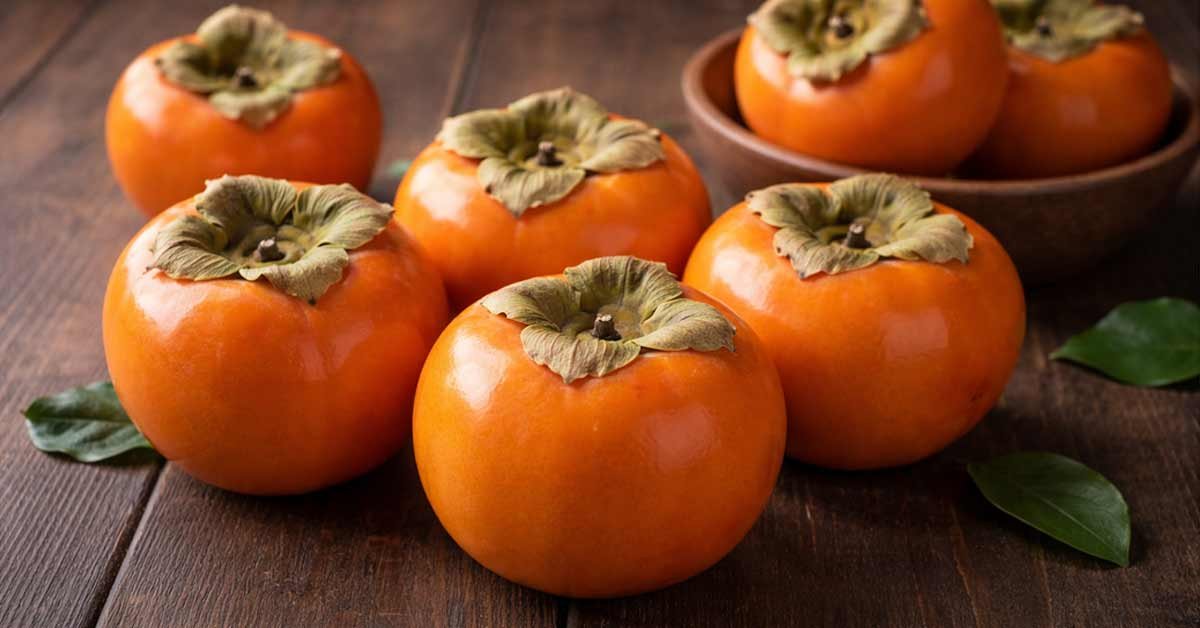
You’ve probably seen a persimmon sitting quietly in the produce section. Bright orange. Almost glowing. It looks like it should taste intense, maybe even overwhelming. Then you try it at the right moment, fully ripe, soft to the touch, and it’s surprisingly gentle. Sweet, yes, but not aggressive. Smooth. Almost honey-like.
That’s usually the moment people start paying attention to persimmon.
Table of Contents


What makes the persimmon interesting is not just the taste. It’s how easily it fits into real life. No complicated prep. No learning curve. Just timing. You wait until it’s ripe, cut it open, and eat it with a spoon. That’s it. And yet, behind that simplicity, there’s a nutritional profile that quietly does a lot of work, especially when it comes to fiber and heart health.
Most people underestimate how much their daily food patterns shape how they feel. Not in a dramatic, overnight way, but in small, consistent shifts. Energy levels. Digestion. That slightly heavy feeling after meals. The kind of things you notice only when they improve. Persimmon tends to work in that subtle space.
A single persimmon can provide a meaningful amount of fiber. That matters more than it sounds. Fiber is one of those nutrients that almost everyone knows is important, but very few people consistently get enough of. The recommended intake for adults usually sits around 25 to 38 grams per day, depending on age and sex. Most diets fall short. Not by a little, but by a lot.
So when a fruit like persimmon shows up with a mix of soluble and insoluble fiber, it becomes more than just a sweet snack. It becomes a tool. Something you can use to gently correct a pattern without forcing a major diet change.
And that’s where persimmons stand out. They don’t ask much from you.
You don’t need to build a meal plan around them. You don’t need to track anything. You just add one to your day. Maybe mid morning. Maybe after dinner when you want something sweet but don’t feel like going down the usual dessert route.
There’s also something worth mentioning about how persimmon interacts with appetite. Foods rich in fiber tend to slow digestion. That changes how full you feel, and for how long. It’s not about restriction or control. It’s about removing that constant background noise of hunger that makes everything harder than it needs to be.
Then there’s the heart health angle, which often sounds more abstract than it should. When people hear “heart health,” they think long term, distant, almost theoretical. But the mechanisms behind it are actually tied to everyday processes.
Things like:
- How your body handles fats after a meal
- How stable your blood pressure stays throughout the day
- How your blood vessels respond to stress, food, and movement
Persimmon contains compounds that interact with these systems in a quiet, supportive way. Not in a dramatic, immediate sense, but in a cumulative one. You don’t eat a persimmon and feel your heart getting healthier. That’s not how it works. You include persimmons regularly, and over time, you shift the baseline.
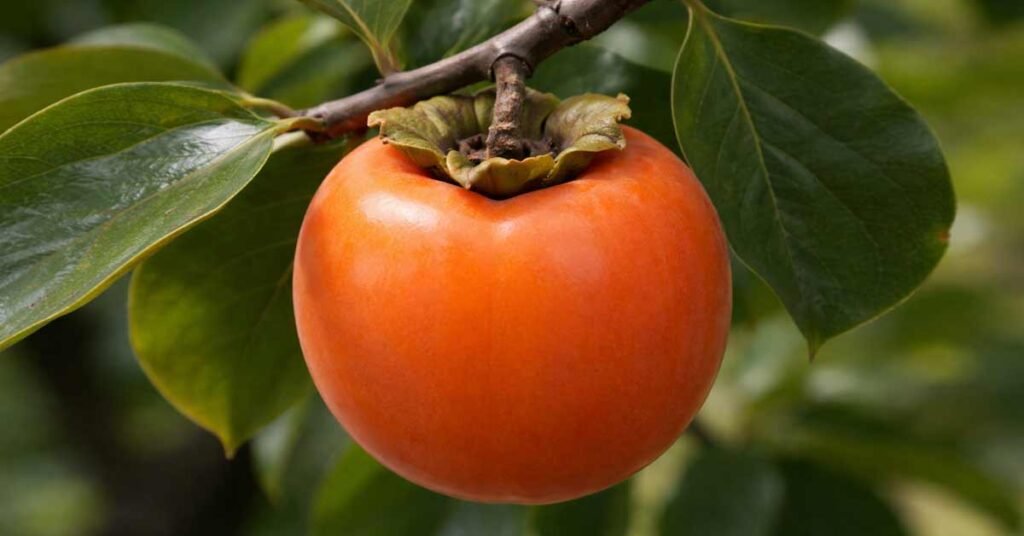
Another detail people often miss is the difference between types of persimmons. If you’ve ever bitten into one too early and felt that dry, puckering sensation, you’ve experienced astringency. That comes from tannins, which are more concentrated in unripe fruit. Some varieties, like Hachiya, need to be fully soft before eating. Others, like Fuyu, can be eaten while still firm.
It’s a small detail, but it changes the experience completely. And if the experience is off, people tend to write off the fruit entirely.
When you get it right, though, persimmon becomes one of those foods that doesn’t feel like an effort. It just slips into your routine. No resistance. No overthinking.
That’s usually the difference between something you try once and something that sticks.
There’s also a seasonal aspect to persimmons that adds to their appeal. They tend to show up in cooler months, when diets naturally shift toward heavier, denser foods. That contrast matters. A soft, sweet persimmon after a heavier meal can balance things out in a way that feels natural, not forced.
And if you look at how people actually build lasting habits, it’s rarely about adding something extreme. It’s about finding small, low friction changes that repeat easily.
Persimmon fits that model.
You don’t need to believe anything special about it. You don’t need to treat it like a superfood. You just need to use it consistently enough to notice what it does.
Over time, that’s when things start to shift.
Fiber in Persimmon: What Actually Makes It Work
There’s a reason persimmon keeps coming up in conversations about fiber. It’s not just that it contains fiber. A lot of foods do. The difference is how that fiber behaves once you eat it, and how easily you can make it part of your day without thinking too hard about it.
A typical persimmon gives you around 5 to 6 grams of fiber, depending on size. If you look at the numbers, that’s roughly 15 to 20 percent of a daily target for many adults. That’s not small. And it’s coming from something that feels more like a dessert than a “health food.”
But the real value of persimmon shows up when you look closer at the type of fiber it provides.
Soluble vs Insoluble Fiber in Persimmons
Not all fiber works the same way. This is where most people oversimplify things.
Persimmons contain both soluble and insoluble fiber, and each plays a different role.
Soluble fiber dissolves in water and forms a gel like substance in your digestive tract. You don’t see it happening, but you feel the effects over time. It slows digestion. It smooths out how nutrients are absorbed. It helps stabilize the rise and fall of energy after eating.
In practical terms, that means:
- Less of that sharp spike and crash after a sugary snack
- More steady energy between meals
- A longer lasting feeling of fullness
Persimmon contains soluble fibers like pectin, which are known for this kind of effect.
Insoluble fiber works differently. It does not dissolve. It adds bulk. It helps move things through your digestive system more efficiently. This is the part people usually associate with “regularity,” but it’s more than that. It supports the overall rhythm of digestion.
When you eat persimmons regularly, you’re getting both effects at the same time. That combination matters.
If you only focus on soluble fiber, digestion can slow too much. If you only focus on insoluble fiber, things can feel rough or uncomfortable. Persimmon sits somewhere in the middle, which is part of why it tends to feel easy on the system.
There’s another layer here that often gets ignored. Persimmons also contain tannins and other plant compounds that interact with digestion. In unripe fruit, these can bind to proteins and create that dry, astringent sensation. As the fruit ripens, those compounds change, and the fiber becomes more accessible and easier to tolerate.
That’s why ripeness is not just about taste. It directly affects how your body handles the fruit.
How Fiber Intake Shapes Digestion and Daily Energy
Most people notice fiber only when something goes wrong. Bloating. Sluggish digestion. Irregular patterns. But when fiber intake is consistent and balanced, digestion tends to fade into the background. It just works.
Persimmon can play a role in that shift.
When you bring in a steady source of fiber like persimmon, a few things start happening:
- Digestion slows just enough to improve nutrient absorption
- Blood sugar rises more gradually after meals
- Hunger signals become more predictable
This has a direct impact on daily energy.
Think about a typical day. You eat something quick, maybe low in fiber, and within an hour or two you feel that dip. You reach for something else. Usually something equally quick. The cycle repeats.
Now compare that to adding a persimmon into the mix.
It doesn’t overhaul your diet. It doesn’t replace meals. It just changes the pace. The fiber slows things down enough to reduce those swings. Over time, that can mean fewer energy crashes and less reliance on constant snacking.
There’s also a gut level effect that builds more slowly. Fiber feeds beneficial gut bacteria. This isn’t something you feel immediately, but it influences how efficiently your digestive system works over time. A more balanced gut environment tends to support smoother digestion and, indirectly, more stable energy.
What’s interesting is how subtle this can be. You don’t wake up one day and think, “this is because of persimmons.” It’s more like noticing that things feel easier. Meals feel more satisfying. You’re not thinking about food as often.
That’s usually a sign that fiber intake has improved.
Practical Ways to Increase Fiber Without Overdoing It
This is where people often go wrong. They decide to “eat more fiber” and go from very little to a lot in a short time. That’s when discomfort shows up. Bloating, gas, that heavy feeling that makes you want to stop.
The better approach is slower and more deliberate.
Persimmon makes that easier because it’s simple to add without forcing anything else out.
A few practical ways to use persimmons consistently:
- Eat one persimmon as a standalone snack, especially in the afternoon
- Add sliced persimmons to yogurt or oatmeal
- Use ripe persimmons as a natural sweet element in salads
- Pair persimmon with nuts for a mix of fiber and fats that slows digestion even more
The key is consistency, not volume.
If you’re currently getting around 10 to 15 grams of fiber per day, adding one persimmon moves you closer to the recommended range without pushing your system too hard. From there, you can layer in other sources gradually.
A few things that help avoid common issues:
- Increase fiber intake step by step, not all at once
- Drink enough water, since fiber needs fluid to function properly
- Pay attention to how your body responds, especially in the first few days
There’s also a timing aspect that people rarely consider. Eating persimmon earlier in the day can help set a steadier rhythm for digestion and energy. Eating it later, especially after a heavy meal, can feel more like a reset. Both approaches work. It depends on what your day looks like.
One detail worth keeping in mind is portion size. Persimmons are easy to overeat because they’re soft and sweet. But more is not always better. One medium fruit is usually enough to get the benefits without overwhelming your system.
That balance is what makes persimmon sustainable.
You’re not forcing fiber into your diet. You’re letting it slip in through something you actually enjoy eating.
Persimmon and Heart Health: What the Research Suggests
When people talk about heart health, the conversation often drifts into extremes. Either it becomes overly clinical, full of numbers and markers, or it turns vague, built around general advice that’s hard to apply. Persimmon sits somewhere in between. It doesn’t act like a quick fix, but it does interact with several systems that matter for how your cardiovascular system functions day to day.
What makes persimmon relevant here is not a single compound or effect. It’s the combination. Fiber, potassium, and a range of plant compounds all working at a low intensity, but with consistency. That’s usually where real changes come from.
If you eat persimmons regularly, you’re not targeting one pathway. You’re supporting multiple small processes that, together, influence heart health over time.
Polyphenols and Their Role in Circulation
Persimmon contains a variety of polyphenols. These include flavonoids and tannins, especially in the peel and in less processed forms of the fruit. You don’t need to memorize the names to understand the effect. What matters is what these compounds tend to do in the body.
Polyphenols are associated with how blood vessels respond to stress, food intake, and daily activity. One of their key roles involves supporting endothelial function. The endothelium is the inner lining of blood vessels. It helps regulate how vessels expand and contract.
When this system works well, circulation stays efficient. Blood flows with less resistance. When it doesn’t, things start to stiffen, and pressure can rise over time.
Research on polyphenol rich foods suggests a few consistent patterns:
- Improved vessel flexibility
- Reduced oxidative stress in the vascular system
- Better regulation of blood flow after meals
Persimmons contribute to this through their antioxidant content. The bright orange color comes from carotenoids, but the less visible compounds often carry more weight when it comes to vascular function.
There’s also an interesting detail about tannins in persimmon. In unripe fruit, they can feel harsh and astringent. As the fruit ripens, their structure changes. Some of their binding activity decreases, but they still contribute to antioxidant capacity.
This shift matters because it affects both taste and how the compounds interact with your body. A fully ripe persimmon tends to deliver these compounds in a way that’s easier to tolerate and more consistent with regular intake.
And that’s the key point. You’re not looking for a strong, immediate effect. You’re looking for something you can repeat often enough for the small effects to add up.
Potassium, Blood Pressure, and Vascular Function
Potassium doesn’t get as much attention as it should, especially compared to sodium. But the balance between the two plays a central role in blood pressure regulation.
Persimmon contains a meaningful amount of potassium. Depending on size, one fruit can provide around 200 to 300 milligrams. That’s not extreme, but it contributes to daily intake in a practical way.
To understand why that matters, you need to look at how potassium works.
Potassium helps regulate fluid balance in the body. It influences how blood vessel walls handle tension. It also supports the excretion of excess sodium through urine. When potassium intake is adequate, it can help offset some of the effects of high sodium intake, which is common in many diets.
From a functional perspective, this leads to:
- More stable blood pressure throughout the day
- Reduced strain on blood vessel walls
- Better overall vascular responsiveness
This is not a dramatic shift you feel instantly. It’s more about reducing background pressure on the system.
There’s also a behavioral aspect that often gets overlooked. Foods rich in potassium, like persimmons, tend to replace more processed options when they’re added consistently. That indirect effect can matter as much as the nutrient itself.
Instead of reaching for something packaged and high in sodium, you eat a persimmon. That one decision changes the balance, even if slightly. Repeated over time, those small shifts can influence overall intake patterns.
Fiber and Cholesterol Balance Explained
Fiber shows up again here, but in a different role.
Soluble fiber, which is present in persimmon, interacts with bile acids in the digestive system. Bile acids are made from cholesterol and are used to help digest fats. When soluble fiber binds to these acids, it increases their excretion.
Here’s what happens step by step:
- You eat a persimmon and take in soluble fiber
- That fiber forms a gel like structure in the gut
- It binds to bile acids during digestion
- More bile acids are excreted instead of reabsorbed
- The liver uses circulating cholesterol to produce new bile acids
The result is a gradual reduction in circulating LDL cholesterol levels over time, assuming this pattern is consistent.
This is not unique to persimmon. Other fiber rich foods do the same. But persimmon makes it easier to engage with this mechanism because it doesn’t feel like a “functional food.” It feels like something you’d eat anyway.
There’s also some evidence from studies on persimmon-derived fibers and extracts showing improvements in lipid profiles, particularly when consumed regularly. These effects are usually modest, but they align with what you would expect from increased soluble fiber intake.
What’s often missed is the time component.
You don’t see changes in cholesterol from a few servings. It takes weeks, sometimes months, of consistent intake. That’s why foods that are easy to repeat matter more than foods that are theoretically powerful but hard to stick with.
Persimmons fall into the first category.
When you combine fiber, potassium, and polyphenols in one food, you’re not relying on a single pathway. You’re creating a layered effect:
- Fiber supports cholesterol balance
- Potassium supports blood pressure regulation
- Polyphenols support vascular function
Each one is relatively small on its own. Together, they start to shape the environment your cardiovascular system operates in.
And that’s really what heart health comes down to. Not one big intervention, but a series of small, repeatable inputs that keep things moving in the right direction.
Using Persimmons in Real Life Without Overthinking It
Persimmon works best when you stop treating it like a “strategy” and start treating it like food. That sounds obvious, but it’s where most people get stuck. They overthink how to use persimmons, wait for the perfect recipe, or forget about them entirely after buying a few.
The truth is simpler. If persimmons are easy to grab, easy to eat, and consistently part of your routine, they’ll do more for you than any carefully planned but rarely followed idea.
What matters here is not variety or creativity. It’s repeatability.
Fresh vs Dried Persimmons: What Changes Nutritionally
Both fresh persimmons and dried persimmons have value, but they behave differently once you eat them.
Fresh persimmon is mostly water. That affects everything. It slows down how quickly you eat it. It increases volume without increasing calories too much. It also makes the fiber feel lighter and easier on digestion.
A typical fresh persimmon gives you:
- Around 5 to 6 grams of fiber
- A moderate amount of natural sugars
- A high water content that supports satiety
Dried persimmons are more concentrated. When water is removed, everything else becomes denser. That includes sugars, calories, and fiber.
If you compare equal weights, dried persimmons provide more fiber. But that’s not how people usually eat them. You’re more likely to eat several pieces of dried fruit quickly without noticing, while a fresh persimmon naturally slows you down.
Here’s what changes in practical terms:
- Dried persimmons deliver more sugar per bite
- Portion control becomes more important
- Fiber is still present, but it comes in a denser form
That doesn’t make dried persimmons a bad option. They’re useful, especially when fresh fruit isn’t available. But they require more awareness.
A simple way to think about it:
- Fresh persimmons work well as a daily habit
- Dried persimmons work better as an occasional addition
Another detail that matters is texture. Fresh persimmon, especially when fully ripe, is soft and almost spoonable. That slows eating. Dried persimmons are chewy and compact. That makes them easy to overconsume if you’re distracted.
If your goal is consistency and ease, fresh persimmons usually win.
Simple Ways to Add Persimmon to Your Day
You don’t need recipes. You need patterns.
The easiest way to use persimmon is to anchor it to something you already do. That’s what makes it stick.
A few examples that tend to work in real life:
- Mid afternoon reset
You hit that point where energy drops and focus fades. Instead of reaching for something processed, you eat a persimmon. It gives you sweetness, fiber, and a slower release of energy. - After dinner habit
You want something sweet, but not heavy. A ripe persimmon replaces dessert without feeling like a compromise. - Breakfast addition
Slice persimmon into yogurt or oatmeal. It adds natural sweetness and texture without needing extra sugar. - Paired snack
Combine persimmon with a handful of nuts. The fiber and fat together slow digestion and keep you full longer.
What you’ll notice is that none of these require effort. No prep beyond slicing. No planning ahead.
That’s intentional.
The more friction you remove, the more likely you are to repeat the behavior. And repetition is what makes persimmons useful, not occasional perfect meals.
There’s also a sensory aspect that helps. Persimmons are naturally sweet, but in a softer way than most processed foods. Over time, that can shift how you perceive sweetness. Things that once felt normal start to feel overly intense.
That change is subtle, but it can influence your overall food choices without forcing anything.
Storage, Ripeness, and Portion Consistency
This is where things either click or fall apart.
If you get the ripeness wrong, persimmon can be unpleasant. If you store it poorly, you forget about it. If portions drift too much, the benefits become inconsistent.
Start with ripeness.
There are two common types of persimmons you’ll find:
- Hachiya
These need to be fully ripe. Very soft. Almost jelly like inside. If you eat them too early, they’ll taste astringent and dry. - Fuyu
These can be eaten while still firm. More like an apple in texture. Less risk of that astringent effect.
Knowing which one you have changes everything. It’s the difference between enjoying persimmons and avoiding them.
For storage:
- Keep unripe persimmons at room temperature until they soften
- Once ripe, move them to the fridge to slow further softening
- If they become very soft, you can scoop them out and eat them directly or mix into yogurt
Timing matters. A perfectly ripe persimmon has a short window where texture and flavor peak. Miss that window, and it either feels too firm or too soft.
Then there’s portion consistency.
Persimmons are easy to eat, which is both good and something to be aware of. One medium fruit per day is a practical baseline. It gives you fiber and nutrients without pushing sugar intake too high.
If you’re using dried persimmons, portions should be smaller. A few pieces, not a handful.
Consistency beats intensity here.
Eating persimmons once in a while won’t change much. Eating one regularly, in a way that fits your routine, starts to shape how you feel over time.
That’s really the whole point.
You’re not trying to optimize every detail. You’re trying to make something simple stick.
Best Selling Persimmon Related Products




A Small Habit That Pays Off More Than You Expect
There’s a point where nutrition advice starts to lose people. Not because it’s wrong, but because it asks for too much at once. Too many changes. Too many rules. Too much attention.
That’s why something as simple as adding a persimmon to your day can be surprisingly effective.
It doesn’t feel like a habit at first. It feels like a small preference. You choose a persimmon instead of something else. You repeat that choice a few times a week. Then it becomes automatic. And once it’s automatic, it starts doing quiet work in the background.
This is where persimmon fits best. Not as a centerpiece, not as a solution, but as a steady input.
Think about what happens when that input stays consistent.
You’re adding fiber without forcing it. That alone starts to shift digestion. Meals feel more stable. You’re not chasing hunger as often. There’s less guesswork around when to eat next.
At the same time, you’re bringing in compounds that support how your body handles everyday stress. Not emotional stress, but physiological stress. The kind that comes from meals, from fluctuations in energy, from the constant adjustments your body has to make.
Persimmon doesn’t remove that stress. It helps smooth it out.
And that smoothing effect is easy to miss because it doesn’t announce itself. It shows up in small ways:
- You feel full a little longer after eating
- You don’t reach for snacks as quickly
- Your energy holds steady instead of dropping off
None of these feel dramatic. But together, they change the rhythm of your day.
There’s also something to be said about predictability.
When you have one or two foods that you rely on daily, decisions get easier. You don’t have to think about what to eat every time you feel hungry. You already have a default. Persimmon can become one of those defaults.
Maybe it’s always there in the afternoon. Maybe it’s your go to after dinner. The exact timing doesn’t matter as much as the repetition.
Over time, that repetition builds trust. You know how your body responds. You know what to expect.
That’s different from constantly trying new things and never sticking with anything long enough to see an effect.
Another detail that often gets overlooked is how habits like this influence other choices indirectly.
When you eat a persimmon regularly, you’re less likely to fill that same space with something highly processed. Not because you’re forcing yourself to avoid it, but because you’ve already satisfied that need for something sweet.
That’s a subtle shift, but it matters.
It changes the baseline of your diet without requiring restriction.
And that’s usually what makes a habit sustainable. It replaces something, rather than adding pressure on top of everything else.
There’s also a timing effect that becomes clearer after a few weeks.
If you eat a persimmon earlier in the day, it can help set a steadier pace for appetite and energy. If you eat it later, it can act as a soft landing after heavier meals. Either way, it becomes part of how your day flows, not something separate from it.
That’s the integration you’re aiming for.
Not perfection. Not optimization. Just something that fits.
One more thing worth keeping in mind is that small habits compound, but only if they’re actually small enough to repeat without resistance.
Persimmon works because it doesn’t ask much from you:
- No preparation beyond basic slicing
- No strong flavors to get used to
- No strict timing or rules
You just eat it.
And that simplicity is what allows the benefits to accumulate.
Over a week, it’s just a few pieces of fruit. Over a month, it’s a consistent increase in fiber and supportive nutrients. Over longer periods, it becomes part of a pattern that supports digestion, steadier energy, and better alignment with what your body actually needs.
You don’t feel that shift all at once.
You notice it in hindsight. When things feel easier than they used to.
That’s usually the signal that something small has been working all along.
Article Sources
At AncientHerbsWisdom, our content relies on reputable sources, including peer-reviewed studies, to substantiate the information presented in our articles. Our primary objective is to ensure our content is thoroughly fact-checked, maintaining a commitment to accuracy, reliability, and trustworthiness.
- Butt, M. S., & Sultan, M. T. (2011). Persimmon (Diospyros kaki) fruit: Hidden phytochemicals and health claims. Exotic Fruits Reference Guide, 347–366. https://doi.org/10.1016/B978-0-12-375688-6.10041-8
- Gorinstein, S., Zachwieja, Z., Folta, M., Barton, H., Piotrowicz, J., Zemser, M., Weisz, M., & Trakhtenberg, S. (2001). Comparative contents of dietary fiber, total phenolics, and minerals in persimmons and apples. Journal of Agricultural and Food Chemistry, 49(2), 952–957. https://doi.org/10.1021/jf000947k
- Matsumoto, K., Yokoyama, S., Goto, H., & Hara, Y. (2006). Effects of persimmon fiber on lipid metabolism in rats. Journal of Nutritional Science and Vitaminology, 52(3), 161–166. https://doi.org/10.3177/jnsv.52.161
- Park, Y. S., Jung, S. T., Kang, S. G., Delgado-Licon, E., Leticia Ayala, A., Tapia, M. S., Martín-Belloso, O., & Trakhtenberg, S. (2006). Drying of persimmon (Diospyros kaki L.) and the effect on antioxidant activity. LWT – Food Science and Technology, 39(7), 748–755. https://doi.org/10.1016/j.lwt.2005.05.012
- Suzuki, T., Someya, S., Hu, F., & Tanokura, M. (2005). Comparative study of catechin compositions in five Japanese persimmons. Food Chemistry, 93(1), 149–152. https://doi.org/10.1016/j.foodchem.2004.09.015
- U.S. Department of Agriculture. (2019). FoodData Central: Persimmons, raw. https://fdc.nal.usda.gov/fdc-app.html#/food-details/169910/nutrients
- World Health Organization. (2012). Guideline: Potassium intake for adults and children. https://www.who.int/publications/i/item/9789241504829
- Anderson, J. W., Baird, P., Davis, R. H., Ferreri, S., Knudtson, M., Koraym, A., Waters, V., & Williams, C. L. (2009). Health benefits of dietary fiber. Nutrition Reviews, 67(4), 188–205. https://doi.org/10.1111/j.1753-4887.2009.00189.x

- Cantaloupe: Hydrating Melon for Eye Health and Vitamin A - March 25, 2026
- Pomegranate: Fruit for Heart Health and Antioxidants - March 25, 2026
- Persimmon: Sweet Fruit for Fiber and Heart Health - March 25, 2026