
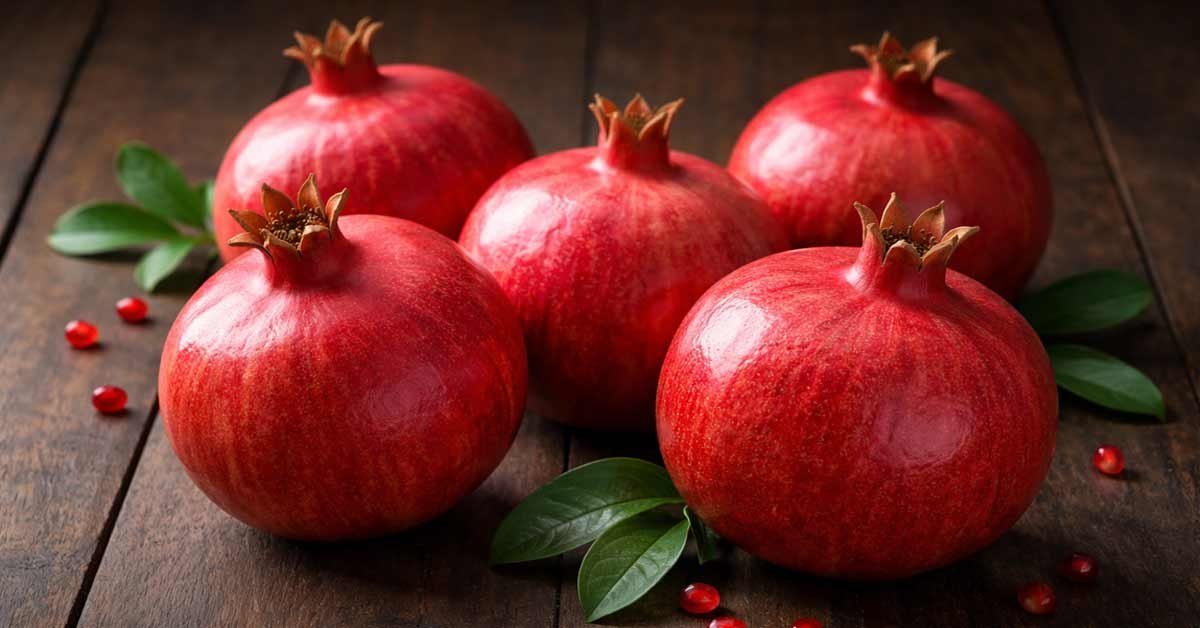
A Fruit That Feels More Like a Ritual Than a Snack
You don’t really “grab” a pomegranate the way you grab an apple. It asks for a bit more attention. A knife, a bowl, maybe even a moment of patience you didn’t plan for. That alone changes how you experience it. The process slows you down, and in a strange way, that’s part of the value.
A pomegranate doesn’t just sit quietly in the background of your routine. It interrupts it. You cut into it and suddenly there’s color everywhere. Deep red, almost jewel-like seeds packed tighter than you’d expect. You’re not just eating. You’re extracting, separating, noticing. It feels closer to a ritual than a snack, and that shift matters more than people think.
Table of Contents

Across cultures, pomegranates have carried that same weight. They’ve been symbols of abundance, fertility, even resilience. Not because they’re exotic or rare, but because they demand engagement. You don’t rush through a pomegranate. And in a world where most food is built for speed, that’s already a different starting point.
There’s also something interesting about how pomegranate fits into modern conversations around food. It didn’t become popular just because it looks good on a plate. It earned attention because of what’s inside. When people talk about antioxidants and heart health, pomegranate shows up often. Not as a trend that came and went, but as something that keeps resurfacing whenever the conversation turns toward long term health and everyday choices.
That reputation didn’t come out of nowhere. Pomegranates contain a mix of polyphenols, compounds that plants produce for their own protection. When you eat them, those same compounds interact with your body in ways researchers have been trying to map out for years. You’ll hear terms like oxidative stress, free radicals, vascular function. It can get technical fast. But at its core, the idea is simple. What you eat shapes how your body handles stress at a cellular level.
Still, it’s easy to overcomplicate things. You don’t need to understand every biochemical pathway to make use of a pomegranate. You just need to recognize that it offers something different from the usual fruit lineup. The flavor alone tells you that. It’s not just sweet. There’s a sharpness, a slight bitterness, a kind of tension that makes each bite more noticeable. That complexity often signals the presence of those same antioxidants people talk about.
And then there’s the texture. The seeds, or arils, have that crisp outer layer that gives way to juice almost instantly. It’s satisfying in a way that’s hard to replicate. You’re not absent-mindedly chewing. You’re paying attention, even if only for a few seconds at a time.
From a practical standpoint, this changes how often people reach for pomegranates. They’re not usually the default choice when you’re in a hurry. But that might be exactly why they’re worth keeping around. They create a pause. And small pauses, repeated often enough, can shift habits in a way that doesn’t feel forced.
Think about how most people approach improving their diet. They look for big changes. New rules, strict plans, complete overhauls. It rarely sticks. A pomegranate works differently. It slips into your routine in small, deliberate moments. You open one while listening to something in the background. You add a handful of seeds to a meal without overthinking it. It doesn’t feel like a system. It feels like a choice you made without pressure.
There’s also a subtle psychological effect here. When food requires a bit of effort, you tend to value it more. Not in a dramatic way, but enough to notice. That can influence how much you eat, how fast you eat, and even how satisfied you feel afterward. It’s not about restriction. It’s about engagement.
Of course, not everyone has the patience to deal with a whole pomegranate every time. And that’s fine. Juice, pre-packed seeds, even frozen options exist for a reason. But something does change when the process is removed. You lose a bit of that ritual. Not the nutrients necessarily, but the experience. And the experience plays a bigger role than most nutrition advice admits.
Pomegranate sits at an interesting intersection. It’s traditional, yet constantly rediscovered. It’s simple, yet often discussed in complex scientific terms. It’s convenient enough to be practical, but just demanding enough to make you slow down. That balance is rare.
If you step back and look at it without all the noise, it’s just a fruit. But the way you interact with it can turn it into something more consistent. A small habit. A recurring moment in your day where you’re a bit more present, a bit more aware of what you’re eating and why.
And maybe that’s the real value of pomegranate. Not just the antioxidants or the conversations around heart health, but the way it quietly changes your pace without asking for much in return.
What Makes Pomegranate Nutritionally Different
Pomegranate has a way of standing apart without trying too hard. You taste it once and you know it is not just another sweet fruit. There is structure to it. A kind of intensity that hints at something deeper going on nutritionally.
If you look at the data, that impression holds up. Pomegranate delivers a dense mix of compounds that are not just about basic nutrition like vitamin C or potassium. Those are there, but they are not the main story. The real difference comes from a group of plant compounds that show up in much higher concentrations than in most commonly eaten fruits.
That is where the conversation around antioxidants and pomegranate starts to make sense. Not as a buzzword, but as something measurable and repeatable across studies.
A Closer Look at Polyphenols and Antioxidants
Pomegranate is rich in polyphenols. These are compounds plants produce to protect themselves from stress, things like UV exposure, pests, and environmental damage. When you eat pomegranate, you take in those same protective compounds.
The main ones in pomegranate include:
- Punicalagins
- Ellagic acid
- Anthocyanins
Punicalagins are the most studied. They are large, water soluble molecules found mostly in the juice and peel. What makes them relevant is their antioxidant capacity. In lab measurements, pomegranate juice often shows higher antioxidant activity than green tea or red wine, largely because of these compounds.
Here is the mechanism in simple terms.
Your body constantly produces unstable molecules called free radicals. This happens during normal metabolism, not just from external stress. When these molecules build up, they can interact with cells in ways that create oxidative stress.
Antioxidants help balance that process. They donate electrons to stabilize free radicals, reducing their reactivity.
This does not mean pomegranate “stops” anything or acts like a switch. The effect is more gradual and depends on overall diet. But including foods that contribute meaningful antioxidant intake can shift that balance over time.
There is another layer that often gets missed. Polyphenols from pomegranate are not fully absorbed in their original form. Gut bacteria break them down into smaller metabolites, like urolithins, which may be responsible for some of the observed biological effects. This means your gut microbiome partly determines how your body uses pomegranate.
So when you eat pomegranate, you are not just feeding yourself. You are also interacting with your gut environment, which then shapes the outcome.
Juice vs Whole Pomegranates: What Actually Changes
This is where things get practical. Most people do not eat pomegranate every day, but many will drink pomegranate juice occasionally. The assumption is that they are interchangeable. They are not.
The biggest difference is fiber.
Whole pomegranates, specifically the seeds or arils, contain dietary fiber. Fiber slows digestion and affects how sugars are absorbed. When you drink juice, most of that fiber is removed.
Let’s break it down with a simple comparison based on typical values:
- 100 g pomegranate arils
- Fiber: about 4 g
- Sugars: about 13 g
- 100 ml pomegranate juice
- Fiber: close to 0 g
- Sugars: about 13 g
Same sugar range, very different structure.
Without fiber, juice is absorbed faster. This can lead to a quicker rise in blood glucose. With whole pomegranate, the presence of fiber slows that process. It also increases satiety, meaning you are less likely to keep consuming more without noticing.
There is also a concentration effect. Juice often contains the equivalent of multiple pomegranates in a single serving. That increases the intake of both beneficial compounds and sugars at the same time.
Antioxidant content is where things get interesting. Juice can actually be higher in measurable antioxidants per serving because it includes compounds extracted from the rind during processing. The rind is rich in polyphenols, but you do not eat it when consuming whole fruit.
So the trade off looks like this:
- Whole pomegranates
- More fiber
- Slower digestion
- Lower intake per sitting
- Juice
- Higher antioxidant concentration per volume
- No fiber
- Easier to overconsume
Neither is automatically better. It depends on how you use them. If you are drinking a small glass of juice alongside a meal, the context changes. If you are drinking large amounts on an empty stomach, the effect is different.
Seeds, Juice, or Extract: Does Form Matter
Then there is the third option people often consider. Extracts and supplements.
You will see pomegranate extracts standardized for punicalagins or ellagic acid. These products aim to deliver a concentrated dose without the need to eat the fruit.
From a composition standpoint, they do provide specific compounds in higher amounts. That part is straightforward. But the bigger picture is less clear.
Whole pomegranate comes as a package:
- Fiber
- Natural sugars
- A broad spectrum of polyphenols
- Water content that affects absorption
When you isolate one part of that system, you change how it behaves in the body. Absorption can differ. Metabolism can differ. Even the role of gut bacteria can shift because you are no longer feeding them the same mix of compounds.
There is also variability in extract quality. Different products use different parts of the fruit, different extraction methods, and different standardization levels. That makes consistency harder to verify without detailed testing.
From a practical standpoint, most people benefit more from focusing on food first.
Using pomegranate in its whole form gives you:
- A predictable nutrient profile
- Built in portion control
- Additional dietary fiber
- A more complete mix of antioxidants
Juice can be useful when convenience matters or when you want a more concentrated intake in a smaller volume. Extracts might make sense in specific contexts, but they require more scrutiny.
The key point is not that one form is superior in every case. It is that the form changes the experience and the outcome.
When people talk about pomegranate and antioxidants, they often treat it as a single thing. In reality, how you consume pomegranate shapes what you actually get from it.
Pomegranate and Heart Health: What the Evidence Suggests
Pomegranate keeps coming up in conversations about heart health, and not by accident. When researchers look at foods that interact with vascular function, oxidative balance, and lipid behavior, pomegranate tends to show consistent signals across different types of studies. Not dramatic, not instant, but consistent enough to pay attention.
It is easy to oversimplify this and say pomegranate is “good for the heart.” That kind of statement skips the mechanisms that actually matter. What the evidence suggests is more specific. Compounds in pomegranate appear to interact with how blood vessels function, how oxidative stress is managed, and how certain lipids behave in circulation.
These are not isolated systems. They influence each other constantly. Small shifts in one area can affect the others over time.
Blood Flow and Vascular Function
One of the most studied aspects of pomegranate is its relationship with blood flow. This comes down largely to how blood vessels expand and contract, a process known as vascular function.
At the center of this is nitric oxide. It is a molecule your body produces to signal blood vessels to relax. When nitric oxide availability is higher, vessels can dilate more effectively, allowing blood to move with less resistance.
Some studies suggest that polyphenols in pomegranate may help support nitric oxide activity. The proposed mechanisms include:
- Protecting nitric oxide from oxidative breakdown
- Supporting enzymes involved in its production
- Improving endothelial function, which is how the inner lining of blood vessels behaves
The endothelium acts like a control layer. It responds to signals, adjusts vessel tone, and helps regulate circulation. When it functions well, blood flow adapts smoothly to the body’s needs. When it does not, that adaptability decreases.
In controlled trials, consumption of pomegranate juice has been associated with measurable changes in markers related to endothelial function. For example, flow mediated dilation, a common measure of vascular response, has shown improvement in some studies after regular intake.
That does not mean the effect is universal or guaranteed. Results vary depending on the population, the amount consumed, and the duration. But the direction of the findings is relatively consistent. Pomegranate seems to support conditions that favor better vascular responsiveness.
From a practical perspective, this matters because circulation is not just about the heart itself. It is about how efficiently blood reaches tissues throughout the body.
Oxidative Stress and Arterial Health
Arteries are exposed to constant mechanical and chemical stress. Blood flow creates pressure. Metabolism produces reactive molecules. Over time, this environment can lead to structural and functional changes.
Oxidative stress plays a role in this process. It reflects an imbalance between free radicals and the body’s ability to neutralize them. When that balance shifts, it can influence how arterial walls behave.
This is where pomegranate’s antioxidant profile becomes relevant again, but in a more specific context.
Polyphenols in pomegranate have been studied for their ability to:
- Reduce markers of oxidative stress in blood
- Interact with inflammatory signaling pathways
- Influence how cells within the arterial wall respond to stress
Some longer term studies have looked at populations consuming pomegranate juice regularly and observed changes in indicators related to arterial thickness and plaque progression. In certain cases, slower progression has been reported.
It is important to interpret this carefully. These studies often involve small sample sizes and specific conditions. They do not establish cause and effect in a broad sense. But they do provide a direction that aligns with what is known about oxidative processes and vascular biology.
There is also an indirect effect through the gut microbiome. As mentioned earlier, polyphenols are metabolized into compounds like urolithins. These metabolites may have their own biological activity, including interactions with inflammation and oxidative pathways.
So the impact is not just from the original compounds in pomegranate, but also from what your body turns them into.
Cholesterol Balance and Lipid Oxidation
When people think about heart health, cholesterol usually comes up quickly. Total cholesterol, LDL, HDL. The numbers are familiar. But the behavior of these lipids can be just as important as their absolute levels.
One area where pomegranate has been studied is lipid oxidation, particularly the oxidation of LDL particles.
LDL is often labeled as “bad cholesterol,” but that label is incomplete. LDL becomes more problematic when it undergoes oxidative modification. Oxidized LDL is more likely to interact with arterial walls in ways that contribute to plaque formation.
This is where antioxidants can play a role.
Compounds in pomegranate have been shown in laboratory and some human studies to:
- Reduce susceptibility of LDL to oxidation
- Increase overall antioxidant capacity in plasma
- Interact with enzymes involved in lipid metabolism
To understand the difference, consider this simplified comparison:
- LDL level alone tells you how much is present
- LDL oxidation reflects how reactive and potentially damaging it becomes
Pomegranate does not consistently show large reductions in total cholesterol across studies. Some report modest changes, others show minimal effect. Where the data is more consistent is in oxidative markers.
That distinction matters. It suggests that pomegranate’s role may be more about influencing the quality and behavior of lipids rather than dramatically changing their quantity.
There are also observations related to HDL function. Some studies suggest improvements in HDL’s ability to participate in reverse cholesterol transport, which is the process of moving cholesterol away from tissues back to the liver. This is still an area of ongoing research, and findings are not fully consistent.
From a practical standpoint, this means pomegranate fits into a broader pattern rather than acting as a standalone solution. Its effects are subtle, cumulative, and dependent on regular intake.
When you look at blood flow, oxidative stress, and lipid behavior together, a pattern emerges. Pomegranate interacts with systems that are already in motion. It does not override them. It nudges them.
And those small adjustments, repeated over time, are usually what shape long term outcomes.
Using Pomegranate in Real Life Without Overthinking It
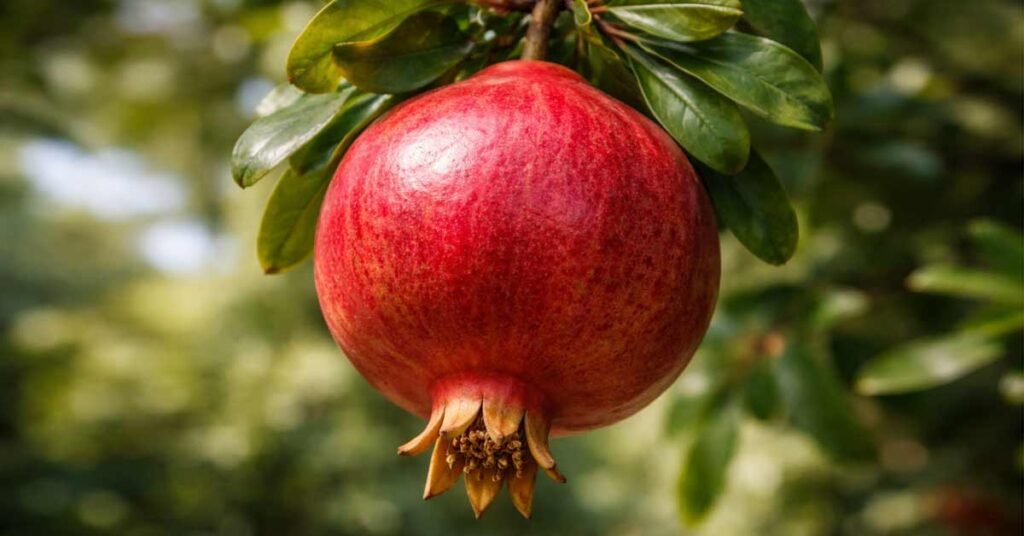
Pomegranate sounds impressive when you talk about antioxidants and heart health. Then you get home, look at the fruit, and realize it is not exactly convenient. Thick skin, juice that stains, seeds that scatter everywhere if you rush it. That is usually where people stop.
The irony is that pomegranate only becomes useful when you stop treating it like a project. You do not need perfect technique or a strict plan. You just need a way to make it show up in your routine often enough to matter.
Consistency beats precision here. Always.
Fresh vs Packaged: What You Gain and What You Lose
Let’s start with the obvious trade off. Fresh pomegranate versus packaged options.
Fresh pomegranates give you the full experience. You cut them open, separate the seeds, and eat them as they are. Nutritionally, this means:
- You get the natural fiber intact
- You control the portion without effort
- There is minimal processing
But there is a cost. Time and mess. If you are tired or in a rush, you will probably skip it.
Packaged seeds, usually sold as ready to eat arils, remove that friction. You open a container and you are done. That increases the chance you will actually eat pomegranates regularly. The downside is subtle:
- Slight loss of freshness over time
- Shorter shelf life once opened
- Sometimes higher cost per portion
Then there is juice. This is the easiest option by far. No prep, no cleanup. But the structure changes:
- No fiber
- Faster absorption of sugars
- Easier to drink large amounts without noticing
There is also variability. Some juices are pure. Others are blends or from concentrate. That affects both taste and composition.
So what do you gain and lose?
- Fresh fruit: more complete, less convenient
- Packaged seeds: balanced option, slightly less fresh
- Juice: most convenient, least structured nutritionally
If you are honest about your habits, the best choice is the one you will actually use more than once. A perfect option you rarely touch does nothing for you.
Simple Ways to Add Pomegranates to Your Day
This is where people tend to overthink things. You do not need recipes. You need default moves. Things you can do without planning.
A few that work in real life:
- Add a handful of pomegranate seeds to yogurt
- Toss them into oatmeal after cooking
- Mix into a simple salad with greens and olive oil
- Sprinkle over rice or grain bowls for contrast
- Eat them directly from a bowl as a snack
That is it. No complicated combinations.
One detail that makes a difference is contrast. Pomegranate works best when it breaks monotony. Soft foods, neutral flavors, repetitive meals. That is where those seeds stand out. You get a burst of acidity and sweetness that changes the whole dish without effort.
You can also use pomegranate juice in small amounts:
- Add a splash to sparkling water
- Use it as a base for a simple dressing
- Mix into a marinade for a slightly acidic edge
Notice the pattern. You are not building meals around pomegranate. You are inserting it into what you already eat.
That is how habits stick.
There is also a sensory aspect people underestimate. The texture, the slight crunch, the release of juice. These small details make food more engaging. When food is more engaging, you are less likely to eat on autopilot.
That alone can shift how much and how fast you eat.
Storage, Prep, and Portion Consistency
If pomegranate feels inconvenient, it usually comes down to prep. Once you solve that, everything else becomes easier.
A simple method to open a pomegranate:
- Cut off the top
- Score the skin along the natural ridges
- Pull it apart into sections
- Remove the seeds over a bowl, ideally under water to reduce splashing
It takes a few minutes once you get used to it. The first time feels slower. After that, it becomes routine.
Storage is straightforward:
- Fresh seeds keep in the fridge for about 4 to 5 days in a sealed container
- Whole pomegranates can last several weeks if stored in a cool place
- You can freeze seeds if needed, though texture changes slightly
Now the part most people ignore. Portion consistency.
You do not need exact measurements, but having a rough reference helps. For example:
- One medium pomegranate yields about 1 cup of seeds
- A practical daily portion could be a small handful, around 50 to 80 grams
You do not need to weigh it every time. Just recognize what that looks like in your hand or bowl.
Why does this matter?
Because consistency drives outcome. Not occasional large amounts, not perfect tracking. Just repeating the same small intake often enough.
If you eat a pomegranate once a week in a large portion, the effect is limited. If you include a small amount most days, the cumulative exposure to its compounds increases.
That is how foods like pomegranate actually fit into real life. Not as a centerpiece, not as a task, but as something that quietly becomes part of your default pattern.
And once it reaches that point, you stop thinking about it entirely. Which is exactly where you want to be.
Best Selling Pomegranate Related Products


A Small Habit That Feels Bigger Over Time
There is a point where pomegranate stops being something you “try to include” and just becomes part of what you do. No reminders, no effort, no sense that you are following a plan. It shows up in your day the same way coffee or bread does. Familiar. Automatic.
That shift is where the real value starts to build.
Most people approach food with an all or nothing mindset. They look for foods that will change everything quickly. More energy, better heart health, visible results. When that does not happen, interest fades. Pomegranate does not work like that. It is quiet. Subtle. Easy to overlook if you are expecting something dramatic.
But if you zoom out and look at patterns instead of moments, it starts to make more sense.
Let’s say you add a small portion of pomegranate to your routine. Around 70 grams of seeds per day. That is roughly half a cup.
Over a week:
70 g × 7 = 490 g
Over a month:
490 g × 4 = 1960 g
That is almost 2 kilograms of pomegranate consumed without changing your life in any noticeable way.
Now think about what that represents. Repeated exposure to polyphenols. A steady intake of antioxidants. A consistent interaction with your gut microbiome. Not in spikes, but in a pattern your body can actually respond to.
This is how most meaningful dietary effects work. Not through extremes, but through repetition.
There is also a behavioral side to this that matters just as much.
When you build a small habit around something like pomegranate, you are not just adding one food. You are reinforcing a pattern:
- You start paying a bit more attention to what you eat
- You slow down, even if only for a few minutes
- You create a moment in your day that is intentional
That might sound minor, but it compounds. Small intentional actions tend to cluster. One change makes the next one easier.
You add pomegranate to yogurt. Then maybe you start choosing yogurt more often instead of something more processed. You keep seeds in the fridge, so you are more likely to assemble simple meals at home. Nothing forced. Just a shift in default behavior.
And that is where pomegranate fits naturally into conversations about heart health. Not as a solution, but as part of a pattern that supports better choices overall.
It is also worth noticing what pomegranate does not do. It does not demand strict timing. It does not require exact portions. It does not create rules you have to follow perfectly. That flexibility makes it easier to stay consistent.
You miss a day, nothing changes. You pick it back up the next day, the pattern continues.
There is a difference between foods that look good on paper and foods that actually integrate into real life. Pomegranate sits in that second category when you approach it correctly.
A simple way to think about it:
- If something requires constant effort, it will eventually drop
- If something fits into what you already do, it stays
Pomegranate works best when it attaches itself to an existing habit. Breakfast, a mid day snack, dinner prep. You do not create a new routine. You anchor it to one that already exists.
For example:
- Add it to breakfast you already eat
- Keep a container in the fridge where you can see it
- Use it as a default topping instead of thinking about options
No decisions, no friction.
Over time, the effect becomes less about the individual servings and more about the accumulated pattern. You are no longer thinking about antioxidants or heart health every time you eat pomegranate. But the intake is still there, repeating in the background.
And that is the part people tend to underestimate. The background habits shape outcomes more than the occasional “perfect” choices.
There is also a kind of quiet satisfaction in this approach. You are not chasing results. You are building something steady. That removes pressure, and when pressure is gone, consistency becomes easier.
Pomegranate, in that sense, is not special because it is rare or powerful on its own. It is useful because it fits into this model so easily.
A small handful of seeds. A few minutes of prep. A subtle change in how your meals feel.
Repeat that often enough, and it stops feeling small.
Article Sources
At AncientHerbsWisdom, our content relies on reputable sources, including peer-reviewed studies, to substantiate the information presented in our articles. Our primary objective is to ensure our content is thoroughly fact-checked, maintaining a commitment to accuracy, reliability, and trustworthiness.
- Aviram, M., & Rosenblat, M. (2012). Pomegranate protection against cardiovascular diseases. Evidence-based complementary and alternative medicine, 2012, 382763. https://doi.org/10.1155/2012/382763
- Basu, A., & Penugonda, K. (2009). Pomegranate juice: A heart-healthy fruit juice. Nutrition reviews, 67(1), 49–56. https://doi.org/10.1111/j.1753-4887.2008.00133.x
- González-Ortiz, M., Martínez-Abundis, E., & Espinel-Bermúdez, M. C. (2011). Effect of pomegranate juice on insulin secretion and sensitivity in patients with obesity. Annals of nutrition & metabolism, 58(3), 220–223. https://doi.org/10.1159/000328835
- Guo, C., Wei, J., Yang, J., Xu, J., Pang, W., & Jiang, Y. (2008). Pomegranate juice is potentially better than apple juice in improving antioxidant function in elderly subjects. Nutrition research, 28(2), 72–77. https://doi.org/10.1016/j.nutres.2007.12.007
- Huang, T. H. W., Peng, G., Kota, B. P., Li, G. Q., Yamahara, J., Roufogalis, B. D., & Li, Y. (2005). Pomegranate flower improves cardiac lipid metabolism in a diabetic rat model: Role of lowering circulating lipids. British journal of pharmacology, 145(6), 767–774. https://doi.org/10.1038/sj.bjp.0706241
- Kaplan, M., Hayek, T., Raz, A., Coleman, R., Dornfeld, L., Vaya, J., & Aviram, M. (2001). Pomegranate juice supplementation to atherosclerotic mice reduces macrophage lipid peroxidation and cellular cholesterol accumulation. The Journal of nutrition, 131(8), 2082–2089. https://doi.org/10.1093/jn/131.8.2082
- Lansky, E. P., & Newman, R. A. (2007). Punica granatum (pomegranate) and its potential for prevention and treatment of inflammation and cancer. Journal of ethnopharmacology, 109(2), 177–206. https://doi.org/10.1016/j.jep.2006.09.006
- Rosenblat, M., Hayek, T., & Aviram, M. (2006). Anti-oxidative effects of pomegranate juice consumption by diabetic patients on serum and on macrophages. Atherosclerosis, 187(2), 363–371. https://doi.org/10.1016/j.atherosclerosis.2005.09.006
- Stowe, C. B. (2011). The effects of pomegranate juice consumption on blood pressure and cardiovascular health. Complementary therapies in clinical practice, 17(2), 113–115. https://doi.org/10.1016/j.ctcp.2010.09.004
- World Health Organization. (2020). Healthy diet. https://www.who.int/news-room/fact-sheets/detail/healthy-diet

- Cantaloupe: Hydrating Melon for Eye Health and Vitamin A - March 25, 2026
- Pomegranate: Fruit for Heart Health and Antioxidants - March 25, 2026
- Persimmon: Sweet Fruit for Fiber and Heart Health - March 25, 2026