
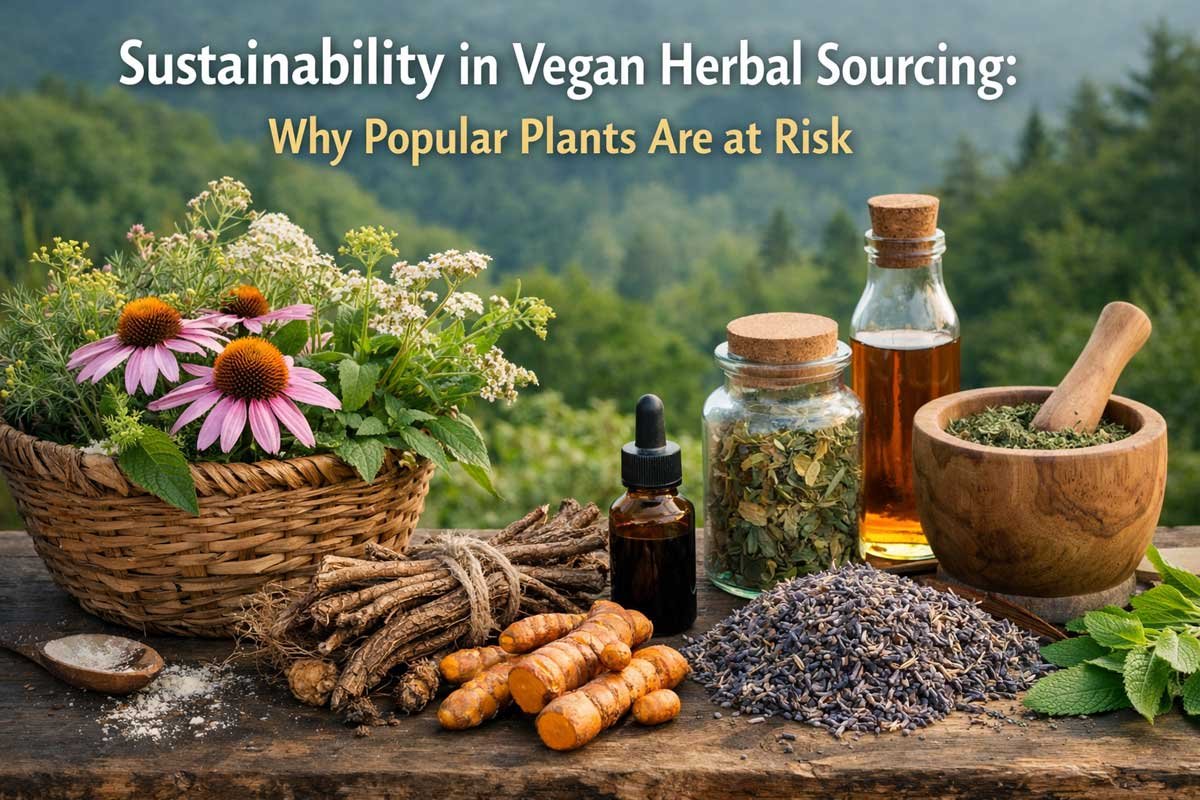
When Green Becomes Fragile: The Hidden Strains on Popular Herbs
It’s easy to open a jar of chamomile tea or sprinkle turmeric into a smoothie and assume that the plant behind it is abundant, patient, and endlessly renewable. The truth is more complicated. As the vegan movement grows and plant-based lifestyles become mainstream, the plants that support this shift are feeling the pressure. Herbs that were once common in home gardens, local fields, or wild meadows are increasingly harvested at industrial scales, sometimes faster than they can naturally regenerate. Sustainability, the word we throw around in conversations about food and lifestyle, becomes urgent and concrete when you see that your favorite herbal allies might be at risk.
Demand drives scarcity. People are reaching for calming teas, adaptogenic powders, and herbal remedies not just for tradition or taste, but for wellness trends amplified by social media. Chamomile, calendula, nettle, turmeric, ginger, ashwagandha, and holy basil are no longer niche herbs for small communities—they are international commodities. And as with any commodity, the rules of supply and demand apply. Wild populations are harvested intensively, farms expand monocultures into fragile ecosystems, and small farmers and indigenous communities are caught between economic need and ecological stewardship.
Table of Contents

Take chamomile as an example. Its gentle, soothing properties have made it a household staple for generations, a go-to for sleepless nights or a comforting cup before work. Yet in Europe, parts of North America, and even in Central Asia, wild chamomile populations are being collected faster than they grow back. Farmers try to meet demand by planting chamomile en masse, but monoculture cultivation often strips the soil of nutrients, increases susceptibility to pests, and requires chemical inputs to maintain yield. The plant itself, known for supporting nervous system balance in traditional herbalism, becomes a victim of the very human desire for convenience and abundance.
Turmeric and ginger tell a similar story on a global scale. Once local spices grown in small, diverse plots, they are now exported and sold in powdered form, tinctures, capsules, and wellness blends across continents. Countries like India, Indonesia, and Thailand have scaled production dramatically to meet global demand. This growth isn’t neutral—it comes with soil erosion, loss of biodiversity, and economic stress on small farmers who can’t compete with large-scale commercial plantations. Vegan consumers seeking plant-based remedies may unintentionally contribute to ecosystems being destabilized thousands of miles away.
Adaptogens, herbs that support the body under stress, are particularly vulnerable. Ashwagandha from India, holy basil (tulsi), and Siberian rhodiola have seen a dramatic surge in popularity. Their efficacy is still being researched, but the market doesn’t wait for peer-reviewed studies. People buy powders, capsules, and teas because wellness culture signals that they “help with stress.” Wild-harvested populations are under pressure because cultivated yields cannot yet satisfy demand, leading to overharvesting and degradation of native habitats. Beyond environmental impact, this creates economic pressures on local communities who rely on these plants for their livelihoods. If a plant is collected unsustainably, local populations might lose a critical source of income while the plant itself becomes scarce.
Even when herbs are grown domestically, sustainability isn’t guaranteed. Conventional agriculture often prioritizes yield over ecological balance. Fertilizers, pesticides, and herbicides can contaminate soil and waterways. Water-intensive crops, like some types of turmeric, strain local water supplies. Pollinators, crucial for herb reproduction, may suffer from habitat loss and chemical exposure. Sustainability in herbal sourcing is therefore not just about avoiding overharvesting—it’s about understanding the full system in which a plant grows.
It’s also about cultural knowledge. Many popular herbs are deeply tied to indigenous and traditional practices. Wildcrafted plants, for example, are often collected in ways that have been refined over centuries to maintain ecosystem balance. When global demand exceeds traditional practices, these methods are sometimes abandoned in favor of short-term yield, jeopardizing both the plant and the culture surrounding it. The disconnect between the consumer and the source plant amplifies the risk: it’s easy to forget that what’s in your hand came from a living ecosystem with its own rhythms and limits.
So, what does sustainability mean in this context? It’s more than a label or a buzzword. It’s the recognition that every cup of tea, every herbal supplement, and every dried herb used in vegan cuisine comes with ecological and social footprints. It’s understanding that even plants that seem resilient can be fragile under human pressure. It’s realizing that your choices as a consumer—rotating herbs, choosing certified sources, planting your own garden—can have a tangible impact on whether these plants will be available for decades to come.
Consider nettle or peppermint. Both are relatively easy to grow, fast-spreading, and highly adaptable. Yet even these species are affected by soil depletion, herbicide use, and the shift toward large-scale commercial farms. Contrast that with wild ginseng or ashwagandha, which have much slower growth cycles and are easily overharvested. When herbs are popularized without consideration for their ecological limits, scarcity isn’t just a distant problem—it becomes immediate and local, even affecting plants cultivated on a smaller scale.
One more angle often overlooked is the sensory and cultural experience of herbs. Picking a sprig of mint from your garden or finding chamomile in a meadow connects you to seasons, soil, and time in a way that a powdered capsule cannot replicate. Sustainability in herbal sourcing preserves not just the plants themselves but the human experience of interacting with them. It’s a reminder that herbalism is as much about connection as it is about function.
In a vegan context, this takes on an added layer of responsibility. Veganism often emphasizes ethical choices regarding animal welfare, but sustainability in herbal sourcing asks us to consider plant welfare, ecological balance, and human communities. Being conscious of where herbs come from, how they are harvested, and how they are processed is part of the same ethical framework that guides vegan food choices. It may require slowing down, rotating herbs seasonally, and accepting that some plants aren’t always available year-round. That restraint is not a limitation—it’s a form of stewardship.
The hidden strains on popular herbs are real, and the consequences are visible in diminished wild populations, stressed farming communities, and compromised ecosystems. But acknowledging this fragility opens the door to meaningful action. Sustainability in herbal sourcing is not an abstract ideal; it is an active choice, a daily practice embedded in the cups of tea we drink, the powders we mix, and the herbal rituals we cherish. By recognizing the pressure our favorite plants face, we can begin to make decisions that preserve them for future generations, both as resources and as cultural treasures.
Sustainability isn’t about scarcity in a negative sense; it’s about balance, awareness, and respect. Each plant has a story, an ecological context, and a life cycle. Being mindful of this transforms herbal consumption from a simple act into a conscious dialogue with nature. In the world of vegan herbalism, when green becomes fragile, it’s a call to slow down, observe, and act with intention—not only for our health and enjoyment but for the enduring health of the planet.
The Popular Plants Pushed to the Edge
Herbs that once felt endlessly abundant are now under pressure, pulled between global demand and ecological limits. What we casually drop into a tea infuser or smoothie powder often has a complex backstory—sometimes one of overharvesting, habitat disruption, or intensive monoculture farming. Popularity in the herbal world can be a double-edged sword: it spreads awareness of plant benefits but can push species to the brink if sustainability isn’t considered. Let’s explore some of the most widely used herbs and why they’re feeling the strain.
Chamomile and Calendula: Gentle Yet Pressured
Chamomile and calendula are cornerstones of herbal comfort. Their mild, soothing properties make them staples in teas, skincare, and home remedies. Yet this popularity has an ecological cost. Chamomile, particularly German chamomile (Matricaria recutita), has been overharvested in the wild in parts of Europe and North America. While domestic cultivation helps, it often involves monoculture plots that deplete soil nutrients and require chemical intervention to maintain yield.
Calendula (Calendula officinalis), with its bright orange petals and skin-soothing properties, faces similar challenges. Wild populations are less common than cultivated ones, and intensive farming can compromise soil health and reduce genetic diversity. These plants, long celebrated for gentle effects on the nervous system and skin, are paradoxically endangered by the very wellness practices that celebrate them.
The subtle irony is that while chamomile and calendula are accessible to most, their long-term availability depends on mindful sourcing and cultivation practices. Consumers who assume these plants are endlessly renewable risk contributing to their decline, especially if purchasing bulk or unverified wild-harvested products. Certified organic and sustainably harvested sources, even at a slightly higher cost, help maintain plant populations and protect the ecosystems they depend on.
Turmeric and Ginger: Global Demand Meets Local Strain
Turmeric (Curcuma longa) and ginger (Zingiber officinale) have moved far beyond their original culinary contexts. These rhizomes are now widely recognized for their anti-inflammatory and digestive support properties, marketed in capsules, powders, teas, and wellness drinks. While this global popularity has made them household names, it has also intensified pressure on the regions where they are cultivated.
India, one of the largest producers of turmeric and ginger, faces the environmental consequences of high-demand agriculture. Expanding monocultures reduce soil fertility, increase vulnerability to pests, and often rely on chemical fertilizers and pesticides. Intensive harvesting, particularly when younger plants are pulled prematurely, can reduce long-term yields and stress the land.
Beyond environmental impacts, there is a social dimension. Small farmers may struggle to compete with large commercial plantations that dominate export markets. When prices fluctuate or demand spikes, local communities can experience economic instability, further complicating sustainable practices. Vegan consumers seeking plant-based remedies, while well-intentioned, can unintentionally drive these pressures unless they choose responsibly sourced, fair-trade products.
Even in regions where turmeric and ginger are grown domestically or in small-scale organic farms, sustainability isn’t guaranteed. Water-intensive cultivation, seasonal overplanting, and soil exhaustion are ongoing challenges. The lesson here is that the global popularity of an herb does not equate to ecological abundance. Awareness, sourcing choices, and support for regenerative practices are essential to ensure these plants remain available.
Adaptogens Under Pressure: Ashwagandha, Rhodiola, and Holy Basil
Adaptogenic herbs have surged in popularity in the past decade. They promise to help the body cope with stress and support overall resilience, though the science is still evolving. Ashwagandha (Withania somnifera), rhodiola (Rhodiola rosea), and holy basil (Ocimum tenuiflorum) have become staples in powdered supplements, teas, and wellness blends.
Ashwagandha, traditionally cultivated in India, is now harvested both from farms and wild populations. The latter is particularly vulnerable, as overharvesting reduces genetic diversity and threatens local ecosystems. Communities that rely on wild ashwagandha for income may face resource depletion, creating a tension between economic needs and environmental stewardship.
Rhodiola, native to the Siberian highlands, is prized for its stress-mitigating properties. Wild rhodiola is slow-growing and thrives in fragile mountain ecosystems. Increased global demand has led to overcollection in some regions, risking population collapse. The plant’s slow growth rate makes recovery difficult, highlighting the delicate balance between human use and ecological sustainability.
Holy basil, or tulsi, is revered in Indian culture for its spiritual and health significance. While easier to cultivate than rhodiola, large-scale farming for international markets can lead to monocultures and chemical dependence, diminishing soil quality and impacting local biodiversity. Even widely cultivated plants are vulnerable when demand escalates beyond sustainable limits.
These adaptogens illustrate a broader trend: popularity can endanger plants that are slow-growing, region-specific, or reliant on particular ecological conditions. They also underscore the importance of transparency in sourcing. Consumers who are aware of supply chains, who seek certified or ethically harvested products, and who rotate herbs in their routines can mitigate the risk of overexploitation.
Taken together, chamomile, calendula, turmeric, ginger, and adaptogens demonstrate the fragile balance between human demand and ecological sustainability. Popularity drives consumption, which in turn can deplete wild populations, stress cultivated fields, and challenge local communities. Being mindful of these pressures doesn’t require giving up these herbs—it requires informed choices, supporting ethical sourcing, and sometimes, embracing less familiar or seasonal alternatives.
Herbal sustainability is an active responsibility. It asks us to consider the origins, growth conditions, and ecological footprint of each plant we consume. A cup of chamomile tea, a sprinkle of turmeric, or a daily adaptogen blend is not just a personal wellness ritual—it is part of a broader interaction with ecosystems and communities. Recognizing the strain on popular herbs transforms everyday consumption into a conscious, sustainable practice.
When we understand which plants are under pressure and why, it opens space for alternatives: growing your own herbs, sourcing locally, exploring less popular yet equally effective species, or supporting producers who prioritize regenerative methods. Sustainability in herbal sourcing is about maintaining abundance without exhausting the planet. Popular plants may be pushed to the edge, but with awareness and intentional choices, they can thrive alongside the growing vegan movement.
Sustainable Sourcing Strategies for Vegan Herbalism
When popular herbs face pressure from global demand, the question becomes: what can we actually do about it? For those committed to a vegan lifestyle, sustainability in herbal sourcing is not an abstract concept—it’s a practical responsibility. It’s about understanding where plants come from, how they are grown or harvested, and what practices help maintain healthy ecosystems. The good news is that concrete strategies exist, and adopting them doesn’t mean sacrificing convenience or variety. It means making intentional choices that support both plants and people.
Certification Systems and Ethical Labels
One of the clearest ways to support sustainability is through certifications and ethical labels. Organizations like FairWild, USDA Organic, and Rainforest Alliance provide frameworks to ensure that herbal products are harvested in ways that maintain ecological balance. FairWild, for example, sets standards for wild collection that prevent overharvesting, ensure fair wages for harvesters, and maintain the integrity of local ecosystems. These labels offer more than just reassurance—they provide a verifiable path toward responsible consumption.
For the vegan herbalist, certifications serve multiple purposes. They guarantee that plant products are free from animal exploitation, while also confirming sustainable practices in cultivation or wildcrafting. A packet of chamomile labeled FairWild or USDA Organic signals that the plants were collected thoughtfully, with attention to regeneration and biodiversity. Similarly, adaptogenic herbs such as ashwagandha or rhodiola, when certified, indicate that wild populations are not being depleted and that local communities benefit economically.
Ethical labels can also guide consumer behavior in subtle but impactful ways. Choosing certified products encourages brands to adopt sustainable practices and helps shift market demand toward responsible sourcing. It creates a feedback loop: consumers signal their values through purchases, producers respond with better practices, and plants and ecosystems are safeguarded in the process. For herbs that are particularly at risk due to global popularity, such as turmeric, ginger, or holy basil, this kind of conscious buying can make a measurable difference.
Cultivation Over Wild Harvest
While ethical wild harvesting is crucial, cultivation—especially small-scale or home cultivation—is often a more sustainable alternative for many herbs. Chamomile, peppermint, nettle, and even calendula thrive in temperate gardens, while tulsi or ashwagandha can be grown in controlled environments or greenhouse setups. By cultivating herbs locally, you reduce the demand on wild populations, decrease the carbon footprint associated with transport, and foster a deeper connection with the plants themselves.
Cultivation doesn’t have to be complicated. Even a few pots on a windowsill can supply enough herbs for daily teas or tinctures. For those with more space, community gardens or small-scale herb farms can produce significant quantities while maintaining ecological balance. Companion planting—growing multiple species together—improves soil health, reduces pest pressures, and mirrors natural ecosystems, making cultivated herbs more resilient and sustainable.
In addition to environmental benefits, cultivation promotes diversity in herbal use. Rotating what you grow based on season, soil type, and sunlight encourages experimentation with less common herbs. This reduces pressure on overharvested species and broadens the range of plants incorporated into daily vegan routines. Growing your own herbs also reconnects you with the sensory experience of herbalism—the smell of fresh mint, the bright yellow of calendula petals, the subtle bitterness of nettle leaves—reminding you that sustainability is as much about engagement and respect as it is about conservation.
Rotational Harvesting and Regenerative Practices
For those who work with commercially cultivated or wild-harvested herbs, rotational harvesting and regenerative practices are essential strategies. Rotational harvesting involves collecting plant material in cycles, allowing populations to regenerate naturally before being harvested again. For example, selectively picking leaves or flowers instead of uprooting the entire plant ensures regrowth and preserves genetic diversity. In perennial herbs like chamomile or peppermint, this method can maintain a healthy population for decades.
Regenerative practices go a step further, focusing not only on sustainability but on actively improving the ecosystem. Techniques such as composting, using organic fertilizers, planting cover crops, and integrating pollinator-friendly habitats help restore soil fertility, enhance biodiversity, and improve water retention. In herb farms or gardens, these practices mean that each harvest contributes positively to the ecosystem rather than depleting it.
These strategies are not exclusive to large-scale operations. Home gardeners, urban farmers, and small community plots can all adopt rotational and regenerative practices. Even simple actions like leaving some plants to flower and seed, avoiding monocultures, and enriching the soil with composted plant matter mimic natural cycles and reduce stress on plant populations. Over time, these practices create resilient herbal ecosystems that are both productive and ecologically responsible.
Sustainable sourcing also intersects with thoughtful consumer behavior. Supporting brands that implement rotational harvesting or regenerative cultivation amplifies these practices. Sharing knowledge about ethical sourcing, encouraging local growers, and prioritizing seasonal herbs are small steps with cumulative impact. By thinking beyond immediate consumption and considering the life cycle of each plant, vegan herbalists participate in a system that values long-term abundance over short-term convenience.
The combination of certifications, cultivation, and regenerative practices forms a comprehensive approach to herbal sustainability. Each element reinforces the others: certifications provide assurance and standards, cultivation reduces wild pressure and deepens connection, and regenerative practices restore ecological health. Together, they offer a practical framework for integrating sustainability into everyday vegan herbalism.
In a world where popular herbs like chamomile, calendula, turmeric, ginger, ashwagandha, rhodiola, and tulsi face increasing pressure, these strategies are more than just recommendations—they are essential tools for preserving the plants that nourish us. They remind us that sustainability is not passive; it requires active engagement, observation, and choice. A simple decision, like buying FairWild-certified chamomile or planting peppermint at home, has a ripple effect. It protects ecosystems, supports local communities, and ensures that the next generation of herbal enthusiasts can enjoy these plants in the same abundance we have.
Ultimately, sustainable sourcing in vegan herbalism is a mindset as much as a practice. It involves recognizing that plants have limits, that human demand can overwhelm ecosystems, and that every action, from purchasing decisions to gardening techniques, contributes to the health of the planet. For those who care deeply about ethical living, environmental responsibility, and the long-term availability of herbal allies, embracing these strategies transforms herbal consumption from a routine into a deliberate act of stewardship.
How Consumer Choices Shape the Future of Herbal Sustainability
Herbal sustainability isn’t just about farms, wild populations, or certifications. It’s also about the decisions we make as consumers. Every cup of chamomile tea, every sprinkle of turmeric, every daily adaptogen blend carries an ecological footprint. Understanding how our habits influence plant populations, farming practices, and global supply chains is essential for maintaining abundance in a vegan herbal lifestyle. The power of choice is enormous, and when applied thoughtfully, it can protect both ecosystems and communities.
Educating About Scarcity and Seasonality
Many herbal enthusiasts assume that plants are endlessly available. This assumption can lead to overharvesting, overconsumption, and even the depletion of wild populations. Education about scarcity and seasonality changes that dynamic. Knowing which herbs are abundant at a given time or in a specific region allows consumers to rotate their use and reduce pressure on overexploited species.
For example, chamomile and calendula flourish in temperate summers, while ginger and turmeric peak in tropical harvest cycles. Seasonal awareness encourages variety and reduces reliance on imported, industrially cultivated herbs. It also opens the door to lesser-known alternatives that are equally beneficial but less commercially exploited, like lemon verbena, violet leaf, or catnip. By integrating seasonal herbs into daily routines, consumers align their consumption with natural growth cycles, supporting sustainability and ecological resilience.
Educational efforts can take many forms. Reading labels, learning the origin of an herb, or engaging with local growers are simple ways to increase awareness. Workshops, social media platforms, and community gardens also play a role, helping consumers understand that abundance is not infinite. Scarcity is not a limitation; it’s a guide for mindful use. Recognizing seasonal patterns encourages creativity in herbal practice, whether mixing teas, rotating tinctures, or exploring new culinary applications.
Transparency in Supply Chains
A significant barrier to sustainable consumption is a lack of transparency in herbal supply chains. Herbs often pass through multiple intermediaries—from wild harvesters, farmers, and processors to distributors and retailers—before reaching consumers. At each step, ecological and social practices can vary, and without clear information, ethical sourcing becomes difficult to verify.
Transparency is a tool that empowers consumers to make informed choices. Brands that disclose origin, cultivation methods, harvesting practices, and certifications allow herbalists to align their purchases with sustainability goals. For instance, knowing that ashwagandha comes from a certified, rotationally harvested source ensures that wild populations are not being depleted. Similarly, seeing that turmeric is grown in regenerative polyculture systems rather than monocultures signals a lower ecological impact.
Consumers can support transparency by seeking out companies that trace their products from farm to shelf. Many ethical brands provide detailed information on packaging or websites, highlighting fair wages, sustainable harvesting, and environmental safeguards. By prioritizing these products, consumers drive market demand toward responsible practices, creating a feedback loop: ethical sourcing is rewarded, overexploitation is discouraged, and plant populations are protected. Transparency also strengthens the connection between consumer and plant, turning everyday choices into conscious, ecological acts.
Mindful Consumption Over Fad Culture
Trends in wellness and social media often create cycles of intense demand for “super-herbs.” Adaptogens, turmeric, ginger, and other popular herbs are frequently marketed as quick solutions for stress, energy, or immunity. While they offer benefits, this trend-driven consumption can exacerbate overharvesting, pressure fragile ecosystems, and marginalize local communities.
Mindful consumption counters the hype-driven approach. It involves evaluating how often and why you use specific herbs, rotating species, and balancing convenience with sustainability. Instead of seeking the latest viral powder or capsule, mindful consumers explore variety, focus on seasonal availability, and experiment with less-popular herbs that are abundant and resilient. For example, switching between nettle, lemon balm, and peppermint throughout the year reduces strain on any single plant population while enriching herbal routines.
Mindfulness also extends to quantity and sourcing. Buying in bulk might seem convenient, but if the product comes from overharvested wild populations, it contributes to scarcity. Choosing smaller amounts from certified or local sources, growing your own herbs, or sharing resources through community gardens and herbal co-ops can reduce environmental pressure while maintaining access to favorite plants.
Consumer choices also shape cultural perception. By valuing sustainability over novelty, herbal enthusiasts encourage brands, suppliers, and markets to prioritize responsible practices. When mindful consumption becomes a social norm, it protects fragile species, rewards ethical growers, and shifts the focus from short-term trends to long-term ecological balance. In this sense, conscious consumerism is not just individual action—it’s a collective movement that can safeguard the future of herbal wellness.
The intersection of scarcity education, supply chain transparency, and mindful consumption demonstrates the profound role consumers play in herbal sustainability. It reminds us that abundance is not guaranteed. Even seemingly common herbs can become vulnerable under unchecked demand, and every choice—from the brand we buy to the herbs we rotate—affects global plant populations. For vegan herbalists, these considerations are part of the ethical framework of living consciously: respecting animals, humans, and plants alike.
Making informed decisions doesn’t require perfection. It begins with awareness, small changes, and intentional habits. Reading labels, asking questions about sourcing, rotating herbs, and embracing seasonal alternatives are all practical steps. Growing herbs at home or supporting local producers adds another layer of sustainability, connecting consumers with the life cycle of the plants they rely on. Each choice contributes to a resilient system where herbs remain abundant, communities thrive, and ecosystems are protected.
Ultimately, consumer behavior is one of the most powerful tools for protecting popular herbs. Trends may rise and fall, but thoughtful, informed habits create lasting impact. Educating ourselves about scarcity, supporting transparent supply chains, and resisting the pull of fad culture ensures that herbs like chamomile, calendula, turmeric, ginger, ashwagandha, rhodiola, and tulsi continue to flourish. The future of vegan herbalism depends as much on how we consume as on how these plants are cultivated or harvested. Every mindful decision is a vote for sustainability, resilience, and respect for the intricate systems that sustain life.
A Call to Cultivate Both Health and Earth
Herbalism, at its core, is an intimate dialogue between humans and plants. Each cup of tea, each sprinkle of turmeric, or daily adaptogen blend is more than a simple ritual—it’s a moment of connection with nature, a choice that carries consequences beyond personal wellness. In the rush of modern life and the surge of plant-based trends, it’s easy to forget that popular herbs like chamomile, calendula, turmeric, ginger, ashwagandha, rhodiola, and tulsi are not infinite resources. They are living organisms, bound to specific ecosystems, climate conditions, and ecological cycles. Sustainability, in this context, is not optional—it is essential.
Recognizing that herbs are fragile under pressure transforms our relationship with them. When we understand the impact of overharvesting, monoculture farming, and global demand, we begin to make choices that respect both plant and planet. Sustainability isn’t about limiting enjoyment or abandoning favorite herbs; it’s about approaching herbal use thoughtfully, with an awareness of the ecological and social systems that sustain them. It’s about cultivating abundance through mindfulness rather than taking it for granted.
One of the most powerful ways to engage with herbal sustainability is through informed consumption. This begins with education—learning which herbs are abundant, which are at risk, and how seasonal and regional factors affect availability. A simple awareness of harvest cycles and ecological sensitivity allows us to rotate herbs in daily routines, reducing pressure on any single species. Chamomile may be abundant in summer, while nettle thrives in spring, and tulsi prefers controlled cultivation. By respecting these natural rhythms, we align our consumption with the life cycles of the plants themselves.
Transparency in supply chains amplifies the effect of mindful consumption. Choosing herbs from certified sources, such as FairWild or USDA Organic, ensures that plants are harvested responsibly, ecosystems are protected, and local communities benefit economically. Supporting brands that prioritize regenerative practices sends a clear signal: the market values sustainability, and overexploitation will not be rewarded. Even small actions, like asking questions about sourcing or selecting local growers, reinforce ethical standards and promote long-term ecological resilience.
Cultivation, both at home and in small-scale farms, is another cornerstone of sustainable practice. Growing herbs in gardens, pots, or community plots reduces reliance on wild populations, fosters biodiversity, and reconnects us to the sensory experience of plants. There’s a profound difference between sipping store-bought chamomile and harvesting fresh flowers from your own garden—both in aroma and in the sense of stewardship it creates. Companion planting, soil enrichment, and regenerative gardening practices ensure that cultivation not only provides for human use but also enhances ecological health.
Equally important is resisting the allure of fad culture. Popularity-driven consumption can accelerate depletion, especially when trends push consumers toward specific “super-herbs.” Mindful rotation, seasonal awareness, and openness to less familiar species are simple yet effective strategies. By diversifying our herbal use, we reduce the risk of overharvesting while discovering new flavors, aromas, and benefits. This approach transforms herbalism from a trend-based pursuit into a sustainable, lifelong practice that honors both plant and human communities.
Sustainability is not just about the environment; it is about equity. Many of the herbs we use today are sourced from regions where local communities rely on these plants for income. Overharvesting or industrial-scale production can disrupt economies, erode traditional knowledge, and marginalize indigenous practices. Conscious consumer choices—favoring fair-trade, certified, or locally grown herbs—support these communities, creating a more ethical and resilient system. Our daily rituals, when grounded in awareness, have the power to protect livelihoods and preserve cultural heritage as much as they protect ecosystems.
At the heart of herbal sustainability lies a simple principle: balance. Balance between consumption and regeneration, between popularity and scarcity, and between human desire and ecological limits. Every cup of tea or herbal preparation is an opportunity to participate in this balance. Choosing sustainably sourced chamomile or cultivating peppermint at home may seem small, but these actions ripple outward, supporting plant populations, soil health, pollinators, and local economies. Over time, individual choices aggregate into systemic change, ensuring that herbs remain abundant for future generations.
This call to action is also a call for reflection. It asks us to pause and consider our relationship with plants, our impact on ecosystems, and the long-term consequences of convenience-driven consumption. Herbs are not commodities in the abstract; they are living participants in a complex web of life. Respecting their cycles, understanding their limits, and engaging with them thoughtfully allows us to cultivate a form of wellness that is holistic—nourishing body, mind, and planet simultaneously.
Ultimately, cultivating sustainability in vegan herbalism is an act of care. It’s care for ourselves, care for the plants that sustain us, and care for the ecological and human communities intertwined with their growth. By embracing conscious sourcing, seasonal rotation, cultivation, regenerative practices, and mindful consumption, we transform everyday herbal use into a deliberate, ethical, and ecological practice. What starts as a personal choice becomes part of a collective movement, one that ensures popular herbs continue to thrive, ecosystems remain balanced, and future herbalists inherit a world where plants are abundant, diverse, and respected.
Sustainability in herbal sourcing is not a destination but a continuous journey—a practice woven into every decision, every cup of tea, and every interaction with the plants that enrich our lives. The responsibility may feel weighty, but it is also empowering: every mindful choice is a tangible contribution to preserving life, maintaining ecological balance, and honoring the centuries of human knowledge and care that brought these plants to our hands.
By choosing sustainability, we cultivate more than herbs. We cultivate a way of living that prioritizes long-term health, ecological integrity, and ethical responsibility. The future of vegan herbalism—and the well-being of the plants it relies on—depends on our choices. Every mindful harvest, every ethically sourced purchase, every garden planted is a step toward a world where humans and herbs flourish together. In caring for the earth, we care for ourselves, and in caring for ourselves, we honor the living network of green allies that make life richer, healthier, and more connected.
Best-selling Vegan Products


Article Sources
At AncientHerbsWisdom, our content relies on reputable sources, including peer-reviewed studies, to substantiate the information presented in our articles. Our primary objective is to ensure our content is thoroughly fact-checked, maintaining a commitment to accuracy, reliability, and trustworthiness.
- Sangiovanni, E., Brivio, P., Dell’Agli, M., & Calabrese, F. (2017). Botanicals as Modulators of Neuroplasticity: Focus on BDNF. Neural Plasticity, 2017, 5965371. https://doi.org/10.1155/2017/5965371
- Vogl, S., Picker, P., & Zidorn, C. (2020). Sustainable Harvesting of Medicinal and Aromatic Plants. Frontiers in Pharmacology, 11, 606. https://doi.org/10.3389/fphar.2020.00606
- World Health Organization. (2013). WHO Traditional Medicine Strategy 2014–2023. https://www.who.int/publications/i/item/9789241506090
- Heinrich, M., Barnes, J., Gibbons, S., & Williamson, E. (2018). Fundamentals of Pharmacognosy and Phytotherapy. Elsevier Health Sciences.
- Hamilton, A. C. (2004). Medicinal plants, conservation and livelihoods. Biodiversity & Conservation, 13(8), 1477–1517. https://doi.org/10.1023/B:BIOC.0000020216.08936.55
- Ticktin, T. (2004). The ecological implications of harvesting non-timber forest products. Journal of Applied Ecology, 41(1), 11–21. https://doi.org/10.1111/j.0021-8901.2004.00859.x
- World Health Organization. (2019). Global report on traditional and complementary medicine 2019. https://www.who.int/publications/i/item/978924151536
- Schippmann, U., Leaman, D. J., & Cunningham, A. B. (2006). A comparison of cultivation and wild collection of medicinal and aromatic plants under sustainability aspects. In Biological and Socioeconomic Considerations (pp. 75–95). Springer. https://doi.org/10.1007/3-540-31339-1_6
- Hamilton, A. C. (2004). Medicinal plant conservation and sustainable use: A global overview. Cambridge University Press.

- Nectarine: Stone Fruit for Heart Health and Antioxidants - March 8, 2026
- Peach: Hydrating Fruit for Skin Health and Digestion - March 8, 2026
- Plum: Fiber-Rich Fruit for Digestion and Heart Health - March 8, 2026
