
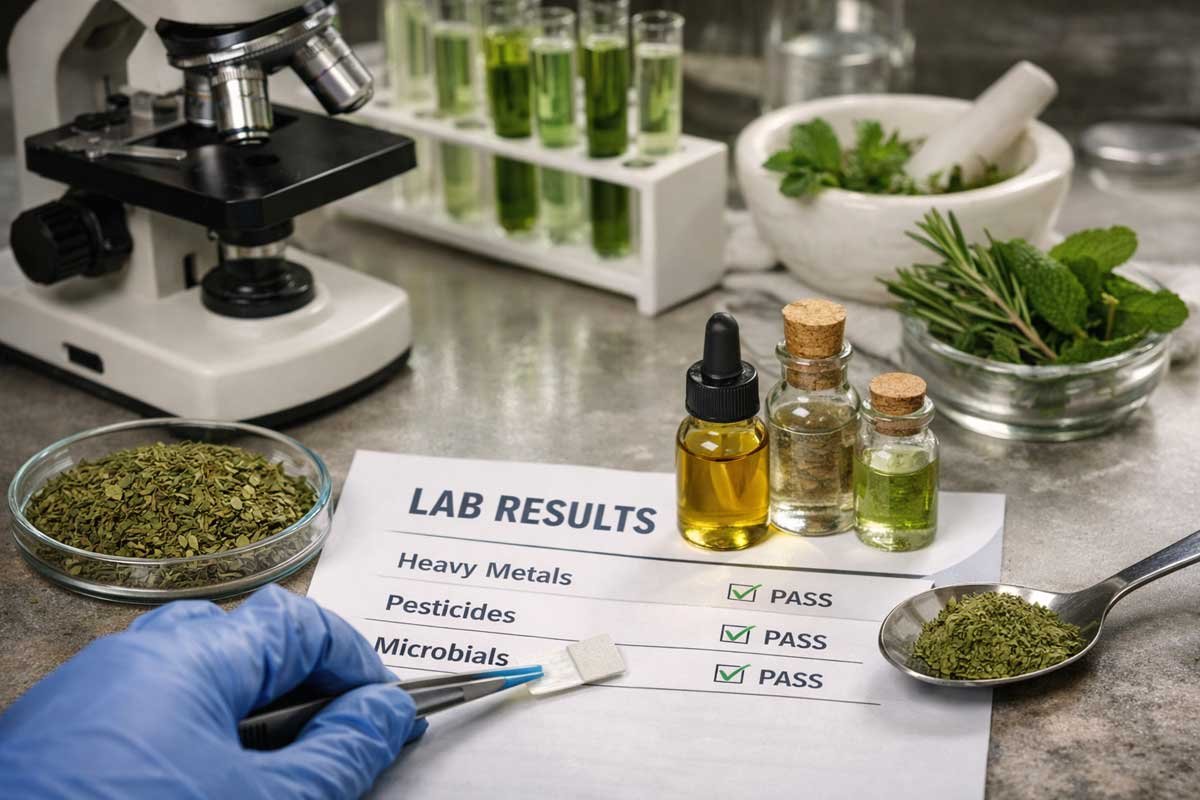
Why Lab Testing for Herbs Isn’t Always Straightforward
Lab testing for herbs has become almost synonymous with quality assurance in the organic world, but the reality is more complicated than most people realize. Many consumers assume that if an herb has been tested in a lab, it is automatically safe, potent, and worth the price. In truth, lab testing can tell us a lot—but it also has significant limitations, and interpreting results requires more than just scanning a few numbers on a certificate.
One of the first misconceptions comes from the sheer variety of tests available. Some labs focus on contaminants like heavy metals, pesticides, or microbial pathogens. Others measure the levels of specific active compounds, often referred to as “potency” markers. Then there are identity tests that confirm the species of the plant itself. While each of these can provide meaningful information, the value of the results depends on context, methodology, and how the data is interpreted. For example, a high curcuminoid reading in turmeric may look impressive on paper, but it doesn’t account for factors like bioavailability, extraction method, or storage conditions that dramatically affect the actual effectiveness of the herb when consumed.
Table of Contents

Even among labs that perform standardized testing, results can vary widely. Soil conditions, climate, harvest timing, and even subtle genetic differences between plant strains can influence chemical composition. That means two batches of the same herb, grown in slightly different conditions, can produce different lab readings despite both being high-quality and organically grown. It’s one of the reasons why simply looking for a “perfect” number on a report can be misleading.
Another layer of complexity comes from the regulatory environment. Organic certification ensures adherence to cultivation standards, but it does not automatically guarantee that every batch is free from contaminants or that active ingredient levels are consistent. Lab testing provides a snapshot of a single batch at a specific point in time. It cannot account for what happened during storage, transportation, or even slight delays in processing. A herb that tested clean last month could develop mold or degrade in potency if handled improperly afterward.
Consumer expectations also complicate the picture. There’s a strong tendency to equate more testing with better quality, but that isn’t always the case. Some labs include tests that sound impressive—like arbitrary antioxidant scores or secondary metabolite profiling—but these results often have little practical meaning for the average user. They may be highlighted on marketing materials to make a product appear superior, even though they do not necessarily affect safety or efficacy. Learning to distinguish between tests that genuinely matter and those that are mostly for show is critical.
Then there’s the issue of interpretation. Lab reports can be highly technical, full of chemical names, percentages, and units that are difficult to understand without a background in chemistry or pharmacognosy. Without the proper context, it’s easy to misread numbers or overemphasize small differences. For instance, a slightly elevated lead level in a root herb may raise alarm bells, but the actual risk depends on dose, frequency of use, and whether the result falls within established safety limits set by regulatory bodies like the World Health Organization or the United States Pharmacopeia.
The complexity is not just a problem for consumers. Retailers, herbalists, and product formulators also need to navigate these challenges. Choosing a lab is not simply about picking the one with the fastest turnaround or the cheapest price. Accreditation, methodology, and experience with botanical testing are crucial factors. Labs that are ISO-accredited and have experience with herbs can provide reproducible results and meaningful interpretation. Without that, even a certificate of analysis can be misleading.
Finally, it’s important to recognize that lab testing is only one piece of the puzzle. Herbs are living materials, influenced by seasons, soil, climate, and human handling. Testing provides valuable data, but it does not replace good agricultural practices, proper storage, or responsible sourcing. A lab report might confirm that an herb is free of contaminants today, but improper handling tomorrow can compromise the very qualities that the report verified. In other words, lab testing informs decisions, but it does not guarantee outcomes.
Understanding why lab testing for herbs isn’t always straightforward helps set realistic expectations. It highlights the need for critical thinking when reading certificates of analysis, comparing results, or deciding which herbs to purchase. The tests that truly matter—identity confirmation, contaminant screening, and key active compound measurements—can guide safe and informed choices. Everything else, while sometimes interesting, should be treated cautiously and understood in context. Recognizing these nuances allows consumers, practitioners, and retailers to approach lab results with clarity rather than confusion, turning complex data into practical insight rather than anxiety.
Decoding Lab Testing for Herbs: Key Analyses That Provide Real Insights
Lab testing for herbs can feel overwhelming at first glance. Certificates of analysis (CoAs) are packed with numbers, chemical names, and acronyms that seem more suited to a chemistry lab than a kitchen shelf. Yet, once you break it down, the results fall into a few core categories that actually matter for understanding quality, safety, and ingredient integrity.
Identity and Purity Testing
One of the most fundamental tests in herb labs is identity verification. This is where the lab confirms that the plant you purchased is actually the plant listed on the label. It sounds obvious, but misidentification is surprisingly common. Some species look nearly identical, and even experienced collectors can make mistakes. A CoA that includes DNA barcoding or microscopic analysis provides assurance that the product is what it claims to be.
Purity testing goes hand in hand with identity. Here, labs check for substitutions, fillers, or adulterants. In powdered herbs, for example, it’s easy for cheaper plant material or starches to be mixed in unintentionally—or sometimes deliberately. Chemical fingerprinting methods, which compare the profile of key compounds in the sample against a reference standard, can reveal these discrepancies. This is crucial because even small amounts of unintended ingredients can trigger allergies or reduce the herb’s effectiveness.
Contaminant Screening
Perhaps the most safety-critical part of lab testing is contaminant screening. Organic herbs are grown without synthetic pesticides, but they are not immune to environmental contamination. Soil naturally contains heavy metals like lead, cadmium, and arsenic, which plants can absorb over time. Testing helps identify whether concentrations exceed safe limits.
Microbial testing is another pillar of contaminant screening. Herbs, especially those stored as dried powders or in capsules, can harbor bacteria, yeasts, or molds if harvested, dried, or stored improperly. Labs can detect species such as Salmonella, E. coli, or Aspergillus, which, while uncommon, pose real health risks. Some labs also test for residual solvents, particularly in extracts, ensuring that the processing chemicals are below safety thresholds.
The important point is that these tests directly impact safety. When choosing herbs, a lab report that confirms contaminant-free status is much more meaningful than flashy marketing claims about antioxidant levels or exotic phytochemicals.
Active Compound Quantification
Many labs report concentrations of active compounds, sometimes called “potency markers.” These can include curcuminoids in turmeric, ginsenosides in ginseng, or flavonoids in chamomile. Measuring these compounds helps ensure batch-to-batch consistency and supports standardized herbal formulations.
However, there’s a caveat: the numbers alone don’t tell the whole story. Plant chemistry is naturally variable. Factors like genetics, soil composition, sunlight exposure, and even harvest timing can shift concentrations. A low reading doesn’t automatically mean an herb is “weak,” and a high reading doesn’t guarantee superior effects. Lab data is most useful when it’s used to check for consistency and quality control across multiple batches rather than as a single measure of superiority.
What Doesn’t Matter as Much
Not every figure on a lab report is equally important. Some labs include tests for secondary metabolites or antioxidant levels that are often highlighted in marketing. These results may sound impressive, but they rarely correlate with practical safety or efficacy in daily use. While interesting for research, these numbers should be interpreted cautiously and not as the main criteria for choosing a product.
Other examples include arbitrary percentages of minor compounds or non-standardized chemical profiles. Highlighting them can mislead consumers into thinking they represent enhanced quality when, in reality, their real-world significance is minimal. Focusing on identity, contaminant-free status, and relevant active compounds will yield more reliable guidance.
Breaking down lab testing into these categories—identity and purity, contaminant screening, and active compound quantification—clarifies what’s meaningful and what isn’t. By focusing on these core areas, you can read a certificate of analysis with purpose, knowing which numbers reflect real safety and quality and which are more cosmetic or marketing-driven. The key takeaway is that not all lab results are created equal. Understanding what truly matters allows you to separate noise from actionable insight and make informed decisions about the herbs you use or sell.
How to Interpret Lab Results for Organic Ingredients
Lab testing is only useful if you can understand what the numbers actually mean. A certificate of analysis (CoA) might look intimidating at first—full of technical jargon, chemical names, and percentages—but learning how to read it can turn confusion into clarity. Proper interpretation helps you separate meaningful information from marketing fluff, giving you insight into the real quality and safety of herbs.
Reading the Certificate of Analysis
The CoA is essentially the lab’s report card for a batch of herbs. It typically includes sections on identity, purity, contaminants, and sometimes active compounds. Identity confirmation ensures the plant species is correct, while purity checks for fillers, substitutions, or adulterants.
Contaminant results are often presented with exact concentrations, usually in parts per million (ppm) or micrograms per gram. These results indicate the levels of heavy metals, pesticide residues, or microbial contaminants. Some CoAs also include testing for solvent residues in extracts. Active compound measurements, when included, provide concentrations of key bioactive compounds that may influence the herb’s performance.
When reading a CoA, pay attention to dates and batch numbers. A test conducted months before harvest might not reflect the herb you’re actually buying. Also, check whether the lab is accredited. ISO-accredited labs follow standardized methods that ensure reproducibility, which adds credibility to the results.
Cross-Referencing Standards
Numbers on a lab report gain meaning only when compared against accepted benchmarks. Regulatory bodies like the United States Pharmacopeia (USP), European Pharmacopoeia (EP), and the World Health Organization (WHO) provide thresholds for acceptable levels of contaminants and ranges for active compounds.
For example, WHO guidelines define safe limits for heavy metals in medicinal plants, helping you determine if a lead or cadmium reading is concerning. Similarly, USP standards specify minimum identity verification methods and contaminant limits for common botanicals. By comparing CoA results against these standards, you can separate minor, irrelevant variations from genuine safety or quality concerns.
Cross-referencing also helps in assessing batch-to-batch consistency. Even organically grown herbs fluctuate in active compounds due to soil, climate, and harvest timing. If values remain within established ranges across multiple batches, you can be confident in the supplier’s quality control practices.
Recognizing Limitations
Even the most thorough lab tests have boundaries. They capture a snapshot of a single batch at a specific moment, but herbs continue to change after testing. Exposure to moisture, heat, or light during storage can alter chemical composition or promote microbial growth, meaning lab results don’t guarantee what you’ll actually receive.
Another limitation is analytical sensitivity. Every lab test has detection limits. A contaminant may be present below a lab’s threshold, meaning it won’t appear in the report but could accumulate over repeated exposure. Understanding the methodology and detection limits provided in the CoA helps set realistic expectations.
Lab reports also cannot capture holistic quality. Fluctuations in minor compounds, aroma, or flavor, which influence the herb’s sensory experience, are rarely reflected. Similarly, the synergistic effects of multiple compounds in a plant—often important for culinary or wellness purposes—cannot be fully quantified by a lab report.
Case Studies in Practical Application
Consider chamomile, widely used for teas and tinctures. Lab testing can confirm the species, detect microbial contamination, and quantify flavonoid content. Yet flavonoid levels vary naturally depending on sun exposure and harvest timing. A batch with slightly lower flavonoids is not inherently inferior; it still meets safety standards and delivers the expected sensory experience.
Turmeric offers another example. A CoA may show curcuminoid percentages, which indicate certain active compounds, but the preparation method—powdered versus extract, raw versus processed—affects absorption and overall effectiveness. Interpreting lab results in isolation would overlook these practical considerations.
Even for leafy herbs like peppermint or basil, identity verification and microbial screening are often more valuable than minor fluctuations in secondary metabolites. Buyers who focus on safety-critical results and verified ingredient identity can make informed choices without being misled by marketing claims about exotic chemical profiles.
By learning how to read certificates, compare numbers against established standards, recognize methodological limitations, and apply results to real-world scenarios, you gain a practical understanding of lab testing. This empowers both consumers and suppliers to make confident decisions, prioritizing safety, authenticity, and meaningful quality measures.
Best Practices for Consumers and Retailers
Lab testing provides valuable data, but knowing how to apply it makes the difference between informed decisions and wasted effort. Whether you’re buying herbs for personal use or managing inventory for retail, a few practical strategies can help ensure that lab results translate into real-world safety and quality.
Choosing Reliable Labs
Not all labs are created equal. A certificate of analysis is only as trustworthy as the lab that produces it. ISO-accredited laboratories that specialize in botanicals are generally the most reliable because they follow standardized, reproducible methods. Accreditation ensures that the results aren’t just a snapshot—they are verifiable, repeatable, and recognized by regulatory authorities.
Experience also matters. Labs familiar with medicinal plants and organic ingredients are better equipped to handle nuances such as naturally occurring compounds that might be mistaken for contaminants or the unique challenges of powdered versus whole herbs. Cheap or inexperienced labs may provide technically correct results, but their interpretation—or even sample handling—can be inconsistent.
Understanding Organic Labeling
Organic labeling and lab testing complement each other but serve different purposes. Certification primarily ensures that the plant was cultivated without prohibited pesticides, synthetic fertilizers, or genetic modification. It doesn’t automatically guarantee that each batch is contaminant-free or uniform in active compounds.
A CoA adds a layer of verification. When used together, organic certification and lab testing give a fuller picture: the former confirms cultivation practices, while the latter confirms what’s actually in the final product. Being able to distinguish between the two helps avoid the common mistake of assuming that an “organic” label alone equates to superior safety or potency.
Integrating Results into Purchase Decisions
Reading lab reports can feel technical, but practical application boils down to a few key points. Focus on identity verification, contaminant-free status, and relevant active compounds. These metrics directly affect safety and the reliability of the herb.
Other results, such as antioxidant scores or minor secondary metabolite percentages, should be viewed as supplemental information. They rarely dictate the herb’s safety or meaningful quality, but they may be of interest to researchers or marketers.
Batch-to-batch consistency is another important factor. If a supplier consistently delivers herbs within expected ranges for contaminants and active compounds, you can have more confidence in the product’s overall reliability. Conversely, wide fluctuations may indicate gaps in quality control. Using lab results as a comparative tool rather than a single deciding factor keeps decisions grounded in practical insight.
Storage and Handling Considerations
Even the most rigorously tested herbs can degrade if stored improperly. Moisture, heat, and light can accelerate the breakdown of active compounds and create conditions favorable to microbial growth. Lab results cannot predict what happens after testing, so proper handling remains essential.
For consumers, this might mean keeping dried herbs in airtight containers away from sunlight or humidity. For retailers, inventory rotation, temperature control, and proper packaging are equally critical. A batch that tested clean in the lab could develop mold or lose potency if exposed to poor storage conditions. Lab testing informs decisions, but it doesn’t replace common-sense practices in handling and storage.
By combining reliable labs, a clear understanding of organic labeling, practical interpretation of results, and proper handling, consumers and retailers can maximize the value of lab testing. These best practices ensure that the insights from certificates of analysis translate into real-world safety, quality, and trust. In short, knowing how to use the information is just as important as having it.
Making Sense of Lab Testing Without Losing Perspective
Lab testing for herbs is a powerful tool, but it’s easy to get lost in the numbers and jargon. For both consumers and retailers, the challenge isn’t accessing data—it’s interpreting it without letting it overwhelm practical judgment. Understanding what really matters, while keeping perspective, is the key to making informed decisions that are both safe and realistic.
The first step is recognizing that lab results are snapshots, not guarantees. A CoA shows the state of a single batch at a specific point in time, but herbs continue to change after testing. Moisture, temperature, light exposure, and handling can all alter chemical composition or allow microbial growth. Even a perfectly tested batch can degrade if stored improperly, which is why lab results should inform choices, not dictate them.
Another important point is differentiating between meaningful and superficial data. Identity verification, contaminant screening, and relevant active compound quantification are the metrics that truly impact safety and reliability. Everything else—like arbitrary antioxidant scores or minor secondary metabolite levels—can be interesting, but it rarely affects real-world use. Focusing on the metrics that matter helps avoid unnecessary anxiety over numbers that are more cosmetic than practical.
Context is critical when evaluating lab results. A slightly elevated reading in a heavy metal test, for example, may seem alarming at first glance, but its significance depends on dose, frequency, and established safety thresholds from regulatory bodies like the World Health Organization or the United States Pharmacopeia. Similarly, variations in active compounds are often natural and expected due to environmental and seasonal factors. Treating these fluctuations as inherently negative can mislead more than inform.
Lab testing also shouldn’t replace knowledge of proper sourcing and storage. Herbs grown in nutrient-rich, contaminant-free soil and handled responsibly after harvest are less likely to present safety concerns, regardless of minor numerical differences on a CoA. On the other hand, poor storage or careless handling can compromise even the most thoroughly tested herbs. Lab results and good practices work hand in hand; one cannot substitute for the other.
A practical approach is to integrate testing into a broader framework of decision-making. Check that the lab is reliable and accredited, focus on safety-related results and verified identity, and assess batch consistency over time. At the same time, keep storage, handling, and supplier practices in mind. This balanced approach ensures that lab data serves as guidance rather than a source of confusion or anxiety.
Ultimately, the goal is to make lab testing a useful tool rather than a source of stress. It provides insight into what’s actually in your herbs, confirms compliance with organic standards, and highlights potential safety risks. By understanding its scope and limitations, you can make informed decisions that prioritize real-world safety, quality, and reliability without getting bogged down in numbers that don’t truly matter. Lab testing should guide choices, but the human perspective—experience, context, and common sense—remains indispensable.
Keeping perspective also means knowing when to ask questions. If a certificate of analysis is unclear, or if results seem inconsistent, a conversation with the supplier or an expert can clarify what the numbers really mean. This proactive approach turns complex data into actionable insight. In the end, sensible interpretation allows consumers and retailers to appreciate the value of lab testing while avoiding the trap of overanalyzing every figure.
Lab testing is a tool, not a verdict. When approached with understanding, it enhances confidence in the herbs you use or sell, providing clarity on identity, safety, and meaningful chemical composition. By maintaining perspective, lab results become a source of reassurance rather than confusion, helping you make decisions that are grounded in science and practicality.
Best-selling Organic Products


Article Sources
At AncientHerbsWisdom, our content relies on reputable sources, including peer-reviewed studies, to substantiate the information presented in our articles. Our primary objective is to ensure our content is thoroughly fact-checked, maintaining a commitment to accuracy, reliability, and trustworthiness.
- Sangiovanni, E., Brivio, P., Dell’Agli, M., & Calabrese, F. (2017). Botanicals as modulators of neuroplasticity: Focus on BDNF. Neural Plasticity, 2017, 5965371. https://doi.org/10.1155/2017/5965371
- Li, S., Li, C., & Zhao, M. (2019). Quality control of herbal medicines: Challenges and current methods. Frontiers in Pharmacology, 10, 1233. https://doi.org/10.3389/fphar.2019.01233
- World Health Organization. (2011). WHO guidelines for assessing quality of herbal medicines with reference to contaminants and residues. Geneva: WHO. https://www.who.int/publications/i/item/9789241501460
- United States Pharmacopeia. (2020). USP General Chapter <561> Botanical identification. https://www.usp.org
- European Directorate for the Quality of Medicines & HealthCare (EDQM). (2023). European Pharmacopoeia 11th edition, General Chapter 2.2.53, Herbal drugs – Identification. https://www.edqm.eu
- Li, X., Ma, Y., & Li, W. (2020). Heavy metal accumulation in medicinal plants: Health risks and analytical methods. Journal of Herbal Medicine, 20, 100320. https://doi.org/10.1016/j.hermed.2020.100320
- Zhang, A., Sun, H., & Wang, P. (2018). Advances in herbal quality evaluation using chromatography and mass spectrometry. Journal of Pharmaceutical and Biomedical Analysis, 149, 333–345. https://doi.org/10.1016/j.jpba.2017.11.037
- European Food Safety Authority. (2021). Guidance on contaminants in food and feed. EFSA Journal, 19(10), e06512. https://doi.org/10.2903/j.efsa.2021.6512

- Nectarine: Stone Fruit for Heart Health and Antioxidants - March 8, 2026
- Peach: Hydrating Fruit for Skin Health and Digestion - March 8, 2026
- Plum: Fiber-Rich Fruit for Digestion and Heart Health - March 8, 2026
