
A Fruit You Probably Haven’t Thought About (But Should)
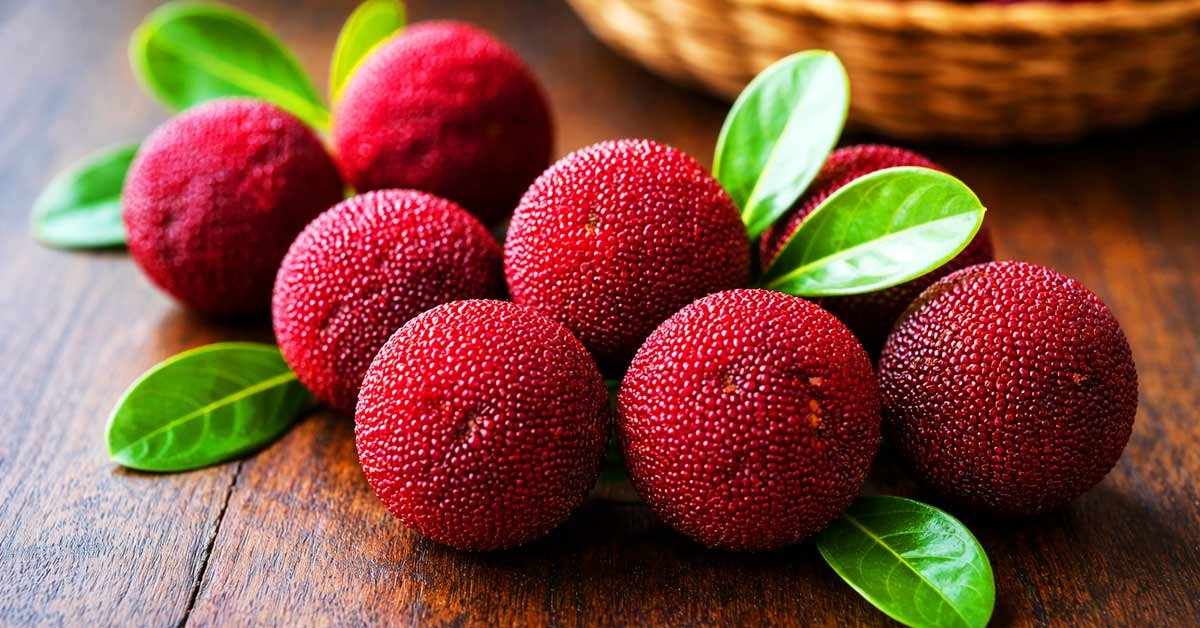
You have probably seen it before without realizing what it was. Small, deep red, slightly glossy. Somewhere between a cherry and a berry, but not quite either. That is yumberry. Or more accurately, yumberries, since they almost always show up in clusters. In parts of Asia, they are not obscure at all. In fact, they have been eaten for centuries. But outside those regions, they still feel like a quiet discovery.
The first time most people taste yumberry, the reaction is usually a pause. It is not overly sweet. It is not sharply sour. It sits somewhere in between, with a mild tartness that feels clean rather than aggressive. There is a subtle floral note, almost like lychee but less perfumed. The texture is soft, with a thin skin and juicy interior. It does not try too hard to impress you. And that is exactly why it works.
Table of Contents


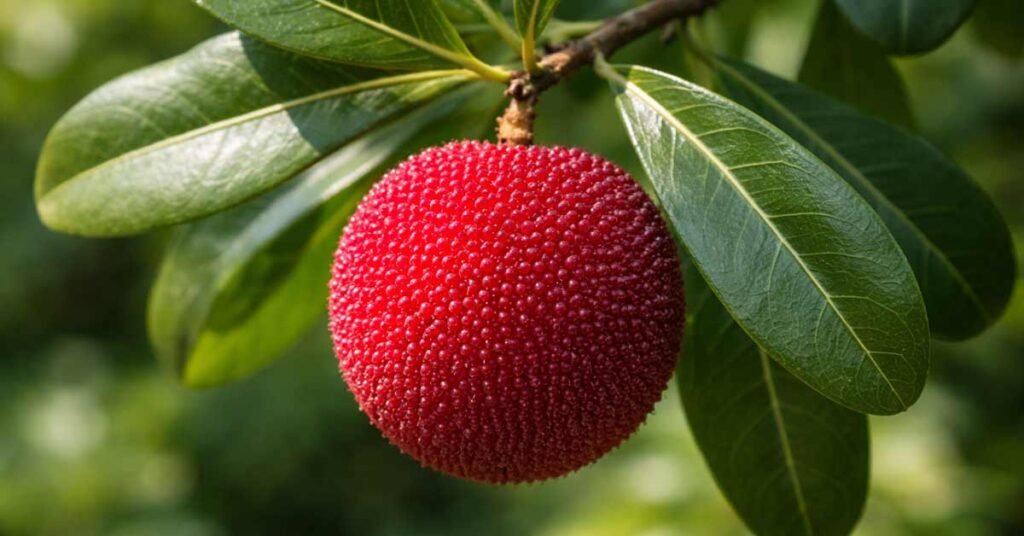
Yumberry comes from a tree known scientifically as Myrica rubra, sometimes called Chinese bayberry or yangmei. It grows mainly in China, Japan, and parts of Southeast Asia. The fruit has been part of traditional diets for a long time, often eaten fresh during its short season or preserved in syrups, wines, and dried snacks. That long history matters. Foods that stay in regular use across generations usually do so for a reason. Not because of trends, but because they consistently deliver something people value.
What makes yumberry interesting today is not just its taste. It is the growing attention around its nutritional profile, especially its antioxidant content and how it may relate to circulation. Those are not abstract health buzzwords. They connect to how your body manages everyday stress, how your blood vessels function, and how well nutrients and oxygen move where they need to go.
If you look at modern diets, especially in urban settings, there is a pattern. Plenty of calories, often enough protein, but not always enough diversity in plant compounds. You might rotate between apples, bananas, maybe berries if you are consistent. But beyond that, the range tends to narrow. That is where something like yumberry quietly adds value. It is not meant to replace your usual fruits. It expands the spectrum.
Think about it this way. Different fruits bring different combinations of polyphenols, organic acids, and micronutrients. Even when two fruits look similar in color, their internal chemistry can be quite different. Yumberries, for example, contain notable levels of anthocyanins. These are the same class of compounds that give blueberries and blackberries their deep color. But the specific types and ratios in yumberry are distinct. That difference is not just technical detail. It shapes how those compounds interact in the body.
There is also a practical side that often gets overlooked. Yumberries are rarely eaten mindlessly. You do not typically grab a large bag and snack through it without noticing. The flavor profile slows you down. You pay attention. That small behavioral shift matters more than people think. Eating with awareness tends to change portion size, satisfaction, and even digestion.
Of course, access can be a limitation. Fresh yumberry has a short shelf life. It bruises easily and does not travel well over long distances. That is why many people encounter it in processed forms first. Juice, dried yumberries, or preserved versions. Each form changes the nutritional profile slightly. Fresh fruit retains more vitamin content. Dried forms concentrate sugars and some antioxidants. Juices can vary widely depending on how they are made. This is not a downside. It just means you need to be aware of what you are actually consuming.
There is also a tendency to overhype lesser-known fruits. You have probably seen it before. A fruit gets labeled as a “superfood,” and suddenly it is treated like a shortcut to better health. That framing is misleading. Yumberry is not a magic fix. It is a useful addition. It fits into a broader pattern of eating that prioritizes variety, consistency, and whole foods.
If you zoom out, the appeal of yumberry becomes clearer. It checks a few important boxes without trying to dominate the conversation:
- It adds diversity to your fruit intake
- It provides a distinct mix of antioxidant compounds
- It has a flavor that encourages slower, more mindful eating
- It can be incorporated in multiple forms depending on availability
That combination is rare enough to be worth paying attention to.
There is also something slightly refreshing about choosing foods that are not everywhere yet. Not because they are exclusive, but because they break routine. When you introduce something like yumberries into your diet, even occasionally, it nudges you out of autopilot. You start noticing flavors again. You think a bit more about what you are eating and why.
And that is really the entry point. Not a dramatic transformation. Not a rigid rule. Just a small shift in awareness, supported by a fruit that has been quietly doing its job for generations.
What Makes Yumberry Stand Out Nutritionally
Yumberry does not stand out because of a single nutrient that dominates everything else. It stands out because of its overall profile. The combination matters more than any isolated number. When you look closely, yumberry brings together a range of plant compounds that tend to show up in fruits known for their antioxidant capacity, but with its own distinct balance.
Most people think in terms of vitamins first. Vitamin C, maybe some vitamin A. That is part of the picture, but not the full story. The more interesting layer sits in the background, in the form of polyphenols and related compounds. These are the molecules that plants produce to protect themselves. When you eat them, they interact with your body in ways that go beyond basic nutrition.
Yumberries fall into that category of fruits where the color tells you something important. That deep red is not random. It signals the presence of anthocyanins and other flavonoids, which are closely tied to antioxidant activity. But instead of treating that as a vague benefit, it helps to break it down into what is actually there and how it behaves.
Key Antioxidant Compounds in Yumberry
The primary compounds that draw attention in yumberry are anthocyanins, flavonols, and phenolic acids. Each plays a slightly different role.
Anthocyanins are the pigments responsible for the red to purple color. In yumberries, compounds such as cyanidin based anthocyanins have been identified in measurable amounts in analytical studies of Myrica rubra. These compounds are widely studied because they can neutralize reactive oxygen species in controlled environments. That sounds abstract, but in practical terms, it relates to how the body manages oxidative stress during normal metabolism.
Flavonols are another group present in yumberry. Quercetin derivatives are among the most commonly discussed. These compounds show up in many plant foods, but their concentration and combination vary. In yumberries, they contribute to the overall antioxidant capacity rather than acting alone.
Phenolic acids, including compounds such as gallic acid, are also part of the mix. These are smaller molecules, but they are highly active. They tend to interact quickly in chemical reactions, which is one reason they are often measured in antioxidant assays.
When you look at these compounds together, a pattern emerges. Yumberry does not rely on a single dominant antioxidant. It provides a layered profile:
- Anthocyanins for pigment linked antioxidant activity
- Flavonols that support broader polyphenol diversity
- Phenolic acids that contribute to rapid reactive interactions
This diversity matters because different compounds behave differently once absorbed. Some act directly. Others influence signaling pathways. Some are metabolized by gut bacteria into new compounds that may have their own effects.
Polyphenols and Their Role in the Body
Polyphenols are often described in simple terms as antioxidants, but that description is incomplete. Their role is more complex and more interesting.
When you consume polyphenol rich foods like yumberry, only a portion of those compounds is absorbed in the small intestine. A significant amount reaches the colon, where it interacts with the gut microbiota. There, these compounds are transformed into smaller metabolites. Those metabolites can then enter circulation and interact with different tissues.
This means the effect of yumberries is not just about what is in the fruit, but also about how your body processes it. Two people can eat the same portion and experience slightly different internal responses based on their gut microbiome composition.
From a functional perspective, polyphenols are studied for several mechanisms:
- They can neutralize reactive molecules in controlled conditions
- They can influence enzyme activity related to oxidative processes
- They may affect signaling pathways involved in inflammation and vascular function
It is important to keep this grounded. These mechanisms are observed in laboratory and clinical research contexts. They do not translate into immediate or guaranteed outcomes. What they suggest is that regularly consuming polyphenol rich foods contributes to a broader dietary pattern associated with better long term physiological balance.
Another detail that often gets missed is synergy. Polyphenols rarely act alone. The combination of compounds in whole foods tends to produce effects that isolated extracts do not fully replicate. This is one reason whole yumberries, whether fresh or minimally processed, are more relevant than highly refined supplements.
Comparing Yumberries to Other Antioxidant Fruits
When people hear “antioxidant fruit,” they usually think of blueberries, blackberries, or pomegranate. Those are well studied and widely available. So where do yumberries fit?
Analytical comparisons using assays such as ORAC or similar methods often show that yumberries have a high antioxidant capacity relative to many common fruits. However, these numbers need context. Different testing methods produce different values, and results can vary based on ripeness, processing, and storage.
A more useful comparison looks at composition rather than just total capacity.
Blueberries are rich in anthocyanins, especially malvidin and delphinidin derivatives. Pomegranate is known for ellagitannins. Blackberries combine anthocyanins with fiber and vitamin C. Yumberries bring a different mix, with a strong presence of cyanidin based anthocyanins and notable phenolic acids.
This means they complement rather than replace other fruits.
If you think in practical terms, rotating between these options gives you broader exposure to different compounds:
- Blueberries for one anthocyanin profile
- Pomegranate for tannin based compounds
- Yumberries for a distinct polyphenol combination
There is also a sensory difference that affects how often you might actually eat them. Yumberries are less sweet than many commercial berries. That can be an advantage. Lower perceived sweetness often leads to smaller portions and more controlled intake, especially if you are trying to avoid excess sugar from fruit juices or sweetened products.
Another factor is processing. Many antioxidant fruits are consumed as juices or concentrates. With yumberry, especially in traditional contexts, it is common to see both fresh and lightly preserved forms. Each format changes the balance:
- Fresh yumberries retain more vitamin C but are harder to access
- Dried yumberries concentrate polyphenols along with sugars
- Juices vary widely depending on dilution and added ingredients
So the comparison is not just about the fruit itself, but about how it is typically consumed.
If you step back, the takeaway is straightforward. Yumberry earns its place among antioxidant rich fruits because of its composition, not because it outperforms everything else in a single metric. It adds another layer to your diet. And in nutrition, layers tend to matter more than extremes.
Yumberry and Circulation: What Actually Matters
Circulation sounds like a broad concept, and it is. But when you strip it down, it comes to a few core processes. Blood moves through vessels. Those vessels expand and contract. Nutrients and oxygen are delivered. Waste products are removed. That is the system you rely on every minute, without thinking about it.
When people connect yumberry to circulation, the idea is not that it directly changes blood flow in a dramatic way. The connection is more subtle. It sits at the level of vascular function, oxidative balance, and how consistently your body maintains those processes over time.
That distinction matters. It keeps expectations realistic and focuses attention on what actually makes a difference day to day.
Blood Flow and Vascular Function Explained
Blood vessels are not static pipes. They are dynamic tissues that respond constantly to signals from your body. One of the key players here is the endothelium, the thin layer of cells lining the inside of your blood vessels. These cells regulate how wide or narrow the vessels are, which directly affects blood flow.
A well functioning endothelium helps maintain balance. It releases molecules like nitric oxide that signal the vessels to relax. When that system works smoothly, circulation tends to be efficient. When it becomes impaired, the vessels may not respond as well.
Several everyday factors influence this system:
- Diet composition
- Physical activity
- Sleep patterns
- Exposure to oxidative stress
This is where foods like yumberry come into the picture. Not as a direct intervention, but as part of the broader inputs that affect vascular behavior.
Polyphenol rich foods are often studied in relation to endothelial function. The reasoning is straightforward. The endothelium is sensitive to oxidative conditions. When oxidative stress increases, its ability to regulate vessel tone can be affected. Compounds that interact with these pathways become relevant in that context.
Yumberries contribute to this conversation because of their polyphenol content. The same compounds that give them their color are the ones being examined in research on vascular responses. Again, the effect is not immediate or isolated. It is cumulative and dependent on overall diet patterns.
How Antioxidants Interact With Circulatory Health
The term antioxidant gets used loosely, so it helps to clarify what it actually means in this setting.
Your body naturally produces reactive molecules during metabolism. This is normal. These molecules are not inherently harmful. They play roles in signaling and defense. The issue arises when their levels exceed what your system can manage efficiently. That imbalance is often referred to as oxidative stress.
Antioxidants, including those found in yumberry, can interact with this process in a few ways:
- They can neutralize certain reactive molecules in controlled conditions
- They can influence enzyme systems involved in oxidative balance
- They can affect signaling pathways linked to inflammation and vascular tone
Polyphenols in yumberries are part of this group. However, their impact is not limited to direct neutralization. In many cases, their role is indirect. They may influence how your body regulates its own antioxidant defenses.
There is also the gut factor. A portion of the polyphenols in yumberry reaches the colon, where gut bacteria transform them into smaller compounds. Some of these metabolites are then absorbed and can circulate in the bloodstream. This adds another layer to how yumberries interact with the body.
From a circulation perspective, what matters is consistency. A single serving of yumberry will not change vascular function in any noticeable way. But a pattern of regularly consuming polyphenol rich foods is associated in research with better markers of vascular health.
It is important to stay precise here. These associations do not prove direct cause and effect in isolation. They reflect patterns observed in controlled studies and population data. Yumberry fits into that pattern. It does not define it.
Practical Intake: How Much Yumberry Makes Sense
This is where things get practical. How much yumberry should you actually eat?
There is no official intake guideline specific to yumberry. Research typically focuses on broader categories like total polyphenol intake or fruit consumption. So you have to translate general principles into something usable.
A reasonable approach is to treat yumberry like any other fruit with a strong polyphenol profile. That means integrating it into your diet without relying on it as a single solution.
If you have access to fresh yumberries, a portion in the range of 100 to 150 grams is a realistic serving. That is roughly a small bowl. It provides a meaningful amount of polyphenols without pushing overall sugar intake too high.
If you are using dried yumberries, the portion needs to be smaller. Drying removes water and concentrates both sugars and bioactive compounds. A portion of 20 to 30 grams is usually enough. It is easy to overeat dried fruit, so this is one area where awareness matters.
For juice, the variability is high. Some products are diluted. Others include added sugars. If you choose yumberry juice, look for options with minimal processing and no added sugar. A serving of around 150 milliliters is a reasonable reference point, but it depends on the product.
A few practical ways to think about intake:
- Rotate yumberries with other fruits rather than consuming them daily in large amounts
- Pair them with meals instead of treating them as a separate snack
- Use them as an addition, not a replacement, for a varied fruit intake
There is also a behavioral angle. When people introduce a new food like yumberry, there is often a short phase of overuse. It is new, interesting, easy to justify. Then it fades out. A more sustainable approach is to keep it in occasional rotation. That is how it becomes part of a long term pattern rather than a short lived experiment.
One more detail worth mentioning is tolerance. Yumberries have organic acids that give them their slightly tart taste. For most people, this is not an issue. But if you consume large amounts at once, especially on an empty stomach, you might notice mild digestive discomfort. That is not unique to yumberry. It applies to many tart fruits. The simple solution is moderation and pairing with other foods.
So what actually matters here is not the idea of yumberry as a circulation booster. It is the role it can play within a consistent pattern of eating that supports vascular function over time. You are not looking for a single food to carry that responsibility. You are building a system where multiple small inputs, including yumberries, add up.
Real-World Ways to Use Yumberries Daily
Yumberry sounds great in theory. Interesting flavor, solid antioxidant profile, ties into circulation. But none of that matters if it never makes it into your routine. This is where most good foods fall apart. They stay as ideas instead of becoming habits.
The challenge with yumberry is not how to eat it. It is how to access it and use it consistently without overthinking it. Once you get past that, it becomes just another fruit in rotation. Not special. Not complicated. Just useful.
Fresh vs Processed Yumberry Products
Fresh yumberry is the ideal starting point. It has the most balanced profile. The texture is intact. The vitamin content is better preserved. The flavor is also more nuanced. You get that mild tartness with a slightly floral note that processed versions often lose.
The problem is availability. Fresh yumberries are highly seasonal and fragile. They bruise easily and do not last long after harvest. Outside regions where they are grown, you will rarely see them fresh.
So most people interact with yumberry in processed forms. Each option comes with trade-offs.
Dried yumberries are one of the most common. They are easy to store, easy to portion, and widely available in Asian grocery stores or online. The drying process removes water, which concentrates both sugars and polyphenols. That means you get a more intense flavor and a higher density of compounds per gram. But it also means it is easier to overconsume.
Yumberry juice is another option. This is where you need to pay attention. Some products are close to pure juice. Others are diluted or include added sugar. The label matters. A juice that is mostly yumberry will retain more of the original profile, although some vitamin content may be reduced during processing.
You may also come across yumberry in preserved forms. Syrups, canned fruits, or fermented products. These can be enjoyable, but they often include added sugar or salt. That shifts them more toward occasional use rather than daily intake.
A simple way to think about it:
- Fresh yumberry for the most complete experience
- Dried yumberries for convenience and concentrated intake
- Juice for occasional use, depending on quality
- Preserved forms as flavor additions, not staples
There is no perfect format. The best option is the one you will actually use without turning it into a chore.
Simple Meal Ideas That Actually Work
This is where things usually get overcomplicated. You do not need elaborate recipes to use yumberries. In fact, the more steps involved, the less likely you are to repeat it.
Start with combinations that fit into meals you already eat.
Breakfast is the easiest entry point. Yumberries work well in:
- Yogurt bowls with plain yogurt, a handful of yumberries, and some nuts
- Oatmeal, especially if you want to balance the natural sweetness with something slightly tart
- Simple smoothies, where yumberry adds depth without overpowering other ingredients
If you are using dried yumberries, they can be mixed directly into these options. Just keep the portion moderate. Around a small handful is enough.
For lunch or lighter meals, yumberries can add contrast rather than acting as the main ingredient. A small amount can change the whole profile of a dish.
- Toss a few yumberries into a salad with leafy greens, olive oil, and a basic protein source
- Add them to grain bowls with rice or quinoa for a slight acidic note
- Pair them with soft cheeses for a simple, balanced plate
Dinner is where people hesitate, but it works if you keep it subtle. Yumberry does not need to dominate the dish.
- Use a small amount of yumberry puree as part of a sauce for poultry or tofu
- Combine it with herbs and a neutral fat to create a light dressing
- Add a few pieces to a side dish for contrast rather than sweetness
The key is restraint. Yumberry has a distinct flavor. Too much, and it takes over. A small amount, and it adds complexity.
There is also a practical trick that makes a difference. Pair yumberries with foods that contain some fat. This does not change the polyphenol content directly, but it can improve overall meal satisfaction and help you avoid chasing sweetness later.
Storage, Seasonality, and Sourcing
If you manage the logistics well, yumberry becomes much easier to use consistently.
Fresh yumberry has a short window. When in season, it should be stored in the refrigerator and consumed within a few days. The skin is delicate, so avoid stacking or compressing the fruit. If you buy more than you can eat quickly, freezing is a practical option. The texture will change after thawing, but the fruit will still work in smoothies or cooked applications.
Dried yumberries are straightforward. Keep them in an airtight container, away from heat and moisture. They can last for months without significant changes in quality. This is the most reliable format for long term use.
Juice requires a bit more attention. Once opened, it should be refrigerated and consumed within a few days, depending on the product. Always check the ingredient list. The shorter, the better.
Sourcing depends on where you live. In larger cities, Asian markets are the most consistent place to find yumberry products. Online retailers also carry dried yumberries and juices, but quality varies. It is worth trying a few options before settling on one.
If you are buying packaged products, look for:
- Minimal added sugar
- Clear labeling of yumberry content
- No unnecessary additives
Seasonality is less of a factor once you rely on dried or preserved forms. That is actually an advantage. You are not dependent on a short harvest window.
At the end of the day, the goal is not to build your diet around yumberry. It is to make it easy enough to include without effort. When a food fits into your existing habits, it stays. When it requires constant planning, it disappears.
Yumberries work best when they are treated as a small, consistent addition. Something you reach for without thinking too much about it. That is what turns a good idea into a lasting habit.
Best Selling Yumberry Related Products


A Small Fruit With a Noticeable Place in Your Routine
Yumberry is easy to overlook. It does not dominate shelves. It is not pushed aggressively in mainstream nutrition advice. And yet, once it finds its way into your routine, it tends to stay there. Not because it is essential, but because it fits.
That is the real measure of a useful food. Not how impressive it sounds on paper, but how naturally it integrates into your day.
At this point, the value of yumberry should feel grounded. It offers a mix of polyphenols, including anthocyanins and phenolic acids. These compounds are studied for their interaction with oxidative processes and vascular function. That connection to antioxidant activity and circulation is what gives yumberry its relevance. But the fruit itself is not the story. The pattern you build around it is.
If you look at how people actually eat, consistency always beats intensity. A single large serving once in a while does very little. Smaller, repeated exposures over time are what shape outcomes. This is where yumberries make sense. They are easy to rotate in without forcing a major change.
You do not need to track exact amounts or follow rigid rules. A simple approach works better:
- Add yumberries to meals you already eat
- Keep portions moderate and consistent
- Rotate them with other fruits rather than relying on one option
- Pay attention to how different forms fit your routine
That last point matters more than it seems. Fresh yumberry, dried yumberries, and juice each behave differently in a real diet. Fresh fruit is more balanced. Dried forms are concentrated and easier to overuse. Juice can be convenient but varies in quality. Once you recognize those differences, you can adjust without effort.
There is also a subtle shift that happens when you start including foods like yumberry. You become more aware of variety. Instead of repeating the same few fruits, you begin to expand your range. That expansion is where much of the benefit sits. Not in a single fruit, but in the diversity of compounds you expose your body to over time.
From a practical standpoint, yumberry works best when it stays simple. You do not need elaborate recipes or strict timing. A small bowl with breakfast. A handful of dried yumberries in the afternoon. A few added to a meal for contrast. These are small actions, but they add up.
There is also no need to overstate its role in circulation. Yumberry contributes to a dietary pattern that supports vascular function. It does not replace other factors. Movement, sleep, and overall diet quality still carry most of the weight. What yumberry does is support that system in a quiet, consistent way.
If you think in long term terms, this is what matters. You are not looking for dramatic changes. You are building a set of habits that you can repeat without friction. Yumberries fit into that model because they are flexible. They adapt to what you already do.
And that is probably the most useful way to see it. Not as a standout superfood, but as a reliable addition. Something that brings a different set of compounds, a slightly different taste, and a small shift in how you approach fruit overall.
Keep it in rotation. Use it when it makes sense. Skip it when it does not. That level of flexibility is what allows it to remain part of your routine without becoming another thing you have to manage.
Article Sources
At AncientHerbsWisdom, our content relies on reputable sources, including peer-reviewed studies, to substantiate the information presented in our articles. Our primary objective is to ensure our content is thoroughly fact-checked, maintaining a commitment to accuracy, reliability, and trustworthiness.
- Chen, L., Xin, X., Zhang, H., Yuan, Q., & Yue, T. (2013). Analysis of anthocyanins and polyphenols in Myrica rubra by high-performance liquid chromatography. Food Chemistry, 136(2), 1031–1037. https://doi.org/10.1016/j.foodchem.2012.09.050
- Sun, C., Huang, H., Xu, C., Li, X., & Chen, K. (2013). Biological activities of extracts from Chinese bayberry (Myrica rubra Sieb. et Zucc.): A review. Plant Foods for Human Nutrition, 68(2), 97–106. https://doi.org/10.1007/s11130-013-0341-6
- Xia, E. Q., Deng, G. F., Guo, Y. J., & Li, H. B. (2010). Biological activities of polyphenols from grapes. International Journal of Molecular Sciences, 11(2), 622–646. https://doi.org/10.3390/ijms11020622
- He, J., & Giusti, M. M. (2010). Anthocyanins: Natural colorants with health-promoting properties. Annual Review of Food Science and Technology, 1, 163–187. https://doi.org/10.1146/annurev.food.080708.100754
- Del Rio, D., Rodriguez-Mateos, A., Spencer, J. P. E., Tognolini, M., Borges, G., & Crozier, A. (2013). Dietary polyphenolics in human health: Structures, bioavailability, and evidence of protective effects against chronic diseases. Antioxidants & Redox Signaling, 18(14), 1818–1892. https://doi.org/10.1089/ars.2012.4581
- Manach, C., Williamson, G., Morand, C., Scalbert, A., & Rémésy, C. (2005). Bioavailability and bioefficacy of polyphenols in humans. The American Journal of Clinical Nutrition, 81(1), 230S–242S. https://doi.org/10.1093/ajcn/81.1.230S
- Vita, J. A. (2005). Polyphenols and cardiovascular disease: Effects on endothelial and platelet function. The American Journal of Clinical Nutrition, 81(1), 292S–297S. https://doi.org/10.1093/ajcn/81.1.292S
- Williamson, G., & Clifford, M. N. (2017). Colonic metabolites of berry polyphenols: The missing link to biological activity? British Journal of Nutrition, 104(S3), S48–S66. https://doi.org/10.1017/S0007114510003946

- Yumberry: Asian Fruit for Antioxidants and Circulation - March 21, 2026
- Gooseberry: Tart Berry for Immunity and Digestion - March 20, 2026
- Eggplant: Purple Vegetable for Heart Health and Fiber - March 20, 2026
