
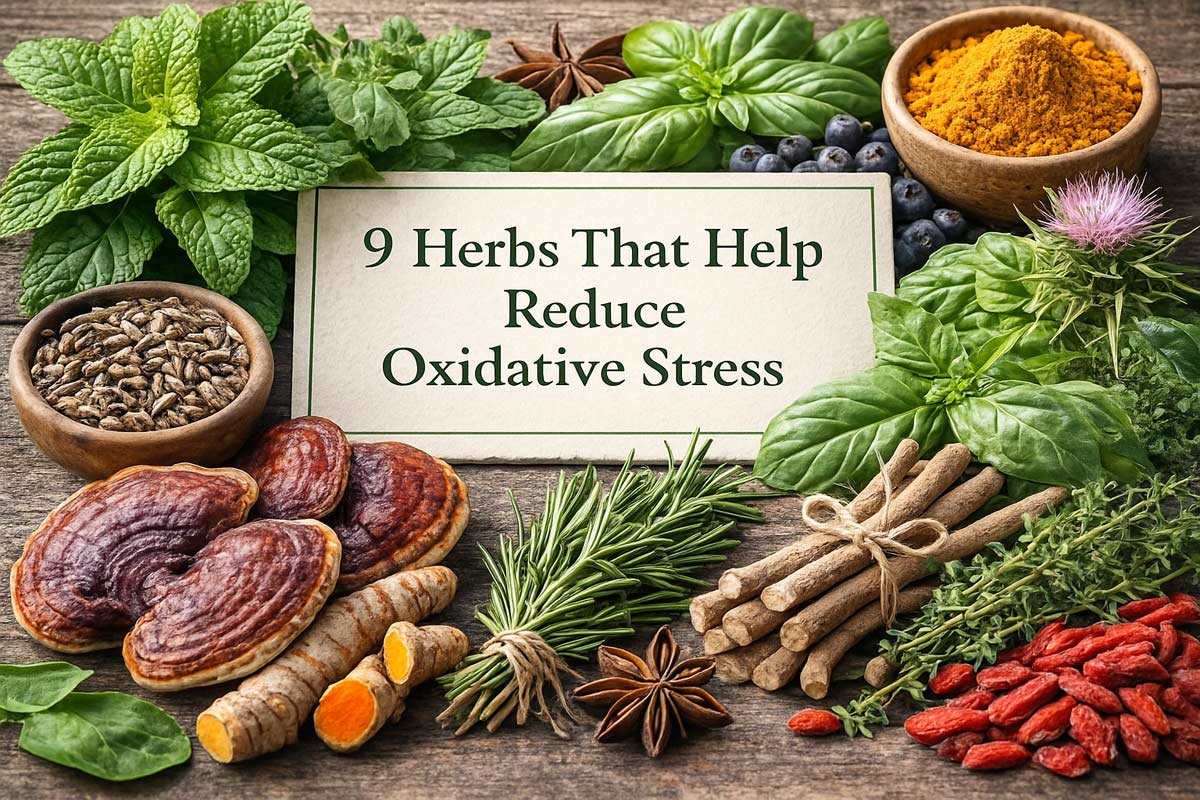
Understanding Oxidative Stress and Herbal Defense
Oxidative stress is one of those phrases that gets tossed around a lot in natural health circles, sometimes so casually that it loses its weight. But it matters. A lot. In simple terms, oxidative stress happens when free radicals outnumber your body’s ability to neutralize them. These unstable molecules are a normal part of metabolism. You breathe, you eat, you move, you think, and free radicals are created. That part is unavoidable. Trouble starts when the balance tips and they begin damaging cell membranes, proteins, even DNA.
I’ve seen this imbalance show up in many forms over the years. Low energy that coffee no longer fixes. Skin that looks tired no matter how clean the diet. Joints that feel older than they should. People often blame age, stress, or bad luck. Sometimes that’s true. Often, oxidative stress is quietly working in the background, wearing things down one cell at a time.
Table of Contents

Your body is not defenseless. It comes equipped with its own antioxidant systems, including enzymes like superoxide dismutase and glutathione. These systems rely on nutrients, rest, and proper signaling to function well. When sleep is short, food quality slips, or chronic stress drags on, those internal defenses weaken. That’s when outside help becomes valuable. This is where herbs and mushrooms step in, not as magic fixes, but as allies.

Plants have been dealing with oxidative stress far longer than we have. They sit in the sun all day, exposed to UV radiation, temperature swings, pests, and environmental toxins. To survive, they evolved complex antioxidant compounds. Polyphenols, flavonoids, carotenoids, triterpenes. These are not marketing terms. They are chemical tools plants use for protection, and when we consume them, our cells know what to do with them.
One thing I’ve learned is that reducing oxidative stress is rarely about flooding the body with one strong antioxidant. It’s about layering support. Different compounds work in different tissues. Some cross the blood brain barrier. Some concentrate in the liver. Others protect lipid membranes. A diverse herbal approach tends to work better than a single hero ingredient.
There’s also a timing aspect that doesn’t get discussed enough. Oxidative stress increases during intense exercise, illness, poor sleep, emotional strain, and exposure to pollution. Using antioxidant herbs strategically during these periods can make a noticeable difference. I’ve watched people recover faster, think more clearly, and feel more resilient simply by adjusting when and how they use certain plants.
Another important point. Oxidative stress is not the enemy. It plays a role in immune defense and cellular signaling. Completely eliminating it would be a mistake. The goal is balance, not eradication. Good herbs respect that balance. They modulate rather than suppress. They support the body’s own intelligence instead of trying to overpower it.
Medicinal mushrooms deserve special mention here. Fungi sit in a category of their own. They are neither plant nor animal, and their antioxidant strategies are unique. Many mushrooms produce compounds that regulate oxidative stress indirectly, by supporting mitochondrial efficiency and immune communication. This matters because poorly functioning mitochondria are a major source of excess free radicals.
What I appreciate most about working with herbs and mushrooms for oxidative stress is how tangible the results can feel. Better stamina. Clearer mornings. Less of that low grade inflammation that hums in the background. These are subtle shifts, but they add up. Over time, reducing oxidative stress supports healthier aging, cardiovascular function, brain health, and metabolic balance.
In the sections that follow, I’ll walk through nine herbs and medicinal mushrooms I trust and return to often. Each one addresses oxidative stress in its own way. Some are gentle daily companions. Others are deeper, more targeted tools. None are trendy for the sake of it. They’ve earned their place through chemistry, tradition, and real world results.
Take this as a conversation, not a prescription. Listen to your body. Pay attention to how it responds. Oxidative stress didn’t build overnight, and it doesn’t unwind in a week. But with the right plants on your side, the process becomes a lot more humane, and honestly, a bit fascinating too.
Foundational Antioxidant Herbs
When I think about reducing oxidative stress in a practical, day to day way, I almost always start with the basics. Not the flashy extracts or rare botanicals, but the herbs that quietly do their job, consistently, without demanding much attention. These are the plants I reach for when someone says, “I just feel worn down,” and can’t quite explain why. Foundational herbs create a baseline of antioxidant protection that everything else builds on.
Turmeric, green tea, and rosemary fall squarely into this category. They work differently, taste different, and show up in different traditions, yet they share a common trait. They strengthen the body’s ability to handle oxidative stress without pushing it too far in any direction.
Turmeric Curcuma longa
Turmeric is everywhere now. Golden lattes, capsules, skincare, you name it. That popularity sometimes makes people dismiss it, which is a mistake. When turmeric is used properly, it earns every bit of its reputation.
The bright orange pigment comes from curcuminoids, compounds with well studied antioxidant behavior. They neutralize free radicals directly, but more importantly, they influence cellular signaling pathways involved in oxidative stress and inflammation. This is subtle work. Turmeric doesn’t slam the brakes. It eases pressure off the system.
In practice, I notice turmeric works best when oxidative stress is tied to chronic strain. Long work hours. Lingering inflammation. Digestive sluggishness that never quite resolves. It has a grounding quality, almost warming, that feels supportive rather than aggressive. I often describe it as tidying up the mess instead of throwing everything out.
Fresh turmeric root has a sharp, earthy bite that tells you something active is happening. Even dried powder retains that presence. Taken with fat, and ideally with black pepper to improve absorption, it becomes far more effective. Without that, much of it passes through unused, which is one reason people sometimes say it “did nothing.”
Turmeric’s antioxidant role also extends to the liver, an organ constantly managing oxidative load from food, alcohol, medications, and environmental toxins. Supporting liver resilience indirectly reduces oxidative stress throughout the body. When the liver struggles, free radicals tend to pile up elsewhere.
This is not an herb I reserve for crisis moments. It shines as a steady companion, something woven into food or daily routines. Over time, that consistency matters more than dramatic short term effects.
Green Tea Camellia sinensis
Green tea is deceptively simple. A cup of pale green liquid doesn’t look like much, yet chemically it’s dense with catechins, especially epigallocatechin gallate. These compounds are among the most researched plant antioxidants, and for good reason.
What I appreciate about green tea is how quickly its effects can be felt. Mental clarity improves. There’s a clean, alert energy that doesn’t jitter or crash. That alone hints at reduced oxidative stress in the nervous system, where free radical activity can interfere with signaling and focus.
Green tea works on multiple levels. It scavenges free radicals directly. It supports endogenous antioxidant enzymes. It helps protect lipids from oxidation, which matters for cardiovascular health. Oxidative damage to LDL cholesterol is one of those slow burn problems that doesn’t announce itself until much later.
The way green tea is prepared matters. Overly hot water or excessive steeping can make it bitter and degrade some compounds. Gentle brewing preserves its antioxidant profile and makes it easier to drink regularly. And regularity is the key here. One cup won’t undo months of oxidative strain, but a daily habit can shift the baseline.
There’s also something ritualistic about green tea that I find therapeutic in its own right. Slowing down for a few minutes, breathing in the steam, letting the bitterness linger. Stress itself generates oxidative stress, so anything that reduces nervous tension indirectly helps the antioxidant equation.
For people sensitive to caffeine, smaller amounts or earlier timing works well. The goal is support, not stimulation overload. Used wisely, green tea becomes a daily tune up rather than a push.
Rosemary Rosmarinus officinalis
Rosemary doesn’t get enough credit. It’s often seen as just a culinary herb, something you toss on potatoes and forget about. But rosemary is chemically potent. Its aroma alone hints at volatile oils and phenolic compounds designed to protect plant tissue from oxidative damage.
Carnosic acid and rosmarinic acid are key players here. These compounds stabilize cell membranes and protect fats from oxidation. That matters because oxidized fats are especially damaging, contributing to inflammation and accelerated cellular aging.
I’ve always associated rosemary with mental sharpness. There’s a reason it has a long history linked to memory and clarity. Oxidative stress in the brain affects cognition long before obvious decline appears. Rosemary’s antioxidant activity seems particularly relevant here, supporting neural tissues that are highly sensitive to free radical damage.
In everyday use, rosemary shines as an infusion, a tincture, or simply as a generous seasoning. The smell when fresh rosemary hits warm water or olive oil is unmistakable. Sharp, resinous, almost pine like. That scent corresponds to activity. It wakes things up.
Rosemary also supports circulation, which indirectly helps reduce oxidative stress by improving oxygen and nutrient delivery to tissues. Poor circulation creates stagnant zones where oxidative damage accumulates more easily. Keeping things moving is an underrated strategy.
Of the three herbs in this section, rosemary is the one I often recommend to people who feel mentally foggy or sluggish without obvious cause. It doesn’t overpower. It nudges. And those nudges add up.
Taken together, turmeric, green tea, and rosemary form a practical foundation for addressing oxidative stress. They don’t compete with each other. They complement. One works deeply and slowly, one works broadly and daily, one sharpens and protects. This is the kind of layering that respects how the body actually functions, messy, adaptive, and always in motion.
Cellular and Liver Protective Plants
Once the basics are in place, I usually look toward herbs that work a little deeper. These are the plants that get involved at the cellular level, especially in organs that carry a heavy oxidative burden. The liver, the brain, and the vascular system tend to take the biggest hit over time. Pollution, alcohol, medications, metabolic waste, emotional stress. It all funnels through the same pathways eventually. When oxidative stress accumulates here, symptoms get louder.
Milk thistle, ginkgo, and sage are not gentle wallflowers. They’re protectors. They reinforce vulnerable tissues and help cells hold their shape under pressure. I’ve leaned on these plants many times when foundational antioxidants weren’t quite enough.
Milk Thistle Silybum marianum
Milk thistle has a very specific reputation, and it deserves it. This is a liver herb through and through. The seeds contain silymarin, a complex of flavonolignans that stabilize liver cell membranes and reduce oxidative damage caused by toxins and metabolic byproducts.
What makes milk thistle stand out is not just its antioxidant capacity, but its ability to help liver cells regenerate. That’s rare. Most herbs protect. Milk thistle protects and repairs. From an oxidative stress standpoint, this matters because damaged liver cells leak reactive molecules into circulation, increasing systemic stress.
I’ve seen milk thistle make a difference in people who feel chronically “toxic” without obvious exposure. Heavy heads in the morning. Poor digestion. Skin acting up for no clear reason. Often, oxidative stress is rising because the liver is overwhelmed, not because free radicals are coming from one dramatic source.
Milk thistle works quietly. There’s no obvious sensation when it kicks in. No warmth, no buzz. Just a gradual sense that the system is coping better. Blood work sometimes reflects this before people feel it, which I find fascinating. The body knows first.
This is an herb I respect enough not to overuse. It does its best work when given time. Short bursts rarely show its full value. Steady support over weeks allows liver antioxidant systems to recalibrate and regain efficiency.
Ginkgo biloba
Ginkgo is ancient. Older than most trees we recognize, older than many ecosystems. There’s something fitting about that, because ginkgo excels at protecting tissues that age badly when oxidative stress builds up, especially the brain.
The flavonoids and terpenoids in ginkgo improve blood flow and reduce oxidative damage in neural tissue. The brain consumes enormous amounts of oxygen. That makes it uniquely vulnerable to free radical activity. When circulation falters or antioxidant defenses weaken, mental sharpness fades.
I’ve noticed ginkgo is most helpful when oxidative stress shows up as cognitive fatigue. Difficulty concentrating. Poor memory recall. That feeling of mental static that doesn’t lift even after rest. Ginkgo doesn’t stimulate. It clears pathways.
By improving microcirculation, ginkgo helps oxygen and nutrients reach neurons while removing metabolic waste. Less waste means fewer free radicals lingering where they shouldn’t. It’s a cleanup operation as much as a protective one.
This is not an herb for everyone. Some people feel too wired on it. Others feel nothing at all. But when it fits, it fits beautifully. The mind feels more spacious, less cluttered. Thoughts move instead of bumping into each other.
Oxidative stress in the brain rarely announces itself dramatically. It creeps. Ginkgo is one of the few herbs that seems to catch that creep early, before it becomes something heavier.
Sage Salvia officinalis
Sage carries a different kind of intelligence. Strong, aromatic, slightly bitter, it feels like an herb that knows its boundaries. Chemically, sage is rich in phenolic acids and volatile oils with antioxidant and antimicrobial activity. It protects tissues while discouraging excess, whether microbial or metabolic.
From an oxidative stress perspective, sage is particularly interesting because of its effect on lipid oxidation. Brain tissue is rich in fats. When those fats oxidize, signaling degrades. Sage helps preserve the integrity of those membranes.
I often think of sage as a clarifying herb. It sharpens the edges. That’s not poetic fluff. Oxidative stress blurs cellular communication. Sage seems to tighten things up, restoring a sense of internal coherence.
There’s also a hormonal dimension here. Oxidative stress and hormonal imbalance feed each other. Sage has traditionally been used in contexts where heat, excess, or overstimulation are present. Sweating, agitation, mental overdrive. By cooling and stabilizing, it indirectly reduces oxidative strain.
Used as a tea, sage has a distinctly dry, resinous taste. It’s not something most people sip casually, and that’s fine. A little goes a long way. Too much feels heavy, almost constricting. Respecting dosage is part of working with this plant intelligently.
Milk thistle, ginkgo, and sage operate like specialists. They don’t just mop up free radicals. They protect high value tissues and help systems regain their internal rhythm. When oxidative stress has moved beyond surface level fatigue and into deeper dysfunction, these are the herbs I trust to step in without making things worse.
Adaptogenic and Medicinal Mushrooms for Oxidative Balance
This is where things get interesting. When oxidative stress refuses to stay in one lane, when it affects energy, immunity, mood, sleep, and recovery all at once, I stop thinking purely in terms of antioxidants and start thinking in terms of adaptation. The body isn’t just dealing with excess free radicals. It’s dealing with poor communication, inefficient energy production, and stress signals that won’t shut off.
Adaptogenic herbs and medicinal mushrooms shine here. They don’t simply neutralize oxidative stress. They change how the body responds to it. That distinction matters more than most people realize.
Ashwagandha, reishi, and chaga work at the crossroads of stress physiology, immune regulation, and cellular protection. They’re not fast fixes. They’re pattern shifters.
Ashwagandha Withania somnifera
Ashwagandha has a reputation as a stress herb, but that label barely scratches the surface. Chronic psychological stress is one of the most potent drivers of oxidative stress. Elevated cortisol increases free radical production and suppresses antioxidant defenses at the same time. That’s a bad combination.
Ashwagandha helps regulate this stress response. Its withanolides influence the hypothalamic pituitary adrenal axis, smoothing out cortisol spikes that would otherwise contribute to oxidative damage. Less hormonal chaos means fewer downstream free radicals.
What I notice most with ashwagandha is improved resilience. People don’t necessarily feel calmer. They feel steadier. Stressors still exist, but the body stops overreacting to every little thing. That reduced reactivity translates into lower oxidative load over time.
There’s also a mitochondrial angle here. Ashwagandha supports cellular energy production, which matters because poorly functioning mitochondria leak free radicals. When energy production becomes more efficient, oxidative stress drops naturally, without forcing the issue.
This is an herb that reveals its value slowly. The first week might feel uneventful. The second, sleep improves. The third, energy stabilizes. By the fourth, people often realize they’re not as depleted as they thought. That realization alone is powerful.
Ashwagandha has a slightly bitter, earthy taste that lingers. It feels grounding, almost heavy. That quality makes it especially useful when oxidative stress is driven by nervous exhaustion rather than physical overexertion.
Reishi Mushroom Ganoderma lucidum
Reishi doesn’t rush. If turmeric tidies and rosemary sharpens, reishi listens. This mushroom has been used for centuries to support longevity, and from an oxidative stress perspective, its value lies in modulation rather than suppression.
Reishi contains triterpenes and polysaccharides that support antioxidant enzyme activity and immune balance. Instead of directly mopping up free radicals, it encourages the body to do a better job itself. That’s sustainable.
I’ve always found reishi helpful when oxidative stress shows up alongside poor sleep, frequent infections, or a sense that the immune system is always on edge. Immune activation generates free radicals by design. When that activation becomes chronic, oxidative stress skyrockets.
Reishi helps tone this response. Not weaken it, tone it. That distinction is subtle but critical. A calmer immune system produces fewer excess reactive molecules while remaining alert when needed.
There’s also something unmistakably calming about reishi. Not sedating, just settling. It takes the edge off internal friction. Less friction means less oxidative wear and tear.
The taste is bitter. Deeply so. Almost woody. I’ve grown to appreciate it as a signal of potency. This isn’t a mushroom you take for flavor. You take it for depth.
Chaga Mushroom Inonotus obliquus
Chaga is oxidative stress in mushroom form, in the best way. It grows on birch trees in harsh climates, absorbing and transforming compounds meant to protect the tree from environmental stress. That resilience carries through.
Chaga is rich in polyphenols and melanin, compounds with strong antioxidant capacity. It directly scavenges free radicals while also supporting endogenous antioxidant systems. Few natural substances do both so effectively.
What sets chaga apart is its relationship with inflammation driven oxidative stress. When inflammation persists, free radical production stays elevated. Chaga interrupts that loop gently, reducing oxidative pressure without shutting down necessary immune activity.
I often think of chaga as a buffer. It doesn’t push energy up or down dramatically. It creates space. People describe feeling more even, less reactive, more durable. That durability is oxidative balance in real life terms.
Chaga tea has a dark, almost coffee like appearance with a mild, earthy flavor. It feels nourishing rather than medicinal. That makes it easy to take consistently, which matters because oxidative stress is rarely an acute problem.
Between ashwagandha, reishi, and chaga, you cover stress induced oxidation, immune driven oxidation, and environmental oxidation. Different sources, same outcome if left unchecked. These herbs and mushrooms don’t fight the body. They teach it how to endure without burning itself out.
When oxidative stress becomes systemic, adaptability matters more than force. These are the allies I trust when balance, not intensity, is the goal.
Final Thoughts
By the time someone starts thinking seriously about oxidative stress, they’ve usually tried a few things already. Supplements stacked on supplements. Short detoxes. Antioxidant buzzwords that sounded convincing at the time. Sometimes those help. Often they don’t last. What tends to be missing is a sense of relationship with the process.
Oxidative stress is not a switch you flip off. It’s a pressure that builds when the body is asked to do too much with too little support. Free radicals increase when energy production is sloppy, when stress signals stay elevated, when detox pathways lag behind input. Herbs and mushrooms don’t override that reality. They work best when they’re part of a broader rhythm.
What I’ve learned, sometimes the slow way, is that reducing oxidative stress is about choosing allies that match the situation. Foundational antioxidants for daily wear and tear. Protective plants when the liver or brain is under strain. Adaptogens and fungi when stress becomes systemic and vague, when everything feels slightly off but nothing is clearly broken.
There’s also a psychological piece that rarely gets acknowledged. Constantly trying to optimize, biohack, or out supplement oxidative stress can become its own stressor. The irony isn’t lost on me. The body senses urgency. Urgency drives cortisol. Cortisol drives oxidative stress. Around and around it goes.
Herbs invite a different pace. Brewing tea. Tasting bitterness. Noticing warmth, clarity, or calm emerge gradually. These small rituals matter more than people think. They signal safety. Safety shifts physiology. Physiology determines oxidative load.
I’ve seen people get better results using fewer plants more consistently than chasing the newest extract every month. Consistency allows antioxidant systems to rebuild instead of constantly adapting to new inputs. There’s wisdom in repetition.
Another thing worth saying plainly. Oxidative stress doesn’t exist in isolation. Sleep quality, blood sugar stability, movement, and emotional stress all influence it directly. Herbs can support, but they can’t compensate for everything. When they’re used honestly, as partners rather than saviors, their effects are clearer and more durable.
The nine herbs and mushrooms in this article earned their place because they work with the body, not against it. They respect complexity. Some act directly on free radicals. Others reduce their formation at the source. Some strengthen resilience so oxidative stress never gains momentum in the first place.
If there’s one guiding principle I’d leave you with, it’s this. Don’t wage war on oxidative stress. Negotiate with it. Reduce unnecessary strain. Support the systems that already know how to restore balance. Use plants and fungi as translators between your modern life and your biology, which hasn’t changed nearly as fast.
When that relationship settles in, something interesting happens. Energy feels steadier. Recovery comes quicker. Aging feels less adversarial. Oxidative stress doesn’t disappear, but it stops running the show. And in my experience, that’s more than enough.
Best Selling Supplements for Oxidative Stress





Article Sources
At AncientHerbsWisdom, our content relies on reputable sources, including peer-reviewed studies, to substantiate the information presented in our articles. Our primary objective is to ensure our content is thoroughly fact-checked, maintaining a commitment to accuracy, reliability, and trustworthiness.
- Ames, B. N., Shigenaga, M. K., & Hagen, T. M. (1993). Oxidants, antioxidants, and the degenerative diseases of aging. Proceedings of the National Academy of Sciences of the United States of America, 90(17), 7915–7922.
https://www.pnas.org/doi/10.1073/pnas.90.17.7915 - Aggarwal, B. B., & Harikumar, K. B. (2009). Potential therapeutic effects of curcumin, the anti inflammatory agent, against neurodegenerative, cardiovascular, pulmonary, metabolic, autoimmune and neoplastic diseases. International Journal of Biochemistry & Cell Biology, 41(1), 40–59.
https://www.sciencedirect.com/science/article/pii/S135727250800273X - Cabrera, C., Artacho, R., & Giménez, R. (2006). Beneficial effects of green tea, a review. Journal of the American College of Nutrition, 25(2), 79–99.
https://www.tandfonline.com/doi/abs/10.1080/07315724.2006.10719518 - Borrás Linares, I., Stojanović, Z., Quirantes Piné, R., Arráez Román, D., & Segura Carretero, A. (2014). Rosmarinus officinalis leaves as a natural source of bioactive compounds. International Journal of Molecular Sciences, 15(11), 20585–20606.
https://www.mdpi.com/1422-0067/15/11/20585 - Federico, A., Dallio, M., Loguercio, C. (2017). Silymarin and the liver, from basic research to clinical practice. World Journal of Hepatology, 9(17), 805–815.
https://www.wjgnet.com/1948-5182/full/v9/i17/805.htm - Smith, J. V., & Luo, Y. (2004). Studies on molecular mechanisms of ginkgo biloba extract. Applied Microbiology and Biotechnology, 64, 465–472.
https://link.springer.com/article/10.1007/s00253-003-1525-0 - Lu, Y., & Foo, L. Y. (2002). Polyphenolics of Salvia, a review. Phytochemistry, 59(2), 117–140.
https://www.sciencedirect.com/science/article/pii/S0031942201007556 - Mishra, L. C., Singh, B. B., & Dagenais, S. (2000). Scientific basis for the therapeutic use of Withania somnifera. Alternative Medicine Review, 5(4), 334–346.
https://altmedrev.com/wp-content/uploads/2019/02/v5-4-334.pdf - Boh, B., Berovic, M., Zhang, J., & Zhi Bin, L. (2007). Ganoderma lucidum and its pharmaceutically active compounds. Biotechnology Annual Review, 13, 265–301.
https://www.sciencedirect.com/science/article/pii/S138726560700011X - Shashkina, M. Y., Shashkin, P. N., & Sergeev, A. V. (2006). Chemical and medicobiological properties of chaga. Pharmaceutical Chemistry Journal, 40(10), 560–568.
https://link.springer.com/article/10.1007/s11094-006-0164-2

- Phosphatidic Acid: Supporting Muscle Growth and Strength - July 31, 2026
- Ceramides: Supporting Healthy Skin From Within - July 31, 2026
- Synbiotics: Combining Prebiotics and Probiotics Together - July 31, 2026