
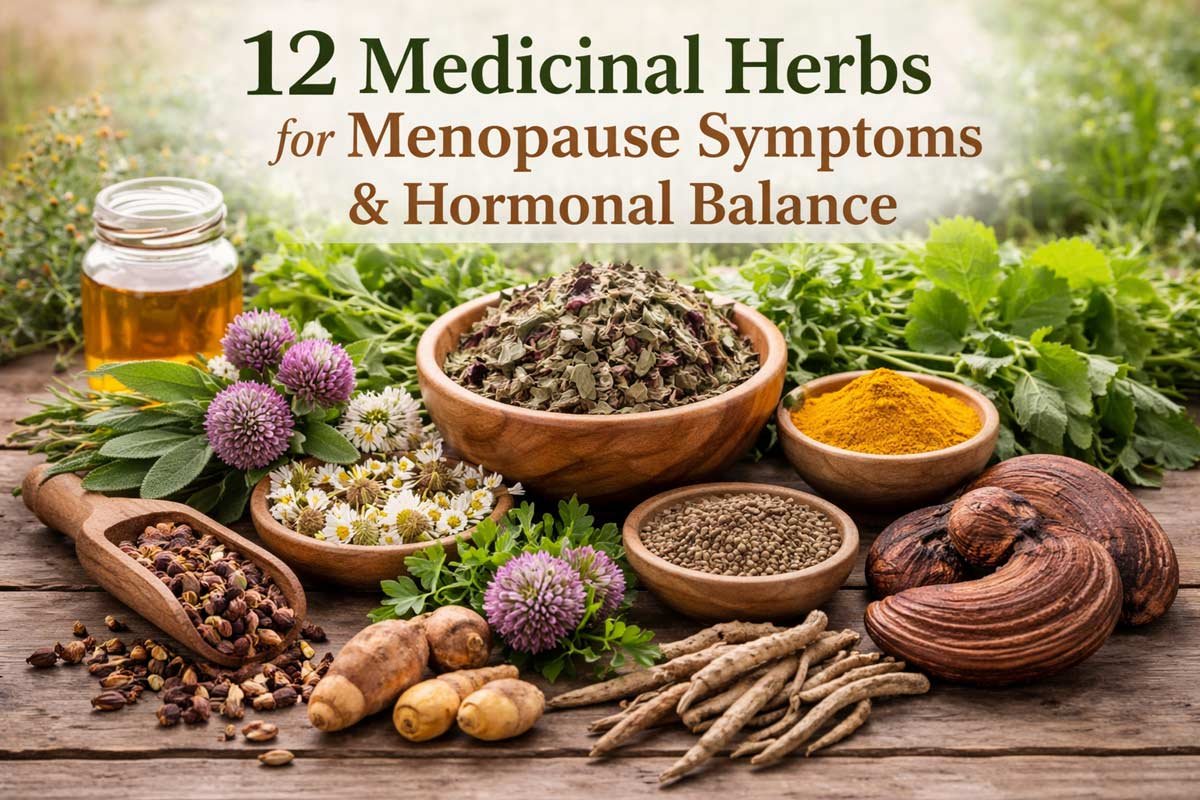
Navigating Menopause with Nature’s Allies
Menopause rarely announces itself clearly. It sneaks in sideways. A warm flush in the middle of the night. A sudden impatience that feels foreign. Sleep that used to come easily now plays hard to get. For many women, this transition feels less like a milestone and more like a slow unraveling of familiar rhythms. And yet, from a natural medicine perspective, menopause is not a malfunction. It is a recalibration. A profound shift in how the body communicates with itself.
When estrogen and progesterone begin to fluctuate and eventually decline, the entire endocrine orchestra has to retune. The ovaries quiet down, but the adrenals, thyroid, liver, gut microbiome, and nervous system all step into more prominent roles. This is why herbs for menopause work best when they are chosen with a wide lens. Treating hot flashes alone misses the point. Supporting hormonal balance means supporting the systems that process hormones, respond to stress, regulate inflammation, and maintain metabolic stability.
Table of Contents

One of the biggest misconceptions around menopause is that symptoms are caused solely by low estrogen. In reality, it is the instability that creates the most discomfort. Estrogen rises and falls unpredictably in perimenopause, sometimes spiking higher than ever before dropping sharply. The nervous system feels every swing. Temperature regulation becomes erratic. Blood sugar tolerance changes. Sleep architecture shifts. Mood becomes more reactive. Herbs for menopause shine here because many of them do not force hormone levels in one direction. They modulate. They soften extremes. They teach the body how to adapt.

Plants have been used to support menopausal women for as long as there have been written records. Long before hormones were isolated in laboratories, herbalists observed patterns. They noticed which plants cooled excessive heat, which calmed agitation, which restored vitality after long nights of broken sleep. These observations were not abstract. They were grounded in daily life. A woman who stopped waking drenched in sweat after drinking a certain bitter root tea. Another who found her sharp edge dulled after weeks with a nervine herb. Over generations, this knowledge refined itself.
What makes herbs for menopause particularly compelling is their diversity of action. Some herbs contain phytoestrogens, plant compounds that interact gently with estrogen receptors. Others act on the hypothalamic pituitary adrenal axis, helping the body respond more gracefully to stress. Some support liver detoxification pathways, improving how hormones are metabolized and cleared. Others nourish the nervous system directly, easing anxiety and emotional volatility that often accompany hormonal shifts.
Menopause also exposes weak links. Poor sleep tolerance, unresolved stress, blood sugar instability, and chronic inflammation often surface more clearly during this time. This is not a coincidence. Estrogen has protective effects on the brain, cardiovascular system, bones, and connective tissue. As its influence wanes, the body demands better foundational support. Herbs for menopause are not a cosmetic fix. They are a way to reinforce those foundations so the transition feels steadier and less adversarial.
It is also worth saying out loud that menopause is not the same experience for everyone. Genetics matter. Life history matters. Trauma, overwork, undernourishment, long term stress, and past hormonal suppression all shape how this phase unfolds. This is why rigid protocols often fail. Herbal medicine thrives on nuance. One woman runs hot and wired, snapping at small inconveniences, waking at 3 a.m. Another feels flat, exhausted, heavy, and unmotivated. Both may be menopausal. They do not need the same plants.
Herbs for menopause invite curiosity and patience. Most do not act overnight. Their effects accumulate quietly. A slightly deeper sleep after ten days. Fewer hot flashes after three weeks. A more even mood after a month. This gradual shift can feel underwhelming in a culture trained to expect immediate results, but it is precisely this slow intelligence that makes plant medicine sustainable. The body is not being overridden. It is being reminded how to regulate itself.
There is also a sensory aspect that often gets overlooked. The bitterness of a root decoction that stimulates digestion and liver function. The floral, slightly grassy aroma of a tea that signals relaxation before bed. The grounding ritual of preparing a tincture each morning. These small acts matter. They engage the nervous system in ways pills rarely do. They tell the body that care is being taken. That alone can soften symptoms.
Medicinal mushrooms deserve a mention here as well, even though they are often discussed separately from herbs. During menopause, immune resilience, inflammation control, and stress tolerance become increasingly important. Mushrooms like reishi and cordyceps do not address hormones directly, yet their effects ripple outward. Better stress adaptation often means fewer hot flashes. Improved sleep quality can stabilize mood and appetite. Supporting one system inevitably influences another.
Another truth that deserves space is that menopause is not something to power through. Many women have been conditioned to minimize their discomfort, to keep functioning as if nothing is changing. Herbs for menopause offer a different invitation. To listen more closely. To rest when needed. To adjust expectations. Plants work best when they are part of a broader conversation with the body rather than a last resort after everything feels unbearable.
Diet, light exposure, movement, and emotional load all interact with herbal support. A beautifully chosen herb cannot compensate for chronic sleep deprivation or constant blood sugar spikes. At the same time, herbs can make those lifestyle adjustments more achievable. Better sleep makes it easier to choose nourishing foods. Calmer nerves reduce cravings driven by stress. This is where hormonal balance becomes less of a target and more of an emergent property of overall regulation.
Using herbs for menopause also challenges the idea that this phase marks decline. Many women report a different kind of strength emerging once the hormonal turbulence settles. Clearer boundaries. Sharper intuition. A reduced tolerance for what drains them. Herbal allies can ease the turbulence so those qualities have room to surface. This is not about returning to how things were before. It is about supporting the body as it reorganizes itself around a new hormonal baseline.
As this article unfolds, individual herbs and mushrooms will be explored in depth, each with its own personality, strengths, and cautions. Some will resonate immediately. Others may not be right for you at all. That is part of the process. Herbal medicine is as much about discernment as it is about remedies. Menopause, approached this way, becomes less of a problem to solve and more of a conversation to enter.
Phytoestrogen-Rich Herbs for Hormonal Harmony
When estrogen begins to fluctuate and eventually decline, the body does not simply miss a single hormone. It misses the steady signaling that hormone once provided. Temperature regulation, vascular tone, neurotransmitter balance, bone turnover, and even collagen production all feel the change. This is where phytoestrogen rich herbs earn their reputation. They do not replace estrogen. They offer the body a gentler language, one that nudges receptors, smooths extremes, and reduces the shock of hormonal instability.
Phytoestrogens are often misunderstood. They are not plant hormones flooding the system. They are structurally similar compounds that interact weakly with estrogen receptors, sometimes activating them, sometimes blocking stronger endogenous estrogens from binding. This dual action is precisely why herbs for menopause can reduce hot flashes in one woman while calming estrogen driven symptoms like breast tenderness or headaches in another. The effect depends on context. That nuance is where these plants shine.
What follows are four classic herbs for menopause that have stood the test of time. Each works differently. Each has a distinct personality. None should be used casually or indefinitely without paying attention to how the body responds.
1. Black Cohosh (Actaea racemosa)
Black cohosh is often the first herb people hear about when menopause symptoms become disruptive. Hot flashes, night sweats, heart palpitations, sleep disturbances, and irritability tend to respond best. Yet its action is frequently misunderstood. Black cohosh does not behave like estrogen in the body. Instead, it appears to influence serotonin and dopamine pathways in the brain, particularly those involved in thermoregulation.
This explains why black cohosh can dramatically reduce hot flashes without stimulating estrogen sensitive tissues. For women who cannot tolerate estrogenic herbs or who are cautious due to personal or family history, this distinction matters. It also explains why the relief often feels neurological rather than hormonal. Fewer night sweats often arrive alongside calmer sleep and less emotional volatility.
In practice, black cohosh works best when symptoms feel abrupt and intense. Sudden waves of heat. A nervous system that feels jumpy. Sleep that is easily disturbed. It is less helpful for deep fatigue or low mood states where stimulation is needed. Timing also matters. Many women notice the most benefit after two to four weeks, with effects stabilizing rather than escalating.
Preparation matters more than many realize. Alcohol based extracts tend to deliver more consistent results than dried root capsules. Dosage should stay moderate. More is not better with this plant. If headaches, digestive upset, or a sense of heaviness develop, it is usually a sign to reassess.
Among herbs for menopause, black cohosh is best seen as a short to medium term ally. It calms chaos. It does not rebuild reserves.
2. Red Clover (Trifolium pratense)
Red clover works in a quieter register. Where black cohosh steadies the nervous system, red clover speaks directly to estrogen receptors through its isoflavone content. These compounds bind preferentially to beta estrogen receptors, which are more involved in bone, cardiovascular, and skin health than in reproductive tissue stimulation.
This selective affinity makes red clover especially useful for women whose symptoms feel vascular. Flushing. Heat that rises slowly rather than exploding. Mild night sweats. It also shines when menopause overlaps with concerns about bone density or circulatory health.
Red clover tends to act slowly. Expecting dramatic results in a week usually leads to disappointment. Given time, often six to twelve weeks, many women notice fewer hot flashes and a more even baseline of comfort. The effect is cumulative. This is not a rescue herb. It is a steady companion.
Tea made from the flowering tops has a mild, pleasant taste and works well for long term use. Concentrated extracts offer convenience but may lack some of the supportive minerals and secondary compounds present in whole plant preparations. Consistency matters more than potency here.
Among herbs for menopause, red clover is particularly suited to women who feel dry, tense, or brittle, physically or emotionally. It nourishes quietly. It softens without sedation.
3. Dong Quai (Angelica sinensis)
Dong quai has earned the nickname female ginseng, though it behaves nothing like Panax species. It is warming, moving, and deeply tied to blood and circulation. In traditional use, it is rarely given alone. Its strength lies in restoring flow where stagnation has taken hold.
During menopause, stagnation often shows up as headaches, pressure sensations, abdominal bloating, and mood that feels stuck or heavy. Dong quai helps by improving blood circulation and modulating estrogenic activity indirectly. It does contain phytoestrogen like compounds, but its primary effect is on how hormones move through the body rather than how much is present.
Women who feel cold easily, who have poor circulation, or who experience dull aches alongside menopausal symptoms often respond well. Those who run hot, bleed easily, or experience heavy menstrual patterns during perimenopause may find it aggravating if used alone.
Dong quai has a distinct aroma and flavor, musky and slightly sweet. This sensory intensity mirrors its physiological action. It is not subtle. Used skillfully, it brings warmth and movement to systems that have slowed. Used indiscriminately, it can overstimulate.
Within the broader category of herbs for menopause, dong quai is best understood as a circulatory harmonizer rather than a symptom suppressor. It supports transition by encouraging the body to move forward rather than clinging to old rhythms.
4. Chaste Tree Berry (Vitex agnus-castus)
Chaste tree berry occupies a unique place among herbs for menopause because it does not act on estrogen receptors at all. Instead, it works upstream, influencing pituitary signaling and prolactin levels. Through this mechanism, it helps rebalance the relationship between estrogen and progesterone.
This makes vitex especially valuable during perimenopause, when progesterone often declines before estrogen does. Symptoms such as mood swings, breast tenderness, irritability, headaches, and disrupted sleep often reflect this imbalance. Vitex helps normalize luteinizing hormone release, encouraging more stable progesterone production where possible.
The effect is gradual and deeply regulatory. Many women feel little change for the first month, followed by a noticeable shift in emotional steadiness and sleep quality. Vitex rewards patience. It is not well suited for sporadic use.
Taste can be a barrier. The berries are bitter and slightly pungent. Capsules or tinctures simplify adherence. Morning dosing is traditional, aligning with natural pituitary rhythms.
Vitex is not appropriate for everyone. Women already well past menopause with very low ovarian activity may feel little benefit. Those using hormonal medications should proceed carefully. Still, when indicated, it can be transformative.
Among herbs for menopause, chaste tree berry stands out as a conductor rather than a performer. It helps the endocrine system find its tempo again.
Taken together, these phytoestrogen rich herbs illustrate a core truth of herbal medicine. Balance does not come from forcing the body into submission. It comes from offering the right signals at the right time. Menopause asks for flexibility, not control. These plants meet that request with remarkable intelligence.
Adaptogenic Herbs to Stabilize Mood and Energy
If phytoestrogen rich herbs address the hormonal conversation directly, adaptogens work on the background noise that so often amplifies menopausal symptoms. Stress. Poor sleep. Blood sugar swings. Emotional overload. During menopause, the ovaries step back and the adrenal glands are asked to do more heavy lifting. When that system is already strained, even small hormonal shifts feel overwhelming. This is why herbs for menopause so often fail when stress physiology is ignored.
Adaptogens do not sedate and they do not stimulate in a crude way. They teach the body how to respond. They improve resilience rather than forcing calm or energy. For many women, this distinction is everything. Mood swings soften. Energy becomes more reliable. The nervous system stops overreacting to minor provocations. Over time, the body feels less brittle.
What makes adaptogens particularly valuable during menopause is their ability to support multiple systems at once. Cortisol regulation influences insulin sensitivity, sleep depth, immune balance, and inflammatory tone. All of these intersect with hormonal balance. When adaptogens are chosen well, herbs for menopause stop feeling like symptom management and start functioning as foundational support.
5. Ashwagandha (Withania somnifera)
Ashwagandha is often described as calming, but that word does not quite capture its range. It steadies. It grounds. It helps the nervous system settle into a more efficient baseline. During menopause, when anxiety can appear without a clear cause and sleep becomes fragile, this quality is invaluable.
Its primary action is on the hypothalamic pituitary adrenal axis. By moderating cortisol output, ashwagandha indirectly supports estrogen balance and thyroid function. This cascade effect explains why women often report better sleep, fewer night time awakenings, and a more even mood rather than a simple reduction in stress.
Ashwagandha is especially useful when exhaustion coexists with agitation. The wired but tired state. The inability to fully relax even when rest is available. Taken in the evening, it can deepen sleep without dulling the mind the next day. Taken in the morning, it supports sustained energy rather than a spike.
Taste matters here. The root has a distinct earthy, slightly bitter flavor that some find grounding and others find off putting. Capsules remove that barrier. Consistency is key. Benefits tend to build over several weeks, not days.
Among herbs for menopause, ashwagandha acts like a stabilizing weight. It lowers the center of gravity.
6. Rhodiola rosea
Rhodiola occupies a different energetic space. Where ashwagandha soothes, rhodiola sharpens. It improves mental clarity, motivation, and physical stamina, particularly under stress. For menopausal women experiencing fatigue that feels flat and unresponsive, rhodiola can be a turning point.
Its influence on neurotransmitters such as serotonin and dopamine helps explain its mood lifting effects. Unlike stimulants, it does not demand more from depleted systems. It improves efficiency. Tasks feel more manageable. Emotional resilience increases. Small challenges no longer feel insurmountable.
Rhodiola is particularly helpful when menopause coincides with cognitive fog. Word finding issues. Poor concentration. A sense that mental energy evaporates too quickly. Used appropriately, it restores a feeling of competence and presence.
Timing matters. Morning dosing works best. Taken too late in the day, it can interfere with sleep. Dosage also matters. More is not better. Lower doses often produce clearer benefits.
Within the landscape of herbs for menopause, rhodiola is best suited for women who feel drained yet still under pressure to perform. It offers support without sedation.
7. Holy Basil (Ocimum tenuiflorum)
Holy basil sits at the intersection of emotional and metabolic regulation. Traditionally revered as a sacred plant, its modern appeal lies in its versatility. It calms the nervous system while supporting blood sugar balance and reducing inflammation. These effects are deeply relevant during menopause, when stress and glucose tolerance often become intertwined.
Many women notice that holy basil takes the edge off irritability. Reactions feel less sharp. Emotional recovery after stress becomes faster. This is not emotional flattening. It is a widening of the space between stimulus and response.
Holy basil also supports cortisol rhythm. Rather than suppressing stress hormones outright, it encourages a healthier daily pattern. Energy feels steadier. Afternoon crashes soften. Sleep onset becomes easier.
As a tea, holy basil has a warm, slightly spicy aroma that itself signals relaxation. This sensory component enhances its effect. Regular use creates a ritual that reinforces nervous system regulation.
Among herbs for menopause, holy basil is particularly helpful for women who feel overstimulated yet sluggish, anxious yet tired. It reconciles opposites.
8. Maca Root (Lepidium meyenii)
Maca is often marketed aggressively, which has done it a disservice. At its core, maca is a nourishing endocrine modulator. It does not contain phytoestrogens. It does not push hormones in one direction. Instead, it supports the communication between the brain and endocrine glands.
For menopausal women, maca often improves energy, libido, and emotional resilience. These effects are subtle but meaningful. A greater interest in movement. A return of desire. A sense of vitality that feels internally generated rather than forced.
Maca also supports stress tolerance. Many women find they can handle physical and emotional demands with less depletion. This makes it an excellent companion to other herbs for menopause, especially when fatigue and low motivation dominate.
Preparation influences response. Gelatinized maca is easier to digest. Powder allows for flexible dosing, while capsules offer convenience. Starting low and increasing gradually prevents digestive discomfort.
Maca works best when viewed as food rather than medicine. Its benefits accrue with daily use over time.
Adaptogenic herbs do not announce themselves loudly. Their success is often measured in what no longer happens. Fewer emotional crashes. Less reactive stress. More stable energy across the day. In the context of herbs for menopause, this quiet support can make the difference between merely enduring the transition and moving through it with a sense of agency and strength.
Medicinal Mushrooms and Supporting Herbs for Overall Vitality
Menopause has a way of revealing what has been quietly depleted over the years. Immune resilience. Stress tolerance. Cognitive clarity. The capacity to recover after long days or broken nights. While herbs for menopause often focus on hormonal signaling, medicinal mushrooms and certain tonic herbs work at a deeper, systemic level. They strengthen the terrain. They improve how the body responds to stress, inflammation, and metabolic demand. When this foundation is supported, hormonal balance becomes easier to maintain.
Mushrooms do not chase symptoms. They build resilience. This is why their effects are sometimes underestimated. They work slowly, but their influence is broad and durable. During menopause, when estrogen’s protective buffering fades, this kind of support becomes not just helpful but essential.
Schisandra berry belongs in this conversation for similar reasons. Though not a mushroom, it behaves like one in the body. Tonic. Adaptogenic. System wide. Together, these allies help restore a sense of vitality that often feels lost during the hormonal transition.
9. Reishi Mushroom (Ganoderma lucidum)
Reishi is often described as calming, but that description barely scratches the surface. Reishi works through the immune system, the nervous system, and the stress response simultaneously. During menopause, this triangulated action becomes particularly relevant.
Sleep disturbances are one of the most common complaints during this phase. Difficulty falling asleep. Frequent waking. A sense that sleep no longer restores. Reishi supports deeper, more stable sleep by calming sympathetic nervous system overactivity. It does not sedate. It downshifts. Over time, this can reduce night sweats and early morning anxiety that often accompany hormonal fluctuations.
Reishi also modulates immune activity and inflammation. As estrogen declines, inflammatory markers tend to rise. This contributes to joint stiffness, headaches, and generalized discomfort. Reishi’s triterpenes and polysaccharides help regulate this inflammatory tone without suppressing immune function.
Emotionally, reishi has a grounding effect. Many women describe feeling less reactive, more spacious inside. Stressors do not disappear, but the body’s response changes. This alone can dramatically alter the experience of menopause.
Preparation matters. Reishi is tough and woody. Decoctions and dual extracts are traditionally used to access its compounds. Consistency is more important than dose. Reishi reveals its benefits over weeks, not days.
Among herbs for menopause, reishi functions as a stabilizer. It does not push. It holds.
10. Cordyceps (Cordyceps militaris / sinensis)
Cordyceps speaks to energy, but not in the way stimulants do. It supports mitochondrial function, oxygen utilization, and adrenal resilience. During menopause, fatigue often feels cellular rather than motivational. Cordyceps meets the body at that level.
Many women notice improved stamina and physical endurance with cordyceps. Daily tasks feel less draining. Exercise becomes more appealing rather than exhausting. This shift matters because movement supports insulin sensitivity, mood regulation, and sleep quality, all of which influence hormonal balance.
Cordyceps also supports adrenal output without overstimulation. This is critical during menopause, when adrenal glands partially compensate for declining ovarian hormone production. When adrenals are overtaxed, symptoms intensify. Cordyceps helps prevent that spiral.
Unlike caffeine driven energy, cordyceps tends to feel warm and steady. There is less crash. Less jitteriness. Taken in the morning, it supports a smoother energy curve across the day.
Cordyceps militaris is now more commonly used due to sustainability and accessibility, and its effects are comparable to traditional Cordyceps sinensis. Extract quality matters. Look for standardized preparations that emphasize active compounds.
Within the landscape of herbs for menopause, cordyceps restores momentum. It helps women feel capable again.
11. Lion’s Mane (Hericium erinaceus)
Cognitive changes during menopause are often dismissed or minimized. Brain fog. Memory lapses. Reduced verbal fluency. These are real experiences with biological underpinnings. Estrogen influences neuroplasticity and neurotransmitter balance. As levels fluctuate, cognitive clarity can suffer.
Lion’s mane addresses this directly by supporting nerve growth factor and neurogenesis. Over time, it can improve focus, memory, and mental endurance. This is not an instant effect. Like all true tonics, lion’s mane works gradually.
Many women report that thoughts feel more organized. Word retrieval improves. Mental fatigue lifts. These changes can be subtle but deeply reassuring, especially for those who worry that cognitive decline is inevitable.
Lion’s mane also supports mood regulation through the gut brain axis. Its polysaccharides influence gut microbiota, which in turn affect neurotransmitter production. This indirect pathway matters more than it sounds. Emotional resilience often improves alongside cognitive clarity.
Lion’s mane is well tolerated by most people. Powdered extracts blend easily into warm beverages. Capsules offer convenience for daily use.
Among herbs for menopause, lion’s mane supports identity. The feeling of being mentally present and capable.
12. Schisandra Berry (Schisandra chinensis)
Schisandra is a five flavor berry for a reason. Sweet, sour, salty, bitter, and pungent. Its complexity mirrors its action. Schisandra supports liver detoxification, adrenal function, and nervous system resilience all at once.
During menopause, liver function becomes increasingly important. Estrogen is metabolized and cleared through hepatic pathways. When these pathways are sluggish, symptoms worsen. Schisandra enhances phase one and phase two detoxification, improving hormone clearance without overstimulation.
Schisandra also improves stress tolerance. It helps normalize cortisol rhythms and supports mental focus under pressure. Many women describe feeling more contained, less scattered. Energy becomes usable rather than diffuse.
There is also a subtle emotional effect. Schisandra tends to strengthen boundaries. Emotional leakage decreases. This can be profoundly stabilizing during menopause, when sensitivity often increases.
Traditionally, schisandra is used as a tincture or decoction. Its flavor is intense but not unpleasant. Small amounts are effective. This is not an herb that needs to be pushed.
In the context of herbs for menopause, schisandra acts like a binder. It pulls systems together.
Medicinal mushrooms and tonic herbs rarely steal the spotlight, yet they often determine whether other interventions succeed. They improve recovery. They stabilize stress physiology. They strengthen the body’s ability to adapt. During menopause, this adaptability is everything.
When these allies are incorporated thoughtfully, the transition stops feeling like a loss of capacity and starts to feel like a redistribution of energy. Less outward, more inward. Less reactive, more deliberate. Vitality returns, not as youthful excess, but as grounded strength.
Embracing Menopause with Informed Choices
Menopause has a reputation problem. It is often framed as an ending, a loss, a slow narrowing of options. From the inside, though, it rarely feels that simple. What many women actually experience is exposure. Coping mechanisms that once worked stop working. Tolerance thresholds shift. The body becomes less forgiving of shortcuts. This can feel unsettling, but it is also clarifying. Menopause asks better questions. Herbs for menopause are not answers in themselves. They are tools that help you listen more clearly.
One of the most important shifts during this phase is moving away from the idea of fixing symptoms and toward supporting systems. Hot flashes, mood swings, insomnia, fatigue, and brain fog are not isolated glitches. They are signals from a body reorganizing itself around a new hormonal baseline. Trying to silence those signals without addressing the underlying imbalance often leads to frustration. Informed choices begin with understanding that discomfort is communication, not failure.
Herbs for menopause work best when chosen with honesty. Honest assessment of energy levels. Of stress load. Of sleep quality. Of digestion. Of emotional bandwidth. It is tempting to stack remedies, to throw everything at the problem. That approach usually backfires. The body under hormonal transition responds better to clarity than to excess. Fewer herbs, chosen well, used consistently, tend to outperform complex protocols.
Consistency deserves emphasis. Plant medicine does not reward impatience. Many of the most effective herbs for menopause act slowly, shaping physiology over weeks and months. This slowness is often mistaken for weakness. In reality, it reflects a deeper level of engagement. The body is not being overridden. It is being retrained. When results arrive, they tend to last.
It is also important to recognize that needs change across the menopausal timeline. Perimenopause often calls for different support than postmenopause. Early stages may benefit more from progesterone supporting herbs like chaste tree berry, while later stages may lean more heavily on adaptogens and tonics that support adrenal and immune function. What worked two years ago may no longer feel right. That is not failure. That is responsiveness.
Another informed choice involves understanding tolerance. Just because an herb is well known does not mean it is appropriate for everyone. Some women feel overstimulated by adaptogens like rhodiola. Others feel flattened by calming herbs. Some thrive on phytoestrogen rich plants, while others feel worse. The body’s feedback is the final authority. Herbs for menopause should make you feel more like yourself, not less.
Menopause also has a metabolic dimension that is often ignored. Insulin sensitivity changes. Muscle mass becomes harder to maintain. Inflammation rises more easily. These shifts influence how herbs work. Blood sugar instability can amplify hot flashes and anxiety. Poor protein intake can worsen fatigue and mood. Herbs are powerful, but they do not operate in isolation. Supporting metabolism through regular meals, adequate protein, and gentle movement amplifies their effect.
Sleep deserves special attention. Many menopausal symptoms improve dramatically when sleep stabilizes. Herbs that calm the nervous system, support circadian rhythm, and reduce nighttime cortisol spikes often have ripple effects across the entire symptom picture. Choosing herbs for menopause with sleep in mind is rarely a mistake. Rest is the foundation on which hormonal balance rebuilds itself.
There is also an emotional reckoning that accompanies menopause. Hormonal shifts strip away some of the buffering that once softened emotional responses. This can feel raw. Old grief surfaces. Patience thins. Tolerance for misalignment drops. Herbs can support emotional resilience, but they cannot replace discernment. Menopause often reveals where energy has been leaking for years. Informed choices include deciding what no longer deserves access to your nervous system.
One of the quiet gifts of this phase is improved self trust. As cycles cease, internal signals often become clearer. Hunger feels different. Fatigue carries more authority. Emotional reactions point more directly to unmet needs. Herbs for menopause can help stabilize the terrain so these signals are easier to interpret rather than overwhelming.
Ritual matters more now than it used to. Preparing tea. Taking tinctures mindfully. Noticing subtle shifts. These acts create continuity in a time of change. They anchor attention in the body. They slow the pace just enough for regulation to occur. This is not nostalgia. It is neurology. Repetition and predictability calm the nervous system, which in turn stabilizes hormonal signaling.
It is also worth naming that menopause is not a problem to solve once and move past. It is a permanent transition. The goal is not to get through it as quickly as possible. The goal is to arrive on the other side with strength intact. Bone density preserved. Cognitive clarity supported. Emotional range expanded rather than constricted. Herbs for menopause can help lay that groundwork if they are used with foresight rather than desperation.
There is no single right way to do this. Some women lean heavily into plant medicine. Others use herbs sparingly alongside other supports. What matters is agency. Understanding why you are choosing a particular herb. Knowing what you expect it to do. Paying attention to how it actually affects you. Adjusting without judgment.
Menopause often rewards this kind of attentiveness. Symptoms that once felt chaotic begin to organize. Patterns emerge. Triggers become obvious. Relief stops feeling random and starts feeling earned. This is where informed choice becomes embodied knowledge rather than intellectual understanding.
Herbs for menopause are not about reclaiming youth. They are about supporting adaptation. The body is changing because it is meant to. When supported rather than resisted, this change can bring a quieter strength. Less tolerance for nonsense. More clarity about what matters. A different relationship with energy that is less performative and more deliberate.
Approached this way, menopause is not an interruption of life but a refinement of it. Plant allies do not remove the work of this transition. They make it navigable. They steady the nervous system. They support hormonal balance. They offer the body the signals it needs to reorganize itself with less friction.
Informed choices are rarely dramatic. They are made daily. A tea instead of pushing through. A tonic taken consistently rather than sporadically. A willingness to adjust rather than endure. Over time, these choices accumulate. The body responds. Balance does not return exactly as it was before. It returns in a new form. Often stronger. Often clearer. Often more honest.
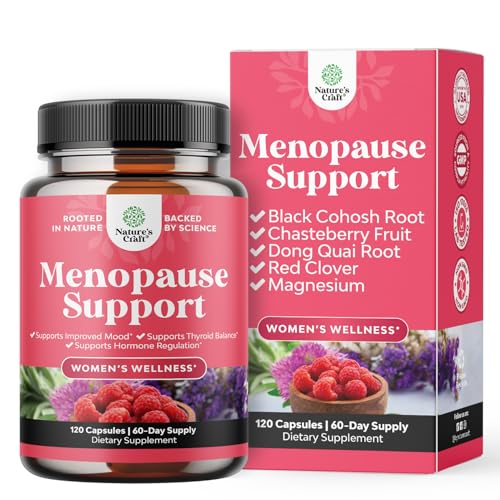
Best-selling Supplements for Menopause Symptoms




Article Sources
At AncientHerbsWisdom, our content relies on reputable sources, including peer-reviewed studies, to substantiate the information presented in our articles. Our primary objective is to ensure our content is thoroughly fact-checked, maintaining a commitment to accuracy, reliability, and trustworthiness.
- Sangiovanni, E., Brivio, P., Dell’Agli, M., & Calabrese, F. (2017). Botanicals as modulators of neuroplasticity: Focus on BDNF. Neural Plasticity, 2017, 5965371. https://doi.org/10.1155/2017/5965371
- Leach, M. J., & Moore, V. (2012). Black cohosh (Cimicifuga spp.) for menopausal symptoms. Cochrane Database of Systematic Reviews, 2012(9), CD007244. https://doi.org/10.1002/14651858.CD007244.pub2
- Patisaul, H. B., & Jefferson, W. (2010). The pros and cons of phytoestrogens. Frontiers in Neuroendocrinology, 31(4), 400–419. https://doi.org/10.1016/j.yfrne.2010.03.002
- Wuttke, W., Jarry, H., & Seidlová-Wuttke, D. (2014). Isoflavones safe food additives or dangerous drugs? Ageing Research Reviews, 13, 49–57. https://doi.org/10.1016/j.arr.2013.09.004
- Panossian, A., & Wagner, H. (2005). Stimulating effect of adaptogens: An overview with particular reference to their efficacy following single dose administration. Phytotherapy Research, 19(10), 819–838. https://doi.org/10.1002/ptr.1752
- Lopresti, A. L., Smith, S. J., Malvi, H., & Kodgule, R. (2019). An investigation into the stress relieving and pharmacological actions of Withania somnifera. Medicine, 6(2), 54. https://doi.org/10.3390/medicines6020054
- Amsterdam, J. D., & Panossian, A. G. (2016). Rhodiola rosea L. as a putative botanical antidepressant. Phytomedicine, 23(7), 770–783. https://doi.org/10.1016/j.phymed.2016.02.009
- Pattanayak, P., Behera, P., Das, D., & Panda, S. K. (2010). Ocimum sanctum Linn. A reservoir plant for therapeutic applications. Pharmacognosy Reviews, 4(7), 95–105. https://doi.org/10.4103/0973-7847.65323
- Brooks, N. A., Wilcox, G., Walker, K. Z., Ashton, J. F., Cox, M. B., & Stojanovska, L. (2008). Beneficial effects of Lepidium meyenii on psychological symptoms and measures of sexual dysfunction in postmenopausal women. Menopause, 15(6), 1157–1162. https://doi.org/10.1097/gme.0b013e3181732953
- Wachtel Galor, S., Yuen, J., Buswell, J. A., & Benzie, I. F. F. (2011). Ganoderma lucidum (Lingzhi or Reishi): A medicinal mushroom. In Herbal Medicine: Biomolecular and Clinical Aspects (2nd ed.). CRC Press. https://www.ncbi.nlm.nih.gov/books/NBK92757/
- Paterson, R. R. M. (2008). Cordyceps: A traditional Chinese medicine and another fungal therapeutic biofactory? Phytochemistry, 69(7), 1469–1495. https://doi.org/10.1016/j.phytochem.2008.01.027
- Friedman, M. (2015). Chemistry, nutrition, and health-promoting properties of Hericium erinaceus (Lion’s Mane mushroom). Journal of Agricultural and Food Chemistry, 63(32), 7108–7123. https://doi.org/10.1021/acs.jafc.5b02914
- Szeto, Y. T., & Benzie, I. F. F. (2006). Effects of a dietary supplement on human antioxidant status. Clinical Chemistry, 52(9), 1761–1762.https://doi.org/10.1373/clinchem.2006.072751

- Phosphatidic Acid: Supporting Muscle Growth and Strength - July 31, 2026
- Ceramides: Supporting Healthy Skin From Within - July 31, 2026
- Synbiotics: Combining Prebiotics and Probiotics Together - July 31, 2026