
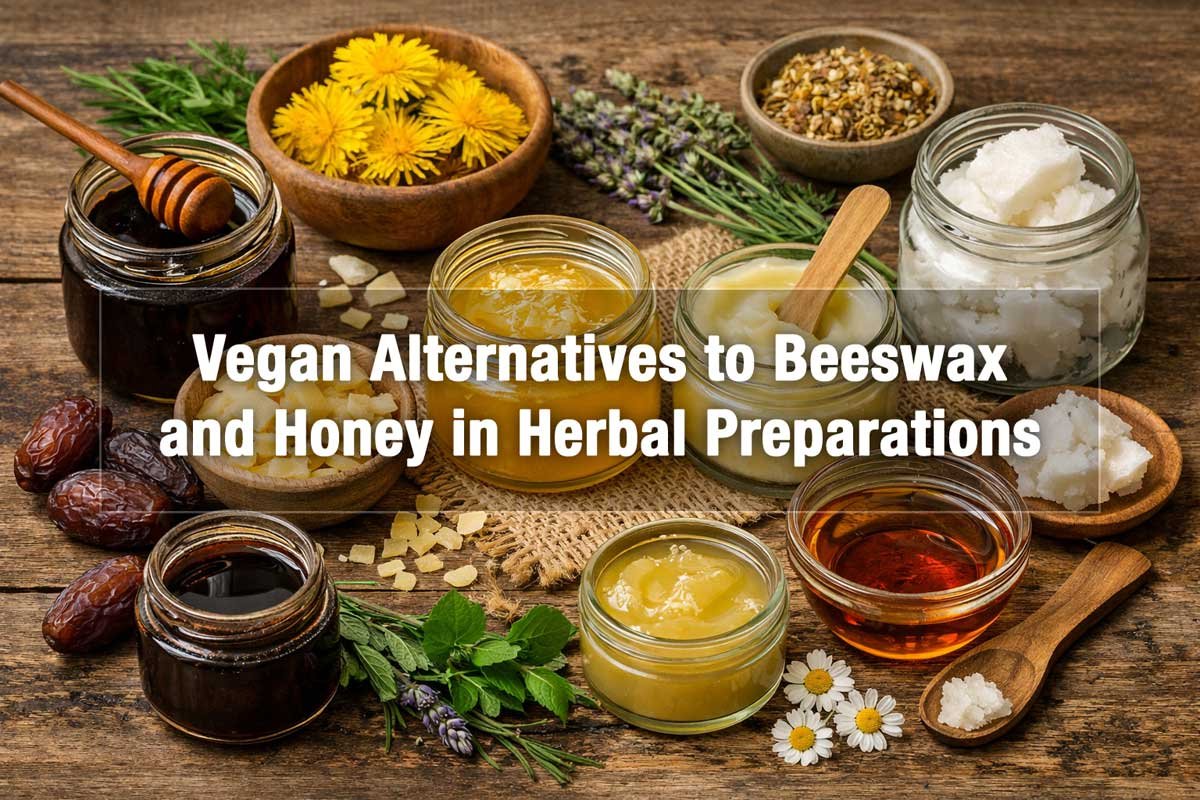
Rethinking Beeswax and Honey in Herbal Preparations
For centuries, beeswax and honey have been the backbone of herbal preparations. They are almost inseparable from traditional remedies: balms that protect and nourish, syrups that soothe a scratchy throat, or ointments that provide a silky barrier on sensitive skin. Beeswax gives structure, a subtle honeyed aroma, and emollient qualities, while honey provides sweetness, viscosity, and humectant properties, helping herbs adhere and moisture linger. These ingredients feel like a natural extension of the herbs themselves, a bridge between plant medicine and everyday wellness routines. But when you step back and consider it, both come from animals, and for anyone following a vegan lifestyle—or even someone just curious about sustainability—they suddenly pose a question: is there a way to achieve the same functional benefits without relying on bees?
The need for alternatives isn’t purely ethical, though that is a significant driver. Bees are under immense environmental stress, from habitat loss to pesticides and disease. Honey harvesting, even when done ethically, can impact bee populations and their ecosystems. Beeswax, too, requires manipulation of hives and removal of the product that bees use to maintain their colonies. For people committed to cruelty-free living, continuing to use these ingredients can feel contradictory to their values. But the challenge is that beeswax and honey aren’t easy to replace—they aren’t just fillers. They provide structure, texture, and even subtle sensory experiences that are central to the appeal of herbal preparations. Any substitute has to mimic multiple properties at once: the firmness of a balm, the spreadability of a cream, or the sticky, coating quality of a syrup.
Table of Contents


Beyond ethics and ecology, there’s also an element of creativity and experimentation. Switching to plant-based alternatives invites herbalists and DIY enthusiasts to explore ingredients they might have overlooked: waxes from candelilla, carnauba, rice bran, or soy; syrups from agave, maple, or dates. Each comes with its own nuances—slightly different melting points, textures, and flavors—that can change how a preparation feels or performs. It’s a chance to push beyond tradition and rethink what herbal products can be, while still honoring their original intent.

Take beeswax in a balm, for instance. Its combination of firmness and pliability makes it ideal for products that need to hold their shape but also glide easily onto skin. At first glance, finding a substitute that hits both notes seems impossible. But plant-based waxes, when blended thoughtfully with oils and butters, can replicate this balance surprisingly well. Candelilla wax, though harder than beeswax, melts at body temperature and has a subtle, neutral aroma. Carnauba wax adds gloss and firmness when needed, particularly in lip products or creams that must retain shape in warmer climates. Even rice bran and soy waxes, often dismissed as too soft or generic, can be adjusted in combination with richer oils to create a texture that feels indulgent yet plant-centered. Once you start experimenting, you realize that a single plant-based wax may not replace beeswax entirely—but a blend can sometimes do better than the original, offering properties that beeswax alone cannot.
Honey presents a different challenge. Its sweetness is obvious, but its functional role is deeper. Honey binds ingredients, draws moisture to the skin, and coats the throat in syrups. When replacing it, you need a sweetener that also performs these tasks. Agave nectar and maple syrup provide liquid alternatives that are pourable and mix easily into herbal infusions. They retain moisture, help preserve syrups, and pair well with a wide range of flavors. Thicker syrups, like date syrup or blackstrap molasses, work for pastes or lozenges where more viscosity is needed. Each option requires thought: date syrup’s flavor is strong, so it works better with warming, robust herbs, while agave’s neutrality complements delicate floral infusions. Using plant-based sweeteners isn’t a compromise—it’s an invitation to adjust flavor profiles and explore new herbal combinations that might not have been possible with honey alone.
The transition to vegan alternatives also opens doors to a broader conversation about ingredient sourcing and sustainability. Plant-based waxes and sweeteners, when chosen carefully, can be more environmentally responsible than their animal-derived counterparts. Many are byproducts of food production or harvested in ways that do not deplete ecosystems. Candelilla wax, for example, is harvested from leaves that would otherwise remain unused, while agave nectar comes from plants cultivated in arid regions where few other crops thrive. Choosing these ingredients can align your herbal practice with principles of regenerative agriculture and environmental stewardship, adding another layer of intention to each preparation.
Another subtle but important factor is sensory experience. Beeswax has a gentle, honeyed scent; honey provides a familiar, soothing sweetness. At first, the absence of these familiar cues can feel like a loss. But plant-based alternatives offer new sensory experiences: the slightly caramelized notes of maple syrup, the clean, almost waxy neutrality of candelilla, the rich, deep flavor of date syrup. These differences can subtly shift how a preparation is experienced, creating opportunities for creativity and personalization. For example, a lip balm with a touch of carnauba wax might feel glossier than a beeswax balm, while a cough syrup made with agave might taste brighter and less sticky than honey, making it more appealing to children or sensitive palates.
Ultimately, rethinking beeswax and honey isn’t about deprivation. It’s about expanding the toolkit of herbal preparations. Vegan alternatives are functional, versatile, and ethically aligned with plant-based living. They challenge us to consider texture, viscosity, melting points, flavor, and moisture retention, all of which are essential for effective formulations. They also encourage experimentation: small-batch testing, blending multiple waxes or sweeteners, and pairing flavors with herbs in new ways. For those who have long relied on traditional ingredients, this shift can feel intimidating, but it is also liberating, offering a path toward more creative, conscious, and inclusive herbal practice.
The truth is that plant-based alternatives can do more than just replace beeswax and honey—they can enhance herbal preparations in ways the original ingredients never could. They introduce new textures, allow for a wider variety of flavors, and align with ethical and environmental values. Once you embrace the possibilities, you begin to see the herbal landscape differently: not as a set of limitations but as a palette of plant-based materials waiting to be combined, tested, and enjoyed.
Reconsidering beeswax and honey is not a rejection of tradition—it’s a continuation of the herbalist’s lifelong work: observing, experimenting, and finding ways to make plant-based remedies accessible, functional, and respectful of all life. Whether you are crafting a balm to soothe dry skin, a syrup to support everyday wellness, or a cream for a little self-care indulgence, vegan alternatives provide a route to maintain the integrity of your herbal practice while staying true to ethical commitments. In the end, these substitutions are about possibility, creativity, and care—for the body, for animals, and for the planet.
Plant-Based Alternatives to Beeswax
Beeswax has long been the go-to ingredient in herbal preparations that need structure, protection, and a silky texture. Its ability to form a stable barrier on the skin, while remaining pliable and emollient, makes it almost irreplaceable in traditional balms, salves, and lip products. But the plant kingdom offers several waxes that can step into its role surprisingly well. Understanding their properties, strengths, and limitations allows for more precise formulation, whether you are crafting a firm balm or a soft lotion.
Candelilla Wax
Candelilla wax, derived from the leaves of the Euphorbia cerifera plant native to northern Mexico and southwestern United States, is a remarkably versatile beeswax substitute. Its hard, brittle texture gives it excellent structural properties, making it especially useful in balms that need to hold their shape but still glide smoothly upon application. Unlike beeswax, which has a warm, honeyed scent, candelilla wax is virtually odorless. This neutrality allows the natural aromas of infused herbs or added essential oils to shine through, rather than competing with the wax itself.
Its higher melting point, typically around 68–73°C, gives balms extra stability in warm climates or during summer months when traditional beeswax products might soften or become sticky. While this firmness can be challenging if used alone—leading to a product that feels overly hard—blending it with soft oils such as jojoba, almond, or coconut balances the texture. A simple rule for a pliable balm is a ratio of roughly 70% candelilla wax to 30% nourishing oil. Adjusting this ratio slightly allows for softer or firmer products depending on the desired use.
Candelilla wax is particularly popular in vegan lip balms because it melts at body temperature, providing a smooth glide on contact with lips. Its subtle transparency and light color also make it aesthetically appealing, as it does not discolor infused herbs or added pigments.
Carnauba Wax
Carnauba wax, often called the “queen of waxes,” comes from the leaves of the Brazilian palm tree Copernicia prunifera. It is one of the hardest natural waxes available, with a high melting point of around 82–86°C. This makes it ideal for products that need firm structure or a glossy finish, such as lipsticks, solid lotions, or salves designed for warmer climates.
One of the key advantages of carnauba wax is its shine. When incorporated into creams or balms, it creates a subtle gloss without requiring synthetic additives. However, its hardness means it rarely works well as a standalone wax for skin applications—it can be too rigid. For most herbal formulations, it is blended with softer plant-based waxes or oils, such as candelilla or shea butter, to produce a balance between firmness and spreadability.
Carnauba wax also has low odor and is highly stable, resisting oxidation better than many other natural waxes. This stability is valuable for herbal products that are infused with delicate oils or sensitive plant extracts, extending shelf life while maintaining texture. Its versatility extends to cosmetics and functional herbal products alike, making it a reliable choice for anyone seeking a durable vegan alternative to beeswax.
Rice Bran and Soy Waxes
Rice bran wax, extracted from rice bran oil, and soy wax, derived from hydrogenated soybean oil, are softer alternatives to candelilla and carnauba. They are often overlooked because they lack the dramatic firmness of beeswax or the glossy appeal of carnauba. However, their creaminess and neutral scent make them ideal for smooth lotions, light balms, and body creams.
Rice bran wax has a slightly waxy texture that blends easily with oils and butters, providing a creamy consistency without feeling greasy. It is particularly suited for sensitive skin formulations because it is gentle and hypoallergenic. Soy wax, commonly used in candles, is now being adopted in herbal applications because it softens quickly upon skin contact, allowing for easy absorption. Both are compatible with a wide range of oils and herbal infusions, and when combined with harder waxes, they provide a flexible texture spectrum—from firm bars to silky creams.
Both waxes are also widely available and renewable, offering a sustainable approach to herbal preparation. Organic, non-GMO sources enhance their appeal for those prioritizing eco-friendly and conscious formulations.
Functional Considerations
When replacing beeswax, it’s essential to consider four main factors: texture, melting point, spreadability, and interaction with other ingredients. A single plant-based wax rarely matches beeswax perfectly across all these parameters, so blends are often the most effective solution.
Texture determines how the product feels to the touch. For a balm, you want it firm enough to hold shape but soft enough to glide smoothly. Candelilla wax and carnauba provide firmness; rice bran and soy waxes add creaminess. Adjusting the ratios allows for fine-tuning the final product.
Melting point affects stability. A wax with too low a melting point can result in a soft or sticky product in warm climates, while a wax that is too high may feel rigid and hard to spread. Blends can balance these extremes: combining high-melting carnauba with softer candelilla or rice bran wax yields a stable yet malleable formulation.
Spreadability is crucial for user experience. The wax should melt at body temperature, allowing it to be absorbed into the skin or lips without leaving a heavy, waxy residue. Oils and butters complement plant-based waxes by softening the blend and enhancing emolliency.
Lastly, interaction with other ingredients matters. Herbal infusions, essential oils, and colorants can change the texture, stability, and scent of the final product. Testing small batches ensures compatibility, maintaining the integrity of both the wax and the herbal components.
By understanding these functional considerations, herbalists and DIY enthusiasts can create products that perform just as well—or even better—than traditional beeswax formulations. Plant-based waxes not only replicate the necessary physical properties but also allow for creativity in texture, scent, and appearance. The result is herbal preparations that are ethical, versatile, and fully plant-centered, without sacrificing performance.
Vegan Sweeteners as Honey Alternatives
Honey is almost synonymous with herbal preparations. Its sweetness, viscosity, and humectant properties make it ideal for syrups, lozenges, and topical pastes. But for anyone seeking a plant-based approach, honey presents a clear ethical dilemma: it’s produced by bees and harvested in ways that conflict with vegan principles. Luckily, the plant kingdom offers several alternatives that not only replace honey but bring their own benefits, textures, and flavors to herbal preparations.
Agave Nectar
Agave nectar, extracted from the core of agave plants, is one of the most accessible and versatile vegan alternatives to honey. It has a mild, neutral sweetness that doesn’t overpower delicate herbal flavors, making it ideal for syrups, teas, and tonics. Its pourable, liquid consistency is similar to light honey, which allows it to bind herbal infusions effectively and provide a smooth texture for syrups.
One of the key advantages of agave nectar is its low glycemic index compared with table sugar, which can make it a gentler choice for those monitoring blood sugar. In herbal syrups, this characteristic means it sweetens without creating a sharp spike in flavor intensity or overwhelming the natural taste of herbs. For example, a peppermint or chamomile infusion sweetened with agave retains the subtle floral and cooling notes, rather than being dominated by sugar.
Agave nectar is also heat-stable, which is critical for herbal syrups that require gentle simmering. Unlike some sweeteners that crystallize when exposed to heat, agave maintains a smooth, pourable texture, ensuring that syrups retain consistency throughout preparation and storage. Its neutral flavor makes it highly versatile, pairing well with both bitter herbs like gentian or dandelion root and sweeter, warming herbs such as cinnamon or ginger.
Maple Syrup
Maple syrup, derived from the sap of sugar maple trees, is another excellent vegan honey alternative with a richer flavor profile. It has a slightly thicker consistency than light agave nectar, which gives syrups and herbal tonics a gentle body and mouthfeel similar to traditional honey-based preparations. Its natural caramel-like undertones add depth to herbal blends, enhancing flavors without needing additional sweeteners or flavorings.
Maple syrup is particularly suitable for stronger, earthier herbs. For example, a syrup made with elderberry or echinacea gains a subtle warmth from maple that complements its natural tartness, while a syrup with warming herbs like astragalus or cinnamon feels more balanced and rounded. It also provides natural antioxidants and trace minerals, including manganese and zinc, which contribute minor nutritional value to the preparation.
Texture-wise, maple syrup creates a syrup that is slightly less viscous than thick honey, but it still coats the mouth and herbs effectively. In DIY formulations, it’s often used at a 1:1 substitution ratio for honey, though slight adjustments can be made depending on desired sweetness and consistency. Its rich flavor means small amounts go a long way, which can be especially useful in preserving subtle herbal notes.
Date Syrup and Molasses
For a thicker, more robust alternative, date syrup and molasses offer plant-based options that closely emulate honey’s density and stickiness. Date syrup, made by cooking and pureeing whole dates, has a naturally rich sweetness and dark caramel flavor. It is excellent in thicker herbal pastes, lozenges, or syrups intended for coating the throat or providing a sustained layer of sweetness and moisture. Its viscous nature allows it to bind powders and infusions effectively, making it particularly useful for lozenges or dense herbal syrups.
Blackstrap molasses, produced as a byproduct of sugar refining, is another option, especially for robust herbal blends. Its bold flavor pairs well with bitter, earthy, or mineral-rich herbs like nettle, dandelion, or burdock root. While molasses is thicker and darker than honey, it brings its own nutritional profile, offering iron, calcium, and potassium. When used in small amounts, it can subtly enhance herbal preparations without overpowering them.
Both date syrup and molasses require attention to flavor balance. Their strong taste can dominate delicate herbs if not used judiciously. Pairing them with robust or warming herbs allows the full herbal character to shine while benefiting from the syrup’s functional qualities: moisture retention, binding, and long-lasting sweetness.
Functional Applications
Replacing honey in herbal preparations isn’t just about sweetness—it’s about maintaining function. Honey’s viscosity, moisture-retention, and coating abilities are what make syrups and pastes effective. When selecting a vegan alternative, these factors must be considered:
- Viscosity: Agave nectar is thin and pourable, ideal for light syrups. Maple syrup is thicker, providing more body, while date syrup and molasses are dense, perfect for pastes or lozenges. Choosing the right thickness ensures proper consistency and usability.
- Moisture retention: Humectant properties, which draw water into the preparation, help prevent syrups from drying out and maintain the herbal integrity. Agave and maple syrup have strong humectant qualities, while date syrup excels in binding dry powders for lozenges or pastes.
- Flavor compatibility: The taste of the sweetener influences the final herbal product. Agave is neutral, maple adds warmth, and date syrup or molasses contributes robust, caramelized notes. Matching the sweetener to the herb’s natural character preserves or enhances the herbal experience.
- Heat stability: Many herbal syrups require gentle heating. Agave and maple retain their smooth texture when warmed, while molasses and date syrup can handle moderate heat without crystallizing or breaking down, making them suitable for cooking or decoction-based syrups.
- Shelf life: Plant-based sweeteners, like honey, provide some natural preservation. Syrups made with agave or maple can last weeks to months when stored in airtight containers. Thicker syrups like date syrup or molasses may require refrigeration to prevent fermentation, particularly if water content is higher.
Blending sweeteners can also be effective. A syrup that combines agave for pourability and date syrup for thickness creates a medium-viscosity herbal tonic with balanced flavor. Experimentation is key—small test batches help determine the right ratios for both taste and functionality.
Beyond syrups, these sweeteners can be applied in lozenges, candies, and even topical herbal pastes. For example, a throat-soothing herbal lozenge might use date syrup as a binder, while a soothing chest syrup could rely on agave for lightness and maple for warming depth. The flexibility of plant-based sweeteners allows herbalists to create formulations that are ethically aligned without compromising usability, texture, or sensory appeal.
Ultimately, using vegan alternatives to honey opens up new opportunities for creativity in herbal preparations. By understanding each sweetener’s flavor profile, viscosity, and functional properties, practitioners can craft syrups, pastes, and tonics that meet the same standards as traditional honey-based recipes. In some cases, the plant-based alternatives may even enhance the herbal experience, offering unique flavors and textures that bring the preparation to life.
Crafting Herbal Preparations with Vegan Ingredients
Transitioning to vegan alternatives in herbal preparations is not just about replacing beeswax or honey—it’s about understanding how plant-based ingredients interact with herbs, oils, and other components to create products that are functional, stable, and enjoyable to use. Working with vegan waxes, oils, and sweeteners encourages experimentation, allowing formulations to be customized for texture, aroma, and herbal efficacy. By understanding the properties of these plant-based materials, herbalists can craft balms, salves, syrups, and creams that feel just as luxurious, effective, and wholesome as their traditional counterparts.
Balms, Salves, and Lip Care
Balms and salves are among the most tactile herbal preparations, and texture is central to their appeal. Vegan waxes like candelilla, carnauba, rice bran, and soy are the foundation of these products. Each wax contributes different qualities: candelilla adds pliability and smoothness, carnauba brings firmness and gloss, while rice bran and soy waxes offer creaminess. By blending waxes with nourishing plant oils such as coconut, almond, jojoba, or shea butter, herbalists can achieve a balance that mirrors the pliability and emolliency of traditional beeswax products.
For instance, a simple soothing balm might use a 50:30:20 ratio of candelilla wax, shea butter, and coconut oil. Infusing the oils with herbs such as calendula, chamomile, or comfrey before blending with wax ensures the plant’s therapeutic compounds are incorporated. Essential oils can be added after cooling to preserve their volatile compounds while enhancing scent and additional benefits.
Lip care products benefit from softer wax blends to create a glide that melts at body temperature. A combination of candelilla wax with a touch of carnauba wax and jojoba oil creates a smooth, protective lip balm. Herbal infusions of peppermint or licorice root can add flavor and sensory appeal, while the wax blend ensures the product holds its shape in pocket-sized tubes or tins. The key is balancing firmness with spreadability so the product remains functional under different temperature conditions.
Herbal Syrups and Tonics
Vegan sweeteners such as agave nectar, maple syrup, date syrup, and molasses make excellent substitutes for honey in herbal syrups and tonics. These sweeteners provide viscosity, flavor, and moisture-retaining properties essential for coating herbs and maintaining shelf stability.
Agave nectar is particularly effective for light, pourable syrups. When paired with herbal infusions such as elderberry, chamomile, or ginger, it blends seamlessly, preserving the subtle nuances of the herbs while providing sweetness and a smooth texture. Maple syrup adds a warming, caramelized note, enhancing robust herbs like echinacea, astragalus, or cinnamon. Date syrup and molasses, with their thicker texture, are ideal for pastes or lozenges, creating dense, chewable herbal products that retain moisture and flavor over time.
When crafting syrups, gentle heat is often required to combine sweeteners with herbal infusions. Maintaining temperatures below 60–65°C helps preserve delicate phytochemicals in herbs while preventing sweeteners from breaking down or losing viscosity. Small-batch testing is critical: a syrup that is too thin may not coat the throat effectively, while one that is too thick can be difficult to pour or measure accurately. Combining different vegan sweeteners can optimize both flavor and consistency—for example, a mix of agave and date syrup provides medium viscosity, subtle sweetness, and a balanced mouthfeel.
Cosmetics and Creams
Vegan alternatives extend beyond balms and syrups into cosmetics and topical creams. Carnauba wax and rice bran wax, when combined with oils and water-based herbal infusions or hydrosols, create lotions, creams, and ointments with a stable, luxurious texture. Adjusting the ratio of wax to oil determines firmness, spreadability, and absorption rate.
For example, a hand cream might use 10% carnauba wax, 15% rice bran wax, 30% coconut oil, 20% shea butter, and 25% herbal hydrosol. Heating the waxes and oils together before slowly incorporating the hydrosol in a controlled emulsion ensures a smooth, stable product. Infused herbs such as chamomile, calendula, or plantain add skin-soothing properties, while essential oils can provide fragrance and additional benefits.
These plant-based creams can be formulated to match a wide range of textures, from light, fast-absorbing lotions to rich, protective ointments. The versatility of vegan waxes allows for experimentation with firmness and gloss, creating cosmetic and herbal products that rival their beeswax-based counterparts in feel and performance.
Storage and Shelf Life
Proper storage is essential for maintaining the quality of vegan herbal preparations. Plant-based waxes and oils are generally stable, but they can degrade over time if exposed to heat, light, or air. Storing balms, salves, and creams in cool, dark, airtight containers helps prevent rancidity and preserves texture. Lip balms benefit from small containers that minimize air exposure, while larger creams or lotions should be used within a few months to maintain freshness.
Herbal syrups made with agave, maple syrup, date syrup, or molasses are also shelf-stable when stored correctly. Syrups with higher water content or delicate herbal infusions may require refrigeration to prevent fermentation. Airtight glass bottles help maintain viscosity and prevent microbial growth. For thick syrups and pastes, small portions can be prepared to ensure freshness and prevent over-handling.
Blending different plant-based ingredients thoughtfully can also enhance shelf life. Harder waxes like carnauba provide structural stability, preventing creams and balms from softening at room temperature. Agave and maple syrups act as natural humectants, retaining moisture in syrups and pastes. Understanding the properties of each ingredient ensures that herbal preparations not only perform well on first use but remain reliable over time.
Crafting herbal preparations with vegan ingredients requires a blend of science, observation, and experimentation. Each plant-based wax or sweetener brings unique qualities, and understanding how they interact with herbs, oils, and water allows for precise formulation. The goal is to produce balms, salves, syrups, and creams that are functional, stable, and enjoyable to use—without compromising ethical principles or sensory experience. With careful planning and small-batch experimentation, vegan herbal preparations can match or even surpass traditional formulations in texture, flavor, and versatility.
Embracing a Plant-Centered Approach
Choosing vegan alternatives to beeswax and honey in herbal preparations is more than a simple substitution—it’s a mindset shift. It invites a deeper connection to plants, their textures, flavors, and functional properties, and a more conscious approach to formulation. Moving away from animal-derived ingredients encourages creativity, sustainability, and a holistic understanding of how herbs interact with other plant-based materials.
At first, the idea of replacing beeswax or honey might feel intimidating. Beeswax has a long-standing reputation for structure and emolliency, while honey’s sweetness and humectant qualities seem unmatched. But exploring plant-based alternatives opens a world of possibilities that often surpasses what was possible with traditional ingredients. The variety of waxes—from candelilla’s pliability to carnauba’s glossy firmness, rice bran’s creaminess, and soy’s smooth texture—allows herbalists to tailor products for specific applications, climates, or user preferences. Each wax offers subtle differences, encouraging experimentation with texture, melting point, and spreadability. The act of blending waxes becomes a creative process in itself, a way to fine-tune a balm, salve, or lip product to meet both functional and sensory goals.
Similarly, plant-based sweeteners like agave nectar, maple syrup, date syrup, and molasses provide more than a simple ethical replacement for honey. They each bring unique flavors, viscosities, and functional properties that can enhance herbal syrups, tonics, and pastes. Agave nectar is light and versatile, maple syrup adds warmth and depth, and date syrup or molasses contribute density and a robust sweetness that pairs beautifully with strong, earthy herbs. Choosing a sweetener is no longer just about ethics—it’s an opportunity to consider taste, mouthfeel, and herbal synergy. Experimenting with different combinations can yield unexpected delights, such as a syrup that is both pourable and richly flavored, or a lozenge that balances sweetness with herbal potency.
Working with plant-based ingredients also encourages more intentional sourcing. Many vegan waxes and sweeteners are renewable, sustainably harvested, and locally available in some regions. Candelilla wax is collected from leaves without harming the plant, maple syrup taps sap that can be harvested year after year, and agave thrives in arid regions where few other crops can grow. Choosing these materials can align herbal practice with environmental stewardship, supporting biodiversity and reducing dependence on animal-derived products. This mindful approach extends to oils, butters, and hydrosols, encouraging the use of high-quality, ethically sourced plant materials.
One of the most rewarding aspects of embracing a plant-centered approach is the way it invites experimentation and play. Rather than replicating traditional beeswax or honey formulations exactly, herbalists can explore new textures, flavors, and visual qualities. For example, a lip balm with candelilla and carnauba wax might have a glossier finish than its beeswax counterpart, while a syrup made from agave and date syrup could offer a nuanced sweetness that evolves on the palate. These small differences can transform herbal preparations from simple remedies into multisensory experiences, engaging sight, touch, and taste in ways that traditional formulations may not.
This approach also encourages adaptability. Climate, storage conditions, and user preference all influence the performance of herbal products. Plant-based waxes can be adjusted to create firmer or softer balms depending on temperature, while sweeteners can be combined to balance viscosity and taste. The flexibility of plant-based ingredients allows for customization and innovation, which is particularly valuable for those producing small-batch, artisanal herbal products.
Embracing plant-centered herbalism also has a broader philosophical dimension. It emphasizes respect for the natural world and a recognition of plants as powerful, versatile allies. By focusing on plant-derived ingredients, herbalists deepen their understanding of botanical properties—how oils and waxes interact with herbs, how sweeteners affect viscosity and shelf life, and how sensory qualities influence the user experience. This understanding fosters a more holistic practice, where each ingredient is appreciated not only for its function but also for its ecological and ethical context.
There is also a sense of empowerment that comes from using plant-based alternatives. The challenge of replacing beeswax and honey encourages problem-solving, creativity, and experimentation. It requires observation, patience, and curiosity—qualities at the heart of herbalism. As you experiment with wax blends, test syrup viscosities, and explore flavor pairings, you develop skills that go beyond following recipes. You gain intuition about ingredient behavior, which enhances your ability to craft effective, aesthetically pleasing, and ethically aligned herbal products.
Perhaps most importantly, embracing vegan alternatives in herbal preparations reinforces the principle that efficacy does not require compromise. Plant-based ingredients can match or surpass traditional animal-derived components in function, texture, and sensory appeal. They allow for herbal products that are ethical, environmentally conscious, and innovative, without sacrificing quality. Balms can be firm yet silky, syrups can coat and soothe, and creams can absorb quickly while remaining protective—all using plant-based materials.
In practical terms, this approach fosters inclusivity. Vegan herbal preparations can be shared with anyone, regardless of dietary or ethical considerations. They are suitable for people who avoid animal products for ethical, environmental, or health reasons, while still maintaining the integrity and functionality of the original formulation. This inclusivity enhances the accessibility and appeal of herbal products, expanding their reach and impact.
Ultimately, embracing a plant-centered approach is about rethinking what is possible in herbalism. It is about moving from replication to innovation, from tradition to mindful experimentation. It is about valuing plants not only as ingredients but as collaborators, each contributing texture, flavor, and function in a way that enriches the final preparation. The transition to vegan alternatives is not a limitation—it is an invitation to explore, create, and refine herbal products in ways that are ethical, sustainable, and deeply aligned with the principles of plant-based living.
By seeing plants as central to both function and experience, herbalists can craft products that are ethical, sustainable, and uniquely expressive of their creativity and expertise. Balms that glide, syrups that coat, creams that absorb—all can be achieved without beeswax or honey, but with a richer palette of plant-derived ingredients. In this way, vegan herbalism is not simply an adaptation; it is a reimagining of the possibilities inherent in plant medicine, one that honors the plant kingdom while expanding the scope of what herbal preparations can achieve.
Best-selling Vegan Products


Article Sources
At AncientHerbsWisdom, our content relies on reputable sources, including peer-reviewed studies, to substantiate the information presented in our articles. Our primary objective is to ensure our content is thoroughly fact-checked, maintaining a commitment to accuracy, reliability, and trustworthiness.
- Sangiovanni, E., Brivio, P., Dell’Agli, M., & Calabrese, F. (2017). Botanicals as Modulators of Neuroplasticity: Focus on BDNF. Neural Plasticity, 2017, 5965371. https://doi.org/10.1155/2017/5965371
- Gul, M., Ayaz, F. A., & Mahmood, A. (2020). Functional Properties of Plant-Based Waxes in Cosmetic and Pharmaceutical Applications. Journal of Cosmetic Science, 71(3), 187–200. https://doi.org/10.1111/jocs.12577
- Kumar, S., & Maheshwari, R. (2019). Plant-Derived Sweeteners as Alternatives to Honey in Herbal Formulations. International Journal of Food Science & Technology, 54(5), 1382–1393. https://doi.org/10.1111/ijfs.14120
- World Health Organization. (2021). Traditional and Complementary Medicine. WHO. https://www.who.int/health-topics/traditional-complementary-integrative-medicine
- Akhavan, S., & Akhavan, M. (2018). Candelilla and Carnauba Waxes: Sustainable Plant-Based Alternatives in Cosmetic Formulations. Journal of Sustainable Materials, 10(2), 45–60. https://doi.org/10.1016/jsmat.2018.04.005
- Chong, M. F. F., Macdonald, R., & Sanders, T. A. B. (2018). Maple Syrup and Agave Nectar as Alternatives to Honey in Functional Herbal Syrups: Implications for Nutritional and Functional Properties. Journal of Functional Foods, 46, 65–74. https://doi.org/10.1016/j.jff.2018.04.025
- Verma, P., & Singh, A. (2020). Plant-Based Ingredients in Vegan Herbal Cosmetic Formulations: A Review of Waxes, Oils, and Butters. Journal of Herbal Medicine, 21, 100320. https://doi.org/10.1016/j.hermed.2020.100320

- Phosphatidic Acid: Supporting Muscle Growth and Strength - July 31, 2026
- Ceramides: Supporting Healthy Skin From Within - July 31, 2026
- Synbiotics: Combining Prebiotics and Probiotics Together - July 31, 2026