
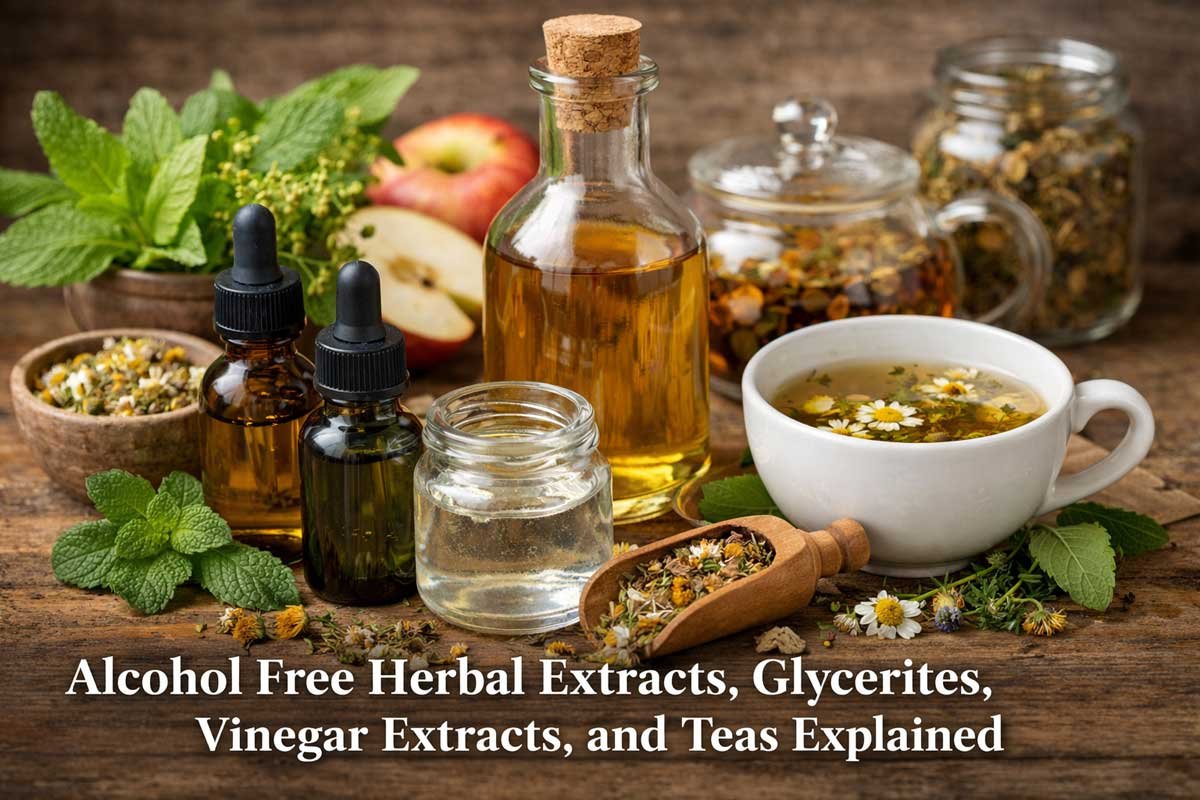
When Alcohol Isn’t an Option: Rethinking Herbal Extracts
For a long time, alcohol based tinctures were treated as the gold standard of herbalism. If you opened an old herbal manual or spoke with a traditional practitioner, chances were high that herbal extracts meant alcohol by default. It was practical. Alcohol pulls a wide range of plant constituents, preserves them well, and travels easily across time and distance. Simple, efficient, effective. Or at least that was the story many of us inherited.
But herbal practice does not live in a vacuum. People change. Values change. Bodies change. Cultural contexts shift. And suddenly, alcohol is not a neutral ingredient anymore. Some people avoid it for religious or ethical reasons. Others do so for personal history, sensory dislike, pregnancy, childhood use, or because alcohol simply does not sit well with them. In vegan and plant-focused lifestyles, the question often comes up quietly but persistently: are there ways to work with herbal extracts without relying on alcohol at all?
Table of Contents

That question is not new, even if it feels modern. Alcohol free herbal extracts have existed as long as herbs themselves. Water, vinegar, honey, and later glycerin were used for centuries to draw out plant qualities. These methods never disappeared. They were simply pushed aside when ethanol became cheap, standardized, and easy to scale. Now they are being rediscovered, not as second-best options, but as intentional choices.
Rethinking herbal extracts starts with letting go of the idea that potency only lives in alcohol. Plants are chemically diverse. Some compounds dissolve easily in water. Others prefer fats, acids, or sugars. Alcohol happens to be broad-spectrum, but broad does not automatically mean appropriate. If a person cannot or does not want to consume alcohol, the most potent tincture in the world becomes irrelevant. Herbal extracts only matter if they are usable in real life.
There is also the sensory side, which is often ignored in technical discussions. Alcohol based extracts burn. They taste sharp. For some people, that sharpness feels activating. For others, it feels harsh, disruptive, or unpleasant enough to avoid regular use. Compliance matters. A glycerite that someone actually takes daily may offer more value than an alcohol tincture that sits untouched on a shelf. Herbal extracts are part of lived routines, not laboratory abstractions.
From a vegan perspective, alcohol raises additional questions. While ethanol itself is plant-derived, the processing aids used in filtration and clarification are not always transparent. Some alcohols are filtered through animal-derived substances. This is not universal, but it is common enough to create uncertainty. Alcohol free herbal extracts made with vegetable glycerin, vinegar, or water offer clearer alignment with vegan principles and reduce the need for assumptions.
There is also the issue of life stage. Children, older adults, and people with heightened sensitivity often respond better to gentler preparations. Traditional systems understood this intuitively. Teas were given daily. Vinegar extracts were used with meals. Sweet preparations made herbs accessible without force. Alcohol based herbal extracts were one tool among many, not the only one. Modern herbalism is slowly circling back to that broader view.
Another layer worth acknowledging is how alcohol shapes the relationship with herbs. Alcohol extracts are concentrated, fast, and sharp. They encourage a mindset of quick dosing. Alcohol free herbal extracts often require more patience. Teas ask for time and presence. Glycerites invite slow tasting. Vinegar extracts integrate into food and digestion. These forms encourage relationship rather than extraction alone. For many people, that shift feels grounding rather than limiting.
Of course, alcohol has real advantages. It preserves well. It extracts resins, alkaloids, and aromatic compounds efficiently. This is not about dismissing alcohol based herbal extracts as flawed. It is about recognizing that no single solvent fits every context. Herbalism has always been adaptive. When alcohol is not an option, creativity fills the gap. And often, that creativity leads to more nuanced practice.
Modern conversations about alcohol free herbal extracts are also shaped by safety and access. In many regions, shipping alcohol is restricted. Storage regulations vary. Some people simply do not want bottles labeled as alcohol in their homes. Others want to share herbal extracts with family members without hesitation or explanation. Removing alcohol removes friction. That matters more than theory.
It is also worth addressing a quiet assumption that alcohol free means weaker. This belief persists despite centuries of evidence to the contrary. Water extracts polysaccharides and minerals beautifully. Vinegar excels at pulling calcium, magnesium, and other minerals from plants. Glycerin captures aromatic and sweet compounds in a way that feels softer and rounder. Each solvent highlights different aspects of the plant. Strength is contextual, not absolute.
When people talk about herbal extracts as if they were interchangeable delivery systems, something essential is lost. The solvent shapes the experience, the pace, and the role of the herb in daily life. Alcohol free herbal extracts tend to integrate rather than dominate. They blend into meals, routines, and rituals. They feel less like medicine in the narrow sense and more like food informed by tradition.
This matters especially in vegan and plant-based communities, where the line between nourishment and herbal support is intentionally porous. Teas, broths, vinegars, and infused drinks blur categories in a useful way. They allow herbal extracts to support the body without creating a sense of treatment or intervention. For many people, that feels safer and more sustainable over time.
Rethinking herbal extracts also means questioning efficiency driven thinking. Faster is not always better. Stronger is not always wiser. Alcohol free preparations invite a slower rhythm. They ask you to notice taste, temperature, timing, and response. They make the body an active participant rather than a passive recipient. That shift alone changes how herbs are used and understood.
There is a quiet confidence that comes from choosing herbal extracts that align with your values, your body, and your daily life. Alcohol free options remove the need to justify or explain. They simply fit. And when something fits, it gets used. Consistency is one of the most underestimated factors in herbal practice.
None of this requires rejecting alcohol based herbal extracts entirely. It requires expanding the definition of what counts as legitimate, effective, and worthwhile. Herbalism is not a single lane road. It is a network of paths shaped by culture, ecology, and human need. Alcohol free herbal extracts are not a modern compromise. They are a return to breadth.
Once alcohol is no longer treated as the default, the conversation opens. Why this solvent for this plant? Why this form for this person? Why now? Those questions lead to better choices and more respectful relationships with plants. Herbal extracts stop being products and start being expressions of intention.
When alcohol is not an option, herbalism does not shrink. It widens.
Alcohol Free Herbal Extracts: What They Are and Why They Matter
Alcohol free herbal extracts sit at an interesting crossroads between tradition, chemistry, and modern values. They are often talked about as alternatives, which subtly implies they exist in the shadow of alcohol tinctures. That framing misses the point. These extracts are not substitutes for something else. They are distinct preparations with their own logic, strengths, and limitations. Understanding them properly means stepping back from habit and looking closely at how plants, solvents, and people actually interact.
At their core, herbal extracts are about relationship. A solvent meets plant material, time does its work, and certain constituents move from plant tissue into liquid. Alcohol is one possible solvent. Water, vegetable glycerin, and vinegar are others. Each of these creates a different expression of the same plant. When alcohol is removed from the equation, the focus shifts from speed and breadth to selectivity and fit.
Alcohol free herbal extracts matter because they expand access. They allow herbs to be used by people who would otherwise opt out entirely. They support daily use without friction. They invite a slower, more attentive approach. And they align with vegan and alcohol free lifestyles in a way that feels straightforward rather than compromised.
Solvent Choice and Plant Chemistry
Every discussion about herbal extracts eventually comes back to chemistry. Not the intimidating kind, but the practical reality that plants are complex. They contain sugars, minerals, acids, polysaccharides, glycosides, volatile oils, and more. No single solvent extracts all of these equally well. Alcohol is broad spectrum because it is both water and fat soluble to a degree. That does not mean it is always the best choice.
Water is the oldest solvent in herbalism. It extracts minerals, mucilage, tannins, and many polysaccharides efficiently. Teas, infusions, and decoctions are water based herbal extracts, even if they are rarely labeled that way. For roots, barks, and seeds, long simmered decoctions pull out constituents that alcohol sometimes misses or underrepresents. Water based extraction also mirrors how humans have consumed plants for most of history.
Vegetable glycerin is a sugar alcohol derived from plant oils. It is sweet, viscous, and gentle. Glycerin extracts aromatic compounds, some glycosides, and water soluble constituents reasonably well. It does not pull resins or heavy alkaloids with the same efficiency as alcohol, but that is not always a drawback. Glycerites often emphasize the softer aspects of a plant. They taste pleasant. They are easy to take. For long term use, especially with sensitive individuals, that matters.
Vinegar, usually apple cider vinegar, is acidic. Acids excel at extracting minerals and certain alkaloids. Traditional vinegar extracts were often used with nutritive herbs, mineral rich plants, and bitter tonics. Vinegar also integrates seamlessly into food. A tablespoon of a vinegar based herbal extract in a salad dressing feels natural rather than medicinal. That context changes how the body receives it.
The key point is this: solvent choice shapes which constituents become dominant. Alcohol free herbal extracts are not weaker versions of alcohol tinctures. They are different chemical conversations. When people say alcohol free extracts lack potency, they are often measuring them against the wrong yardstick. Potency is not universal. It depends on intention.
Stability, Shelf Life, and Potency Considerations
One of alcohol’s undeniable strengths is preservation. Ethanol inhibits microbial growth effectively. Remove it, and questions about stability surface immediately. This is where alcohol free herbal extracts often get dismissed prematurely.
Stability is not a single variable. It depends on water activity, pH, sugar content, storage conditions, and handling. Glycerin is hygroscopic and inhibits some microbial growth. Vinegar is acidic enough to discourage many pathogens. Water based extracts are less stable, but they were never meant to sit for years. Traditionally, they were made fresh and consumed regularly.
Shelf life expectations need recalibration. Alcohol based herbal extracts are often stored for five to ten years. That does not mean every extract needs to last that long to be useful. A glycerite kept refrigerated and used within a year can be perfectly appropriate. A vinegar extract consumed over a few months as part of meals fits its purpose. Teas are made daily for a reason.
Potency is another area where assumptions creep in. Alcohol concentrates quickly. Alcohol free herbal extracts often require more plant material, longer extraction times, or more frequent dosing. That is not inefficiency. It is a different rhythm. A daily cup of strong infusion can deliver substantial amounts of minerals and polysaccharides over time. Consistency changes the equation.
There is also a subtle but important point about degradation. Alcohol preserves, but it also fixes a snapshot of the plant at a moment in time. Water based and food integrated herbal extracts are dynamic. They are part of a cycle of making and using. For many practitioners, that feels more aligned with how herbs are meant to be engaged with.
Quality control matters regardless of solvent. Clean plant material, proper ratios, mindful storage, and realistic timelines are what keep alcohol free herbal extracts reliable. When those are respected, concerns about safety and effectiveness tend to soften.
Vegan and Alcohol Free Standards in Modern Herbalism
Modern herbalism exists in a landscape shaped by transparency, ethics, and informed choice. Vegan and alcohol free standards are not fringe concerns. They reflect broader cultural shifts toward conscious consumption.
From a vegan standpoint, alcohol introduces ambiguity. Even when derived from plants, the processing chain is not always clear. Filtration agents, clarifying methods, and carrier materials are rarely disclosed. Alcohol free herbal extracts made with vegetable glycerin, vinegar, or water offer cleaner lines. The inputs are easier to trace. The assumptions are fewer.
Alcohol avoidance is not always ideological. It can be physiological, psychological, or practical. Some people are in recovery. Others are sensitive to alcohol’s effects even in small amounts. Some simply do not want it in their daily routine. Herbal extracts that respect that boundary without demanding explanation feel inclusive.
There is also a regulatory and cultural dimension. In some households, workplaces, or communities, alcohol presence creates discomfort or restriction. Alcohol free herbal extracts move more freely through these spaces. They can be shared, taught, and used without caveats. That accessibility matters for education and continuity.
Modern standards also emphasize informed consent. People want to know what they are taking and why. When alcohol is removed, conversations shift toward plant choice, preparation style, and lifestyle integration. That depth tends to strengthen herbal literacy rather than weaken it.
Perhaps the most important reason alcohol free herbal extracts matter today is that they remind us herbalism is not a monolith. It is a practice shaped by context. Vegan values, alcohol free living, sensory preference, and daily routine all influence what makes sense. When herbal extracts are chosen to fit real lives instead of abstract ideals, they tend to be used more thoughtfully.
Alcohol free herbal extracts are not about restriction. They are about alignment. They reflect a mature phase of herbal practice where one-size-fits-all thinking gives way to nuance. And in that nuance, plants tend to show up more clearly, not less.
Glycerites and Vinegar Extracts in Practice
Among alcohol free herbal extracts, glycerites and vinegar extracts are two of the most widely used and versatile forms. They are far from interchangeable, yet both offer reliable ways to work with plants without ethanol. Understanding how each functions, their strengths, and their limitations allows herbalists and enthusiasts to make informed choices that fit taste preferences, lifestyle, and intended use.
Glycerites: Sweet, Stable, and Child Friendly
Glycerites are herbal extracts made by steeping plant material in vegetable glycerin, sometimes mixed with a small amount of water to adjust viscosity. Glycerin is naturally sweet and viscous, creating extracts that taste approachable, even pleasant, without any added sugar. This characteristic makes glycerites particularly suitable for children, older adults, or anyone sensitive to bitter flavors. The sweetness is not cosmetic; it is part of how the solvent draws out certain water soluble compounds gently over time.
Glycerin’s chemical properties also contribute to stability. It is hygroscopic, meaning it attracts and holds water, which can reduce microbial growth when formulated correctly. While glycerites generally have a shorter shelf life than alcohol tinctures—often one to two years when refrigerated—their viscous nature slows degradation and preserves aromatic compounds better than water alone.
Glycerites are best suited for herbs containing aromatic oils, flavonoids, glycosides, and water soluble constituents. Plants like chamomile, lemon balm, and elderflower produce extracts that retain subtle flavors and nuanced qualities, allowing daily use without overwhelming the palate. The sweetness of glycerites also enables dosing without harshness, which encourages consistent intake—a practical advantage often overlooked in efficacy discussions.
From a lifestyle perspective, glycerites are versatile. They can be taken directly by the dropper, added to warm drinks, or incorporated into syrups and lozenges. They align well with vegan and alcohol free values since both the solvent and plant materials are entirely plant derived, and they do not require additives like honey or gelatin for preservation.
Vinegar Extracts: Traditional, Mineral Rich Preparations
Vinegar extracts, also called herbal vinegars, are made by macerating herbs in a mild acidic solution such as apple cider vinegar. The acid gently draws out minerals, alkaloids, and other water soluble compounds, resulting in a preparation that is both functional and flavorful. Unlike glycerites, vinegar extracts are tangy, slightly bitter, and integrate well into culinary use, making them ideal for people who enjoy herbal flavors in food.
Historically, vinegar extracts were used as folk tonics, bitters, and salad additives. Plants rich in calcium, magnesium, potassium, and other minerals, such as nettle, dandelion root, and horsetail, benefit particularly from this method. The acid not only facilitates extraction of these constituents but also acts as a preservative, providing a reasonable shelf life of several months to a year when stored properly.
Vinegar extracts differ from glycerites in texture and sensory profile. They are thinner, less sweet, and often perceived as sharper. This makes them less immediately appealing to children or those sensitive to acidity, but highly suitable for adults seeking a functional, food-integrated approach. They also allow for combination with culinary applications—herbal vinegars can become salad dressings, marinades, or tonics that deliver plant constituents in a natural context.
Choosing Between Glycerites and Vinegar
The choice between glycerites and vinegar extracts is guided by several practical factors: taste, plant chemistry, lifestyle considerations, and intended use.
Taste is often decisive. Glycerites are sweet and approachable, ideal for daily intake without preparation. Vinegar extracts are sharper and better suited for integration into meals or for people accustomed to bitter flavors.
Plant chemistry also matters. Herbs rich in aromatic oils, flavonoids, and glycosides tend to perform well in glycerin, whereas mineral rich roots, stems, and bitter tonics often benefit from vinegar extraction. Knowing what constituents are desired can help determine the optimal solvent.
Lifestyle and context should not be underestimated. Children, sensitive adults, or anyone seeking a gentle, sweet preparation will usually prefer glycerites. Adults comfortable with acidity, culinary experimentation, or digestive bitters may find vinegar extracts more fitting. Both align with alcohol free and vegan principles, but glycerites often feel more neutral and universal, while vinegar extracts have a culinary and functional edge.
Practicality and storage also influence choice. Glycerites are viscous and stable, easy to dose directly. Vinegar extracts are thin and can be incorporated into foods and drinks, making them convenient for mealtime routines. Both require proper storage to maintain potency, but neither demands the long-term shelf life that alcohol tinctures provide.
Ultimately, glycerites and vinegar extracts are complementary rather than competitive. Understanding their chemical profiles, sensory properties, and application contexts allows herbal enthusiasts to select the right preparation for the right plant and the right person. When used thoughtfully, both forms offer robust, alcohol free approaches to integrating herbal extracts into daily life.
Herbal Teas as Extracts in Their Own Right
Herbal teas often get dismissed as casual or “lightweight” compared to tinctures or glycerites, but that underestimates their role as true alcohol free herbal extracts. Tea is simply a solvent meeting plant material—water—over time. The compounds that dissolve are exactly what make herbal extracts effective: minerals, polysaccharides, tannins, flavonoids, and volatile oils. In fact, for many people, teas are the most accessible and sustainable way to work with herbs daily, combining extraction with ritual and routine.
The perception that teas are weak comes from comparing them to concentrated alcohol tinctures. That comparison misrepresents how extraction works. While tinctures offer a snapshot of plant chemistry in a small volume, teas release constituents over time and in larger quantities of liquid, making them gentler, more integrative, and easier to consume consistently. For daily herbal practice, that consistency often outweighs peak concentration.
Infusions vs Decoctions
Not all teas are made the same. Infusions and decoctions are distinct preparation methods, each suited to different plant materials. Infusions are steeped in hot water for several minutes and are ideal for delicate parts of plants, such as leaves, flowers, or soft stems. They draw out aromatic compounds, flavonoids, and water soluble vitamins, preserving subtle flavors and fragrances. Chamomile, peppermint, and lemon balm are classic examples of herbs suited for infusions.
Decoctions involve simmering harder plant parts—roots, barks, seeds, or tougher stems—in water for an extended period. This method extracts minerals, polysaccharides, tannins, and more robust constituents that do not release quickly. Dandelion root, burdock root, and cinnamon bark are examples of herbs best prepared as decoctions. Decoctions are often darker, richer in flavor, and slightly more bitter, reflecting the depth of the compounds extracted.
Understanding which method to use for each herb ensures the tea functions as a legitimate herbal extract rather than a bland or incomplete infusion. Herbalists have relied on this distinction for centuries, matching extraction method to plant chemistry to achieve the intended effect.
Fresh vs Dried Herbs in Tea Making
Another layer of consideration is whether to use fresh or dried plant material. Fresh herbs contain more water, volatile oils, and subtle aromatic compounds that can be lost during drying. They often require more careful handling and shorter steeping times to preserve delicate flavors. Mint, basil, and rose petals are examples where fresh leaves produce nuanced, fragrant teas.
Dried herbs, on the other hand, are more concentrated, shelf stable, and convenient. They often yield higher extraction of certain constituents, like tannins, polysaccharides, and flavonoids, over longer steeping times. Roots, barks, and woody stems almost always perform better dried, partly because drying reduces microbial activity and concentrates chemical compounds.
Choosing between fresh and dried herbs also affects taste, texture, and ritual. Fresh herbs produce lighter, brighter flavors, while dried herbs create deeper, more robust profiles. Both forms function as valid extracts; the choice depends on availability, season, and intended experience.
Daily Use, Ritual, and Consistency
Perhaps the most compelling advantage of herbal teas is how naturally they integrate into daily life. Brewing a cup of tea encourages presence, reflection, and repetition. Unlike concentrated extracts that demand precise dosing, teas become a gentle, habitual part of a routine. Over time, this consistency ensures regular intake of plant constituents, which is often more meaningful than occasional, high potency dosing.
Teas also allow flexibility. They can be sipped slowly throughout the day, incorporated into meals, or consumed as a warming ritual in the morning or evening. The act of preparation—measuring, steeping, smelling, and tasting—reinforces connection to the plant, creating a richer, more engaged relationship than a dropper alone can provide.
From a chemical perspective, regular, moderate consumption of teas extracts water soluble compounds effectively. Minerals, antioxidants, and mild aromatic compounds accumulate in the body over repeated use. In this sense, teas are not “weaker” extracts—they are alcohol free, body friendly, and integrative.
Herbal teas also democratize herbal practice. They require no special equipment, minimal training, and are accessible to people of all ages and health sensitivities. For families, daily tea rituals are one of the safest ways to introduce herbs, encouraging gentle use over time.
Herbal teas deserve recognition as fully legitimate alcohol free extracts. Infusions and decoctions provide versatility across plant types, fresh and dried material offer complementary extraction profiles, and daily use cultivates both chemical benefit and lived experience. When approached intentionally, tea is more than a beverage—it is a powerful, approachable, and sustainable method of working with plants.
Working With Herbal Extracts Without Compromise
Working with herbal extracts without alcohol does not mean sacrificing quality, effectiveness, or sophistication. On the contrary, it invites a more intentional approach, where plant selection, solvent choice, preparation, and integration into daily life all align with personal values, practical needs, and sensory preferences. It is about using what the plant offers most fully, rather than chasing a single idea of potency.
At the heart of alcohol free herbal practice is respect for context. Different herbs demand different extraction methods. Delicate flowers, aromatic leaves, and soft stems thrive in glycerin or water infusions, while mineral rich roots and woody barks often benefit from vinegar or decoction methods. Recognizing the natural strengths of each plant allows extracts to highlight the qualities that matter most, without forcing a one-size-fits-all approach.
Preparation technique matters as much as solvent choice. Glycerites require appropriate ratios of plant to glycerin and sufficient maceration time to draw out active constituents. Vinegar extracts need careful attention to acidity, plant size, and maceration duration. Teas rely on proper water temperature, steeping time, and plant form—fresh versus dried—to release constituents effectively. Thoughtful preparation maximizes extraction without introducing unnecessary compromise.
Storage and handling are also key. Glycerites should be kept in tightly sealed containers, away from heat and light, ideally refrigerated to prolong freshness. Vinegar extracts, while naturally more stable due to acidity, benefit from dark bottles and minimal exposure to air. Water based infusions and decoctions are best consumed promptly or refrigerated for short-term use. Proper storage ensures that alcohol free extracts remain safe, consistent, and flavorful.
Consistency of use is another critical factor. Alcohol free herbal extracts often work best when integrated into routine life. A daily cup of infusion, a measured dose of glycerite, or a tablespoon of herbal vinegar with meals ensures steady intake of plant constituents. Regular use fosters familiarity with the plant, allows subtle effects to be noticed, and supports a rhythm of engagement that occasional, high-potency dosing rarely achieves.
Sensory experience should not be overlooked. Alcohol free extracts invite engagement with taste, aroma, and texture. Glycerites are sweet and soothing, vinegar extracts are sharp and tangy, teas are aromatic and warming. Paying attention to these sensory cues not only enhances enjoyment but also provides practical feedback on freshness, potency, and quality. Herbalism has always been a sensory practice as much as a chemical one, and alcohol free extracts make this evident.
Vegan and ethical alignment is increasingly important. Alcohol free extracts simplify adherence to plant-based principles, avoiding ambiguities related to filtration or processing agents. They are accessible to children, older adults, and people sensitive to alcohol. These preparations respect both personal ethics and physiological needs without requiring compromise.
Working without compromise also involves awareness of limitations. Alcohol free extracts may not pull every compound equally, and some herbs traditionally prepared with alcohol may need adapted methods or repeated dosing. Accepting these differences is part of mature herbal practice. It encourages flexibility, patience, and a broader understanding of what “strength” and “efficacy” really mean. Potency is context dependent, not absolute, and alcohol free extracts remind practitioners that usefulness is measured in integration, sustainability, and long-term benefit rather than immediate intensity.
Finally, alcohol free herbal extracts encourage experimentation and mindful observation. Trying glycerites, vinegar extracts, and teas side by side can reveal nuanced differences between solvents, highlight overlooked plant qualities, and deepen understanding of preparation and dosing. This approach fosters confidence in using herbs safely, creatively, and effectively while honoring both plant integrity and personal boundaries.
In essence, working with herbal extracts without alcohol is not about doing less—it is about doing differently, intentionally, and with greater awareness. It is about choosing forms, methods, and routines that respect both the plant and the person. When approached thoughtfully, alcohol free herbal extracts offer richness, depth, and reliability comparable to traditional tinctures, while expanding accessibility, aligning with ethical principles, and integrating seamlessly into daily life. The practice becomes less about compromise and more about mindful engagement, where plant, preparation, and user are all in harmony.
Best-selling Herbal Extracts




Article Sources
At AncientHerbsWisdom, our content relies on reputable sources, including peer-reviewed studies, to substantiate the information presented in our articles. Our primary objective is to ensure our content is thoroughly fact-checked, maintaining a commitment to accuracy, reliability, and trustworthiness.
- World Health Organization. (2013). WHO traditional medicine strategy: 2014–2023. https://apps.who.int/iris/handle/10665/92455
- Upton, R., Graff, A., Jolliffe, G., Länger, R., & Williamson, E. (2011). American Herbal Pharmacopoeia: Botanical pharmacognosy—Microscopic characterization of botanical medicines. American Herbal Pharmacopoeia. https://www.herbal-ahp.org
- Bone, K., & Mills, S. (2013). Principles and practice of phytotherapy: Modern herbal medicine (2nd ed.). Churchill Livingstone.
- EMA Committee on Herbal Medicinal Products. (2018). Guideline on quality of herbal medicinal products. European Medicines Agency. https://www.ema.europa.eu
- Heinrich, M., Barnes, J., Gibbons, S., & Williamson, E. (2018). Fundamentals of pharmacognosy and phytotherapy (3rd ed.). Elsevier.
- Sangiovanni, E., Brivio, P., Dell’Agli, M., & Calabrese, F. (2017). Botanicals as modulators of neuroplasticity: Focus on BDNF. Neural plasticity, 2017, 5965371. https://doi.org/10.1155/2017/5965371
- Kamboj, V. P. (2000). Herbal medicine. Current Science, 78(1), 35–39. https://www.jstor.org/stable/24104694
- Wichtl, M. (2004). Herbal drugs and phytopharmaceuticals: A handbook for practice on a scientific basis (3rd ed.). Medpharm Scientific Publishers.
- Escudero, M. L., & Cifuentes, A. (2001). Natural products as a source of phytochemicals: Extraction, isolation, and analysis. Analytical and Bioanalytical Chemistry, 371(1), 45–55. https://doi.org/10.1007/s002160170038
- Hobbs, C. (1999). Herbal remedies: From traditional use to clinical research. Pharmaceutical Press.

- Nectarine: Stone Fruit for Heart Health and Antioxidants - March 8, 2026
- Peach: Hydrating Fruit for Skin Health and Digestion - March 8, 2026
- Plum: Fiber-Rich Fruit for Digestion and Heart Health - March 8, 2026
