
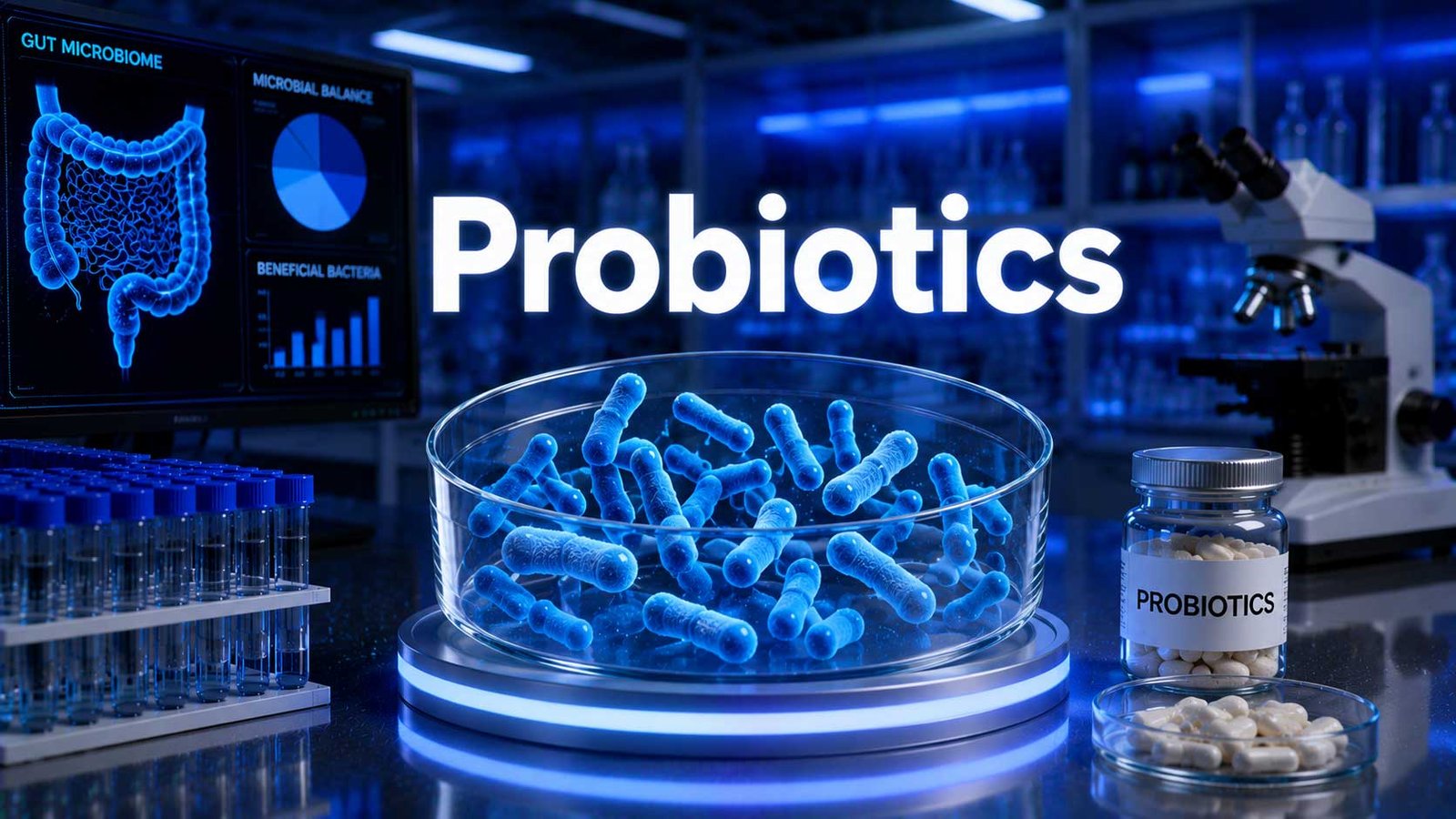
The Trillions of Tenants Living Inside You
Somewhere between your last meal and this sentence, roughly forty trillion microorganisms are going about their business inside your intestines. That number still stops me for a second every time I write it down, even after years of digging through the research. You are, in a very real sense, outnumbered by your own bacteria. And whether that ecosystem is thriving or struggling has a lot more to do with how you feel day to day than most people realize.
This is where probiotics come into the conversation. If you’ve spent any time in a grocery store’s yogurt aisle or scrolled past a supplement ad promising “gut health in 30 days,” you’ve already brushed up against the term, even if the actual science behind it got lost somewhere in the marketing copy. Probiotics, put simply, are live microorganisms that, when consumed in the right amounts, provide a measurable benefit to the person eating them. That’s the working definition used by international health bodies, and it’s intentionally narrow. Not every fermented food counts. Not every bacterial strain qualifies. Context, dose, and evidence all matter.
Table of Contents


I’ve been fascinated by this topic for a long time now, partly because the field keeps surprising even the people who study it for a living. A decade ago, most of the conversation around gut bacteria stayed inside gastroenterology offices, tucked between discussions of irritable bowel syndrome and antibiotic-associated diarrhea. Now it spills into immunology, endocrinology, dermatology, and even psychiatry. The gut microbiome, that sprawling community of bacteria, fungi, and other microbes lining your digestive tract, has turned out to be far more interconnected with the rest of the body than anyone expected.

Here’s the thing that tends to get glossed over, though: probiotics are not a single substance. They’re not even a single category of organism. When someone says “I’m taking a probiotic,” they might mean a strain of Lactobacillus that’s been studied in dozens of clinical trials, or they might mean a scoop of powder with a vague blend of bacteria and no strain-level identification at all. That distinction matters enormously, and it’s one of the reasons the probiotic aisle can feel so overwhelming. Different strains do different things. A bacterium that helps with traveler’s diarrhea isn’t necessarily the same one that supports skin barrier function or helps regulate mood.
I want to be upfront about something else, too: this isn’t a miracle category. There’s a tendency, especially online, to treat probiotics as a cure-all, capable of fixing everything from bloating to anxiety to acne. The actual research is more measured than that. Some strains, in some populations, for some conditions, show real and reproducible benefit. Others show promise but need more study. And a fair number of products on store shelves have never been tested in a human trial at all. That gap between marketing and evidence is worth keeping in mind as we go.
What I find genuinely compelling about this field is how it reframes the relationship between you and the bacteria you carry. For most of modern medicine’s history, bacteria were the enemy, something to sterilize, eliminate, or avoid. Probiotics flip that script. They treat certain microbes as collaborators, organisms that, when present in the right numbers and the right places, actively support digestion, train the immune system, and help keep less friendly bacteria in check. That shift in thinking, from “kill the germs” to “cultivate the right community,” is one of the more interesting developments in health science over the last twenty years.
There’s also a historical thread worth mentioning, because it grounds all this modern research in something older than you might expect. Fermented foods have been part of human diets for thousands of years, long before anyone understood what lactic acid bacteria were. Sauerkraut, kimchi, kefir, yogurt: these weren’t invented as health products. They were preservation techniques that happened to leave behind living cultures. It wasn’t until the early twentieth century, when a Russian scientist working in Paris started connecting fermented dairy consumption to longevity in certain populations, that anyone started asking whether those live cultures were doing something beneficial inside the body. That early hypothesis, however imperfect, planted the seed for everything that followed.
So where does that leave you, the person trying to figure out whether any of this is worth your time or money? That’s exactly what the rest of this article is going to work through. We’ll look at what the evidence actually says about health benefits, where you can realistically get probiotics from food, how dosage and strain selection affect whether a product does anything at all, and where the real risks lie, because yes, there are some. My goal here isn’t to sell you on probiotics or talk you out of them. It’s to give you a clear, honest picture of what’s actually going on inside that trillion-microbe ecosystem you’re carrying around, and what you can reasonably do to support it.
Key Health Benefits
Let’s get into what probiotics can actually do, based on what the research shows rather than what the label promises. I’ll say this upfront: the strength of evidence varies a lot depending on which benefit we’re talking about. Some effects are well-documented across dozens of trials. Others are still emerging. I’ll try to be clear about which is which as we go.
Digestive Balance and Gut Comfort
This is the area where probiotics have the deepest research base, and honestly, it makes sense given where these organisms actually live. A recent literature review focused specifically on gastrointestinal health found that certain probiotic strains help manage diarrhea and symptoms associated with irritable bowel syndrome by reshaping the composition of gut microbial communities, in some cases reducing harmful bacteria and calming inflammatory markers tied to abdominal discomfort. That’s not a small thing if you’ve ever dealt with the unpredictable misery of IBS-D.
Beyond IBS, probiotics have also been studied for their role in supporting more regular bowel movements and easing the kind of everyday bloating that so many people just quietly live with. The mechanism isn’t mysterious once you understand it: certain bacterial strains produce short-chain fatty acids as a byproduct of fermenting fiber, and those fatty acids help nourish the cells lining your colon while also influencing gut motility.
Immune System Support
Roughly seventy percent of your immune tissue sits in and around your gut, which is one reason probiotics keep coming up in immunology research. A comprehensive review on probiotic health benefits described how these microbes support immune function alongside their more well-known digestive roles, contributing to what researchers describe as a broader defense system for the body. Probiotics appear to interact with immune cells lining the intestinal wall, helping regulate how the body responds to potential threats without tipping into excessive inflammation.
This doesn’t mean popping a probiotic capsule will stop you from catching a cold. But there’s a growing body of evidence suggesting that a well-balanced gut microbiome plays a supporting role in how efficiently your immune system operates, particularly around barrier function, the physical and chemical defenses that keep unwanted pathogens from crossing into the bloodstream in the first place.
Mood, the Gut-Brain Axis, and Beyond
I’ll admit this is the part of the field that still amazes me most. There’s a genuine, bidirectional communication pathway between your gut and your brain, often called the gut-brain axis, and it runs through the vagus nerve, hormonal signaling, and immune messaging. Probiotics have been researched for their potential role in this pathway, with some studies pointing to effects on stress response and general emotional regulation.
I want to be careful here, though. This is one of the more preliminary areas of probiotic research. The mechanisms are compelling and the early data is interesting, but I wouldn’t call this settled science yet. If you’re dealing with a mood-related condition, a probiotic supplement should be viewed as a possible complementary piece, not a replacement for established care.
Metabolic and Chronic Condition Support
Beyond digestion and immunity, researchers have investigated probiotics in the context of several chronic conditions, including obesity, type 2 diabetes, and even osteoporosis, with certain bacterial strains showing potential benefit depending on the condition and strain involved. A separate review looking specifically at antimicrobial and functional applications noted that probiotic bacteria help maintain gut microbiota stability and provide resistance against pathogen colonization, while also playing a role in modulating immune response and reducing chronic inflammation, particularly within the gastrointestinal tract.
None of this means probiotics are a treatment for diabetes or obesity. What the research suggests is more nuanced: certain strains, used appropriately, may support the broader physiological environment that influences these conditions. That’s a meaningfully different claim than “probiotics cure metabolic disease,” and it’s an important distinction to hold onto as you read health content elsewhere, too.
Oral and Skin Health
Less commonly discussed but genuinely interesting is the emerging research on probiotics for oral and dermatological health. Certain Lactobacillus strains have been studied as adjuncts to standard periodontal treatment, showing improvements in gum bleeding and plaque measurements when used consistently. On the skin side, probiotics are being examined for their role in conditions like eczema, with some evidence suggesting particular bacterial blends may modestly ease severity and itching, especially in children. It’s a smaller research base compared to gut-focused studies, but it points to just how far-reaching this bacterial influence appears to be.
Taken together, the picture that emerges isn’t “probiotics fix everything.” It’s closer to this: a well-supported gut microbiome, cultivated through the right strains and consistent use, appears to ripple outward into digestion, immune function, and possibly mood and metabolic health, with the strongest evidence sitting squarely in the digestive and immune categories.

Dietary Sources
If supplements feel like an unnecessary expense or you’d rather get your probiotics the old-fashioned way, food is a completely legitimate route, and in many cases a more enjoyable one. The catch is that not every fermented food actually delivers live bacteria by the time it reaches your plate, so it helps to know what you’re looking for.
Fermented Dairy
Yogurt is the obvious starting point, and for good reason. It’s made by fermenting milk with lactic acid bacteria and bifidobacteria, and a good portion of commercially available yogurt still contains live cultures at the time of purchase. The trick is reading labels carefully. Look for something like “live and active cultures” printed on the container, and skip anything so heavily processed or sweetened that it’s really dessert wearing a health halo.
Kefir deserves its own mention here because it tends to fly under the radar compared to yogurt, despite arguably being the more potent option. It’s a fermented milk drink made by introducing kefir grains, which are actually a symbiotic culture of bacteria and yeast, into cow’s, goat’s, or sheep’s milk and letting it ferment for roughly a day. The resulting drink typically contains a broader range of bacterial and yeast strains than standard yogurt, which is part of why it’s earned such a strong reputation among people focused on gut diversity.
Fermented Vegetables
This category is where things get genuinely fun, culinarily speaking. Sauerkraut, made from cabbage fermented with salt and naturally occurring lactic acid bacteria, is one of the most accessible options, provided you choose the unpasteurized version, since pasteurization kills off the very bacteria you’re trying to consume. Kimchi works the same way, built primarily on napa cabbage or Korean radish and fermented with Lactobacillus strains, though the addition of garlic, ginger, and chili gives it a completely different flavor profile than its German cousin.
A few practical notes worth keeping in your back pocket:
- Vinegar-pickled vegetables generally don’t contain live probiotics, since the vinegar itself does the preserving rather than bacterial fermentation. If a jar of pickles lists vinegar as a primary ingredient, don’t expect much probiotic value.
- Refrigerated, unpasteurized versions of fermented vegetables are almost always your best bet for live cultures. Shelf-stable versions have usually been heat-treated.
- The briny liquid left behind after fermenting vegetables often carries a meaningful bacterial load of its own, so it’s worth using in dressings or drinking straight if the flavor appeals to you.
Fermented Beverages and Soy-Based Foods
Kombucha, the fizzy fermented tea that’s become something of a cultural fixture, is produced using a symbiotic culture of bacteria and yeast, commonly referred to as a SCOBY. Depending on the brand and how it’s processed, kombucha can retain a meaningful probiotic content, though some commercial versions are pasteurized for shelf stability, which reduces or eliminates the live cultures.
Miso and tempeh, both soy-based fermented foods rooted in East Asian culinary traditions, bring a different angle to the conversation. Miso is a fermented soybean paste used widely in Japanese cooking, and tempeh is a fermented soybean cake with a firmer, more textured bite than tofu. Natto, fermented soybeans with a notably strong smell and sticky texture, is another traditional option, particularly popular in Japan, and has been studied for both its probiotic content and its unique enzyme profile.
Choosing Quality Sources
A comprehensive review of fermented foods and their gastrointestinal effects found that among the most common fermented foods, only kefir, sauerkraut, natto, and sourdough bread had actually been tested in randomized controlled trials for gastrointestinal outcomes, while foods like kombucha, miso, kimchi, and tempeh, despite extensive laboratory research, still lack that level of direct human trial evidence. That’s not a reason to avoid those foods; it just means the clinical proof isn’t as robust yet, even though the theoretical mechanism, live bacteria interacting with your gut environment, is well established.
My general rule of thumb: prioritize refrigerated, unpasteurized, minimally processed versions of these foods whenever possible, and treat the “fermented” label on a shelf-stable product with a bit of healthy skepticism. Heating, alcohol content, and long-term processing can all strip out the live organisms that make fermented foods interesting from a gut health standpoint in the first place.
Dosage & Deficiency
This is where the probiotic conversation tends to get murky, and I think that murkiness is honest, not evasive. Unlike a vitamin with a clearly established recommended daily allowance, probiotics don’t have one universal dosing standard, because the effective dose depends heavily on which strain you’re talking about and what you’re trying to accomplish with it.
How Much Is Actually Enough
Colony forming units, or CFU, is the metric used to describe how many live bacteria are packed into a given dose, and you’ll see this number prominently displayed on most probiotic supplement labels. The International Scientific Association for Probiotics and Prebiotics has generally treated one billion CFU per day as a reasonable minimum threshold, though most clinical trials investigating specific health outcomes use doses ranging anywhere from one billion up to one hundred billion CFU, depending on the strain and the condition being studied. Some research has used doses as low as ten million CFU for certain strains and as high as several hundred billion for others, which tells you just how strain-dependent this really is.
The World Gastroenterology Organisation has taken a sensible position on this: rather than recommending a blanket dosage, it advises clinicians to only endorse the specific strains, doses, and durations that have actually demonstrated benefit in published human studies. That’s a meaningful distinction from how most supplement marketing frames dosage, where “more billion CFU” is often implied to mean “more effective,” even though the research doesn’t consistently back that assumption up.
Why Strain Names Matter More Than Big Numbers
Here’s something that took me a while to fully appreciate: a product listing “Lactobacillus” on the label without a specific strain designation is giving you almost no useful information. Lactobacillus rhamnosus GG, for instance, has been studied extensively and shown to be effective at certain doses for certain outcomes. But that doesn’t mean every Lactobacillus rhamnosus strain behaves the same way. Benefits documented in clinical research are strain-specific, not just species-specific, which means the difference between a product that works and one that does essentially nothing might come down to a few letters and numbers most people scroll right past on the label.
If you’re shopping for a probiotic with a specific goal in mind, digestive regularity, post-antibiotic recovery, immune support, whatever it might be, it’s worth looking up whether the exact strain listed on the label has actually been studied for that purpose, rather than assuming the genus name alone is enough of a guarantee.
What “Deficiency” Actually Means Here
Probiotics don’t work quite like nutrients such as vitamin D or iron, where a blood test can flag a clear deficiency state. Instead, researchers talk more often about dysbiosis, an imbalance in the composition or diversity of your gut microbiota, which can happen after a course of antibiotics, during periods of chronic stress, following illness, or simply as a byproduct of a diet low in fiber and fermented foods. Interestingly, though, a recent systematic review and meta-analysis of randomized controlled trials examining probiotic supplementation in healthy populations found that the evidence supporting probiotics as a reliable way to meaningfully boost overall gut microbiota diversity remains inconclusive.
That finding surprised a lot of people in the field, myself included, when it came out. It doesn’t mean probiotics are useless for healthy people. It means the specific claim that popping a daily probiotic will noticeably diversify your gut microbiome isn’t as well supported as the marketing suggests, at least not across the board. Probiotics still appear to offer targeted, strain-specific benefits, they just may not function as a general diversity booster the way some products imply.
Practically speaking, if you suspect your gut has taken a hit, say, after a round of antibiotics, or during a stretch of chronic digestive discomfort, the most evidence-based approach is choosing a strain that’s actually been studied for that specific situation, taking it consistently for the duration used in the research, and paying attention to how your body responds rather than assuming bigger numbers or longer ingredient lists automatically mean better results.
Toxicity & Risks
I think it’s important to be direct about this part, because most probiotic marketing glosses right over it. For the overwhelming majority of healthy people, probiotics are well tolerated. But “well tolerated for most people” isn’t the same as “risk-free for everyone,” and there are specific situations where caution is genuinely warranted.
The Mild, Common Side Effects
Let’s start with what most people actually experience if anything at all: mild gastrointestinal symptoms like gas, bloating, or a temporary shift in bowel habits during the first week or two of starting a new probiotic. This tends to settle down as your gut adjusts to the new bacterial input. It’s usually more of an annoyance than a real concern, and it’s one of the more consistent findings across the safety literature on common probiotic species such as Bifidobacterium and members of the Lactobacillaceae family.
Who Actually Needs to Be Cautious
This is the part that deserves real attention. Probiotics have been linked to rare but serious infections, including bacteremia and fungemia, cases where the bacteria or yeast from the probiotic itself enter the bloodstream and cause illness. According to a health professional fact sheet on the topic, these infections have occurred in cases resulting in severe illness, and most of them involved individuals who were already severely ill or immunocompromised.
A separate review focused specifically on this question found that these infections, while exceptionally rare, are concentrated in higher-risk groups, including people who are immunocompromised following organ transplants or chemotherapy, those with reduced immunity from conditions like AIDS or leukemia, seriously and chronically ill patients requiring central intravenous catheters, premature infants and newborns whose immune systems are still developing, elderly individuals, and pregnant women. That same review pointed to guidance from international food and health authorities, which categorizes probiotic-related adverse effects into four groups: systemic infections, adverse metabolic effects, excessive immune stimulation in people who are already prone to it, and the theoretical risk of transferring antibiotic-resistance genes between bacteria.
I want to underscore something here, because it’s easy to read a list like that and panic unnecessarily: these are rare events, concentrated almost entirely in people with significantly compromised health status, not the general population reaching for a yogurt or a daily supplement. But if you or someone in your household falls into one of those higher-risk categories, whether due to illness, a recent major surgery, an implanted medical device, or a weakened immune system, this is exactly the kind of decision that belongs in a conversation with a physician rather than something to figure out solo based on a supplement label.
The Preterm Infant Question
One area that’s received specific regulatory attention involves the use of probiotics in preterm infants. Health authorities have expressed concern about administering probiotic products to this particularly vulnerable population, given documented cases where things went seriously wrong. This isn’t a blanket statement that probiotics are dangerous for babies in general, but it is a clear signal that dosing and product selection in fragile, underdeveloped systems require far more caution than they do in a healthy adult reaching for kefir with breakfast.
Genetic and Quality Control Considerations
There’s also an ongoing, more technical concern within the field around antibiotic resistance gene transfer and the general genetic stability of probiotic strains used commercially. Regulatory frameworks in various regions require ongoing safety assessment of microorganisms used in food and supplements, including periodic re-evaluation of strains already approved for use, precisely because bacteria can and do evolve. This is less something an individual consumer needs to actively worry about day to day, and more a reflection of why buying probiotic products from reputable manufacturers with transparent strain identification and quality testing actually matters.
The bottom line on risk is this: for a healthy adult without significant underlying illness, probiotics carry a well-established safety profile, with mild digestive adjustment being the most likely downside. For anyone immunocompromised, critically ill, very young, very old, or pregnant, probiotic use isn’t automatically off the table, but it does deserve a conversation with a healthcare provider first, rather than a default assumption that “natural” and “live bacteria” automatically mean harmless in every circumstance.
Cultivating an Ecosystem You Can’t See
If there’s one thing I hope sticks with you after all this, it’s that your gut microbiome isn’t a static thing you either have or don’t have in good shape. It’s a living, shifting ecosystem, responsive to what you eat, how stressed you are, whether you’ve recently taken antibiotics, and yes, whether you’re making room for the right bacterial allies along the way.
Probiotics aren’t a magic switch, and I’d be doing you a disservice if I wrapped this up pretending otherwise. The research genuinely supports specific benefits, particularly around digestive symptoms, certain immune functions, and targeted conditions where particular strains have been studied directly. It’s considerably less certain, at least so far, when it comes to broader claims like general gut diversity or sweeping metabolic transformation. That distinction matters, and it’s worth carrying with you the next time a bold claim on a supplement label catches your eye.
What I’d actually suggest, if you’re looking to act on any of this, is starting with food. Work fermented options like yogurt with live cultures, kefir, unpasteurized sauerkraut, or kimchi into your regular rotation, not as a cure for anything specific, but as a low-risk, genuinely enjoyable way to introduce a broader mix of beneficial bacteria into your system. If you’re considering a targeted supplement for a specific issue, whether that’s post-antibiotic recovery, digestive discomfort, or something else entirely, look past the CFU count plastered across the front of the bottle and check whether the actual strain listed has research behind it for your specific concern. And if you fall into one of the higher-risk categories we talked about, loop in your doctor before adding anything new.
The gut microbiome research field is still moving fast, and some of what feels settled today will almost certainly get refined, or outright overturned, in the coming years. That’s not a weakness of the science; it’s just what real, evolving research looks like from the inside. In the meantime, treating your gut bacteria as active collaborators rather than background noise, feeding them thoughtfully, and staying skeptical of anything promising a one-size-fits-all fix, is about as solid a foundation as you can build. Trillions of organisms are already doing their work in there whether you pay attention to them or not. Might as well give them something good to work with.
Article Sources
At AncientHerbsWisdom, our content relies on reputable sources, including peer-reviewed studies, to substantiate the information presented in our articles. Our primary objective is to ensure our content is thoroughly fact-checked, maintaining a commitment to accuracy, reliability, and trustworthiness.
- Dimidi, E., Cox, S. R., Rossi, M., & Whelan, K. (2019). Fermented foods: Definitions and characteristics, impact on the gut microbiota and effects on gastrointestinal health and disease. Nutrients, 11(8), 1806. https://doi.org/10.3390/nu11081806
- Éliás, A. J., Földvári-Nagy, K. C., Al-Gharati, Y. Z., Veres, D. S., Schnabel, T., Teutsch, B., Erőss, B., Hegyi, P., Lenti, K., & Földvári-Nagy, L. (2026). Effect of probiotic supplementation on the gut microbiota diversity in healthy populations: A systematic review and meta-analysis of randomised controlled trials. BMC Medicine, 24, Article 21. https://doi.org/10.1186/s12916-025-04602-0
- Gul, S., & Durante-Mangoni, E. (2024). Unraveling the puzzle: Health benefits of probiotics—A comprehensive review. Journal of Clinical Medicine, 13(5), 1436. https://doi.org/10.3390/jcm13051436
- Katkowska, M., Garbacz, K., & Kusiak, A. (2021). Probiotics: Should all patients take them? Microorganisms, 9(12), 2620. https://doi.org/10.3390/microorganisms9122620
- Mohammed, C., Fuego, J. P., Garcia, K. V., Jamil, H., Rajesh, R. Y., Escobar, A. S., Hassan, M. J., & Rai, M. (2024). A mini literature review of probiotics: Transforming gastrointestinal health through evidence-based insights. Cureus, 16(3), e57055. https://doi.org/10.7759/cureus.57055
- National Institutes of Health, Office of Dietary Supplements. (2025). Probiotics: Fact sheet for health professionals. U.S. Department of Health and Human Services. https://ods.od.nih.gov/factsheets/Probiotics-HealthProfessional/
- Sepehr, A., Miri, S. T., Aghamohammad, S., Rahimirad, N., Milani, M., Pourshafie, M.-R., & Rohani, M. (2024). Health benefits, antimicrobial activities, and potential applications of probiotics: A review. Medicine, 103(52), e32412. https://doi.org/10.1097/MD.0000000000032412

- Phosphatidic Acid: Supporting Muscle Growth and Strength - July 31, 2026
- Ceramides: Supporting Healthy Skin From Within - July 31, 2026
- Synbiotics: Combining Prebiotics and Probiotics Together - July 31, 2026