

When Gut Bacteria Get a Little Help From Their Friends
If probiotics are the seeds and prebiotics are the fertilizer, why not plant them together? This question, in a roundabout way, is exactly what led scientists to coin the term synbiotics almost three decades ago.
Here’s the thing about the gut microbiome that took me years to really internalize: it’s not a static organ you can just “boost” with a single pill. It’s a living, breathing ecosystem, trillions of organisms deep, constantly shifting based on what you eat, how you sleep, whether you just finished a round of antibiotics, even how stressed you were last Tuesday. Probiotics — live microorganisms that, when given in the right amount, confer a health benefit — are one lever you can pull to influence that ecosystem. Prebiotics, the selectively fermented substrates that feed the beneficial microbes already living in your colon, are another. Synbiotics simply ask: what happens when you pull both levers at once?
Table of Contents

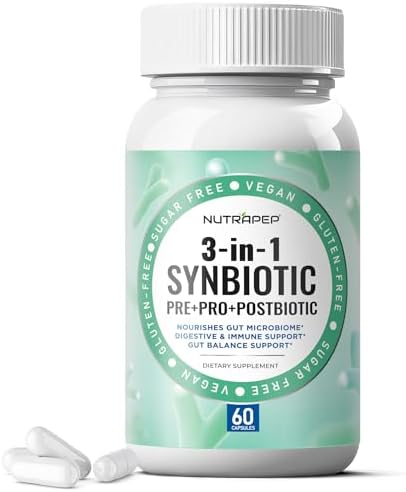

The term itself comes from a 1995 paper by Gibson and Roberfroid, who first floated the idea of combining “probiotics and prebiotics that beneficially affect the host.” It sounded elegant on paper. In practice, it took the scientific community the better part of 25 years to actually agree on what counts as a true synbiotic, as opposed to just a probiotic and a prebiotic sitting side by side in the same capsule without doing anything meaningfully different together. In 2019, a panel convened by the International Scientific Association for Probiotics and Prebiotics (ISAPP) settled on a cleaner definition: a synbiotic is a mixture comprising live microorganisms and substrate(s) selectively utilized by host microorganisms that confers a health benefit on the host.

That might sound like splitting hairs, but the distinction matters more than you’d think. Under this framework, there are actually two flavors of synbiotic. A complementary synbiotic pairs an established probiotic with an established prebiotic, and each one is doing its own thing — the probiotic delivers its benefit, the prebiotic feeds the resident gut flora, and together they add up to something useful. A synergistic synbiotic is a different animal entirely: the substrate is specifically chosen because it’s the preferred food of the particular microorganism it’s paired with, so the two components work in lockstep rather than running parallel tracks. Most commercial synbiotics on the shelf right now, it turns out, fall into the complementary camp, largely because proving true synergy requires a level of experimental rigor that’s genuinely difficult to pull off.
I bring this up not to bog you down in taxonomy but because it explains a lot of the confusion people run into when they start researching synbiotics online. You’ll see wildly different claims, some backed by solid trials, some riding on the coattails of the individual reputations of probiotics and prebiotics without any evidence that the combination itself does anything special. And that’s a fair criticism, honestly — plenty of products slap “synbiotic” on the label as a marketing flourish rather than a scientifically validated claim.
What keeps me interested in this space, though, is the mechanism itself. Picture a probiotic strain like Lactobacillus or Bifidobacterium making its journey through your stomach acid, bile salts, and the general chaos of the upper digestive tract. A lot of those cells don’t survive the trip. Pair that same strain with a prebiotic fiber, something like inulin or a galacto-oligosaccharide, and you’re essentially packing it a lunch for the road. The prebiotic can help buffer conditions, support the microorganism’s survival, and once it reaches the colon, continue feeding it (and often the native flora too) so it has a fighting chance of sticking around long enough to do something useful. It’s less “magic pill” and more “logistics problem, solved.”
There’s also a deeper reason this concept resonates with anyone who has spent real time thinking about gut health: the microbiome doesn’t respond well to blunt-force interventions. Dumping billions of foreign bacteria into a gut that has no food source waiting for them is a bit like airlifting settlers into a place with no infrastructure. Synbiotics, at least in theory, try to solve both problems in one move — bring the settlers, and bring the supply chain.
I’ll be upfront about something before we go further: this is not a space where you should expect miracle results overnight, and I’ll never pretend otherwise. The research on synbiotics is genuinely promising in specific, well-defined contexts — gut regularity, certain inflammatory conditions, recovery after surgery, metabolic markers — but it is not a cure-all, and results vary a lot depending on the exact strains, substrates, doses, and the person taking them. What follows is a grounded look at where the evidence actually stands: the benefits worth paying attention to, where you can find synbiotics naturally in food, how much you actually need, and where the risks creep in. No hype, just what a decade-plus of watching this research evolve has taught me.
Key Health Benefits of Synbiotics
Let’s get into what synbiotics can actually do, because this is where the marketing tends to outrun the science by a wide margin. I want to walk through this carefully, because “supports gut health” is the kind of vague phrase that sounds nice on a supplement label but tells you almost nothing useful.
Rebalancing a Disrupted Gut Microbiota
The most consistent, well-supported effect of synbiotics is their influence on the composition and function of the gut microbiota. When the balance of your gut flora is off — a state researchers call dysbiosis — it’s been linked to a surprisingly long list of downstream issues, from digestive discomfort to metabolic and inflammatory conditions. Gut dysbiosis increases the risk of developing metabolic and inflammatory diseases, which is why strategies that promote optimal gut health matter so much. Synbiotics are one of the more targeted tools researchers have for nudging that balance back toward something healthier, precisely because they’re designed to support survival and activity of beneficial strains rather than just hoping some of them stick.
Digestive and Bowel Function
This is probably the benefit with the most consistent day-to-day evidence behind it. Multiple trials have looked at synbiotics for constipation, irregular bowel movements, and general GI comfort, and the results tend to lean positive, even if not dramatically so. In one randomized trial in breast cancer patients undergoing chemotherapy — a population that deals with brutal digestive side effects — the severity of chemotherapy complications, including abnormal defecation and fatigue, decreased significantly in the synbiotics group compared to placebo. That’s a meaningful finding, not because everyone reading this is undergoing chemotherapy, but because it shows synbiotics doing real work in a population whose gut function is under serious physiological stress.
Immune Function
Roughly seventy percent of your immune system lives in and around your gut lining, which is part of why the microbiome and immune health are so tightly linked. Synbiotics appear to support this relationship by helping regulate inflammatory markers and supporting a healthier gut barrier. Broader reviews of the functional food category note that prebiotics and probiotics enhance immune function by altering gut microbiota composition, resulting in elevated amounts of beneficial bacteria such as Bifidobacteria, and synbiotics, by design, are meant to amplify that same mechanism rather than replace it.
Metabolic Health Markers
Here’s where things get genuinely interesting, and also where I’d urge some caution about overpromising. Systematic reviews looking at synbiotic supplementation in people with obesity, insulin resistance, type 2 diabetes, and non-alcoholic fatty liver disease have found real, if modest, effects. According to one comprehensive review of human clinical trials, select probiotics and synbiotics provided beneficial effects in patients with obesity, mainly affecting body mass index and fat mass, while synbiotics specifically decreased insulin resistance and plasma lipid levels in some trials. I want to be clear that this isn’t a weight-loss shortcut — the effect sizes in these trials are generally small — but as one piece of a broader metabolic strategy, it’s not nothing either.
Reducing Complications After Surgery and Illness
This is a less talked-about benefit, but it’s one of the areas with the most robust trial data, largely because hospitals have strong incentive to study anything that shortens recovery time. A large meta-analysis pooling data from over eight thousand critically ill patients found that probiotics significantly reduced the incidence of ventilator-associated pneumonia, and broader synbiotic-focused trials in surgical populations have shown reductions in postoperative infection rates and hospital stay length. It’s a niche application for most people reading this at home, but it speaks to how meaningfully synbiotics can influence outcomes when the gut is under acute stress.
Supporting Specific Conditions
Beyond the general categories above, synbiotics have been studied — with mixed but sometimes promising results — in conditions like irritable bowel syndrome, atopic dermatitis, and even thyroid function. One trial in hypothyroid patients found that while thyroid hormone levels themselves didn’t shift dramatically, significant improvements occurred in several domains of quality of life, including perceived mental health, bodily pain, general health perception, and overall wellbeing, and blood pressure also improved in the synbiotic group. That’s a good example of why I tell people to keep expectations realistic and specific — synbiotics rarely fix the “headline” problem outright, but they often move the needle on how a person actually feels day to day.
None of this means synbiotics are a guaranteed fix for whatever ails you. Strain specificity matters enormously, dosing matters, and honestly, so does your starting gut microbiota, which is about as individual as a fingerprint. But taken together, the research paints a picture of a genuinely useful tool, not a fringe wellness trend.


Dietary Sources of Synbiotics
Here’s something that surprises a lot of people: you don’t need a supplement aisle to get synbiotics into your life. In fact, some of the oldest food traditions on the planet were doing synbiotic pairing long before anyone had a name for it. Grandma’s fermented cabbage next to a bowl of whole grains wasn’t an accident of good taste — it was, functionally, a synbiotic meal.
Naturally Fermented Foods
Fermented foods are the most direct route to dietary probiotics, and a fair number of them come pre-loaded with fiber that can act as a natural prebiotic partner. Top choices include kefir, kimchi, sauerkraut, kombucha, and miso, as well as certain aged cheeses like cheddar or parmesan. Not every fermented food actually delivers live, active cultures by the time it reaches your plate — pasteurization can wipe out the microbial population entirely — so if the goal is live organisms, look for labels indicating “live and active cultures,” or better yet, unpasteurized versions where available.
- Kefir: a fermented dairy (or increasingly, coconut-based) drink loaded with diverse bacterial and yeast strains
- Kimchi: fermented Korean vegetables, typically napa cabbage, that also happen to be a solid source of dietary fiber
- Sauerkraut: fermented cabbage that’s inexpensive, easy to make at home, and packs vitamin C and K alongside its bacterial content
- Miso and tempeh: fermented soy products that bring probiotics along with plant protein
- Unpasteurized, aged cheeses: less obvious, but certain varieties retain live cultures through the aging process
Prebiotic-Rich Plant Foods
On the other side of the equation, you’ve got prebiotic fibers, which show up in a wide range of everyday plant foods, many of which you’re probably already eating without thinking of them as “functional.” Prebiotics are fibers and compounds in foods such as onions, garlic, bananas, asparagus, legumes, and artichokes that help feed beneficial bacteria in the gut. Other reliable sources include leeks, chicory root, oats, and slightly underripe bananas, which carry more resistant starch than their fully ripened counterparts.
Building Synbiotic Meals Naturally
This is the part I find genuinely fun to think about, because it turns synbiotics from an abstract supplement concept into something you can just do at the dinner table. The idea is simple: pair a probiotic food with a prebiotic food in the same meal or snack, so the fiber is right there to feed the bacteria as they move through your system. Some pairings that work well in practice include yogurt or kefir with sliced banana and a spoonful of oats, sauerkraut alongside a lentil-based dish, miso soup with a side of steamed vegetables, or kimchi folded into a bowl of brown rice. None of these need to be complicated or “clean eating” in the rigid sense — they’re just everyday combinations that happen to align with what the research suggests works.
Fortified and Commercial Synbiotic Products
Of course, there’s also a growing market of products specifically formulated as synbiotics — usually a defined probiotic strain paired with a specific prebiotic fiber, often in capsule or powder form. These can be genuinely useful, particularly for people managing a specific health condition where a clinically studied dose matters, or for those who simply don’t eat much fermented food and want a reliable baseline. That said, quality varies enormously across brands, and the strain-and-substrate specificity that made the ISAPP panel so insistent on rigorous definitions applies here too — a product labeled “synbiotic” isn’t automatically backed by the same evidence as the ones used in clinical trials. If you’re going the supplement route, look for products that disclose the exact strain (not just the genus and species) and the specific prebiotic used, ideally at doses that mirror what’s been tested in published research.
Regional and Traditional Approaches
It’s worth pointing out that synbiotic eating patterns aren’t a modern Western invention dressed up in new language. Traditional diets across the world have long combined fermented staples with fiber-rich plants: think of the yogurt-and-whole-grain combinations common across the Middle East and South Asia, or the fermented vegetable and legume pairings found throughout East Asian cuisine. There’s something almost humbling about realizing that the “cutting edge” of gut microbiome science is, in many ways, catching up to what traditional food cultures figured out through generations of trial and error.
Dosage and Deficiency Considerations
This is the section where I have to be honest with you: dosing synbiotics is not as tidy as dosing, say, vitamin C. There’s no single “recommended daily allowance” the way there is for many vitamins and minerals, largely because synbiotics aren’t a single compound — they’re a combination of a live organism and a substrate, and the effective dose of each depends heavily on the specific strain, the specific fiber, and what condition you’re trying to influence.
Why There’s No Universal Dosage
The ISAPP consensus statement makes this point directly, noting that appropriate dosing is context-dependent. Research trials have used doses of the prebiotic component ranging anywhere from a mere 100 milligrams to as much as 10 to 15 grams per day, depending on the substrate and the intended outcome. Probiotic doses in these same trials commonly land somewhere in the range of one billion to ten billion colony-forming units (CFU) per serving, though some clinical protocols go higher.
To give you a concrete sense of what a studied dose actually looks like in practice: the hypothyroidism trial mentioned earlier used 500 milligrams of a 10⁹ CFU/g probiotic blend combined with fructo-oligosaccharide, taken over ten weeks. Other trials in critically ill or postsurgical populations have used considerably higher doses administered multiple times a day. The takeaway isn’t that you need to memorize these numbers — it’s that “more” isn’t automatically “better,” and the doses that show up in credible research were chosen deliberately, based on what actually demonstrated a measurable effect in that specific population.
Practical Dosing Guidance
If you’re considering a synbiotic supplement, a few practical principles tend to hold up reasonably well across the research:
- Look for products that specify both the probiotic strain (down to the specific designation, not just “Lactobacillus”) and the exact prebiotic substrate and quantity
- Start with a lower dose for the first week or two, especially if you’re not used to consuming much fiber, since a sudden increase can cause temporary bloating or gas
- Give it time — most of the trials showing meaningful benefit ran for somewhere between four and twelve weeks, not a few days
- Take it consistently, ideally with food, since food intake can help buffer stomach acid and improve survival of the live organisms
What Deficiency Actually Looks Like Here
Deficiency is a slightly odd word to apply to synbiotics, since there’s no single nutrient you can be “low” in the traditional sense. What’s more accurate to say is that a lot of modern diets are simply lacking in the raw materials that support a synbiotic effect naturally. Diets low in fiber-rich plants and fermented foods — which, let’s be honest, describes a large chunk of the standard Western diet — tend to produce a gut microbiota that’s less diverse and less resilient. That’s not a “deficiency” in the classic sense, but it’s a real, measurable gap, and it’s part of why interest in prebiotic and probiotic-rich eating has grown so much over the past decade.
Populations Who May Need More Attention to Dosing
Certain groups warrant more careful consideration around synbiotic dosing, generally on the advice of a healthcare provider rather than self-directed experimentation. This includes people recovering from major surgery, individuals managing chronic gastrointestinal conditions, older adults with slower intestinal transit time (who may need longer to see an effect, or may need adjusted doses), and anyone currently on antibiotics, since timing relative to antibiotic use can meaningfully affect how well probiotic strains survive and colonize. None of this is meant to scare you off — it’s meant to underscore that “natural” doesn’t mean “one-size-fits-all,” and a little individualized thought goes a long way here.
Toxicity and Risks of Synbiotics
I don’t love how often supplement conversations skip straight past the risk section, so let’s not do that here. Synbiotics have a strong overall safety profile, and I want to say that clearly up front so it doesn’t get lost in what follows — but “generally safe” is not the same as “risk-free for everyone,” and there are a few areas worth taking seriously.
The General Safety Record
The good news first: across a large body of research, prebiotics and probiotics tested to date have a strong safety record, and synbiotics formulated with them are generally presumed safe for the same intended uses. For the average healthy adult eating fermented foods or taking a reasonably dosed synbiotic supplement, the most common downside is simply mild, temporary digestive discomfort — some gas, bloating, or a change in stool consistency as your gut adjusts to a new fiber and bacterial load. This usually resolves within a week or two.
Reporting Gaps in the Research
Here’s something that doesn’t get mentioned enough, and it’s one of those details that separates a careful look at the evidence from a superficial one. A systematic review of hundreds of prebiotic, probiotic, and synbiotic trials found troubling gaps in how side effects were even documented. No safety-related data were reported in 37% of the randomized controlled trials reviewed, and 89 studies only used generic statements to describe adverse events. That’s not a reason to panic, but it is a reason to stay a little skeptical of blanket claims that synbiotics are “completely safe with zero side effects” — the honest answer is that reporting has historically been inconsistent, and newer studies are working to close that gap.
Risks in Specific Populations
This is where I want to be most direct, because it’s the part that actually matters for safety. Synbiotics involve introducing live microorganisms into the body, and for people with a compromised or still-developing immune system, that’s not automatically neutral. Reviews focused on critically ill and immunocompromised populations have flagged real concerns — some randomized trials in critically ill adults have highlighted a higher risk of bacteremia and fungemia infection resulting from probiotics and synbiotics specifically in immunocompromised patients. This doesn’t mean synbiotics are dangerous across the board; it means that in people whose immune defenses are already compromised — post-transplant patients, those in intensive care, people undergoing aggressive chemotherapy — introducing live organisms carries a genuinely different risk calculus, and it should only be done under medical supervision, not as a self-directed wellness choice.
Beyond that specific population, a large meta-analysis of probiotic and synbiotic use in critically ill adults found a nuanced picture: real benefits for outcomes like reduced incidence of ventilator-associated pneumonia and sepsis, alongside minimal impact on other outcomes like diarrhea and hospital-acquired pneumonia — but the same body of research has also documented that probiotics had a higher rate of adverse events compared to control groups in some trial populations. The lesson here isn’t “avoid synbiotics,” it’s “context matters enormously,” and a healthy adult managing occasional digestive sluggishness is in an entirely different risk category than someone recovering from major surgery in an ICU.
Interactions and Practical Cautions
A few other practical points worth keeping in mind. If you’re on immunosuppressive medication, undergoing chemotherapy, managing an autoimmune condition, or dealing with a compromised gut barrier from conditions like severe inflammatory bowel disease, talk to your doctor before adding a synbiotic supplement, even though some trials — like the breast cancer study mentioned earlier — have shown benefit in exactly these populations under medical supervision. There’s also a quality-control angle worth mentioning: because supplements aren’t regulated with the same rigor as pharmaceuticals in most countries, product quality varies, and contamination or mislabeling of strains has been documented in the broader probiotic supplement market. Sourcing from reputable manufacturers who publish third-party testing isn’t optional caution — it’s a genuinely practical safeguard.
Excess Fiber, Underappreciated
One risk that gets overlooked because it seems almost too mundane: the prebiotic half of a synbiotic is still fiber, and too much fiber introduced too quickly, for anyone, probiotic-paired or not, can cause real gastrointestinal distress — cramping, excessive gas, and in sensitive individuals, exacerbation of conditions like irritable bowel syndrome. It’s not dangerous in the way a drug interaction can be dangerous, but it’s uncomfortable enough that it derails a lot of people’s attempts to use synbiotics consistently. Slow, gradual introduction really is the boring but correct answer here.
Where the Gut Microbiome Conversation Goes From Here
If there’s one thing I hope sticks with you after all this, it’s that synbiotics aren’t a trend to chase or a magic combination to hunt down on a supplement shelf. They’re a reflection of something researchers have been circling for decades: the idea that gut health isn’t about adding one heroic ingredient, but about creating the conditions where beneficial microbes can actually thrive, survive the trip through your digestive tract, and do their job once they arrive.
What strikes me most, looking back over how far this research has come since Gibson and Roberfroid first floated the idea in 1995, is how much the science has matured from “combine a probiotic and a prebiotic and hope for the best” to something far more precise — strain-specific, dose-specific, condition-specific. That precision is exactly why the 2019 ISAPP consensus mattered so much; it forced the field to stop treating “synbiotic” as a marketing shortcut and start treating it as a claim that needs to be earned through actual evidence of a combined health benefit.
For most people, the most sustainable entry point isn’t a supplement bottle at all — it’s the dinner table. A bowl of kefir with banana and oats, sauerkraut alongside a lentil stew, kimchi folded into rice: these aren’t biohacks, they’re just good food choices that happen to align with decades of microbiome research. Supplements have their place, particularly for people managing specific conditions where a clinically studied dose has shown real benefit, but they work best as a complement to a fiber-and-fermentation-friendly diet, not a replacement for one.
I’d also gently push back on the idea that synbiotics are some kind of universal fix. The research is genuinely encouraging in specific contexts — digestive regularity, immune support, recovery after illness or surgery, certain metabolic markers — but it’s not a substitute for the fundamentals: sleep, stress management, a reasonably varied diet, movement. Synbiotics work with your existing physiology, not around it.
If you take one practical thing away from this, let it be this: start small, stay consistent, and pay attention to your own body rather than chasing whatever combination is trending. Whether that means adding a serving of fermented vegetables to your lunch a few times a week, or working with a healthcare provider to choose a clinically studied synbiotic supplement for a specific condition, the goal is the same — giving your gut microbiota the tools and the food it needs to do what it’s already trying to do. That, more than any single product, is where the real benefit lives.
Article Sources
At AncientHerbsWisdom, our content relies on reputable sources, including peer-reviewed studies, to substantiate the information presented in our articles. Our primary objective is to ensure our content is thoroughly fact-checked, maintaining a commitment to accuracy, reliability, and trustworthiness.
- Al-Habsi, N., Al-Khalili, M., Haque, S. A., Elias, M., Al Olqi, N., & Al Uraimi, T. (2024). Health benefits of prebiotics, probiotics, synbiotics, and postbiotics. Nutrients, 16(22), 3955. https://doi.org/10.3390/nu16223955
- Dimidi, E., Cox, S. R., Rossi, M., & Whelan, K. (2019). Fermented foods: Definitions and characteristics, impact on the gut microbiota and effects on gastrointestinal health and disease. Nutrients, 11(8), 1806. https://doi.org/10.3390/nu11081806
- Gibson, G. R., Hutkins, R., Sanders, M. E., Prescott, S. L., Reimer, R. A., Salminen, S. J., Scott, K., Stanton, C., Swanson, K. S., Cani, P. D., Verbeke, K., & Reid, G. (2017). Expert consensus document: The International Scientific Association for Probiotics and Prebiotics (ISAPP) consensus statement on the definition and scope of prebiotics. Nature Reviews Gastroenterology & Hepatology, 14(8), 491-502. https://doi.org/10.1038/nrgastro.2017.75
- Khazaei, Y., Basi, A., Fernandez, M. L., Foudazi, H., Bagherzadeh, R., & Shidfar, F. (2023). The effects of synbiotics supplementation on reducing chemotherapy-induced side effects in women with breast cancer: A randomized placebo-controlled double-blind clinical trial. BMC Complementary Medicine and Therapies, 23, 339. https://doi.org/10.1186/s12906-023-04165-8
- Lee, Z. Y., Lew, C. C. H., Ortiz-Reyes, A., Patel, J. J., Wong, Y. J., Loh, C. T. I., Martindale, R. G., & Heyland, D. K. (2023). Benefits and harm of probiotics and synbiotics in adult critically ill patients: A systematic review and meta-analysis of randomized controlled trials with trial sequential analysis. Clinical Nutrition, 42(4), 519-531. https://doi.org/10.1016/j.clnu.2023.01.019
- Ramezani, M., Reisian, M., & Sajadi Hezaveh, Z. (2023). The effect of synbiotic supplementation on hypothyroidism: A randomized double-blind placebo controlled clinical trial. PLOS ONE, 18(2), e0277213. https://doi.org/10.1371/journal.pone.0277213
- Sáez-Lara, M. J., Robles-Sánchez, C., Ruiz-Ojeda, F. J., Plaza-Díaz, J., & Gil, A. (2016). Effects of probiotics and synbiotics on obesity, insulin resistance syndrome, type 2 diabetes and non-alcoholic fatty liver disease: A review of human clinical trials. International Journal of Molecular Sciences, 17(6), 928. https://doi.org/10.3390/ijms17060928
- Swanson, K. S., Gibson, G. R., Hutkins, R., Reimer, R. A., Reid, G., Verbeke, K., Scott, K. P., Holscher, H. D., Azad, M. B., Delzenne, N. M., & Sanders, M. E. (2020). The International Scientific Association for Probiotics and Prebiotics (ISAPP) consensus statement on the definition and scope of synbiotics. Nature Reviews Gastroenterology & Hepatology, 17(11), 687-701. https://doi.org/10.1038/s41575-020-0344-2

- Phosphatidic Acid: Supporting Muscle Growth and Strength - July 31, 2026
- Ceramides: Supporting Healthy Skin From Within - July 31, 2026
- Synbiotics: Combining Prebiotics and Probiotics Together - July 31, 2026