
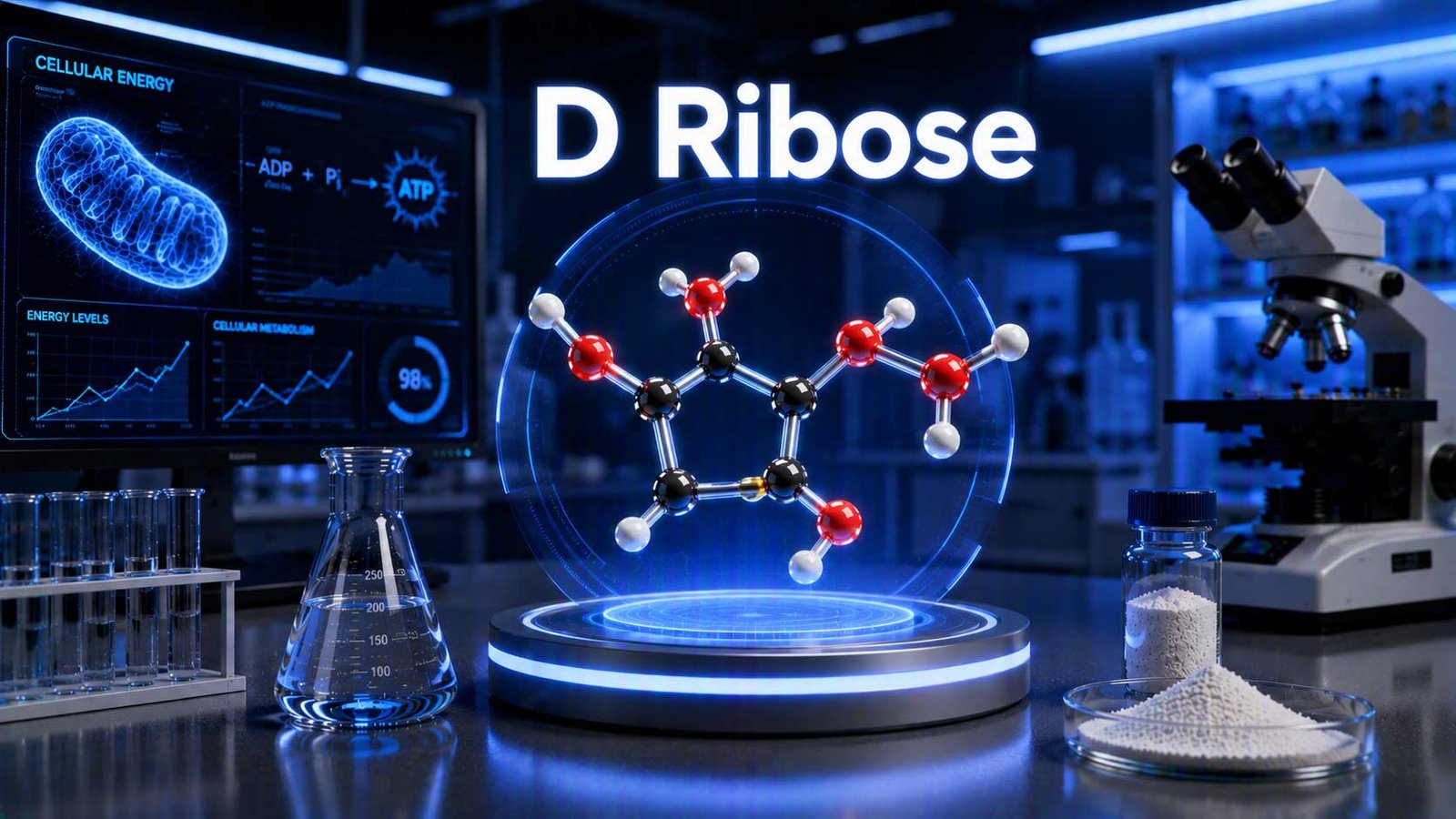
The Sugar Your Mitochondria Have Been Waiting For
Most people hear the word “sugar” and immediately think of the enemy. Cookies, soda, that second helping of dessert you promised yourself you wouldn’t have. So it throws people off, understandably, when they learn that one particular sugar is quietly essential to whether their cells can even make energy in the first place. That sugar is D Ribose, and it doesn’t behave anything like the sugars we’re used to worrying about.
I’ve spent a long time reading through the muscle physiology and cardiac metabolism literature, and D Ribose keeps popping up in places you wouldn’t expect: heart failure clinics, fibromyalgia research, sports science labs, even the biochemistry courses that explain how your DNA is put together. It’s a five-carbon simple sugar, technically called a pentose, and it sits at the structural core of some of the most important molecules your body makes. Adenosine triphosphate, or ATP, the molecule every cell burns for fuel, is literally built around a ribose backbone. So is RNA. So are NADH and FAD, the electron carriers that keep your mitochondria humming.
Table of Contents
Here’s the part that surprises people: your body already makes D Ribose. You don’t need to eat it to survive, the way you need an essential amino acid or vitamin C. Your cells manufacture it through a metabolic route called the pentose phosphate pathway, which branches off from glucose metabolism. So why would anyone bother supplementing with something the body produces on its own?
That’s the interesting tension at the center of this whole topic. The pentose phosphate pathway is notoriously slow. It’s not built for speed, it’s built for steady background production. Under normal circumstances, that’s fine. Your heart, muscles, and other energy-hungry tissues keep up just fine with everyday demands. But when energy demand spikes, or when a tissue is under metabolic stress, injury, or disease, that slow pathway can become a bottleneck. Cells burn through ATP faster than they can rebuild the ribose needed to make more of it. This is where supplemental D Ribose entered the picture decades ago, first in cardiac research, then in exercise physiology, then in conditions like fibromyalgia and chronic fatigue syndrome.
I want to be upfront about something before we go further: this is not a miracle molecule, and anyone who tells you otherwise is selling something. What it is, though, is a genuinely interesting piece of human biochemistry with real, published research behind specific, narrow uses. Some of that research is strong. Some of it is preliminary. Some proposed uses, like general athletic performance enhancement, haven’t held up particularly well when tested rigorously. I think the honest, useful way to approach D Ribose is the way a good mechanic approaches a car problem: understand what it actually does mechanically, then match that mechanism to situations where it plausibly helps, rather than treating it as a cure-all.
Over the course of this article, we’re going to walk through what the research says about D Ribose’s role in health, where you can actually get it, how much people typically use, and where the real risks lie. I’ll be honest about the gaps in the evidence too, because pretending the science is more settled than it is doesn’t do anyone any favors. What I can tell you upfront is that the core biochemistry, D Ribose’s role in building ATP and other energy-carrying molecules, is not up for debate. It’s well established. The open questions are mostly about who benefits from supplementing beyond what the body already makes, at what dose, and for how long.
Ribose sugar isn’t glamorous. It doesn’t have the marketing muscle of creatine or the mainstream recognition of protein powder. But if you’ve ever wondered what’s actually happening at the cellular level when your energy tanks, whether from a hard workout, a chronic illness, or just the slow grind of aging, understanding this small five-carbon molecule gives you a genuinely useful window into it.
There’s also a bit of a branding problem that D Ribose has never quite shaken. Because it shares part of its name with riboflavin, vitamin B2, people sometimes assume the two are interchangeable or closely related. They’re not. Riboflavin is a B vitamin your body cannot manufacture and must get from food. D Ribose is a sugar your body manufactures on its own and rarely needs in appreciable amounts from the diet. Keeping that distinction straight matters, because a fair amount of the confusion floating around online, including some dietary source lists that quietly swap one for the other, traces back to that naming coincidence.
I also think it’s worth setting expectations about tone here. A lot of supplement writing tends to swing between two extremes: breathless promotion on one side, or reflexive dismissal on the other. Neither approach does justice to a molecule like this one, which has a legitimate, decades-long research history in cardiology and exercise physiology, alongside a fair number of overstated claims made by people selling it. My goal in the sections ahead is to walk the line honestly, tell you where the evidence is genuinely solid, where it’s thin, and where reasonable researchers still disagree.
One more thing worth mentioning before we get into it: D Ribose sits at an interesting intersection of basic biochemistry and applied clinical research, which means it shows up in slightly different forms depending on who’s writing about it. A cardiologist interested in myocardial energy recovery after ischemia is going to describe it differently than a sports dietitian thinking about muscle recovery, who in turn describes it differently than a rheumatologist looking at fibromyalgia symptom management. All three are talking about the same molecule and roughly the same underlying mechanism, just applied to different tissues and different clinical questions. Keeping that unifying thread in mind, ATP synthesis, and the raw materials needed to keep it running, will make the rest of this article easier to follow, since we’ll be moving between these different contexts as we go.
Let’s get into the details, starting with what the actual health research says about where D Ribose helps and where it doesn’t.
Key Health Benefits
When people ask me what D Ribose is “for,” I usually tell them to think less about a single benefit and more about a mechanism: it’s a raw material for rebuilding ATP faster than the body would otherwise manage on its own. That mechanism has been studied in a handful of distinct contexts, and the strength of the evidence varies quite a bit depending on which one we’re talking about. Let’s go through them honestly, one at a time.
Cardiac Energy Support
This is where the research is deepest, and for good reason. Heart tissue is one of the most metabolically demanding tissues in the body, and it has almost no energy reserve to spare. When blood flow to the heart is compromised, even briefly, ATP levels can plummet and take days to fully recover, long after blood flow itself has been restored. Researchers noticed this lag decades ago and started asking whether supplying the raw material for ATP synthesis could speed up that recovery.
A well-cited feasibility study gave people with congestive heart failure and coronary artery disease 15 grams of D Ribose daily, split into three doses, for three weeks. The researchers found an enhancement of atrial contribution to left ventricular filling, a smaller left atrial dimension, and a shortened E wave deceleration time on echocardiography. Quality of life scores improved too, while the placebo group showed no such changes. That’s a small study, and it’s a single trial, but it’s the kind of finding that opened the door to a broader look at D Ribose for diastolic dysfunction specifically, the type of heart failure where the heart muscle has trouble relaxing and filling properly between beats.
More recent reviews of heart failure with preserved ejection fraction, a particularly stubborn and hard-to-treat form of heart failure, have pointed to D-ribose’s role in providing a framework for the formation of molecules that transfer and produce energy, along with intermediates that feed back into other pathways for cellular respiration as a plausible reason it might help. One narrative review summarizing this line of work described a study in which patients with heart failure symptoms and diastolic dysfunction received five grams of D Ribose daily for six weeks and experienced improved diastolic filling velocity and better maximal oxygen consumption during exercise testing.
None of this means D Ribose is a treatment for heart failure. It isn’t approved as one, and no cardiologist should be swapping it in for standard therapy. But as an area of adjunctive research, cardiac bioenergetics is genuinely where D Ribose has the most substantial track record.
Fibromyalgia and Chronic Fatigue
This is the use that tends to generate the most public interest, probably because chronic fatigue syndrome and fibromyalgia are so poorly served by conventional medicine. Patients are often desperate for something, anything, that offers relief, and D Ribose has been floated as a candidate because both conditions have been linked to impaired cellular energy metabolism.
The foundational study here was a small, open-label pilot involving people diagnosed with fibromyalgia or chronic fatigue syndrome, given five grams of D Ribose three times daily for about three weeks. D-ribose significantly reduced clinical symptoms in patients suffering from fibromyalgia and chronic fatigue syndrome. The researchers later ran a larger, multi-site follow-up with over 250 patients using the same basic dosing protocol, and reported meaningful average improvements across energy, sleep, mental clarity, pain, and overall well-being, with statistically significant results.
I want to flag something important here, though, because it matters for how you weigh this evidence: both of these studies were open-label, meaning nobody was blinded and there was no placebo comparison group. That’s a real limitation. People with debilitating fatigue conditions who are told they’re taking something that might help often report improvement regardless of what’s actually in the capsule. That doesn’t mean the results are meaningless, D Ribose is generally well tolerated and the biological rationale is plausible, but it does mean we’re working with suggestive evidence rather than proof. If you’re dealing with fibromyalgia or chronic fatigue syndrome and you’re considering this, it’s worth a conversation with your doctor about realistic expectations alongside proven treatment approaches.
Rare Metabolic Muscle Disorders
Here’s a lesser-known corner of the research that I find genuinely compelling from a pure biochemistry standpoint. There’s a rare condition called myoadenylate deaminase deficiency, where an enzyme involved in muscle energy metabolism doesn’t function properly, leading to exercise-induced muscle pain, cramping, and stiffness. Because the defect sits directly in the pathway that D Ribose feeds into, researchers tried supplementing with it directly.
In one of the earliest published case reports on this, a patient with the condition was treated with oral D Ribose, and single doses of 4 grams administered at the beginning of exercise prevented the symptoms completely, though the dose had to be repeated every 10 to 30 minutes with continued exercise. That’s about as close to a mechanistic proof of concept as you’ll find in this field: a specific enzymatic bottleneck, a specific substrate given to work around it, and a specific, reproducible symptomatic response.
That said, this is a genuinely rare condition, and results in other muscle disorders like McArdle’s disease, a different type of exercise intolerance caused by a glycogen metabolism defect, haven’t been nearly as consistent. Ribose is not a general fix for muscle fatigue or cramping in healthy people, and I’ll get into why in the next section.
Where the Evidence Gets Thin: Athletic Performance
If you’ve spent any time in a supplement store, you’ve probably seen D Ribose marketed toward athletes, usually with claims about faster recovery, more power output, or reduced fatigue during intense training. This is, frankly, the weakest part of the evidence base, and it’s worth saying so clearly rather than dancing around it.
A well-designed study gave trained males either a placebo or 10 grams of D Ribose daily for five days, then tested them on repeated high-intensity cycling sprints. The result: oral ribose supplementation did not affect anaerobic exercise capacity or metabolic markers like lactate, ammonia, or uric acid in trained subjects. Some other studies have found narrow, conditional benefits, for example, one trial found a performance boost specifically in people with lower baseline fitness levels but not in those with higher fitness levels, which suggests any effect, if real, may depend heavily on how well-conditioned someone’s mitochondria already are.
My honest read on this, after years of following the literature, is that D Ribose’s clearest, most defensible uses are in situations involving impaired or stressed energy metabolism, cardiac tissue under strain, or specific enzymatic bottlenecks, not in otherwise healthy, well-trained bodies looking for a competitive edge. If you’re a healthy athlete hoping ribose will be your secret weapon, the data just doesn’t back that up particularly well.


Dietary Sources
Here’s something that tends to catch people off guard: despite how central D Ribose is to human biochemistry, it’s genuinely difficult to get meaningful amounts of it from food. This isn’t like vitamin C or iron, where you can point to a produce aisle and give someone a shopping list. The reasons are worth understanding, because they explain why supplementation became the primary way people access therapeutic amounts of this compound.
Why Free D Ribose Is Scarce in Food
Ribose exists all over the place biologically, but almost never as a free-floating sugar molecule sitting around waiting to be eaten. Instead, it’s locked up inside nucleotides, RNA, and energy molecules like ATP within the cells of the foods we eat. When you consume a piece of chicken or a serving of sardines, you’re getting ribose in bound form, embedded in cellular machinery, not as the free monosaccharide the research studies use in supplement form. Cooking makes this even more complicated, since heat can degrade what little free ribose exists in food, and digestion doesn’t necessarily liberate the bound form efficiently either.
This matters because it explains the gap between “ribose is present in foods” and “you can dose therapeutic amounts of ribose from your diet.” Both statements can be true at once, and often are, in the marketing copy of supplement companies that want to have it both ways.
Foods That Contain It
With that caveat firmly in place, there are foods that do contain ribose in meaningful biological amounts, mostly because these are foods with high cellular density and turnover. Organ meats, particularly liver, tend to top the list, along with other red meats. Poultry, including chicken and turkey, contributes as well. Seafood is another notable source: sardines, anchovies, herring, and caviar have all been mentioned in nutritional literature as containing D Ribose, likely because these are small, whole, nutrient-dense foods where you’re consuming a large proportion of cellular material relative to your portion size.
Dairy products, including yogurt, cheese, and milk, and eggs round out the list. If you’re building a diet with an eye toward these foods for general health reasons, unrelated to any specific ribose goal, you’re already looking at a fairly standard, nutrient-dense, animal-protein-forward pattern of eating.
Here’s a quick reference for foods commonly cited as ribose-containing sources:
- Organ meats, especially beef and chicken liver
- Red meat and poultry, including dark meat cuts
- Small oily fish like sardines, anchovies, and herring
- Eggs
- Dairy products, including yogurt and aged cheese
- Caviar and other roe
The Practical Reality
I’ll be straightforward here: nobody has clinically meaningful ribose deficiency from diet alone, because your body doesn’t rely on dietary intake to meet its baseline needs. The pentose phosphate pathway handles that. Where dietary or supplemental ribose becomes relevant is in situations of elevated demand or impaired production, not everyday nutritional adequacy. If you’re eating any reasonably varied, whole-food diet with some animal protein in it, you’re getting whatever incidental ribose those foods provide, and that’s simply not something you need to track or optimize the way you might track protein or fiber intake.
This is also why virtually every clinical study on D Ribose’s therapeutic effects, in heart failure, in fibromyalgia, in muscle enzyme deficiencies, used purified supplemental D Ribose powder rather than dietary intervention. The doses studied, typically five to sixty grams daily, are simply not achievable through food. If a specific situation calls for meaningfully increased ribose intake, supplementation, not dietary planning, is the mechanism that’s actually been tested and shown to matter.
How Supplemental D Ribose Is Made
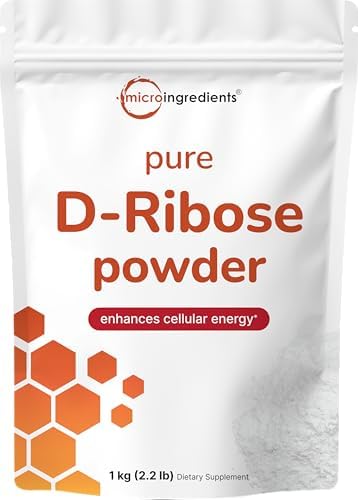
If dietary sources aren’t a practical route to therapeutic amounts, it’s worth understanding briefly where the powder in a supplement tub actually comes from, since this surprises a lot of people. Commercial D Ribose isn’t extracted from meat or fish, that would be wildly impractical at scale. Instead, it’s typically produced through microbial fermentation, using specially engineered strains of bacteria that convert glucose into free D Ribose as a metabolic byproduct. Some manufacturing processes rely on corn-derived starting material, fermented and purified down to a high-purity crystalline powder, usually tested to a high percentage purity using standard laboratory verification methods before it’s packaged for sale.
This matters for a couple of practical reasons. First, it means the D Ribose in a supplement is chemically identical to the D Ribose your own cells produce and the D Ribose embedded in the foods listed above, there’s no meaningful difference in how your body processes it based on its manufacturing origin. Second, it explains why supplement-grade D Ribose can be produced in the quantities used in clinical research, five, fifteen, even sixty grams a day, in a way that would be completely impossible to replicate by eating your way there through liver, sardines, and yogurt.
Should You Bother With Food Sources at All?
Given everything above, you might reasonably wonder whether it’s even worth thinking about ribose-containing foods at all. My honest take is this: eat those foods for the other nutrients they bring to the table, not because you’re trying to hit a ribose target. Organ meats are genuinely excellent sources of iron, B12, and other micronutrients that are much harder to get elsewhere. Oily fish bring omega-3 fatty acids along with them. Eggs and dairy contribute high-quality protein and a range of micronutrients. These are foods worth including in a varied diet on their own merits, and any incidental ribose you get along the way is simply a bonus, not something to plan around or track.
If your goal is specifically to explore D Ribose for one of the more targeted uses we covered earlier, supporting cardiac energy metabolism, or working through a fibromyalgia symptom protocol, supplementation is the path that actually mirrors what’s been studied. Food can round out a healthy foundation, but it isn’t the tool that gets you to a therapeutic dose.
Dosage & Deficiency
Let’s talk numbers, because this is where a lot of the confusion around D Ribose tends to live. The dosing landscape here is unusually wide compared to most supplements, ranging from a few grams to well over fifty grams daily depending on what condition or context researchers were studying. That range isn’t a sign of sloppy science, it reflects genuinely different physiological demands across different populations.
Understanding “Deficiency” With D Ribose
Before getting into specific numbers, it’s worth pausing on a conceptual point. D Ribose isn’t an essential nutrient in the traditional sense, the way vitamin D or iron are essential, because your body synthesizes what it needs through the pentose phosphate pathway rather than depending entirely on external intake. So there isn’t a classic “deficiency syndrome” the way there is with, say, vitamin B12.
What does happen, in certain contexts, is a functional shortfall: a mismatch between how much ATP a tissue needs to rebuild and how quickly the body’s own ribose production can keep pace. This shows up most clearly in situations like heart tissue recovering from reduced blood flow, skeletal muscle in specific enzyme deficiency conditions, or, more speculatively, in chronic fatigue and fibromyalgia where cellular energy metabolism appears to be running suboptimally. When researchers talk about D Ribose “replenishing” depleted energy stores, this functional shortfall, not a nutritional deficiency in the classic sense, is what they mean.
Typical Dosing Ranges by Context
For general use and mild energy support, many supplement labels and practitioners suggest somewhere in the range of three to five grams, once to a few times daily. This is a conservative, low-risk starting point that mirrors some of the lower-end doses used in fibromyalgia and chronic fatigue research.
For the fibromyalgia and chronic fatigue syndrome studies specifically, the dosing protocol that produced positive results was five grams taken three times daily, adding up to fifteen grams total, typically continued for around three weeks before assessing response.
Cardiac research has generally used somewhat higher totals. The heart failure feasibility study used fifteen grams daily split into three five-gram doses. Broader clinical guidance compiled from cardiac trials has cited a wider range, roughly fifteen to sixty grams daily, split into three to four doses, for periods ranging from one to twelve weeks, aimed specifically at supporting outcomes like left ventricular function and exercise capacity in people with existing heart conditions.
At the high end, the myoadenylate deaminase deficiency case reports used total daily doses in the fifty to sixty gram range, tolerated without significant side effects in that specific clinical context, though administered in small, frequent doses tied to exercise bouts rather than all at once.
I want to be clear that these higher-end doses, anything above fifteen or twenty grams a day, come from clinical research settings involving specific diagnosed conditions and, often, medical supervision. They’re not general recommendations for a healthy person looking for an energy boost. If you’re generally healthy and simply curious about D Ribose, starting low, in the three to five gram range, and paying attention to how your body responds, is the more sensible approach.
Timing and Absorption Notes
One detail from the pharmacokinetic research that’s genuinely useful: rapid absorption of orally ingested ribose appears to be blunted when it’s taken alongside a high-fat or high-carbohydrate meal. This lines up with something researchers noted in heart failure patients specifically, where doses taken with food produced substantially lower blood levels of ribose than the same dose taken fasted. If your goal is to maximize the metabolic exposure from a given dose, taking it on a relatively empty stomach, spaced away from large meals, appears to make a meaningful difference, though this also tends to increase the likelihood of the blood sugar dip we’ll cover in the next section.
Splitting the total daily amount into smaller doses spread through the day, rather than taking it all at once, shows up consistently across the clinical protocols too, and for good reason, which brings us to the safety side of this equation.
Forms Available
D Ribose supplements typically show up in one of three forms: loose powder, capsules, or tablets. Powder is by far the most common choice in the research and among long-term users, mostly because it dissolves easily in water or can be mixed into a smoothie, and because it makes hitting the higher gram-level doses used in some protocols far more practical than swallowing a dozen capsules. Capsules and tablets offer more convenience and precise, consistent dosing per unit, which some people prefer, particularly if they’re using it at the lower, general-support end of the range where a capsule or two covers the intended amount without any measuring involved.
There’s no meaningful difference in how the body processes D Ribose based on the delivery format itself. What matters more is total dose, timing relative to meals, and how the daily amount is split across the day. If you’re new to it, starting with a pre-measured capsule product removes some of the guesswork, while powder gives you more flexibility to fine-tune your dose as you learn how your body responds.
A Note on Consistency and Duration
Something that stands out across the clinical literature is that meaningful effects, where they were observed at all, generally required sustained use over a period of weeks rather than a single dose producing a noticeable change. The fibromyalgia and chronic fatigue research used roughly three weeks of consistent dosing before assessing outcomes. The cardiac studies ran anywhere from several weeks to a few months. This lines up with what you’d expect from the underlying mechanism: rebuilding depleted energy pools and supporting ongoing metabolic demand isn’t something that happens instantly, it’s a gradual process that tracks with how consistently the raw material is supplied.
If you decide to try D Ribose for a specific purpose, giving it a fair, consistent trial period, rather than judging it after a day or two, is going to give you a much more honest read on whether it’s doing anything for you. And as with most supplements worth taking seriously, keeping some kind of simple log, energy levels, symptom severity, whatever’s relevant to why you started, makes it far easier to tell a genuine effect apart from ordinary day-to-day variation.
Toxicity & Risks
This is the section I think deserves the most careful, unhurried treatment, because D Ribose has a genuine safety profile worth understanding, not a scary one, but a real one with specific, well-documented effects that are worth knowing before you start experimenting with dosing.
The Blood Sugar Effect
The single most consistently reported effect of D Ribose supplementation, across nearly every study I’ve come across, is a transient dip in blood glucose. This sounds counterintuitive, since ribose is technically a sugar, but the mechanism has been worked out fairly clearly. Taking a bolus dose of D Ribose triggers a transient spike in insulin release, and that insulin spike can, in turn, drive blood glucose down temporarily, sometimes enough to produce symptoms.
Pharmacokinetic research in people with chronic heart failure described this directly: bolus oral D-ribose can induce a dose-dependent transient hypoglycemia preceded by a transient spike in insulin levels, which can result in symptomatic hypoglycemia in people whose blood glucose falls sufficiently far. The same research noted this effect is dose-limiting, meaning it’s essentially the ceiling that determines how much D Ribose someone can comfortably take in a single sitting, and that it’s readily managed by something as simple as a glass of fruit juice if symptoms appear.
In practical terms, this means people with diabetes, hypoglycemia, or any condition involving blood sugar sensitivity need to be genuinely cautious here, and ideally shouldn’t start supplementing without talking to a healthcare provider first, particularly if they’re on medications that also lower blood glucose. Combining D Ribose with insulin or other glucose-lowering drugs could plausibly compound the effect in ways that haven’t been thoroughly mapped out.
Regulatory Safety Assessment
The European Food Safety Authority conducted a formal safety review of D Ribose as part of evaluating it for novel food status, and their findings give us some of the clearest numbers available on where the safety ceiling sits. Based on human studies indicating a potential decrease in glucose levels and occurrence of transient symptomatic hypoglycemia at intakes of 10 grams of D-ribose, the panel defined 70 milligrams per kilogram of body weight per day as the no-observed-adverse-effect level with respect to hypoglycemia for adults. From there, accounting for a subchronic toxicity study in rats and building in a margin for population variability, the panel concluded the compound is safe for the general population at intake levels up to 36 milligrams per kilogram of body weight per day.
For a person weighing around seventy kilograms, or roughly 154 pounds, that works out to approximately 2.5 grams daily as the officially recognized safe upper threshold for general population use in food products, which is notably lower than many of the doses used in the clinical research we discussed earlier. That gap matters. It doesn’t mean the higher clinical doses are inherently dangerous, they were used and generally tolerated under research or medical supervision for specific conditions, but it does mean the general safety threshold for casual, self-directed use is considerably more conservative than the therapeutic doses studied in heart failure or fibromyalgia trials. This is exactly the kind of distinction worth discussing with a doctor if you’re considering doses meaningfully above a few grams daily.
Gastrointestinal Effects
The second most commonly reported category of side effects involves the gut, and it tends to scale with dose. Higher intake levels, particularly doses used in some of the older cardiac studies exploring doses up to sixty grams daily, have been associated with abdominal discomfort and diarrhea, described in some literature as resembling the reaction seen in people with lactose intolerance after drinking milk. Nausea and general stomach upset have also been reported, particularly when D Ribose is taken on an empty stomach, and tend to improve when it’s taken alongside a small amount of food, though as noted earlier, that trade-off may reduce absorption somewhat.
Lower, more conservative doses, in the three to five gram range, tend to be considerably better tolerated on this front, which is part of why that range shows up so often as a sensible starting point for people who are new to supplementing with it.
Populations That Should Be Cautious
A few groups warrant specific mention. Pregnant and breastfeeding individuals are generally advised to avoid D Ribose supplementation, largely because of its blood-glucose-lowering effect and a lack of safety data in these populations. People with diabetes or any blood sugar regulation issue should approach it cautiously and under medical guidance, for the reasons already covered. People with gout have also been flagged as needing caution in some clinical sources, likely related to ribose’s downstream involvement in purine metabolism, since purine breakdown products include uric acid, the compound directly implicated in gout flares.
The Bigger Picture on Safety
Stepping back, I think the fair, balanced summary is this: at conservative doses, in the low single-digit grams range, D Ribose has a track record that looks reasonably clean, with mild, manageable, dose-dependent side effects being the main concern for most healthy people. At the higher end of the doses used in clinical research, tens of grams daily, the side effect profile becomes more noticeable, primarily blood sugar dips and gastrointestinal discomfort, and those doses really do belong in a supervised, medically guided context rather than casual self-experimentation. This isn’t a compound with alarming toxicity red flags in the research, but it’s also not something to treat as risk-free simply because it’s “natural” or something your body already makes. Respecting the dose-response relationship here matters, and if you have any underlying condition, particularly involving blood sugar or kidney function, a conversation with your doctor before starting is the sensible move.
The Bottom Line on This Unassuming Little Sugar
If there’s one thing I hope sticks after all of this, it’s that D Ribose is a genuinely interesting example of how nuanced supplement science actually is, once you get past the marketing headlines. This isn’t a sugar you need to fear, and it isn’t a miracle molecule either. It’s a specific biochemical tool with a specific mechanism, feeding directly into how cells rebuild their energy currency, and that mechanism matters most in situations where energy production is genuinely stressed or bottlenecked, not in the day-to-day metabolism of a healthy person going about ordinary life.
The strongest evidence sits with cardiac bioenergetics, where decades of research have explored how supplemental ribose might help hearts recover ATP more quickly after periods of reduced blood flow, and with rare enzymatic conditions where the mechanistic logic is about as clean as it gets in nutrition science. The fibromyalgia and chronic fatigue research is genuinely promising and worth paying attention to, but it needs better-controlled trials before anyone should treat it as settled. And the athletic performance angle, frankly, just hasn’t held up particularly well under rigorous testing in healthy, trained individuals, no matter what the label on a pre-workout tub might claim.
What I’d actually suggest, if you’re weighing whether this is relevant to you, is to think less about D Ribose as a general wellness supplement and more as a targeted tool for a targeted situation. If you or someone you know is dealing with a diagnosed heart condition, a rare metabolic muscle disorder, or a fatigue condition like fibromyalgia, this is a legitimate topic to raise with a physician, ideally one familiar with the relevant research, as a potential piece of a broader treatment conversation. If you’re a generally healthy person curious about cellular energy production for its own sake, understanding the biochemistry is worthwhile on its own merits, even if the supplement itself may not do much for you beyond what your own pentose phosphate pathway is already quietly handling in the background.
It’s worth remembering, too, that supplement research in general tends to move slowly and unevenly, and D Ribose is no exception. A lot of the foundational work here dates back to the 1980s and 1990s, with more recent reviews mostly synthesizing and reinterpreting that earlier evidence rather than generating large new randomized trials. That’s not unusual for a compound that isn’t patentable in its natural form and doesn’t have a pharmaceutical company behind it funding phase three trials, but it does mean the field moves at the pace of academic interest and small grants rather than the pace of a well-funded drug pipeline. If you’re the type of reader who likes to check in on where the science stands every so often, this is a topic where it’s genuinely worth revisiting every few years, since a handful of new, better-controlled studies could meaningfully shift how confidently we can talk about the fibromyalgia and chronic fatigue applications in particular.
Start conservative if you do decide to try it. A few grams, taken with attention to how your body responds, tells you far more than jumping straight to the higher end of the doses used in clinical trials. Pay attention to how you feel, particularly around blood sugar, and loop in a healthcare provider if you have any underlying condition that makes glucose regulation a concern.
It’s also worth revisiting that food-versus-supplement distinction one more time here, because I think it’s the single most practically useful takeaway in this whole piece. You cannot eat your way to a therapeutic dose of D Ribose, no matter how much liver or sardines you work into your week, and that’s fine. That’s not a failure of your diet, it’s simply how this particular molecule is distributed in nature. If your interest here is purely about eating well and supporting your body’s baseline energy metabolism, the more productive move is focusing on the broader nutritional patterns that support mitochondrial health generally: adequate protein, a good spread of B vitamins, iron, magnesium, and enough overall energy intake to match your activity level. D Ribose supplementation is a separate, more targeted lever, one that’s really only been shown to matter in specific, higher-demand situations.
I’d also encourage a healthy amount of skepticism toward any product or article that frames D Ribose as an everyday energy fix for otherwise healthy people. That’s simply not what the evidence supports, and the research on athletic performance in particular should temper expectations for anyone hoping it’ll be a shortcut to more energy at the gym. Where the evidence is genuinely encouraging, cardiac bioenergetics, specific enzyme deficiencies, and the still-developing fibromyalgia and chronic fatigue research, it’s encouraging precisely because those are situations involving a real, identifiable energy bottleneck that ribose’s mechanism plausibly addresses.
Cellular energy production is happening in every one of your cells, every second, whether you think about it or not. D Ribose won’t change that fundamental fact, but in the right circumstances, the research suggests it might help some cells keep pace just a little better when the demand on them outstrips what they can rebuild on their own. Understood that way, as a targeted tool rather than a general miracle, this quiet, unassuming little sugar earns its place in the conversation about how we support the body’s most basic and most essential process: making the energy it needs to keep going.
Article Sources
At AncientHerbsWisdom, our content relies on reputable sources, including peer-reviewed studies, to substantiate the information presented in our articles. Our primary objective is to ensure our content is thoroughly fact-checked, maintaining a commitment to accuracy, reliability, and trustworthiness.
- EFSA Panel on Dietetic Products, Nutrition and Allergies (NDA). (2018). Safety of D-ribose as a novel food pursuant to Regulation (EU) 2015/2283. EFSA Journal, 16(5), e05265. https://doi.org/10.2903/j.efsa.2018.5265
- Kreider, R. B., Melton, C., Greenwood, M., Rasmussen, C., Lundberg, J., Earnest, C. P., & Almada, A. (2003). Effects of oral D-ribose supplementation on anaerobic capacity and selected metabolic markers in healthy males. International Journal of Sport Nutrition and Exercise Metabolism, 13(1), 76-86. https://doi.org/10.1123/ijsnem.13.1.76
- Krueger, K. J., Rahman, F. K., Shen, Q., Vacek, J., Hiebert, J. B., & Pierce, J. D. (2021). Mitochondrial bioenergetics and D-ribose in HFpEF: A brief narrative review. Annals of Translational Medicine, 9(19), 1504. https://doi.org/10.21037/atm-21-2291
- Mahoney, D. E., Hiebert, J. B., Thimmesch, A., Pierce, J. T., Vacek, J. L., Clancy, R. L., Sauer, A. J., & Pierce, J. D. (2018). Understanding D-ribose and mitochondrial function. Advances in Bioscience and Clinical Medicine, 6(1), 1-5. https://doi.org/10.7575/aiac.abcmed.v.6n.1p.1
- Omran, H., Illien, S., MacCarter, D., St Cyr, J., & Lüderitz, B. (2003). D-Ribose improves diastolic function and quality of life in congestive heart failure patients: A prospective feasibility study. European Journal of Heart Failure, 5(5), 615-619. https://doi.org/10.1016/S1388-9842(03)00060-6
- Teitelbaum, J. E., Johnson, C., & St Cyr, J. (2006). The use of D-ribose in chronic fatigue syndrome and fibromyalgia: A pilot study. Journal of Alternative and Complementary Medicine, 12(9), 857-862. https://doi.org/10.1089/acm.2006.12.857
- Teitelbaum, J., Jandrain, J., & McGrew, R. (2012). Treatment of chronic fatigue syndrome and fibromyalgia with D-ribose: An open-label, multicenter study. The Open Pain Journal, 5, 32-37.
- Zöllner, N., Reiter, S., Gross, M., Pongratz, D., Reimers, C. D., Gerbitz, K., Paetzke, I., Deufel, T., & Hübner, G. (1986). Myoadenylate deaminase deficiency: Successful symptomatic therapy by high dose oral administration of ribose. Klinische Wochenschrift, 64(24), 1281-1290. https://doi.org/10.1007/BF01785710

- Phosphatidic Acid: Supporting Muscle Growth and Strength - July 31, 2026
- Ceramides: Supporting Healthy Skin From Within - July 31, 2026
- Synbiotics: Combining Prebiotics and Probiotics Together - July 31, 2026