
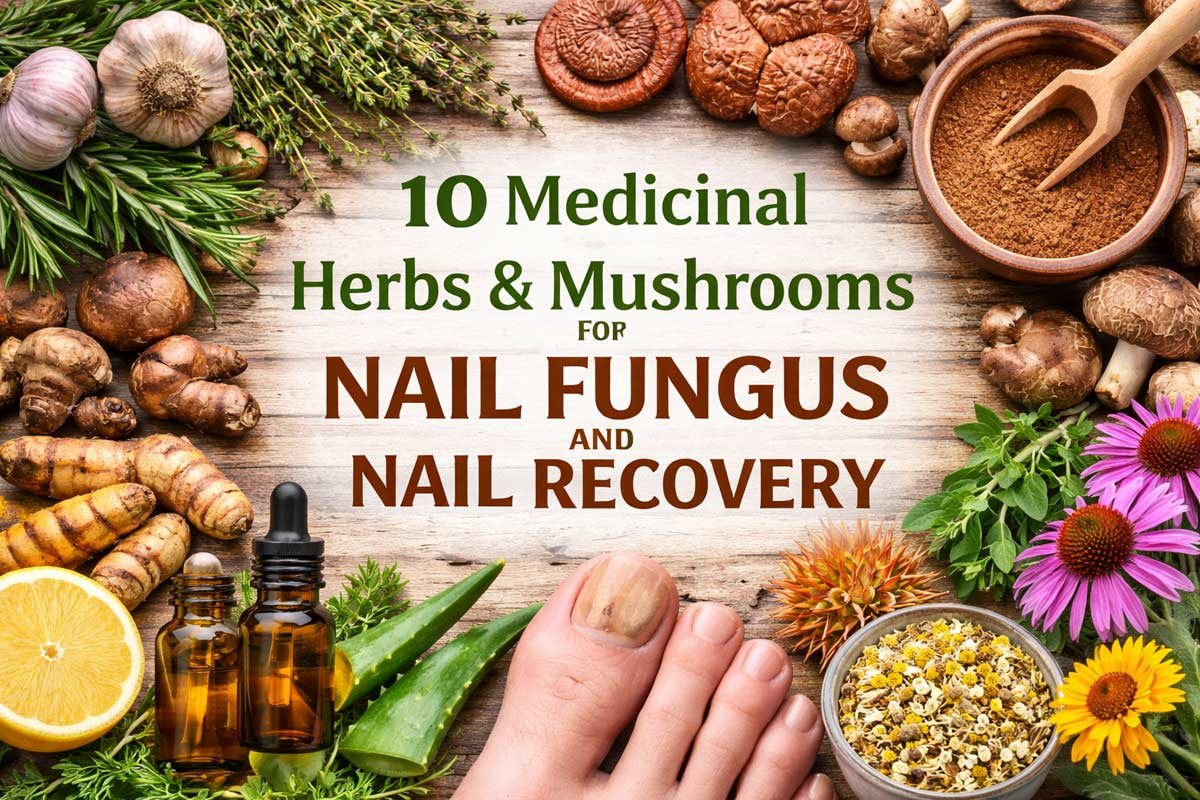
When Nail Fungus Takes Hold Beneath the Surface
Nail fungus rarely starts with drama. It slips in quietly, often unnoticed, settling under the nail plate where light, air, and circulation barely reach. One day the nail looks a little dull. A few weeks later, it thickens, yellows, lifts, or becomes brittle at the edges. By the time most people recognize nail fungus for what it is, the organism has already built a comfortable home beneath the surface.
From years of watching this pattern repeat, one thing stands out. Nail fungus is not just a surface issue. It is a relationship between environment, tissue health, microbial balance, and time. Fungus does not invade strong, well oxygenated, fast growing nails easily. It thrives where growth is slow, moisture lingers, and the immune response feels distant or distracted.
Table of Contents

Toenails are especially vulnerable. They grow slowly. They spend long hours in dark, enclosed spaces. Shoes trap moisture. Minor trauma from walking or sports creates microscopic entry points. Over time, nail fungus takes advantage of every small weakness. Fingernails can be affected too, but the pace is usually faster, the exposure to air greater, and recovery often easier when the right conditions are restored.
There is also the myth that nail fungus is purely a hygiene issue. That idea does more harm than good. Many people dealing with nail fungus are meticulous about cleanliness. The problem is not dirt. It is biology. Fungi are opportunists. They respond to warmth, keratin, moisture, and imbalance. Once established, they protect themselves with biofilms and nest deep within nail layers that topical treatments struggle to penetrate.
This is where frustration begins. Conventional approaches often focus on killing the fungus directly, usually aggressively, sometimes systemically. That strategy can work in certain cases, but it ignores the terrain. In herbal and mycological thinking, terrain matters as much as the organism. Nail fungus thrives because the nail environment allows it. Change the environment, and the fungus loses its advantage.
Healthy nails are living structures. They are extensions of skin, supplied by blood, shaped by nutrition, hormones, circulation, and immune signaling. When these factors weaken, nail fungus finds room to grow. Thickened nails are not just infected nails. They are slow nails. Brittle nails are not just damaged nails. They are undernourished nails. Discoloration is not merely cosmetic. It reflects changes happening beneath the keratin layers.
Another overlooked factor is patience. Nail fungus develops slowly and resolves slowly. Toenails can take twelve months or more to fully regrow. Fingernails several months. Any approach that promises instant clearing misunderstands nail biology. Recovery is measured in millimeters, not days. This is where many people give up too early, switching remedies repeatedly without allowing enough time for tissue renewal.
Herbs and mushrooms approach nail fungus differently. Instead of focusing only on eradication, they work on inhibition, resilience, repair, and support. Some directly suppress fungal growth. Others improve circulation to the nail bed. Some calm inflammation in surrounding skin. Others strengthen immune recognition or improve keratin quality over time. When combined thoughtfully, they shift conditions away from fungal dominance.
It is also worth saying this clearly. Nail fungus is common. Very common. It affects people of all ages, lifestyles, and backgrounds. It does not reflect laziness or neglect. It reflects exposure and opportunity. Communal showers, gyms, swimming pools, shared footwear, tight shoes, nail salons, damp work environments. These are normal parts of life. The fungus is already present in many environments. What determines whether it takes hold is vulnerability, not morality.
The emotional side often goes unspoken. People hide their feet. They avoid sandals. They feel embarrassed at pools or beaches. They delay addressing nail fungus because it feels minor, until it no longer is. That delay gives the organism time to embed itself deeper. Addressing nail fungus early is always easier, but addressing it later is still possible with consistency and realistic expectations.
One of the most important shifts is understanding that nail fungus does not exist in isolation. It interacts with skin microbiota, footwear habits, moisture exposure, and immune tone. Repeated reinfection often comes from untreated shoes, socks, or tools. No plant or mushroom can compensate for constant re exposure. Traditional systems always emphasized environment alongside remedy, and this is one place where that wisdom remains painfully relevant.
When nails begin to recover, the change is subtle at first. A thin clear line at the base. Slightly smoother texture. Less debris under the nail. These signs mean growth has resumed under healthier conditions. The old damaged nail must still grow out. There is no shortcut around that. But when the foundation improves, nail fungus loses its grip.
From a plant and mushroom perspective, the goal is not domination but balance. Suppress the fungus enough that it cannot maintain its hold. Strengthen the nail and surrounding tissue enough that regrowth outpaces reinfection. Support immune awareness so opportunistic organisms remain opportunistic, not permanent residents.
Anyone who has dealt with nail fungus long enough knows it teaches patience whether you want it to or not. It also teaches attention. Nails quietly reflect internal and external states. When they change, they are offering information. Ignoring that message allows nail fungus to deepen. Listening to it opens the door to recovery that lasts longer than any quick fix.
Understanding nail fungus at this deeper level changes how remedies are chosen and used. It shifts the mindset from attack to strategy. And once that shift happens, the path forward becomes clearer, calmer, and far more sustainable.
Antifungal Herbs That Target Nail Fungus at Its Root
When nail fungus has settled in, the first priority is containment. Not panic. Not scorched earth. Containment. Fungal organisms survive by spreading laterally through keratin and vertically toward the nail bed. They rely on enzymes that digest nail material and on protective layers that shield them from disruption. Certain herbs interfere with these exact strategies, not by brute force alone, but by making the environment increasingly hostile to fungal survival.
What I have learned over time is that effective antifungal herbs share three traits. They penetrate tissue. They disrupt fungal metabolism. And they do so consistently without damaging the surrounding skin when used properly. These plants do not chase nail fungus around. They box it in, starve it, and slowly push it out as new nail grows.
1. Tea Tree (Melaleuca alternifolia)
Tea tree is often the first herb people hear about for nail fungus, and for once, the reputation is earned. Its essential oil contains terpinen 4 ol and related compounds that interfere with fungal cell membranes. When those membranes weaken, the organism cannot regulate itself. It leaks. It falters. It loses cohesion.
What makes tea tree especially valuable for nail fungus is penetration. The oil is small molecule, volatile, and capable of moving into the nail plate and surrounding skin. This matters. Nail fungus hides under dense keratin layers where many remedies never reach. Tea tree does not solve everything on its own, but it reaches places others miss.
There is also an important practical point. Tea tree works best when used consistently and patiently. Daily application, often twice daily, over many months. The goal is not to burn the fungus out in a week. The goal is to prevent it from advancing while healthier nail grows forward. Over time, that steady pressure adds up.
One mistake I see often is overuse. Undiluted tea tree oil can irritate skin, especially around already inflamed nails. Irritation slows healing and can worsen the surrounding environment. Dilution with a stable carrier oil keeps the focus on nail fungus, not collateral damage. The nose knows when tea tree is working. That sharp, medicinal scent fades as fungal load decreases. It is subtle, but noticeable.
2. Oregano (Origanum vulgare)
Oregano is a different kind of antifungal entirely. Stronger. Hotter. Less forgiving. Its power comes largely from carvacrol and thymol, compounds that aggressively disrupt fungal energy systems. Nail fungus exposed to oregano oil struggles to maintain basic metabolic function. Growth slows. Reproduction falters. The organism becomes vulnerable.
This intensity is both strength and weakness. Oregano oil demands respect. It is not a casual daily oil for most people. Used improperly, it can inflame skin and damage healthy tissue. Used strategically, it can break stubborn fungal patterns that softer herbs cannot.
In nail fungus cases where the nail is thick, yellowed, and crumbly, oregano often plays a role early on. Short bursts rather than constant exposure. Think pressure, then rest. The goal is to knock fungal activity down a notch, not to provoke a chemical war zone around the nail.
There is also synergy here. Oregano pairs well with gentler oils that soothe tissue and support repair. When nail fungus retreats but the skin remains irritated, regrowth slows. Balance matters. Oregano brings force. It needs companions that bring stability.
3. Garlic (Allium sativum)
Garlic does not behave like an essential oil. It is water and sulfur based, rich in allicin and related compounds that fungi find deeply unpleasant. Allicin interferes with enzymes fungi rely on for survival. Without those enzymes, nail fungus loses efficiency. It becomes sluggish and exposed.
Fresh garlic preparations have a long history in traditional antifungal use, including for nails. Crushed garlic releases allicin, but that compound is unstable. It works best when fresh and applied promptly. This is not elegant medicine. It smells. It stains. It can tingle or burn slightly. But it works when used thoughtfully.
What garlic does particularly well is disrupting biofilms. Nail fungus often shelters itself in protective layers that resist treatment. Garlic weakens those defenses, making other antifungal herbs more effective. In stubborn nail fungus cases, garlic often acts as the door opener.
The key here is moderation. Prolonged direct contact with raw garlic can irritate skin. Short applications followed by rest periods tend to work better. Over time, people often notice less debris under the nail and reduced thickness. These are early signs that the fungal structure is breaking down.
4. Neem (Azadirachta indica)
Neem works on a different level. It is less aggressive than oregano and less volatile than tea tree, but deeply persistent. Neem contains azadirachtin and related compounds that interfere with fungal reproduction and adherence. Nail fungus exposed to neem struggles to anchor itself securely within nail tissue.
One of neem’s strengths is its effect on surrounding skin. Many people with nail fungus also deal with scaling, itching, or redness around the nail folds. Neem calms this terrain. A calmer environment heals faster and resists reinfection more effectively.
Neem also has a long track record in traditional systems for chronic skin and nail conditions. It is not a quick fix herb. It is a long game herb. Regular use supports gradual clearing and reduces recurrence once nail fungus has been pushed back.
Another overlooked benefit is neem’s bitterness. Fungi do not thrive in bitter environments. This principle shows up across herbal medicine. Where bitterness dominates, opportunistic organisms retreat. Neem brings that bitter intelligence directly to the nail and skin interface.
Together, these four herbs form a core antifungal strategy for nail fungus. Tea tree penetrates. Oregano disrupts. Garlic dismantles defenses. Neem stabilizes and prevents rebound. None of them work instantly. All of them work directionally. They move the system away from fungal dominance and toward recovery.
When used with patience, proper dilution, and respect for tissue limits, these plants do more than suppress nail fungus. They change the conditions that allowed it to settle in the first place. That shift is where lasting improvement begins.
Skin-Healing and Nail-Rebuilding Botanicals
Stopping nail fungus is only half the work. Anyone who has dealt with it long enough learns this the hard way. You can suppress fungal activity, even clear it temporarily, and still end up with weak, distorted nails that invite the problem right back. Nail fungus takes advantage of damaged terrain. If the terrain does not recover, the cycle repeats.
This is where rebuilding botanicals matter. These plants do not just discourage nail fungus. They help the nail bed, cuticle, and surrounding skin return to a state where healthy growth becomes the default again. Strong nails grow forward with quiet confidence. Fungus struggles to keep up when keratin quality improves and inflammation settles.
What I look for in this phase is support for circulation, collagen integrity, cellular repair, and calm. Inflamed skin heals poorly. Dry cracked cuticles invite reinfection. Nails that grow unevenly create pockets where nail fungus hides. These botanicals address those issues directly, often in ways that feel subtle at first but compound over time.
5. Thyme (Thymus vulgaris)
Thyme sits at an interesting crossroads between antifungal and regenerative. Many people know it for its antimicrobial strength, but in nail recovery it plays a quieter role too. Thyme improves local circulation. When blood flow increases to the nail bed, growth improves. That alone changes the pace of recovery.
Thyme contains thymol, which discourages fungal persistence, but it also supports tissue tone. Nails affected by nail fungus often feel spongy or oddly rigid. Thyme helps normalize that texture over time. I have seen nails regain smoother edges and more even thickness when thyme is used consistently alongside antifungal herbs.
There is also something grounding about thyme. It reduces low grade inflammation without suppressing normal healing signals. In practical terms, the skin around the nail becomes less reactive. Less redness. Less itching. Fewer micro tears. These small improvements add up to a nail environment that feels less fragile.
Thyme works well in oil preparations and in diluted topical blends. It is strong enough to matter, gentle enough to stay in the routine long term. Nail fungus thrives on neglect and inconsistency. Thyme rewards steadiness.
6. Lavender (Lavandula angustifolia)
Lavender does not look impressive on paper. It is often dismissed as cosmetic or relaxing. That dismissal misses the point. Lavender excels at restoring balance to stressed tissue, and nail fungus leaves tissue stressed whether we acknowledge it or not.
When nails are infected, the surrounding skin often becomes tight, dry, or inflamed. That discomfort leads people to pick, cut too aggressively, or avoid touching the area altogether. Lavender softens this dynamic. It calms irritation and supports skin regeneration without shutting down normal immune response.
Lavender also has mild antifungal properties. Not enough to fight nail fungus alone, but enough to discourage residual activity while the nail rebuilds. More importantly, it supports collagen and skin barrier repair. Healthy cuticles form a seal. When that seal is intact, nail fungus loses easy entry points.
There is another benefit that rarely gets mentioned. Lavender encourages compliance. People use it. They tolerate it. They enjoy the scent. Long recoveries require habits that do not feel punishing. Lavender makes the process feel humane, which increases the odds that someone sticks with it long enough for nail fungus to truly clear.
Over months, nails supported by lavender often grow in smoother and less brittle. The new nail looks different. More translucent. Less chalky. That visual feedback matters. It reinforces that the work is paying off.
7. Turmeric (Curcuma longa)
Turmeric works deeper than most people expect. Its role in nail fungus recovery is not surface level. Curcumin, its primary active compound, influences inflammation, oxidative stress, and cellular signaling. These processes shape how nails grow and how skin repairs itself.
Chronic nail fungus often leaves behind lingering inflammation even after fungal activity drops. That inflammation slows nail growth and distorts keratin formation. Turmeric helps calm that internal noise. When inflammation settles, the nail matrix produces stronger, more uniform keratin.
There is also evidence that turmeric discourages fungal adherence. It does not aggressively kill fungi, but it makes it harder for them to establish themselves. This matters during regrowth, when fresh nail tissue is most vulnerable.
Topically, turmeric must be used carefully. It stains. That is a fact. But staining does not equal harm. Used intermittently or in combination with other botanicals, it supports tissue repair without irritating the nail bed. Some people notice that nails feel firmer within weeks of use. Others notice faster growth. Both are welcome signs when nail fungus has slowed things down for too long.
Internally, turmeric also plays a role, but even topically its effects are tangible. Nails recovering from nail fungus often show less splitting and fewer ridges when turmeric becomes part of the routine. It supports structural integrity, which is exactly what weak nails need.
8. Aloe Vera (Aloe barbadensis)
Aloe is underestimated because it feels simple. Clear gel. Cooling. Mild. But aloe excels at one thing that nail fungus recovery desperately needs. Hydration without maceration.
Dry nails crack. Overly wet nails soften and lift. Aloe threads the needle. It hydrates skin and nail tissue while supporting barrier repair. For nails damaged by nail fungus, this balance is critical.
Aloe also supports fibroblast activity. These are the cells involved in producing collagen and maintaining connective tissue. Healthy nail beds depend on them. When the nail bed recovers, the nail above it grows better. That connection is often overlooked.
There is also a soothing psychological effect. Nail fungus can feel relentless. Aloe brings relief. Less tightness. Less soreness. Less urge to over treat. When people feel relief, they are less likely to sabotage progress with excessive scraping or harsh products.
Aloe pairs well with stronger herbs. After antifungal application, aloe helps calm tissue and reduce irritation. This allows more frequent treatment without damage. Over time, the skin around the nail becomes more resilient, not thinner.
One pattern I see repeatedly is this. When aloe becomes a regular part of care, nails recover more evenly. The regrowth line becomes clearer. The boundary between damaged and healthy nail sharpens. That clarity signals that nail fungus is no longer dictating the pace.
Together, these botanicals rebuild what nail fungus disrupts. Thyme improves circulation and tone. Lavender calms and repairs. Turmeric strengthens from the inside out. Aloe restores hydration and resilience. None of them rush the process. All of them respect how slowly nails heal.
Nail fungus fades when growth outpaces damage. These plants help tip that balance. They turn recovery into a process the body recognizes and supports, rather than a fight it resists. Over time, nails stop feeling like a problem to manage and start feeling like tissue that knows how to repair itself again.
Medicinal Mushrooms for Immune and Tissue Resilience
There is a point in long standing nail fungus cases where herbs alone stop being enough. The surface improves. The nail looks calmer. Growth resumes. And yet the fungus lingers, waiting for a lapse. This is usually a sign that the issue is no longer just local. It is systemic in tone, even if it shows up in a very specific place.
This is where medicinal mushrooms change the conversation. Mushrooms do not chase nail fungus directly in the way essential oils do. They work upstream. They influence immune recognition, inflammatory signaling, and tissue repair capacity. In simple terms, they help the body notice what it has been ignoring and respond without overreacting.
Nail fungus often persists because immune response in the nail bed is muted. Nails are peripheral. Blood flow is slower. Immune surveillance is weaker compared to other tissues. Medicinal mushrooms help correct that imbalance gradually, without stimulation or suppression. That subtlety is their strength.
9. Reishi Mushroom (Ganoderma lucidum)
Reishi has earned its reputation through patience, not force. It does not attack nail fungus directly. Instead, it shifts immune tone. This matters more than it sounds. Many people dealing with chronic nail fungus are not immunocompromised in a dramatic sense. Their immune systems simply overlook the problem. Reishi helps sharpen that awareness.
Reishi contains beta glucans and triterpenes that influence innate immune response. These compounds help immune cells recognize opportunistic organisms more efficiently. When immune recognition improves, fungal persistence becomes harder to maintain. The body starts participating again.
Another overlooked aspect of reishi is its effect on inflammation regulation. Chronic low grade inflammation around the nail bed interferes with healthy growth. Reishi calms excessive inflammation while preserving protective responses. This balance allows nail tissue to regenerate without remaining stuck in a constant state of irritation.
From a tissue perspective, reishi supports circulation and oxygen delivery. Over time, nails grow with better color and texture. They feel less dead. More alive. That change is subtle but meaningful. Healthy tissue resists nail fungus by default.
Reishi also teaches patience. Its effects accumulate slowly. Weeks turn into months. Nails become more consistent in growth. Setbacks become less dramatic. Recurrence becomes less frequent. In chronic nail fungus cases, this long arc is often what finally breaks the cycle.
10. Chaga Mushroom (Inonotus obliquus)
Chaga works differently. Where reishi modulates, chaga fortifies. It is dense with antioxidants, melanin, and polysaccharides that support tissue resilience. Nail fungus thrives in weakened, oxidatively stressed environments. Chaga helps reverse that terrain.
One of chaga’s most relevant actions for nail health is its support of skin and connective tissue. Nails are not isolated structures. They rely on the integrity of the nail bed and surrounding skin. Chaga supports collagen maintenance and cellular repair processes that keep these tissues strong.
There is also the antioxidant angle. Chronic fungal presence generates oxidative stress. That stress damages tissue and slows regeneration. Chaga buffers this effect. When oxidative load decreases, nails grow more evenly and predictably. Growth lines smooth out. Fragility decreases.
Chaga also supports immune endurance. Not stimulation, endurance. It helps the immune system maintain attention over time. Nail fungus exploits fatigue. It waits until attention drifts. Chaga reduces that drift. The immune system stays engaged long enough for new healthy nail to replace old infected layers.
People often notice changes in nail texture months after introducing chaga. The new growth feels denser. Less chalky. Less prone to splitting. That density matters. Dense keratin resists fungal enzymes better than porous, brittle nail.
Together, reishi and chaga provide a foundation that surface treatments cannot replace. Reishi improves recognition and response. Chaga strengthens tissue and resilience. Neither rushes the process. Both reward consistency.
In stubborn nail fungus cases, this internal support often makes the difference between temporary improvement and lasting recovery. The fungus stops feeling like an enemy to battle and starts feeling like a problem the body knows how to handle.
When immune tone improves and tissue regains strength, nail fungus loses its advantage. Growth accelerates. Damage recedes. And slowly, almost quietly, healthy nails reclaim the space that fungus once occupied.
Restoring Nail Integrity and Preventing Recurrence
This is the part most people underestimate. Nail fungus does not usually return because a remedy failed. It returns because the conditions that allowed it to thrive were never fully corrected. Once the visible signs fade, attention drifts. Shoes go back on. Old habits resume. Nails look better, so the work feels done. That is when nail fungus quietly tests the borders again.
True recovery means restoring nail integrity so thoroughly that recurrence becomes unlikely, not just inconvenient. That requires a shift in how nails are viewed. They are not decorations. They are slow growing diagnostic tissues that reflect circulation, immune tone, mechanical stress, and care routines. When those factors stay aligned, nail fungus struggles to re establish itself.
One of the first signs of real recovery is predictable growth. Healthy nails grow at a steady pace. Toenails grow slowly but consistently. Fingernails faster. When nail fungus has been active, growth often becomes uneven. Spurts followed by stagnation. Thickening in one area, thinning in another. Restoring integrity means smoothing that rhythm out again.
Footwear plays a larger role here than most people want to admit. Shoes create the environment nails live in. Tight shoes compress the nail bed and reduce circulation. Poorly ventilated shoes trap moisture. Re wearing shoes without allowing them to fully dry creates a fungal friendly microclimate no herb or mushroom can fully compensate for. Alternating footwear and allowing full drying time is not optional if recurrence prevention is the goal.
Socks matter too. Materials that trap moisture keep nails damp longer than they should be. Nails do not need to be dry at all times, but they do need cycles of dryness. Constant dampness softens keratin and makes it easier for nail fungus to penetrate. This is simple biology, not superstition.
Another overlooked factor is mechanical trauma. Repeated pressure on the same toe. Long walks in ill fitting shoes. Aggressive nail trimming. These small insults add up. Nail fungus often enters through microscopic separations between nail and nail bed. Preventing recurrence means protecting those interfaces, not constantly scraping or thinning the nail in the name of cleanliness.
Trimming technique matters more than people think. Nails should be cut straight across, not rounded deeply at the edges. Over trimming invites separation. Under trimming invites pressure. Balance matters. Tools should be kept clean and not shared casually. Reinfection often comes from familiar objects, not new exposures.
Moisture management is not about dryness at all costs. Over drying nails makes them brittle. Brittle nails crack. Cracks invite colonization. The goal is resilience. Nails that flex slightly and return to shape resist invasion better than nails that shatter or peel. This is where consistent hydration with supportive botanicals pays off long after nail fungus has retreated.
Consistency beats intensity every time. A gentle daily routine maintained for months prevents recurrence more reliably than aggressive treatments used sporadically. Nail fungus respects time. Recovery must respect it too. Once healthy growth dominates, maintenance becomes easier and less demanding.
Another quiet contributor to recurrence is immune distraction. Periods of high stress, illness, or exhaustion often precede flare ups. Nails are peripheral tissues. When resources are scarce, the body prioritizes elsewhere. Supporting immune steadiness during these times matters. This is not about boosting. It is about stability.
Diet influences nail integrity in ways people often overlook. Nails require protein, minerals, and trace elements to grow well. Deficiencies slow growth and weaken structure. Slow growth gives nail fungus more time to work. Strong growth pushes it out. This relationship is simple and often ignored.
One pattern that repeats itself is this. When people stop viewing nail fungus as an isolated problem and start viewing nail health as an ongoing relationship, recurrence drops dramatically. Nails become something to observe, not just manage. Changes are noticed earlier. Adjustments happen sooner. Fungus loses the element of surprise.
It is also worth addressing the psychological side. Many people carry lingering embarrassment even after nails improve. They hide them out of habit. That disconnection leads to neglect. Paying attention again is part of prevention. Healthy nails benefit from being seen, touched, and cared for without shame.
Preventing recurrence also means accepting that exposure never fully disappears. Fungi exist in the environment. Gyms, pools, hotels, public showers. Avoidance is unrealistic. Preparedness is realistic. Strong nails, intact skin, good circulation, and steady care routines create resistance that does not depend on perfect conditions.
There is no finish line where nail fungus is defeated forever, and attention can disappear completely. There is, however, a point where it stops being a recurring problem and becomes a non-issue. That point arrives when nail integrity is restored deeply enough that fungus cannot gain traction even when exposure happens.
When nails are healthy, they feel different. Firmer. Smoother. Less reactive. Growth lines move forward steadily. Discoloration stays behind. These changes do not announce themselves loudly. They reveal themselves quietly over months. That quiet improvement is the most reliable sign that recurrence is unlikely.
The irony is that once nails recover fully, the routine that maintains them feels simple. Less effort. Less worry. Less intervention. The work shifts from fixing a problem to supporting a system that already knows how to maintain itself.
Nail fungus teaches patience, whether you want the lesson or not. Those who learn it fully often end up with stronger nails than they had before the problem began. Integrity returns not because the fungus was crushed, but because the conditions that allowed it to persist were gently, consistently, and permanently changed.
That is what lasting recovery looks like. Not perfection. Stability. And nails that quietly do their job without asking for attention again.
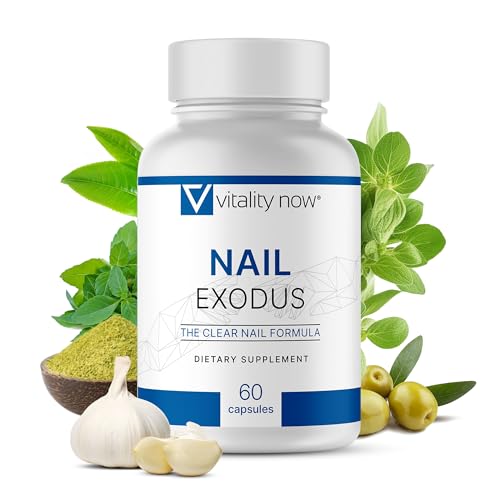
Best-selling Supplements for Nail Fungus




Article Sources
At AncientHerbsWisdom, our content relies on reputable sources, including peer-reviewed studies, to substantiate the information presented in our articles. Our primary objective is to ensure our content is thoroughly fact-checked, maintaining a commitment to accuracy, reliability, and trustworthiness.
- Hammer, K. A., Carson, C. F., & Riley, T. V. (2003). Antifungal effects of Melaleuca alternifolia tea tree oil and its components on Candida albicans, Aspergillus niger, and Saccharomyces cerevisiae. Journal of Antimicrobial Chemotherapy, 53(6), 1081–1085. https://doi.org/10.1093/jac/dkg202
- Manohar, V., Ingram, C., Gray, J., Talpur, N. A., Echard, B. W., Bagchi, D., & Preuss, H. G. (2001). Antifungal activities of origanum oil against Candida albicans. Molecular and Cellular Biochemistry, 228(1–2), 111–117. https://doi.org/10.1023/A:1013361629087
- Ankri, S., & Mirelman, D. (1999). Antimicrobial properties of allicin from garlic. Microbes and Infection, 1(2), 125–129. https://doi.org/10.1016/S1286-4579(99)80003-3
- Biswas, K., Chattopadhyay, I., Banerjee, R. K., & Bandyopadhyay, U. (2002). Biological activities and medicinal properties of neem (Azadirachta indica). Current Science, 82(11), 1336–1345. https://www.currentscience.ac.in/Volumes/82/11/1336.pdf
- Soković, M., Glamočlija, J., Marin, P. D., Brkić, D., & Van Griensven, L. J. L. D. (2010). Antibacterial effects of the essential oils of commonly consumed medicinal herbs using an in vitro model. Molecules, 15(11), 7532–7546. https://doi.org/10.3390/molecules15117532
- Bakkali, F., Averbeck, S., Averbeck, D., & Idaomar, M. (2008). Biological effects of essential oils: A review. Food and Chemical Toxicology, 46(2), 446–475. https://doi.org/10.1016/j.fct.2007.09.106
- Gupta, S. C., Patchva, S., & Aggarwal, B. B. (2013). Therapeutic roles of curcumin: Lessons learned from clinical trials. AAPS Journal, 15(1), 195–218. https://doi.org/10.1208/s12248-012-9432-8
- Surjushe, A., Vasani, R., & Saple, D. G. (2008). Aloe vera: A short review. Indian Journal of Dermatology, 53(4), 163–166. https://doi.org/10.4103/0019-5154.44785
- Paterson, R. R. M. (2006). Ganoderma – A therapeutic fungal biofactory. Phytochemistry, 67(18), 1985–2001. https://doi.org/10.1016/j.phytochem.2006.07.004
- Shashkina, M. Y., Shashkin, P. N., & Sergeev, A. V. (2006). Chemical and medicobiological properties of chaga. Pharmaceutical Chemistry Journal, 40(10), 560–568.https://doi.org/10.1007/s11094-006-0164-6

- Zucchini: Hydrating Vegetable for Digestion and Heart - April 6, 2026
- Yams: Energy Rich Root for Fiber - April 6, 2026
- Turnip: Root Vegetable for Digestion and Vitamin C - April 6, 2026