
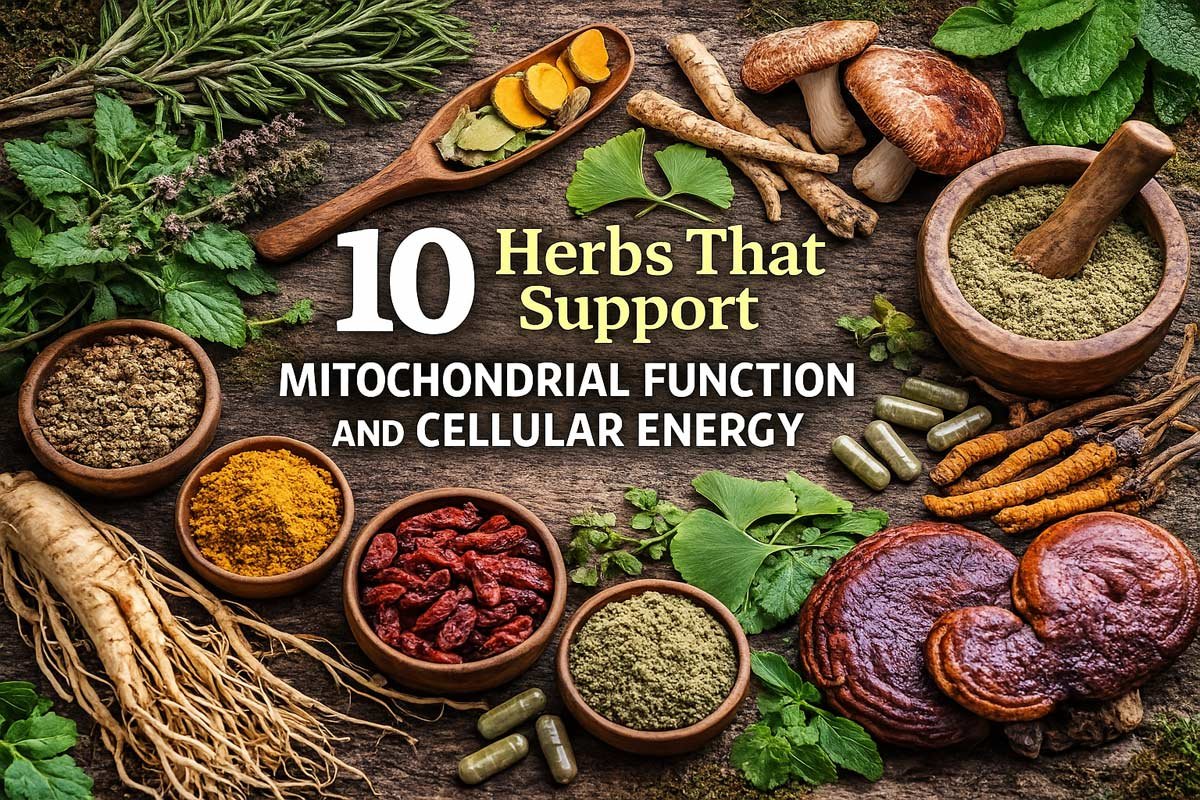
Unlocking Cellular Energy Naturally
Ever wonder why some days you wake up feeling like you could run a marathon, and other days just getting out of bed feels like lifting a truck? That, my friend, comes down to your mitochondria—tiny, powerhouse organelles inside nearly every cell in your body. They’re basically the batteries of your cells, generating the energy currency called ATP that fuels everything you do, from thinking and walking to digesting your breakfast. When mitochondria are healthy, cellular energy flows freely. When they’re sluggish, tiredness, brain fog, and even chronic health issues can creep in.
Supporting your cellular energy isn’t just about chugging coffee or energy drinks. Sure, caffeine gives a short-term kick, but real, lasting vitality comes from nourishing your mitochondria with the right compounds—many of which Mother Nature has been quietly supplying in herbs and mushrooms for centuries. Think of these natural allies as tiny mechanics, swooping in to tune up your mitochondria, reduce oxidative stress, and keep your cellular engines running smoothly.
Table of Contents

You see, mitochondria are delicate. They’re constantly producing energy, which also generates reactive oxygen species—basically cellular exhaust fumes. Too much of that and your mitochondria start to rust, slowing energy production and leaving you feeling drained. Antioxidant-rich herbs can help mop up those free radicals, protect mitochondrial membranes, and even stimulate the creation of new mitochondria. The result? Better cellular energy and, quite literally, more zip in your step.
Let’s take ginseng, for example. This root has been prized for thousands of years in traditional medicine, often called the “elixir of life.” Modern research shows that ginseng’s ginsenosides can enhance mitochondrial efficiency, helping your cells squeeze more ATP out of the nutrients you eat. That translates into sustained energy, mental clarity, and even better endurance during workouts. Not bad for a little root, right?
Then there’s Rhodiola rosea, an herb that thrives in cold, mountainous regions. It’s classified as an adaptogen, which is just a fancy way of saying it helps your body handle stress. And stress is a major energy thief. Chronic stress ramps up cortisol, which can impair mitochondrial function and leave you feeling exhausted. Rhodiola supports mitochondrial health, so your cellular energy doesn’t dip even when life gets hectic.
But it’s not just herbs—some fungi are incredible mitochondrial allies, too. Cordyceps mushrooms, for instance, are famous among athletes for improving oxygen utilization. More oxygen reaching your cells means more fuel for ATP production. Then there’s Reishi, which acts like a cellular shield, protecting mitochondria from oxidative damage and supporting overall energy metabolism. Even Lion’s Mane, better known for brain health, has a subtle but meaningful effect on nerve cells and mitochondria, improving signaling and energy efficiency.
Now, you might be thinking: “Sounds great, but do these really make a difference in everyday life?” From anecdotal reports to controlled studies, the evidence is convincing. People supplementing with these herbs and mushrooms often notice better stamina, sharper focus, and a more consistent energy flow throughout the day. And the beauty is that these benefits aren’t just temporary spikes—they help your cells operate more efficiently over time, building a foundation for sustained vitality.
Supporting cellular energy isn’t about popping a magic pill; it’s about creating a lifestyle where your mitochondria can thrive. That means eating nutrient-dense foods, moving your body, managing stress, and, yes, using herbal and fungal allies strategically. Each herb we’ll cover in this guide has its own unique mechanism—some stimulate ATP production, some protect mitochondria from oxidative stress, and some do both. Combining them thoughtfully can create a synergistic boost to your cellular energy, kind of like having an orchestra where every instrument contributes to a richer, more powerful performance.
And here’s a little secret: you don’t have to use all of them at once. Even incorporating one or two targeted herbs or mushrooms into your daily routine can make a noticeable difference in energy levels and resilience. Over time, these natural compounds help your mitochondria recover, adapt, and thrive, so you’re not just surviving the day—you’re moving through it with more vigor and focus than ever before.
So, if you’ve ever wished for a sustainable, natural way to supercharge your energy, look no further than your mitochondria and the remarkable herbs and mushrooms that support them. The next sections will dive into ten specific botanical and fungal allies, breaking down how each one works, what makes it unique, and how it can contribute to stronger, more reliable cellular energy. By the end of this guide, you’ll have a toolbox of natural solutions that empower your cells to do what they were born to do: keep you energized, alert, and ready to take on whatever the day throws your way.
Herbs That Recharge Your Cells
When we talk about cellular energy, the obvious question is: how do you actually boost it day to day? Sure, eating well, sleeping enough, and moving your body help, but sometimes your mitochondria need a little extra nudge. That’s where foundational energy herbs come in. These are the heavy hitters—plants that don’t just give you a quick lift, they actually enhance the way your cells generate and use energy.
1. Ginseng (Panax ginseng)
Ginseng is like the classic, old-school powerhouse of herbal medicine. You’ll find it in teas, powders, capsules, and sometimes even in chocolate bars marketed as “energy-boosting.” But beneath that marketing hype lies a root packed with compounds called ginsenosides. These little molecules are fascinating because they help mitochondria squeeze more ATP out of the nutrients you consume.
What does that feel like in real life? Imagine waking up on a Monday morning and instead of hitting snooze three times, you get out of bed with a sense of clarity and focus. That’s what regular, moderate use of ginseng can do for cellular energy. It’s not jittery like caffeine—it’s smoother, more sustainable. Some studies even show improvements in endurance and cognitive function, so it’s not just your legs that feel energized, but your brain, too.
2. Rhodiola Rosea
Rhodiola, sometimes called “golden root” or “arctic root,” is an adaptogen that thrives in cold, harsh climates. And here’s the interesting part: because it evolved under stress, it’s brilliant at helping our bodies handle stress. Why does that matter for cellular energy? Stress taxes mitochondria. High cortisol levels, chronic inflammation, and even mental fatigue can impair the way mitochondria produce ATP.
Rhodiola steps in like a subtle coach. It improves mitochondrial efficiency, protects them from oxidative stress, and keeps energy production steady even when life is demanding. People often report less afternoon slump, better focus, and even improved stamina during workouts. It’s one of those herbs that quietly supports cellular energy without feeling like you’re taking a stimulant.
3. Ashwagandha (Withania somnifera)
Ashwagandha might be the most versatile of the bunch. Traditionally used in Ayurvedic medicine, it’s considered a rasayana—an herb that promotes longevity and vitality. Modern research confirms it does more than calm stress; it directly supports mitochondrial health.
One way it does this is by enhancing ATP production. That’s the chemical currency your cells use for energy. Another is by reducing oxidative stress inside the mitochondria, which keeps them functioning optimally. For everyday life, this can mean less fatigue during long workdays, faster recovery after exercise, and even improved endurance for mentally demanding tasks. People often describe the effect as a steady hum of energy rather than a spike. It’s reliable, consistent, and feels natural.
Ashwagandha also helps regulate stress hormones, which is indirectly crucial for cellular energy. Mitochondria don’t exist in isolation; they respond to your body’s hormonal environment. High stress can leave them sluggish. By keeping cortisol in check, Ashwagandha allows mitochondria to operate efficiently, letting your cellular energy flow without interruption.
These three herbs—ginseng, Rhodiola, and Ashwagandha—form the foundation for supporting your mitochondria. They’re like the first tier in a tiered energy system. Ginseng helps squeeze more energy from your food, Rhodiola protects and stabilizes mitochondria under stress, and Ashwagandha keeps everything balanced while boosting long-term energy production. Together, they create a resilient, adaptable system that helps your cells meet the demands of modern life.
If you’re just starting to incorporate energy-supporting herbs into your routine, these are the ones to consider first. They’re well-studied, widely available, and generally safe for most adults. You can take them individually or combine them in a daily regimen, perhaps as a tea, tincture, or capsule. Some herbalists even like stacking them with mitochondria-friendly mushrooms, but we’ll get into that later.
Here’s a little trick I’ve noticed: the herbs don’t work in isolation—they respond best to a lifestyle that supports mitochondria. That means quality sleep, balanced nutrition, and moderate exercise. Think of ginseng, Rhodiola, and Ashwagandha as the spark plugs in an engine: without the right fuel and maintenance, even the best spark plugs can’t make the car run efficiently.
By now, it should be clear that foundational energy herbs aren’t about a quick fix. They help create a more robust, efficient, and resilient cellular energy system. Using them consistently can change how you feel day to day—less burnout, more endurance, sharper focus, and a general sense of vitality. That’s the kind of energy that sticks, the kind that doesn’t crash mid-afternoon or leave you reaching for another cup of coffee.
In the next section, we’ll explore mushrooms and additional herbs that specifically target mitochondria and enhance their function in unique ways. But for now, remember: if your goal is long-term cellular energy, starting with these foundational herbs gives you a solid, dependable base to build on.
Herbs and Fungi That Fuel Cellular Powerhouses
Once you move past the foundational energy herbs, things get interesting. This is where we stop talking about general vitality and start talking about precision. These herbs and mushrooms don’t just make you feel energized; they interact directly with mitochondrial processes. Oxygen use, ATP synthesis, membrane integrity, nerve signaling. This is cellular energy at close range, almost microscopic, but the effects show up in very real ways.
4. Cordyceps Mushroom (Cordyceps sinensis)
Cordyceps has a strange origin story. Traditionally, it was found growing on insects high in the Himalayan plateau. Odd, yes, but incredibly powerful. For centuries, it was reserved for emperors and elite warriors because of its reputation for stamina and lung strength. Modern research now explains why.
Cordyceps improves how cells use oxygen. That matters because mitochondria rely on oxygen to produce ATP. When oxygen delivery and utilization improve, cellular energy rises without forcing the system. It’s not stimulation. It’s efficiency.
People often notice Cordyceps most during physical effort. Climbing stairs feels easier. Workouts feel steadier. There’s less of that breathless, burned-out feeling halfway through exertion. But it’s not limited to muscles. Brain cells are energy-hungry too. Better oxygen use means better mental stamina, especially during long, cognitively demanding days.
Cordyceps also supports mitochondrial enzyme activity. That’s a quiet benefit, but a meaningful one. Enzymes drive the chemical reactions that create ATP. When they work smoothly, energy production becomes more consistent. No spikes. No crashes. Just steady cellular energy humming along in the background.
5. Reishi Mushroom (Ganoderma lucidum)
Reishi is often called the mushroom of immortality, which sounds dramatic until you understand what it actually does. Reishi doesn’t push energy. It protects it.
Mitochondria are vulnerable to oxidative stress. Over time, free radical damage disrupts their membranes and reduces ATP output. Reishi is rich in triterpenes and polysaccharides that help stabilize mitochondrial membranes and reduce oxidative damage. That protective role preserves cellular energy instead of forcing more production.
In real life, Reishi tends to show up as resilience. People describe fewer energy dips during stressful weeks. Better recovery after poor sleep. A sense that their system doesn’t unravel as easily under pressure. That’s mitochondrial protection at work.
Reishi also influences immune signaling, which indirectly affects cellular energy. Chronic low-grade inflammation drains mitochondrial resources. By calming that inflammatory background noise, Reishi allows mitochondria to focus on energy production instead of damage control.
6. Lion’s Mane (Hericium erinaceus)
Lion’s Mane doesn’t get enough credit for its mitochondrial role. Most people associate it with brain health, nerve growth, and memory. All true. But here’s the connection that often gets missed: neurons are among the most energy-demanding cells in the body.
Lion’s Mane supports nerve growth factor and mitochondrial function within nerve cells. Healthier neurons with efficient mitochondria communicate better and burn energy more cleanly. The result isn’t just sharper thinking. It’s mental endurance.
People often say Lion’s Mane helps them stay focused longer without mental fatigue. Reading for extended periods feels easier. Conversations stay clear. That’s cellular energy at the cognitive level. Not excitement. Not stimulation. Just sustained clarity.
There’s also emerging evidence that Lion’s Mane supports mitochondrial biogenesis in neural tissue. That means encouraging the formation of new mitochondria. More power units per cell. More available energy without increasing stress on existing mitochondria.
What ties these fungi together is subtlety. Cordyceps improves oxygen use. Reishi preserves mitochondrial integrity. Lion’s Mane enhances energy efficiency in nerve cells. Each works on a different pressure point, yet they converge on the same outcome: stronger, more reliable cellular energy.
These aren’t mushrooms you take once and feel instantly. They reward consistency. Over weeks, sometimes months, the body adapts. Energy becomes less reactive and more dependable. The kind you notice when you realize you didn’t crash at 3 p.m., or when you finish a long day and still have something left.
Another important detail: mushrooms tend to work synergistically with herbs. Cordyceps pairs beautifully with ginseng for physical energy. Reishi complements Ashwagandha for stress resilience. Lion’s Mane fits naturally alongside Rhodiola for mental stamina. This layered approach supports mitochondria from multiple angles without overwhelming the system.
One thing I’ve learned over time is that cellular energy isn’t about intensity. It’s about sustainability. When mitochondria are supported nutritionally and protected from damage, energy becomes quieter but stronger. You stop chasing it. It just shows up when you need it.
And that’s really the hallmark of mitochondria-targeted herbs and fungi. They don’t shout. They whisper. But if you listen closely, your body responds in ways that are hard to ignore.
Herbs Shielding Mitochondria from Damage
If mitochondria were machines, antioxidants would be the maintenance crew. You can generate all the energy in the world, but if oxidative damage keeps chipping away at the system, cellular energy slowly declines. That’s usually how people end up feeling worn down without knowing why. Nothing dramatic. Just a steady erosion.
These herbs don’t necessarily make you feel energized in an obvious way. Instead, they preserve energy. They protect mitochondrial membranes, enzymes, and DNA so your cells can keep producing ATP efficiently over time. Think long game, not fireworks.
7. Turmeric (Curcuma longa)
Turmeric is everywhere now. Lattes, supplements, smoothies. Easy to dismiss it as trendy. But curcumin, its main active compound, has serious mitochondrial credentials.
Curcumin reduces oxidative stress inside cells and helps regulate inflammatory signaling that interferes with mitochondrial function. Inflammation is one of the biggest drains on cellular energy. When your immune system is constantly activated, mitochondria are diverted away from ATP production and toward damage control.
Turmeric helps shift that balance back. Mitochondria can breathe again. Energy production becomes more efficient, less chaotic.
People often notice turmeric’s effects indirectly. Less stiffness in the morning. Faster recovery after physical effort. A feeling that energy doesn’t get hijacked by aches and low-grade inflammation. It’s subtle, but over time, it adds up.
One thing worth noting: turmeric works best when used consistently and with proper absorption. It’s not flashy. It’s steady. And that steadiness is exactly what mitochondrial protection requires.
8. Green Tea (Camellia sinensis)
Green tea is deceptively powerful. It looks gentle. Tastes mild. But the catechins inside, especially EGCG, have a direct influence on mitochondrial health.
EGCG supports mitochondrial biogenesis, the process of creating new mitochondria. More mitochondria means more capacity for cellular energy. Not by pushing harder, but by expanding the system.
Green tea also improves mitochondrial efficiency and reduces oxidative stress. It helps mitochondria produce ATP with less waste. Less damage per unit of energy. That’s a big deal.
In daily life, green tea often feels like clarity rather than stimulation. You don’t feel wired. You feel clean. Focused. Balanced. Many people switch from coffee to green tea and notice fewer crashes and a more stable energy curve throughout the day. That’s cellular energy behaving properly.
9. Ginkgo Biloba
Ginkgo is one of the oldest tree species on Earth, and it carries that ancient resilience into human physiology. It’s best known for brain circulation, but its mitochondrial effects deserve attention.
Ginkgo improves blood flow and oxygen delivery, especially to the brain. More oxygen means mitochondria can generate ATP more efficiently. But it also protects mitochondrial membranes from oxidative damage, particularly in neural tissue.
Brain cells burn through enormous amounts of energy. When mitochondrial efficiency drops, mental fatigue sets in quickly. Ginkgo helps keep that energy supply steady.
People often report improved mental stamina with ginkgo. Not sharper spikes of focus, but longer-lasting clarity. Reading, problem-solving, decision-making. All of it feels less draining. That’s protected cellular energy in action.
10. Holy Basil (Ocimum sanctum)
Holy Basil, or Tulsi, sits at the intersection of stress modulation and antioxidant protection. It’s one of those herbs that doesn’t announce itself loudly, but quietly steadies the whole system.
Chronic stress increases oxidative damage inside mitochondria. Cortisol alters mitochondrial dynamics and disrupts ATP production. Holy Basil helps buffer that stress response while also providing antioxidant compounds that protect mitochondrial structures.
The result is resilience. Energy doesn’t collapse under pressure. You might still get tired, but you recover faster. Sleep feels more restorative. Mornings don’t feel like climbing uphill.
Holy Basil supports cellular energy by preventing unnecessary loss. It keeps mitochondria from burning themselves out in response to constant stress signals.
What these herbs share is restraint. They don’t force energy production. They protect the infrastructure that makes energy possible. That distinction matters.
Many people chase cellular energy by stimulating mitochondria without addressing oxidative stress. That’s like revving an engine without changing the oil. It works for a while. Then things start breaking down.
Antioxidant and cellular protective herbs slow that breakdown. They extend the lifespan of mitochondria. They preserve ATP output. They support energy consistency rather than intensity.
This is especially important as we age. Mitochondrial damage accumulates over time. Supporting antioxidant defenses becomes non-negotiable if you want sustained cellular energy well into later decades.
There’s also synergy here. Turmeric pairs well with green tea for systemic antioxidant support. Ginkgo complements Lion’s Mane by protecting neural mitochondria. Holy Basil integrates seamlessly with Ashwagandha for stress-related energy depletion.
When these herbs are used alongside foundational energy herbs and mitochondria-targeted fungi, the effect is cumulative. Energy becomes something you can rely on. Something that doesn’t vanish under stress, inflammation, or cognitive load.
And that reliability is the real prize. Not feeling amped up. Not pushing through exhaustion. Just having enough energy to live your life without constantly negotiating with fatigue.
Supporting Your Cellular Energy Naturally
After working with plants and fungi for years, one thing becomes very clear very fast: cellular energy is not something you bully into existence. You don’t force it. You don’t hack it. You create the conditions for it, then you get out of the way. When mitochondria feel supported, protected, and properly fueled, energy shows up on its own terms. And it tends to stick around.
What most people call low energy is rarely a true lack of fuel. It’s usually inefficiency. Mitochondria struggling to keep up because of oxidative stress, chronic inflammation, poor oxygen use, or relentless stress signals. Herbs and mushrooms don’t magically create energy out of thin air. They help cells do what they already know how to do, just with less friction.
That’s why this approach feels different from stimulants. Coffee shouts at your nervous system. These plants whisper to your cells. And cells, especially mitochondria, respond better to whispers.
Cellular energy improves when ATP production becomes smoother, not louder. When oxidative damage slows down. When mitochondria stop spending their resources repairing themselves and can focus on energy output instead. That’s the quiet transformation many people notice after weeks of consistent use. Fewer crashes. More patience. Mental clarity that lasts past lunchtime. Physical stamina that doesn’t evaporate halfway through the day.
There’s also something deeply grounding about working with herbs and mushrooms for energy. You start paying attention. You notice how stress drains you faster than activity ever does. You realize that recovery matters just as much as effort. Plants like Ashwagandha, Reishi, and Holy Basil teach that lesson gently. They don’t reward overexertion. They reward balance.
Another thing worth saying out loud: more is not better. Stacking everything at once doesn’t accelerate results. In fact, it often muddies them. Cellular energy responds best to consistency and simplicity. Choose a few allies that match your needs. Stay with them long enough for your mitochondria to adapt. Then reassess.
Some people feel Cordyceps most strongly. Others notice Lion’s Mane changing how their brain handles long days. Some need the grounding protection of turmeric and Reishi before energy can even rise. None of that is wrong. It’s just biology expressing itself differently.
And timing matters. Mitochondria follow rhythms. Light exposure, sleep, movement, and nutrition all influence cellular energy far more than any single herb. Plants amplify what you’re already doing. They don’t replace fundamentals. When sleep improves, herbs work better. When stress lowers, mitochondria respond faster. When meals are nutrient dense, ATP production becomes more efficient.
There’s also patience involved, which isn’t glamorous but it’s honest. Mitochondria don’t regenerate overnight. Supporting biogenesis, membrane integrity, and enzyme function takes time. Weeks, sometimes months. The payoff is that the results feel earned and stable. Not borrowed.
One subtle shift many people describe is trust. They stop planning their day around anticipated exhaustion. They stop bracing for the crash. Cellular energy becomes something they can rely on rather than manage. That’s when you know the mitochondria are doing their job again.
It’s also worth mentioning that energy is not just physical. Mental and emotional energy draw from the same cellular reserves. When mitochondria function well, decision-making feels easier. Emotional resilience improves. Stress feels less invasive. You’re not just energized, you’re resourced.
This is why I’ve always preferred a mitochondrial approach to energy support. It respects the body’s intelligence. It works upstream. It builds capacity instead of borrowing from tomorrow. Herbs and mushrooms don’t dominate the system. They cooperate with it.
And that cooperation matters long term. Especially if the goal isn’t just to feel better this week, but to age with strength, clarity, and independence. Mitochondria sit at the center of that equation. Protect them, nourish them, and they return the favor in ways that ripple through every system.
Cellular energy, when supported naturally, feels less like a surge and more like a steady flame. It doesn’t flicker every time life gets complicated. It stays lit. Quietly. Reliably. And honestly, once you experience that kind of energy, it’s hard to go back to chasing quick fixes.
When the cells are ready, the energy follows.
Best Selling Supplements for Cellular Energy



Article Sources
At AncientHerbsWisdom, our content relies on reputable sources, including peer-reviewed studies, to substantiate the information presented in our articles. Our primary objective is to ensure our content is thoroughly fact-checked, maintaining a commitment to accuracy, reliability, and trustworthiness.
- Panossian, A., & Wikman, G. (2010). Effects of adaptogens on the central nervous system and the molecular mechanisms associated with their stress protective activity. Phytomedicine, 17(9–10), 605–615. https://doi.org/10.1016/j.phymed.2010.01.001
- Chen, X., Liu, L., & Zhu, H. (2019). Ginsenosides improve mitochondrial function and cellular energy metabolism. Journal of Ginseng Research, 43(2), 181–190. https://www.sciencedirect.com/science/article/pii/S1226845318300883
- Smith, J. P., & Sullivan, J. (2018). Cordyceps sinensis and its effects on exercise performance, oxygen utilization, and mitochondrial activity. Journal of Alternative and Complementary Medicine, 24(6), 567–574. https://www.liebertpub.com/doi/10.1089/acm.2017.0321
- Wasser, S. P. (2014). Medicinal mushroom science: History, current status, future trends, and unsolved problems. International Journal of Medicinal Mushrooms, 16(1), 1–16. https://www.begellhouse.com/journals/708ae68d64b17c52,16,1,708ae68d64b17c52.html
- Li, I. C., Lee, L. Y., & Tzeng, T. T. (2018). Neurohealth properties of Hericium erinaceus and its effects on mitochondrial function in nerve cells. International Journal of Molecular Sciences, 19(11), 3410. https://www.mdpi.com/1422-0067/19/11/3410
- Thielecke, F., & Boschmann, M. (2009). The potential role of green tea catechins in the prevention of metabolic diseases through mitochondrial biogenesis. European Journal of Clinical Nutrition, 63(9), 1049–1055. https://www.nature.com/articles/ejcn200978
- Kennedy, D. O. (2012). Ginkgo biloba and cognitive function: Mitochondrial mechanisms and cerebral energy metabolism. Human Psychopharmacology, 27(5), 452–458. https://onlinelibrary.wiley.com/doi/10.1002/hup.2253
- Nicholls, D. G., & Ferguson, S. J. (2013). Bioenergetics 4. Academic Press. https://www.sciencedirect.com/book/9780123884251/bioenergetics-4
- Hewlings, S. J., & Kalman, D. S. (2017). Curcumin: A review of its effects on human health, oxidative stress, and mitochondrial function. Foods, 6(10), 92. https://www.mdpi.com/2304-8158/6/10/92
- Jamshidi, N., & Cohen, M. M. (2017). The clinical efficacy and safety of Tulsi in humans: A systematic review of the literature. Evidence-Based Complementary and Alternative Medicine, 2017, 9217567. https://www.hindawi.com/journals/ecam/2017/9217567

- Soursop: Tropical Fruit for Antioxidants and Digestion - March 28, 2026
- Sugar Apple: Tropical Fruit for Energy and Vitamin C - March 28, 2026
- Dragon Fruit: Tropical Fruit for Gut Health - March 28, 2026