
The Protein Your Body Reaches For First
I still remember the first time I really sat with lactoferrin as a subject instead of skimming past it in a supplement ingredient list. It was tucked into a prenatal formula, third from the bottom, wedged between folate and some proprietary probiotic blend nobody bothers to explain. I almost skipped over it. That would have been a mistake, and honestly, a pretty common one, because lactoferrin doesn’t advertise itself the way flashier compounds do. It doesn’t have a marketing team. It has decades of quiet, unglamorous research showing it does something genuinely clever: it manages iron and immune signaling at the same time, in the same molecule, using the same basic trick.
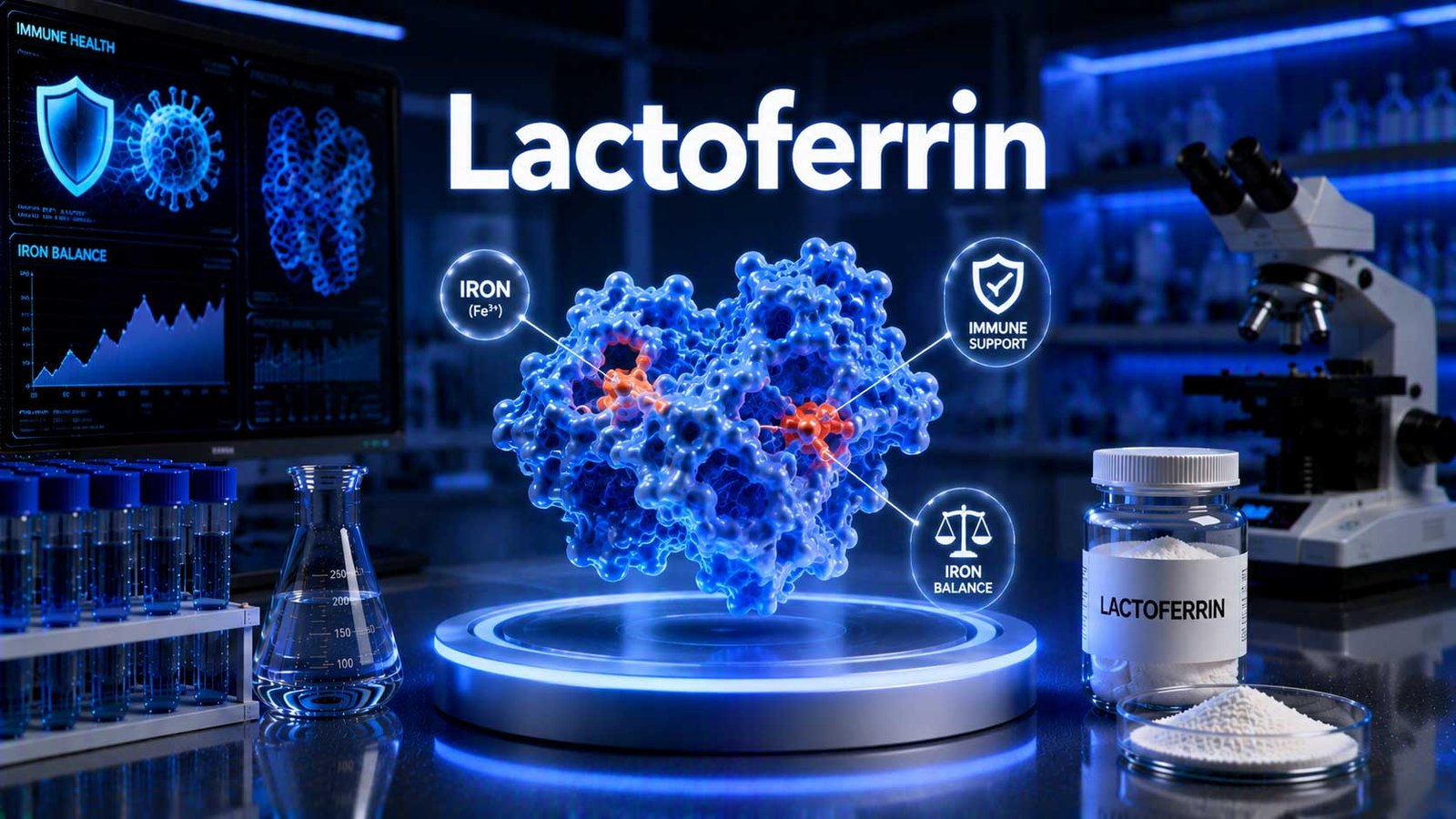
Here’s the trick. Lactoferrin is an iron-binding glycoprotein, which is a fancy way of saying it’s a protein built with pockets that grab onto free iron and hold it tight. Your body makes it in a handful of places — the lining of your gut, your tear ducts, your salivary glands, and in a big way, the mammary gland during lactation. Colostrum, that first thick milk a mother produces in the days right after birth, is packed with it. Newborn mammals, humans included, depend on that early dose to get their immune systems calibrated and their gut lining sealed up. But lactoferrin doesn’t clock out once infancy ends. It shows up in neutrophils, the immune cells that rush to the site of an infection, where it gets released as one of the first responders to a pathogen. It’s baked into how the human body handles two of its most basic survival tasks: fending off invaders and controlling iron so bacteria can’t use it against you.
Table of Contents


That second part is what makes lactoferrin so interesting to me, and it’s the part most casual explanations skip. Iron is essential, obviously. Every cell needs it. But iron is also exactly what bacteria and other pathogens need to multiply. So the body has developed this elegant countermeasure — lactoferrin — that sequesters loose iron during an infection, essentially starving invaders of a resource they can’t do without. Researchers call this nutritional immunity, and lactoferrin is one of the main tools the body uses to pull it off. Lactoferrin belongs to the transferrin family of iron-binding proteins, and that same iron-binding ability is what shapes its role in immune balance and its anti-inflammatory function, since keeping iron under control helps limit the reactive oxygen species that would otherwise drive excess inflammation. That idea, once you unpack it, explains why lactoferrin keeps showing up in research on infections, inflammatory conditions, and anemia all at once. It’s not that lactoferrin does three unrelated things. It’s that iron regulation and immune regulation are, biologically, almost the same conversation.

I want to be upfront about something before we go further: lactoferrin is not a miracle molecule, and I’m allergic to language that treats any single nutrient that way. What it is, though, is a legitimately well-studied protein with a body of clinical and mechanistic research behind it that’s more substantial than most people realize. We’re talking about a molecule that’s been examined in premature infants, pregnant women with anemia, patients with inflammatory bowel disease, and healthy adults looking for general immune support. That’s a wide net, and it’s earned, not hyped.
So why does lactoferrin matter to someone who isn’t a newborn or a hospital patient? Because iron balance is one of those quiet issues that a huge number of adults deal with without ever naming it. Fatigue that doesn’t have an obvious cause. Brain fog that shows up mid-afternoon. Getting winded on stairs that never used to bother you. Iron deficiency is staggeringly common, especially among menstruating women, and the standard fix — high-dose iron supplements — comes with its own baggage: constipation, nausea, that metallic aftertaste that makes people quietly stop taking their pills after a week. Lactoferrin has become interesting precisely because it seems to support iron status through a gentler mechanism, working with the body’s existing iron-handling machinery rather than just dumping more elemental iron into the gut and hoping for the best.
On the immune side, lactoferrin’s reputation has grown for a related but distinct reason. It sits at a crossroads between the innate immune system — your fast, non-specific first responders — and the adaptive immune system, which learns and remembers specific threats. Lactoferrin acts as a cell-secreted mediator that bridges innate and adaptive immune function in mammals, and it’s one of the first factors neutrophils release when they encounter a pathogen, helping steer the development of the body’s broader immune response. That bridging role is part of why lactoferrin shows up in research spanning respiratory infections, gut inflammation, and even some antiviral studies. It’s not fighting on one front. It’s coordinating.
There’s also a practical, food-and-supplement angle to all of this that I think gets buried under the biochemistry. Lactoferrin is something you can actually get more of, through diet or through targeted supplementation, and the dosing research is further along than it is for a lot of trendier compounds. That’s genuinely useful information, not just academic trivia.
What I want to do across the rest of this piece is walk through what lactoferrin actually does for your health, where you can find it, how much of it people are realistically using in research and in supplements, and where the boundaries of safety sit. I’m not going to pretend every claim about lactoferrin is settled science, because it isn’t. Some of the antiviral and anticancer research, for instance, is still early and mostly preclinical. But the core story — iron regulation intertwined with immune defense — is one of the better-supported narratives in nutritional biochemistry, and it deserves more attention than a throwaway line on a supplement label.
Key Health Benefits
Lactoferrin’s benefit profile reads a little differently than most nutrients you’ll research, because it isn’t really “one thing does one job.” It’s closer to a Swiss army knife that happens to specialize in two connected areas: immune defense and iron handling. Let’s take them apart piece by piece, because lumping them together tends to make the whole picture blurrier instead of clearer.
Immune Support and Antimicrobial Activity
Lactoferrin’s antimicrobial reputation isn’t built on a single mechanism, and that’s actually one of the more compelling things about it. It attacks problems from multiple angles at once. The iron-sequestering trick I mentioned earlier — pulling free iron away from bacteria — is one layer. But there’s more going on underneath that. Lactoferrin exerts broad-spectrum antimicrobial activity against bacteria, viruses, fungi, and parasites, and it does this through several distinct mechanisms working together: sequestering iron away from microbes, disrupting microbial cell membranes, blocking microbial adhesion to host tissue, and generally interfering with how pathogens interact with the host. That’s a genuinely broad toolkit for a single protein, and it’s part of why lactoferrin research spans everything from gut pathogens to respiratory viruses to fungal infections.
There’s also a peptide angle worth knowing about, because it changes how you think about lactoferrin as a functional compound rather than just an inert protein sitting in milk. When lactoferrin gets broken down during digestion, it releases smaller fragments, and some of these turn out to be even more potent than the original molecule. The first lactoferrin-derived peptide, lactoferricin, was isolated decades ago and, notably, turned out to have even stronger antimicrobial activity than the native, intact lactoferrin protein it came from. This matters practically because it means the benefits of eating or supplementing with lactoferrin aren’t necessarily lost once it hits stomach acid. Digestion can actually activate some of its most useful properties rather than destroy them.
Beyond direct pathogen-fighting, lactoferrin plays referee in the immune system’s internal communication. It doesn’t just attack invaders; it helps calibrate how aggressively your own immune cells respond, which sounds subtle but matters enormously. An immune system that overreacts causes as many problems as one that underreacts — think of the inflammatory cascades that make certain infections so dangerous. Lactoferrin has a hand in keeping that response proportional. It has a strong modulatory effect on both innate and adaptive immunity, and it accelerates the maturation of T-cells while helping immature B-cells differentiate, all while exerting anti-inflammatory activity against key inflammatory signals like interleukin-6 during periods of active inflammation.
I think this is worth sitting with for a second, because it explains why lactoferrin research doesn’t confine itself to infection studies. It shows up in gut health research, too, particularly around intestinal inflammation. The intestinal lining is basically a war zone of immune activity at all times, constantly deciding what to tolerate (food, beneficial bacteria) and what to attack (pathogens, toxins). Lactoferrin appears to support that decision-making process. Research on the intestinal mucosal immune system has found that lactoferrin performs diverse biological functions there, including antibacterial activity, anti-inflammatory activity, protection of the intestinal barrier, and modulation of immune cells, all of which help maintain balance in the gut’s immune environment.
Iron Metabolism and Regulation
This is the half of the lactoferrin story that I think deserves more daylight, because it explains why the protein has become genuinely interesting for people dealing with fatigue and low iron rather than just for immunologists.
Unlike a straightforward iron supplement, which floods the gut with elemental iron and hopes enough gets absorbed before side effects kick in, lactoferrin seems to work with the body’s regulatory systems rather than around them. Part of this involves hepcidin, a hormone that essentially acts as the master gatekeeper of iron absorption. When inflammation is high, hepcidin tends to rise, which shuts down iron absorption and traps iron in storage — this is a big part of why chronic inflammatory conditions so often come bundled with anemia, even when dietary iron intake looks adequate on paper. Lactoferrin’s anti-inflammatory activity appears to help interrupt that cycle, calming the inflammatory signals that would otherwise keep hepcidin elevated and iron absorption suppressed.
The clinical data here isn’t hypothetical. A meta-analysis comparing oral lactoferrin against ferrous sulfate, the standard iron supplement used to treat iron-deficiency anemia, found that lactoferrin supplementation had measurably better effects on serum iron, ferritin, and hemoglobin concentrations, along with a notable reduction in inflammatory IL-6 levels compared with ferrous sulfate, even though lactoferrin showed a slightly reduced effect on fractional iron absorption itself. That last detail is worth pausing on: lactoferrin didn’t necessarily push more iron across the gut wall than ferrous sulfate did, but it still produced better outcomes on blood iron markers. That points toward lactoferrin doing something more sophisticated than simple absorption — it’s likely improving how the body handles and retains the iron it already has, partly by dialing down the inflammation that interferes with iron use in the first place.
This pattern holds up in specific patient populations, too. In children with inflammatory bowel disease and iron-deficiency anemia — a group that struggles with both chronic gut inflammation and poor iron status simultaneously — researchers directly compared lactoferrin against ferrous sulfate. Hemoglobin, serum iron, transferrin saturation, and ferritin all improved significantly with either treatment, but lactoferrin produced a greater improvement in these markers while also lowering IL-6 and hepcidin levels more effectively than the standard iron supplement. Similar patterns have turned up in pregnant women, a population where iron-deficiency anemia is extremely common and where gastrointestinal tolerance of standard iron pills is often a genuine barrier to consistent use.
Additional Areas of Research Interest
I’ll mention this without overstating it, because the research here is younger and less settled than the immune and iron work: lactoferrin has drawn interest in antiviral research, with studies examining its potential role in influencing how certain viruses interact with host cells. There’s also ongoing exploration of its relevance in oxidative stress regulation, since lactoferrin appears to help scavenge reactive oxygen species and support the body’s own antioxidant enzyme activity, which ties back neatly into its anti-inflammatory role. None of this is settled clinical guidance yet, but it does show why lactoferrin keeps attracting fresh research funding decades after it was first identified.
Dietary Sources
If you’re trying to get more lactoferrin into your life through food rather than a capsule, it helps to understand exactly where it concentrates, because the differences between sources are bigger than most people expect.
Human Milk and Colostrum
Human colostrum is, by a wide margin, the richest natural source of lactoferrin, with concentrations that can run several grams per liter in the days immediately following birth. This isn’t a coincidence of biology — it’s a deliberate design. Newborns arrive with immune systems that are essentially still in beta testing, and colostrum’s lactoferrin content helps cover that gap while the infant’s own defenses come online. Mature human milk still contains lactoferrin after the colostrum period ends, just at somewhat lower concentrations. Obviously, this isn’t a “dietary source” in the sense of something an adult reader can go shopping for, but it’s worth understanding because it’s the baseline against which every other source gets measured, and it explains why infant formula manufacturers have spent so much effort trying to fortify their products with lactoferrin derived from other mammals.
Bovine Milk and Colostrum
For practical, everyday purposes, cow’s milk is where most dietary and supplemental lactoferrin actually comes from. Bovine colostrum contains meaningfully less lactoferrin than human colostrum, but it’s still a substantial source, and its concentration drops further as colostrum transitions into mature milk. Bovine colostrum has been measured at roughly 0.8 milligrams per milliliter, and that concentration in colostrum runs several times higher than what’s found in regular mature bovine milk. Regular pasteurized cow’s milk you’d buy at a grocery store contains lactoferrin too, though pasteurization does reduce the amount somewhat compared to raw milk, since lactoferrin, like many proteins, is sensitive to heat.
A quick word of caution about colostrum supplements specifically, since they get marketed heavily under the lactoferrin banner: whole bovine colostrum products are not an efficient way to get concentrated lactoferrin. Because lactoferrin makes up only a small fraction of colostrum’s total protein content, a typical colostrum capsule might deliver a small fraction of the lactoferrin you’d get from a dedicated, purified lactoferrin supplement of the same serving size. That’s not a knock on colostrum products, which offer their own benefits from immunoglobulins and other bioactive compounds, but if lactoferrin specifically is your goal, reading the label carefully matters.
Other Foods and Sources
Outside of milk-based products, lactoferrin shows up in smaller amounts in a handful of other places. It’s present in human tears, saliva, and mucus, though obviously none of that is something you’re incorporating into a meal plan. From a food standpoint, dairy remains the dominant category: yogurt, cheese, and whey-based products can carry residual lactoferrin depending on how they’re processed, though the amounts vary considerably and aren’t standardized the way a supplement’s dosage would be.
Supplemental Forms
This is where most people who are seriously trying to increase their lactoferrin intake end up, and for good reason — supplements offer a level of dosing precision that food sources simply can’t match. Most lactoferrin supplements on the market are derived from bovine milk, extracted and purified rather than delivered as part of a whole-food colostrum product. There’s also a newer category, recombinant human lactoferrin, produced using biotechnology in systems like transgenic rice, cows, or fungal fermentation, designed to structurally mimic the lactoferrin naturally found in human milk more closely than bovine-derived versions do. This recombinant form is still working through regulatory processes in some markets, and it’s less widely available commercially than standard bovine lactoferrin, but it’s an active area of ingredient development worth knowing about if you’re paying close attention to supplement labels going forward.
Dosage & Deficiency
Let’s talk numbers, because vague language like “take some lactoferrin” isn’t actually useful to anyone trying to make a real decision.
What the Research Has Used
There isn’t a single, official, universally agreed-upon dosage for lactoferrin the way there is for something like vitamin C. What exists instead is a fairly wide range of doses used across different studies, generally scaled to the health goal in question. On the lower end, immune-support studies in healthy adults have used daily doses as modest as around 32 milligrams, while other trials examining broader immune and inflammatory markers have gone as high as several grams per day. For iron-deficiency anemia specifically, a commonly studied dose in pediatric populations has been 100 milligrams per day, taken over a period of around three months, which produced measurable improvements in hemoglobin and iron markers in clinical trials.
For general supplementation in adults looking for immune or gut support, commercially available lactoferrin products commonly land somewhere in the 100 to 300 milligram per day range, usually split into one or two doses. This isn’t a hard rule, more a reflection of what’s typical on store shelves and in the studies that informed those product formulations. If you’re using lactoferrin for a specific therapeutic goal — say, addressing diagnosed iron-deficiency anemia — that’s a conversation to have with a healthcare provider who can tailor the dose and monitor your blood work, rather than something to reverse-engineer from a supplement label.
Absorption Considerations
One detail that matters if you’re taking lactoferrin as a supplement: how it’s manufactured affects how much of it survives your digestive tract intact. Stomach acid and digestive enzymes can break down a portion of ingested lactoferrin before it reaches the intestine, though as I mentioned earlier, some of the breakdown products retain or even enhance antimicrobial activity, so this isn’t purely a loss. Some supplement manufacturers use enteric coatings or specific processing methods aimed at improving how much intact lactoferrin reaches the gut, though the degree to which this meaningfully changes outcomes compared to standard formulations is still being worked out in the research.
Signs and Contexts of Deficiency
Lactoferrin deficiency isn’t typically diagnosed or discussed the way, say, iron deficiency or vitamin D deficiency is — there’s no standard blood test that doctors run to check your circulating lactoferrin levels as part of a routine physical. Instead, lactoferrin status tends to come up in more specific research contexts: preterm infants, who haven’t received the full benefit of late-pregnancy nutrient transfer and colostrum exposure, tend to have lower lactoferrin levels and correspondingly higher vulnerability to infections like neonatal sepsis and necrotizing enterocolitis. This is part of why lactoferrin supplementation has been studied so heavily in neonatal intensive care settings.
In adults, lower lactoferrin activity has been observed in some inflammatory and chronic disease states, though the relationship tends to be more about lactoferrin’s function being disrupted by ongoing inflammation than about a straightforward dietary shortfall. This is a meaningfully different picture than classic nutrient deficiencies. You’re less likely to become “lactoferrin deficient” from diet alone the way you might become iron or B12 deficient, and more likely to have functional changes in how your body’s own lactoferrin system is operating in response to illness, inflammation, or, in infants, immaturity of the immune and digestive systems.
Toxicity & Risks
I appreciate directness on this topic, because so much health writing either overstates risk to seem cautious or glosses over it to seem reassuring. Here’s the honest picture with lactoferrin.
General Safety Profile
Lactoferrin has one of the more reassuring safety records among the compounds I’ve researched in depth. Bovine milk lactoferrin is classified in the United States as generally recognized as safe, permitted for use in term infant formula, sports foods, functional foods, chewing gum, and as an antimicrobial agent. That’s a fairly broad regulatory green light, and it reflects decades of both animal and human research.
Human trials examining lactoferrin at high doses have consistently failed to turn up significant toxicity concerns. Extensive studies in both animals and humans have shown that even in vulnerable populations with compromised immune systems, daily doses ranging from 1.5 to as much as 15 grams, given for periods spanning a single day up to 42 weeks, have not produced significant toxicity-related outcomes in safety or tolerability assessments. That upper figure, 15 grams a day, is far beyond what any commercial supplement would recommend, which gives a sense of how much margin exists between typical use and any observed threshold for concern.
Recombinant Lactoferrin: An Evolving Picture
The newer recombinant forms of human lactoferrin, produced through biotechnology rather than extracted directly from bovine milk, come with a slightly more nuanced safety story, mostly because they’re newer to market and the regulatory process around them has been unusually cautious. Recombinant human lactoferrin was the subject of several GRAS notices filed with the FDA, but the agency ceased evaluating those specific notices at the request of the companies that filed them, which isn’t the same thing as a safety rejection, but it does mean the regulatory pathway remains unresolved for that particular ingredient category. Separately, animal toxicology studies on recombinant human lactoferrin have shown no significant toxicity-related outcomes across the safety and tolerability measures tested, and no-observed-adverse-effect levels were reached at the highest doses tested in these studies without triggering safety concerns.
That said, researchers have flagged one specific open question worth knowing about: because recombinant human lactoferrin is technically an exogenous version of a protein your body already produces naturally, there’s a theoretical concern around whether repeated exposure could, in rare cases, trigger an immune response against the person’s own natural lactoferrin — a phenomenon called alloimmunization. This question has been raised by expert panels and remains an active area of ongoing safety research rather than a resolved issue, which is a good example of science working exactly as it should: identifying a plausible theoretical risk and then designing studies to actually test it, rather than either dismissing it or treating it as confirmed danger before the data exists.
Practical Considerations and Who Should Be Cautious
For most healthy adults, lactoferrin from bovine sources at standard supplemental doses carries a low risk profile, and reported adverse events in clinical trials tend to be mild when they occur at all — occasional digestive discomfort is the most commonly reported issue, and it’s notably less frequent and less severe than the gastrointestinal side effects associated with standard high-dose iron supplements like ferrous sulfate.
A few groups deserve a more cautious approach and a conversation with a healthcare provider before starting supplementation. Because lactoferrin is milk-derived, anyone with a genuine dairy protein allergy, as opposed to lactose intolerance, should be careful, since even purified lactoferrin extracts can carry trace amounts of other milk proteins depending on manufacturing quality. People with autoimmune conditions or significant gastrointestinal disorders that could affect how supplements are absorbed represent another group where individualized medical guidance makes more sense than generic dosing advice, particularly given the still-developing research on immune modulation in these populations. And as with most supplements, pregnant or breastfeeding individuals should loop in their healthcare provider before adding lactoferrin to their routine, not necessarily because of a specific documented danger, but because that’s simply sound practice anytime you’re introducing a new supplement during pregnancy or lactation.
Small Protein, Outsized Role in How the Body Defends Itself
Working through the lactoferrin research, what stays with me isn’t any single dramatic finding. It’s the coherence of the whole picture. Here’s a protein your body starts deploying before you’ve taken your first breath, packed into that first thick milk specifically because evolution figured out, long before any of us were studying it in a lab, that immune defense and iron control needed to be handled together, not as separate problems.
That’s really the throughline worth remembering here: lactoferrin isn’t an immune booster in the vague, all-purpose sense that phrase usually implies. It’s more specific and, frankly, more interesting than that. It’s a molecule built to solve the exact problem pathogens exploit — free iron — while simultaneously calming the inflammatory noise that so often accompanies infection and chronic illness. That dual function is why the research spans everything from premature infants in neonatal wards to adults quietly managing low iron and lingering fatigue, without those research threads feeling disconnected from one another once you understand the underlying mechanism.
If you’re weighing whether lactoferrin deserves a place in your routine, here’s how I’d frame the decision, stripped of hype in either direction. If you’re dealing with iron-deficiency anemia and standard iron supplements have wrecked your gut every time you’ve tried them, lactoferrin is a genuinely evidence-backed alternative worth discussing with your doctor, not just a wellness trend to try on a whim. The comparative research against ferrous sulfate is real, it’s been replicated across different populations, and the gentler side-effect profile is well documented. If your goal is more general immune support, particularly heading into a season where you’re regularly exposed to more illness, lactoferrin has a reasonable mechanistic case behind it, even if the research there is somewhat less definitive than the anemia data. And if you’re simply curious and healthy with no particular deficiency or complaint, food sources like dairy products already provide some baseline exposure, and there’s no urgent reason to add a supplement on top of that without a specific goal in mind.
A few practical takeaways worth carrying forward. Dosage in the research varies widely by purpose, so match the amount to your actual goal rather than grabbing whatever number shows up first on a supplement bottle. Understand that colostrum supplements and purified lactoferrin supplements are not interchangeable, even though marketing sometimes blurs that line — read labels closely if lactoferrin specifically is what you’re after. And keep in mind that the safety data here is genuinely reassuring for standard bovine-derived lactoferrin, while the newer recombinant human versions are still working through some open safety questions that responsible researchers are actively addressing rather than sweeping aside.
What I keep coming back to is this: lactoferrin earned its role in the body’s defense system the old-fashioned way, through millions of years of evolutionary refinement, long before it earned a spot on a supplement label. That’s usually a decent sign that a compound is worth taking seriously. Not worshipping, not treating as a cure-all, just taking seriously, and giving it a fair, informed look based on what the actual research shows rather than what a marketing department wants it to mean.
Article Sources
At AncientHerbsWisdom, our content relies on reputable sources, including peer-reviewed studies, to substantiate the information presented in our articles. Our primary objective is to ensure our content is thoroughly fact-checked, maintaining a commitment to accuracy, reliability, and trustworthiness.
- Actor, J. K., Hwang, S. A., & Kruzel, M. L. (2009). Lactoferrin as a natural immune modulator. Current Pharmaceutical Design, 15(17), 1956-1973. https://doi.org/10.2174/138161209788453202
- Arslan, A., Kaplan, M., Duman, H., Bayraktar, A., Ertürk, M., Henrick, B. M., Frese, S. A., & Karav, S. (2021). Bovine colostrum and its potential for human health and nutrition. Frontiers in Nutrition, 8, 651721. https://doi.org/10.3389/fnut.2021.651721
- El Amrousy, D., El-Afify, D., Elsawy, A., Elsheikh, M., Donia, A., & Nassar, M. (2022). Lactoferrin for iron-deficiency anemia in children with inflammatory bowel disease: a clinical trial. Pediatric Research, 92(3), 762-766. https://doi.org/10.1038/s41390-022-02136-2
- Kell, D. B., Heyden, E. L., & Pretorius, E. (2020). The biology of lactoferrin, an iron-binding protein that can help defend against viruses and bacteria. Frontiers in Immunology, 11, 1221. https://doi.org/10.3389/fimmu.2020.01221
- Legrand, D. (2016). Overview of lactoferrin as a natural immune modulator. The Journal of Pediatrics, 173(Suppl), S10-S15. https://doi.org/10.1016/j.jpeds.2016.02.071
- Cao, X., Ren, Y., Lu, Q., Wang, K., Wu, Y., Wang, Y., Zhang, Y., Cui, X., Yang, Z., & Chen, Z. (2023). Lactoferrin: A glycoprotein that plays an active role in human health. Frontiers in Nutrition, 9, 1018336. https://doi.org/10.3389/fnut.2022.1018336
- Rascón-Cruz, Q., Espinoza-Sánchez, E. A., Siqueiros-Cendón, T. S., Nakamura-Bencomo, S. I., Arévalo-Gallegos, S., & Iglesias-Figueroa, B. F. (2021). Lactoferrin: A glycoprotein involved in immunomodulation, anticancer, and antimicrobial processes. Molecules, 26(1), 205. https://doi.org/10.3390/molecules26010205
- Vishwanath-Deutsch, R., Dallas, D. C., Besada-Lombana, P. B., Katz, L., Conze, D., Kruger, C., Clark, A. J., Peterson, R., & Malinczak, C. A. (2024). A review of the safety evidence on recombinant human lactoferrin for use as a food ingredient. Food and Chemical Toxicology, 189, 114727. https://doi.org/10.1016/j.fct.2024.114727
- Zhao, X., Zhang, X., Xu, T., Luo, J., Luo, Y., & An, P. (2022). Comparative effects between oral lactoferrin and ferrous sulfate supplementation on iron-deficiency anemia: A comprehensive review and meta-analysis of clinical trials. Nutrients, 14(3), 543. https://doi.org/10.3390/nu14030543

- Phosphatidic Acid: Supporting Muscle Growth and Strength - July 31, 2026
- Ceramides: Supporting Healthy Skin From Within - July 31, 2026
- Synbiotics: Combining Prebiotics and Probiotics Together - July 31, 2026