
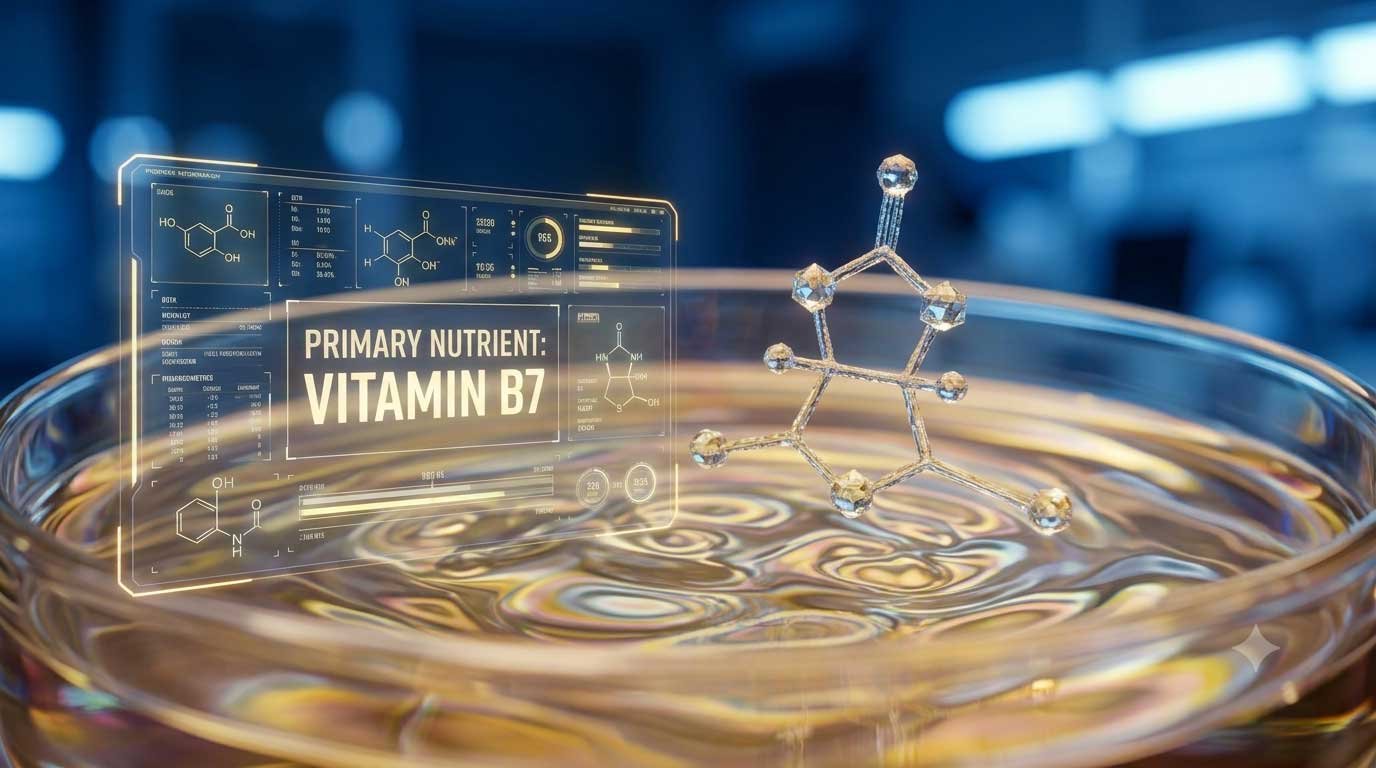
The Quiet Vitamin Behind Your Hair, Skin, and Energy
Ask ten people what biotin actually is, and you’ll probably get ten different answers. Some will tell you it’s “the hair growth vitamin.” Others will shrug and say it’s something in their multivitamin they’ve never really thought about. A few will mention gummy supplements with cartoon strands of hair on the bottle. Almost nobody will mention that it’s officially called Vitamin B7, or that it quietly keeps some of the most fundamental chemical reactions in your body running smoothly, long before it ever touches a single strand of hair.
That gap between reputation and reality is exactly why this vitamin deserves a closer look. Vitamin B7, better known by its everyday name biotin, belongs to the family of B vitamins, the same group that includes B12, B6, and folate. Like its siblings, it’s water-soluble, meaning your body doesn’t store large reserves of it the way it stores vitamins A, D, E, and K. You need a steady, ongoing supply from food, because your cells are constantly using it up.
Table of Contents


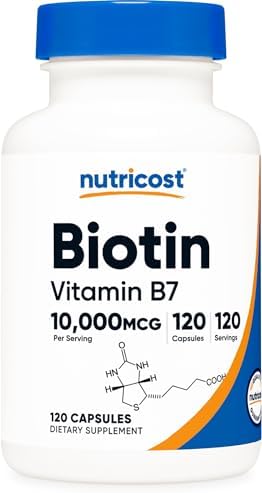
Here’s the part that tends to surprise people: biotin isn’t primarily a beauty nutrient. It’s a metabolic workhorse. Vitamin B7 acts as a helper molecule, a cofactor, for a small group of enzymes called carboxylases. These enzymes are involved in breaking down fats, carbohydrates, and proteins so your body can convert them into usable energy. Without adequate biotin, those enzymatic pathways don’t function the way they’re supposed to. The hair and skin benefits people associate with biotin actually trace back to this deeper metabolic role, since skin cells and hair follicles are some of the fastest-growing, most metabolically active tissues in the body. When cellular energy production stumbles, visible tissues like skin, hair, and nails are often where the effects show up first.
I’ve noticed that a lot of the marketing around biotin skips straight to the “will it make my hair grow faster” question without ever explaining what the vitamin is doing at a cellular level. That’s a shame, because understanding the mechanism actually makes the supplement conversation a lot more grounded. It also explains why biotin doesn’t work like a magic switch you can flip. If your biotin status is already adequate, which is the case for most people eating a varied diet, adding more probably isn’t going to give you thicker hair or clearer skin. The vitamin matters most when your body is genuinely short on it.
Biotin deficiency, as we’ll get into later, is actually rare in the general population. That hasn’t stopped it from becoming one of the most heavily marketed vitamins on drugstore shelves, often in doses that are dozens or even hundreds of times higher than what your body needs in a day. There’s a reason for that gap between “what’s sold” and “what’s needed,” and it’s worth understanding before you start tossing a bottle of biotin gummies into your cart.
There’s also a quieter side to Vitamin B7 that doesn’t get nearly enough attention: its role in gene regulation and cell signaling. Biotin participates in modifying histones, the proteins that DNA wraps around, which influences how genes are turned on or off. It’s involved in how cells communicate with each other. None of this makes for a catchy bottle label, but it’s arguably more important to long-term health than whatever’s happening with your split ends.
So where does that leave us? Vitamin B7 is a nutrient with a legitimate, well-documented role in metabolism, alongside a smaller, more nuanced connection to hair, skin, and nail health that’s often overstated in popular culture. It’s found naturally in a surprisingly wide range of foods, from organ meats to sweet potatoes, which means most people get enough without ever thinking about it. But certain groups, including pregnant women, people with chronic alcohol use, and those with rare genetic conditions, are genuinely at higher risk of falling short.
Over the next several sections, we’ll walk through what biotin actually does for your body, where to find it in real food, how much you actually need based on age and life stage, and what happens when people take way more than that. There’s also a less-discussed risk worth knowing about, one that has nothing to do with toxicity in the traditional sense but has still led to real, documented harm. If you’ve ever wondered whether that biotin supplement in your cabinet is doing anything at all, or whether it might actually be working against you in ways you wouldn’t expect, this is worth reading in full.
What Vitamin B7 Actually Does Inside Your Body
Before getting into hair and skin, which is what most people are here for, it helps to understand the actual biochemistry, because it explains everything else that follows. Vitamin B7 functions as a coenzyme for five specific carboxylase enzymes in the human body. These enzymes handle critical steps in breaking down fatty acids, glucose, and amino acids. Think of biotin less like a nutrient with its own job and more like a key that unlocks other enzymes so they can do theirs.
Metabolism and Energy Production
This is the core function, and it’s the one that gets skipped over most often in consumer content. Every time your body converts the carbohydrates, fats, and proteins from your last meal into usable energy, biotin-dependent enzymes are involved somewhere in that chain. Pyruvate carboxylase, for example, plays a role in glucose production. Acetyl-CoA carboxylase is central to fatty acid synthesis. These aren’t obscure, once-in-a-while processes. They’re happening in your cells constantly, all day, whether you’re aware of it or not.
What this means practically is that biotin isn’t an “extra” nutrient you add on top of a healthy diet for a bonus effect. It’s foundational. Without it, the metabolic machinery that keeps you energized and functioning simply can’t run at full capacity. That said, because deficiency is uncommon, most people never notice this role because it’s quietly working in the background the way it should.
Hair Growth and Strength
Now for the part everyone’s actually curious about. The connection between biotin and hair exists because visible signs of biotin deficiency include hair thinning, and in more severe cases, hair loss across the body. That’s a real, documented finding. But here’s the nuance that gets lost in translation: the studies showing meaningful hair improvement from biotin supplementation were conducted in children with a specific, rare hair shaft disorder, not in the general adult population with ordinary hair concerns.
That doesn’t mean biotin is irrelevant to hair health. It means the evidence for supplementing beyond what you need from food, if your biotin levels are already normal, is thinner than the marketing suggests. If you’re already getting adequate biotin through your diet, extra biotin isn’t necessarily going to accelerate hair growth or reverse hair loss caused by other factors like genetics, hormones, or stress.
Skin Health and Barrier Function
Skin cells regenerate constantly, and that regeneration depends on efficient energy metabolism, which loops back to biotin’s core function. People with genuinely low biotin status can develop a distinctive rash, sometimes with a scaly, red appearance around the eyes, nose, mouth, and other body openings. This pattern is specific enough that clinicians have a name for it: biotin deficiency facies.
Outside of actual deficiency, though, the evidence supporting biotin supplements for general skin health is limited mostly to case reports in infants who had diagnosed deficiencies, not broad clinical trials in healthy adults. It’s a meaningful finding for the population it applies to, but it doesn’t automatically translate into “take more biotin, get better skin” for someone who isn’t deficient.
Nail Strength
Brittle nails are one of the more studied applications of biotin supplementation, and the results here are a bit more encouraging, though still far from definitive. A handful of small studies, none including a placebo comparison, found that daily biotin supplementation over several months resulted in firmer, less brittle nails in a majority of participants. One study reported improvement in the vast majority of patients with thin, splitting nails after roughly five months of use.
It’s not a slam dunk of an evidence base, but if you’ve been dealing with nails that split and peel no matter what you do, it’s one of the more legitimate reasons to discuss a biotin supplement with a healthcare provider.
Gene Regulation and Cellular Communication
This is the piece that rarely makes it into hair and skin content, but it’s arguably the most fascinating. Biotin plays a role in modifying histones, the structural proteins around which DNA winds itself, which affects how accessible certain genes are for expression. It also influences cell signaling, essentially how cells send and interpret messages from one another.
Researchers are still working out the full implications of this role, but it’s a good reminder that Vitamin B7 isn’t just a “beauty vitamin” wearing a lab coat. It’s woven into some of the most fundamental processes that keep your cells functioning and communicating properly, well beyond anything you can see in the mirror.

Where to Find Biotin on Your Plate
Here’s some genuinely good news: getting enough Vitamin B7 through food is not difficult for most people. Biotin shows up in a wide enough range of everyday foods that a reasonably varied diet tends to cover your needs without any special planning. That’s part of why true deficiency is rare outside of specific risk groups.
Animal-Based Sources
If you eat meat, eggs, or fish, you’re probably getting a decent amount of biotin without even trying. Organ meats top the list by a wide margin. A three-ounce serving of cooked beef liver delivers over 100 percent of the daily value in a single sitting, making it one of the most concentrated sources you’ll find anywhere.
Whole eggs are another strong source, particularly when cooked. A single cooked egg provides roughly a third of the daily value. That “when cooked” detail matters more than people realize, and we’ll get to why in a moment.
Other solid animal-based options include:
- Salmon, particularly canned varieties
- Pork chops and other cuts of pork
- Ground beef and hamburger patties
- Various types of fish, including tuna
None of these are exotic or hard to find. They’re staples in most grocery stores, which is part of why widespread deficiency simply doesn’t happen in populations with reasonable access to a varied diet.
Plant-Based Sources
If you’re vegetarian or vegan, biotin is still accessible, though you may need to be slightly more intentional about it since plant sources tend to offer smaller amounts per serving.
- Sunflower seeds, roasted, offer a meaningful contribution per quarter cup
- Sweet potatoes, cooked, are one of the better vegetable sources
- Almonds and other nuts contribute smaller but useful amounts
- Spinach and broccoli provide modest amounts as part of a varied vegetable intake
- Oats and whole grains add trace contributions
None of these single-handedly cover your daily needs the way liver or eggs do, but stacked together across a day of eating, plant-based sources add up. This is really a “variety wins” situation rather than a “find one perfect food” situation.
Cooking Tips That Preserve Biotin
Here’s a detail that trips a lot of people up, especially those into raw egg smoothies or homemade mayonnaise made with uncooked eggs: raw egg whites contain a protein called avidin, which binds tightly to biotin and blocks your body from absorbing it. This isn’t a minor effect. Avidin binds biotin so effectively that it can meaningfully interfere with your biotin status if raw eggs become a regular habit.
The fix is refreshingly simple. Cooking denatures avidin, essentially breaking down its structure so it can no longer latch onto biotin and block absorption. A fully cooked egg poses none of this risk. So if you’ve been tossing raw eggs into protein shakes for the “extra nutrition,” you might actually be working against yourself where biotin is concerned.
Beyond that, biotin content in food can shift based on factors like plant variety, growing season, and processing methods. Canning, for instance, can reduce the biotin content of certain foods compared to fresh or lightly processed versions. None of this is cause for alarm, but it’s a good reason to lean toward a rotating variety of whole foods rather than relying heavily on any single processed item.
For most people, the takeaway here is straightforward: eat a reasonably varied diet that includes some animal protein or a thoughtful mix of plant foods, cook your eggs, and you’re very likely covering your Vitamin B7 needs without ever having to think about a supplement bottle.
How Much Vitamin B7 You Actually Need
This is where things get a little unusual compared to most vitamins, and it’s worth explaining clearly because it changes how you should think about supplementation.
Recommended Intakes by Age
For most nutrients, health authorities set a Recommended Dietary Allowance, a number backed by enough research to confidently say “this covers the needs of nearly everyone.” Biotin doesn’t have one. The available research hasn’t been sufficient to establish that level of precision, so instead, health authorities rely on what’s called an Adequate Intake, a slightly softer benchmark based on the amount of biotin found in human breast milk, then scaled up using body weight for older age groups.
Here’s roughly what that looks like:
- Infants up to six months: about 5 micrograms daily
- Infants seven to twelve months: about 6 micrograms daily
- Children one to three years: about 8 micrograms daily
- Children four to eight years: about 12 micrograms daily
- Children nine to thirteen years: about 20 micrograms daily
- Teens fourteen to eighteen years: about 25 micrograms daily
- Adults nineteen and older: about 30 micrograms daily
- Pregnant women: about 30 micrograms daily
- Breastfeeding women: about 35 micrograms daily
Compare those numbers to what’s actually sold in supplement aisles, where biotin gummies and capsules routinely contain 5,000, 10,000, even 20,000 micrograms per dose. That’s not a small gap. It’s hundreds of times higher than what your body is estimated to need in a day, which raises a fair question about why doses got so inflated in the first place. Part of the answer is simply marketing momentum: bigger numbers sell better, even when there’s no evidence that more biotin equals more benefit once your needs are already met.
Who’s at Risk of Deficiency
Under normal circumstances, eating a typical mixed diet, severe biotin deficiency essentially doesn’t happen. It’s genuinely rare. But rare isn’t the same as impossible, and a few groups deserve closer attention.
People with a condition called biotinidase deficiency are unable to properly release free biotin from the food they eat, regardless of how much they consume. This is a rare inherited disorder, and it’s serious enough that newborns in the United States and many other countries are routinely screened for it at birth, since early treatment with biotin supplementation can prevent significant neurological and skin-related complications.
People with chronic alcohol use are another risk group. Alcohol appears to interfere with biotin absorption in the gut, and measurable drops in biotin levels have been documented in a meaningful portion of people with long-term alcohol dependence.
Pregnant and breastfeeding women are a third group worth flagging. Interestingly, a notable share of pregnant women develop what’s described as marginal biotin deficiency even when their dietary intake looks adequate on paper. Researchers aren’t entirely sure why this happens or what it means clinically, but it’s consistent enough across studies that it’s worth mentioning to a prenatal care provider if you’re pregnant and curious about your nutrient status.
People on certain long-term anticonvulsant medications have also shown lower biotin levels in research, likely because these medications appear to speed up how quickly biotin gets broken down and used, while also interfering with its absorption.
Signs Your Body Is Running Low
When biotin deficiency does occur, it tends to build gradually rather than appearing overnight. The pattern typically includes some combination of:
- Thinning hair that can progress to hair loss across the body in severe cases
- A scaly, reddish rash concentrated around the eyes, nose, and mouth
- Brittle nails
- Skin infections
- In more advanced cases, neurological symptoms like lethargy, depression, or tingling sensations in the extremities
In infants, deficiency can show up as low muscle tone, sluggishness, and developmental delays. None of these symptoms are exclusive to biotin deficiency, which is exactly why self-diagnosing based on a single symptom, like noticing more hair in your shower drain, isn’t a reliable approach. A proper evaluation from a healthcare provider is the only real way to know what’s actually going on.
The Overlooked Downside of High-Dose Biotin
This is the section I think deserves more attention than it usually gets, because the risk here isn’t what most people expect. When people hear “vitamin toxicity,” they picture something like vitamin A overdose, with symptoms tied directly to the vitamin itself. Biotin doesn’t really work that way, and that’s exactly what makes its risks so easy to overlook.
Is There Such a Thing as Too Much
Research hasn’t identified a clear toxicity threshold for biotin in humans. Studies looking at doses ranging from 10 to 50 milligrams daily, and even up to 200 milligrams in people with biotinidase deficiency, haven’t turned up direct signs of toxicity. Health authorities haven’t been able to establish an upper intake limit for biotin, which sounds reassuring on the surface. In terms of biotin directly harming your organs or tissues at high doses, the evidence just isn’t there to support that concern.
But “no direct toxicity” doesn’t mean “no risk,” and this is the part that genuinely surprises people.
Lab Test Interference
High-dose biotin supplements, even at levels well below what’s considered dangerous in a traditional sense, can interfere with common laboratory blood tests. Specifically, many diagnostic assays used to measure thyroid hormones, certain heart-related markers, and other substances rely on biotin-based technology in their testing process. When you have extra biotin circulating in your bloodstream from a high-dose supplement, it can throw off these tests, producing results that are falsely high or falsely low depending on the specific assay.
This isn’t a theoretical concern. There have been documented cases of people taking high-dose biotin supplements receiving test results that falsely suggested Graves’ disease or severe hyperthyroidism, when nothing of the sort was actually happening. Even a single 10-milligram dose, which sounds modest compared to some supplement bottles on the market, has been shown to interfere with thyroid testing for up to 24 hours afterward.
The most serious documented case involved a patient whose troponin test, a blood marker used to help diagnose heart attacks, came back falsely low because of biotin interference. That falsely reassuring result was linked to a death, according to a safety communication issued by health regulators. This is precisely why the concern isn’t hypothetical or overly cautious. It’s a real, if uncommon, patient safety issue that’s serious enough that health agencies have specifically warned clinicians to ask patients about biotin supplement use before interpreting certain lab results.
A smaller controlled study found that even short-term supplementation, just one week at 10 milligrams daily, was enough to distort results across several common blood tests in healthy adults, including tests used to catch congestive heart failure. If you’re someone who takes a high-dose biotin supplement regularly and you’re heading in for bloodwork, this is genuinely worth mentioning to whoever’s drawing your labs.
Beyond lab interference, biotin can interact with certain medications. People on long-term anticonvulsant therapy, as mentioned earlier, tend to run lower biotin levels, which suggests these medications and biotin metabolism intersect in ways that are still being studied. If you’re on regular medication and considering a biotin supplement, that’s a reasonable conversation to have with whoever manages your prescriptions.
None of this means biotin supplements are inherently dangerous for the average healthy person taking a normal dose. But it does mean the common assumption, that a water-soluble vitamin you can’t overdose on is automatically risk-free no matter how much you take, doesn’t hold up under closer scrutiny. The risk isn’t really about biotin harming your body directly. It’s about biotin quietly sabotaging the accuracy of tests your doctor is relying on to understand what’s actually happening in your body.


Bringing Vitamin B7 Back Into Balance
There’s something almost funny about how far Vitamin B7’s reputation has drifted from its actual biology. Walk down any supplement aisle and you’d think biotin exists purely to grow hair and glow up skin. In reality, it’s a metabolic cofactor first, quietly enabling the enzymes that turn your meals into usable energy, and a hair-and-skin nutrient second, mostly relevant when your levels are genuinely low rather than merely “not maxed out.”
If there’s one thing worth taking away from all of this, it’s that more isn’t automatically better. Most people eating a reasonably varied diet, one that includes some eggs, meat or fish, and a mix of vegetables, nuts, or seeds, are already covering their biotin needs without any special effort. The Adequate Intake for adults sits at a modest 30 micrograms a day, a number that looks almost comically small next to the thousands of micrograms packed into a typical gummy vitamin.
For the specific groups who are genuinely at higher risk, people with biotinidase deficiency, those with chronic alcohol use, pregnant and breastfeeding women, and people on certain long-term medications, a real conversation with a healthcare provider about testing and supplementation makes sense. For everyone else, the honest answer is that supplementing beyond your needs probably isn’t buying you the hair or skin transformation the marketing implies, and it comes with a real, documented downside in the form of skewed lab results that has, in at least one case, contributed to serious harm.
If you do decide a biotin supplement makes sense for you, a few practical habits go a long way. Stick to doses closer to what’s actually studied for your specific concern, whether that’s brittle nails or a diagnosed deficiency, rather than defaulting to whatever milligram count happens to be biggest on the shelf. Cook your eggs instead of relying on raw ones if you’re trying to maximize dietary biotin absorption. And if you’re taking a high-dose biotin supplement regularly, mention it before any bloodwork, particularly anything involving thyroid function or cardiac markers. That one habit alone could prevent a confusing, potentially frightening misdiagnosis down the line.
Vitamin B7 isn’t flashy, and honestly, it doesn’t need to be. Its real value lies in the unglamorous, constant work it does inside your cells every single day, work that mostly goes unnoticed until something’s actually wrong. Respecting that role, rather than chasing a beauty-aisle promise, is probably the smartest way to think about biotin going forward.
Article Sources
At AncientHerbsWisdom, our content relies on reputable sources, including peer-reviewed studies, to substantiate the information presented in our articles. Our primary objective is to ensure our content is thoroughly fact-checked, maintaining a commitment to accuracy, reliability, and trustworthiness.
- National Institutes of Health, Office of Dietary Supplements. (2022). Biotin: Fact sheet for health professionals. https://ods.od.nih.gov/factsheets/Biotin-HealthProfessional/
- National Institutes of Health, Office of Dietary Supplements. (2023). Biotin: Fact sheet for consumers. https://ods.od.nih.gov/factsheets/Biotin-Consumer/
- MedlinePlus. (2025). Pantothenic acid and biotin. U.S. National Library of Medicine. https://medlineplus.gov/ency/article/002410.htm
- Patel, D. P., Swink, S. M., & Castelo-Soccio, L. (2017). A review of the use of biotin for hair loss. Skin Appendage Disorders, 3(3), 166-169. https://doi.org/10.1159/000462981
- Li, D., Radulescu, A., Shrestha, R. T., Root, M., Karger, A. B., Killeen, A. A., Hodges, J. S., Fan, S. L., Ferguson, A., Garg, U., Sokoll, L. J., & Burmeister, L. A. (2017). Association of biotin ingestion with performance of hormone and nonhormone assays in healthy adults. JAMA, 318(12), 1150-1160. https://doi.org/10.1001/jama.2017.13705
- Rosner, I., Rogers, E., Maddrey, A., & Goldberg, D. M. (2019). Clinically significant lab errors due to vitamin B7 (biotin) supplementation: A case report following a recent FDA warning. Cureus, 11(8), e5470. https://doi.org/10.7759/cureus.5470

- Phosphatidic Acid: Supporting Muscle Growth and Strength - July 31, 2026
- Ceramides: Supporting Healthy Skin From Within - July 31, 2026
- Synbiotics: Combining Prebiotics and Probiotics Together - July 31, 2026