
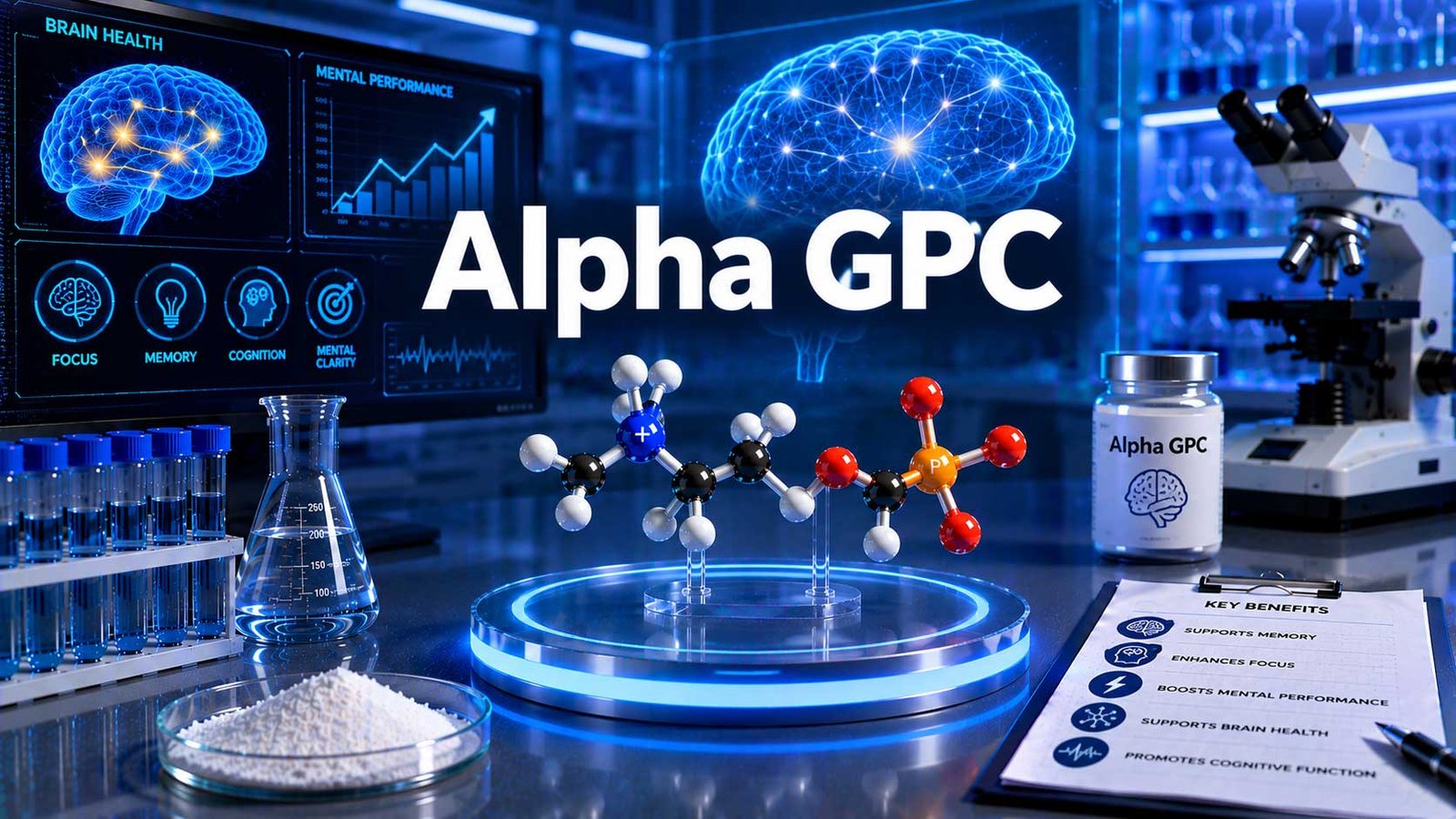
The Choline Molecule That Talks Directly to Your Brain
Alpha GPC has earned a strange dual identity. On one hand, it’s a pharmaceutical-grade compound prescribed in parts of Europe and Asia for cognitive decline, sold under names like Gliatilin or Delecit. On the other hand, it’s a staple in pre-workout powders and stacked nootropic blends sitting on supplement store shelves in the United States, marketed almost entirely on the promise of sharper focus and a better pump. Both identities are, in a sense, accurate. That’s rare for a compound this hyped.
So what is it, structurally speaking? Alpha GPC is a choline-containing phospholipid, meaning it’s built from a glycerol backbone attached to a phosphate group and a choline molecule. It occurs naturally in the body in small amounts, largely as a byproduct of the breakdown of phosphatidylcholine, a major structural component of your cell membranes. It’s also present in trace amounts in certain foods, though nowhere close to the concentrations used in supplements. Commercially, most Alpha GPC is derived from soy or sunflower lecithin through an enzymatic process that isolates and concentrates the choline compound to a standardized potency, often 50 percent or 99 percent purity depending on the manufacturer.
Table of Contents


What sets Alpha GPC apart from other choline sources, and this is the part that actually matters for brain health, is its ability to cross the blood-brain barrier efficiently. Choline itself struggles to get into the brain in meaningful quantities when consumed as, say, choline bitartrate. Alpha GPC’s structure allows it to pass through more readily, where it’s then broken down to release free choline directly into brain tissue. That choline becomes the rate-limiting raw material for acetylcholine synthesis, the neurotransmitter most closely tied to memory formation, learning, attention, and muscle activation throughout the body. It’s also converted into phosphatidylcholine, helping maintain the structural integrity of neuronal membranes, something that becomes more relevant as we age and those membranes naturally degrade.
I want to be upfront about something before we go further: the research on Alpha GPC is genuinely interesting, but it’s also a mixed bag in terms of scale. A lot of the strongest data comes from clinical trials in patients with mild cognitive impairment, vascular dementia, or Alzheimer’s disease, conditions where the cholinergic system is already compromised. There’s less large-scale research on Alpha GPC in healthy young adults simply looking to sharpen mental performance, which is exactly the population buying most of the supplement today. That gap between the clinical population studied and the consumer population using it is worth holding onto as we go through the rest of this. It doesn’t invalidate the compound. It just means the story is more nuanced than a bottle label suggests.
There’s also a physical performance angle that surprises a lot of people who only know Alpha GPC as a “brain supplement.” Because acetylcholine is essential for neuromuscular signaling, not just cognition, researchers have looked at whether Alpha GPC supplementation can improve strength, power output, and growth hormone secretion around resistance training. Some of the findings here are genuinely compelling, even if the effect sizes vary study to study.
What I find most useful about Alpha GPC, from a practical standpoint, is that it sits at an intersection most nootropics don’t: it has one foot in the clinical, geriatric cognition world and another in the sports performance and everyday mental sharpness world. That dual application is part of why it’s stuck around as long as it has, while plenty of trendier compounds have come and gone. Whether it deserves the specific claims made about “mental performance” on a bodybuilding forum is a separate question from whether it has a legitimate physiological mechanism worth understanding. It does have that mechanism. What we do with that information, how much we take, when, and what we should watch for, is what the rest of this article digs into.
One more thing before we move on. You’ll sometimes see Alpha GPC referred to interchangeably as “choline alfoscerate,” particularly in European or clinical literature. They’re the same molecule. If you’re reading a study and it uses one term while a supplement label uses the other, don’t let that trip you up. The compound, the mechanism, and the choline payload are identical either way. Understanding that naming overlap will save you some confusion as you dig deeper into the research yourself, because a fair number of the most rigorous trials on this compound were conducted using the “choline alfoscerate” terminology rather than the more commercially familiar “Alpha GPC” branding you see in the United States.
Key Health Benefits
Cognitive Function and Memory Support
This is where Alpha GPC has the deepest research bench, and it’s not particularly close. Most of the higher-quality trials have been conducted in older adults with some degree of cognitive impairment rather than in cognitively healthy young adults, and that distinction matters enormously when you’re trying to figure out what to expect from your own supplementation.
A 2024 multicenter, randomized, double-blind, placebo-controlled trial published in BMC Geriatrics gave 100 adults with mild cognitive impairment either a 600mg Alpha GPC soft capsule or a placebo daily for 12 weeks. Researchers measured outcomes using the Alzheimer’s Disease Assessment Scale-cognitive subscale, and the group taking Alpha GPC showed a significantly greater improvement compared to placebo, with no increase in adverse events over the placebo group. That’s a fairly clean, modern data point, and it’s encouraging precisely because it wasn’t funded or run the way older, smaller pharmaceutical trials sometimes were.
Older research tells a similar story with a larger dose. An earlier multicenter trial examined Alpha GPC in patients with mild to moderate Alzheimer’s dementia, and cognitive scores improved meaningfully more in the treatment group than the placebo group over several months of use. The Alzheimer’s Drug Discovery Foundation, reviewing the body of evidence, notes that trials in Alzheimer’s populations have generally used doses around 1,200mg daily split across three doses, and that across an open-label study, two randomized controlled trials, and a review of earlier work, Alpha GPC may improve cognition in patients with dementia, though it remains uncertain whether it offers meaningful benefits beyond currently approved dementia medications. That’s an honest, appropriately hedged summary, and I think it’s the right way to think about this compound rather than the breathless “brain doubling” language you sometimes see on supplement sites.
It’s worth pausing here because the mechanism explains why this pattern shows up specifically in impaired populations. Cognitive decline related to aging or neurodegeneration is tied, in part, to a drop in acetylcholine production and availability. Alpha GPC directly supplies the raw material for that neurotransmitter. In a brain that’s running low, topping up the precursor pool can produce a measurable functional improvement. In a brain that isn’t running low, the ceiling for improvement is naturally going to be lower, which is exactly why we don’t have the same magnitude of evidence in healthy young adults chasing “mental performance” in the marketing sense of the phrase.
Growth Hormone Response and Physical Performance
Here’s the part that surprises people outside the sports nutrition world. Acetylcholine isn’t just a memory neurotransmitter, it’s central to neuromuscular junction signaling, the communication between nerve and muscle that initiates every voluntary contraction you make. That link is the basis for a decent body of research on Alpha GPC and athletic performance.
A frequently cited 2008 study published in the Journal of the International Society of Sports Nutrition had resistance-trained men take 600mg of Alpha GPC 90 minutes before a lower-body resistance training session, using a randomized, placebo-controlled crossover design. Compared to placebo, the Alpha GPC condition produced a greater post-exercise growth hormone response and greater peak force production during a bench throw power test. That single dose, that specific timing window, and that specific population (experienced lifters) matter a lot here. It’s not evidence that any dose, taken any time, will replicate that response in everybody.
Since then, other trials have looked at lower doses, longer supplementation windows, and different performance markers, isometric strength, vertical jump, reaction time, with genuinely mixed results. Some studies using 250 to 300mg doses found no meaningful change in power output or work capacity, while higher doses closer to 500 to 600mg have more consistently shown some benefit. This inconsistency likely comes down to dosage thresholds, timing relative to exercise, and the specific performance metric being tested. If you’re an athlete considering Alpha GPC for performance rather than cognition, the practical takeaway is that dose and timing appear to matter more than they do for the cognitive applications, and the evidence base, while real, is still considered preliminary by most researchers who’ve reviewed it.
Neuroprotective and Recovery Support
Beyond straightforward memory testing, there’s a smaller body of research examining Alpha GPC’s role in recovery after acute cerebrovascular events and as an adjunct to standard dementia therapy. Trials combining Alpha GPC with cholinesterase inhibitor medications in Alzheimer’s patients with concurrent cerebrovascular injury have suggested the combination may slow functional decline more than the medication alone, though this remains an area with a limited number of large trials and should be understood as adjunctive research rather than a green light for self-directed use in place of medical care. None of this should be read as a substitute for guidance from a physician managing an existing neurological condition. What the research does support is a plausible, mechanistically grounded role for choline availability in brain resilience, particularly in aging populations where cholinergic signaling naturally declines.
Dietary Sources
Where Choline and Alpha GPC Naturally Occur
Here’s something that trips a lot of people up: Alpha GPC in its concentrated supplement form barely exists in whole foods. What you’re actually getting from food is choline in various bound forms, phosphatidylcholine, glycerophosphocholine, sphingomyelin, and free choline, all of which your body can use as a choline source, but not at the concentration or bioavailability of an isolated supplement dose.
A comprehensive 2023 review published in Frontiers in Endocrinology compiled USDA data on choline and glycerophosphocholine content across common foods. Fish stood out prominently in that dataset. For instance, smoked red salmon and dried steelhead trout both showed meaningful combined free choline and GPC content per 100 grams, with farmed Atlantic salmon and wild-caught varieties also ranking well above average. Beyond fish, the classic choline-dense foods remain relevant: egg yolks, beef liver, chicken, dairy products, and cruciferous vegetables like broccoli and Brussels sprouts. Soybeans and soy lecithin, incidentally, are also where the commercial Alpha GPC used in most supplements is originally sourced from, extracted and concentrated through an enzymatic process rather than eaten in a form that delivers anywhere near supplemental doses.
Why Whole Food Sources Rarely Match Supplemental Doses
If you tried to hit a 600mg Alpha GPC-equivalent dose through diet alone, you’d need an unrealistic quantity of even the richest whole food sources, largely because food-based choline compounds are a mix of different forms, not concentrated Alpha GPC specifically. This isn’t a criticism of whole foods, plenty of essential nutrients work the same way (vitamin D from food versus sun exposure or supplementation is a comparable example), it’s simply a reason the two shouldn’t be treated as interchangeable, especially if you’re targeting a clinical or performance dose rather than general nutritional adequacy.
For the average person, eating a diet reasonably rich in eggs, fish, and lean meats, along with cruciferous vegetables, goes a long way toward meeting general choline needs, which we’ll get into more specifically in the next section. It’s the difference between covering baseline physiological requirements and pursuing the higher, more concentrated doses used in the clinical trials discussed earlier. Both are legitimate goals, but they call for different strategies. Someone managing general brain health through nutrition doesn’t necessarily need a supplement at all if their diet already includes regular eggs, fish, and poultry. Someone specifically trying to replicate a 600mg or 1,200mg clinical protocol is, realistically, going to need a standardized Alpha GPC supplement, because food alone won’t reliably get them there without enormous and impractical portions.
Reading Supplement Labels Correctly
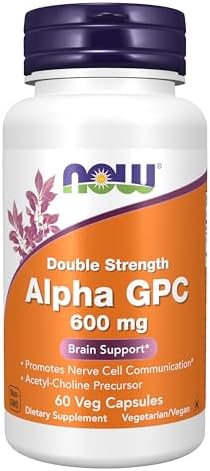
One practical note worth including here: Alpha GPC supplements vary in standardized potency, commonly either 50 percent or 99 percent Alpha GPC by weight, depending on the manufacturing process. This matters because a “300mg” capsule at 50 percent potency delivers roughly half the actual Alpha GPC content of a “300mg” capsule at 99 percent potency. If you’re trying to replicate a specific dose from the research, checking that percentage on the supplement facts panel, not just the milligram number on the front of the bottle, is the only way to know what you’re actually taking.
Dosage and Deficiency
Typical Supplemental Dosages Used in Research
There’s no single, universally agreed-upon dose for Alpha GPC, largely because the research spans such different goals and populations. For cognitive support in clinical trials involving mild cognitive impairment or early dementia, doses have ranged from 600mg to 1,200mg daily, often split into two or three smaller doses across the day rather than taken all at once. For general nootropic or focus-oriented use in healthy adults, most commercial products land in the 300 to 600mg range taken once daily, frequently in the morning or before a task requiring sustained attention. For athletic performance applications, single acute doses of 300 to 600mg taken roughly 30 to 90 minutes before training are what most of the performance research has actually tested, rather than continuous daily dosing.
It’s worth being honest that “standard dosing” in the supplement world is often reverse-engineered from what’s commercially convenient and what a handful of studies happened to test, rather than from a robust dose-response curve established across dozens of trials. That’s not unique to Alpha GPC, it’s true of most supplements, but it’s worth keeping your expectations calibrated accordingly rather than assuming more research exists behind a bottle’s suggested serving than actually does.
Choline’s Broader Adequate Intake and Where Alpha GPC Fits In
Because Alpha GPC is ultimately a choline delivery vehicle, it helps to understand where general choline recommendations sit. The Adequate Intake for choline in adult men is 550mg daily, and 425mg daily for adult women, with those figures rising to 450mg during pregnancy and 550mg during lactation. These aren’t Alpha GPC-specific numbers, they cover all dietary choline forms combined, but they give useful context for how a 300 to 600mg Alpha GPC dose fits into someone’s total daily choline picture. Given that Alpha GPC is roughly 40 percent choline by weight, a 600mg Alpha GPC dose contributes somewhere around 240mg of actual choline on top of whatever a person is already getting from food.
Notably, data from national nutrition surveys consistently show that most people fall short of the Adequate Intake for choline through diet alone, which is part of why choline-containing supplements, Alpha GPC included, have found a foothold even outside of clinical or athletic contexts. Someone with a diet low in eggs, meat, and fish, whether by preference or dietary restriction, is statistically more likely to be running a choline deficit than someone eating a more omnivorous, varied diet.
What True Choline Deficiency Looks Like
Frank choline deficiency isn’t extremely common in people eating a varied diet, but it does happen, and the primary marker researchers use to establish adequate intake levels is liver function, specifically elevated liver enzymes indicating fatty liver changes. Populations at elevated risk of inadequate choline status include pregnant women, people on long-term parenteral nutrition, some individuals with genetic variants affecting choline metabolism, and people following very restrictive diets that eliminate the primary dietary choline sources like eggs and meat. Signs associated with inadequate choline status can include muscle damage markers and, over longer periods, liver dysfunction, though these outcomes typically show up in cases of prolonged, significant dietary restriction rather than mild day-to-day fluctuation in intake. This is a nutritional deficiency picture tied to choline broadly, not something specifically documented for Alpha GPC supplementation shortfalls, since almost nobody is relying on Alpha GPC as their primary choline source relative to whole foods.
Toxicity and Risks
Commonly Reported Side Effects
Alpha GPC has a reasonably favorable safety profile across the clinical trials that have tracked adverse events, but “reasonably favorable” doesn’t mean “without side effects.” The most commonly reported issues across trials and supplement users include headache, gastrointestinal upset such as heartburn or nausea, dizziness, and skin rash in a small subset of users. In the 2024 mild cognitive impairment trial, no serious adverse events were reported, and no participants discontinued the study due to side effects, with adverse event rates statistically similar between the Alpha GPC and placebo groups. That’s a genuinely reassuring finding, though it’s worth remembering that trial populations are monitored closely and don’t always reflect real-world use patterns, where people might combine Alpha GPC with other stimulants, high caffeine intake, or additional choline sources without tracking the cumulative load.
The Upper Limit and the TMAO Question
Because Alpha GPC contributes to total choline intake, it’s governed by the same upper boundaries established for choline generally. Regulatory bodies have set Tolerable Upper Intake Levels for choline based primarily on the risk of hypotension, along with corroborating evidence around fishy body odor and other cholinergic side effects at high intakes, with the adult upper limit set at 3,500mg per day from all sources combined. Most people using standard Alpha GPC doses of 300 to 1,200mg daily, combined with normal dietary choline intake, stay comfortably under that ceiling, but it’s a relevant number to know if you’re stacking Alpha GPC with other choline-containing supplements like citicoline or choline bitartrate, since those milligrams add up across products.
There’s a more nuanced, ongoing conversation in the research world about choline and cardiovascular risk that’s worth knowing about rather than dismissing or overstating. Choline consumption has been shown to increase production of trimethylamine N-oxide, a compound gut bacteria generate from choline that has been linked to elevated cardiovascular disease risk in a dose-dependent manner. This is genuinely an area of active research rather than settled science, and the relationship appears to depend heavily on individual gut microbiome composition, baseline cardiovascular risk factors, and total intake levels rather than being a uniform effect across everyone who takes a choline supplement. If you have existing cardiovascular disease or significant risk factors for it, this is a conversation worth having with a physician before adding a concentrated choline source like Alpha GPC to your routine, rather than something to self-diagnose around based on a supplement forum thread.
Who Should Be Particularly Cautious
A handful of groups warrant extra caution. People with low blood pressure or who are on blood pressure medication should be aware that high choline intake has been associated with hypotensive effects in some research, and Alpha GPC’s efficient delivery to the central nervous system doesn’t exempt it from that broader choline effect. People with liver or kidney disease, Parkinson’s disease, depression, or a rare condition called trimethylaminuria are noted in dietary reference research as potentially more sensitive to the effects of high choline intake and should approach supplementation more conservatively. There’s also a documented interaction worth knowing: Alpha GPC’s cholinergic activity can counteract medications like scopolamine, which work by reducing cholinergic transmission, so anyone on that class of medication should flag Alpha GPC use to their prescribing physician.
Pregnant and breastfeeding individuals fall into a different category entirely, since choline itself is important during those periods, but the specific safety data on concentrated Alpha GPC supplementation, as opposed to dietary choline, during pregnancy is thin. That’s a conversation for an obstetrician, not a supplement label, and it’s one of the clearer cases where I’d rather say “talk to your doctor” than pretend the research gives us a confident answer either way.
What Actually Matters When You Cut Through the Noise
If you strip away the marketing language and look only at what the research actually supports, Alpha GPC comes out as a legitimately interesting compound with a real, mechanistically sound reason to work, but with a research base that’s stronger in some areas than others. The cognitive support evidence is genuinely solid, particularly in older adults dealing with mild cognitive impairment or early dementia, where the underlying cholinergic deficit gives the supplement something concrete to correct. The physical performance evidence is real but considerably more inconsistent, shaped heavily by dose, timing, and the specific population being tested. And the dietary picture is straightforward once you separate general choline nutrition, which most people can improve through eggs, fish, and lean meat, from the concentrated clinical doses that require an actual supplement to replicate.
What I’d tell anyone considering Alpha GPC is this: know which outcome you’re actually chasing before you pick a dose. Someone hoping to support long-term brain health as they age is working from a different evidence base, and probably a different dosing strategy, than someone trying to squeeze a little extra power output out of a training session. Both are reasonable goals, and Alpha GPC has research behind both, but treating it as a single, interchangeable “brain pill” flattens a compound that actually has some real texture to it once you look closely.
The practical takeaways worth holding onto: standard doses in most of the meaningful research sit between 300 and 1,200mg depending on the goal, the upper safety limit is governed by total choline intake across everything you’re consuming, side effects when they occur tend to be mild and gastrointestinal, and the cardiovascular TMAO conversation is real enough to mention to a doctor if you have existing risk factors, without being alarmist about it for an otherwise healthy adult using standard doses. Alpha GPC isn’t a miracle, and it isn’t snake oil either. It’s a well-characterized choline compound with a defensible mechanism, a reasonably good safety record, and a body of evidence that supports specific, honest claims rather than sweeping ones. That’s more than most things on a supplement shelf can say, and it’s exactly why it’s stuck around this long.
Article Sources
At AncientHerbsWisdom, our content relies on reputable sources, including peer-reviewed studies, to substantiate the information presented in our articles. Our primary objective is to ensure our content is thoroughly fact-checked, maintaining a commitment to accuracy, reliability, and trustworthiness.
- Alzheimer’s Drug Discovery Foundation. (n.d.). Alpha-GPC (choline alfoscerate) & your brain. Cognitive Vitality. https://www.alzdiscovery.org/cognitive-vitality/ratings/alpha-gpc-choline-alfoscerate
- Harvard T.H. Chan School of Public Health. (n.d.). Choline. The Nutrition Source. https://nutritionsource.hsph.harvard.edu/choline/
- Institute of Medicine (US) Standing Committee on the Scientific Evaluation of Dietary Reference Intakes and its Panel on Folate, Other B Vitamins, and Choline. (1998). Choline. In Dietary reference intakes for thiamin, riboflavin, niacin, vitamin B6, folate, vitamin B12, pantothenic acid, biotin, and choline. National Academies Press. https://www.ncbi.nlm.nih.gov/books/NBK114308/
- Jeon, J., Lee, S. Y., Lee, S., Han, C., Park, G. D., Kim, S. J., Chang, J. G., & Kim, W. J. (2024). Efficacy and safety of choline alphoscerate for amnestic mild cognitive impairment: A randomized double-blind placebo-controlled trial. BMC Geriatrics, 24(1), 774. https://doi.org/10.1186/s12877-024-05366-7
- Kansakar, U., Trimarco, V., Mone, P., Varzideh, F., Lombardi, A., & Santulli, G. (2023). Choline supplements: An update. Frontiers in Endocrinology, 14, 1148166. https://doi.org/10.3389/fendo.2023.1148166
- Linus Pauling Institute, Oregon State University. (n.d.). Choline. Micronutrient Information Center. https://lpi.oregonstate.edu/mic/other-nutrients/choline
- National Institutes of Health, Office of Dietary Supplements. (2022). Choline: Fact sheet for health professionals. https://ods.od.nih.gov/factsheets/Choline-HealthProfessional/
- National Institutes of Health, Office of Dietary Supplements. (2022). Choline: Fact sheet for consumers. https://ods.od.nih.gov/pdf/factsheets/Choline-Consumer.pdf
- Ziegenfuss, T., Landis, J., & Hofheins, J. (2008). Acute supplementation with alpha-glycerylphosphorylcholine augments growth hormone response to, and peak force production during, resistance exercise. Journal of the International Society of Sports Nutrition, 5(Suppl 1), P15. https://doi.org/10.1186/1550-2783-5-S1-P15

- Phosphatidic Acid: Supporting Muscle Growth and Strength - July 31, 2026
- Ceramides: Supporting Healthy Skin From Within - July 31, 2026
- Synbiotics: Combining Prebiotics and Probiotics Together - July 31, 2026