
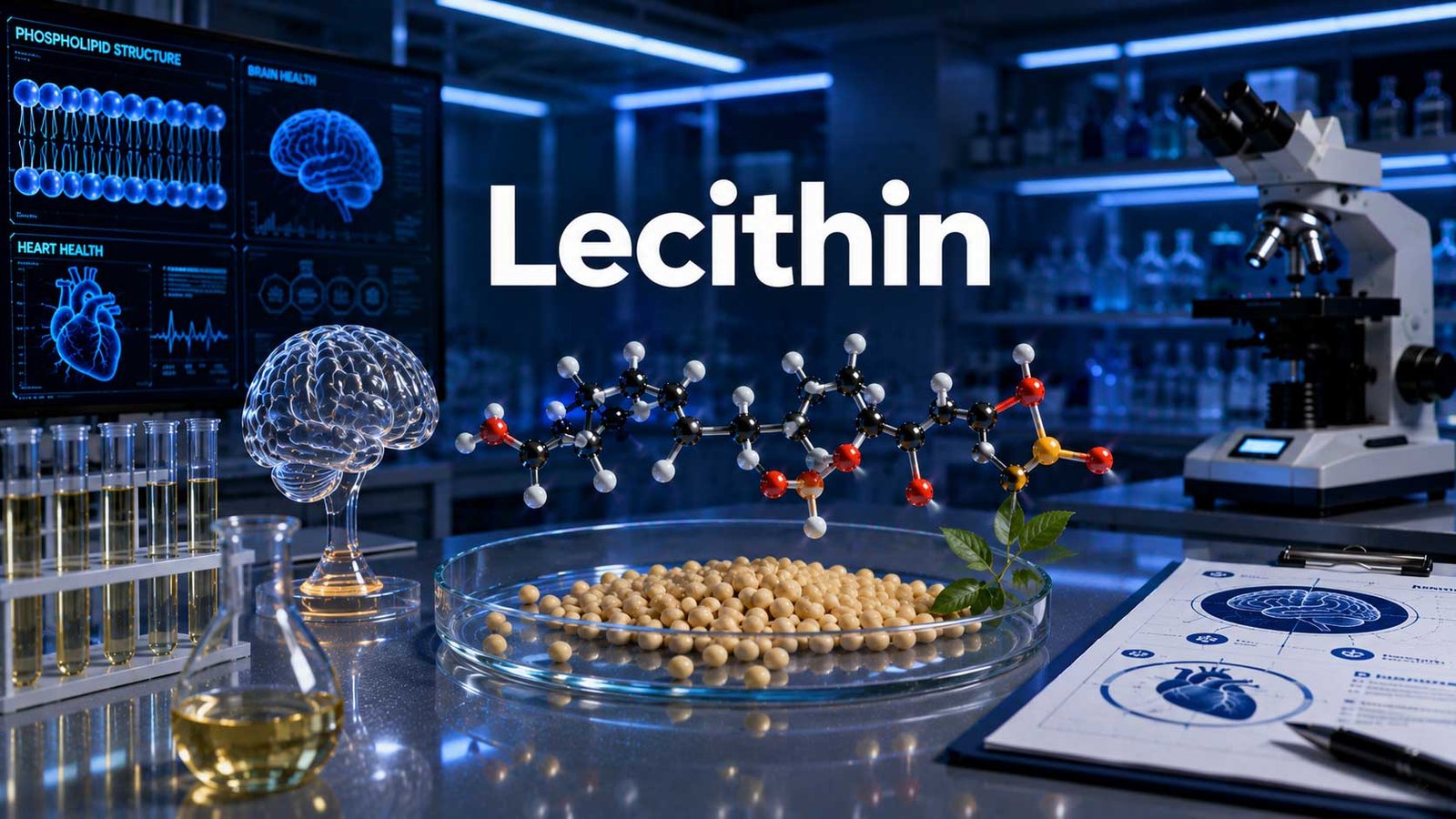
The Fatty Substance Your Body Can’t Stop Talking About
I still remember the first time someone handed me a tub of granulated lecithin like it was some kind of forbidden treasure. She’d read somewhere that a spoonful a day would sharpen her memory and clean out her arteries in one shot. I laughed, not because she was wrong exactly, but because the truth about lecithin is so much more interesting than the miracle-powder version of the story.
Lecithin isn’t a single compound. It’s a family of fatty substances, technically called phospholipids, that show up in every living cell you have. Your neurons are wrapped in it. Your liver processes it constantly. Even your lungs depend on a lecithin-based surfactant just to keep from collapsing on themselves with every breath. The name itself comes from the Greek word for egg yolk, lekithos, because that’s where a French chemist named Maurice Gobley first isolated it back in the 1800s while poking around biological tissue out of pure curiosity.
Table of Contents


There’s a reason lecithin keeps resurfacing in conversations about aging well. It sits right at the intersection of two organs people worry about most as they get older, the brain and the heart, and it does so through mechanisms that are actually traceable in the lab rather than vaguely implied. That’s rarer than you’d think in the supplement world, where a lot of ingredients get bundled into wellness narratives without much biochemical backbone behind them.
What makes lecithin worth talking about, though, isn’t just that it’s everywhere in your body. It’s that a huge chunk of the population doesn’t get enough of its main active component, choline, from food. Somewhere around ninety percent of adults in the United States fall short of the recommended intake. That’s not a small gap. Choline sits at the center of methylation, cell membrane construction, fat transport out of the liver, and the manufacture of acetylcholine, a neurotransmitter your brain leans on constantly for memory and muscle signaling. Lecithin, largely through its phosphatidylcholine content, is one of the most efficient ways to get that choline into your system.
I’ve spent more than a decade digging through supplement claims that oversell and underdeliver, and lecithin is a strange case because the underlying biology is genuinely compelling, but the marketing around it has often run way ahead of what the science can support. Some of the boldest claims, particularly around Alzheimer’s disease reversal, haven’t held up in controlled trials. Other claims, like lecithin’s role in cholesterol metabolism and liver fat clearance, are backed by a surprisingly solid body of research going back decades. That gap between hype and evidence is exactly where I think most people get confused, and honestly, where a lot of supplement companies prefer people stay confused.
Part of what makes lecithin tricky to talk about is that it isn’t marketed the way a vitamin or a mineral is. Nobody puts “lecithin deficiency” on a warning label the way they would with, say, vitamin D or iron. It’s a background player, quietly involved in dozens of processes at once rather than tied to one obvious symptom you’d notice if you ran low. That’s probably why so few people think about it at all, despite the fact that its main functional ingredient, choline, has an official government-recommended intake level and most of us aren’t hitting it.
So where does that leave someone standing in the supplement aisle, or scooping a spoonful of granules into their morning smoothie? Honestly, it leaves you in a pretty good position, as long as you understand what lecithin can plausibly do, where the evidence is thin, and how much of it you actually need. This isn’t a nutrient where more is automatically better. There’s a real ceiling, and there are real questions researchers are still chasing down, particularly around a gut bacteria byproduct called TMAO that’s become something of a talking point in cardiology circles over the past ten years or so.
I want to walk through what lecithin is doing inside your brain and your heart, where you can reasonably get it from your plate rather than a pill bottle, how much your body actually needs, and where the legitimate concerns lie. Not the fear-mongering kind of concerns, the kind grounded in actual peer-reviewed research. Because lecithin deserves a fair, unglamorous look, the kind you’d get from someone who has read the trials rather than the label on the bottle.
There’s also a practical angle I think gets skipped too often in these conversations. Lecithin isn’t an exotic ingredient you need to hunt down at a specialty shop. It’s already sitting in your kitchen in the form of eggs, and it’s baked into a huge share of processed foods as an emulsifier, which means most people are getting some amount of it without ever thinking about it consciously. The question isn’t really whether you’re getting any lecithin. It’s whether you’re getting enough of the right kind, from sources that support the benefits people are actually chasing when they reach for a supplement in the first place.
Let’s get into it.
Key Health Benefits of Lecithin
Feeding the Brain’s Communication Network
Your brain runs on more than glucose and willpower. It runs on a steady supply of raw materials for building and repairing cell membranes, and lecithin’s phosphatidylcholine is one of the primary suppliers. Neurons are essentially tiny electrical devices wrapped in a fatty membrane, and that membrane needs constant maintenance. Phosphatidylcholine also happens to be the direct precursor to acetylcholine, the neurotransmitter responsible for encoding new memories, sustaining attention, and coordinating the connection between your nervous system and your muscles.
There’s a reasonably large body of observational research connecting higher dietary phosphatidylcholine intake with better cognitive outcomes. One notable analysis involving nearly twenty-five hundred Finnish men found that those with the highest phosphatidylcholine intake had a substantially lower risk of developing dementia compared with those consuming the least, and higher intake also tracked with better cognitive performance overall in a study where individuals with the highest dietary intake levels of phosphatidylcholine had a lower risk of dementia relative to those with the lowest intake, with high phosphatidylcholine intake also associated with better cognitive function. A separate cohort analysis from the Framingham Heart Study reached a similar conclusion, linking low choline and phosphatidylcholine intake with a higher likelihood of dementia later in life.
Now, here’s where I have to be the person in the room who pumps the brakes a little. Observational data showing a correlation isn’t the same as a clinical trial proving lecithin supplementation reverses or prevents cognitive decline. A systematic review of randomized controlled trials examining lecithin specifically for Alzheimer’s disease treatment did not find it more effective than a placebo a systematic review of randomized controlled trials did not find lecithin to be more beneficial than placebo in the treatment of dementia due to Alzheimer’s disease. That’s an important distinction. Lecithin appears to matter a great deal for maintaining healthy cognitive function through diet over a lifetime, but it isn’t shaping up to be a rescue remedy once significant neurodegeneration has already set in.
Where the newer research gets genuinely interesting is in aging and muscle-brain crosstalk. A large 2025 study following older adults in China found associations between lecithin status and both memory performance and skeletal muscle preservation, with parallel experiments in aging mice showing that phosphatidylcholine metabolites helped protect against memory decline and muscle wasting through a hormone pathway involving a protein called irisin. This is a newer thread of research, not a settled conclusion, but it points toward lecithin mattering for more than just memory in isolation. It may be part of a broader system connecting nutrition, brain resilience, and physical strength as we get older.
There’s also emerging work on shorter-term cognitive effects. A placebo-controlled trial examining an eight-week course of a lecithin-derived compound called lysophosphatidylcholine in middle-aged and older adults found measurable increases in blood choline levels alongside changes in cognitive test performance, suggesting the bioavailability question, meaning how well your body actually absorbs and uses different choline forms, might matter as much as total intake.
Supporting Cardiovascular Function
Move down from the skull to the chest, and lecithin’s story shifts toward cholesterol transport and liver-driven lipid metabolism. This is honestly where I think the evidence is strongest, even though it gets far less attention than the brain angle.
Lecithin plays a direct role in a process called reverse cholesterol transport, essentially the system your body uses to pull excess cholesterol out of tissues and shuttle it back to the liver for disposal. An enzyme called lecithin-cholesterol acyltransferase, LCAT for short, depends on lecithin to convert cholesterol into a form that can be packaged into HDL particles, the so-called good cholesterol, and cleared from circulation the review emphasizes lecithin’s ability to reduce excess low-density lipoproteins while specifically promoting the synthesis of high-density lipoprotein particles, and delves into the contribution of lecithin cholesterol acyltransferase in the reverse cholesterol transport process, which removes surplus cholesterol from cells.
Human trials back this up with actual numbers. A study published in the journal Lipids found that soy lecithin supplementation led to meaningful reductions in both total cholesterol and LDL cholesterol among people with moderately elevated cholesterol levels. Another clinical trial went further, tracking patients over one and two months of soy lecithin supplementation and documenting reductions of roughly forty percent in total cholesterol and even steeper drops in LDL cholesterol results showed a reduction of about forty-one percent and forty-two percent in total cholesterol and roughly forty-two percent and fifty-six percent in LDL cholesterol after treatment for one and two months, respectively. That’s a substantial shift, and it lines up with animal research showing similar reductions in cholesterol and slowed plaque buildup in primates fed lecithin-enriched diets.
There’s a liver piece to this too, and it deserves its own paragraph because it connects back to heart health in a way people often miss. Lecithin helps ferry fat out of liver cells rather than letting it accumulate there. When fat builds up in the liver, the condition doctors call nonalcoholic fatty liver disease, it doesn’t just sit there quietly. It contributes to insulin resistance and disrupted lipid metabolism, both of which ripple outward and raise cardiovascular risk. Supporting the liver’s fat-clearing machinery is, in a roundabout way, supporting your heart.
I’ll be honest, though. Not every marker moves the same direction in every study, and some reviews note ongoing debate around how consistently lecithin affects particle size and triglyceride-rich lipoproteins across different populations. The overall direction of the evidence favors a beneficial lipid profile, but “cures cardiovascular disease” is not a phrase any careful researcher would use here.
A Structural Role Beyond the Two Headlines
It’s worth mentioning, if only briefly, that lecithin’s usefulness doesn’t begin and end with the brain and heart story that sells supplements. It’s a foundational component of every cell membrane in your body, it plays a role in fat digestion by acting as an emulsifier in bile, and it’s essential for lung function through a substance called pulmonary surfactant, which is why premature infants sometimes receive lecithin-based treatments to help their lungs function properly. None of this is flashy. But it’s the quiet infrastructure work that makes the flashier brain and heart benefits possible in the first place.


Dietary Sources of Lecithin
The Original Sources: Eggs and Soy
If you’re trying to get lecithin the old-fashioned way, through your fork rather than a supplement bottle, egg yolks are still hard to beat. A single large egg yolk contains around two grams of phospholipids, and phosphatidylcholine makes up roughly seventy percent of that phosphatidylcholine is the main component of lecithin, accounting for about seventy-three percent, and the content of lecithin in egg yolk is three times higher than the content of lecithin in soybean. That’s a meaningful concentration, and it’s a big part of why eggs earned the nickname “brain food” long before anyone understood the biochemistry behind it.
Soybeans are the other major player, and honestly the dominant one commercially. Lecithin occurs in significant quantities in egg yolk, at eight to ten percent, and soybeans, at around two and a half percent, which is the main source of vegetable lecithin. Nearly all the lecithin used as a food additive or sold as a standalone supplement, that yellowish granulated stuff or the liquid version, comes from soybean oil processing. If you eat tofu, tempeh, edamame, or soy milk with any regularity, you’re already getting a steady trickle of it.
Beyond the Big Two
A handful of other foods carry worthwhile amounts, even if they don’t dominate the conversation the way eggs and soy do.
- Sunflower seeds, and the lecithin extracted from them, have become a popular alternative for people avoiding soy due to allergy concerns or a preference for non-GMO sources
- Brazil nuts and sesame seeds show up repeatedly in nutrition literature as solid plant-based contributors
- Wheat germ carries a modest but respectable amount
- Organ meats, particularly liver, contain notable phosphatidylcholine alongside other choline-rich compounds
- Fish and poultry contribute smaller but consistent amounts as part of an overall omnivorous diet
- Full-fat dairy products add a little to the daily total, though not nearly as much as eggs or soy
Sunflower lecithin has carved out a real niche for a reason. It’s produced through a mechanical, chemical-free extraction process, and because sunflowers are rarely genetically modified at commercial scale, it appeals to people who want to sidestep both soy allergens and GMO concerns entirely. The phospholipid profile differs slightly from soy, leaning more toward phosphatidylcholine and phosphatidylinositol, but functionally it delivers a comparable benefit.
How Processing Changes the Picture
One thing that trips people up is assuming all lecithin sources deliver the same nutritional punch once they hit a supplement shelf. They don’t, entirely. Commercial soy lecithin typically contains somewhere around sixty percent phospholipids by weight, with the rest made up of triglycerides, plant sterols, carbohydrates, and other minor compounds left over from the extraction process. Egg yolk lecithin, by contrast, tends to carry a notably higher concentration of phosphatidylcholine specifically, along with sphingomyelin, another phospholipid that plays its own role in cell membrane structure. That’s part of why some researchers consider egg-derived lecithin a slightly more potent choline source ounce for ounce, even though soy dominates the commercial market purely on cost and scale.
There’s also a historical wrinkle worth knowing. Egg yolks were actually the dominant commercial source of lecithin until the 1930s, when soybean processing scaled up and became dramatically cheaper to produce. Soy simply won on economics, not necessarily on nutritional superiority. That history matters a little when you’re deciding which form makes sense for you, because “most common” and “most concentrated” aren’t always the same thing.
Whole Food Versus Supplement Form
Here’s something I tell people constantly, and it tends to surprise them. Whole food sources of lecithin come packaged with other nutrients that seem to work alongside it rather than against it. Eggs bring you protein, vitamin D, and lutein along with their lecithin. Soybeans bring fiber, isoflavones, and plant protein into the mix, and there’s decent evidence that these companion compounds contribute independently to cardiovascular health rather than lecithin acting alone.
Supplemental lecithin, usually derived from soy or sunflower, tends to be more concentrated and more convenient if you’re specifically trying to hit a therapeutic dose that would be difficult to reach through diet alone. Neither approach is wrong. It really depends on whether you’re eating for general wellness or trying to address something more specific, like elevated cholesterol, where a concentrated dose might make more practical sense.
There’s also the everyday exposure most people forget about entirely. Lecithin, usually the soy-derived kind, shows up as an emulsifier in an enormous range of processed foods, chocolate, salad dressings, baked goods, margarine, and packaged snacks among them. It keeps oil and water-based ingredients from separating, and it’s been used this way for decades because it works well and has a long safety track record as a food additive. This isn’t a meaningful source of therapeutic dosing, the amounts used for emulsification are small, but it does mean that if you eat any amount of processed food, you’re probably getting trace lecithin without ever noticing the ingredient label.
Dosage and Deficiency
What “Enough” Actually Looks Like
There isn’t an official recommended intake specifically for lecithin as a compound, mostly because lecithin is a mixture rather than a single nutrient. Instead, researchers and health authorities focus on choline, lecithin’s primary functional component. The Institute of Medicine, now folded into the National Academy of Medicine, set an Adequate Intake level back in 1998 based largely on preventing liver damage the primary criterion used to estimate the Adequate Intake for choline is the prevention of liver damage as assessed by measuring serum alanine aminotransferase levels, and the Adequate Intake for adults is 550 milligrams per day for men and 425 milligrams per day for women.
Pregnancy and lactation shift those numbers upward, with recommendations rising to roughly 450 milligrams daily during pregnancy and 550 milligrams during breastfeeding, reflecting how much choline a developing fetus and nursing infant pull from maternal stores for pregnancy and lactation, the Adequate Intake is 450 milligrams and 550 milligrams daily, respectively.
When it comes to lecithin supplements specifically, rather than choline as an isolated nutrient, typical commercial dosing tends to fall in a fairly narrow band. Most products on the market suggest daily amounts ranging from 1,200 milligrams to 2,400 milligrams, adjusted depending on whether someone is using it for general wellness or targeting something more specific like cholesterol support.
The Deficiency Gap Nobody Talks About Enough
This is the part that genuinely surprises people. Despite choline being essential, meaning your body cannot make sufficient amounts on its own and must obtain it from food, actual deficiency in the clinical sense is uncommon in otherwise healthy adults eating a varied diet. But falling short of the Adequate Intake, without crossing into outright deficiency, is shockingly common. Roughly ninety percent of Americans do not reach the recommended daily intake of dietary choline.
Certain groups face a steeper climb. Pregnant women are a particularly striking example. One German study tracking pregnant participants found that only a small fraction, around seven percent, actually hit the recommended choline intake, with vegetarians and vegans falling notably further behind omnivores the median choline intake of omnivores was significantly higher than that of vegetarians and vegans, at roughly 270 milligrams per day compared to about 205 milligrams per day. Given choline’s documented role in fetal brain development, that gap matters more than a lot of people realize.
True deficiency, when it does occur, shows up primarily as liver dysfunction. Controlled feeding studies going back decades demonstrated that men fed a choline-deficient diet developed measurable liver damage within just a few weeks, detectable through elevated liver enzymes that study reported decreased choline stores and liver damage, evidenced by elevated alanine aminotransferase, when men were fed a choline-deficient diet for three weeks. Patients receiving intravenous nutrition without any choline included have shown the same pattern, developing fatty liver disease that in some cases resolved once choline was reintroduced.
Muscle damage is another documented consequence of severe deficiency, and interestingly, this ties back to that newer research connecting lecithin status with muscle preservation in older adults. It’s not just an isolated brain nutrient or an isolated liver nutrient. It threads through multiple systems at once, which is honestly part of what makes it interesting to study.
Who Should Pay Closer Attention
A few groups have particular reason to be mindful of their choline and lecithin intake: pregnant and breastfeeding women, given the elevated requirements and the nutrient’s role in fetal neurological development; strict vegetarians and vegans, since the richest sources are animal-derived; heavy drinkers, since alcohol interferes with choline metabolism; and people with certain genetic variants affecting choline-related enzymes, which can raise individual requirements above the population average without any obvious external symptoms.
Why Individual Needs Vary More Than the Label Suggests
Here’s something that doesn’t get nearly enough attention in the general conversation around choline and lecithin: individual requirements aren’t fixed the way a standard label implies. Sex and hormonal status play a real role. Research has shown that premenopausal women appear to need less dietary choline than men or postmenopausal women, likely because estrogen boosts the body’s own internal production of choline through a liver enzyme pathway. Once estrogen levels drop after menopause, that internal cushion shrinks, and dietary requirements effectively rise, even though the official Adequate Intake number doesn’t shift to reflect that.
Genetics complicate the picture further. Certain common variations in genes involved in choline and folate metabolism can meaningfully increase how much choline a given person needs just to avoid symptoms of inadequate intake, even while eating what looks, on paper, like a perfectly reasonable diet. This is part of why two people can eat almost identically and have noticeably different outcomes when it comes to liver function markers or reported energy and mental clarity. It isn’t imagined. There’s a documented biological basis for that kind of individual variation, and it’s one of the more compelling arguments for treating nutrient intake as a range worth personalizing rather than a single number to hit and forget about.
Practical Ways to Close the Gap
If you suspect you’re falling short, and given the national averages, there’s a decent chance you are, a few straightforward adjustments tend to make the biggest difference. Working two or three whole eggs into your week rather than relying exclusively on egg whites is probably the single most efficient dietary move, since so much of an egg’s choline and lecithin content sits specifically in the yolk. Adding a serving or two of soy foods, whether that’s edamame as a snack or tofu worked into a stir-fry, helps meaningfully as well. For people who don’t eat much of either, a modest lecithin or choline supplement is a reasonable and well-studied way to close the remaining gap without needing to overhaul an entire diet around one nutrient.
Toxicity and Risks of Lecithin
The Established Upper Limit
Choline does have a defined Tolerable Upper Intake Level, meaning the highest daily amount considered safe for the general adult population without a meaningful risk of adverse effects. That threshold sits at 3.5 grams per day the upper tolerable limit for choline intake is 3.5 grams per day in adults, roughly 50 milligrams per kilogram per day. Since lecithin supplies choline in a bound, food-matrix form rather than as free choline, it’s genuinely difficult to approach that ceiling through lecithin alone, even at fairly generous supplemental doses. The identified adverse effect from excessive intake is hypotension, a drop in blood pressure, along with a fishy body odor in some individuals as the compound gets metabolized and partially excreted unchanged.
Soy-derived lecithin carries an additional consideration worth flagging directly: allergy risk. Soy sits among the more common food allergens, and while highly refined soy lecithin typically contains only trace amounts of the actual soy proteins responsible for allergic reactions, people with severe soy allergies should still check labels carefully or opt for sunflower or egg-derived alternatives instead.
The TMAO Conversation
This is the part of the lecithin story that’s generated the most genuine scientific debate over the past decade, and I think it deserves a straightforward explanation rather than either dismissal or alarm.
When gut bacteria metabolize choline, carnitine, and phosphatidylcholine, one of the byproducts is a compound called trimethylamine, which your liver then converts into trimethylamine N-oxide, or TMAO. A substantial body of research has linked elevated blood TMAO levels with increased cardiovascular risk. A recent large cohort study following a diverse, multi-ethnic population of nearly seven thousand adults found that higher blood TMAO levels enhance atherosclerotic cardiovascular disease in experimental models, and a meta-analysis pooling data from thirty prospective studies covering nearly forty-nine thousand participants examined this same relationship across multiple adverse cardiovascular outcomes.
Here’s the nuance that tends to get lost in headlines, though, and it’s an important one. Not all choline sources appear to raise TMAO equally. Free choline, the kind found in choline bitartrate supplements, tends to produce the sharpest TMAO spikes. Choline bound within phosphatidylcholine, meaning lecithin, behaves differently. The greatest risk of elevated TMAO levels is seen with free choline such as choline bitartrate, with low to no risk found with forms of choline such as phosphatidylcholine or lecithin from eggs. That distinction matters enormously if you’re trying to make an informed decision rather than reacting to a scary headline out of context.
It’s also worth noting that kidney function plays a mediating role researchers are still untangling. Some studies examining TMAO’s relationship with cardiovascular events found that the association weakened substantially once kidney function was accounted for statistically, suggesting the picture is more complicated than “TMAO directly causes heart disease” in every case. TMAO is cleared through the kidneys, so people with impaired renal function tend to accumulate higher levels regardless of intake, which complicates the cause-and-effect story.
My honest read on this, after going through a fair amount of the primary literature, is that TMAO is a legitimate area of ongoing research rather than a settled reason to avoid lecithin altogether. If anything, it’s a reason to lean toward whole food and lecithin-bound choline sources over isolated free-choline supplements, and to keep an eye on kidney health as a separate but related priority, particularly for anyone with existing cardiovascular or renal concerns.
Practical Safety Notes
A few other points worth having on your radar. Lecithin supplements can occasionally cause mild digestive discomfort, things like bloating, diarrhea, or a feeling of fullness, particularly at higher doses or when introduced abruptly rather than gradually. There isn’t strong evidence of dangerous interactions between lecithin and common medications, but as with any supplement, anyone pregnant, breastfeeding, or managing a chronic condition should run it by a healthcare provider before adding it in, simply because individual circumstances vary and blanket statements rarely capture every scenario. And one research note that deserves mention rather than alarm: some observational data has flagged a possible association between choline intake and prostate cancer risk, though the evidence remains mixed and may reflect broader dietary patterns rather than choline itself acting as a direct cause.
Kidney Considerations Deserve Their Own Mention
Because TMAO clearance happens primarily through the kidneys, people with existing chronic kidney disease represent a genuinely distinct case rather than a footnote. Research examining choline metabolism in this population has found that TMAO tends to accumulate to much higher levels regardless of intake, since the usual clearance pathway isn’t functioning at full capacity, and some experimental work suggests that elevated TMAO in this context may contribute independently to cardiac strain over time. This doesn’t mean someone with kidney disease needs to avoid lecithin-containing foods entirely, but it’s a genuine reason for that population specifically to have a more individualized conversation with a physician about choline intake, rather than relying on general population guidelines that weren’t built with impaired kidney function in mind.
Keeping the Risk Picture in Proportion
I think it’s worth stepping back and putting all of this in context, because it’s easy to read a section on toxicity and risk and walk away more alarmed than the evidence actually warrants. Lecithin has a long history of use in food, medicine, and infant nutrition, and regulatory bodies generally regard it as safe within normal dietary and supplemental ranges. The Tolerable Upper Intake Level for choline sits well above what most people would ever realistically consume through lecithin-rich foods or standard supplement doses. The TMAO conversation is a legitimate and evolving area of cardiovascular research, not a reason for panic, and it applies with much more force to concentrated free-choline supplementation and high animal-source intake than to a moderate lecithin habit built around eggs, soy, or sunflower seeds. The honest takeaway isn’t “avoid lecithin.” It’s “understand the difference between forms, pay attention to dose, and treat any specific medical concern, like kidney disease or a diagnosed soy allergy, as its own conversation with your doctor rather than something a general nutrition article can resolve for you.”
Where Lecithin Actually Fits Into Your Life
After sitting with this research for a while, I keep coming back to the same conclusion. Lecithin isn’t a miracle and it isn’t a myth either. It’s a genuinely essential compound doing quiet, unglamorous work in every cell membrane you have, with a reasonably strong case for supporting cholesterol metabolism and a more nuanced, still-developing case for cognitive support that leans on lifelong dietary patterns rather than any dramatic reversal of existing decline.
What strikes me most is the gap between how essential choline is and how few people actually meet the recommended intake. That’s not a failure of willpower. It’s a blind spot in how we think about nutrition, because choline doesn’t get the same attention as protein or fiber or omega-3s, despite sitting at the intersection of liver function, cardiovascular health, and neurological maintenance all at once. If you asked most people to name the nutrients they’re probably falling short on, choline wouldn’t make the list, and yet the population data says it probably should.
I also think it’s worth resisting the urge to treat lecithin as either a cure-all or a dud, because both framings miss what the actual research shows. The cholesterol and liver data is genuinely strong and has held up across multiple human trials over more than two decades. The cognitive data is promising but still maturing, particularly around newer findings connecting lecithin metabolites to muscle preservation in older adults, and it hasn’t yet translated into a proven treatment for existing cognitive decline. Holding both of those truths at once, rather than picking whichever one fits a marketing angle, is what an honest look at this nutrient actually requires.
If you’re eating eggs regularly, getting some soy or sunflower products into your rotation, and not living on ultra-processed food stripped of these nutrients, you’re probably doing better than the national averages suggest. For anyone dealing with elevated cholesterol, a fatty liver diagnosis, or simply an inadequate intake based on a documented gap like pregnancy or a vegan diet, supplemental lecithin is a reasonable, well-tolerated option worth discussing with a healthcare provider, particularly given how mild its downsides tend to be compared with its documented upsides.
I’d also gently push back on the instinct to treat lecithin supplementation as a substitute for the underlying dietary pattern that made lecithin-rich foods beneficial in the first place. Eggs, soy, and sunflower seeds don’t just deliver lecithin in isolation. They arrive with fiber, protein, and a whole supporting cast of nutrients that appear to work in concert with it. A lecithin capsule can close a documented gap efficiently, and there’s nothing wrong with using one that way, but it isn’t a shortcut around eating reasonably well overall. Think of supplementation as filling in a specific hole in an otherwise solid foundation, not as the foundation itself.
And on the TMAO question, since that’s usually where people’s anxiety lands once they start reading, I’d say this: choose whole food and lecithin-bound sources over isolated free-choline supplements when you have the option, keep portions reasonable rather than megadosing on the assumption that more is always better, and don’t let one metabolite’s headline overshadow decades of research on lecithin’s structural and metabolic importance. Nutrition rarely rewards the all-or-nothing approach, and lecithin is a pretty good example of why that’s true.
The people who benefit most from understanding a nutrient like lecithin aren’t the ones chasing a dramatic transformation. They’re the ones making small, consistent adjustments over years, not weeks, because that’s genuinely how membrane health, cholesterol metabolism, and cognitive resilience accumulate over a lifetime. An egg at breakfast a few times a week. Some tofu or edamame worked into a rotation of meals. A modest supplement if your diet genuinely can’t close the gap on its own. None of that makes for an exciting headline, but it’s the kind of unglamorous consistency that the research actually supports, and honestly, that’s usually where the real results live anyway. It’s not about chasing a magic dose. It’s about closing a gap that, for most people, is quietly there whether they realize it or not.
Article Sources
At AncientHerbsWisdom, our content relies on reputable sources, including peer-reviewed studies, to substantiate the information presented in our articles. Our primary objective is to ensure our content is thoroughly fact-checked, maintaining a commitment to accuracy, reliability, and trustworthiness.
- Bahnfleth, C. L., Strupp, B. J., Caudill, M. A., & Canfield, R. L. (2022). Prenatal choline supplementation improves child sustained attention: A 7-year follow-up of a randomized controlled feeding trial. FASEB Journal, 36(1), e22054. https://doi.org/10.1096/fj.202101217R
- Böckmann, K. A., Franz, A. R., Minarski, M., Shunova, A., Maiwald, C. A., Schwarz, J., Gross, M., Poets, C. F., & Bernhard, W. (2021). Differential metabolism of choline supplements in adult volunteers. European Journal of Nutrition, 60(8), 4241–4254. https://doi.org/10.1007/s00394-021-02591-4
- Dajani, A. I., & Popovic, B. (2020). Essential phospholipids for nonalcoholic fatty liver disease associated with metabolic syndrome: A systematic review and network meta-analysis. World Journal of Clinical Cases, 8(21), 5235–5249. https://doi.org/10.12998/wjcc.v8.i21.5235
- Fischer, L. M., daCosta, K. A., Kwock, L., Stewart, P. W., Lu, T. S., Stabler, S. P., Allen, R. H., & Zeisel, S. H. (2007). Sex and menopausal status influence human dietary requirements for the nutrient choline. American Journal of Clinical Nutrition, 85(5), 1275–1285. https://doi.org/10.1093/ajcn/85.5.1275
- Higgins, J. P., & Flicker, L. (2003). Lecithin for dementia and cognitive impairment. Cochrane Database of Systematic Reviews, 2003(3), CD001015. https://doi.org/10.1002/14651858.CD001015
- Institute of Medicine (US) Standing Committee on the Scientific Evaluation of Dietary Reference Intakes. (1998). Dietary reference intakes for thiamin, riboflavin, niacin, vitamin B6, folate, vitamin B12, pantothenic acid, biotin, and choline. National Academies Press. https://www.ncbi.nlm.nih.gov/books/NBK114308/
- Léniz, A., González, M., Besné, I., Carrera, Y. N., Fernández-Quintela, A., & Portillo, M. P. (2024). Lecithin and cardiovascular health: A comprehensive review. Egyptian Heart Journal, 76(1), 92. https://www.ncbi.nlm.nih.gov/pmc/articles/PMC11246377/
- Lin, Y., Zhou, X., Yang, K., Chen, Y., Wang, X., Wang, A., & Zhao, T. (2024). Unlocking choline’s potential in Alzheimer’s disease: A narrative review exploring the neuroprotective and neurotrophic role of phosphatidylcholine and assessing its impact on memory and learning. Ageing Research Reviews. https://www.sciencedirect.com/science/article/abs/pii/S2405457724013287
- Linus Pauling Institute, Oregon State University. (2026). Choline. Micronutrient Information Center. https://lpi.oregonstate.edu/mic/other-nutrients/choline
- Mourad, A. F. (2010). Influence of soy lecithin administration on hypercholesterolemia. Cholesterol, 2010, 824813. https://doi.org/10.1155/2010/824813
- Nagata, J., Yasuda, R., Kobayashi, S., Hirota, A., Takada, M., & Kishimoto, Y. (2000). The effects of dietary soybean lecithin and lecithin-derived choline on cholesterol metabolism in rats. Lipids, 35(3), 313–319.
- Obeid, R., Derbyshire, E., & Schön, C. (2022). Association between maternal choline, fetal brain development, and child neurocognition: A systematic review and meta-analysis of human studies. Advances in Nutrition, 13(6), 2445–2457. https://doi.org/10.1093/advances/nmac082
- Radziejewska, A., Muzsik-Kazimierska, A., Chmurzynska, A. (2022). Inadequate choline intake in pregnant women in Germany. Nutrients, 14(21), 4666. https://www.ncbi.nlm.nih.gov/pmc/articles/PMC9696170/
- Tanaka-Kanegae, R., Kimura, H., & Hamada, K. (2024). Effects of an 8-week intake of lysolecithin on cognitive function and concentrations of blood choline and lysophosphatidylcholine: A randomized, double-blinded, placebo-controlled trial. Journal of Clinical Biochemistry and Nutrition, 76(1), 59–63. https://doi.org/10.3164/jcbn.24-105
- Velasquez, M. T., Ramezani, A., Manal, A., & Raj, D. S. (2016). Trimethylamine N-oxide: The good, the bad and the unknown. Toxins, 8(11), 326. https://www.ncbi.nlm.nih.gov/pmc/articles/PMC5127123/
- Wang, Y., Sun, J., Zhang, R., Li, X., Chen, Y., & Liu, Q. (2025). Lecithin alleviates memory deficits and muscle attenuation in Chinese older adults and SAMP8 mice. Advanced Science. https://doi.org/10.1002/advs.202405222
- Yamashita, S., Kawada, N., Wang, W., Takahashi, R., Suzuki, C., & Sato, Y. (2023). Effects of egg yolk choline intake on cognitive functions and plasma choline levels in healthy middle-aged and older Japanese: A randomized double-blinded placebo-controlled parallel-group study. Lipids in Health and Disease, 22(1), 75. https://doi.org/10.1186/s12944-023-01839-w
- Zeisel, S. H., & da Costa, K. A. (2009). Choline: An essential nutrient for public health. Nutrition Reviews, 67(11), 615–623. https://doi.org/10.1111/j.1753-4887.2009.00246.x
- Zhang, Q., Sun, Y., & Xu, F. (2025). Trimethylamine-N-oxide and risk of incident cardiovascular events in the Multi-Ethnic Study of Atherosclerosis. Scientific Reports, 15, 22841. https://doi.org/10.1038/s41598-025-05903-3

- Phosphatidic Acid: Supporting Muscle Growth and Strength - July 31, 2026
- Ceramides: Supporting Healthy Skin From Within - July 31, 2026
- Synbiotics: Combining Prebiotics and Probiotics Together - July 31, 2026