
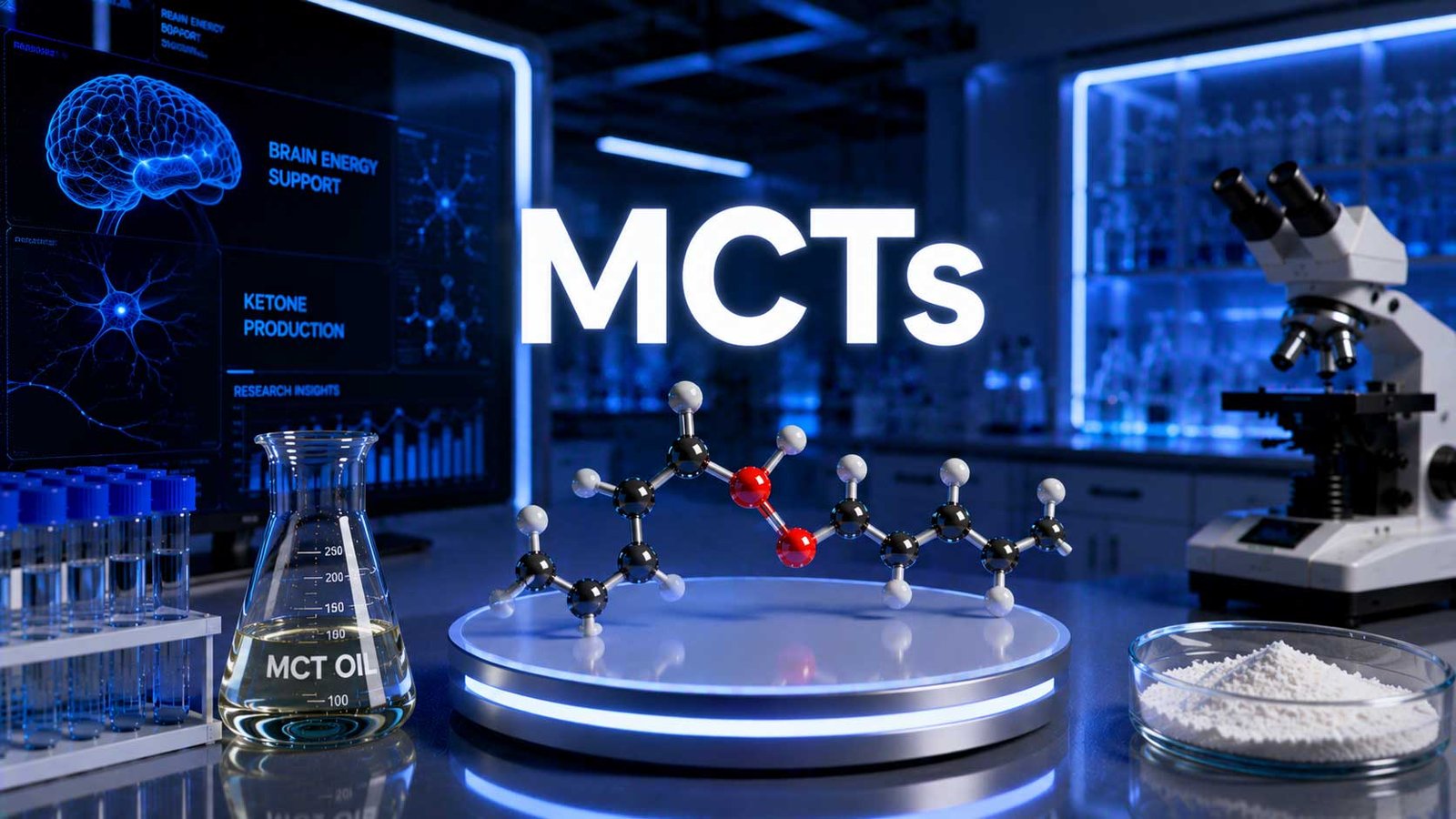
The Fat That Feeds Your Brain a Different Way
Is MCT oil going to make you smarter? The honest answer is more interesting than a flat yes or no. MCTs, short for medium-chain triglycerides, occupy a strange little corner of nutrition science where the biochemistry is genuinely elegant and the marketing has, at times, run several steps ahead of the evidence. That gap is exactly why this topic deserves a careful look instead of another breathless headline.
Here’s the basic picture, and I promise to keep the biochemistry conversational rather than textbook-dry. Fats in your diet are mostly long-chain triglycerides, meaning the fatty acid chains have somewhere between thirteen and twenty-one carbon atoms strung together. MCTs are shorter, generally in the six-to-twelve carbon range, and that seemingly small structural difference changes almost everything about how your body handles them. Long-chain fats need bile salts to be broken down, get packaged into structures called chylomicrons, and travel through the lymphatic system before they ever reach general circulation. MCTs skip most of that. They’re absorbed more directly and shuttled straight to the liver through the portal vein, where they get oxidized quickly, often turning into ketone bodies rather than being stored away as body fat.
Table of Contents


That’s the part that gets people excited about brain health specifically. Your brain is a hungry organ. It runs mostly on glucose under normal conditions, but it can also run on ketone bodies, particularly beta-hydroxybutyrate and acetoacetate, when glucose availability dips or when insulin signaling in brain tissue becomes less efficient, which tends to happen with age. Because MCTs, especially the caprylic acid and capric acid fractions, are converted into ketones relatively quickly and don’t require carbohydrate restriction to do it, they’ve become a subject of real scientific curiosity as a way to supply the aging or stressed brain with an alternative fuel source.
I want to be upfront about something before we go further: this is not a magic bullet, and anyone who tells you otherwise is selling you something. What the research actually shows is more nuanced, more conditional, and honestly more useful once you understand it. Some studies show meaningful cognitive benefits, particularly in older adults or people already experiencing mild cognitive decline. Other studies, especially in young, healthy brains, show smaller effects or none that reach statistical significance. That’s not a failure of the research; it’s just how biology works. A brain that’s already running efficiently on glucose doesn’t necessarily need or benefit from an alternative fuel the same way a brain under metabolic strain might.
There’s also a practical, everyday angle to this that I think gets lost in the science-versus-hype tug of war. MCTs aren’t some exotic lab-synthesized compound you need a prescription for. They occur naturally, mostly in coconut oil, palm kernel oil, and to a lesser extent in dairy fat. The concentrated MCT oil you find in a bottle is simply a more purified, more potent version of something that’s been present in human diets, in smaller amounts, for a very long time. That matters because it changes how we should think about incorporating MCTs: not as a pharmaceutical intervention, but as a dietary choice with a plausible, mechanistically sound rationale and a still-developing evidence base.
What I want to do in this article is walk through what’s actually been studied, not what’s been implied in a supplement ad. We’ll look at the health benefits that have decent research support, where you can actually find MCTs in food versus supplement form, how much people typically use in clinical settings and what happens if you don’t get enough or take too much, and finally, the risks and caveats that responsible use requires. I’ve spent enough years reading through the primary literature on fats and metabolism to have opinions here, and I’ll share them, but I’ll also be clear about where the evidence is thin so you’re not left with a rosier picture than the data supports.
One thing I’ve noticed after years of following this research is that people tend to fall into one of two camps: total skeptics who dismiss MCTs as coconut oil repackaged with a marketing budget, or true believers who think a tablespoon in their coffee is rewiring their neurons for genius-level output. The truth, as usual, sits somewhere in the middle, closer to “interesting and worth understanding” than to either extreme.
Part of what makes this topic tricky to talk about honestly is that MCTs sit at an odd intersection of three different worlds: sports nutrition, where they’ve been used for decades as a quick-digesting fuel source; clinical nutrition, where fractionated MCT oil has a long history in feeding tubes and specialized formulas for people with fat malabsorption; and now, more recently, the wellness and cognitive optimization space, where the claims tend to outrun the caution the earlier two fields exercised. Each of those communities brings a slightly different lens to the same molecule, and a lot of the confusion out there comes from people mixing up findings from one context and applying them uncritically to another. A dose that works fine in a clinical feeding protocol isn’t automatically the right dose for someone hoping to sharpen their afternoon focus, and a mechanism that makes sense for a brain running low on usable glucose doesn’t automatically apply to a twenty-five-year-old with no metabolic concerns whatsoever.
I also think it’s worth saying plainly that “brain health” itself is a broad, sometimes fuzzy target. Are we talking about memory? Processing speed? Mood? Long-term neurodegenerative risk? The research doesn’t treat these as interchangeable, and neither should we. Some of the most compelling MCT studies focus narrowly on working memory in older adults; others look at gait and balance, which reflect a different set of brain circuits entirely; still others focus on plasma ketone levels and brain glucose uptake as intermediate markers, without directly measuring whether a person feels or performs any differently day to day. Keeping these distinctions in mind is going to matter a lot as we move through the specific research below, because a supplement that shows promise on one narrow outcome in one specific population isn’t the same as a blanket brain booster for everyone.
Let’s get into it.
Key Health Benefits
Cognitive Support in Aging and Cognitive Decline
The strongest, most consistent signal in the MCT and brain health literature comes from studies involving older adults, particularly those already showing signs of cognitive decline. A pilot study using functional MRI found that a single MCT-containing meal improved working memory task performance in healthy elderly adults compared with a placebo meal, and this improvement was accompanied by measurable changes in brain activity in the dorsolateral prefrontal cortex, a region tied closely to executive function people (14 females and 6 males; mean age: 65.7 ± 3.9 years) were engaged in executive function tasks (N-back and Go-Nogo) after ingesting a single MCT meal. What made this study particularly compelling to me is that the improvement wasn’t uniform across everyone. Participants with better baseline cognitive function showed gains in working memory tasks, while those with lower baseline scores showed improvements in inhibitory control instead, suggesting the brain draws on that extra ketone-derived energy differently depending on its starting point.
A separate systematic review looking specifically at non-demented older adults found that MCT supplementation was associated with better memory outcomes, particularly working memory, in four out of six trials reviewed, with effects appearing more pronounced in people who had lower memory scores to begin with MCT supplementation compared to controls was associated with improved indices of memory function in 4 out of 6 studies, particularly working memory. That pattern, benefits concentrated in people who have more room to improve, shows up again and again in this research, and it’s an important nuance that often gets flattened out in casual conversation about MCTs.
Brain Metabolism and Ketone Utilization
Here’s where the mechanism really earns its keep. Research using PET imaging and metabolic tracking has shown that when plasma ketone levels rise following MCT intake, the brain does in fact draw on those ketones as fuel, and this effect appears more pronounced in people with impaired glucose metabolism in the brain, a hallmark of conditions like mild cognitive impairment and early Alzheimer’s disease. A 2022 randomized controlled study in healthy older adults found that three months of daily MCT supplementation improved walking balance, an outcome tied to cerebellar brain function, and this was linked to suppressed glucose metabolism in favor of ketone use in the sensorimotor cortex. Compared with the control group, the MCT group showed better balance ability. Balance might seem like an odd thing to bring up in an article about brain health, but gait and balance are deeply tied to cerebellar and cortical function, and improvements there are a real, measurable proxy for changes happening in the brain.
Dementia and Mild Cognitive Impairment
This is probably the area with the most research volume, and also the area where I think expectations need the most tempering. A 2024 systematic review pulling together twenty-one studies on MCT use in Alzheimer’s disease and mild cognitive impairment found substantial increases in plasma ketone levels and brain metabolic rates, but cognitive improvements were, in the review’s own words, only occasional or specific to certain cognitive domains rather than sweeping across the board. Cognitive assessments showed only occasional or domain-specific performance improvements. The same review flagged that many of these trials had design weaknesses and, notably, financial conflicts of interest tied to manufacturers of MCT products, which is exactly the kind of detail that should make anyone reading these claims pause before treating them as settled science.
That said, the metabolic rationale hasn’t been dismissed. The reasoning is that in Alzheimer’s disease, glucose metabolism in certain brain regions becomes impaired well before symptoms appear, and ketone metabolism in those same regions often remains relatively intact, at least in earlier stages. That creates a biological opening for MCTs to act as an alternative fuel source, bypassing the glucose bottleneck. Whether that translates into a real, durable clinical benefit over months and years is still an open question, and one that larger, better-controlled, and less commercially entangled trials need to answer.
Working Memory and Processing Speed in Younger Adults
Less discussed, but genuinely interesting, is emerging research in healthy young adults. A randomized controlled trial found that both a single dose and a four-week daily regimen of MCTs improved certain aspects of cognitive function, with the sustained daily intake showing benefits in processing speed and complex working memory stability compared with long-chain triglyceride intake a 4-week daily MCT regimen is an effective strategy for improving information processing speed and performance stability in complex WM. This is a newer thread in the research, and I’ll admit it surprised me a little, since most of the earlier literature focused almost exclusively on older or cognitively impaired populations. It suggests the story here isn’t purely about rescuing a struggling brain but might also extend, in a more modest way, to optimizing a healthy one.
None of this amounts to a guarantee. What it amounts to is a genuinely promising, biologically coherent thread of research that deserves continued attention, real skepticism about overstated claims, and a realistic sense of who is most likely to notice a difference.
Dietary Sources
Where MCTs Actually Come From
If you want MCTs from whole foods rather than a bottle, your options are fairly limited, and it’s worth understanding why. MCTs occur naturally in a handful of tropical oils and, to a smaller degree, in dairy fat. Coconut oil is the most concentrated common source, though people are often surprised to learn that the majority of coconut oil’s medium-chain content is lauric acid, a twelve-carbon fatty acid that behaves somewhat differently in the body compared to the shorter caprylic (eight-carbon) and capric (ten-carbon) acids that dominate purified MCT oil supplements. Palm kernel oil contains a similar profile, generally rich in lauric acid with smaller amounts of the more rapidly ketogenic C8 and C10 fractions.
Dairy fat is the other natural source worth mentioning, and it’s one people rarely think about. Butter, full-fat cream, aged cheeses, and whole milk all contain measurable, if modest, amounts of caproic, caprylic, and capric acids. Goat milk in particular tends to carry a slightly higher proportion of these shorter-chain fatty acids compared with cow’s milk, which is part of why some people find goat dairy easier to digest.
Here’s a quick, practical rundown of where you’ll find MCTs in whole food form:
- Coconut oil and coconut cream, rich in lauric acid with smaller C8 and C10 content
- Palm kernel oil, similar profile to coconut oil though less commonly used in home cooking
- Butter and ghee, modest but real MCT content
- Full-fat cheese and cream, particularly from grass-fed or pasture-raised dairy
- Goat’s milk and goat cheese, slightly higher in shorter-chain MCTs than cow dairy
- Human breast milk, which naturally contains MCTs as part of infant nutrition
Whole Foods Versus Concentrated MCT Oil
This distinction matters more than people usually realize. Whole coconut oil, despite being marketed heavily as an MCT powerhouse, actually delivers a fairly small dose of the caprylic and capric acids that most of the cognitive research has focused on, since lauric acid dominates its fatty acid profile and metabolizes more like a long-chain fat in some respects. To get a meaningful, research-relevant dose of C8 and C10 specifically, you’d need to eat an impractical amount of coconut oil, which is exactly why fractionated MCT oil supplements exist. These are produced by isolating and concentrating the caprylic and capric acid fractions from coconut or palm kernel oil, a process called fractionation, resulting in a product that’s typically composed of a blend of C8 and C10, sometimes leaning heavily toward one or the other depending on the brand and intended use.
If your interest in MCTs is specifically about the cognitive and ketone-related research we just covered, a purified C8 or C8/C10 blend oil is going to get you closer to what was actually used in most clinical trials than a jar of coconut oil ever will. That doesn’t make coconut oil useless or not worth using in cooking, it’s a perfectly reasonable cooking fat with its own nutritional profile, but I think it’s important to separate the culinary staple from the concentrated supplement when we’re talking about brain-specific outcomes.
Practical Ways to Work MCTs Into a Day
For people who want to experiment with food-based sources rather than jumping straight to a supplement, a few approaches tend to work well in practice. Cooking with coconut oil a few times a week, choosing full-fat dairy over reduced-fat versions when digestion allows for it, and incorporating goat cheese or goat milk products occasionally are all reasonable, low-effort ways to nudge your intake upward. None of these will replicate the concentrated doses used in research settings, but they’re a sensible starting point if you’re not ready to commit to a bottle of purified oil, and they come with the side benefit of contributing genuinely enjoyable fats to your meals rather than something that tastes, frankly, a bit medicinal straight off the spoon.
I’ll also say, from years of watching people try to incorporate MCT oil into their routines, that food-first is almost always the more sustainable approach for long-term habits, even if the concentrated oil is what the studies actually used. A habit that fits into your existing meals tends to stick. A bottle that sits in the cupboard because the plain oil tastes strange or upsets your stomach doesn’t do anyone any good, no matter how promising the research behind it looks on paper.
Reading Labels and Understanding What You’re Buying
If you do decide to go the concentrated oil route, a little label literacy goes a long way. Products will typically specify their C8 to C10 ratio, something like sixty-forty or seventy-thirty, and some are marketed as one hundred percent caprylic acid, meaning pure C8. This isn’t just a marketing detail; it actually affects how quickly the oil converts to ketones, with C8 generally considered the fastest and most efficiently ketogenic of the medium-chain fatty acids, followed by C10. If your goal is aligning with what the cognitive research has actually tested, a blend that leans toward C8, or a pure C8 product, gets you closer to the compounds used in many of the trials we’ve discussed, though plenty of studies have also used mixed C8/C10 formulations with meaningful results.
Source matters a bit too, though probably less than the marketing around it would suggest. Coconut-derived MCT oil and palm kernel-derived MCT oil, once fractionated down to their C8 and C10 fractions, are functionally quite similar. The main practical difference tends to come down to allergy considerations, since some people react to coconut specifically, and broader concerns some shoppers have about the environmental footprint of palm oil production. Neither source changes the fundamental way your body processes the isolated C8 or C10 fatty acids once they’ve been separated out.
One more practical note worth mentioning: quality does vary between manufacturers, and things like peroxide value and free fatty acid content, which reflect how well an oil has been processed and stored, can affect both taste and, to some degree, tolerability. Choosing a product that’s been third-party tested isn’t strictly necessary for safety in most cases, but it’s a reasonable extra layer of confidence if you’re going to be taking something daily for an extended period, especially since the supplement industry doesn’t have the same regulatory oversight as pharmaceuticals.
Dosage & Deficiency
What the Research Trials Actually Used
There’s no official recommended daily intake for MCTs the way there is for something like vitamin D or calcium, largely because MCTs aren’t considered an essential nutrient your body absolutely requires from outside sources. That said, clinical research gives us a useful reference point for what’s actually been tested and found to produce measurable effects. Most trials investigating cognitive and metabolic outcomes have used somewhere in the range of ten to thirty grams of MCT oil per day, often split across two or three doses with meals rather than taken all at once.
The fMRI study on elderly adults we discussed earlier used a single meal containing close to twenty grams of MCTs and still detected measurable cognitive and brain activity changes within about ninety minutes. Meiji817-B includes 30.3 g caprylic acid and 9.8 g capric acid as medium-chain fatty acids per 100 g total fatty acids, which tells you something about how quickly these fats get absorbed and converted. Longer-term studies looking at sustained supplementation, like the four-week trial in young adults, tend to use daily doses in a similar ten-to-thirty-gram range, sustained consistently rather than as a one-off.
A Sensible Starting Approach
If you’re considering trying MCT oil, and I want to be careful here because this is general information, not individualized medical advice, the pattern that shows up consistently across both clinical protocols and practical, real-world use is to start low and build up gradually. Something like one teaspoon, roughly five milliliters, taken with food once a day for the first several days is a reasonable starting point. From there, many people gradually increase toward ten to twenty grams daily over one to two weeks, watching how their digestion responds along the way.
Splitting the dose across two or three meals rather than taking it all at once tends to be much easier on digestion, since a large bolus of rapidly absorbed fat hitting the gut at once is often what triggers discomfort. Taking MCT oil with food rather than on an empty stomach also seems to reduce the odds of an unpleasant reaction, particularly for people who aren’t used to it yet.
What Happens With Too Little, or None at All
Because MCTs aren’t classified as essential fats the way omega-3 and omega-6 fatty acids are, there’s no clinical deficiency syndrome tied to simply not consuming them. Your body doesn’t need dietary MCTs specifically to function; it can meet its energy needs through glucose, long-chain fats, and, when necessary, ketones produced from its own fat stores during fasting or carbohydrate restriction, without any MCT intake at all. So if you’re someone who’s never touched MCT oil in your life, there’s no deficiency state to worry about, and that’s worth saying plainly, because supplement marketing sometimes implies otherwise.
Where the conversation about “not enough” becomes more relevant is in specific clinical contexts, particularly cognitive decline and certain metabolic conditions, where researchers are exploring whether supplementing beyond typical dietary levels might offer a therapeutic benefit precisely because the brain’s normal fuel supply, glucose, has become less efficiently used. That’s a very different framing from a nutritional deficiency; it’s closer to a targeted metabolic intervention being studied for a specific problem, not a gap in baseline nutrition that affects the general population.
Overdoing It
On the flip side, more is not automatically better here. Doses well beyond what’s been studied, particularly large amounts taken all at once, are far more likely to cause gastrointestinal discomfort than to produce additional cognitive benefit. Research and clinical observation both suggest that doses up to roughly one gram per kilogram of body weight are generally well tolerated in healthy adults when introduced gradually, but pushing well past what your gut has adapted to rarely buys you anything extra in terms of ketone production or brain benefit. The relationship between dose and effect isn’t linear indefinitely; past a certain point, your liver’s capacity to oxidize these fatty acids and convert them to ketones simply gets saturated, and the excess just becomes a digestive problem rather than a cognitive advantage.
Timing and Consistency Matter More Than People Expect
Something that doesn’t get discussed nearly enough is timing. Because MCTs are absorbed and converted to ketones so quickly, roughly within an hour or two for many people, the acute cognitive studies typically test their subjects within ninety minutes to two hours of intake, which tells you something practical: if you’re hoping for a same-day, noticeable effect, taking MCT oil first thing in the morning with breakfast, or before a task that demands sustained mental effort, lines up more closely with how these studies were actually designed than taking it right before bed.
For the longer-term cognitive outcomes, the ones tied to sustained daily supplementation over weeks rather than a single dose, consistency appears to matter more than precise timing. The four-week trial in young adults and the three-month studies in older adults both relied on daily intake sustained over the full study period, not sporadic use. If you’re trying to gauge whether MCTs are doing anything for you personally, giving it a real trial period of several weeks, taken consistently, is going to tell you far more than a single morning where you added a spoonful to your coffee and waited to feel different.
Individual Variation Is Real
I’d be doing you a disservice if I didn’t mention that people vary quite a bit in how efficiently they convert MCTs to ketones and how their gut tolerates them. Body composition, baseline metabolic health, gut microbiome differences, and even genetic factors like APOE4 status, a gene variant linked to Alzheimer’s risk, have all been raised as potential modifiers of how someone responds to MCT supplementation. Some research suggests people without the APOE4 allele may see more pronounced cognitive benefits than those who carry it, though this remains an area of ongoing investigation rather than settled fact. None of this means you need genetic testing before trying a teaspoon of MCT oil, but it does explain why one person’s glowing testimonial and another person’s shrug of indifference can both be entirely honest accounts of their own experience with the same product.
Toxicity & Risks
Gastrointestinal Discomfort Is the Real, Common Risk
Let’s start with the risk you’re actually most likely to encounter, because it’s not liver damage or some rare dramatic event, it’s your gut telling you that you’ve overdone it. Gastrointestinal side effects, including cramping, bloating, nausea, and loose stools, are by far the most frequently reported issue with MCT supplementation, and they’re closely tied to both dose size and how quickly the dose is introduced. A systematic review and meta-analysis covering nearly 850 patients across ten trials found that adverse events, largely diarrhea, contributed to participant dropouts in a meaningful number of the studies included. A 2023 systemic review and meta-analysis including 10 trials and 848 patients, lasting up to 6 months in duration, reports that adverse events that ‘could have contributed to dropouts during the clinical trial’ were noted in six studies. This isn’t a rare or unpredictable side effect; it’s a direct consequence of rapidly absorbed fat reaching the gut in a large amount, particularly on an empty stomach or before your digestive system has had a chance to adjust.
The encouraging part is that this risk is largely manageable. Gradual dose escalation, taking MCT oil with meals rather than alone, and splitting the daily total across multiple smaller servings all meaningfully reduce the odds of discomfort, and most people who experience initial symptoms find they resolve within a week or two of consistent, moderate use.
Effects on Blood Lipids
This is a nuance I think gets glossed over in a lot of casual health content, and it deserves more attention than it usually gets. Not all MCTs behave identically when it comes to cholesterol. A rigorous systematic review and meta-analysis of randomized trials specifically isolating the shorter C8 and C10 fatty acids, the kind found in purified MCT oil, found no significant effect on total cholesterol, LDL cholesterol, or HDL cholesterol, though it did note a small increase in triglyceride levels, and importantly, the effect on LDL depended heavily on what MCT oil was being compared against. The effect of MCT oil on LDL cholesterol differed by the fatty acid composition of the control, such that MCT oil increased LDL cholesterol when compared to a control containing predominantly unsaturated fatty acids. That’s a meaningfully different picture from lauric acid, the twelve-carbon fatty acid that dominates coconut oil, which other research has more consistently linked to increases in both total and LDL cholesterol, behaving more like a longer-chain saturated fat in this particular respect.
The practical takeaway is that purified C8/C10 MCT oil and whole coconut oil are not interchangeable when it comes to lipid effects, even though both get lumped under the same “MCT” umbrella in casual conversation. If you have existing cardiovascular risk factors or elevated LDL cholesterol, this is a genuinely worthwhile detail to bring up with your doctor before adding either one to your routine in meaningful amounts, and it’s a good example of why chain length, not just the broad MCT label, actually matters.
Liver and Metabolic Considerations
Because MCTs are metabolized almost entirely by the liver, people with significant liver disease represent a group where more caution is warranted. The liver’s capacity to oxidize fatty acids and produce ketones can be compromised in advanced liver disease, and while there isn’t strong direct evidence of MCT-induced liver injury in healthy people, the theoretical concern in those with impaired liver function is reasonable enough that most clinicians recommend avoiding significant MCT supplementation in that population without medical supervision.
People with diabetes, particularly those on medications that affect blood sugar or insulin, should also approach MCT supplementation thoughtfully, since shifts toward ketone metabolism can interact with how these conditions are managed. This isn’t a reason for blanket avoidance, but it is a reason to loop in a healthcare provider rather than simply adding a supplement to an already complex medical picture.
Toxicological Safety Profile
Stepping back to the bigger picture, the general toxicological safety profile of MCTs, evaluated over decades of use in clinical nutrition, infant formula, and enteral feeding, is reassuring. A comprehensive review of the toxicologic properties of medium-chain triglycerides concluded that they have a long history of safe use across a wide range of populations and applications, with the primary limiting factor being gastrointestinal tolerance rather than any organ toxicity at typical dietary or supplemental doses. MCT supplements are generally safe with the most common side effects being gastrointestinal effects. That’s a meaningfully reassuring conclusion, but it’s specifically bounded by “typical doses” and “otherwise healthy populations,” which is exactly why the caveats above, particularly around liver disease, cardiovascular risk, and diabetes, still matter and shouldn’t be waved away just because the overall safety data looks good on paper.
A Few Groups Who Should Be Extra Careful
Beyond what’s already been covered, pregnant and breastfeeding individuals should know that research on MCT supplementation specifically during pregnancy and lactation is limited, which means a conversation with a healthcare provider is the more responsible path rather than assuming safety by default. People with fat malabsorption conditions, chronic pancreatitis, or certain inherited fatty acid oxidation disorders also need individualized guidance, since MCT metabolism intersects directly with the pathways affected by these conditions. None of this is meant to be alarming, it’s simply an honest accounting of where the caution flags genuinely belong, separate from the more common and far more mundane digestive discomfort that most people who try MCT oil will encounter, if they encounter anything at all.

Where the Evidence Actually Leaves Us
After going through all of this, here’s where I land, and I say this as someone who’s read more of these trials than I probably should admit to. MCTs are not a cognitive enhancer you can count on the way you’d count on caffeine to wake you up. They’re something more interesting and, honestly, more limited than that: a metabolically distinct fat with a plausible, well-understood mechanism for supplying the brain with an alternative fuel source, and a body of research that shows real, if inconsistent, benefit, concentrated most clearly in older adults and people already experiencing some degree of cognitive or metabolic strain.
If you’re a healthy young adult without any cognitive concerns, the honest answer is that the evidence for a dramatic brain benefit is thinner than the supplement aisle would have you believe, though the newer research on working memory and processing speed suggests there may be something modest happening even in healthy brains. If you’re older, or supporting someone who’s dealing with early cognitive decline, the research picture is more encouraging, though still not definitive enough to call MCTs a treatment in any formal sense. What it is, is a reasonable, low-risk dietary experiment worth discussing with a healthcare provider, particularly given how the effects seem to concentrate in people whose brains are already working a little harder to keep up.
What I’d actually suggest, practically speaking, is this. Start with food sources if you want a gentle introduction, coconut oil in cooking, full-fat dairy, maybe some goat cheese if that appeals to you. If you want to explore something closer to what’s actually been studied in the cognitive trials, a purified C8 or C8/C10 MCT oil, introduced slowly and taken with meals, is the more evidence-aligned choice. Pay attention to your gut, because that’s genuinely the first and most reliable signal your body will give you about tolerance. And if you have any existing liver, cardiovascular, or metabolic conditions, bring your doctor into the conversation before you make MCT oil a daily habit rather than an occasional experiment.
The bigger lesson here, one that extends well beyond MCTs specifically, is that good nutrition science rarely hands you a clean, universal yes or no. It hands you a mechanism, a population where the effect shows up most clearly, a dose range that’s actually been tested, and a set of caveats that matter more than the headline. MCTs fit that pattern almost perfectly. They’re genuinely interesting, backed by real biochemistry, and worth a place in the conversation about brain health, but they work best as one thoughtful piece of a broader picture, not as the single supplement that’s going to transform how your brain functions.
I think it’s also worth remembering that MCTs don’t exist in a vacuum. Brain health, in the research literature and in real life, is shaped far more heavily by sleep quality, cardiovascular fitness, blood sugar regulation, social connection, and overall dietary pattern than by any single fat you add to your coffee. If someone is running on five hours of sleep, eating mostly processed food, and getting little physical activity, a spoonful of MCT oil isn’t going to meaningfully offset those larger factors, no matter how sound the underlying biochemistry is. Where MCTs seem most reasonable to me is as a small, additive piece within an already reasonably healthy pattern, not as a substitute for the fundamentals or a shortcut around them.
I’d also gently push back on the idea that you need to choose a side here, either fully embracing MCT oil as a daily ritual or dismissing it outright as unproven hype. Nutrition science is rarely that binary, and this topic is a particularly good example of why. It’s entirely reasonable to try a modest, food-based approach to MCT intake, pay attention to how you feel and function over several weeks, and adjust from there based on your own experience layered on top of what the research actually says, rather than what a product label promises. That kind of grounded, curious experimentation, informed by real evidence rather than either blind faith or blanket skepticism, is honestly the approach I’d recommend for most things in nutrition, not just this one.
If you take away just one thing from everything above, let it be this: the people most likely to notice something from MCT supplementation are older adults, people already navigating some degree of cognitive or metabolic strain, and those willing to use it consistently over weeks rather than expecting an instant jolt. Everyone else might notice something subtle, might notice nothing distinguishable from placebo, or might simply enjoy the flavor it adds to their morning coffee. All three of those outcomes are honest, biologically plausible possibilities, and none of them should surprise you now that you understand where this research actually stands. That, to me, is worth far more than another oversimplified claim promising a sharper brain in thirty days.
Article Sources
At AncientHerbsWisdom, our content relies on reputable sources, including peer-reviewed studies, to substantiate the information presented in our articles. Our primary objective is to ensure our content is thoroughly fact-checked, maintaining a commitment to accuracy, reliability, and trustworthiness.
- Giannos, P., Prokopidis, K., Lidoriki, I., Triantafyllidis, K. K., Kechagias, K. S., Celoch, K., Candow, D. G., Ostojic, S. M., & Forbes, S. C. (2022). Medium-chain triglycerides may improve memory in non-demented older adults: A systematic review of randomized controlled trials. BMC Geriatrics, 22, 819. https://doi.org/10.1186/s12877-022-03521-6
- McKenzie, K. M., Lee, C. M., Mijatovic, J., Haghighi, M. M., & Skilton, M. R. (2021). Medium-chain triglyceride oil and blood lipids: A systematic review and meta-analysis of randomized trials. The Journal of Nutrition, 151(10), 2949-2956. https://doi.org/10.1093/jn/nxab220
- Meer, N., & Fischer, T. (2024). Medium-chain triglycerides (MCTs) for the symptomatic treatment of dementia-related diseases: A systematic review. Journal of Nutrition and Metabolism, 2024, 9672969. https://doi.org/10.1155/2024/9672969
- Mumme, K., & Stonehouse, W. (2015). Effects of medium-chain triglycerides on weight loss and body composition: A meta-analysis of randomized controlled trials. Journal of the Academy of Nutrition and Dietetics, 115(2), 249-263. https://doi.org/10.1016/j.jand.2014.10.022
- Mutoh, T., Kunitoki, K., Tatewaki, Y., Yamamoto, S., Thyreau, B., Matsudaira, I., Kawashima, R., & Taki, Y. (2022). Impact of medium-chain triglycerides on gait performance and brain metabolic network in healthy older adults: A double-blind, randomized controlled study. GeroScience, 44(3), 1325-1338. https://doi.org/10.1007/s11357-022-00553-z
- Traul, K. A., Driedger, A., Ingle, D. L., & Nakhasi, D. (2000). Review of the toxicologic properties of medium-chain triglycerides. Food and Chemical Toxicology, 38(1), 79-98. https://doi.org/10.1016/S0278-6915(99)00106-4
- Watanabe, S., & Tsujino, S. (2022). Applications of medium-chain triglycerides in foods. Frontiers in Nutrition, 9, 802805. https://doi.org/10.3389/fnut.2022.802805
- Yomogida, Y., Matsuo, J., Ishida, I., Ota, M., Nakamura, K., Ashida, K., & Kunugi, H. (2021). An fMRI investigation into the effects of ketogenic medium-chain triglycerides on cognitive function in elderly adults: A pilot study. Nutrients, 13(7), 2134. https://doi.org/10.3390/nu13072134

- Phosphatidic Acid: Supporting Muscle Growth and Strength - July 31, 2026
- Ceramides: Supporting Healthy Skin From Within - July 31, 2026
- Synbiotics: Combining Prebiotics and Probiotics Together - July 31, 2026