
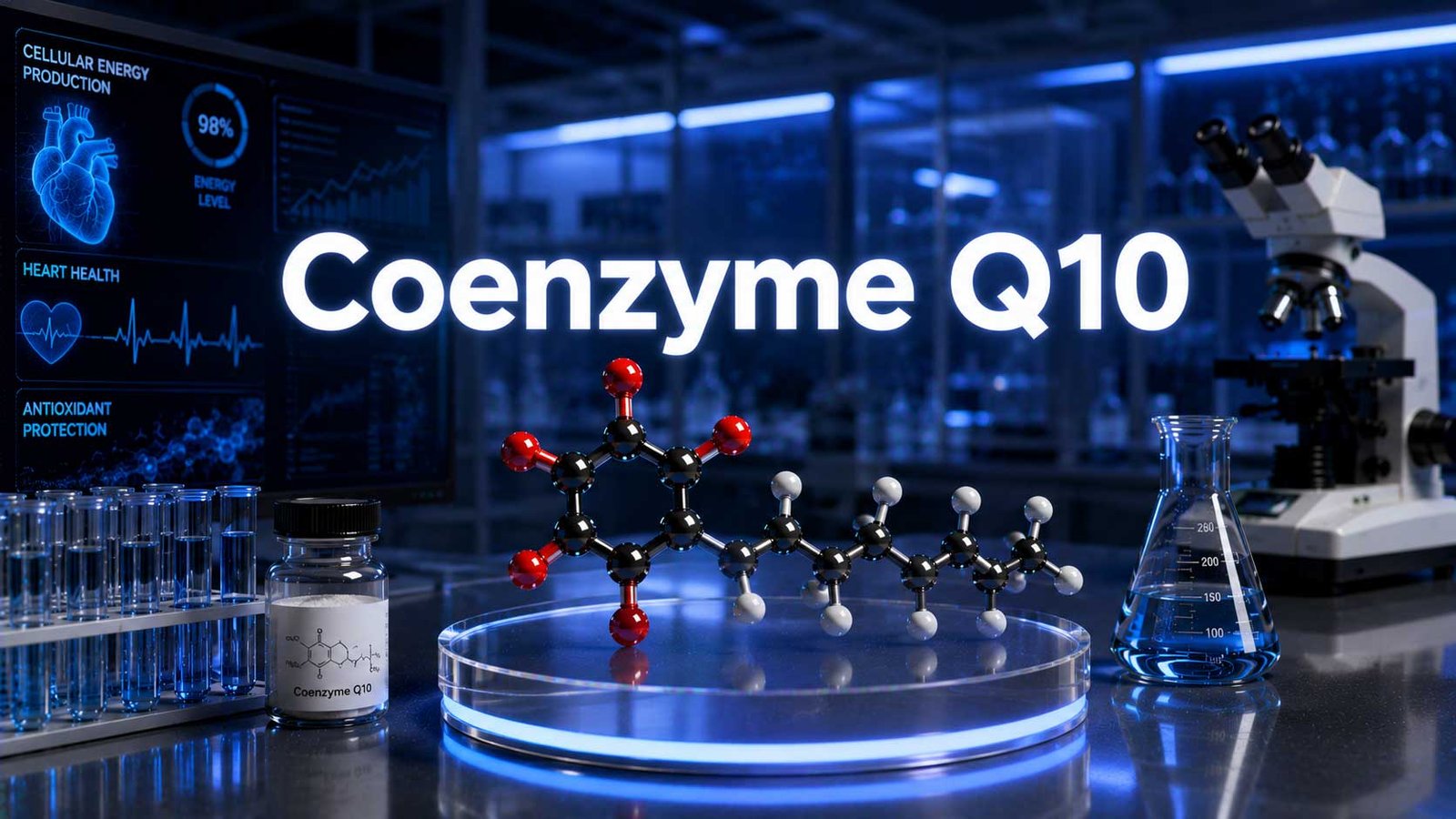
The Tiny Molecule Doing the Heaviest Lifting in Your Body
Here’s something most people never stop to think about: every heartbeat, every thought, every step you take this morning required energy that had to be manufactured, on the spot, inside microscopic power plants called mitochondria. And sitting right in the middle of that manufacturing process is a compound most people have heard of but very few actually understand — Coenzyme Q10.
I’ve spent years reading through the research on this molecule, watching the supplement industry oversell it in some ways and the mainstream medical world underappreciate it in others, and I still find it fascinating. Coenzyme Q10, often shortened to CoQ10, isn’t a vitamin. It isn’t a mineral. It’s a fat-soluble, vitamin-like compound that your body actually makes on its own, in nearly every cell, with the heart, liver, kidneys, and pancreas holding some of the highest concentrations because Coenzyme Q10 is naturally present in the human body, with the highest levels found in the heart, liver, kidneys, and pancreas. That distribution isn’t random. Those are exactly the organs that never get to rest, the ones burning through ATP around the clock.
Table of Contents


So what does Coenzyme Q10 actually do? At the most basic level, it acts as a shuttle inside the mitochondrial electron transport chain, ferrying electrons between protein complexes so your cells can generate adenosine triphosphate, or ATP — the actual currency your body spends on everything from muscle contraction to nerve signaling. Without enough CoQ10 in that chain, energy production slows down, and tissues with the highest energy demands feel it first. That’s the cellular energy piece. But CoQ10 wears a second hat too: it’s one of the few fat-soluble antioxidants your body produces internally, meaning it helps neutralize free radicals before they damage cell membranes, proteins, and DNA.
Here’s where it gets more personal for a lot of readers. Your body’s own production of CoQ10 isn’t constant throughout life. It tends to peak around your twenties and then gradually tapers off as the decades go on. Certain medications — statins being the most well documented example — interfere with the same biochemical pathway used to synthesize both cholesterol and CoQ10, which can knock levels down further. Add in chronic stress, some health conditions, and simply not eating a varied diet, and you’ve got a fairly large slice of the adult population walking around with lower-than-optimal Coenzyme Q10 stores without ever realizing it.
I want to be upfront about something before we go further: Coenzyme Q10 is not a miracle cure, and I get a little skeptical whenever I see it marketed that way. What the research actually shows is more nuanced and, frankly, more interesting. There’s solid evidence for its role in supporting heart function, particularly in people with compromised cardiac output. There’s reasonably good data on statin-associated muscle symptoms. And there’s an entire body of literature on its antioxidant behavior that explains why it shows up in everything from skincare formulas to sports nutrition products. Not all of that hype is earned, but a good chunk of it is grounded in real mechanisms.
What draws me to this topic, honestly, is the sheer elegance of it. Here’s a compound your body already knows how to build, already knows where to put, and already relies on for the most fundamental task any living cell has to accomplish — staying powered. When something interrupts that process, whether through aging, medication, or simple dietary gaps, the downstream effects can show up in ways that aren’t always obvious. Fatigue that doesn’t have an easy explanation. Muscle soreness that lingers longer than it should after a statin prescription starts. A cardiologist mentioning CoQ10 almost as an aside during a heart failure consultation.
This article is going to walk through what the science actually says about Coenzyme Q10 — not the marketing copy, not the forum anecdotes, but the peer-reviewed research and the positions taken by organizations like the National Center for Complementary and Integrative Health and the Mayo Clinic. We’ll get into the specific health benefits with actual mechanisms behind them, where you can find CoQ10 in real food (spoiler: organ meats show up a lot), how much people typically take and who tends to run low, and finally the honest picture on safety and interactions, because “natural” doesn’t automatically mean “risk-free.”
A quick note on how I think about supplements like this one in general: context matters enormously. A 35-year-old marathon runner and a 68-year-old on a statin with a family history of heart failure are not the same audience, even though both might reasonably ask “should I be taking CoQ10?” I’ll try to keep that distinction visible throughout rather than treating everyone reading this as an identical case. Coenzyme Q10 research spans decades of study, from early biochemistry work in the 1950s identifying the compound in beef heart mitochondria, all the way through modern randomized controlled trials in heart failure patients. That’s a long runway of accumulated evidence, and it’s worth taking seriously — carefully, not credulously.
One more thing worth sitting with before we dive in. Ubiquinone and ubiquinol are two names you’ll run into constantly when researching this molecule. They’re essentially the oxidized and reduced forms of the same compound, and your body converts between them as needed. You don’t need to memorize the biochemistry to benefit from understanding CoQ10 broadly, but it helps explain why some supplement labels distinguish between the two forms, and why that distinction sometimes matters more in theory than in practice for the average healthy adult. We’ll touch on that again later when we get into dosing.
Let’s get into what the actual health benefits look like, because that’s where this molecule earns its reputation — or doesn’t, depending on which claim you’re evaluating.
Key Health Benefits
Powering the Mitochondrial Engine
The most well-established role of Coenzyme Q10 is right there in its function: it’s a core component of the electron transport chain, the assembly line inside mitochondria responsible for producing the majority of your body’s ATP. Think of it like the conveyor belt that keeps handing off electrons from one station to the next until the final product — usable cellular energy — comes off the line. When CoQ10 levels drop, that conveyor belt slows, and tissues with the highest metabolic demand, like heart and skeletal muscle, tend to notice first. This is part of why fatigue and reduced exercise tolerance are among the more commonly reported symptoms tied to low CoQ10 status, even though “low energy” is admittedly a vague complaint that overlaps with dozens of other causes.
Supporting a Struggling Heart
This is where the research gets genuinely compelling. The heart is essentially a muscle that never stops working, and it depends on a steady, uninterrupted energy supply more than almost any other organ. Myocardial CoQ10 depletion has been linked to the severity of heart failure, which is part of why researchers have spent decades studying whether supplementation could help.
The strongest piece of evidence here is the Q-SYMBIO trial, a randomized, double-blind, multicenter study that followed 420 patients with moderate to severe heart failure over two years. Patients received either 100 mg of CoQ10 three times daily or a placebo, in addition to their standard heart failure therapy. The results were striking: compared to placebo, the CoQ10 group showed a meaningfully lower rate of the combined endpoint of cardiovascular death, hospitalization for heart failure, or the need for mechanical circulatory support or transplant with 30 events in the CoQ10 group versus 57 in the placebo group, along with a reduction in cardiovascular death and all-cause mortality. That’s not a small effect for a nutritional supplement layered on top of guideline-directed medical therapy.
A separate meta-analysis pooling fourteen randomized controlled trials involving over two thousand heart failure patients backed this up, finding that coenzyme Q10 was associated with lower mortality and greater improvement in exercise capacity compared with placebo, though it didn’t find a significant difference in left ventricular ejection fraction between groups. I find that last detail important — it’s a reminder that CoQ10 doesn’t appear to dramatically reshape heart structure, but it may still meaningfully influence how patients function and how long they live. Those are two different things, and good research tends to keep them separate rather than blending them into one triumphant headline.
An Antioxidant With a Cardiovascular Angle
Beyond its energy-transfer job, Coenzyme Q10 also functions as a lipid-soluble antioxidant, meaning it operates inside cell membranes where water-soluble antioxidants like vitamin C can’t reach as effectively. CoQ10 has been shown to increase production of protective antioxidant enzymes such as superoxide dismutase, which helps offset oxidative stress in blood vessels, an issue particularly relevant in people managing hypertension. It’s also been associated with preserving nitric oxide, the molecule responsible for helping blood vessels relax and dilate properly, which ties directly back into healthy blood flow and blood pressure regulation.
Easing the Statin Conversation
If you’ve ever taken a statin and dealt with unexplained muscle aches, you’ve probably encountered CoQ10 in a pharmacy aisle or heard your doctor mention it in passing. Statins work by inhibiting an enzyme in the same biosynthetic pathway your body uses to produce both cholesterol and CoQ10, which means lowering cholesterol can come with a side effect of lowering CoQ10 too. This mechanistic overlap has fueled a lot of interest in whether supplementation can ease statin-associated muscle symptoms, and while results across studies have been mixed, the biological rationale is sound enough that plenty of cardiologists bring it up as a reasonable, low-risk option worth discussing.
Inflammation and the Bigger Picture
There’s also emerging interest in CoQ10’s relationship with inflammatory markers. Research has found that supplementation can lower circulating levels of inflammatory markers such as C-reactive protein, interleukin-6, and tumor necrosis factor-alpha, and some of this anti-inflammatory activity has even been observed in patients with rheumatoid arthritis. This is one of those areas where the science is still filling in, but it fits neatly with everything else we know about CoQ10’s dual role as both an energy facilitator and a protective antioxidant. Two mechanisms, one small molecule, doing a lot of quiet, unglamorous work behind the scenes of your overall health.
Dietary Sources
Where Coenzyme Q10 Actually Comes From
Most people assume CoQ10 is purely a supplement-store product, but your body gets a meaningful head start from food, on top of what it manufactures internally. According to a widely cited review of CoQ10 food content published in Critical Reviews in Food Science and Nutrition, meat, fish, nuts, and certain oils are the richest nutritional sources of CoQ10, while dairy products, vegetables, fruits, and cereals contain much lower amounts. That same review noted something worth sitting with: the average dietary intake of CoQ10 across most diets is fairly modest, typically in the single-digit milligram range per day, which is nowhere close to the 100 to 300 milligram doses used in most clinical trials. Food alone isn’t going to replicate a therapeutic dose, but it absolutely contributes to your baseline status.
Organ Meats and Animal Proteins
If you’re trying to maximize dietary CoQ10 without supplements, organ meats sit at the top of the list. Beef heart, liver, and kidney — from beef, pork, and chicken alike — carry some of the highest concentrations of any food source. I know organ meats aren’t for everyone; there’s a real cultural gap in how comfortable people are cooking liver or heart compared to a chicken breast. But it’s worth acknowledging because the concentration difference is substantial, and these cuts also happen to be dense in other nutrients like vitamin B12, iron, and zinc.
Beyond organ meats, regular muscle meats still contribute meaningfully:
- Beef, pork, and chicken provide moderate amounts, with darker cuts generally containing more than white meat
- Fatty fish such as sardines, mackerel, salmon, and trout are excellent sources, and they carry the added benefit of omega-3 fatty acids that support absorption of the fat-soluble CoQ10 alongside them
- Eggs contribute smaller but still relevant amounts
There’s a practical reason fatty fish keeps coming up in this conversation. CoQ10 is fat-soluble, meaning it’s absorbed more efficiently when consumed with dietary fat rather than on its own. A piece of salmon delivers both the compound and the fat that helps your gut actually take it up.
Plant-Based and Oil Sources
Vegetarians and vegans aren’t left without options, though the concentrations are generally lower. Soybeans, lentils, and peanuts provide some CoQ10, and certain vegetable oils — soybean oil and canola oil in particular — rank among the richest non-animal sources available. Nuts and seeds, especially pistachios and sesame seeds, are another solid plant-based contributor, and they come with the same fat-pairing advantage that fatty fish offers, since the natural oil content helps with absorption.
Vegetables contribute smaller amounts, but they’re not negligible over the course of a varied diet:
- Spinach and broccoli offer modest but consistent contributions
- Cauliflower contains trace amounts as well
- Strawberries and oranges provide small quantities among fruits
Cooking, Storage, and Why It’s Easy to Undereat
Here’s a detail that doesn’t get discussed nearly enough: CoQ10 is sensitive to heat and prolonged storage, meaning that how food is prepared and how long it sits before you eat it can influence how much of the compound actually survives to your plate. High-temperature cooking methods and extended shelf time both chip away at CoQ10 content. This isn’t a reason to panic about grilling your salmon, but it does help explain why even people eating what looks like a “CoQ10-rich” diet on paper might still be getting less than expected in practice.
If you’re the type of person who eats a fairly standard Western diet — some meat, some fish here and there, a handful of nuts, maybe olive or canola oil in the kitchen — you’re likely getting a low but steady trickle of dietary CoQ10 without ever thinking about it. Whether that trickle is “enough” really depends on your age, health status, and whether anything in your life is actively depleting your internal production, which brings us naturally into dosage and deficiency.
Dosage & Deficiency
What “Normal” Even Means Here
Unlike a nutrient with an official Recommended Dietary Allowance, Coenzyme Q10 doesn’t have a universally established daily requirement, largely because your body produces it endogenously and dietary contribution is considered supplemental rather than essential in the way vitamin C or iron would be. That said, clinical research gives us a reasonably good sense of the dosing ranges that have been studied and used in practice.
Most clinical trials for heart-related applications, including the Q-SYMBIO trial, used doses in the range of 100 mg taken three times daily, totaling around 300 mg per day. Other studies exploring general wellness, migraine prevention, or statin-related muscle symptoms have used smaller daily doses, often somewhere between 30 mg and 200 mg. There isn’t a single “correct” number that applies to everyone, and dosing really should be discussed with a healthcare provider who knows your full medical picture, particularly if you’re managing a chronic cardiovascular condition.
Who Tends to Run Low
Deficiency in the classic sense — a diagnosable, measurable shortfall — is relatively uncommon in the general population, but functional insufficiency is a different story and shows up more often than people realize. A few groups are worth flagging specifically:
- People on statin therapy, since the same enzymatic pathway responsible for cholesterol synthesis also produces CoQ10, and inhibiting one can suppress the other
- Older adults, since natural production of CoQ10 declines with age after peaking around the second or third decade of life
- People with certain chronic conditions, including some forms of heart failure, fibromyalgia, and neurodegenerative disease, where reduced CoQ10 levels have been documented as part of the broader disease picture
- Individuals on certain other medications, including some antidepressants, oral contraceptives, hormone replacement therapy, and bisphosphonates used for bone health, all of which have been associated with reduced CoQ10 levels
I want to be careful here not to overstate this. Being on one of these medications doesn’t automatically mean you’re clinically deficient, and it’s not something you should self-diagnose based on fatigue alone, since fatigue has about a hundred possible causes. But if you fall into more than one of these categories simultaneously — say, you’re over 60, on a statin, and dealing with a chronic inflammatory condition — it’s a reasonable conversation to bring up at your next appointment.
Signs Worth Paying Attention To
Because CoQ10’s core job is cellular energy production, symptoms tied to low levels tend to cluster around fatigue, reduced exercise tolerance, and muscle discomfort, especially in people taking statins. None of these symptoms are unique to CoQ10 status, which is exactly why self-diagnosis is tricky. A tired 45-year-old could be dealing with poor sleep, thyroid issues, iron deficiency, or a dozen other explanations that have nothing to do with Coenzyme Q10. This is one of those areas where testing and professional guidance genuinely matter more than guessing based on internet symptom lists.
Practical Takeaways on Dosing
If you’re generally healthy, eating a reasonably varied diet, and not on any medications known to deplete CoQ10, you likely don’t need to think about supplementation at all. If you’re managing heart failure under a cardiologist’s care, taking a statin and experiencing muscle-related side effects, or simply getting older and curious about supporting mitochondrial health, that’s when a targeted conversation about dosage makes sense. Starting conservatively and reassessing after a few months tends to be a sensible approach rather than jumping straight to the highest doses used in clinical trials.
Toxicity & Risks
A Generally Well-Tolerated Compound
Let’s start with the reassuring part, because it’s true and it matters: Coenzyme Q10 has a strong safety track record across decades of clinical research. Most healthcare professionals consider it safe, with a relatively low rate of significant side effects even at higher doses used in trials. That doesn’t mean zero risk, though, and treating any supplement as automatically harmless just because it’s “natural” is a mistake I see people make constantly.
The Side Effects Worth Knowing
The most commonly reported side effects are mild and gastrointestinal in nature — things like upper stomach discomfort, reduced appetite, nausea, or diarrhea. Some people also report headaches, irritability, or difficulty sleeping, particularly when CoQ10 is taken later in the day given its mild energizing effect at the cellular level. Reports also suggest that mild gastric disturbance and headaches may become more noticeable at higher doses, particularly above roughly 1,200 mg per day, which is well beyond what most people would ever take for general wellness purposes.
Drug Interactions That Actually Matter
This is the section I’d encourage anyone considering supplementation to actually read carefully, because interactions here are not theoretical.
- Warfarin: CoQ10 may reduce the effectiveness of this blood-thinning medication, and there have been reports suggesting it can interfere with anticoagulant control. Anyone on warfarin should not start CoQ10 without direct guidance from the prescribing physician, since the interaction affects clotting risk in a very real, measurable way
- Insulin and diabetes medications: some evidence suggests CoQ10 may influence blood sugar regulation, so people managing diabetes should monitor levels closely if adding it to their routine
- Chemotherapy agents: certain cancer treatments may not be compatible with concurrent CoQ10 use, so oncology guidance takes priority here over general supplement advice
- Theophylline: animal research suggests a possible interaction, adding another reason to disclose all supplement use to a prescribing doctor rather than assuming it’s inconsequential
Pregnancy and Special Populations
The evidence on CoQ10 during pregnancy is limited but generally reassuring, with some sources suggesting it’s safe. That said, “limited but reassuring” is not the same as “well established,” and pregnant or breastfeeding individuals should treat any supplement decision, CoQ10 included, as a conversation to have with an obstetric provider rather than a decision to make solo based on an article, including this one.
Who Should Be Extra Cautious
Beyond the drug interaction list above, a few groups deserve a slightly more careful approach: anyone with a scheduled surgery in the near future, given the warfarin-related bleeding risk consideration; anyone managing blood pressure with medication, since CoQ10 has mild blood-pressure-lowering properties of its own that could compound with existing treatment; and anyone currently undergoing cancer treatment, for the reasons already mentioned. None of this is meant to scare people away from a compound with a genuinely strong overall safety profile — it’s meant to reinforce that “safe for most people most of the time” is not the same statement as “safe for everyone in every circumstance,” and CoQ10 is not an exception to that general rule of supplement use.
The Honest Bottom Line on Risk
If I had to summarize the risk profile in one sentence, it would be this: Coenzyme Q10 is one of the better-tolerated supplements on the market, with a side effect profile that’s mild for the vast majority of users, but the medication interactions — particularly with blood thinners — are real enough that this isn’t a supplement to add casually without telling your doctor. That combination of “generally safe” plus “a few specific, serious exceptions” describes a lot of supplements, honestly, but it’s worth repeating here because CoQ10’s reputation as an antioxidant sometimes leads people to assume it’s beyond scrutiny. It isn’t, and no compound should be treated that way.

What Coenzyme Q10 Really Comes Down To
After all the mechanisms, trial data, and dosing nuance, here’s what I keep coming back to: Coenzyme Q10 is a molecule your body already trusts enough to manufacture on its own, use in nearly every cell, and prioritize in the organs working hardest to keep you alive. That’s not marketing language — that’s just biology. The fact that production naturally declines with age, that certain common medications interfere with it, and that clinical trials in heart failure patients have shown measurable benefits on hard outcomes like mortality and hospitalization, makes this one of the more evidence-backed supplements you’ll come across, without needing to lean on exaggeration to make the case.
At the same time, I’d push back gently on anyone treating CoQ10 as a cure-all or a substitute for the fundamentals — a heart-healthy diet, consistent movement, sleep, and appropriate medical care for existing conditions. The research supports it as a meaningful adjunct, particularly for people on statins, people managing heart failure alongside standard treatment, and older adults whose natural production has quietly declined without them ever noticing. It’s not a replacement for any of those foundational pieces, and nobody studying this compound seriously claims otherwise.
If you’re weighing whether to add it to your routine, a few practical takeaways worth carrying forward: eat toward the food sources that naturally carry more CoQ10, particularly fatty fish and, if you’re open to it, organ meats, since dietary intake alone contributes a real if modest baseline. Pay attention to whether you fall into one of the higher-risk categories for lower CoQ10 status — statin use, older age, certain chronic conditions — because that’s where a supplementation conversation becomes genuinely worth having rather than optional. And if you do start supplementing, treat it the way you’d treat any active compound: disclose it to your doctor, especially if you’re on blood thinners, watch for how your body responds, and don’t assume that more is automatically better.
Cellular energy and heart health aren’t separate stories when it comes to this particular molecule — they’re the same story told from two angles. Coenzyme Q10 sits quietly at the center of both, doing the unglamorous, essential work that keeps your cells powered and your heart supported, one electron transfer at a time.
Article Sources
At AncientHerbsWisdom, our content relies on reputable sources, including peer-reviewed studies, to substantiate the information presented in our articles. Our primary objective is to ensure our content is thoroughly fact-checked, maintaining a commitment to accuracy, reliability, and trustworthiness.
- Hou, S., Tian, Z., Zhao, D., Liang, Y., Liu, Z., & Zhan, Y. (2023). Efficacy and optimal dose of coenzyme Q10 supplementation on inflammation-related biomarkers: A GRADE-assessed systematic review and updated meta-analysis of randomized controlled trials. Molecular Nutrition & Food Research, 67(13), e2200800. https://doi.org/10.1002/mnfr.202200800
- Lei, L., & Liu, Y. (2017). Efficacy of coenzyme Q10 in patients with cardiac failure: A meta-analysis of clinical trials. BMC Cardiovascular Disorders, 17(1), 196. https://doi.org/10.1186/s12872-017-0628-9
- Mayo Clinic. (2025). Coenzyme Q10. https://www.mayoclinic.org/drugs-supplements-coenzyme-q10/art-20362602
- Mortensen, S. A., Rosenfeldt, F., Kumar, A., Dolliner, P., Filipiak, K. J., Pella, D., Alehagen, U., Steurer, G., & Littarru, G. P. (2014). The effect of coenzyme Q10 on morbidity and mortality in chronic heart failure: Results from Q-SYMBIO: A randomized double-blind trial. JACC: Heart Failure, 2(6), 641–649. https://doi.org/10.1016/j.jchf.2014.06.008
- National Center for Complementary and Integrative Health. (2023). Coenzyme Q10. National Institutes of Health, U.S. Department of Health and Human Services. https://www.nccih.nih.gov/health/coenzyme-q10
- Pravst, I., Žmitek, K., & Žmitek, J. (2010). Coenzyme Q10 contents in foods and fortification strategies. Critical Reviews in Food Science and Nutrition, 50(4), 269–280. https://doi.org/10.1080/10408390902773037
- Sood, B., Patel, P., & Keenaghan, M. (2024). Coenzyme Q10. In StatPearls. StatPearls Publishing. https://www.ncbi.nlm.nih.gov/books/NBK531491/
- Staiano, C., García-Corzo, L., Mantle, D., Turton, N., Millichap, L. E., Brea-Calvo, G., & Hargreaves, I. (2023). Biosynthesis, deficiency, and supplementation of coenzyme Q. Antioxidants, 12(7), 1469. https://doi.org/10.3390/antiox12071469

- Phosphatidic Acid: Supporting Muscle Growth and Strength - July 31, 2026
- Ceramides: Supporting Healthy Skin From Within - July 31, 2026
- Synbiotics: Combining Prebiotics and Probiotics Together - July 31, 2026