
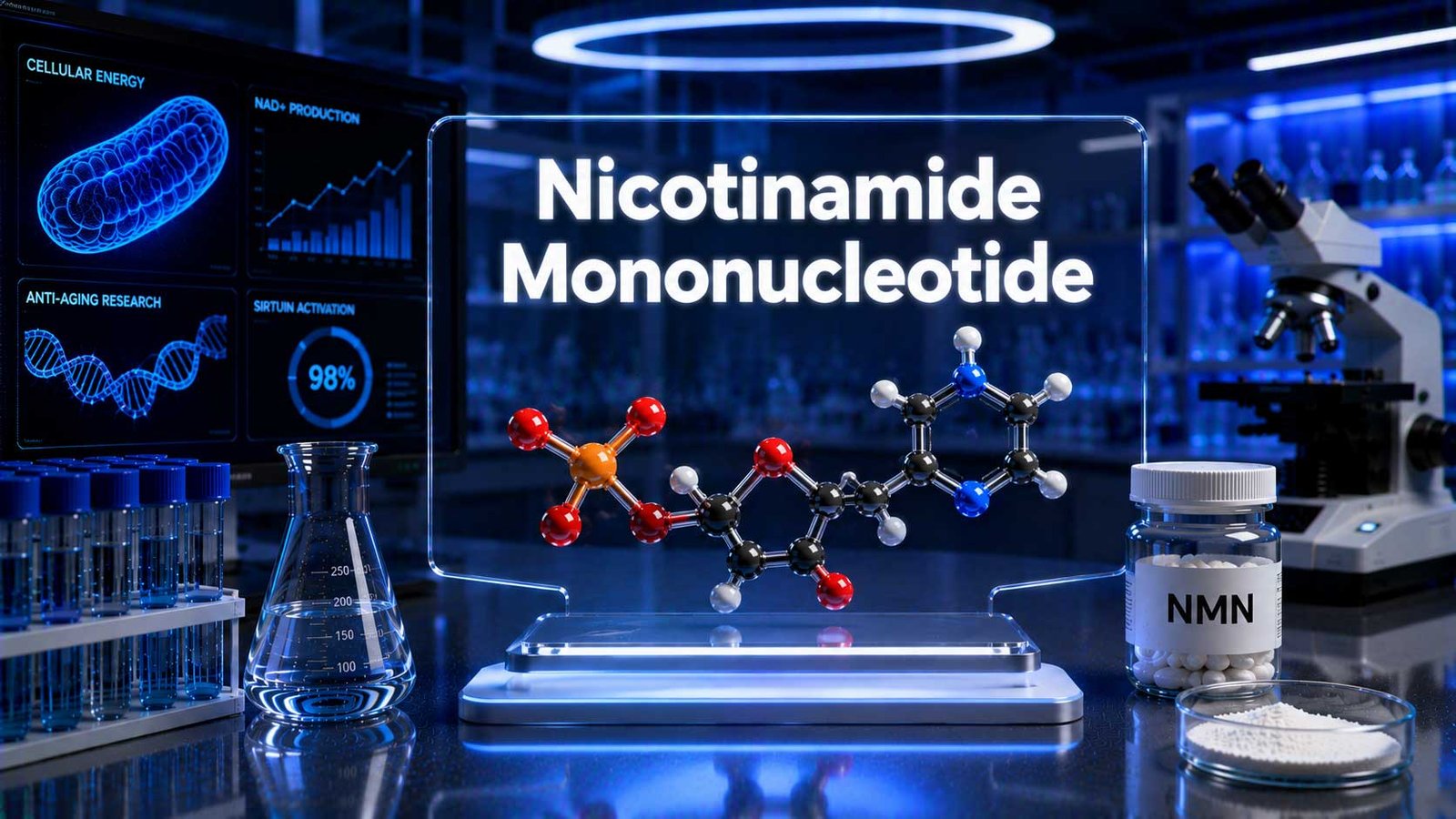
The Molecule Everyone in the Longevity World Won’t Stop Talking About
Someone showed me a bottle of NMN and asked me, half-embarrassed, whether she was wasting her money. That was years ago, back when Nicotinamide Mononucleotide was still mostly a name whispered in biohacker forums and university labs. It isn’t whispered anymore. Walk into almost any supplement shop, scroll through almost any wellness newsletter, and you’ll bump into it — usually next to bold claims about turning back the clock.
Here’s the thing, though. Underneath the marketing noise, there’s an actual molecule doing actual biochemistry, and it deserves a clear-eyed look rather than either blind enthusiasm or reflexive dismissal.
Table of Contents


Nicotinamide Mononucleotide, often shortened to NMN, is a naturally occurring compound found in every cell of your body. Chemically, it’s a nucleotide built from a nicotinamide group, a ribose sugar, and a phosphate group. Its job, in the simplest possible terms, is to serve as a direct precursor to NAD+ (nicotinamide adenine dinucleotide) — a coenzyme so fundamental to cellular energy production that life without it, quite literally, isn’t possible for more than a few seconds. NAD+ powers hundreds of biochemical reactions, from converting food into usable energy to repairing damaged DNA to keeping the enzymes called sirtuins active, the ones long associated with lifespan regulation in model organisms.
And here’s where the story gets interesting, and also where it gets complicated: NAD+ levels decline steadily as we age. By the time most people reach midlife, they may be running on a fraction of the NAD+ they had in their twenties. This decline has been linked, in research settings, to slower metabolism, reduced mitochondrial efficiency, and a general fraying at the edges of cellular resilience. Since NMN sits just one enzymatic step away from NAD+, the logic driving the entire NMN supplement boom is straightforward: if you can raise NMN levels, you can raise NAD+ levels, and maybe, just maybe, you can nudge some of those age-related declines in a better direction.
Is it that simple? Not quite. Nothing about aging biology ever is, and I say that as someone who has spent a good chunk of a career sifting through supplement trends that promised the moon and delivered a light drizzle. But NMN is different from most of what crosses my desk in one important respect — it isn’t relying purely on rodent data and marketing copy. Human clinical trials have started to accumulate, and while the picture is still forming, it’s forming with actual data rather than anecdote.
What makes Nicotinamide Mononucleotide worth a serious conversation, rather than a skeptical eye-roll, is the sheer breadth of what NAD+ touches. This isn’t a niche pathway relevant to one organ system. NAD+ metabolism intersects with how your muscles respond to insulin, how your brain clears metabolic waste, how your cells sense and repair DNA damage, and even how efficiently your mitochondria — the energy factories inside every cell — do their jobs. So when researchers ask whether boosting NMN can support healthy aging, they’re really asking whether you can intervene at one of the most upstream points in cellular metabolism and see downstream benefits ripple outward.
There’s also a personal dimension to why this topic resonates with so many people right now. We’re living longer, on average, than any generation before us, but “longer” and “healthier” don’t automatically travel together. A lot of people I talk to aren’t chasing immortality — they’re chasing the version of aging where you can still hike with your grandkids at seventy, still think clearly, still recover from a bad night’s sleep without needing three days to bounce back. That’s the framing NMN research tends to live in: not reversing aging, but supporting the physiological reserves that make healthy aging more achievable.
I’ll be upfront about something else too. The supplement industry has a well-earned reputation for overselling thin science, and NMN has not been immune to that. You’ll find bold headlines suggesting it can add decades to your life, based almost entirely on studies conducted in yeast, worms, or mice. Those studies matter — they’re often where promising human research begins — but they are not the same as proof that a 45-year-old office worker popping 250 milligrams a day is going to live meaningfully longer. Good skepticism isn’t the enemy of good science; it’s usually a prerequisite for it.
So that’s the terrain we’re walking into. Over the following sections, I want to dig into what the actual clinical evidence says about NMN’s potential health benefits, where you can find it in food (spoiler: not in amounts that matter much), how dosing tends to work in the research that exists, and what the honest risk picture looks like, including some regulatory drama that’s played out in the United States. My goal isn’t to sell you on NMN or talk you out of it. It’s to leave you better equipped to make your own call, with a grounded sense of what the science currently supports and what it doesn’t.
Nicotinamide Mononucleotide sits at a genuinely fascinating intersection of basic biochemistry and applied longevity science, and whatever you decide to do with that information, you deserve to have the full picture rather than the highlight reel.
Key Health Benefits
Let’s get into what the human research actually shows, because this is where things get more interesting than the average supplement aisle pitch would have you believe.
Metabolic and Insulin Sensitivity Support
The most talked-about human trial on Nicotinamide Mononucleotide came out of Washington University School of Medicine, led by researchers including Mihoko Yoshino and Samuel Klein. In a ten-week, randomized, placebo-controlled, double-blind trial, postmenopausal women who were overweight or obese and had prediabetes took 250 milligrams of NMN daily. The results showed that muscle insulin sensitivity improved meaningfully in the NMN group compared to placebo, along with favorable changes in insulin signaling within skeletal muscle tissue. Body weight and composition didn’t shift much, which tells you this wasn’t a fat-loss intervention — it was a metabolic-efficiency intervention, and a fairly targeted one at that.
I find this trial compelling not because it’s flashy, but because it used the hyperinsulinemic-euglycemic clamp, considered the gold standard for measuring how well your body responds to insulin. That’s not a subjective questionnaire or a self-reported energy score. It’s a hard physiological measurement, and it moved in the right direction.
Physical Performance and Fatigue
A separate randomized, double-blind, placebo-controlled study out of the University of Tsukuba looked at older Japanese adults taking 250 milligrams of NMN daily for twelve weeks, this time paying attention to sleep quality, self-reported fatigue, and physical performance measures like grip strength and the five-times sit-to-stand test. Interestingly, the timing of intake seemed to matter: afternoon dosing showed the largest improvements in lower-limb function and in reducing daytime drowsiness. That’s a small but practically useful detail if you’re the kind of person who likes to optimize when you take things, not just what you take.
Physical performance in older adults isn’t a vanity metric — it’s one of the better predictors we have of independence and quality of life in later decades. A modest improvement in sit-to-stand performance might not sound dramatic, but functionally, that’s the difference between getting up from a chair without help and not.
NAD+ Elevation Itself
It’s worth pausing on something that tends to get glossed over: multiple trials have confirmed that oral NMN supplementation reliably raises blood NAD+ concentrations in humans, in a dose-dependent way. A multicenter trial involving 80 healthy middle-aged adults found that NAD+ concentration and physical performance measures peaked around a daily dose of 600 milligrams, with the compound well tolerated even at 900 milligrams. This matters because raising NAD+ is the entire mechanistic premise behind everything else NMN is being investigated for. Without that first domino falling reliably, none of the downstream benefit claims would have legs.
Early Signals in Brain-Adjacent Outcomes
The evidence here is thinner and I want to be honest about that rather than overstate it. Some of the sleep-quality findings mentioned above touch on cognitive-adjacent territory, since poor sleep and fatigue are deeply intertwined with attention, mood, and mental clarity in older adults. A single-arm, open-label trial out of Keio University, involving healthy middle-aged Japanese men taking NMN for eight weeks, also reported favorable changes in sleep quality parameters and confirmed that oral NMN meaningfully raised NAD+ metabolites in peripheral tissue over time, without triggering safety concerns.
What I won’t do is dress this up as proven cognitive enhancement, because it isn’t there yet in the human literature at the rigor level I’d want before making that claim to a friend.
Cellular Energy and Recovery
Here’s a way to think about the throughline connecting these findings: NAD+ isn’t a benefit in itself so much as a resource your cells spend when they’re doing repair work, energy production, or stress response. Athletes chase recovery. Office workers chase afternoon energy that doesn’t come from a third coffee. Older adults chase resilience against the kind of physical decline that sneaks up quietly. NMN research, taken as a whole, suggests a compound that supports the metabolic substrate underlying all three, even if it’s not going to feel like flipping a switch.
A few practical takeaways worth sitting with:
- The strongest human evidence right now centers on insulin sensitivity, NAD+ elevation, and modest gains in physical performance and sleep-related fatigue in older or metabolically at-risk populations
- Doses studied in humans have generally ranged from 125 milligrams to 900 milligrams daily, with meaningful physiological effects showing up even at the lower end
- Cognitive and longevity claims remain largely extrapolated from animal data and shouldn’t be treated as settled science yet
None of this means Nicotinamide Mononucleotide is a miracle molecule. It means the human evidence, while still young, is more substantive than what you’ll find behind most trending supplements, and it’s growing in a direction that at least deserves continued attention rather than dismissal.
How These Benefits Might Actually Connect
I think it helps to step back and ask why insulin sensitivity, physical performance, and sleep quality would all move in tandem in the first place. They’re not unrelated outcomes plucked at random by researchers hunting for something positive to report. NAD+ sits at the crossroads of mitochondrial function, and mitochondria are the reason your muscle cells can respond efficiently to insulin, the reason your tissues can produce usable energy without excessive oxidative stress, and, indirectly, part of the reason poor sleep leaves you feeling like you’re wading through wet cement the next day. When researchers see improvements clustering across these seemingly separate domains, it’s at least consistent with a genuine upstream mechanism doing real work, rather than a scattershot of unrelated placebo effects.
That said, I want to resist the temptation to connect every dot too neatly. Human physiology rarely offers a clean, single-cause story, and NAD+ metabolism intersects with dozens of other systems — hormonal status, inflammation, gut health, circadian rhythm — that supplementation alone won’t override. A 250-milligram capsule isn’t competing with or replacing any of those other levers; at best, it’s supporting one piece of a much larger, interconnected system.
A Word on Individual Variability
Something else worth sitting with: none of the trials I’ve referenced show uniform benefit across every single participant. Some responded more strongly than others, which tracks with what we generally see across nutrition and supplement research more broadly. Baseline NAD+ status, metabolic health going in, age, sex, and even gut microbiome composition likely all play some role in how much benefit any individual sees from raising NMN intake. This is part of why researchers are cautious about overgeneralizing trial results from a specific population — say, postmenopausal women with prediabetes — to the general public without qualification.
If there’s a fair, evidence-grounded summary to land on here, it’s this: NMN supplementation has shown real, measurable, mechanistically plausible benefits in specific human populations under specific study conditions, primarily centered on metabolic health, NAD+ elevation, and functional performance in older or metabolically at-risk adults. That’s meaningfully more than most supplements can claim, even if it falls short of the sweeping anti-aging promises attached to it in less careful corners of the wellness world.
Dietary Sources
If you’re hoping to eat your way to meaningfully higher NMN levels, I need to manage your expectations early, because this is one of the more misunderstood corners of the whole conversation.
Where NMN Naturally Occurs
Nicotinamide Mononucleotide is present in a range of everyday foods — vegetables, fruits, and to a lesser extent, meat. The foundational research mapping this out, conducted by Katherine Mills and colleagues and published in Cell Metabolism, measured NMN content across several common foods. Edamame and broccoli came out as some of the more concentrated plant sources, with avocado and tomato contributing smaller but measurable amounts. Raw beef contained the least among the foods tested.
To put real numbers on it: edamame and broccoli have been measured in the range of roughly a quarter of a milligram to under two milligrams of NMN per 100 grams, depending on the specific sample and growing conditions. Avocado and tomato land in a similar low range. Raw beef comes in noticeably lower still. These aren’t exact, universal numbers — NMN content varies with ripeness, variety, growing conditions, and which part of the plant gets analyzed — but they give you a workable sense of scale.
Why Food Alone Won’t Get You There
Here’s the reality check. Clinical trials investigating NMN’s effects on insulin sensitivity, NAD+ elevation, and physical performance have used doses in the range of 125 to 900 milligrams daily. To reach even the lower end of that range through broccoli alone, you’d be looking at eating tens of kilograms of it in a single day. That’s not a diet plan; that’s a logistics problem. Food-based NMN intake, even from a very deliberately constructed diet heavy in edamame, cruciferous vegetables, and avocado, is going to land in the low single-digit milligrams per day at best.
I don’t say this to discourage you from eating well — quite the opposite. A diet rich in vegetables, legumes, and fruit supports NAD+ metabolism through multiple pathways, not just direct NMN content. Niacin (vitamin B3) and its relatives, abundant in whole grains, poultry, fish, and legumes, feed into NAD+ biosynthesis through a completely different route than dietary NMN does. So the food conversation and the supplement conversation aren’t really in competition with each other; they’re addressing overlapping but distinct mechanisms.
A Practical Way to Think About Food Sources
If you want to lean into a diet that at least nominally supports the NAD+ system, here’s where I’d point you:
- Edamame and broccoli, ideally lightly cooked or eaten raw when palatable, since heavy processing appears to reduce measurable NMN content
- Avocado and tomato as consistent, easy additions to salads, sandwiches, or sides
- Cabbage and cucumber, which show up repeatedly in food-composition analyses as modest contributors
- Lean proteins like fish and poultry for niacin, which supports NAD+ synthesis through the salvage pathway rather than direct NMN conversion
Treat this as a supporting habit within an already sensible eating pattern, not a substitute for anything you’re doing intentionally to raise NAD+ levels. If someone tells you they’ve built an entire longevity protocol around eating extra broccoli for the NMN content specifically, I’d gently suggest the vegetables are doing plenty of good for other reasons — fiber, antioxidants, micronutrients — even if the NMN contribution itself is a rounding error compared to supplement doses studied in trials.
The Bigger Biological Picture
It’s also worth understanding that dietary NMN doesn’t simply walk straight into your bloodstream and become cellular NMN. Digestion breaks a lot of it down, and your gut and tissues have their own complex handling of NAD+ precursors before anything reaches the cells where it matters. This is part of why researchers interested in meaningfully shifting NAD+ levels have focused on supplementation rather than food fortification — the concentrations achievable through diet simply don’t approach what’s been tested and shown to produce measurable physiological change in trials.
So where does that leave the food angle? Genuinely useful as part of a broader nutrient-dense diet, genuinely interesting from a biochemistry standpoint, but not a realistic vehicle if your actual goal is to replicate what’s been studied in the clinical literature. That distinction matters, because I’ve seen people convince themselves that a big vegetable smoothie is doing the same job as a measured supplement dose, and biologically, that’s just not an accurate comparison.
Cooking, Storage, and Freshness
One detail that tends to get lost in the shuffle: preparation method appears to influence how much NMN actually survives in your plate of food. Heavy processing, prolonged high-heat cooking, and extended storage all seem to reduce measurable NMN content in vegetables, which lines up with what we already know about many delicate, water-soluble plant compounds. If you’re already eating broccoli or edamame regularly and want to make the most of whatever NMN content is there, lighter cooking methods — steaming briefly rather than boiling for extended periods, or eating certain vegetables raw when that’s palatable — are a reasonable, low-effort adjustment. It won’t transform the numbers dramatically, but it’s a sensible habit that costs nothing.
Comparing Plant and Animal Sources
It’s worth noting the pattern that shows up consistently across food-composition research: plant foods, particularly legumes and cruciferous vegetables, tend to outperform animal foods when it comes to measurable NMN content. This runs a bit counter to how people often think about nutrient density, where animal products frequently take the spotlight. For NMN specifically, though, the vegetable garden wins. That doesn’t make animal protein irrelevant to the broader NAD+ picture — niacin from poultry, fish, and lean meats still feeds into NAD+ synthesis through its own distinct pathway — but if you’re specifically curious about foods carrying measurable NMN itself, the produce aisle is doing more of the heavy lifting than the meat counter.
Setting Realistic Expectations
I’d rather be straightforward with you than let this section trail off vaguely. If your primary interest in Nicotinamide Mononucleotide is genuinely tied to the outcomes studied in clinical trials — meaningful NAD+ elevation, measurable changes in insulin sensitivity, or functional performance gains — dietary intake alone isn’t going to get you there, full stop. That’s not a failure of vegetables; it’s simply a reflection of how dilute NMN concentrations are in whole foods compared to what’s been isolated and concentrated in supplement form. Where food absolutely does matter is in supporting the broader metabolic environment your cells are operating in, which is worth doing regardless of what you decide about supplementation.
Dosage & Deficiency
This is the section where I want to be the most careful, because dosage questions are exactly where good information gets watered down into vague, unhelpful advice — or worse, into confident-sounding numbers that aren’t actually backed by anything solid.
What “Deficiency” Even Means Here
Unlike a vitamin such as B12 or vitamin D, there’s no established clinical deficiency syndrome for Nicotinamide Mononucleotide specifically. Nobody walks into a doctor’s office with a diagnosable NMN deficiency the way they might with iron-deficiency anemia. What we do know, with reasonably strong evidence, is that NAD+ concentrations decline with age across multiple tissues — a pattern documented consistently in both animal models and, more recently, in human tissue sampling. So the more accurate way to frame this isn’t “NMN deficiency,” but rather “age-associated NAD+ decline,” a distinct and better-supported concept.
That distinction matters because it reframes the entire conversation. Supplementing NMN isn’t about correcting a deficiency disease. It’s about attempting to counteract a well-documented downward trend in a coenzyme that becomes scarcer as we get older, with the working hypothesis that keeping levels higher for longer might support better metabolic and cellular function.
What Doses Have Actually Been Studied
Human clinical trials give us our best real-world reference points, and they cluster in a fairly consistent range:
- 125 milligrams twice daily (250 milligrams total) was used in the Washington University trial on insulin sensitivity in prediabetic women, and separately in the Tsukuba trial on sleep and physical performance in older adults
- A dose-ranging trial out of a multicenter study tested 300, 600, and 900 milligrams daily over 60 days in healthy middle-aged adults, finding that NAD+ concentration and physical performance measures peaked around the 600-milligram mark
- An 8-week open-label trial in middle-aged Japanese men used 250 milligrams daily (two 125-milligram capsules) and confirmed steady, chronological increases in NAD+ metabolites in peripheral tissue over the treatment period
Put together, most of the meaningful clinical signal in humans has come from daily doses somewhere between 250 and 600 milligrams. That doesn’t mean higher doses don’t work or aren’t safe — we’ll get into safety data shortly — but it does mean the sweet spot in existing research clusters well below the higher-dose products some brands market.
Why More Isn’t Automatically Better
I’ll be honest: the dose-ranging trial I mentioned above found that 600 milligrams outperformed 900 milligrams on some measures, which is a useful reminder that biological systems often follow a curve rather than a straight line. Beyond a certain point, adding more of a precursor molecule doesn’t necessarily translate into more downstream benefit, especially once your body’s conversion machinery is already working near capacity. This is a pattern seen across plenty of nutrient and precursor supplementation research, not just NMN specifically.
Practical Considerations Around Timing and Form
A few things worth knowing if you’re trying to make sense of product labels and dosing schedules:
- Sublingual and liposomal NMN formulations are marketed as having better absorption than standard capsules, though head-to-head human comparisons of these delivery methods remain limited
- The Tsukuba trial’s finding that afternoon dosing produced better results on drowsiness and lower-limb function than morning dosing suggests timing may matter more than most people assume, though this is a single study and shouldn’t be treated as gospel
- Splitting a daily dose, as several trials did, rather than taking it all at once, mirrors how the body’s own turnover of NAD+ precursors tends to work throughout the day
The Honest Caveat
None of the dosing information here should be read as medical advice, and I mean that sincerely rather than as boilerplate. Individual factors — kidney function, existing metabolic conditions, medications, pregnancy status — all matter enormously and aren’t something a general article can account for. If you’re considering NMN supplementation, especially at the higher end of studied doses, a conversation with a healthcare provider who knows your full picture is worth far more than any range of numbers I can hand you here.
What the research does support is that the doses studied and found effective in humans are considerably more modest than the highest amounts some supplement companies push, and that alone is useful context the next time you’re standing in front of a shelf full of competing NMN products with wildly different milligram counts on the label.
Why Trials Chose the Doses They Did
It’s worth understanding that dosing in early-phase human trials isn’t chosen arbitrarily. Researchers typically start with amounts informed by animal studies, scaled down using established conversion methods that account for differences in metabolism between species, then adjusted based on safety data from earlier, smaller human trials. That’s part of why you see a fairly tight cluster of doses across independent research groups working in different countries — 125 milligrams, 250 milligrams, 300 milligrams, up through 600 and 900 milligrams — rather than a wide, scattered range. These aren’t marketing numbers; they’re numbers that emerged from a fairly deliberate, cautious escalation process designed to establish both safety and a workable effective range before anyone starts asking bigger questions about long-term outcomes.
Age and Baseline Status Likely Matter
Something else worth factoring in, even though the direct evidence is still limited: a 30-year-old with no metabolic concerns and a 65-year-old with early insulin resistance are starting from very different NAD+ baselines. Most of the trials showing the clearest benefit recruited middle-aged or older participants, often with some degree of existing metabolic risk. That’s not a coincidence — it likely reflects the reality that people with lower baseline NAD+ levels have more room to show measurable improvement, a pattern common across a lot of nutrient and precursor research. Younger, metabolically healthy individuals may simply have less room to move the needle, which is a reasonable thing to keep in mind before assuming a dose that worked well in a 60-year-old trial participant will produce a comparable effect in someone in their late twenties.
Building a Sensible Starting Point
If you’re weighing where to start, absent a specific reason to go higher, the lower-to-middle end of the clinically studied range — somewhere in the 250-milligram territory, taken consistently rather than sporadically — represents the most evidence-backed starting point available right now. Consistency also appears to matter more than most people assume; the trials showing benefit involved daily intake sustained over eight to twelve weeks, not occasional or intermittent use. A capsule taken a few times a month isn’t really testing the same thing these studies tested, and expecting comparable results from that kind of irregular pattern isn’t realistic.
Toxicity & Risks
Every promising compound eventually has to answer the same question: what happens when things go wrong, or at least, what’s the worst-case scenario look like? With Nicotinamide Mononucleotide, the honest answer is more reassuring than a lot of trending supplements can claim, but it’s not without real caveats worth understanding.
What the Safety Trials Actually Show
Several dedicated human safety studies exist, which is more than can be said for most supplement ingredients riding a wave of popularity. A Japanese research team led by Yuichiro Fukamizu evaluated the safety of a single 1,250-milligram dose of NMN in healthy adults, finding it well tolerated with no serious adverse events reported. A separate placebo-controlled trial pushed even further, testing sustained daily doses of 750 and 1,500 milligrams over four weeks in thirty healthy Japanese volunteers, monitoring blood pressure, body weight, liver and kidney markers, and general bloodwork throughout. That study reported no problematic findings across any of the monitored parameters, even at the higher dose.
Earlier work out of Keio University, led by Junichiro Irie, similarly found that oral NMN administration in healthy Japanese men didn’t produce meaningful changes in body weight, blood pressure, heart rate, or standard clinical lab values over the study period. Taken together, this body of safety research paints a fairly consistent picture: at the doses studied so far, NMN appears to be well tolerated in the short-to-medium term in healthy adults.
What We Don’t Know Yet
Here’s where I want to slow down, because “no adverse events in a study lasting eight to twelve weeks” is meaningfully different from “safe for decades of continuous use.” Long-term human data simply doesn’t exist yet for NMN, the way it might for a supplement that’s been in mainstream use for fifty years. Most of the trials I’ve referenced run for a matter of weeks to a couple of months, involve relatively small sample sizes, and often draw from fairly homogeneous populations. That’s a real limitation, not a minor technicality.
There’s also a more theoretical concern worth flagging honestly, one raised by researchers reviewing the broader NAD+ boosting field: because NAD+ supports cellular energy metabolism and DNA repair broadly, and because rapidly dividing cells — including cancer cells — also depend heavily on NAD+ availability, some scientists have raised the question of whether long-term, high-dose NAD+ precursor supplementation could theoretically support the growth of existing malignant cells, particularly in people with undiagnosed or early-stage cancer. This isn’t a proven risk in humans, and no clinical trial has demonstrated this outcome, but reviewers in the field have explicitly noted it as an open question that deserves continued long-term study rather than dismissal. I think it’s worth you knowing that concern exists, rather than pretending the entire safety conversation is fully settled.
Regulatory Status Worth Understanding
If you’ve followed NMN even loosely, you may have noticed some confusing regulatory back-and-forth in the United States. In late 2022, the FDA determined that NMN could no longer be sold under the dietary supplement category, based on a legal technicality tied to prior pharmaceutical investigation of the compound — not because of any new safety finding against it. That decision triggered years of industry pushback, citizen petitions, and legal challenges. In September 2025, the FDA reversed course and confirmed that NMN is not excluded from the dietary supplement definition after all, restoring its legal footing in the U.S. market. I raise this not because it changes the underlying biology, but because it’s a good reminder that the regulatory status of a supplement and its safety profile are two genuinely separate questions, and it’s worth not confusing headlines about one for conclusions about the other.
Quality Control Is a Real Concern
Separate from the biology entirely, there’s a practical risk that gets less attention than it should: product quality varies enormously across brands. Independent testing of commercially available NMN products has repeatedly found significant discrepancies between labeled and actual NMN content, with some products containing far less of the active compound than advertised, or in some cases, very little at all. If you’re going to supplement, buying from a manufacturer that provides third-party testing documentation isn’t optional diligence — it’s the difference between actually taking what you think you’re taking and quietly wasting your money on an underdosed capsule.
Who Should Be Especially Cautious
A few groups deserve extra caution before considering NMN supplementation, based on general principles rather than NMN-specific trial exclusions: anyone with a personal or strong family history of cancer, given the theoretical concern outlined above; pregnant or breastfeeding individuals, simply because the research hasn’t been conducted in these populations; and anyone managing complex chronic conditions or taking multiple medications, where an unstudied interaction is always a possibility worth ruling out with a professional first.
None of this is meant to scare you away from a compound with a genuinely encouraging early safety record. It’s meant to make sure “encouraging early safety record” doesn’t quietly get misremembered as “proven safe for everyone, indefinitely,” because those are two very different statements, and the difference matters.
Where the Science Leaves Us, and Where It’s Still Headed
If you’ve made it this far, you’ve probably noticed I haven’t handed you a tidy verdict, and that’s intentional. Nicotinamide Mononucleotide occupies an unusually interesting middle ground in the supplement world — not a fad built on nothing, and not yet a fully proven longevity intervention either. It’s a molecule with a clear, well-understood mechanism, a growing stack of human trials showing real physiological effects on insulin sensitivity, NAD+ levels, and functional performance in older adults, and a safety record that, so far, holds up better than most trending compounds.
What it isn’t, at least not yet, is a guaranteed anti-aging solution you can take and forget about. The honest through-line across every study I’ve looked at is modest, measurable, biologically plausible improvement — not dramatic transformation. That’s actually a good sign, scientifically speaking. Real physiology tends to move in small, defensible increments, not miracle leaps, and NMN’s data so far fits that more believable pattern rather than the too-good-to-be-true one.
If I were talking to a friend who asked me straight up whether they should try it, here’s roughly where I’d land: if you’re generally healthy, have talked to a doctor about your specific situation, and you’re curious about a compound with genuine mechanistic logic and a reasonable early safety profile, there’s a defensible case for cautious experimentation at doses in line with what’s actually been studied — not the highest number on the shelf. If you’re looking for a magic bullet that replaces sleep, movement, and a decent diet, no molecule, NMN included, is going to deliver that, and anyone promising otherwise is selling you a story rather than reporting the science.
What I’d actually encourage is patience with the research itself. Longevity science moves slower than the marketing built on top of it, and some of the most important questions — long-term safety over years rather than weeks, optimal dosing, who actually benefits most — are still being worked out in real time. A few practical takeaways worth carrying forward:
- The strongest evidence supports metabolic and functional benefits, not dramatic lifespan claims
- Doses in the 250 to 600 milligram range show up most consistently across trials with meaningful results
- Food sources contribute a negligible amount compared to supplement doses studied clinically
- Short-to-medium term safety data looks encouraging, but long-term data is still missing
- Product quality varies wildly, so sourcing matters as much as the decision to supplement at all
Aging is not a problem anyone solves with a single capsule, and Nicotinamide Mononucleotide was never going to be the exception to that rule. But as one piece within a much larger picture — sleep, movement, nutrition, stress management, and yes, potentially targeted supplementation grounded in real evidence — it’s earned a legitimate seat at the table. That’s not a dramatic conclusion, but it might be the most honest one the current science supports.
I’ll leave you with this. The people who tend to do best with a compound like this aren’t the ones chasing a single silver bullet — they’re the ones who treat it as a modest addition layered onto habits that were already working. If your sleep is a mess, your diet is mostly convenience food, and you’re sedentary five days a week, no amount of NMN is going to outrun those bigger levers. But if the fundamentals are already reasonably solid and you’re curious about a well-mechanized, cautiously promising compound with a growing human evidence base behind it, this is about as good a place to be curious as the supplement world currently offers.
It’s also worth remembering that the field is moving quickly. New trials are enrolling participants right now, some looking at longer treatment windows, others exploring different populations entirely — athletes, people with diagnosed metabolic disease, older adults at risk of cognitive decline. Whatever conclusion feels reasonable today is likely to get refined, and possibly revised, within the next few years as that data matures. That’s not a weakness of the science; it’s simply what science looks like while it’s still being built in real time, and it’s a far more honest position than pretending the book on Nicotinamide Mononucleotide is already closed.
So keep an eye on the research as it develops, stay skeptical of anyone promising more certainty than the data currently supports, and make the call that fits your own health picture — ideally with a professional who actually knows it. Whatever you decide, you’ll be making that decision from a place of genuine understanding rather than borrowed hype, and in a category this crowded with noise, that alone puts you ahead of most people reaching for the bottle.
Article Sources
At AncientHerbsWisdom, our content relies on reputable sources, including peer-reviewed studies, to substantiate the information presented in our articles. Our primary objective is to ensure our content is thoroughly fact-checked, maintaining a commitment to accuracy, reliability, and trustworthiness.
- Fukamizu, Y., Uchida, Y., Shigekawa, A., Sato, T., Kosaka, H., & Sakurai, T. (2022). Safety evaluation of β-nicotinamide mononucleotide oral administration in healthy adult men and women. Scientific Reports, 12, 14442. https://doi.org/10.1038/s41598-022-18272-y
- Irie, J., Inagaki, E., Fujita, M., Nakaya, H., Mitsuishi, M., Yamaguchi, S., Yamashita, K., Shigaki, S., Ono, T., Yukioka, H., Okano, H., Nabeshima, Y. I., Imai, S. I., Yasui, M., Tsubota, K., & Itoh, H. (2020). Effect of oral administration of nicotinamide mononucleotide on clinical parameters and nicotinamide metabolite levels in healthy Japanese men. Endocrine Journal, 67(2), 153-160. https://doi.org/10.1507/endocrj.EJ19-0313
- Kim, M., Seol, J., Sato, T., Fukamizu, Y., Sakurai, T., & Okura, T. (2022). Effect of 12-week intake of nicotinamide mononucleotide on sleep quality, fatigue, and physical performance in older Japanese adults: A randomized, double-blind placebo-controlled study. Nutrients, 14(4), 755. https://doi.org/10.3390/nu14040755
- Mills, K. F., Yoshida, S., Stein, L. R., Grozio, A., Kubota, S., Sasaki, Y., Redpath, P., Migaud, M. E., Apte, R. S., Uchida, K., Yoshino, J., & Imai, S. I. (2016). Long-term administration of nicotinamide mononucleotide mitigates age-associated physiological decline in mice. Cell Metabolism, 24(6), 795-806. https://doi.org/10.1016/j.cmet.2016.09.013
- Poddar, S. K., Sifat, A. E., Haque, S., Nahid, N. A., Chowdhury, S., & Mehedi, I. (2019). Nicotinamide mononucleotide: Exploration of diverse trends and applications required for further improvement. Biomolecules, 9(1), 34. https://doi.org/10.3390/biom9010034
- Roos, J., Zinngrebe, J., & Fischer-Posovszky, P. (2021). Nicotinamide mononucleotide: A potential effective natural compound against insulin resistance. Signal Transduction and Targeted Therapy, 6(1), 310. https://doi.org/10.1038/s41392-021-00723-z
- Yamaguchi, S., Irie, J., Mitsuishi, M., Uchino, Y., Nakaya, H., Takemura, R., Inagaki, E., Kosugi, S., Okano, H., Yasui, M., Tsubota, K., Hayashi, K., Yoshino, J., & Itoh, H. (2024). Safety and efficacy of long-term nicotinamide mononucleotide supplementation on metabolism, sleep, and nicotinamide adenine dinucleotide biosynthesis in healthy, middle-aged Japanese men. Endocrine Journal, 71(2), 153-169. https://doi.org/10.1507/endocrj.EJ23-0431
- Yi, L., Maier, A. B., Tao, R., Lin, Z., Vaidya, A., Pendse, S., Thasma, S., Andhalkar, N., Avhad, G., & Kumbhar, V. (2023). The efficacy and safety of β-nicotinamide mononucleotide (NMN) supplementation in healthy middle-aged adults: A randomized, multicenter, double-blind, placebo-controlled, parallel-group, dose-dependent clinical trial. GeroScience, 45(1), 29-43. https://doi.org/10.1007/s11357-022-00705-1
- Yoshino, M., Yoshino, J., Kayser, B. D., Patti, G. J., Franczyk, M. P., Mills, K. F., Sindelar, M., Pietka, T., Patterson, B. W., Imai, S. I., & Klein, S. (2021). Nicotinamide mononucleotide increases muscle insulin sensitivity in prediabetic women. Science, 372(6547), 1224-1229. https://doi.org/10.1126/science.abe9985

- Phosphatidic Acid: Supporting Muscle Growth and Strength - July 31, 2026
- Ceramides: Supporting Healthy Skin From Within - July 31, 2026
- Synbiotics: Combining Prebiotics and Probiotics Together - July 31, 2026