
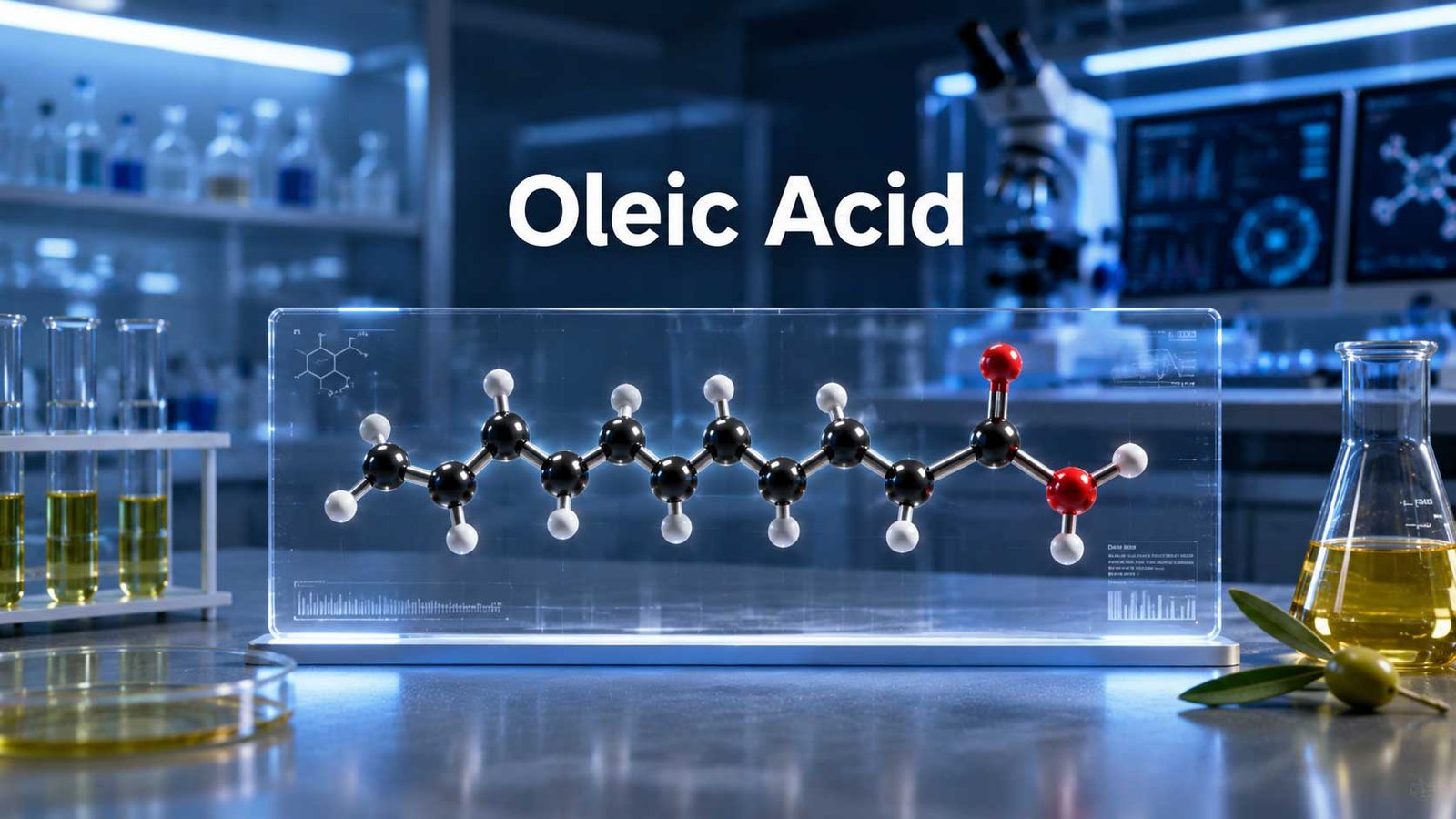
The Fat That Quietly Runs the Mediterranean Table
Pour a glug of olive oil over a plate of tomatoes and you’re not just adding flavor. You’re adding a molecule that has been studied, argued over, and occasionally overhyped for the better part of a century: oleic acid. If you’ve spent any time reading about healthy fats, you’ve probably seen the term omega-9 tossed around, usually right next to olive oil, avocados, and vague promises about heart health. Oleic acid is that omega-9. It’s a monounsaturated fatty acid, meaning its eighteen-carbon backbone carries exactly one double bond, and it happens to be the single most abundant fatty acid in the human diet worldwide, not because it’s rare or exotic, but because it’s everywhere — in the oil you cook with, the nuts you snack on, the fat marbled through your steak, and even in the fat stored in your own body.
What makes oleic acid worth a closer look isn’t novelty. It’s familiarity paired with genuine complexity. Unlike omega-3 or omega-6 fatty acids, oleic acid isn’t classified as essential, which means your body can manufacture it on its own from saturated fat precursors using an enzyme called stearoyl-CoA desaturase. So why does it get so much attention? Because the amount and source of oleic acid in your diet appears to matter for things far beyond simple calorie counting: blood pressure regulation, insulin sensitivity, LDL cholesterol behavior, and the overall stability of your cell membranes.
Table of Contents

I’ve gone back and forth on how to frame oleic acid for people because the nutrition world tends to oversimplify it into a single sentence — “it’s the good fat in olive oil” — and then moves on. That does the molecule a disservice. Oleic acid shows up in wildly different contexts. It’s the fatty acid Spanish and Italian researchers have spent decades trying to isolate as the active ingredient behind the Mediterranean diet’s cardiovascular benefits. It’s also the fatty acid that food scientists chase when they breed high-oleic sunflower and soybean varieties specifically because it resists oxidation better than its polyunsaturated cousins. And it’s the fatty acid your own liver quietly produces when you eat too many refined carbohydrates, which is a detail almost nobody mentions when they’re singing olive oil’s praises.

There’s also a genuine scientific tension running through the oleic acid literature that’s worth naming upfront, because it will keep resurfacing throughout this piece. Some large meta-analyses of cohort studies have found that olive oil consumption specifically predicts lower cardiovascular risk, while monounsaturated fat intake as a general category does not show the same consistent signal once researchers pool cohort data across hundreds of thousands of participants and separate plant and animal sources of MUFA from oleic acid and the overall MUFA-to-saturated-fat ratio. In plain language: it’s not entirely clear whether oleic acid itself is doing the heavy lifting, or whether it’s riding shotgun with olive oil’s polyphenols, vitamin E, and squalene, getting credit it doesn’t fully deserve on its own. That nuance doesn’t make oleic acid less interesting. If anything, it makes the question of “what does this fatty acid actually do in isolation” more compelling, not less.
Chemically speaking, oleic acid (cis-9-octadecenoic acid, if you want the formal name) sits in an unusual sweet spot. Saturated fats pack tightly together and tend to raise LDL cholesterol. Polyunsaturated fats are more chemically reactive and prone to oxidative damage when heated or exposed to light. Oleic acid, with its single double bond in the cis configuration, is flexible enough to keep cell membranes fluid and functional, but stable enough to hold up reasonably well under normal cooking conditions. That structural middle ground is a big part of why it dominates so many culinary oils and why your body prioritizes it for membrane construction, energy storage, and even skin barrier function.
I want to be upfront about something else before we go further: this isn’t a piece designed to convince you that olive oil is magic or that oleic acid supplements belong in your cabinet. There’s no supplement question here, really, since almost nobody takes isolated oleic acid capsules — it’s a dietary fat, not a nutrient you’re likely to be short on. What’s actually useful is understanding where oleic acid fits into the bigger nutritional picture: what it does inside your body, where you’re already getting it (probably more than you think), how much is reasonable, and where the line between “beneficial” and “just more fat calories” actually sits. That last point matters more than people assume. A tablespoon of olive oil and a tablespoon of any other fat both carry roughly 120 calories, and no amount of oleic acid’s reputation changes basic energy balance.
So consider this a working tour through oleic acid’s actual biology and the state of the evidence behind it — the genuinely interesting parts, the overstated parts, and the parts that are still being sorted out by people running clinical trials in Barcelona, Naples, and Boston right now. Whether you’re the kind of person who reads ingredient labels obsessively or you just want to know if your olive oil habit is doing anything, there’s substance here worth sitting with.
Key Health Benefits
Oleic acid’s health reputation didn’t come out of nowhere, but it also didn’t arrive as cleanly as the wellness industry likes to suggest. The research spans decades, several countries, and a mix of observational cohorts, randomized controlled trials, and mechanistic lab work. Here’s what actually holds up when you look past the headlines.
Cardiovascular Support, With an Asterisk
The most famous evidence for oleic acid’s benefits comes from the PREDIMED trial, a large Spanish randomized controlled study that assigned over 7,000 people at high cardiovascular risk to either a Mediterranean diet supplemented with extra-virgin olive oil, a Mediterranean diet supplemented with nuts, or a low-fat control diet. After a median follow-up of 4.8 years, the group assigned extra-virgin olive oil showed roughly a 31 percent relative reduction in heart attack, stroke, and cardiovascular death compared with the low-fat control group. That’s a genuinely striking number for a dietary intervention, and it’s part of why olive oil, and by extension oleic acid, earned such a strong reputation.
But here’s where I think people get sloppy. PREDIMED tested whole extra-virgin olive oil, not isolated oleic acid. A related analysis from the same cohort found that participants with the highest baseline consumption of total olive oil and extra-virgin olive oil specifically had 35 and 39 percent lower cardiovascular disease risk respectively compared to those consuming the least, with each additional 10 grams per day of extra-virgin olive oil linked to roughly a 10 percent drop in cardiovascular disease risk and a 7 percent drop in mortality risk. Extra-virgin, cold-pressed olive oil carries far more than oleic acid — it’s loaded with polyphenols, hydroxytyrosol, and vitamin E, all of which have their own documented antioxidant effects. A broader meta-analysis of 32 cohort studies covering over 840,000 people found something worth sitting with: olive oil consumption specifically predicted lower cardiovascular disease and stroke risk, but MUFA intake as a general category did not show the same consistent benefit. So the honest takeaway is that oleic acid appears to be part of a beneficial package, particularly when it arrives via minimally processed olive oil, rather than a magic bullet on its own.
Blood Pressure and Vascular Function
One of the more mechanistically interesting findings involves blood pressure. A well-cited study from a Spanish research group found that oleic acid, not the minor polyphenol compounds people usually credit, was responsible for olive oil’s blood-pressure-lowering effect in animal models. The researchers demonstrated that olive oil’s hypotensive effect stems from its oleic acid content, proposing that oleic acid gets incorporated into cell membranes where it alters membrane lipid structure in a way that modulates G protein-mediated cell signaling, ultimately reducing blood pressure, while soybean oil, which is low in oleic acid, produced no such effect. It’s a nice piece of mechanistic detective work — it suggests oleic acid isn’t just inert filler in olive oil but an active participant in at least one specific cardiovascular pathway.
Insulin Sensitivity and Metabolic Health
This is where things get genuinely nuanced, and where I think the “oleic acid is unambiguously good” narrative oversimplifies real biology. The KANWU study, a multi-center European randomized trial involving over 160 healthy adults, tested what happens when saturated fat in the diet is swapped for monounsaturated fat over three months. The result: insulin sensitivity improved on the monounsaturated diet and worsened on the saturated fat diet, though the effect was only statistically significant when total fat intake stayed below the group median. A subsequent review noted that insulin sensitivity in humans tends to be relatively impaired by diets low in oleic acid or rich in trans-MUFA or palmitic acid, a saturated fat, with emerging evidence that palmitic acid drives insulin resistance through inflammatory signaling in a way oleic acid does not. Cell-based research backs this up mechanistically: monounsaturated and polyunsaturated fatty acids, including oleate, not only improve insulin sensitivity in skeletal muscle cells but actively counteract the insulin-desensitizing effects of saturated fatty acids. The practical implication isn’t that oleic acid is a treatment for insulin resistance — it’s that swapping saturated fat for monounsaturated fat, rather than simply adding more fat of any kind, seems to be where the metabolic benefit lives.
Weight Management, Realistically
A systematic review of human intervention trials examining diets enriched in oleic acid found generally favorable effects on body composition markers, though the magnitude varied considerably across studies and populations, and the review’s authors were careful to note that oleic acid’s role in weight management works primarily through fat substitution patterns rather than any unique metabolic advantage of the fatty acid itself. In other words, oleic acid doesn’t burn fat or suppress appetite in any dramatic way — its benefit, where it exists, comes from what it displaces in the diet.
The Broader Umbrella: Cancer, Skin, and Endocrine Outcomes
A recent umbrella review pulling together systematic reviews and meta-analyses on olive oil and oleic acid across cardiovascular, metabolic, cancer, mortality, and dermatological outcomes offers a useful reality check. The review found that each 10 grams per day increase in olive oil intake was associated with a 0.22 mg/dL increase in HDL cholesterol and improved endothelial function, and concluded that olive oil is a genuinely beneficial dietary choice for people with type 2 diabetes and cardiovascular disease, as well as a strong option for topical skin application in immobilized patients. But the same review flagged that the quality of 77 percent of the underlying evidence was only low to moderate by GRADE standards, with 69 percent of studies showing low or critically low methodological quality. That’s not a reason to dismiss the benefits — it’s a reason to hold them with appropriately calibrated confidence rather than treating oleic acid as a settled cure-all.


Dietary Sources
If you’re wondering whether you need to actively seek out oleic acid, the honest answer is probably not — you’re almost certainly already eating plenty of it, whether or not you’ve ever thought about it. Oleic acid shows up across an enormous range of food categories, from the obvious ones to some genuinely surprising sources.
Olive Oil, the Reference Point
Olive oil is the food most closely associated with oleic acid for good reason. Oleic acid accounts for up to 70 to 80 percent of the total fatty acid content in extra virgin olive oil, which is an extraordinarily high concentration compared to most other common cooking fats. That said, not all olive oil is created equal in terms of what accompanies the oleic acid. Extra-virgin olive oil retains the polyphenols and antioxidant compounds that get stripped out during the refining process used for “light” or “pure” olive oil varieties, so if you’re buying olive oil specifically hoping to capture the full range of benefits associated with the research, cold-pressed extra-virgin is where the evidence actually points.
Avocados and Avocado Oil
Avocado has become something of a nutritional celebrity over the past decade, and its fat profile is a big reason why. Research on avocado oil composition found that oleic acid is the main fatty acid in avocado oil, constituting between 50 and 65 percent of total fatty acids, depending on the variety. A detailed compositional study of four avocado varieties grown in Morocco found notable variation, with oleic acid content ranging up to roughly 61 percent depending on cultivar, alongside meaningful amounts of beta-sitosterol and alpha-tocopherol. The whole fruit carries this fat profile too, not just the extracted oil, which is part of why a mashed avocado on toast behaves nutritionally more like a fat source than a typical fruit.
Nuts and Seeds
Almonds, macadamia nuts, pecans, cashews, and hazelnuts all lean heavily monounsaturated, with oleic acid typically making up a substantial share of their fat content — macadamia nuts in particular can run especially high in oleic acid relative to other tree nuts. Peanuts, technically a legume but nutritionally grouped with nuts, also contribute meaningfully. If you snack on a handful of almonds most days, you’re getting a steady, unglamorous but genuine source of oleic acid alongside fiber, magnesium, and vitamin E.
High-Oleic Vegetable Oils
This is the category most people overlook entirely, and it’s actually become a bigger part of the food supply than most consumers realize. Plant breeders have spent decades developing high-oleic versions of sunflower, canola, and safflower oil specifically because oleic acid resists oxidative breakdown better than the polyunsaturated fats those crops normally produce. Conventional sunflower oil typically runs somewhere between 14 and 39 percent oleic acid, but high-oleic sunflower oil varieties range from roughly 75 to 91 percent oleic acid, putting them in the same neighborhood as olive oil. These oils show up constantly in packaged snack foods, restaurant fryers, and shelf-stable products specifically because of that stability advantage — so if you eat processed food with “high oleic sunflower oil” or “high oleic canola oil” on the label, you’re consuming a concentrated oleic acid source without necessarily realizing it.
Animal Fats
Oleic acid isn’t exclusive to plant foods. It’s a significant component of lard, tallow, chicken fat, and the fat marbled through beef and pork. This surprises people who assume monounsaturated fat is a “plant food thing,” but animal fats are actually mixed profiles containing saturated, monounsaturated, and small amounts of polyunsaturated fatty acids together. Pasture-raised and grass-fed meats tend to shift that ratio somewhat, but even conventional animal fats carry meaningful oleic acid content.
Dairy and Eggs
Butter, cheese, and egg yolks contain smaller but non-trivial amounts of oleic acid mixed in with their saturated fat content. It’s easy to think of dairy fat as purely saturated, but the fatty acid profile is more of a blend than most nutrition labels let on.
Reading the Label vs. Reading the Whole Food
Here’s a habit I’d genuinely encourage: when you see “oleic acid” or “monounsaturated fat” highlighted on packaging, pause before assuming it’s a green light. A granola bar cooked in high-oleic sunflower oil is still a granola bar, sugar content and all. The oleic acid content tells you something true about the fat quality, but it says nothing about the rest of the ingredient list. Compare that with eating an actual avocado or drizzling actual olive oil on a salad — in those cases, the oleic acid arrives bundled with fiber, micronutrients, and, in the case of extra-virgin olive oil, a meaningful dose of polyphenols that isolated oleic acid on a spec sheet simply doesn’t carry. The fatty acid is identical either way, chemically speaking, but the nutritional context around it is not, and that context is usually what determines whether a food belongs in your regular rotation.
A Practical Shopping List
If you’re trying to build a diet that leans naturally toward oleic acid-rich foods without overthinking it, a reasonable working list looks like this:
- Extra-virgin olive oil, for cooking at moderate heat and for dressings
- Avocados, whole, rather than avocado-oil-based snack products
- Raw or dry-roasted almonds, macadamias, cashews, and pecans
- Natural nut butters with no added oils or sugar
- Pasture-raised eggs and meats, which shift the fat profile modestly in a favorable direction compared to conventional versions
None of these require precise measuring or tracking. They’re simply foods where oleic acid shows up as part of a broader nutritional package worth having in your kitchen regularly, rather than a number you’re chasing in isolation.
The bigger picture here is that oleic acid isn’t a nutrient you need to hunt for — it’s woven through an unusually broad swath of the food supply, from the obviously healthy (olive oil, avocado, almonds) to the obviously less so (fried snack foods cooked in high-oleic oil for shelf stability). That duality is worth keeping in mind, because “contains oleic acid” tells you almost nothing about whether a food belongs in a healthy pattern of eating.
Dosage & Deficiency
This is the section where oleic acid starts to look genuinely different from nutrients like vitamin C or omega-3 fatty acids, because there isn’t a recommended daily allowance, an estimated average requirement, or even an official adequate intake level for it. That’s not an oversight — it reflects something real about the biology.
Why There’s No Official Number
Because your body can synthesize oleic acid endogenously from saturated fat using the enzyme stearoyl-CoA desaturase-1, it doesn’t meet the biological definition of an essential nutrient. Essential fatty acids, by contrast, are the ones your body genuinely cannot make on its own — linoleic acid (omega-6) and alpha-linolenic acid (omega-3) — and those are the fats that carry actual dietary reference intakes because a true deficiency is physiologically possible. Reflecting this, national nutrition authorities set intake guidance for total fat and for omega-3 and omega-6 polyunsaturated fats specifically, but based on a lack of evidence for a dietary requirement, no estimated average requirements or recommended dietary allowances have been set for total fat, saturated fatty acids, monounsaturated fatty acids, or cholesterol. Oleic acid falls into that same gap. There’s no number to hit, and there’s no established deficiency syndrome tied specifically to inadequate oleic acid intake, because your liver will simply manufacture more if dietary intake runs low, provided you’re consuming enough total fat and calories to support that synthesis.
The Practical Framework: Total Fat, Not Isolated Oleic Acid
Since there’s no oleic-acid-specific target, the more useful frame is total fat intake and fat quality. Current dietary guidelines recommend that no more than 20 to 35 percent of daily calories come from fat to stay within what’s called the acceptable macronutrient distribution range. Within that fat allotment, the general recommendation from cardiovascular and metabolic research consistently favors shifting the balance toward monounsaturated and polyunsaturated sources and away from saturated fat, which is really just a roundabout way of saying: oleic acid-rich foods like olive oil, nuts, and avocado are a reasonable default for the “good fat” portion of your intake, without needing to hit any specific gram target.
For a person eating 2,000 calories a day, staying within the fat AMDR means something in the range of 400 to 700 calories from fat, roughly 44 to 78 grams. If a meaningful share of that comes from olive oil, nuts, and avocado rather than butter and fatty processed meats, you’re naturally landing in the range that shows up in the research associated with Mediterranean-pattern benefits — without needing to track oleic acid milligrams on a spreadsheet.
Can You Actually Be Deficient?
Practically speaking, no. There’s no clinical syndrome of oleic acid deficiency described in the literature, and I’d be skeptical of anyone selling you a supplement to fix one. What can happen is something more indirect: extremely low-fat diets, or diets that are almost entirely composed of lean protein and carbohydrate with minimal fat of any kind, can leave you short on total dietary fat generally, which affects fat-soluble vitamin absorption, hormone production, and cell membrane integrity. But that’s a total fat problem, not an oleic acid problem specifically, and your body’s own synthesis pathway provides a real backstop that doesn’t exist for genuinely essential fatty acids.
A Reasonable Target, If You Want One
If you want a working number rather than a vague “just eat some olive oil” suggestion, the research associated with the strongest cardiovascular outcomes tends to cluster around 40 to 50 grams of extra-virgin olive oil per day, roughly three to four tablespoons, which is the amount the PREDIMED trial’s olive oil group actually received. That’s not a formal recommendation, and it’s specific to olive oil rather than isolated oleic acid, but it’s a defensible, evidence-grounded anchor point if you want something more concrete than “moderate amounts.”
What This Looks Like Day to Day
In practice, hitting a number like that isn’t complicated. A tablespoon of olive oil used to sauté vegetables, another drizzled over a finished dish or whisked into a vinaigrette, and a modest handful of nuts as a snack gets most people into a reasonable range without any special effort or tracking. I’d rather someone build the habit of cooking with olive oil regularly than fixate on hitting an exact gram target, because consistency over months and years is what the underlying research actually measured — PREDIMED ran for nearly five years, not five days. Sporadic, occasional use of olive oil is unlikely to replicate outcomes seen in trials built around sustained daily intake over multiple years.
It’s also worth separating “how much fat should I eat” from “how much of that fat should be oleic acid-rich.” The first question has an actual guideline attached to it, the AMDR range mentioned above. The second doesn’t, and probably shouldn’t, because forcing a specific fatty acid ratio onto an otherwise reasonable diet adds complexity without much payoff. If your fat intake sits within the recommended range and a meaningful share of it comes from olive oil, nuts, seeds, and avocado rather than fried foods and processed snacks, you’re already capturing whatever benefit the research associates with oleic acid, without needing a spreadsheet to prove it.
One More Nuance Worth Knowing
Genetic variation matters here too, though the practical implications for most people are limited. Individual differences in the activity of stearoyl-CoA desaturase, the enzyme responsible for endogenous oleic acid production, mean some people synthesize more of their own oleic acid than others from the same dietary inputs. This is an active area of research connected to metabolic disease risk, but it isn’t something you can meaningfully test for or adjust dietary behavior around at this point. The practical guidance stays the same regardless: prioritize fat quality within a sensible total fat intake, and let your body’s own regulatory systems handle the rest.
Toxicity & Risks
Oleic acid has a strong safety profile, and there’s no meaningful concern about acute toxicity from consuming it through normal food sources. But “safe” and “risk-free in every context” aren’t the same thing, and there are a handful of areas worth understanding honestly rather than glossing over.
Oxidative Stability Isn’t Infinite
One of oleic acid’s genuine structural advantages is that its single double bond makes it considerably more resistant to oxidative degradation than polyunsaturated fats when exposed to heat. This is part of why high-oleic sunflower and canola oils have become popular replacements for standard vegetable oils in frying applications. But “more resistant” doesn’t mean “immune.” Research on high-oleic sunflower oil used in extended deep-frying conditions found that oleic acid was the most represented fatty acid at over 84 percent, but polyunsaturated fatty acids still decreased over 48 hours of heat treatment while trans fatty acids increased with frying time, alongside the buildup of aldehydes from the decomposition of hydroperoxides of oleic and linoleic acids. A separate comparative study of ten common vegetable oils found that oxidative stability at high temperatures correlated positively with saturated fat content and negatively with polyunsaturated fat content, while low-temperature oxidation depended on a combination of fatty acid composition and the oil’s natural antioxidant compounds like tocopherols and polyphenols. The practical takeaway: oleic-acid-rich oils are a reasonably good choice for cooking, but reused frying oil, extended high-heat exposure, and oils stripped of their natural antioxidants during refining all still degrade oleic acid over time, producing compounds you don’t want in your food regardless of the fatty acid’s inherent stability advantage.
Off-Flavors and Practical Cooking Limits
There’s a food science detail that rarely makes it into consumer nutrition articles but matters for anyone cooking with high-oleic oils regularly: research on oil formulation has found that while oleic acid is relatively stable at high cooking temperatures, when it does degrade under heat it creates negative flavor compounds that diminish the positive flavor notes normally produced by linoleic acid oxidation, which is part of why manufacturers often cap oleic acid content around 65 to 85 percent by weight rather than pushing it higher to avoid off-flavors in fried foods. This is a food quality issue rather than a health risk, but it’s a reminder that “more oleic acid” isn’t automatically “better” even from a purely culinary standpoint.
Caloric Density Is Still the Biggest Practical Risk
This is the risk people skip past most often because it’s unglamorous, but it’s genuinely the one most likely to affect someone’s health outcomes: oleic acid, like every fat, delivers roughly 9 calories per gram, more than double the density of carbohydrate or protein. Olive oil doesn’t get a caloric exemption because of its reputation. Pouring it liberally over every dish while assuming it’s “healthy so it doesn’t count” is a real and common way people quietly add several hundred extra calories a day without noticing, which can undercut any metabolic benefit associated with fat quality if total intake climbs high enough to drive weight gain.
The MUFA-Versus-Olive-Oil Question Cuts Both Ways
Remember that tension from earlier — the finding that olive oil consistently predicts better cardiovascular outcomes while monounsaturated fat as a broad category doesn’t always show the same signal in cohort studies. The flip side of that finding is a caution rather than a benefit: swapping saturated fat for oleic acid delivered via a highly processed source, stripped of accompanying antioxidants and possibly partially oxidized during manufacturing, isn’t guaranteed to replicate the outcomes seen with whole, cold-pressed olive oil or minimally processed nuts and avocado. Treating “high oleic” as an automatic health halo on a packaged food label, regardless of what else is in the product or how the oil was processed, is a reasoning error worth avoiding.
Special Populations and Genuine Unknowns
Some early laboratory and animal research has explored oleic acid’s role in cell signaling pathways connected to certain cancer processes, and findings have been mixed enough that no firm conclusions about dietary oleic acid and cancer risk in humans should be drawn from cell studies alone; the umbrella review referenced earlier found the underlying evidence quality across cancer outcomes specifically was limited. There’s no established need for anyone to avoid oleic acid-rich foods based on current human evidence, but it’s an area where “the science isn’t finished” is the honest and appropriate summary, rather than either alarm or reassurance dressed up as certainty.
People on Anticoagulant or Blood Pressure Medication
Given the documented effect oleic acid has on blood pressure through membrane-level signaling, it’s worth a brief mention for anyone on antihypertensive medication or blood thinners: dramatic, sudden changes in dietary fat composition, including a rapid jump from a low-fat diet to heavy daily olive oil use, could theoretically compound the effects of blood-pressure-lowering medication. This isn’t a documented clinical concern at the intake levels used in the research discussed here, and PREDIMED itself was conducted in people already on standard cardiovascular medications without safety issues attributed to the olive oil intervention. Still, if you’re making a significant, deliberate change to your fat intake and you’re managing blood pressure medically, mentioning it to your physician is reasonable due diligence rather than an overreaction.
Storage and Rancidity
One risk that gets almost no attention in consumer nutrition writing is simple rancidity from poor storage. Oleic acid-rich oils, olive oil included, degrade with prolonged exposure to light, heat, and air, even without ever touching a stove. A bottle of olive oil left on a sunny countertop for months will oxidize gradually, losing both flavor quality and some of the antioxidant compounds that accompany the oleic acid in extra-virgin varieties. This doesn’t make the oil dangerous in the way spoiled meat would be, but it does mean you’re likely getting less of the benefit associated with fresh, properly stored oil, and consuming more of the oxidized breakdown products that the research above associates with degraded oil quality. Buying smaller bottles you’ll use within a few months, storing them away from direct light and heat, and treating an odd or overly sharp smell as a signal to discard the bottle are simple, unglamorous practices that matter more than most people assume.
Taken together, none of this amounts to a reason for concern about oleic acid as a normal part of your diet. The risks that actually matter are practical and manageable: don’t reuse frying oil excessively, don’t assume “high oleic” on a label makes a processed food healthy, store your oils properly, and keep total fat intake, and total calorie intake, in view rather than treating any single fatty acid as exempt from basic energy math.
Bringing It Back to the Kitchen Table
After spending this much time in the research, here’s where I land: oleic acid earns its reputation, but it earns a more modest and more specific version of that reputation than the wellness industry usually grants it. It’s not a miracle molecule, and it’s not something you need to supplement, track, or worry about running short on. What it actually is, is a genuinely well-studied fatty acid that behaves differently depending on where it comes from and what accompanies it — cold-pressed olive oil delivering oleic acid alongside polyphenols and vitamin E is a different nutritional experience than the same fatty acid arriving via a bag of chips fried in high-oleic oil for shelf stability, even though a lab analysis would report similar oleic acid percentages in both.
The practical version of everything above is refreshingly simple, even if the underlying science isn’t: cook with extra-virgin olive oil where it makes sense, keep avocados and a handful of nuts in regular rotation, don’t fear the fat content of these foods, and don’t assume that “contains oleic acid” turns a processed product into a health food. Pay more attention to the whole package a food arrives in than to any single fatty acid’s name on an ingredient list. And if you’re the kind of person who likes concrete anchors, a few tablespoons of good olive oil a day, used for cooking and dressing rather than added on top of an already fat-heavy diet, sits squarely within the range associated with the strongest cardiovascular evidence we currently have.
What I find genuinely compelling about oleic acid, after all this, isn’t any single benefit — it’s the fact that a fat this common, this unglamorous, sitting in nearly every kitchen on the planet, has generated decades of serious clinical research trying to pin down exactly what it does and doesn’t do on its own. That’s rare for something so ordinary. Most of the foods carrying it — olive oil, avocado, almonds — were already reasonable choices before anyone knew the name oleic acid. The research mostly explains why they work, rather than handing us a new reason to eat differently.
Article Sources
At AncientHerbsWisdom, our content relies on reputable sources, including peer-reviewed studies, to substantiate the information presented in our articles. Our primary objective is to ensure our content is thoroughly fact-checked, maintaining a commitment to accuracy, reliability, and trustworthiness.
- Estruch, R., Ros, E., Salas-Salvadó, J., Covas, M. I., Corella, D., Arós, F., Gómez-Gracia, E., Ruiz-Gutiérrez, V., Fiol, M., Lapetra, J., Lamuela-Raventós, R. M., Serra-Majem, L., Pintó, X., Basora, J., Muñoz, M. A., Sorlí, J. V., Martínez, J. A., Fitó, M., Gea, A., Hernán, M. A., & Martínez-González, M. A. (2018). Primary prevention of cardiovascular disease with a Mediterranean diet supplemented with extra-virgin olive oil or nuts. New England Journal of Medicine, 378(25), e34. https://doi.org/10.1056/NEJMoa1800389
- Guasch-Ferré, M., Hu, F. B., Martínez-González, M. A., Fitó, M., Bulló, M., Estruch, R., Ros, E., Corella, D., Recondo, J., Gómez-Gracia, E., Fiol, M., Lapetra, J., Serra-Majem, L., Muñoz, M. A., Pintó, X., Lamuela-Raventós, R. M., Basora, J., Buil-Cosiales, P., Sorlí, J. V., Ruiz-Gutiérrez, V., Martínez, J. A., & Salas-Salvadó, J. (2014). Olive oil intake and risk of cardiovascular disease and mortality in the PREDIMED Study. BMC Medicine, 12, 78. https://doi.org/10.1186/1741-7015-12-78
- Schwingshackl, L., & Hoffmann, G. (2014). Monounsaturated fatty acids, olive oil and health status: A systematic review and meta-analysis of cohort studies. Lipids in Health and Disease, 13, 154. https://doi.org/10.1186/1476-511X-13-154
- Terés, S., Barceló-Coblijn, G., Benet, M., Álvarez, R., Bressani, R., Halver, J. E., & Escribá, P. V. (2008). Oleic acid content is responsible for the reduction in blood pressure induced by olive oil. Proceedings of the National Academy of Sciences of the United States of America, 105(37), 13811-13816. https://doi.org/10.1073/pnas.0807500105
- Zou, X., & Liu, H. (2025). Cardiovascular, metabolic and endocrine, cancer, mortality, derma, and other outcomes of olive oil and oleic acid: An umbrella review. Food Science & Nutrition. https://doi.org/10.1002/fsn3.71115
- Vessby, B., Uusitupa, M., Hermansen, K., Riccardi, G., Rivellese, A. A., Tapsell, L. C., Nälsén, C., Berglund, L., Louheranta, A., Rasmussen, B. M., Calvert, G. D., Maffetone, A., Pedersen, E., Gustafsson, I. B., & Storlien, L. H. (2001). Substituting dietary saturated for monounsaturated fat impairs insulin sensitivity in healthy men and women: The KANWU Study. Diabetologia, 44(3), 312-319. https://doi.org/10.1007/s001250051620
- Nardi, F., Lipina, C., Magill, D., Hage Hassan, R., Hajduch, E., Gray, A., & Hundal, H. S. (2014). Enhanced insulin sensitivity associated with provision of mono and polyunsaturated fatty acids in skeletal muscle cells involves counter modulation of PP2A. PLOS ONE, 9(3), e92255. https://doi.org/10.1371/journal.pone.0092255
- Nasri, C., Halabi, Y., Harhar, H., Mohammed, F., Bellaouchou, A., Guenbour, A., & Tabyaoui, M. (2021). Chemical characterization of oil from four Avocado varieties cultivated in Morocco. OCL, 28, 19. https://doi.org/10.1051/ocl/2021008
- Warner, K., Vick, B., Kleingartner, L., Isaak, R., & Doroff, K. (2003). Compositions of sunflower, NuSun (mid-oleic sunflower), and high-oleic sunflower oils. National Sunflower Association. https://www.sunflowernsa.com/uploads/35/warner_.pdf
- Ma, Y., Wang, G., Deng, Z., Zhang, B., & Li, H. (2023). Effects of endogenous anti-oxidative components from different vegetable oils on their oxidative stability. Foods, 12(11), 2273. https://doi.org/10.3390/foods12112273
- National Academies of Sciences, Engineering, and Medicine. (2024). Rethinking the acceptable macronutrient distribution range for the 21st century: A letter report. The National Academies Press. https://www.ncbi.nlm.nih.gov/books/NBK610333/

- Phosphatidic Acid: Supporting Muscle Growth and Strength - July 31, 2026
- Ceramides: Supporting Healthy Skin From Within - July 31, 2026
- Synbiotics: Combining Prebiotics and Probiotics Together - July 31, 2026