
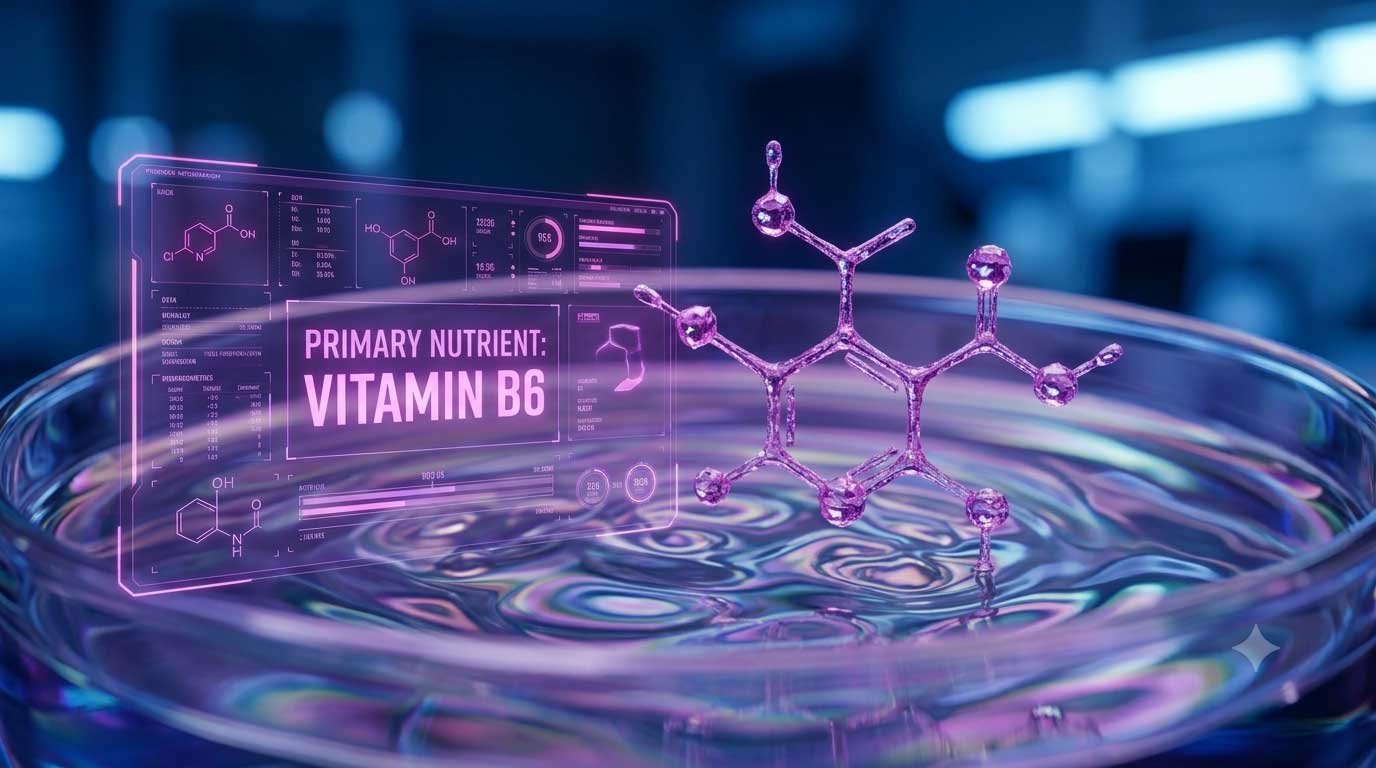
The Quiet Vitamin Running the Show Behind the Scenes
Ask most people to name a vitamin that matters and you’ll hear vitamin C, maybe vitamin D if they’ve been paying attention to the wellness headlines of the last few years. Almost nobody brings up Vitamin B6. And that’s a little strange, honestly, because this is a nutrient that’s involved in more than one hundred separate enzyme reactions in your body. A hundred. Think about that for a second. There aren’t many things in nutrition that touch that many biological processes at once.
Vitamin B6, known chemically as pyridoxine (along with its close relatives pyridoxal and pyridoxamine), is a water-soluble vitamin that your body cannot make on its own. You have to get it from food or supplements, and once it’s inside you, it gets converted into its active form, pyridoxal 5′-phosphate, or PLP for short. PLP is the workhorse. It’s the version of Vitamin B6 that actually does the heavy lifting inside your cells, acting as a coenzyme for reactions involving amino acids, glucose, and lipids since the body needs vitamin B6 for more than 100 enzyme reactions involved in metabolism.
Table of Contents


I’ve spent a long time looking at how nutrients get talked about in the health space, and there’s a pattern. Some vitamins become celebrities. They get the supplement aisle endcap, the influencer mentions, the “10x your energy” claims plastered across bottles. Vitamin B6 isn’t one of those. It just quietly does its job. It helps convert the food you eat into usable energy. It supports the production of neurotransmitters that regulate your mood. It plays a role in brain development during pregnancy and infancy as well as immune function. And it does all this without much fanfare.

Here’s what makes Vitamin B6 particularly interesting to me: it sits at this intersection between two systems that people usually think of as separate — the brain and the metabolism. We tend to compartmentalize. Mental health goes in one bucket, physical health and energy levels go in another. But pyridoxine doesn’t respect that boundary. The same coenzyme that helps your body break down protein for energy is also involved in synthesizing serotonin, dopamine, and GABA — the chemical messengers that shape how you feel, how calm or anxious you are, how well you sleep. That’s not a coincidence. That’s just how deeply interconnected our biology actually is.
Let’s talk about where this vitamin actually comes from and who needs to pay closer attention to it. Vitamin B6 is naturally present in a surprisingly wide range of foods — poultry, fish, potatoes, chickpeas, bananas, fortified cereals. Most people eating a reasonably varied diet in wealthier countries get enough of it without thinking twice. But “most people” isn’t “everyone,” and there are specific groups — older adults, people with certain kidney or autoimmune conditions, people who drink heavily, pregnant women — where B6 status becomes a genuinely relevant question rather than a background assumption.
I also want to be upfront about something before we go further: this isn’t going to be a piece that tells you Vitamin B6 is some miracle nutrient that fixes everything from anxiety to weight gain. The research is more nuanced than that, and honestly, more interesting than that. Some of the popular claims about B6 — for cognition, for mood, for PMS — have decent theoretical backing but mixed clinical trial results. Other claims, like its role in metabolism and nerve function, are about as solid as nutritional science gets. Part of what I want to do here is help you understand the difference.
There’s also a flip side worth mentioning early, because it tends to get buried in articles that only talk about benefits: Vitamin B6 can be harmful in excess, particularly from supplements. This is a vitamin where “more is better” absolutely does not apply, and I’ll get into exactly why later on. For now, just hold onto that thought — a nutrient this involved in your nervous system has to be treated with a bit of respect in both directions, deficiency and excess.
So, where does that leave us? Vitamin B6 is unglamorous, essential, deeply tied to both your brain chemistry and your metabolic engine, and, if you’re like most people, probably something you’ve never given a second thought to. That’s about to change. We’re going to walk through what it actually does for your health, where you can reliably get it, how much you need at different life stages, what happens when you don’t get enough — and what happens when you get too much. No hype, no fear-mongering. Just a clear-eyed look at a vitamin that deserves more attention than it gets.
By the time you’re done reading, you’ll probably find yourself looking at your dinner plate a little differently. That chickpea salad or grilled salmon isn’t just protein and fiber — it’s also quietly restocking one of the busiest coenzymes in your entire body.
Key Health Benefits
Brain Chemistry and Neurotransmitter Production
If there’s one area where Vitamin B6 earns its reputation, it’s brain chemistry. PLP, the active form of B6, acts as a coenzyme in the synthesis of several major neurotransmitters — serotonin, dopamine, and gamma-aminobutyric acid (GABA) — all of which are central to mood regulation, motivation, and the nervous system’s ability to calm itself down after stress. Vitamin B6 also plays a necessary role in decarboxylation reactions during tryptophan metabolism, a pathway that eventually leads to serotonin production.
This has led researchers to look closely at the relationship between B6 status and depressive symptoms. A cross-sectional study of older adults in Massachusetts found that dietary vitamin B6 intake and plasma PLP were significantly associated with lower depression scores and likelihood of depressive symptoms among the population studied. A more recent analysis using NHANES data on thousands of U.S. adults similarly found that people in the highest quartile of dietary vitamin B6 intake had a meaningfully lower risk of depression compared to those in the lowest quartile, and the same pattern held for blood PLP levels.
I want to be careful here, because it would be easy to overstate this. Association isn’t causation, and not every study agrees. A Cochrane systematic review looking specifically at vitamin B6 supplementation in older adults found no clear short-term benefit for mood or cognitive function, regardless of baseline B6 status. So what we’re really looking at is a nutrient that appears necessary for normal neurotransmitter production — deficiency clearly disrupts things — but supplementing beyond adequate levels doesn’t seem to turn into a mood-boosting intervention on its own. That distinction matters a lot in practice.
Homocysteine Regulation and Cardiovascular Support
Vitamin B6 also plays a supporting role in something called the methionine cycle, which involves an amino acid called homocysteine. Elevated homocysteine levels have been linked in observational research to increased cardiovascular risk and, separately, to cognitive decline in older populations. PLP is a required cofactor for enzymes that help metabolize homocysteine, working alongside folate and vitamin B12 in this process.
This is one of those biochemical relationships that sounds abstract until you realize it’s part of why B-complex vitamins get grouped together so often in supplement formulations and dietary guidance. They’re not interchangeable, but they are interdependent — a deficiency in one can throw off how effectively the others function.
Immune Function
Vitamin B6 is involved in immune function as well, contributing to processes involved in white blood cell and antibody production. This gets far less attention than the brain-related benefits, probably because it’s less dramatic and harder to market, but it’s a legitimate part of what this vitamin does day to day inside a functioning immune system.
Energy Metabolism
This might be the least glamorous of the benefits, and also the most foundational. PLP is a required coenzyme in glycogenolysis — the process of breaking down stored glycogen into glucose for energy — and it’s also involved in amino acid and lipid metabolism more broadly. Athletes and physically active people sometimes take particular interest in B6 for this reason, since amino acid metabolism ramps up with higher protein intake and physical training. That said, needing more protein processed doesn’t automatically mean needing more supplemental B6; adequate intake through diet is typically sufficient even for active individuals.
Pregnancy-Related Benefits
Vitamin B6 has a long history of use for nausea during pregnancy, sometimes referred to as morning sickness. It’s one of the more well-established therapeutic applications of this vitamin, often used alone or in combination with other treatments under medical guidance, precisely because pyridoxine’s role in neurological signaling extends to the nausea and vomiting pathways involved in early pregnancy.
Taken together, these benefits paint a picture of a vitamin that’s less about dramatic transformation and more about maintaining the steady background hum of biochemical processes that keep your brain, blood vessels, immune system, and metabolism running the way they’re supposed to. It’s foundational, not flashy — and honestly, most of the genuinely important nutrients in the human body work that way.

Dietary Sources
Animal-Based Sources
If you eat meat, fish, or poultry, getting adequate Vitamin B6 is generally not difficult. Poultry, fish, and organ meats are all rich sources of vitamin B6, and they tend to deliver a meaningful percentage of daily needs in a single serving. Chicken breast, turkey, tuna, and salmon are all solid, reliable contributors. Organ meats like beef liver are particularly concentrated sources, though admittedly not something most people are eating on a weekly basis these days.
Here’s a rough sense of where B6 shows up on your plate if you eat animal products regularly:
- Poultry (chicken, turkey) — consistently good source across most cuts
- Fish (salmon, tuna, halibut) — high in B6 alongside beneficial omega-3s
- Beef and pork — moderate contributors, varies by cut
- Organ meats (liver) — very concentrated, though less commonly consumed
Plant-Based Sources
For people eating plant-forward or fully plant-based diets, Vitamin B6 is still very achievable, which is reassuring given how essential it is. Potatoes and other starchy vegetables are among the major sources of vitamin B6 for Americans, and fruit other than citrus also contributes significantly to typical dietary intake.
Chickpeas deserve a specific mention because they’re genuinely one of the best plant sources available — a cup of cooked chickpeas provides a substantial chunk of the daily requirement, which is part of why hummus, roasted chickpeas, and chickpea-based salads are such quietly efficient choices nutritionally. Bananas are another commonly cited source and tend to come up in almost every B6 food list, largely because they’re accessible, inexpensive, and easy to eat daily without much thought.
Other solid plant contributors include:
- Chickpeas and other legumes (lentils, kidney beans)
- Potatoes, sweet potatoes, and other starchy vegetables
- Bananas
- Fortified breakfast cereals, which are engineered specifically to help close nutritional gaps
- Spinach and other leafy greens, in smaller but still useful amounts
Fortified and Supplemental Sources
Because of how food manufacturing works in many countries, fortified cereals and grain products have become a significant, if somewhat underappreciated, source of Vitamin B6 for the general population. This matters particularly for people whose diets skew toward processed convenience foods but who still end up meeting a decent chunk of their B6 needs simply because the products they’re already eating have been fortified.
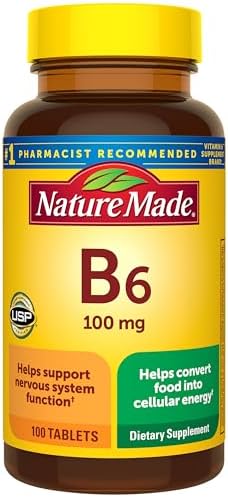
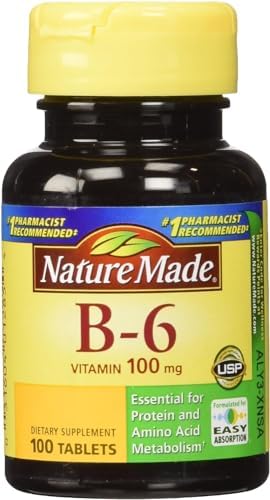
For those who do supplement, vitamin B6 in dietary supplements usually comes in the form of pyridoxine, and it appears both in standalone B6 products and, more commonly, folded into multivitamins and B-complex formulations.
Practical Takeaway on Sourcing
What strikes me about the sourcing picture for Vitamin B6 is how forgiving it is compared to some other nutrients. There’s no single “bottleneck” food group you have to prioritize. Whether you eat a lot of meat or none at all, whether you lean toward starchy vegetables or leafy greens, there’s a reasonably clear path to adequate intake. The exceptions tend to be less about dietary pattern and more about individual circumstances — certain medications, malabsorption conditions, alcohol use disorder, or advanced age, all of which can interfere with how well your body absorbs or utilizes the B6 you’re consuming, regardless of how much is actually on your plate.
This is worth sitting with for a moment, because it reframes the conversation. For most healthy adults, the question isn’t “how do I get more Vitamin B6 into my diet” — it’s more a matter of maintaining the varied, reasonably balanced eating pattern that already covers this nutrient along with a dozen others. The people who genuinely need to think harder about B6 sourcing are a specific subset, and we’ll get into exactly who that includes in the next section.
Dosage & Deficiency
How Much Vitamin B6 Do You Actually Need
Recommended intakes for Vitamin B6 shift depending on age, sex, and life stage, which is fairly typical for water-soluble vitamins. For most adults, daily recommended amounts land somewhere in the range of 1.3 to 1.7 milligrams, with requirements increasing somewhat for adults over 50, largely because absorption efficiency tends to decline with age. Pregnant and breastfeeding women have higher requirements as well, reflecting the vitamin’s role in fetal brain development and increased maternal metabolic demand.
The U.S. Food and Drug Administration set a Daily Value of 1.7 mg for adults and children age four and up, a figure used specifically to help people compare nutrient content across food and supplement labels. It’s worth noting that this DV isn’t identical to the more granular, age-specific Recommended Dietary Allowances, but it’s a reasonably useful reference point for everyday label-reading.
Populations at Higher Risk of Deficiency
Deficiency in Vitamin B6 is relatively uncommon in people eating a varied diet, but it’s far from rare in specific populations. A few groups deserve particular attention:
- Older adults, due to reduced dietary intake and less efficient absorption
- People with chronic kidney disease, especially those on dialysis
- People with autoimmune conditions such as rheumatoid arthritis, where inflammation appears to affect B6 metabolism
- Individuals with alcohol use disorder, since alcohol interferes with the conversion of B6 to its active form
- People taking certain medications, including isoniazid (used for tuberculosis), some anti-seizure drugs, and penicillamine — all of which can bind to or deplete pyridoxine
What Deficiency Actually Looks Like
Vitamin B6 deficiency doesn’t tend to announce itself with one dramatic symptom. Instead, it shows up as a cluster of overlapping issues: microcytic anemia (a type of anemia related to impaired hemoglobin synthesis, since B6 is involved in that pathway too), dermatitis, glossitis (an inflamed, swollen tongue), depression and confusion, and a weakened immune response. In more severe or prolonged cases, deficiency has also been linked to seizures, particularly in infants, which is part of why B6 status during pregnancy and early infancy gets so much specific attention in clinical nutrition.
What makes deficiency symptoms tricky diagnostically is that they overlap heavily with symptoms of other nutrient deficiencies — folate and B12 in particular — so a clinician working through a differential usually needs bloodwork rather than symptoms alone to pin down exactly what’s going on.
Testing and Practical Monitoring
For people concerned about their B6 status — maybe due to a medical condition, medication use, or persistent unexplained symptoms — plasma PLP testing is the standard method for assessing status, since it reflects the active, functional form of the vitamin rather than total intake alone. This isn’t something most healthy people need to routinely check, but for the higher-risk groups listed above, it’s a reasonable conversation to have with a healthcare provider rather than something to self-diagnose from a symptom checklist online.
The Bigger Picture on Dosage
Here’s the thing about dosage guidance that I think gets lost in a lot of health content: the recommended intake numbers exist because they represent what’s needed to prevent deficiency and support normal physiological function in the vast majority of healthy people — not because hitting some higher number produces extra benefit. With Vitamin B6 specifically, that distinction becomes genuinely important, because unlike many water-soluble vitamins where excess is simply excreted with minimal consequence, B6 has a real ceiling where more stops being neutral and starts being a problem. That’s exactly what we’re getting into next.
Toxicity & Risks
Why Vitamin B6 Toxicity Is Different From Most Water-Soluble Vitamins
Most people assume water-soluble vitamins are basically impossible to overdose on — your body just flushes out what it doesn’t need through urine, right? That assumption holds up reasonably well for something like vitamin C. It does not hold up for Vitamin B6. The only reported cases of vitamin B6 toxicity come from supratherapeutic dosing through supplements or iatrogenic causes — not from food. In other words, you are extremely unlikely to overdose on B6 from eating chickpeas and chicken breast. The risk is almost entirely a supplement-driven phenomenon.
This is worth sitting with, because it flips the usual “just take more, it can’t hurt” mentality that a lot of people carry into the supplement aisle. With B6, that mentality can genuinely backfire.
What Excess Vitamin B6 Actually Does
The primary concern with excessive Vitamin B6 intake is peripheral sensory neuropathy — nerve damage that typically presents as numbness, tingling, or a burning sensation, usually starting in the hands or feet and sometimes progressing to difficulty with balance and coordination. This sensory neuropathy usually develops at doses above 1,000 mg per day, though there are documented case reports of neuropathy occurring at doses below 500 mg per day in people taking supplements over a period of months.
What’s genuinely unsettling about this is the paradox involved: the symptoms of B6 toxicity closely mirror the symptoms of B6 deficiency. Both can produce nerve-related symptoms and a similar overall clinical picture, which makes it easy for excess intake to be misread, initially, as a sign that someone needs more of the vitamin rather than less.
A systematic review examining vitamin B6 and peripheral neuropathy across two decades of published research concluded that higher vitamin B6 levels, most often the result of nutritional supplement use, may lead to a predominantly sensory type of nerve damage, and that patients who discontinue pyridoxine supplementation subjectively report improvement in their symptoms afterward. That’s a genuinely important finding for anyone experiencing unexplained tingling or numbness who also happens to be taking a B-complex or multivitamin supplement — it’s worth checking the label.
Regulatory Responses and Real-World Exposure
This isn’t just a theoretical concern buried in case reports. Regulatory bodies in multiple countries have taken action specifically because of this issue. Australia’s Therapeutic Goods Administration reduced the maximum permitted daily dose of vitamin B6 in over-the-counter products and now requires warning labels on products containing more than 10 mg per day, following a cluster of reported neuropathy cases — some involving people who didn’t even realize they were taking B6 because it was bundled into a magnesium or zinc supplement rather than marketed as a B6 product itself.
That last point is genuinely useful practical information: a lot of people accumulate excessive B6 intake without intending to, simply because it’s included as filler in unrelated supplement formulations. If you’re taking multiple supplements simultaneously — a multivitamin, a magnesium product, a “stress support” blend, maybe a greens powder — it’s worth actually reading the labels and adding up the B6 content across all of them, because that’s exactly the kind of stacking that leads to unintentional overexposure.
Who Should Be Especially Cautious
A few groups warrant extra care around B6 supplementation specifically:
- Anyone already taking multiple supplements that might each contain B6
- People experiencing unexplained tingling, numbness, or balance issues, who should mention supplement use to their healthcare provider rather than assuming it’s unrelated
- Long-term users of high-dose B6 for conditions like premenstrual syndrome or carpal tunnel symptoms, where efficacy evidence is mixed but supplementation sometimes continues indefinitely out of habit
The Reassuring Part
None of this should read as a reason to fear Vitamin B6 broadly — deficiency carries its own real consequences, and food-based intake essentially never causes toxicity. The concern is narrow and specific: high-dose, long-duration supplementation, often stacked unknowingly across multiple products. Most reported toxicity cases, according to poison control data, involve minor or moderate effects rather than anything catastrophic, and symptoms generally improve once supplementation stops. The takeaway isn’t “avoid B6” — it’s “don’t assume more is automatically better,” which honestly is decent advice for supplementation in general.
What This Quiet Vitamin Is Really Telling Us About Health
If there’s one thing worth carrying away from all of this, it’s that Vitamin B6 is a case study in how misleading it can be to sort nutrients into simple “good” or “bad,” “more is better” or “less is better” categories. It’s essential, genuinely essential, for brain chemistry, energy metabolism, immune function, and nerve health. And it’s also a nutrient where the line between “adequate” and “too much” is narrower than most people assume, especially once supplements enter the picture.
I think what makes B6 worth understanding, beyond the specific facts, is what it represents about nutrition more broadly. We live in a culture that treats supplementation as inherently additive — as if taking more of something health-related can only help or, at worst, do nothing. Vitamin B6 quietly pushes back against that assumption. It’s a reminder that the body operates on ranges, not one-directional scales, and that even essential nutrients have an upper boundary where benefit stops and risk begins.
For most people reading this, the practical implications are refreshingly simple. If you’re eating a reasonably varied diet — some protein sources, some starchy vegetables, a banana here and there, maybe fortified cereal — you’re very likely covering your Vitamin B6 needs without any deliberate effort. That’s the beauty of a nutrient this widely distributed across food sources. The people who need to think more carefully are a specific, identifiable subset: older adults, people managing chronic kidney or autoimmune conditions, people on medications known to interact with B6, pregnant women working with their care providers on nausea management, and anyone stacking multiple supplements without tracking cumulative B6 content.
There’s also something worth saying about the mood and cognition research specifically, because I think it gets oversimplified in a lot of places. The evidence supports Vitamin B6 as necessary — deficiency clearly disrupts neurotransmitter synthesis and correlates with depressive symptoms in observational research. But necessary isn’t the same as sufficient. Supplementing beyond what your body needs doesn’t appear to reliably boost mood or sharpen cognition in people who weren’t deficient to begin with. That’s a more honest, more useful takeaway than the “take B6 for your brain” framing that shows up in a lot of casual health content.
If you’re going to walk away with one actionable habit from this, let it be this: eat a genuinely varied diet, don’t assume you need a B6 supplement unless there’s a specific reason to think you’re at risk, and if you are supplementing — for any reason — actually check how much B6 is bundled into everything you’re taking, not just the products explicitly labeled as B vitamins. That single habit addresses both ends of the spectrum this vitamin sits on: it protects against the quiet, easily-missed deficiency risk in vulnerable groups, and it protects against the less obvious but very real risk of unintentional overexposure through supplement stacking.
Vitamin B6 isn’t going to become the next trendy wellness ingredient, and honestly, that’s fine. Some of the most important things your body relies on were never meant to be exciting. They were meant to work, consistently, in the background, so you don’t have to think about them — until, occasionally, it’s worth taking a moment to understand exactly what they’re doing for you.
Article Sources
At AncientHerbsWisdom, our content relies on reputable sources, including peer-reviewed studies, to substantiate the information presented in our articles. Our primary objective is to ensure our content is thoroughly fact-checked, maintaining a commitment to accuracy, reliability, and trustworthiness.
- National Institutes of Health, Office of Dietary Supplements. (2024). Vitamin B6: Fact sheet for health professionals. https://ods.od.nih.gov/factsheets/VitaminB6-HealthProfessional/
- National Institutes of Health, Office of Dietary Supplements. (2024). Vitamin B6: Fact sheet for consumers. https://ods.od.nih.gov/factsheets/VitaminB6-Consumer/
- Hemminger, A., & Wills, B. K. (2023). Vitamin B6 toxicity. In StatPearls. StatPearls Publishing. https://www.ncbi.nlm.nih.gov/books/NBK554500/
- Muhamad, R., Akrivaki, A., Papagiannopoulou, G., Zavridis, P., & Zis, P. (2023). The role of vitamin B6 in peripheral neuropathy: A systematic review. Nutrients, 15(13), 2823. https://doi.org/10.3390/nu15132823
- Merete, C., Falcon, L. M., & Tucker, K. L. (2008). Vitamin B6 is associated with depressive symptomatology in Massachusetts elders. Journal of the American College of Nutrition, 27(3), 421-427. https://pmc.ncbi.nlm.nih.gov/articles/PMC2572855/
- Lu, J., Mao, H., Tan, Y., & Luo, G. (2024). Associations of dietary intake of vitamin B6 and plasma pyridoxal 5′-phosphate level with depression in US adults: Findings from NHANES 2005-2010. Brain and Behavior, 14(11), e70128. https://doi.org/10.1002/brb3.70128
- Malouf, R., & Grimley Evans, J. (2003). The effect of vitamin B6 on cognition. Cochrane Database of Systematic Reviews, (4), CD004393. https://doi.org/10.1002/14651858.CD004393

- Phosphatidic Acid: Supporting Muscle Growth and Strength - July 31, 2026
- Ceramides: Supporting Healthy Skin From Within - July 31, 2026
- Synbiotics: Combining Prebiotics and Probiotics Together - July 31, 2026