
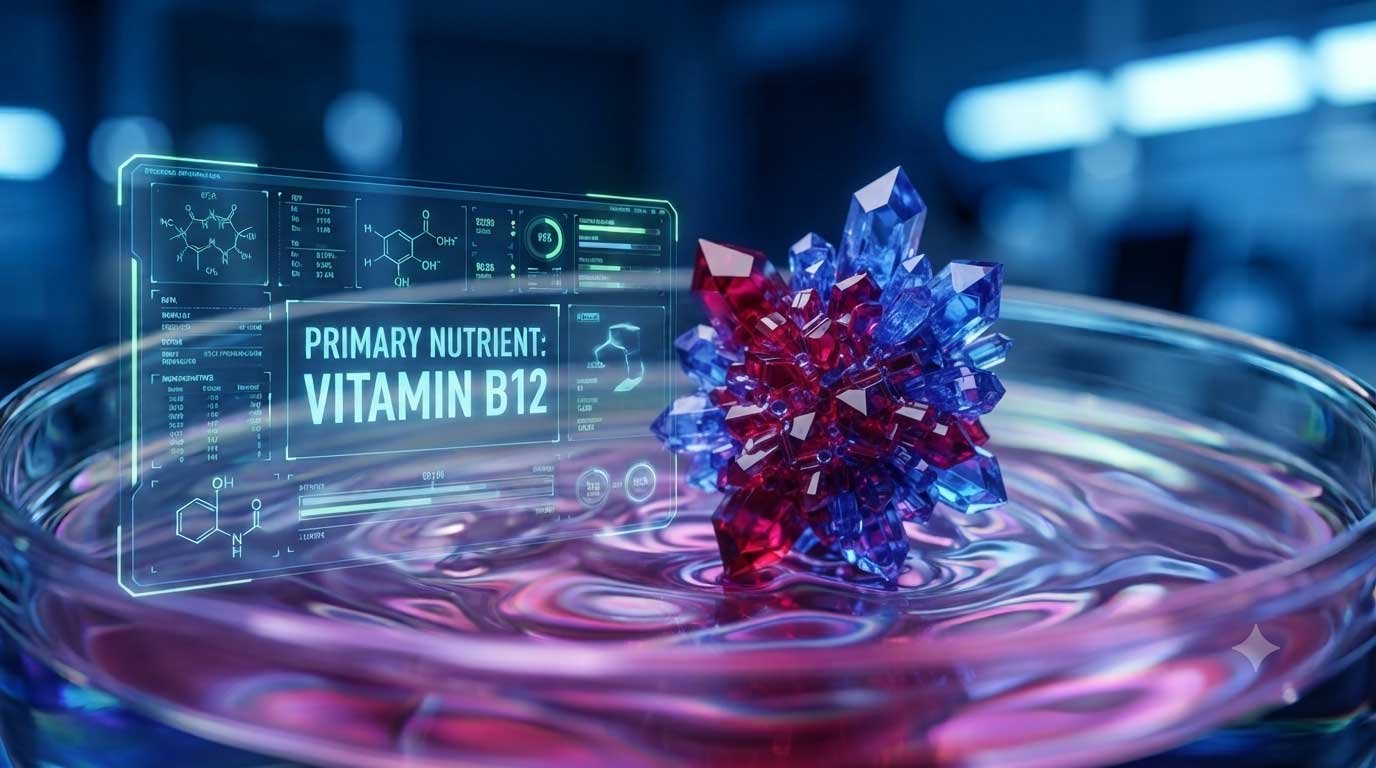
The Vitamin Your Nerves Have Been Quietly Depending On
I want to start with a confession. For years, when readers asked me about “the most important vitamin,” I’d hedge. There isn’t really one, I’d say, because the body runs on dozens of them working in tandem. And that’s still true. But if you press me hard enough, backed into a corner at a dinner party, I’ll admit that Vitamin B12 has a special place on my list. Not because it’s trendy or because supplement companies have turned it into a wellness buzzword (they have, and that’s part of the problem), but because of what it actually does inside you, quietly, every single day, without asking for credit.
Vitamin B12, also known as cobalamin, is a water-soluble nutrient that your body cannot make on its own. Not a single cell in the human body can synthesize it from scratch. Instead, we rely entirely on bacteria, mostly in the guts of animals, to produce it, and then we get it by eating those animals or their products. That’s a strange and somewhat humbling fact when you sit with it. This vitamin, essential for two of your most fundamental biological systems, your nervous system and your blood, is something you are completely dependent on external sources for. There’s no backup plan built into human physiology.
Table of Contents


Here’s what makes B12 different from a lot of the vitamins we casually toss into the same conversation. Most vitamins get discussed in terms of “boosting” something, immunity, energy, skin glow, whatever the marketing angle of the month happens to be. B12 doesn’t need embellishment. Its roles are structural and functional at a level most people don’t fully appreciate until something goes wrong. It’s involved in the formation of myelin, the fatty sheath that insulates your nerve fibers and lets electrical signals travel at the speed they need to. It’s required for the maturation of red blood cells in your bone marrow. It participates in DNA synthesis, meaning every time a cell in your body divides, and that happens billions of times a day, B12 has some involvement in that process running smoothly.

So why does it deserve its own deep dive, rather than getting lumped in with “the B vitamins” as a category? Because unlike most of its siblings in the B-complex family, deficiency in B12 can take years to show up, and when it does, some of the damage, particularly to the nervous system, may not fully reverse even after you correct the deficiency. That’s a sobering thought, and it’s one of the reasons clinicians and researchers keep circling back to this nutrient. It’s slow-moving in a way that catches people off guard.
There’s also the matter of who’s at risk, and it’s a wider net than most people assume. We tend to think of nutrient deficiencies as a problem for people with poor diets in low-resource settings, but B12 deficiency shows up in surprisingly well-nourished populations too. Older adults, whose stomachs produce less acid and intrinsic factor over time, absorb B12 less efficiently regardless of how much they eat. Vegans and strict vegetarians, since B12 occurs naturally almost exclusively in animal foods, are at elevated risk unless they’re deliberate about fortified foods or supplementation. People on certain medications, like long-term proton pump inhibitors or metformin, or those who’ve had gastric surgery, face their own absorption hurdles. It’s not a niche concern reserved for extreme diets. It’s something that touches a surprisingly broad slice of the population, and most of them have no idea.
I think what draws me back to this topic, again and again, is the mismatch between how understated B12 is in everyday conversation and how consequential it actually is biologically. We talk endlessly about vitamin D and its sunlight connection, or vitamin C and immunity, but B12 tends to get mentioned almost in passing, usually alongside “energy” claims on supplement bottles that oversimplify what it’s actually doing. The truth is more interesting and, frankly, more useful to understand. When your B12 status is adequate, your nerves conduct signals properly, your red blood cells form and mature the way they’re supposed to, and a whole cascade of cellular processes downstream of that hums along without you ever noticing. It’s the kind of nutrient whose value becomes obvious mostly through its absence.
That’s the angle I want to take here. Not a superficial rundown of “B12 is good for you,” but a real look at what this vitamin does inside the nervous system and the blood, where you can reliably get it, what happens when levels run low, how much you actually need at different life stages, and where the line sits between a helpful supplement and unnecessary excess. Along the way, I’ll try to cut through some of the noise that surrounds B12 in wellness circles, because there’s plenty of it, energy shots, sublingual sprays, injection trends among people with entirely normal levels. Some of that has merit. A lot of it doesn’t. Let’s get into the details and sort out which is which, starting with what B12 is actually doing for your nerves and your blood on a mechanistic level, because understanding the “why” makes everything that follows, dosage, sources, risk factors, make a lot more sense.
Key Health Benefits
Let’s talk mechanisms first, because I think benefits without mechanisms tend to sound like marketing copy, and I’d rather you walk away understanding why B12 matters rather than just accepting that it does.
Nerve Health and Myelin Formation
Your nervous system is essentially a vast network of wiring, and like any wiring, it needs insulation to function efficiently. That insulation is myelin, a fatty substance wrapped around nerve fibers that allows electrical impulses to travel quickly and accurately from one point to another. Vitamin B12 plays a direct role in myelin synthesis, acting as a cofactor in reactions that are necessary for producing and maintaining this protective sheath. When B12 is chronically low, myelin production falters, and nerve conduction becomes less efficient. This is why one of the earliest and most telling signs of deficiency isn’t fatigue or a vague sense of feeling “off,” it’s numbness or tingling in the hands and feet, the kind of sensation you’d get from a limb falling asleep, except it doesn’t go away.
Research examining the neurological consequences of B12 deficiency has repeatedly documented a broad spectrum of symptoms tied to this demyelinating process, ranging from peripheral neuropathy and impaired balance to more serious complications like myelopathy, damage to the spinal cord itself, in cases where deficiency goes unaddressed for extended periods as vitamin B12 deficiency is a well-recognized cause of neurological complications including peripheral neuropathy, cognitive decline, and myelopathy. What’s notable is that these neurological symptoms can appear even in people whose blood counts look otherwise normal, which is part of why B12 deficiency is so frequently missed in routine checkups.
Red Blood Cell Formation
The second pillar of B12’s role in the body involves your bone marrow, where red blood cells are manufactured around the clock. B12 works alongside folate in DNA synthesis, and DNA synthesis is non-negotiable for cell division. Red blood cells, or erythrocytes, are produced from precursor cells that divide rapidly as they mature. Without adequate B12, this maturation process stalls, and the bone marrow starts churning out red blood cells that are larger than normal but fewer in number, a condition called megaloblastic anemia. These oversized, immature cells don’t carry oxygen as efficiently as healthy ones, which is why fatigue, pallor, and shortness of breath on exertion often accompany B12-related anemia.
I find this connection genuinely fascinating because it illustrates how a single nutrient can influence two seemingly unrelated systems, nerves and blood, through the same underlying mechanism: DNA synthesis and cellular division. It’s not two separate jobs B12 is doing. It’s one core function expressing itself in two different tissue types that both happen to depend heavily on rapid, accurate cell replication.
Homocysteine Regulation and Cardiovascular Considerations
Here’s a piece that doesn’t get talked about enough. B12 is essential for converting homocysteine, an amino acid byproduct of protein metabolism, into methionine. When B12 is deficient, homocysteine accumulates in the blood. Elevated homocysteine has been associated in observational research with increased cardiovascular risk and, more consistently, with cognitive decline and dementia risk in older adults. The mechanistic link involves methylation, B12 supports the production of S-adenosylmethionine, a universal methyl donor involved in everything from DNA regulation to neurotransmitter synthesis. When that pathway is disrupted, downstream effects ripple into mood regulation, cognitive function, and vascular health.
I want to be careful here, because this is an area where the evidence is nuanced rather than definitive. Elevated homocysteine correlates with worse outcomes, but correcting B12 deficiency doesn’t automatically reverse existing cardiovascular damage, and large supplementation trials in people who already have normal B12 status haven’t shown the dramatic protective effects that early observational data hinted at. What’s clear is that maintaining adequate B12 status supports the methylation and homocysteine pathways as they’re meant to function, which matters most for people who are actually deficient or borderline.
Energy Metabolism, Without the Hype
I’d be doing you a disservice if I didn’t address the “B12 for energy” claim head-on, because it’s everywhere, energy drinks, B12 shots at wellness clinics, sublingual tablets marketed to anyone feeling sluggish. Here’s the honest version: B12 is involved in the metabolic pathways that convert food into usable cellular energy, and correcting a genuine deficiency absolutely resolves the fatigue that comes with it. But if your B12 levels are already adequate, taking more doesn’t give you an energy boost beyond what your body already has access to. The excess simply gets excreted, since B12 is water-soluble. This is one of the more persistent myths I run into, and it’s worth being blunt about: supplementing B12 when you’re not deficient is not a shortcut to more energy. It’s mostly an expensive way to produce very yellow urine.
Supporting Neurological Function Beyond Myelin
Beyond its structural role in myelin, B12 also contributes to the synthesis of neurotransmitters involved in mood regulation, including serotonin and dopamine pathways, through its participation in methylation reactions. Some research has drawn connections between low B12 status and mood disturbances, though this remains an area where correlation is easier to demonstrate than causation, and B12 should never be framed as a standalone answer to depression or anxiety. What can be said with more confidence is that adequate B12 status supports the biochemical environment in which healthy neurotransmitter production can occur, which is a meaningfully different claim than “B12 fixes your mood,” and I’d encourage skepticism toward anyone who tells you otherwise.
Taken together, these benefits paint a picture of a nutrient that isn’t flashy but is foundational. It’s not going to transform your workout recovery or give you visible results in a week. What it does is far less glamorous and far more important: it keeps two of your body’s most essential systems, your nerves and your blood, running the way they’re supposed to.
Dietary Sources
This is where B12 gets genuinely interesting from a practical standpoint, because unlike most vitamins, it isn’t distributed across a wide variety of plant and animal foods. It has a fairly narrow origin story, and understanding that story explains almost everything about who’s at risk for deficiency.
Why B12 Comes Almost Exclusively From Animal Foods
Vitamin B12 is synthesized by certain bacteria and archaea, not by plants or animals themselves. Animals accumulate B12 in their tissues by consuming these microorganisms, either directly or indirectly through the food chain, and by hosting B12-producing bacteria in their own digestive systems. This is why plant foods have no vitamin B12 unless they are fortified. It’s a detail that surprises a lot of people who assume nutrients are more evenly distributed across food categories. B12 simply isn’t. It’s concentrated almost entirely in the animal kingdom, with a few exceptions I’ll get to.
Animal-Based Sources
If you eat meat, fish, poultry, eggs, or dairy, getting sufficient B12 from food is generally straightforward. Some of the richest sources include:
- Organ meats, particularly beef liver, which contains exceptionally high concentrations of B12
- Clams and other shellfish, among the most concentrated natural sources available
- Fish such as salmon, trout, and tuna
- Beef, poultry, and pork, in more moderate but still meaningful amounts
- Eggs and dairy products, including milk, yogurt, and cheese, which provide B12 in smaller but consistent quantities
Clams, oysters, and beef liver are some of the best sources of vitamin B12, and for anyone who eats a varied omnivorous diet, hitting daily requirements through food alone is rarely a struggle. Where things get more complicated is absorption, which I’ll come back to in the next section, because having B12 in your food and actually absorbing it into your bloodstream are two different challenges.
Fortified Foods and Plant-Based Options
For people following vegan or largely plant-based diets, fortified foods become essential rather than optional. Many plant-based milk alternatives, breakfast cereals, and nutritional yeast products are fortified with synthetic B12, typically in the form of cyanocobalamin. This isn’t a lesser or inferior source, synthetic B12 in fortified foods and supplements is generally well absorbed and is often used clinically because its bioavailability is well studied and consistent.
I’ll say this plainly, because I think plant-based eaters deserve directness rather than vague reassurance: there is no reliable plant source of B12 that provides adequate amounts through diet alone. Certain algae, fermented foods, and mushrooms have been proposed as sources over the years, but the B12 analogs in many of these foods are often biologically inactive or poorly absorbed, meaning they may show up on a lab test as B12 without actually functioning as B12 in the body. If you’re vegan, fortified foods or a supplement aren’t a backup plan, they’re the plan.
Bioavailability and Absorption Realities
Here’s a nuance that often gets skipped in dietary source lists: how much B12 you eat isn’t the same as how much you absorb. Absorption relies on a multi-step process involving stomach acid, a protein called intrinsic factor secreted by the stomach lining, and specialized receptors in the distal ileum. Approximately 56% of a 1 mcg oral dose of vitamin B12 is absorbed, but absorption decreases drastically when the capacity of intrinsic factor is exceeded, which is part of why very large single doses of B12 are absorbed at a much lower percentage than smaller, more frequent doses. This is also why people with reduced stomach acid, whether from age, medication, or medical conditions, often struggle to extract B12 from food even when their diet includes plenty of it.
Research into bioavailability across different food sources has found meaningful variation as well. Animal-derived B12, particularly from muscle meats and dairy, tends to be reasonably well absorbed in healthy individuals, though cooking methods, food matrix effects, and individual digestive capacity all influence the final amount that makes it into circulation.
A Quick Word on Cooking and Storage
B12 is relatively heat-stable compared to some other water-soluble vitamins, but prolonged cooking, particularly boiling or extended high-heat preparation, can still degrade a meaningful portion of it. If you’re relying on food sources, methods like gentle cooking, steaming, or shorter cook times help preserve more of the vitamin. It’s a small detail, but for anyone trying to optimize intake through diet rather than supplements, it’s worth keeping in mind.
The bottom line on sources is this: if you eat animal products regularly, deficiency from diet alone is uncommon, though absorption issues can still catch people off guard regardless of intake. If you don’t eat animal products, fortified foods or supplementation aren’t optional extras, they’re a genuine necessity, and there’s no need to feel conflicted about that. It’s simply how this particular nutrient works.
Dosage & Deficiency
Dosage conversations around B12 tend to get muddled because the numbers involved are tiny, we’re talking micrograms, not milligrams, and because deficiency can develop so slowly that people rarely connect the dots until symptoms are well established.
How Much Do You Actually Need
Recommended intake varies by age and life stage. For most healthy adults, the recommended dietary allowance sits around 2.4 micrograms per day, a genuinely small amount when you consider how much biological work this vitamin is doing. Pregnant and breastfeeding individuals need somewhat more, generally in the range of 2.6 to 2.8 micrograms daily, to support fetal and infant neurological development. Infants and children require less in absolute terms but proportionally more relative to body weight, since B12 plays a critical role in early nervous system development.
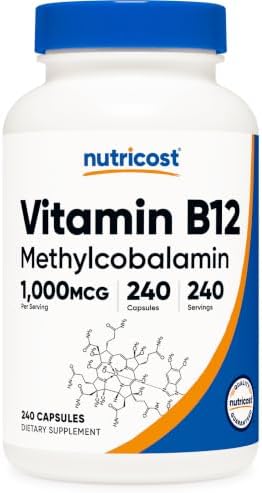
What surprises people is how modest these numbers are compared to the doses found in many commercial supplements, which often contain 500 to 1,000 micrograms or more per tablet, hundreds of times the daily requirement. That’s not necessarily dangerous, since B12 has a wide margin of safety, but it does reflect how absorption inefficiency shapes supplement formulation. Because only a fraction of a large oral dose gets absorbed, manufacturers compensate by including far more than the body technically needs, essentially betting on the law of large numbers to get a therapeutic amount across the intestinal barrier.
Who’s Actually at Risk of Deficiency
Deficiency risk isn’t evenly distributed across the population, and understanding who falls into higher-risk categories matters more than memorizing exact intake numbers.
- Older adults, due to reduced stomach acid production and lower intrinsic factor secretion, a condition sometimes called atrophic gastritis, which impairs the release of B12 from food proteins
- Vegans and long-term strict vegetarians, given the near-total absence of B12 in plant foods
- Individuals with pernicious anemia, an autoimmune condition where the immune system attacks the stomach cells responsible for producing intrinsic factor, effectively blocking B12 absorption regardless of intake
- People who’ve undergone gastric bypass or other bariatric surgery, which alters the stomach’s capacity to release and absorb B12
- Long-term users of certain medications, including proton pump inhibitors, H2 blockers, and metformin, all of which can interfere with absorption over time
- Individuals with inflammatory bowel disease or other conditions affecting the small intestine, particularly the ileum, where B12 absorption physically takes place
Recognizing the Signs of Deficiency
This is where I think the medical literature and everyday awareness diverge the most. Most people associate B12 deficiency with fatigue and pale skin, and while those are real symptoms tied to the anemia component, the neurological symptoms are often more telling and, frustratingly, can appear before any changes show up in a standard blood count.
Neurological findings associated with B12 deficiency include altered sensation, paresthesia in the extremities, gait ataxia, poor vision, dizziness, loss of taste or smell, impaired sense of vibration and proprioception, memory impairment, and personality changes, a genuinely broad and sometimes nonspecific list that makes diagnosis tricky. In adults, this often starts subtly, tingling in the fingertips or toes, a feeling of unsteadiness, or difficulty concentrating that gets chalked up to stress or aging. Left unaddressed, more serious complications can develop, including difficulty walking, memory problems that mimic early dementia, and in advanced cases, subacute combined degeneration of the spinal cord, a condition affecting both the sensory and motor pathways.
One detail that genuinely surprised me when I first came across it in the literature: the severity of neurological symptoms doesn’t always correlate with the severity of anemia. Patients presenting with neuropsychiatric symptoms due to vitamin B12 deficiency have a less severe presentation of megaloblastic anemia, and severe megaloblastic anemia is seldom accompanied by any neurological symptoms or signs. In other words, someone can have significant nerve involvement with relatively mild blood changes, or vice versa. This inverse relationship is still not fully understood, but it’s exactly why relying on a single blood marker to rule out deficiency is a mistake clinicians increasingly try to avoid.
Diagnosis and What Comes Next
If deficiency is suspected, diagnosis typically involves measuring serum B12 levels alongside markers like methylmalonic acid and homocysteine, both of which rise when B12 is functionally low even if serum levels look borderline normal. This is important because serum B12 alone can be misleading; someone can have levels that look adequate on paper while still being functionally deficient at the cellular level.
Treatment, once deficiency is confirmed, generally involves either high-dose oral supplementation or intramuscular injections, depending on the underlying cause and severity. Interestingly, research comparing these two approaches has found that oral therapy showed similar efficacy to intramuscular injections, better tolerability, and lower cost for many patients with confirmed deficiency, which has shifted clinical practice somewhat away from the assumption that injections are always necessary. That said, in cases involving absorption disorders like pernicious anemia, injections may still be the more reliable route since they bypass the digestive absorption process entirely.
The window for full recovery matters too. Hematological symptoms, the anemia component, tend to resolve fairly quickly and completely once B12 is restored. Neurological symptoms are more unpredictable. Some resolve fully within weeks to months of treatment, while longstanding or severe nerve damage may only partially improve, which is really the core argument for catching deficiency early rather than waiting for obvious symptoms to appear.
Toxicity & Risks
This is, honestly, the shortest conversation in the whole article, and there’s a good reason for that. Vitamin B12 is one of the safer vitamins on the shelf, and understanding why helps put a lot of supplement anxiety to rest.
Why B12 Has No Established Tolerable Upper Intake Level
Unlike fat-soluble vitamins such as A, D, E, and K, which can accumulate in body tissue and cause genuine toxicity at high doses, B12 is water-soluble. Excess amounts that aren’t used by the body are generally excreted through urine rather than stored in tissues where they could build up to harmful concentrations. This is a major reason why regulatory and scientific bodies evaluating micronutrient safety, including the Scientific Committee on Food, which issued an opinion on the tolerable upper intake level of vitamin B12, have not established a numeric upper limit for B12 the way they have for other vitamins. The available evidence simply hasn’t demonstrated a consistent pattern of toxicity even at doses far exceeding typical requirements.
This doesn’t mean “more is always better,” a phrase I try to steer people away from regardless of the nutrient in question, but it does mean the safety margin here is genuinely wide compared to most other vitamins and minerals.
Reported Side Effects at High Doses
That said, “no established upper limit” isn’t the same as “zero possible side effects.” At very high supplemental doses, some people report mild reactions, including headache, nausea, diarrhea, or skin reactions like acne-form eruptions or rash. These effects are uncommon and generally resolve when the dose is reduced or discontinued. They’re also far more associated with injectable, high-dose formulations used clinically for confirmed deficiency than with typical over-the-counter oral supplements taken at standard doses.
There have also been isolated reports connecting very high-dose B12 injections, particularly in combination with folic acid, to skin issues in susceptible individuals. These findings are worth being aware of, but they don’t change the overall picture: for the general population taking standard supplemental doses, adverse effects from B12 are rare.
Interactions Worth Knowing About
A few medication interactions deserve mention, not because they’re common causes of alarm, but because they’re genuinely useful to know if you’re managing a chronic condition. Certain antibiotics and medications used to treat seizures can interfere with B12 absorption or metabolism over long-term use. Metformin, widely prescribed for type 2 diabetes, is well documented to reduce B12 absorption with prolonged use, which is why many clinicians now recommend periodic B12 monitoring for patients on long-term metformin therapy. Proton pump inhibitors and other acid-reducing medications, used widely for reflux and ulcer conditions, also reduce the stomach acid needed to release B12 from food proteins, gradually increasing deficiency risk over months or years of use rather than causing acute problems.
None of this means these medications should be avoided, they’re often necessary and effective for their intended purposes. It simply means that if you’re on any of them long-term, periodic awareness of your B12 status is a reasonable thing to bring up with a healthcare provider, rather than something to worry about reactively only after symptoms appear.
Alcohol is another factor worth mentioning, though it rarely gets the attention it deserves in this context. Chronic, heavy alcohol use can damage the stomach lining and pancreas in ways that reduce both dietary intake and absorption of B12 over time, compounding whatever deficiency risk already exists from diet alone. This is less about an isolated interaction and more about a broader pattern, alcohol tends to erode several of the physiological steps B12 depends on to get from your plate into your bloodstream, from stomach acid production to intestinal integrity.
Special Considerations for Pregnancy and Infancy
Pregnancy deserves its own mention here, not because B12 becomes riskier during this period, but because the stakes of getting it wrong shift considerably. Adequate maternal B12 status supports fetal neurological development, and deficiency during pregnancy has been linked to developmental concerns in infants, along with a higher likelihood of the infant developing their own B12 deficiency in the months following birth, since a newborn’s stores are entirely dependent on what the mother provided. This isn’t a toxicity concern in the traditional sense, it’s closer to a risk of under-supplementation rather than over-supplementation, but it belongs in any honest discussion of B12 and safety because the consequences of inadequate intake during this window can be more serious and less reversible than in a typical healthy adult. Pregnant individuals following plant-based diets, in particular, should treat B12 status as a priority to discuss with a healthcare provider rather than something to guess at.
Masking Folate Deficiency
Here’s a subtler risk that doesn’t get discussed enough outside clinical circles. High-dose B12 supplementation, or B-complex formulas containing large amounts of folic acid alongside B12, can complicate the picture when someone actually has a folate deficiency. Because B12 and folate deficiency produce similar blood changes, particularly the same type of megaloblastic anemia, and because correcting one can partially mask the hematological signs of the other, self-supplementing with high doses without professional guidance can occasionally delay proper diagnosis. This is a fairly niche concern for most healthy people, but it’s relevant for anyone dealing with unexplained fatigue or anemia who’s tempted to self-treat with a B-complex before getting bloodwork done.
The Practical Takeaway on Safety
If I had to summarize the risk profile in one sentence, it would be this: B12 is not a nutrient most people need to fear in supplement form, but that doesn’t mean supplementing without a clear reason is automatically beneficial either. The real risks here aren’t about toxicity in the traditional sense, they’re about masking other issues, unnecessary spending on doses far beyond what the body can use, and, occasionally, mild and reversible side effects at very high intakes. For anyone with a confirmed or suspected deficiency, the safety margin gives clinicians plenty of room to treat aggressively without much concern for overcorrection. For everyone else, moderate, food-based intake, with fortified sources or a modest supplement for those on plant-based diets, remains the sensible approach.

Small Molecule, Big Responsibility
If there’s one thing I hope sticks with you after all this, it’s that Vitamin B12 doesn’t need to be dramatized to be taken seriously. It’s not the vitamin that’s going to transform your energy overnight or show up on a highlight reel of dramatic before-and-after wellness stories. What it does is quieter and, in a lot of ways, more essential than that. It keeps your nerves properly insulated so signals travel where they need to go. It keeps your bone marrow producing red blood cells that are actually capable of carrying oxygen efficiently. It supports a methylation pathway that touches everything from DNA regulation to neurotransmitter production. None of that makes for flashy marketing copy, but all of it matters enormously to how you feel and function day to day.
What I’ve tried to do here is give you the honest, unglamorous version of the B12 story, one where the emphasis is on understanding your own risk factors rather than reflexively reaching for a supplement because a wellness influencer told you to. If you eat a varied diet that includes animal products, your risk of deficiency from diet alone is genuinely low, though absorption issues tied to age or medication can still sneak up on anyone. If you’re vegan or largely plant-based, fortified foods or a modest, consistent supplement aren’t optional extras, they’re simply how you close a gap that diet alone can’t close, and there’s no reason to feel any way about that other than practical.
It’s also worth remembering that this vitamin doesn’t operate in isolation. Folate, iron, and B6 all intersect with B12 in overlapping metabolic pathways, which is part of why isolated supplementation sometimes fails to resolve symptoms that turn out to have more than one contributing cause. A thoughtful approach to B12 rarely means fixating on a single nutrient in a vacuum. It usually means looking at the fuller picture of diet, absorption, medication use, and life stage, and letting that picture guide whether food, fortified sources, or a supplement makes the most sense for you specifically.
The bigger lesson, for me, is about paying attention to the symptoms that don’t always get connected to a vitamin deficiency in the popular imagination. Tingling in your hands, unexplained fatigue that doesn’t improve with rest, memory that feels foggier than it used to, these are worth mentioning to a healthcare provider rather than dismissing as ordinary aging or stress, especially if you fall into one of the higher-risk categories we’ve covered. Blood tests for B12 status are simple, inexpensive, and can catch a problem well before it becomes a harder one to reverse.
I’ll leave you with this. Vitamin B12 is a reminder that the body doesn’t always announce its needs loudly. Some deficiencies show up fast and unmistakably. This one tends to creep, which is exactly why understanding it, rather than just supplementing blindly or ignoring it entirely, is the more useful path. Pay attention to your sources, know your risk factors, and treat the numbers on a supplement label with a healthy dose of skepticism rather than assuming more is automatically better.
If I were to boil this down into a handful of practical takeaways, they’d look something like this:
- If you eat animal products regularly, focus less on supplementing and more on absorption, especially as you get older or if you’re on medications that reduce stomach acid
- If you’re vegan or largely plant-based, treat fortified foods or a modest daily supplement as a routine part of your diet, not an afterthought
- Pay attention to neurological symptoms, tingling, numbness, unsteadiness, foggy memory, even when your energy levels seem otherwise fine, since nerve symptoms don’t always track neatly with anemia
- Ask for both serum B12 and, when possible, methylmalonic acid testing if deficiency is suspected, since serum levels alone can be misleading
- Don’t assume more is better once a deficiency is corrected; there’s little evidence that pushing B12 intake well beyond what your body needs delivers any additional benefit
None of this requires obsessing over the topic. Most people, most of the time, get what they need from a reasonably varied diet without giving B12 a second thought, and that’s exactly how it should work. The goal isn’t to turn this vitamin into another thing to worry about. It’s to have enough working knowledge that if something does feel off, tingling that won’t quit, fatigue that doesn’t make sense, memory that feels slower than it should, you know this is a nutrient worth ruling out rather than something that gets overlooked for years while symptoms quietly accumulate. That, more than any dosage chart or supplement recommendation, is the real value of understanding what B12 does and why it matters. A small, unglamorous molecule, carrying a genuinely large share of the responsibility for keeping your nerves and your blood working the way they’re supposed to.
Article Sources
At AncientHerbsWisdom, our content relies on reputable sources, including peer-reviewed studies, to substantiate the information presented in our articles. Our primary objective is to ensure our content is thoroughly fact-checked, maintaining a commitment to accuracy, reliability, and trustworthiness.
- National Institutes of Health, Office of Dietary Supplements. (2024). Vitamin B12: Fact sheet for health professionals. https://ods.od.nih.gov/factsheets/VitaminB12-HealthProfessional/
- National Institutes of Health, Office of Dietary Supplements. (2022). Vitamin B12: Fact sheet for consumers. https://ods.od.nih.gov/factsheets/VitaminB12-Consumer/
- Watanabe, F. (2007). Vitamin B12 sources and bioavailability. Experimental Biology and Medicine, 232(10), 1266-1274. https://doi.org/10.3181/0703-MR-67
- Moravcová, M., Siatka, T., Krčmová, L. K., et al. (2025). Biological properties of vitamin B12. Nutrition Research Reviews, 38(1), 338-370. https://doi.org/10.1017/S0954422424000210
- Ali, A. A. H., Mohamed, F. H. A., Hago, S., Elgali, I. F. E., Mohammed, H. E. S., & Mirghani, R. G. (2025). The neurological sequelae of vitamin B12 deficiency: A systematic review and randomized controlled trial. Cureus, 17(5), e83668. https://doi.org/10.7759/cureus.83668
- Nawaz, A., Khattak, N. N., Khan, M. S., Nangyal, H., Sabri, S., & Shakir, M. (2020). Deficiency of vitamin B12 and its relation with neurological disorders: A critical review. The Journal of Basic and Applied Zoology, 81(1), 10. https://doi.org/10.1186/s41936-020-00148-0
- Badar, A. (2022). Neuropsychiatric disorders associated with vitamin B12 deficiency: An autobiographical case report. Cureus, 14(1), e21476. https://doi.org/10.7759/cureus.21476
- European Commission, Scientific Committee on Food. (2000). Opinion of the Scientific Committee on Food on the tolerable upper intake level of vitamin B12. European Food Safety Authority. https://www.efsa.europa.eu/sites/default/files/efsa_rep/blobserver_assets/ndatolerableuil.pdf

- Phosphatidic Acid: Supporting Muscle Growth and Strength - July 31, 2026
- Ceramides: Supporting Healthy Skin From Within - July 31, 2026
- Synbiotics: Combining Prebiotics and Probiotics Together - July 31, 2026