
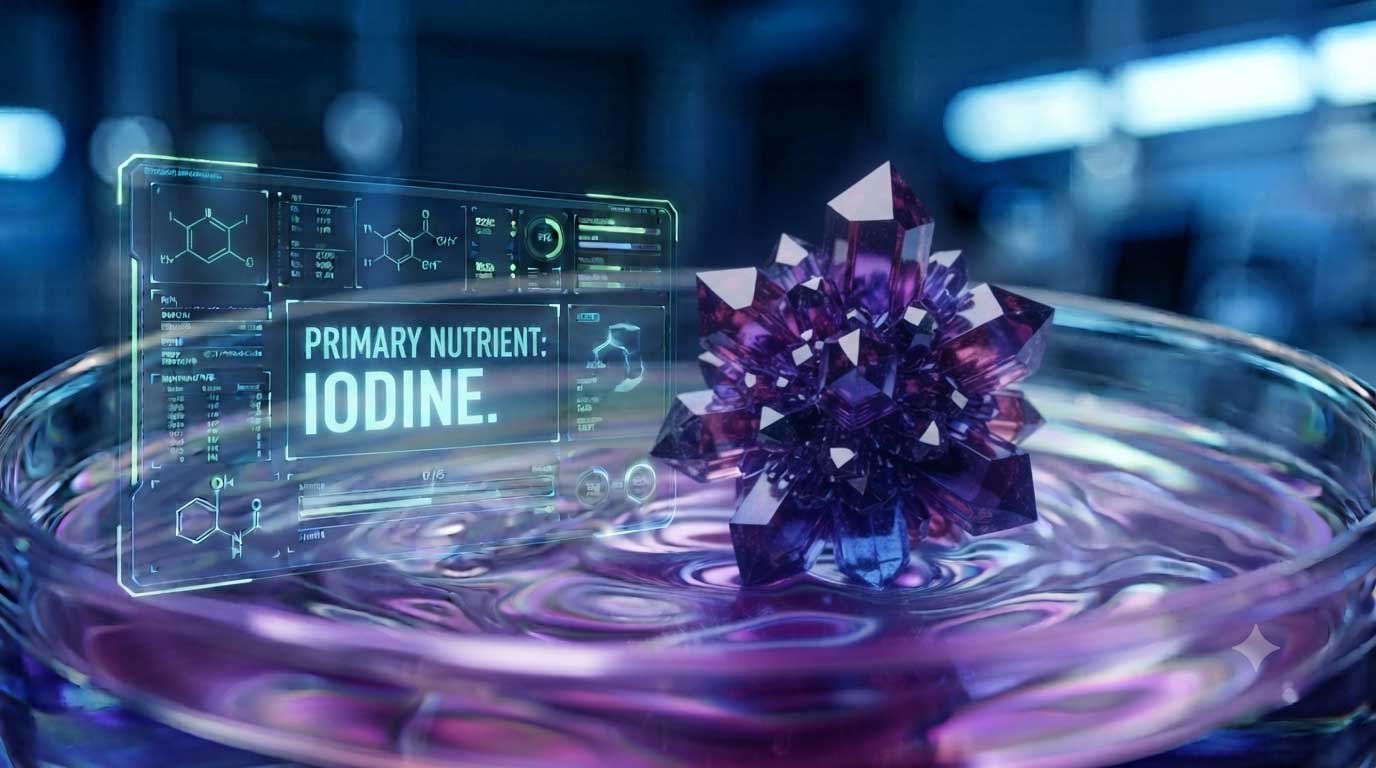
The Tiny Element Running Your Metabolism’s Engine Room
Your entire metabolic rhythm, the pace at which your heart beats, your body burns calories, and your brain fires off thoughts, depends on an element you need in such small quantities that it’s measured in millionths of a gram. That element is iodine, and most people go their whole lives without giving it a second thought until something goes wrong.
Iodine isn’t glamorous. It doesn’t have the marketing budget of vitamin C or the trendy appeal of magnesium supplements lining every wellness aisle. It’s a halogen, sitting quietly on the periodic table next to chlorine and bromine, and unless you’ve had a run-in with thyroid trouble or you’re pregnant and your doctor mentioned it in passing, there’s a decent chance nobody has ever really explained why it matters. Yet without adequate iodine, your thyroid gland physically cannot manufacture the hormones that keep your body running. Not “struggles to.” Cannot. That’s not hyperbole, it’s basic biochemistry.
Table of Contents


The thyroid, that small butterfly-shaped gland sitting low in your neck, is essentially an iodine-trapping machine. It pulls iodine out of your bloodstream and welds it onto a protein called thyroglobulin to produce two hormones: thyroxine, known as T4, and triiodothyronine, known as T3. The numbers in those names aren’t arbitrary. They refer to how many iodine atoms are bolted onto each hormone molecule. Four for T4, three for T3. No iodine, no hormone. It really is that direct a relationship, and I’ve always found that clarity kind of refreshing in a field where so much nutrition science gets murky and contested.
What makes iodine worth an entire conversation, rather than a quick footnote, is the sheer reach of what those hormones do once they’re circulating. Thyroid hormones influence how fast your cells burn fuel, how your heart and digestive system function, how your skin and hair regenerate, and critically, how a developing fetus’s brain and nervous system take shape. There’s a reason obstetricians ask about iodine intake during pregnancy checkups. Get this mineral wrong at the wrong moment in fetal development, and the consequences aren’t reversible the way a missed vitamin D dose might be.
I think part of why iodine slipped off the public radar in wealthier nations is a genuine public health success story, which is a strange thing to say about a nutrient still causing widespread problems elsewhere. Iodized salt programs, rolled out across much of the twentieth century, dramatically reduced goiter and cretinism in countries where they were once common. It worked so well that a lot of people assume iodine deficiency is a solved problem, a historical footnote from black-and-white photographs of enlarged necks in rural mountain communities. It’s not solved. It’s just less visible, and in some pockets of the population, it’s quietly creeping back.
Pregnant women, people who’ve cut iodized salt for health reasons, strict vegans without a reliable supplement plan, and anyone living somewhere the local soil is naturally iodine-poor are all walking around with a higher chance of running short. And then there’s the flip side of this story, which doesn’t get nearly enough attention: too much iodine can be just as disruptive to thyroid function as too little. This isn’t a nutrient where more is simply better, and that nuance is exactly why I wanted to lay it out properly rather than give you another generic “eat more seaweed” article.
Minerals like iodine occupy a strange niche in nutrition. They’re needed in tiny amounts, they don’t get stored efficiently in most cases, and they interact with hormone systems in ways that are easy to overlook when you’re focused on macronutrients or the vitamin of the month. But the thyroid doesn’t care about trends. It needs a steady, modest, consistent supply of iodine, day after day, to keep producing the hormones your entire body is quietly relying on.
There’s also a historical thread worth pulling on here, because it explains a lot about why iodine gets treated so seriously in public health circles compared to nutrients with far bigger marketing footprints. Before anyone understood the biochemistry, entire regions were known simply as “goiter belts,” places where enlarged thyroids were common enough to be considered almost normal, a visible marker of soil and diet rather than illness. It took until the early twentieth century for researchers to connect the dots between iodine-poor environments and these visible thyroid changes, and even longer for iodized salt to become the elegant, low-cost solution that eventually reshaped population health outcomes across much of the industrialized world. That history matters because it’s a rare case of a nutrition problem being genuinely, measurably solved at scale, and it’s part of why complacency has crept back in even as the underlying biology hasn’t changed one bit.
So let’s actually dig into what iodine does for your health, where you can realistically get it from food, how much you actually need at different life stages, what deficiency looks like when it shows up, and where the line sits for too much. I want to walk through this the way I’d explain it to a friend who just asked me over coffee why their doctor brought up iodine at their last checkup. No fluff, no fear-mongering, just the actual substance of what’s known and what it means for you.
What Iodine Actually Does Once It’s Inside You
Building the Hormones That Set Your Metabolic Pace
Let’s start with the mechanism because everything else about iodine’s health benefits flows from this single function. Once you consume iodine, whether from a pinch of iodized salt or a strip of nori wrapped around your sushi roll, your body absorbs it as iodide and shuttles it toward the thyroid gland via a transport protein called the sodium-iodide symporter. The thyroid actively concentrates iodine to levels far higher than what’s circulating in your blood, which tells you how seriously your body treats this mineral. It’s not passively absorbing it. It’s actively hunting it down and stockpiling it.
Inside the thyroid, iodine gets incorporated into thyroglobulin, and enzymatic processes convert this into T4 and T3, the hormones that then get released into your bloodstream and travel to essentially every tissue you have. T4 is the more abundant form, but it’s largely a precursor. Your liver, kidneys, and other tissues convert it into the more biologically active T3 as needed. This conversion step is part of why thyroid health isn’t just about the gland itself. It’s a whole-body system, and iodine sits right at the starting line of it.
Why Pregnancy and Early Childhood Raise the Stakes
If there’s one area where iodine’s importance becomes impossible to overstate, it’s fetal and early childhood brain development. Thyroid hormones direct the proliferation and migration of neurons during critical windows of gestation, and a developing fetus depends entirely on maternal thyroid hormone in the earliest weeks, before its own thyroid gland is even functional. Research from the Avon Longitudinal Study of Parents and Children, a large UK birth cohort, found that children born to mothers with mild to moderate iodine deficiency during early pregnancy scored lower on verbal IQ and reading assessments years later, at eight and nine years old. That’s not a subtle statistical blip. That’s a measurable, lasting cognitive difference tied to a mineral deficiency during a handful of critical weeks.
I bring this up not to alarm anyone who’s pregnant and reading this at midnight wondering if they’ve ruined something, but because it illustrates just how time-sensitive iodine’s role can be. Unlike some nutrients where a deficient stretch can be made up for later with no lasting harm, iodine deficiency during specific developmental windows can leave effects that supplementation afterward simply cannot undo.
Metabolic Regulation and Everyday Energy
Stepping away from pregnancy for a moment, iodine’s more everyday relevance is in keeping your metabolism humming along at an appropriate pace. Thyroid hormones regulate how quickly your cells use oxygen and generate energy, they influence body temperature regulation, and they play a role in how your body manages cholesterol and heart rate. People with untreated hypothyroidism, often but not always linked to iodine status, commonly report fatigue, cold intolerance, weight gain that doesn’t respond to diet changes, and a kind of mental fog that’s hard to describe unless you’ve experienced it. None of this means iodine supplementation is a magic fix for fatigue or sluggish metabolism in someone who’s iodine-replete already; correcting an actual deficiency is where the benefit lies, not layering more iodine onto an already sufficient intake.
Possible Roles Beyond the Thyroid
There’s ongoing scientific interest, still not fully settled, in whether iodine plays a role outside the thyroid gland entirely. Breast tissue, for example, concentrates iodine, and some researchers have explored a potential connection between iodine status and fibrocystic breast changes, along with a broader interest in iodine’s role in immune regulation. I want to be careful here, because this is an area where the evidence is nowhere near as solid as the thyroid hormone story, and I’ve seen plenty of supplement marketing overreach on exactly this point. What’s fair to say is that iodine’s biological footprint may extend beyond the thyroid, but the well-established, heavily researched benefit remains squarely in hormone production.
Growth and Development Beyond Infancy
Even outside the womb, adequate iodine during childhood and adolescence supports normal growth trajectories, since thyroid hormones influence bone maturation and the pacing of physical development. Kids in regions with historically low iodine intake, before salt iodization programs took hold, showed measurably shorter stature and delayed development compared to iodine-sufficient populations. It’s one more reminder that this mineral, tiny as the required dose is, threads through an awful lot of what we consider “normal” human growth.
The Ripple Effect Across Organ Systems
What strikes me most, having spent a long time looking at how single nutrients affect the body, is how far the influence of thyroid hormone actually reaches once iodine has done its initial job. Cardiovascular function depends on adequate thyroid hormone to regulate heart rate and the strength of each contraction. Digestive motility, the pace at which food moves through your gut, is influenced by thyroid status too, which is part of why both hypothyroidism and hyperthyroidism show up with opposite ends of the same symptom, one slowing digestion down and the other speeding it up. Skin, hair follicles, and even mood regulation, through interactions with neurotransmitter systems in the brain, all show measurable sensitivity to thyroid hormone levels. None of this is iodine acting directly on these tissues. It’s iodine enabling the hormone that then acts on nearly everything else, which is really the whole point of calling it foundational rather than peripheral to human physiology.
A Mineral Working in Concert, Not in Isolation
It’s worth mentioning that iodine doesn’t operate as a lone actor here. Selenium is required for the enzymes that convert T4 into the more active T3, and iron deficiency can blunt the effectiveness of iodine supplementation programs, since certain iodine-processing enzymes are iron-dependent. This is one of those details that rarely makes it into simplified nutrition advice, but it matters in practice: someone correcting an iodine deficiency while also running low on selenium or iron may not see the full expected improvement in thyroid function until those other pieces are addressed too. Nutrition, annoyingly, is rarely as clean as a single mineral fixing a single problem in isolation.

Where Iodine Hides in Your Kitchen
Seafood and Sea Vegetables: The Reliable Heavy Hitters
If you had to guess where the richest natural iodine sources sit, the ocean is a good starting assumption, and it’s correct. Saltwater fish, shellfish, and especially sea vegetables like kelp, nori, and kombu carry substantial iodine content, a reflection of how much iodine concentrates in seawater and gets absorbed up the marine food chain. Cod is a particularly strong source among common fish, and shrimp tends to be reasonably iodine-rich as well.
Seaweed deserves a specific mention because its iodine content is wildly inconsistent. A sheet of nori might contain a modest, manageable amount, while certain kelp preparations can contain iodine levels many times higher than what you’d want in a single serving. I’ve seen people start drinking kelp-based smoothies daily thinking they’re doing something virtuous for their thyroid, only to end up with iodine intakes that are, frankly, excessive. If sea vegetables are a regular part of your diet, especially kelp, it’s worth knowing roughly how much you’re consuming rather than treating it as an unlimited health food.
- Cod: a very reliable, moderate-to-high iodine source per typical serving
- Shrimp: a decent contributor, especially combined with other seafood in a meal
- Nori (dried seaweed sheets): lower and more predictable than kelp
- Kelp: extremely variable, sometimes dramatically high in iodine
Dairy and Eggs: The Underappreciated Everyday Source
Here’s something that surprises people: in many countries, dairy products are actually one of the largest contributors to iodine intake, not because milk is naturally packed with it, but because of how dairy cattle are managed. Iodine-containing sanitizers used in milking equipment and iodine supplementation in cattle feed both raise the iodine content of milk, cheese, and yogurt well above what you’d expect from the biology alone. Eggs also contribute a meaningful amount, largely concentrated in the yolk.
This is worth knowing because it means someone who’s cut dairy for lactose intolerance, ethical reasons, or a trendy elimination diet may be losing a bigger chunk of their iodine intake than they realize, without necessarily replacing it with an equivalent source.
Iodized Salt and the Elephant in the Pantry
Iodized salt remains the single most consistent public health intervention for iodine sufficiency worldwide, and for good reason. It’s cheap, it reaches nearly every household regardless of income, and a small daily amount reliably covers a meaningful chunk of the recommended intake. The catch, and it’s a big one in current dietary culture, is that a lot of the salt used in processed and restaurant food isn’t iodized. Manufacturers frequently use non-iodized salt for cost or textural reasons, which means someone who’s shifted toward eating mostly packaged or restaurant meals, even while still “using salt,” might be getting far less iodine than someone cooking at home with a shaker of iodized table salt.
There’s also the broader low-sodium health trend to consider. Reducing sodium intake is generally sound advice for cardiovascular health, but it does mean fewer opportunities to get iodine from salt, which makes the other dietary sources on this list more important for anyone actively cutting back.
Plant-Based Diets and the Gaps Worth Knowing
Plant foods are, generally speaking, poor and unreliable iodine sources. Some vegetables grown in iodine-rich soil will carry trace amounts, but soil iodine content varies enormously by region, and you have no practical way of knowing how much your produce actually contains. This puts strict vegans in a genuinely trickier spot than most other dietary groups. Without dairy, eggs, or seafood, and without consistent use of iodized salt, plant-based eaters are one of the higher-risk groups for inadequate iodine intake, and it’s an area where a modest, well-chosen supplement or seaweed source, used thoughtfully rather than haphazardly, makes practical sense.
- Iodized table salt used in home cooking: a dependable baseline source
- Dairy products: often a larger contributor than people expect
- Eggs: a smaller but steady source, concentrated in the yolk
- Fortified foods and prenatal vitamins: increasingly common and worth checking labels for
Reading Labels and Building a Realistic Weekly Pattern
I think the most practical way to approach dietary iodine isn’t to obsess over a single meal, but to think in terms of a weekly pattern. A couple of servings of dairy most days, a serving or two of seafood most weeks, eggs used regularly in cooking, and iodized salt as your default at home will comfortably cover the recommended intake for most non-pregnant adults without a single supplement involved. It’s honestly one of the more forgiving nutrients in that sense, provided you’re not deliberately avoiding every one of its major sources at once, which is really the specific combination that gets people into trouble.
Where labels actually matter is on two fronts: salt packaging, where “iodized” needs to appear explicitly rather than assumed, and prenatal or general multivitamins, where iodine content varies enormously between brands and some formulations skip it entirely. It’s a five-second check that resolves most of the uncertainty people carry around this mineral, and it’s a habit I’d genuinely recommend over trying to calculate micrograms from a spreadsheet of food composition data.
A Note on Iodine Loss During Cooking and Storage
One detail that rarely comes up: iodine, particularly from iodized salt, can degrade with heat, light, and humidity over time. Iodized salt stored for long periods, or added early in a long simmering process rather than toward the end of cooking, can lose a meaningful portion of its iodine content before it ever reaches your plate. This isn’t a reason to panic over your spice cabinet, but it’s part of why relying on a single, precise source rather than a varied pattern of iodine-containing foods tends to be the more resilient approach, since it doesn’t depend on any one ingredient behaving perfectly.
How Much Is Enough, and What Happens When You Fall Short
Recommended Intakes by Life Stage
The recommended dietary allowance for most adults sits at 150 micrograms per day, a genuinely small number when you consider how much biological work that quantity is doing. Requirements rise during pregnancy, generally cited around 220 to 250 micrograms daily, and rise again slightly during breastfeeding, up to roughly 250 to 290 micrograms, reflecting both the fetus’s and infant’s total dependence on maternal iodine status. Children need less than adults in absolute terms, scaled roughly to body size and developmental stage, but the relative importance during early childhood growth windows remains high.
These numbers aren’t arbitrary round figures pulled from thin air. They’re derived from balance studies and population data examining how much iodine is needed to maintain adequate thyroid hormone synthesis without tipping into deficiency, adjusted for the additional demands of fetal and infant development.
What Deficiency Actually Looks Like
Mild iodine deficiency is sneaky because the early symptoms are vague enough to blend into ordinary life. Fatigue, feeling cold when others don’t, subtle weight changes, and a kind of mental sluggishness are all plausible signs, but they’re also plausible symptoms of a dozen other things, which is exactly why iodine deficiency can go unnoticed for a long stretch. As deficiency becomes more pronounced, the thyroid gland itself starts working overtime to compensate, pulling in whatever trace iodine it can find, and this compensatory effort is what produces a goiter, a visibly enlarged thyroid gland at the base of the neck.
Globally, iodine deficiency remains the leading preventable cause of intellectual impairment, a statistic that tends to catch people off guard because it sounds like it belongs to a bygone era rather than the present day. The World Health Organization has tracked iodine status across regions for decades, and while iodization programs have dramatically improved the picture since the 1990s, an estimated substantial share of the world’s population still lives with insufficient iodine intake, concentrated in certain regions of Europe, parts of Africa, and areas without consistent access to iodized salt.
Who Actually Needs to Pay Closer Attention
I’d put four groups at the top of the watch list. Pregnant and breastfeeding women, given the dramatically elevated requirements and the developmental stakes involved. Strict vegans and vegetarians who don’t reliably use iodized salt or a supplement. People who’ve switched to specialty or gourmet salts, like Himalayan pink salt or sea salt, which are rarely iodized despite looking similarly “natural” or even healthier on packaging. And anyone following a low-sodium diet for cardiovascular reasons without deliberately sourcing iodine elsewhere.
There’s also a subtler risk group: people with existing thyroid conditions, where iodine status interacts with medication and disease management in ways that really should involve a conversation with an endocrinologist rather than self-directed supplementation. Iodine isn’t a nutrient where “when in doubt, take more” is a safe default, which brings us to the other side of this equation entirely.
How Deficiency Is Actually Measured
You can’t feel your way to a diagnosis here, and that’s part of the problem. Iodine status at a population level is typically assessed through urinary iodine concentration, since the body excretes most of what it doesn’t use through the kidneys within about a day. A single spot sample isn’t terribly reliable for an individual, because day-to-day intake fluctuates, but averaged across a population it gives a fairly dependable picture of whether a region is deficient, adequate, or trending toward excess. This is exactly the kind of surveillance the World Health Organization has relied on for decades to track which countries have solved their iodine problem and which haven’t. On an individual level, blood tests measuring thyroid-stimulating hormone, or TSH, alongside T4, give a clinician a window into whether the thyroid is compensating for inadequate iodine, though TSH elevation can stem from plenty of causes beyond iodine status alone.
The Full Spectrum of Iodine Deficiency Disorders
Goiter tends to get the most attention because it’s visible, but it’s really just the most obvious point on a much wider spectrum that researchers group under the umbrella term iodine deficiency disorders. At the milder end, you’re looking at subclinical hypothyroidism, subtle cognitive effects, and reduced work capacity in adults, the kind of thing that rarely gets attributed to iodine because it looks like ordinary tiredness. Moving further along the spectrum, moderate to severe deficiency during pregnancy can cause miscarriage and stillbirth, and in surviving infants, it can produce cretinism, a condition marked by severe, irreversible intellectual disability alongside physical growth abnormalities. It’s a stark word, and it’s not one I use lightly, but it’s the historically accurate term for what untreated severe maternal iodine deficiency can do to a developing child, and it’s precisely why iodization programs became a global public health priority in the first place rather than a nice-to-have.
Regional Patterns Worth Knowing
Iodine status isn’t evenly distributed, and it never has been, because it largely comes down to geology. Mountainous regions and areas prone to historical flooding or glaciation tend to have iodine-depleted soil, since the mineral leaches out over time and washes toward the sea. That’s why alpine regions of Europe, parts of the Himalayas, and certain river valleys have historically shown some of the highest rates of goiter recorded anywhere. Coastal populations, by contrast, tend to fare better simply by proximity to iodine-rich seafood and sea spray settling on crops and grazing land. Even today, with iodization programs in place across most of the world, pockets of mild to moderate deficiency persist in parts of Europe, a detail that tends to surprise people who assume deficiency is strictly a developing-world issue tied to poverty rather than geography and dietary habit.
When More Isn’t Better: The Upper Limit Problem
The Wolff-Chaikoff Effect and Why Your Thyroid Fights Back
One of the more counterintuitive things about iodine is that your thyroid has a built-in defense mechanism against getting too much of it, called the Wolff-Chaikoff effect. When iodine intake spikes acutely, the thyroid temporarily shuts down hormone production as a protective measure, preventing a sudden overproduction of thyroid hormone. In most people, the thyroid “escapes” this shutdown within a couple of weeks and resumes normal function. But in some individuals, particularly those with underlying thyroid autoimmunity or prior iodine deficiency, that escape mechanism doesn’t kick in properly, and the suppressed thyroid function persists, tipping into hypothyroidism.
This is part of why iodine’s relationship with thyroid health gets described as a U-shaped curve rather than a straight line. Both too little and too much can push thyroid function in the wrong direction, and the sweet spot in the middle is narrower than most people assume for a mineral generally regarded as safe.
Autoimmune Thyroid Concerns
Research has fairly consistently linked chronically excessive iodine intake to an increased risk of autoimmune thyroid conditions, including Hashimoto’s thyroiditis and Graves’ disease, particularly in people who are genetically predisposed. Population studies from regions that transitioned from iodine deficiency to iodine sufficiency, sometimes overshooting into excess through aggressive salt iodization, have documented rising rates of thyroid autoantibodies and subclinical hypothyroidism following the shift. The proposed mechanism involves excess iodine increasing the immunogenicity of thyroglobulin, essentially making the thyroid’s own proteins look more like a target to an overactive immune system.
I don’t say this to scare anyone off iodized salt, which remains a genuinely important public health tool. But it’s a good example of why treating any nutrient as purely a “more is better” story misses the biological nuance almost every time.
The Tolerable Upper Intake Level and Practical Cautions
For most adults, the tolerable upper intake level sits around 1,100 micrograms per day, roughly seven times the standard recommended intake. Reaching that level through food alone is genuinely difficult unless you’re eating large amounts of kelp or other iodine-dense seaweed regularly. Supplements are a far more common route to excess, particularly high-dose kelp tablets, some of which have been found in testing to contain wildly unpredictable iodine amounts, sometimes many multiples of what the label claims.
Iodine-based antiseptics, certain medications, and iodinated contrast dye used in some medical imaging procedures are additional, less obvious sources people rarely think to factor into their overall intake. If you’re already consuming a reasonably varied diet with dairy, occasional seafood, and iodized salt, the case for adding a high-dose iodine supplement on top is genuinely weak for most people, and worth discussing with a healthcare provider rather than assuming it’s a harmless extra.
Jod-Basedow and Iodine-Induced Hyperthyroidism
There’s a flip side to the Wolff-Chaikoff shutdown, and it’s worth understanding because it plays out in a specific, identifiable group of people. In individuals with a pre-existing nodular goiter or a thyroid that’s been quietly compensating for years of mild iodine deficiency, a sudden large increase in iodine intake can trigger the opposite problem: iodine-induced hyperthyroidism, sometimes called the Jod-Basedow phenomenon. Portions of a thyroid gland that have essentially been running semi-autonomously, producing hormone somewhat independently of normal regulatory signals, can suddenly have far more raw material available and ramp up hormone output sharply. This isn’t a common everyday occurrence, but it’s well documented enough in older adults and in regions transitioning rapidly from iodine deficiency to iodine sufficiency that clinicians watch for it deliberately when iodine intake changes abruptly, whether from a new supplement, a medication, or a contrast dye used during imaging.
Iodine, Thyroid Nodules, and Cancer Risk Questions
This is an area where I want to be careful not to overstate the evidence, because the research here is genuinely more mixed than the deficiency story. Some population data has suggested that chronically excessive iodine intake may be associated with a higher proportion of a particular subtype of thyroid cancer, papillary thyroid carcinoma, compared to iodine-deficient regions, which tend to see relatively more of the follicular subtype. It’s a correlation that’s shown up in some geographic comparisons rather than a settled causal mechanism, and thyroid cancer incidence is influenced by plenty of other factors, including how aggressively a population gets screened via ultrasound. I bring it up not to suggest anyone should be alarmed about their salt shaker, but because it reflects the broader theme running through this entire section: iodine’s relationship with thyroid tissue is genuinely bidirectional, and framing it as a nutrient with only an upside misses real, published concerns on the excess end of the spectrum.
Recognizing the Signs of Getting Too Much
Symptoms of iodine excess can look surprisingly similar to symptoms of deficiency, which is part of what makes self-diagnosing based on how you feel such an unreliable approach. Both an underactive and an overactive thyroid triggered by iodine imbalance can produce fatigue, and both can disrupt weight and mood, just through different mechanisms. A burning sensation in the mouth or throat, increased salivation, or a metallic taste shortly after a large iodine dose are more specific acute warning signs, though these tend to show up only with quite high single doses rather than the gradual creep that’s more common with everyday dietary habits like a daily kelp smoothie. Given how easily excess and deficiency symptoms can overlap, this really is a situation where a blood test, not guesswork, is the appropriate next step if something feels off.
Getting Iodine Right Without Overthinking It
If there’s one thing I hope sticks after all of this, it’s that iodine rewards a kind of steady, unremarkable consistency rather than dramatic intervention in either direction. This isn’t a mineral where loading up feels productive, and it isn’t one where casual neglect is harmless either. It sits quietly at the foundation of thyroid hormone production, shaping metabolism, growth, and in the case of pregnancy, brain development that can’t be revisited or corrected later.
For most people eating a reasonably varied diet, with some dairy, occasional seafood, and iodized salt in the kitchen, iodine intake tends to land in a perfectly adequate range without any special effort. The people who genuinely need to think harder about it are pregnant and breastfeeding women, strict vegans without a deliberate plan, and anyone who’s quietly swapped iodized table salt for a trendier, non-iodized alternative without realizing what they gave up in the process.
What I’d actually suggest, practically speaking, is this: check whether the salt in your kitchen is iodized, since that single detail matters more than most people assume. If you’re pregnant or planning to be, make sure your prenatal vitamin actually contains iodine, because not all of them do. If you’ve gone plant-based, don’t assume a multivitamin has you covered without checking the label specifically for iodine content. And if you’re tempted by high-dose kelp supplements because you read somewhere that they support thyroid health, pump the brakes and talk to a healthcare provider first, because the dosing on those products is far less predictable than it looks on the package.
Iodine isn’t a nutrient that needs to dominate your thinking day to day. It needs a place in the background of a reasonably varied diet, the same quiet, dependable presence it’s had in human nutrition for as long as we’ve understood the thyroid at all. Get the basics right, and this is one mineral that mostly takes care of itself.
Something I’ve come to appreciate over years of looking at nutrients like this one is how much iodine’s story mirrors a broader lesson about minerals in general: the ones that matter most are often the ones that ask the least of you day to day, right up until you get them wrong. Vitamin C deficiency announces itself relatively quickly and is easy to correct with an orange. Iodine deficiency can sit in the background for months, masquerading as ordinary tiredness or a stubborn few pounds that won’t budge, and its most serious consequences, the ones tied to fetal brain development, don’t offer a second chance once that window has passed. That combination of low daily requirement and high developmental stakes is genuinely unusual among nutrients, and it’s why public health authorities have historically treated iodine with a level of seriousness that can feel disproportionate to how rarely anyone talks about it at the dinner table.
I’d also push back gently on the instinct, and I understand where it comes from, to treat any mineral tied to a “deficiency crisis” headline as something you should aggressively supplement against. Iodine punishes that instinct more than most nutrients do, given how narrow the gap is between adequate and excessive intake, and given how directly excess intake has been tied to its own set of thyroid problems in the research. The goal isn’t maximizing iodine. It’s hitting a stable, moderate target and staying there, year after year, without much drama in either direction.
If you take away three practical things from everything above, let them be these. First, know your salt: if it’s not labeled iodized, it’s probably not contributing meaningfully to your intake, regardless of how “natural” or expensive it looks on the shelf. Second, if pregnancy is anywhere on your horizon, confirm your prenatal vitamin actually lists iodine on the label, because a surprising number don’t, and this is precisely the life stage where the stakes are highest. Third, treat high-dose iodine or kelp supplements with real skepticism rather than assuming more thyroid support is automatically a good thing; talk to a healthcare provider and, ideally, get an actual measurement of where you stand before adding anything substantial on top of your normal diet.
None of this requires obsessive tracking or a cabinet full of supplements. It requires a basic awareness of where iodine shows up in your ordinary meals, a willingness to ask a quick question about your prenatal vitamin or your salt brand, and a healthy suspicion toward anything promising thyroid miracles in a bottle. That’s really the whole story. Iodine has been quietly running this particular corner of human biology for as long as we’ve had thyroids to run, and it doesn’t need to become complicated just because it finally has your attention.
Article Sources
At AncientHerbsWisdom, our content relies on reputable sources, including peer-reviewed studies, to substantiate the information presented in our articles. Our primary objective is to ensure our content is thoroughly fact-checked, maintaining a commitment to accuracy, reliability, and trustworthiness.
- National Institutes of Health, Office of Dietary Supplements. (2024). Iodine: Fact sheet for health professionals. https://ods.od.nih.gov/factsheets/Iodine-HealthProfessional/
- National Institutes of Health, Office of Dietary Supplements. (2016). Iodine: Fact sheet for consumers. https://ods.od.nih.gov/factsheets/Iodine-Consumer/
- Bath, S. C., Steer, C. D., Golding, J., Emmett, P., & Rayman, M. P. (2013). Effect of inadequate iodine status in UK pregnant women on cognitive outcomes in their children: Results from the Avon Longitudinal Study of Parents and Children (ALSPAC). The Lancet, 382(9889), 331–337. https://doi.org/10.1016/S0140-6736(13)60436-5
- de Benoist, B., Andersson, M., Takkouche, B., & Egli, I. (2003). Prevalence of iodine deficiency worldwide. The Lancet, 362(9398), 1859–1860. https://doi.org/10.1016/S0140-6736(03)14920-3
- American Thyroid Association. (2013). ATA statement on the potential risks of excess iodine ingestion and exposure. https://www.thyroid.org/ata-statement-on-the-potential-risks-of-excess-iodine-ingestion-and-exposure/
- Teti, C., Panciroli, M., Nazzari, E., Pesce, G., Mariotti, S., Olivieri, A., & Bagnasco, M. (2021). Iodoprophylaxis and thyroid autoimmunity: An update. Immunologic Research, 69, 196–207. https://doi.org/10.1007/s12026-021-09192-6
- World Health Organization Regional Office for Europe & Iodine Global Network. (2024). Prevention and control of iodine deficiency in the WHO European Region: Adapting to changes in diet and lifestyle. https://pmc.ncbi.nlm.nih.gov/articles/PMC12489964/

- Phosphatidic Acid: Supporting Muscle Growth and Strength - July 31, 2026
- Ceramides: Supporting Healthy Skin From Within - July 31, 2026
- Synbiotics: Combining Prebiotics and Probiotics Together - July 31, 2026