
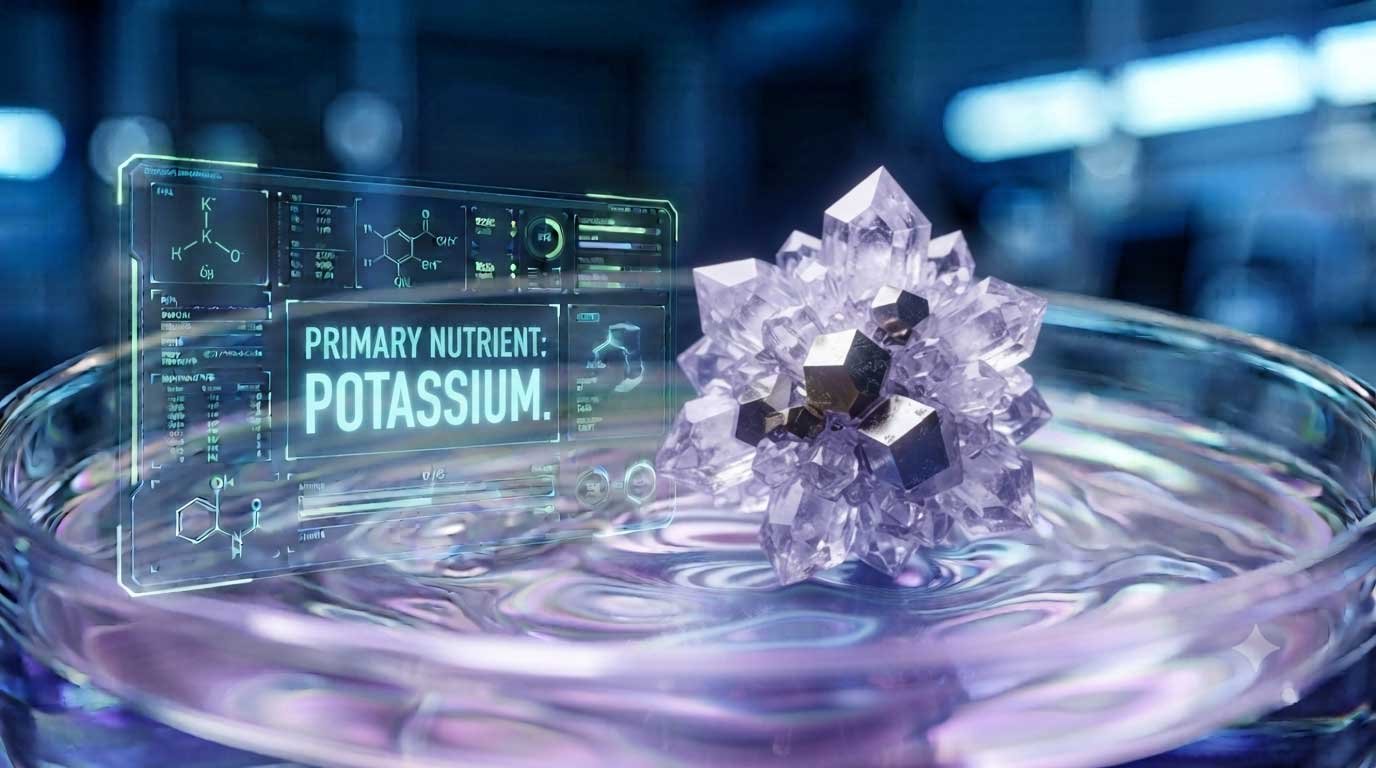
The Mineral Your Heartbeat Can’t Do Without
Ask most people to name an important mineral and they’ll say calcium, maybe iron if they’re feeling ambitious. Potassium rarely makes the list, which is strange, because it’s arguably doing more heavy lifting than either of them, every single second you’re alive. I’ve spent years looking at nutrition labels, lab panels, and dietary intake data, and if there’s one mineral I think gets criminally underrated, it’s this one.
Here’s the thing about potassium: it’s not glamorous. Nobody’s selling you a potassium serum for glowing skin. There’s no potassium-based wellness trend sweeping through social media. And yet, every heartbeat you’ve ever had, every muscle contraction, every nerve signal that told your hand to pull away from something hot — potassium was involved in all of it. It’s one of those background workers that never gets a shoutout until something goes wrong.
Table of Contents


Potassium is an electrolyte, which is just a fancy way of saying it’s a mineral that carries an electrical charge when dissolved in your body’s fluids. Sodium is probably the electrolyte you’ve heard about most, usually in the context of “eat less salt.” Potassium is sodium’s quieter counterpart, and in a lot of ways, its counterbalance. Where sodium tends to pull water in and raise pressure, potassium helps push back, relaxing blood vessel walls and helping the kidneys flush out excess sodium through urine. The two minerals work as a pair, and honestly, most modern diets have the ratio backwards — too much sodium, not nearly enough potassium.

The vast majority of your body’s potassium — something like 98 percent — sits inside your cells rather than floating around in your bloodstream. That distinction matters more than it sounds like it should. Your cells maintain a steep difference in potassium concentration between their interior and the fluid surrounding them, and that gradient is what allows nerves to fire and muscles to contract. There’s a specific pump embedded in cell membranes, the sodium-potassium pump, that spends a huge chunk of your daily energy budget just maintaining this balance. It’s not an exaggeration to say that without it, your heart simply would not beat.
I bring this up not to scare anyone but to reframe how we think about minerals in general. We tend to treat them like vitamins — nice to have, good for a checklist, maybe worth a supplement if you’re feeling run down. Potassium doesn’t really fit that mold. It’s structural. It’s electrical. It’s the thing quietly regulating your blood pressure while you’re arguing with a coworker about lunch plans, and it’s the reason your legs don’t cramp up every time you climb a flight of stairs (well, most of the time).
What makes potassium particularly interesting from where I sit is the gap between how essential it is and how little attention it gets in everyday conversations about health. We’ve collectively become fairly sodium-aware — most people know that too much salt isn’t great for blood pressure. Far fewer people know that the other half of that equation, getting enough potassium, might matter just as much, if not more, for keeping blood pressure in a healthy range. Survey data consistently shows that average potassium intake in the United States sits well below recommended levels, for basically every age group and demographic. That’s not a niche problem affecting a handful of people with poor diets. That’s most of us.
Part of the reason is structural. Potassium-rich foods — fruits, vegetables, legumes, some dairy — require a bit more intention to prepare and eat regularly than the processed, potassium-poor convenience foods that dominate a lot of modern eating patterns. Nobody’s out here potassium-fortifying snack cakes the way manufacturers add extra sodium for shelf stability and flavor. So the deck is a little stacked against us, dietarily speaking.
There’s also a fair amount of confusion around potassium, probably because of how it’s occasionally discussed in the context of kidney disease or certain medications, where too much can genuinely become dangerous. That’s a real and important nuance, and I’ll get into it later, but it shouldn’t overshadow the reality for the average healthy adult: most of us aren’t at risk of getting too much potassium from food. We’re at risk of not getting nearly enough.
Over the next several sections, I want to walk through what this mineral actually does for your heart and muscles, where you can realistically get it from your diet, how much you should be aiming for, what happens when levels run low, and yes, when things can tip too far in the other direction. Think of this as less of a clinical rundown and more of a practical, no-nonsense look at a mineral that deserves a lot more credit than it gets. By the end, I think you’ll look at a banana, a baked potato, or a handful of white beans a little differently.
Key Health Benefits
Keeping the Heart Beating in Rhythm
Let’s start with the heart, because if there’s one organ where potassium’s job description is impossible to overstate, it’s this one. Your heart is a muscle, obviously, but it’s a muscle that runs on electrical signals, and those signals depend heavily on the movement of potassium and sodium across cell membranes. Every contraction, every beat, relies on ion channels opening and closing in a very specific sequence. When potassium levels swing too far in either direction, that rhythm can become genuinely unstable, which is part of why hospitals monitor potassium so closely in patients on certain heart medications or with kidney issues.
For someone with normal kidney function and a reasonably balanced diet, this isn’t something to lose sleep over. But it does explain why cardiologists and nutrition researchers pay so much attention to potassium intake at the population level. Diets low in potassium and high in sodium have been linked, again and again, to higher rates of hypertension, which is itself one of the biggest risk factors for heart disease and stroke.
Muscle Function and Recovery
Beyond the heart, potassium plays a starring role in skeletal muscle — the muscles you use to walk, lift, type, and generally move through your day. Muscle contraction depends on a coordinated exchange of calcium, sodium, and potassium ions. When potassium runs low, muscles can become weak, fatigued, or prone to cramping. Athletes and people who sweat heavily during exercise sometimes notice this firsthand; heavy sweating causes some potassium loss (though far less than sodium loss), and combined with inadequate dietary intake, it can contribute to that heavy, sluggish feeling in overworked muscles.
I’ll be honest, a lot of sports drink marketing overstates how much potassium you lose through sweat compared to sodium, but that doesn’t mean potassium is irrelevant to athletic performance. Adequate intake supports normal muscle contraction and recovery, and chronically low levels are associated with muscle weakness and, in more severe cases, more serious complications.
Blood Pressure and Cardiovascular Protection
This is probably the area with the most robust research behind it. Multiple meta-analyses of randomized controlled trials have found that potassium supplementation can meaningfully lower both systolic and diastolic blood pressure, particularly in people who already have hypertension. One well-cited analysis of 25 trials found average reductions of roughly 4.5 points systolic and nearly 3 points diastolic with potassium supplementation. Another analysis pooling similar data found even larger effects in hypertensive participants.
The proposed mechanism makes sense biologically: potassium encourages blood vessels to relax (vasodilation) and helps the kidneys excrete more sodium and water, which reduces overall blood volume and, with it, pressure on artery walls. Some research also points to potassium-rich eating patterns, like the DASH diet, being associated with a lower risk of stroke — one large meta-analysis found people with the highest potassium intakes had roughly a 15 to 24 percent lower risk of stroke compared to those with the lowest intakes. That’s a meaningful number when you’re talking about something as devastating as a stroke.
Bone and Kidney Stone Support
Two benefits that get less airtime but deserve mention: bone health and kidney stone prevention. Potassium salts, particularly potassium bicarbonate and citrate, appear to help buffer the acid load created by typical Western diets that lean heavily on meat and refined grains. Some clinical trials have found that potassium citrate supplementation reduces urinary calcium loss and modestly improves markers of bone turnover in older adults, though the research isn’t entirely consistent across every study.
On the kidney stone front, the connection is a bit clearer. Large observational studies, including data from tens of thousands of participants in long-term cohort studies, have found that people with higher potassium intakes have a notably lower risk of developing kidney stones — differences in the range of 35 to 51 percent between the highest and lowest intake groups. Potassium citrate specifically seems to help by raising urinary citrate levels, which interferes with the crystal formation that leads to calcium oxalate stones, the most common type.
None of this means potassium is a cure-all, and I’d be doing you a disservice if I framed it that way. But when you add up cardiovascular support, muscle function, and these secondary benefits for bone and kidney health, it’s hard not to see potassium as one of the more quietly important minerals in the entire diet.
Dietary Sources
Fruits and Vegetables Lead the Pack
If you’re trying to get more potassium into your diet, produce is going to do most of the work. Dried apricots are shockingly potassium-dense — about half a cup gets you well over 700 milligrams. Squash, particularly acorn squash, is another standout, and so are prunes and raisins. A single baked potato, eaten with the skin, delivers around 600 milligrams, which honestly surprises a lot of people who think of potatoes as “just a starch.” Leafy greens like spinach contribute meaningfully too, especially when cooked down, since the volume shrinks and the mineral content concentrates.
Then there’s the classic: bananas. They’re a reasonable source, sitting at a bit over 400 milligrams for a medium banana, but they’re not actually the potassium powerhouse their reputation suggests. A cup of cooked lentils or kidney beans will often out-potassium a banana, and a cup of orange juice isn’t far behind. Tomatoes, cantaloupe, and broccoli round out a solid list of everyday produce that adds up quickly if you’re eating a varied diet.
Protein and Dairy Sources
Potassium isn’t exclusive to plants. Salmon, chicken breast, and lean beef all contribute a meaningful amount per serving, generally somewhere in the 300-milligram range for a typical three-ounce portion. Dairy is an underappreciated source too — a cup of milk provides over 350 milligrams, and yogurt, especially the fruit-flavored nonfat varieties, contributes a similar amount. Soy milk is a solid plant-based alternative if dairy isn’t part of your diet.
I think this is worth mentioning because a lot of “eat more potassium” advice gets framed exclusively around produce, which can make it feel out of reach for people who don’t eat a ton of fruits and vegetables. In reality, a mixed diet with some dairy, fish, poultry, and legumes can get you a long way toward adequate intake without requiring a complete dietary overhaul.
Grains, Legumes and Everyday Staples
Whole grains generally beat their refined counterparts by a wide margin. Brown rice, for instance, contains roughly three times the potassium of white rice, and whole wheat bread edges out white bread as well. Legumes deserve special mention here — soybeans, lentils, and kidney beans are some of the densest potassium sources available, plant or animal, and they’re inexpensive, shelf-stable, and versatile enough to work into soups, salads, and grain bowls without much effort.
A few practical swaps that add up:
- Choosing brown rice over white rice
- Keeping the skin on potatoes and sweet potatoes
- Swapping a sugary snack for a handful of nuts or dried apricots
- Adding beans or lentils to soups and salads a couple times a week
- Choosing whole fruit over fruit juice when possible, since juice concentrates sugar without the fiber
None of these are dramatic changes. That’s kind of the point — meaningful improvement in potassium intake usually comes from a handful of small, boring, repeatable habits rather than one big dietary overhaul.
A Note on Salt Substitutes and Supplements
Salt substitutes that replace some or all of the sodium chloride in table salt with potassium chloride have become fairly popular, particularly for people managing blood pressure. They can be a genuinely useful tool, but they’re also concentrated — some products deliver well over 1,000 milligrams of potassium per teaspoon, which is a meaningfully different exposure than getting potassium spread across meals from food. Anyone with kidney issues or taking certain blood pressure medications should be cautious here, a point I’ll come back to later.
As for standalone potassium supplements, most on the market are capped fairly low, often around 99 milligrams per serving, largely due to historical concerns about gastrointestinal irritation from concentrated potassium salts. That’s a small fraction of daily needs, which is exactly why food remains the primary and most practical way to meet potassium requirements for the vast majority of people.
Dosage & Deficiency
How Much Potassium You Actually Need
Recommendations for potassium are set as an Adequate Intake rather than a strict Recommended Dietary Allowance, because the research base wasn’t considered strong enough to pin down an exact requirement for the general population. That said, the numbers still give a useful target. Adult men are generally advised to aim for around 3,400 milligrams a day, while adult women are advised to aim closer to 2,600 milligrams. Pregnancy and lactation nudge those numbers up slightly. For context, the Daily Value used on nutrition labels — the number you see referenced as a percentage on packaged food — is set at 4,700 milligrams, a figure meant to reflect an intake associated with reduced chronic disease risk at a population level.
Here’s the uncomfortable reality: most adults in the United States fall well short of these targets. Survey data has repeatedly shown average intakes hovering somewhere around 2,300 to 3,000 milligrams a day depending on age and sex, which puts a large chunk of the population below even the more conservative recommendations. This isn’t a fringe issue affecting people with unusual diets — it’s the norm, largely driven by how few whole fruits, vegetables, and legumes make it into the average plate compared to processed and refined foods.
Recognizing Low Potassium
Mild potassium inadequacy, the kind that comes from a diet that’s simply light on potassium-rich foods rather than an acute medical issue, tends to be quiet. You might feel a bit more fatigued than usual, notice more frequent muscle cramps, or deal with a bit more constipation than normal. None of these are dramatic red flags on their own, which is part of why potassium shortfalls tend to fly under the radar compared to something like iron deficiency, which shows up more clearly in routine bloodwork.
True hypokalemia — clinically low blood potassium — is a different and more serious situation, and it’s rarely caused by diet alone in someone with normal kidney function. It’s more commonly triggered by things like prolonged vomiting or diarrhea, certain diuretic medications, laxative overuse, or heavy, sustained sweating without adequate replacement. Symptoms at this more serious level can include pronounced muscle weakness, irregular heartbeat, and in severe cases, dangerous complications that require medical attention. I want to be careful not to blur the line here: everyday dietary shortfalls and clinical hypokalemia are related but distinct situations, and the latter is something to address with a healthcare provider, not a food list.
Who’s Most at Risk
A few groups tend to run a higher risk of inadequate potassium status:
- People on certain diuretic medications, particularly thiazide and loop diuretics, which increase urinary potassium losses
- Individuals with inflammatory bowel conditions like Crohn’s disease or ulcerative colitis, where chronic diarrhea and increased potassium secretion in the gut both play a role
- People who use laxatives frequently or in large doses
- Older adults, who sometimes eat smaller volumes of food overall and may have reduced kidney efficiency in regulating electrolytes
- Anyone dealing with prolonged vomiting or diarrhea from illness
If any of these apply to you, it’s worth a conversation with a healthcare provider rather than trying to self-correct with high-dose supplements, since the right approach really does depend on the underlying cause.
Toxicity & Risks
Why Healthy Kidneys Usually Handle the Excess
Here’s something that tends to surprise people: for healthy adults with normally functioning kidneys, there isn’t an established upper limit for dietary potassium, because the kidneys are remarkably efficient at excreting whatever excess shows up. Eat an enormous salad, a few baked potatoes, and a couple of bananas in one day, and your kidneys will simply filter out what your body doesn’t need. This is genuinely one of the reasons researchers haven’t set a formal upper intake level for potassium from food — the risk profile for a healthy person just isn’t there in the way it is for, say, sodium or added sugar.
That said, “no established upper limit for healthy people” is doing a lot of work in that sentence, and it’s not a blanket permission slip to go overboard with concentrated potassium sources like supplements or salt substitutes, which deliver much larger doses much faster than food typically does.
When Potassium Becomes Dangerous
The picture changes considerably for people whose kidneys can’t efficiently excrete potassium, whether due to chronic kidney disease, certain hormonal conditions, or specific medications. In these situations, potassium can accumulate in the blood, a condition called hyperkalemia, and it’s genuinely serious. Elevated blood potassium interferes with the same electrical signaling that makes potassium so essential for the heart in the first place, which means excess levels can trigger dangerous heart rhythm disturbances. Symptoms can include muscle weakness, tingling or numbness in the extremities, heart palpitations, and in severe, untreated cases, life-threatening cardiac events.
This is exactly why people with kidney disease are often given specific guidance around limiting high-potassium foods and why concentrated potassium supplements and salt substitutes come with real caution for this population. It’s also worth flagging that potassium-containing medications, in high enough doses, have historically been associated with gastrointestinal irritation and, in rare cases, more serious lesions in the small intestine, which is part of why regulatory limits exist on how much potassium certain oral drug products can contain without a warning label.
Medication Interactions Worth Knowing
A handful of medication categories interact meaningfully with potassium status, and it’s worth being aware of them even outside a clinical context:
- ACE inhibitors and angiotensin receptor blockers, commonly prescribed for blood pressure and heart failure, reduce urinary potassium excretion and can push levels upward
- Potassium-sparing diuretics do exactly what the name suggests, and combining them with high-potassium supplements or salt substitutes can tip someone into hyperkalemia
- Loop and thiazide diuretics work in the opposite direction, increasing potassium losses and sometimes requiring supplementation under medical supervision
None of this is meant to be alarming for the average person without kidney issues who’s simply trying to eat more fruits and vegetables. It’s really aimed at explaining why potassium occupies this interesting dual space in nutrition: broadly beneficial and safe from food for most healthy people, but genuinely risky in concentrated forms for specific populations. Anyone on the medications above, or with existing kidney concerns, really should loop in a healthcare provider before making major changes to potassium intake, whether that’s through diet, salt substitutes, or supplements.
Small Mineral, Massive Job
If you’ve made it this far, I hope potassium feels a little less like background noise on a nutrition label and a little more like what it actually is: one of the hardest-working minerals in your entire body. It’s keeping your heart in rhythm right now, as you read this. It’s part of why your muscles fire correctly when you stand up, reach for something, or go for a run. It’s quietly counterbalancing sodium, supporting healthy blood pressure, and possibly protecting your bones and kidneys along the way.
What strikes me most, looking at the data, isn’t that potassium is complicated. It’s that the fix for most people is almost boringly simple. This isn’t a mineral that requires exotic supplements or complicated protocols. It requires eating more of the stuff that nutrition advice has been pointing toward for decades — fruits, vegetables, legumes, whole grains, a reasonable amount of dairy and lean protein — and doing it consistently rather than perfectly.
If I had to boil this down to a few practical takeaways, they’d be these. First, don’t assume a banana has you covered; potatoes, beans, lentils, and leafy greens often carry more potassium per serving and deserve equal billing. Second, pay attention to the sodium-potassium balance rather than obsessing over sodium alone — cutting salt matters, but adding potassium-rich foods might matter just as much for blood pressure. Third, if you’re on blood pressure medications, diuretics, or have any kidney concerns, treat potassium as something to discuss with a healthcare provider rather than something to aggressively supplement on your own. And finally, remember that most of the benefit here comes from ordinary food choices made repeatedly over time, not from any single meal or supplement.
Minerals like this one rarely get the spotlight they deserve, mostly because their effects are cumulative and quiet rather than immediate and dramatic. But given everything potassium is doing for your heart and muscles at this very moment, it’s earned a permanent spot on your grocery list, right up there with the nutrients that get all the attention.
Article Sources
At AncientHerbsWisdom, our content relies on reputable sources, including peer-reviewed studies, to substantiate the information presented in our articles. Our primary objective is to ensure our content is thoroughly fact-checked, maintaining a commitment to accuracy, reliability, and trustworthiness.
- Institute of Medicine. (2005). Dietary reference intakes for water, potassium, sodium, chloride, and sulfate. National Academies Press. https://doi.org/10.17226/10925
- National Academies of Sciences, Engineering, and Medicine. (2019). Dietary reference intakes for sodium and potassium. The National Academies Press. https://doi.org/10.17226/25353
- Stone, M. S., Martyn, L., & Weaver, C. M. (2016). Potassium intake, bioavailability, hypertension, and glucose control. Nutrients, 8(7), 444. https://doi.org/10.3390/nu8070444
- Weaver, C. M. (2013). Potassium and health. Advances in Nutrition, 4(3), 368S-377S. https://doi.org/10.3945/an.112.003533
- Viera, A. J., & Wouk, N. (2015). Potassium disorders: Hypokalemia and hyperkalemia. American Family Physician, 92(6), 487-495. https://pubmed.ncbi.nlm.nih.gov/26371733/
- Filippini, T., Violi, F., D’Amico, R., & Vinceti, M. (2017). The effect of potassium supplementation on blood pressure in hypertensive subjects: A systematic review and meta-analysis. International Journal of Cardiology, 230, 127-135. https://doi.org/10.1016/j.ijcard.2016.12.048
- Vinceti, M., Filippini, T., Crippa, A., de Sesmaisons, A., Wise, L. A., & Orsini, N. (2016). Meta-analysis of potassium intake and the risk of stroke. Journal of the American Heart Association, 5(10), e004210. https://doi.org/10.1161/JAHA.116.004210
- Phillips, R., Hanchanale, V. S., Myatt, A., Somani, B., Nabi, G., & Biyani, C. S. (2015). Citrate salts for preventing and treating calcium containing kidney stones in adults. Cochrane Database of Systematic Reviews, 2015(10), CD010057. https://doi.org/10.1002/14651858.CD010057.pub2
- Jehle, S., Hulter, H. N., & Krapf, R. (2013). Effect of potassium citrate on bone density, microarchitecture, and fracture risk in healthy older adults without osteoporosis: A randomized controlled trial. The Journal of Clinical Endocrinology & Metabolism, 98(1), 207-217. https://doi.org/10.1210/jc.2012-3099
- Curhan, G. C., Willett, W. C., Rimm, E. B., & Stampfer, M. J. (1993). A prospective study of dietary calcium and other nutrients and the risk of symptomatic kidney stones. New England Journal of Medicine, 328(12), 833-838. https://doi.org/10.1056/NEJM199303253281203
- National Institutes of Health, Office of Dietary Supplements. (2022). Potassium: Fact sheet for health professionals. https://ods.od.nih.gov/factsheets/Potassium-HealthProfessional/
- National Institutes of Health, Office of Dietary Supplements. (2021). Potassium: Fact sheet for consumers. https://ods.od.nih.gov/factsheets/Potassium-Consumer/
- World Health Organization. (2012). Guideline: Potassium intake for adults and children. World Health Organization. https://www.who.int/publications/i/item/9789241504829

- Phosphatidic Acid: Supporting Muscle Growth and Strength - July 31, 2026
- Ceramides: Supporting Healthy Skin From Within - July 31, 2026
- Synbiotics: Combining Prebiotics and Probiotics Together - July 31, 2026